
Introduction to Semi-Aquatic Mammals
Defining the «Water Rat»
The water rat, commonly referred to as the marsh rat or by its scientific name Nectomys, belongs to the family Cricetidae. It is a semi‑aquatic rodent native to tropical and subtropical regions of Central and South America. Morphologically, the species exhibits a streamlined body, dense waterproof fur, partially webbed hind feet, and a flattened tail that functions as a rudder during swimming. Size ranges from 20 to 30 cm in head‑body length, with a tail of comparable length; weight typically falls between 150 and 300 g.
Ecologically, the water rat inhabits riparian zones, flooded forest floors, and swamp margins. It constructs burrows in soft riverbanks and utilizes vegetation for shelter. Diet consists primarily of aquatic insects, crustaceans, small fish, and occasional plant matter, reflecting opportunistic foraging behavior. Activity peaks at night, with individuals spending considerable time foraging both in water and along the banks.
Reproductive traits include a gestation period of approximately 23 days, litters of 2–5 young, and a breeding season that aligns with rainy periods to maximize resource availability. Offspring are born altricial, gaining independence after roughly three weeks.
Key identifiers for the water rat:
- Semi‑aquatic morphology (webbed feet, flattened tail)
- Dense, water‑repellent fur coloration ranging from brown to gray
- Habitat preference for freshwater margins and flooded forests
- Diet focused on aquatic invertebrates and small vertebrates
- Nocturnal activity pattern with extensive swimming capability
These characteristics distinguish the water rat from other rodent species and provide a baseline for comparative analysis with sympatric semi‑aquatic mammals such as otters.
Defining the «Otter»
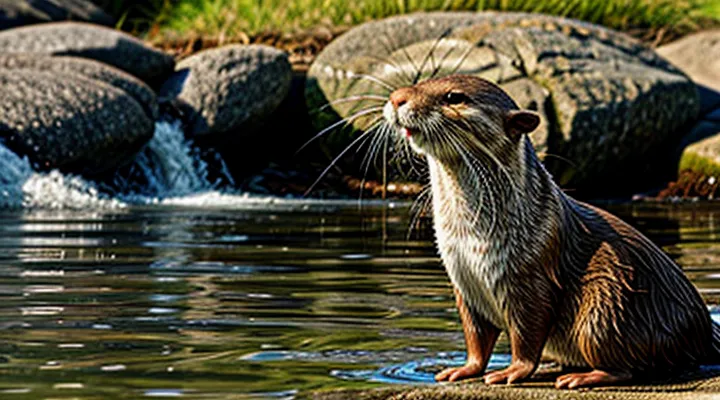
Otters are semi‑aquatic mammals belonging to the family Mustelidae, subfamily Lutrinae. The group comprises 13 extant species distributed across freshwater and marine environments worldwide.
Physical characteristics include a streamlined body, dense water‑repellent fur, webbed feet, and a long, muscular tail that provides propulsion. Body length ranges from 45 cm in the Asian small‑clawed otter to 1.8 m in the sea otter, with weight varying from 0.9 kg to 45 kg respectively.
Key adaptations:
- Fur: the densest in the animal kingdom, offering insulation and buoyancy.
- Sensory whiskers: detect vibrations and movements in water.
- Dentition: sharp, interlocking teeth suited for crushing crustaceans and fish.
Habitat preferences differ among species but generally encompass rivers, lakes, coastal estuaries, and open ocean. Freshwater otters favor riverbanks with abundant vegetation, while sea otters occupy kelp forests and rocky shorelines.
Diet consists primarily of fish, crustaceans, mollusks, and occasionally amphibians. Foraging techniques involve diving, using forepaws to manipulate prey, and, in some species, employing rocks as tools to break shells.
Reproductive behavior includes seasonal breeding, a gestation period of 60–86 days, and the birth of 1–3 altricial young that remain with the mother for several months. Social structures range from solitary individuals to family groups, depending on species and environmental conditions.
Key Distinguishing Features
Physical Characteristics
Size and Weight
The water rat is considerably smaller than most otter species. Adult water rats typically measure 25–35 cm in head‑body length, with a tail adding another 15–25 cm. Their weight ranges from 200 g to 400 g.
Otters exhibit broader size variation. The Eurasian otter (Lutra lutra) reaches 70–80 cm in body length, plus a 40–50 cm tail, and weighs 7–12 kg. Smaller species, such as the Asian small‑clawed otter (Aonyx cinereus), attain 35–40 cm body length, a 30 cm tail, and 1–2 kg weight. Larger species, including the sea otter (Enhydra lutris), exceed 100 cm body length, a 50 cm tail, and can weigh 30–45 kg.
Key points:
- Water rat: 25–35 cm body, 15–25 cm tail, 0.2–0.4 kg.
- Small otter species: 35–40 cm body, 30 cm tail, 1–2 kg.
- Medium otter species: 70–80 cm body, 40–50 cm tail, 7–12 kg.
- Large otter species: >100 cm body, 50 cm tail, 30–45 kg.
The disparity in size and mass reflects differing ecological niches: water rats occupy smaller freshwater burrows, while otters exploit larger riverine and marine environments requiring greater strength and stamina.
Fur and Coloration
The fur of the water rat (genus Hydromys) is dense, short, and water‑repellent, with a gray‑brown dorsal surface and a lighter ventral side. Guard hairs are stiff, providing protection against aquatic vegetation. Underlying down offers insulation, allowing the animal to maintain body temperature in cool streams.
The otter’s coat (family Mustelidae) features longer, thicker guard hairs that interlock to create a waterproof layer. The dorsal pelage ranges from dark brown to black, while the ventral area is creamy or pale. Seasonal molting can introduce a subtle shift toward a richer hue in winter.
Key distinctions in fur and coloration:
- Length and texture: water rat – short, smooth; otter – long, interlocking.
- Water resistance: water rat – moderate, relies on oil glands; otter – high, structural hair design.
- Dorsal color: water rat – gray‑brown; otter – dark brown to black.
- Ventral color: water rat – pale; otter – creamy to pale.
- Seasonal change: water rat – minimal; otter – noticeable molting cycle.
These characteristics reflect adaptation to different aquatic niches, with the otter’s fur optimized for prolonged submersion and the water rat’s coat suited to brief, fast‑moving water exposure.
Tail Morphology
The tail of a water rat is relatively short, typically measuring 10–15 % of total body length. Its vertebral column is less robust than that of an otter, and the musculature is adapted for limited propulsion in water. Dense, coarse fur covers the dorsal surface, providing insulation but reducing hydrodynamic efficiency. The tail functions primarily as a rudder for steering during swimming and as a balance aid when the animal moves on land.
In contrast, an otter possesses a long, laterally flattened tail that can exceed 30 % of its body length. The vertebrae are elongated and reinforced, supporting powerful musculature that generates thrust during undulatory swimming. The tail is covered with sleek, water‑repellent fur, minimizing drag. It serves as a primary propulsive organ, enabling rapid acceleration and precise maneuverability in aquatic environments.
Key morphological distinctions:
- Length: water rat ≈ 10–15 % of body; otter ≈ 30 % or more.
- Cross‑section: water rat’s tail is cylindrical; otter’s tail is flattened.
- Musculature: water rat exhibits modest muscle mass; otter shows well‑developed, segmented muscles for strong strokes.
- Fur texture: water rat’s fur is coarse and dense; otter’s fur is fine and hydrophobic.
- Functional emphasis: water rat uses tail mainly for steering; otter relies on tail for propulsion and stability.
Paw Structure
The paw morphology of semi‑aquatic rodents and mustelids reflects distinct ecological adaptations. Water rats possess partially webbed hind feet, elongated digits, and a flexible ankle joint that permits precise manipulation of substrates such as mud and vegetation. Their forepaws feature sharp, retractable claws suited for digging burrows and handling prey. The plantar surface is covered with sparse, water‑repellent fur, reducing drag while maintaining tactile sensitivity through small, densely innervated pads.
Otters exhibit fully webbed feet, with a broad, flattened palm that creates an effective paddle for propulsion. Digits are short and robust, ending in non‑retractable claws primarily used for anchoring to slippery surfaces. The foot pads are thick, cushioned, and densely furred, providing insulation and grip in cold, fast‑moving water. Musculature in the otter’s paw is heavily developed for powerful strokes, while the water rat’s musculature favors fine motor control.
Key structural differences:
- Webbing: partial (water rat) vs. complete (otter)
- Digit length: elongated (water rat) vs. short (otter)
- Claw type: retractable (water rat) vs. fixed (otter)
- Fur density on soles: sparse (water rat) vs. dense (otter)
- Muscular emphasis: dexterity (water rat) vs. power (otter)
These anatomical traits enable each species to exploit its preferred habitat: water rats excel in maneuvering through dense vegetation and burrow construction, whereas otters achieve high-speed swimming and prey capture in open waterways.
Habitat and Range
Preferred Environments
Both semi‑aquatic mammals exhibit distinct habitat preferences that reflect their foraging strategies and predator avoidance.
The water rat favors shallow freshwater systems with dense vegetation. Typical locations include riverbanks, marshes, and wet meadows where emergent plants provide cover and access to submerged roots and tubers. The species relies on stable bank structures for burrow construction and prefers water bodies with low current velocity, which facilitates swimming and foraging without excessive energy expenditure.
The otter selects habitats offering abundant fish populations and open water channels. Preferred environments encompass fast‑flowing streams, coastal estuaries, and larger lakes where prey visibility is high. Access to terrestrial haul‑out sites—such as rocky ledges, sandy banks, or driftwood—is essential for resting, grooming, and rearing young. Unlike the water rat, otters tolerate higher flow rates and often occupy territories that span both freshwater and marine zones.
Key differences in preferred environments:
- Water rat: shallow, vegetated banks; low‑flow water; burrow‑friendly substrates.
- Otter: open, fish‑rich waters; moderate to swift currents; nearby dry haul‑out areas.
These habitat choices dictate each species’ distribution patterns and influence their ecological roles within riparian and coastal ecosystems.
Geographic Distribution
The water rat, a semi‑aquatic rodent, inhabits regions primarily in the southern hemisphere. Its range includes coastal streams and wetlands of Australia, New Zealand, and parts of South America, where it prefers cool, fast‑flowing rivers and densely vegetated banks. Populations are largely restricted to temperate zones with abundant freshwater habitats.
Otters, members of the Mustelidae family, occupy a far broader geographical span. Species are found across North and South America, Europe, Africa, Asia, and Oceania. Their distribution covers marine coastlines, estuaries, lakes, and rivers, from Arctic tundra to tropical rainforests. The adaptability to both saltwater and freshwater environments enables otters to thrive in diverse climatic conditions.
Key contrasts in distribution:
- Latitude: Water rats are confined to mid‑latitude temperate zones; otters extend from polar to equatorial regions.
- Habitat type: Water rats favor inland freshwater systems with dense riparian vegetation; otters exploit a wide array of aquatic habitats, including marine shorelines.
- Continental coverage: Water rats are limited to a few southern continents; otters are present on every continent except Antarctica.
These patterns reflect divergent ecological requirements and evolutionary histories, resulting in distinct biogeographic footprints for each group.
Diet and Foraging
Primary Food Sources
The semi‑aquatic rodent and the carnivorous mustelid obtain energy from distinct prey categories, reflecting divergent foraging strategies.
The water rat consumes primarily:
- Aquatic insects (caddisfly larvae, mayfly nymphs)
- Small crustaceans (freshwater shrimp, amphipods)
- Vegetative matter (young shoots of emergent plants, algae)
- Occasionally fish fry and amphibian larvae
The otter’s diet consists chiefly of:
- Fish of various sizes (salmon, trout, carp)
- Crustaceans (crabs, crayfish)
- Mollusks (freshwater mussels, snails)
- Occasionally small mammals and birds captured near water
Key contrasts between the two species’ food sources:
- Taxonomic focus: the rodent relies on invertebrates and plant material; the mustelid targets vertebrate prey.
- Size of prey: water rat selects items generally under 10 g; otter captures prey ranging from 20 g to several kilograms.
- Hunting method: the rodent forages by probing submerged substrates; the otter employs pursuit swimming and surface diving.
- Seasonal variation: the rodent shifts toward more plant matter in winter; the otter maintains a fish‑centric diet year‑round.
Hunting Techniques
Water rats and otters occupy overlapping riparian habitats but employ distinct hunting strategies adapted to their morphology and sensory capabilities.
Water rats rely primarily on nocturnal ambush. They position themselves near riverbanks or dense vegetation, use whisker sensitivity to detect vibrations, and launch rapid lunges to seize insects, crustaceans, and small fish. Their dentition is suited for crushing hard shells, allowing them to exploit prey hidden under rocks.
Otters pursue prey with a combination of visual tracking and agile swimming. They employ forward thrusts powered by strong forelimbs, maintain a streamlined body posture, and use their webbed feet to generate thrust and maneuver quickly. While chasing fish, otters execute a “scoop” motion, opening their mouths as they pass to capture the target. For crustaceans, they manipulate the prey with forepaws before delivering a bite.
Key contrasts in technique:
- Detection: Water rats emphasize tactile cues; otters prioritize acute eyesight.
- Approach: Water rats use stationary ambush; otters execute active pursuit.
- Capture: Water rats employ a single, powerful bite; otters combine rapid mouth opening with paw handling.
- Prey range: Water rats focus on benthic organisms; otters target a broader spectrum, including larger fish and amphibians.
These differences reflect evolutionary specialization: the water rat’s stealth and crushing ability versus the otter’s speed, agility, and coordinated use of limbs for handling diverse prey.
Behavior and Social Structure
Activity Patterns
The water rat and the otter occupy distinct temporal niches despite sharing riparian habitats.
The water rat (genus Hydromys) is primarily nocturnal. Peak activity occurs shortly after sunset, extending through the early morning hours. Foraging focuses on small aquatic invertebrates, crustaceans, and occasional fish. Movements are stealthy; the animal relies on dense vegetation and burrow systems for concealment during daylight.
The otter (family Lutrinae) displays diurnal and crepuscular tendencies, with most individuals most active during daylight and at twilight. Hunting bouts concentrate on fish, amphibians, and larger crustaceans, often involving coordinated group pursuits. Rest periods occur in dens or under overhanging banks, typically during the night.
Key contrasts in activity patterns:
- Time of day: water rat – night; otter – day/ twilight.
- Social structure: water rat – solitary or small family units; otter – often in family groups or larger colonies.
- Foraging strategy: water rat – ambush from concealed positions; otter – active pursuit and cooperative hunting.
- Resting sites: water rat – burrows and dense foliage; otter – dens built in riverbanks or under rocks.
These differences reduce direct competition for food and space, allowing both species to coexist along the same watercourses.
Social Dynamics
The social structures of the semi‑aquatic rodent commonly called the water rat differ markedly from those of the otter, despite their overlapping habitats. Water rats typically form small, stable family units composed of a breeding pair and their offspring. Interaction within these groups centers on nest maintenance, cooperative foraging near riverbanks, and mutual grooming that reinforces pair bonds. Territorial boundaries are defended through scent marking and vocalizations, but aggression is limited to occasional disputes over nesting sites.
Otters, in contrast, exhibit more fluid social arrangements. While some species maintain enduring family groups, many individuals adopt a fission‑fusion pattern, joining and leaving temporary foraging parties based on prey availability. Communication relies heavily on vocal calls, body postures, and scent marking, enabling rapid coordination during group hunts. Competition for space is intense; dominant individuals establish extensive latrine sites that signal hierarchy and deter intruders.
Key comparative points:
- Group composition: water rat families are fixed; otter groups are dynamic.
- Cohesion mechanisms: water rats emphasize pair bonding and grooming; otters rely on vocal and visual signals.
- Territoriality: water rats defend limited riverbank segments; otters control larger territories marked by multiple scent sites.
- Reproductive strategy: water rats raise young within a single burrow; otters often rear pups in communal dens with shared parental duties.
Understanding these behavioral distinctions clarifies how each species exploits aquatic environments, balances competition, and sustains population stability.
Vocalizations
Water rats (genus Hydromys) and otters (family Mustelidae) produce distinct acoustic signals that reflect their divergent ecological niches and social structures.
The water rat relies primarily on low‑frequency chirps and short whistles during foraging and territorial encounters. These sounds travel efficiently underwater, allowing individuals to maintain spacing in dense riparian vegetation. Recordings show peak frequencies between 300 Hz and 1 kHz, with durations of 0.1–0.3 seconds. Vocal output increases during the breeding season, when males emit repetitive series of chirps to attract females and deter rivals.
Otters generate a broader repertoire that includes high‑frequency whistles, growls, and pulsating clicks. Whistles, ranging from 2 kHz to 12 kHz, serve in group cohesion while swimming and during play. Growls and clicks, often below 1 kHz, function as alarm signals and as part of aggressive displays. Studies indicate that otter vocalizations are modulated by body size; larger individuals produce lower‑frequency components, facilitating individual identification within pods.
Key contrasts in vocal behavior:
- Frequency range: water rat ≈ 300 Hz–1 kHz; otter ≈ 2 kHz–12 kHz (whistles) plus lower‑frequency growls.
- Temporal pattern: water rat chirps are brief and repetitive; otter whistles are longer, often lasting 0.5–1 second with complex modulation.
- Social context: water rat vocalizations are primarily territorial and mating‑related; otter sounds support group coordination, alarm, and play.
- Habitat adaptation: water rat calls optimized for propagation through dense vegetation and shallow water; otter calls designed for open water and rapid transmission among moving individuals.
These acoustic distinctions underscore the evolutionary divergence between the two semi‑aquatic mammals, with vocalizations tailored to their specific communication demands.
Reproduction and Lifespan
Breeding Habits
The semi‑aquatic rodent commonly referred to as the water rat initiates reproduction during the warmer months, typically from late spring to early summer. Females reach sexual maturity at 10–12 months, produce a single litter per year, and experience a gestation period of approximately 30 days. Litters contain 2–5 altricial young, which remain in the nest for 4–5 weeks while the mother provides exclusive care; the father contributes no parental assistance.
The otter, a member of the Mustelidae family, displays a more complex reproductive strategy. Breeding peaks in late winter to early spring, but delayed implantation extends the effective gestation to 60–70 days after a 10‑day embryonic development phase. Females give birth to 1–3 relatively precocial pups, which are nursed for 8–12 weeks. Both parents participate in pup rearing: the male secures food and protects the den, while the female continues direct nursing.
Key distinctions in breeding habits:
- Seasonality – water rats breed in late spring/summer; otters breed in late winter/spring with delayed implantation.
- Litter size – water rats: 2–5 offspring; otters: 1–3 offspring.
- Gestation length – water rats: ~30 days; otters: 60–70 days including delayed implantation.
- Parental roles – water rats: maternal care only; otters: biparental involvement.
- Offspring development – water rat young are altricial; otter pups are comparatively precocial at birth.
These contrasts reflect divergent evolutionary pressures: the rodent’s strategy emphasizes rapid turnover of moderately sized litters, whereas the mustelid’s approach invests in extended parental cooperation and fewer, more developed offspring.
Parental Care
Both species are semi‑aquatic mammals, yet their reproductive strategies diverge markedly. The water rat, a rodent adapted to riverbanks and wetlands, produces litters of three to six young after a gestation of roughly 23 days. Females construct nests from vegetation and mud, line them with soft material, and remain inside for the entire nursing period. Maternal care includes frequent feeding, temperature regulation, and protection from predators; males are typically absent from the nest and do not participate in offspring rearing.
Otters, members of the Mustelidae family, exhibit longer gestation—approximately 60 days for Eurasian and North American species. Litters comprise one to four pups that develop in a burrow or den close to water. Both parents contribute: the female provides primary nursing and grooming, while the male supplies food deliveries, defends the den, and assists in teaching swimming techniques. Care continues for several months until juveniles achieve independence.
Key distinctions arise in parental investment duration, litter size, and paternal involvement. Water rat offspring become independent within weeks, reflecting a rapid growth cycle suited to high predation pressure. Otter juveniles remain dependent for up to a year, benefitting from prolonged learning of complex foraging and aquatic skills. Male participation is absent in water rats but integral to otter pup survival.
Longevity
Water rats (genus Nectomys) typically live 3–5 years in the wild, with captive individuals reaching up to 7 years. Their relatively short lifespan correlates with high predation pressure, rapid reproductive cycles, and metabolic rates suited to tropical riverine habitats.
Otters (family Mustelidae, especially Lutra and Lontra species) exhibit markedly longer lifespans. Wild individuals often survive 10–12 years, while those in zoological settings can exceed 20 years. Longevity is supported by slower growth, lower basal metabolic rates, and adaptive behaviors that reduce exposure to predators.
Key factors distinguishing the two mammals:
- Reproductive strategy: Water rats produce multiple litters annually; otters usually have one litter per year.
- Metabolism: Higher metabolic demand in water rats accelerates cellular turnover; otters maintain a more energy‑conservative physiology.
- Habitat stability: Otters occupy a broader range of aquatic environments, offering more consistent food sources and shelter.
- Predation risk: Smaller size and ground‑dwelling habits increase water rat mortality; otters’ larger size and swimming agility lower predation rates.
These biological differences explain the disparity in average lifespan between the two semi‑aquatic rodents.
Ecological Roles and Conservation Status
Impact on Ecosystems
The semi‑aquatic rodent and the mustelid influence freshwater ecosystems through distinct biological functions. The rodent’s burrowing activity modifies riverbank structure, increasing sediment turnover and creating microhabitats for invertebrates. Its foraging on aquatic plants reduces excessive vegetation growth, which can improve water flow and oxygen diffusion.
The mustelid’s predation pressure regulates populations of fish, amphibians, and crustaceans. By removing surplus individuals, it helps maintain balanced trophic dynamics and prevents overgrazing of algae. Its presence also signals healthy water quality, as otters require clean, well‑oxygenated habitats.
Both species affect nutrient cycling:
- Rodent excrement contributes organic matter to streams, enhancing microbial decomposition.
- Otter waste introduces nitrogen and phosphorus, supporting primary productivity in downstream zones.
Collectively, the contrasting ecological roles of these mammals shape habitat complexity, species composition, and overall ecosystem resilience.
Conservation Concerns
Threats
Both semi‑aquatic mammals encounter distinct pressures that shape their survival prospects.
Water rats (Rakali) face habitat loss from agricultural expansion, waterway modification, and urban development. Pollution—particularly heavy metals and pesticide runoff—reduces prey availability and impairs reproductive health. Introduced predators such as feral cats and foxes increase mortality rates, especially in fragmented riparian zones. Climate‑driven droughts lower water levels, limiting foraging grounds and exposing individuals to heat stress.
Otters confront comparable but species‑specific challenges. Commercial fishing operations generate by‑catch mortality and deplete fish stocks, directly reducing food resources. River regulation and dam construction alter flow regimes, disrupting shelter sites and breeding banks. Industrial effluents introduce toxic compounds that accumulate in otter tissues, affecting immune function. Illegal wildlife trade and poaching for pelts add direct human‑induced mortality.
Key differences in threat profiles emerge from ecological niches and geographic distribution. Water rats rely heavily on freshwater wetlands in temperate regions, making them more vulnerable to land‑use change and drought. Otters, occupying broader latitudinal ranges and both freshwater and coastal habitats, experience greater pressure from fisheries and marine pollution.
Mitigation measures must address these divergent pressures: protecting and restoring riparian corridors for water rats, enforcing by‑catch reduction technologies for otters, and regulating pollutant discharge across shared waterways.
Protection Efforts
Water rats and otters, both semi‑aquatic mammals, encounter similar threats: wetland drainage, water contamination, and illegal trapping. Effective protection requires species‑specific measures and joint initiatives.
-
Preserve riparian corridors that support water rat foraging and nesting.
-
Enforce strict limits on pesticide runoff in agricultural zones adjacent to streams.
-
Install predator‑exclusion fences around known colonies to reduce loss from introduced mammals.
-
Conduct regular population surveys using live traps and radio telemetry to track demographic trends.
-
Designate otter conservation zones that encompass sufficient fish stocks and undisturbed riverbanks.
-
Implement catch‑and‑release policies for incidental otter captures in fisheries.
-
Promote the installation of otter-friendly culverts and bypass channels to maintain habitat connectivity.
-
Monitor water quality parameters—dissolved oxygen, heavy metals—to ensure compliance with ecological standards.
National wildlife statutes list both species as protected, mandating habitat restoration and anti‑poaching enforcement. Collaborative programs between governmental agencies, NGOs, and local landowners provide funding for wetland rehabilitation, public education, and citizen‑science monitoring. Continuous data collection informs adaptive management, ensuring that conservation actions remain aligned with observed population responses.
Common Misconceptions and Identification Tips
Dispelling Myths
Common misconceptions portray water rats and otters as interchangeable semi‑aquatic mammals. Scientific classification, dietary habits, social behavior, and conservation assessments reveal clear distinctions.
- Taxonomy: Water rats belong to the family Muridae, genus Nectomys or Neotoma depending on region. Otters are members of the family Mustelidae, genus Lutra or Lutrinae. Genetic divergence exceeds 50 million years.
- Diet: Water rats consume a mix of aquatic insects, crustaceans, seeds, and small fish. Otters rely almost exclusively on fish, amphibians, and crustaceans, exhibiting higher trophic positioning.
- Habitat use: Water rats inhabit riparian zones and slow‑moving streams with dense vegetation, constructing burrows near water edges. Otters occupy broader ranges, from coastal estuaries to large rivers, and build nests (holts) above water.
- Social structure: Water rats are largely solitary, with occasional pair bonds during breeding. Otters form family groups, display cooperative hunting, and maintain territorial scent marking.
- Conservation status: Many water rat species are listed as Least Concern due to adaptability to disturbed habitats. Several otter species are classified as Vulnerable or Endangered, reflecting habitat loss and pollution pressures.
Myth that both species share identical ecological roles is disproved by their divergent feeding strategies and habitat preferences. Myth that conservation measures can be applied uniformly ignores the differing threat levels and legal protections. Accurate information supports targeted management plans for each taxon.
Practical Identification Guide
When observing semi‑aquatic mammals in wetlands, accurate identification prevents misreporting and supports proper management. The following guide highlights observable traits that separate water rats (Nectomys spp. or similar) from otters (Lutrinae).
Physical characteristics
- Size: Water rats reach 25–35 cm body length, tail 20–30 cm; otters range 50–90 cm body length, tail 30–45 cm.
- Build: Water rats have compact bodies, short limbs, and dense, water‑repellent fur. Otters display elongated bodies, long, muscular tails, and sleek fur that lies flat against the skin.
- Head shape: Water rats possess a rounded skull with a short, blunt muzzle. Otters exhibit a tapered skull and a pronounced, elongated snout.
- Ears and eyes: Water rats have small, partially hidden ears and modest eye size. Otters feature conspicuous, round ears and larger eyes positioned high on the head for better surface vision.
- Feet: Water rats’ hind feet are webbed with a short, fleshy tail. Otters have fully webbed feet and a powerful, laterally flattened tail used for propulsion.
Behavioral cues
- Activity pattern: Water rats are primarily nocturnal, often seen foraging along riverbanks under cover of darkness. Otters are diurnal to crepuscular, engaging in visible swimming and play during daylight.
- Vocalizations: Water rats emit high‑pitched squeaks and soft clicks. Otters produce a range of sounds, including whistles, chirps, and low growls.
- Social structure: Water rats are typically solitary or found in small family groups. Otters live in cohesive family units, often observed grooming and resting together.
Habitat preferences
- Water rats favor shallow streams, dense vegetation, and banks with abundant ground cover.
- Otters prefer larger water bodies—rivers, lakes, coastal estuaries—with open water for swimming and rocky or burrow sites for dens.
Field identification checklist
- Measure body length and tail proportion.
- Observe head and snout shape.
- Note ear visibility and eye size.
- Check foot webbing and tail morphology.
- Record activity time and social grouping.
- Identify habitat type and vegetation density.
Applying these criteria in the field yields reliable differentiation between the two groups, supporting accurate data collection and ecological assessment.