
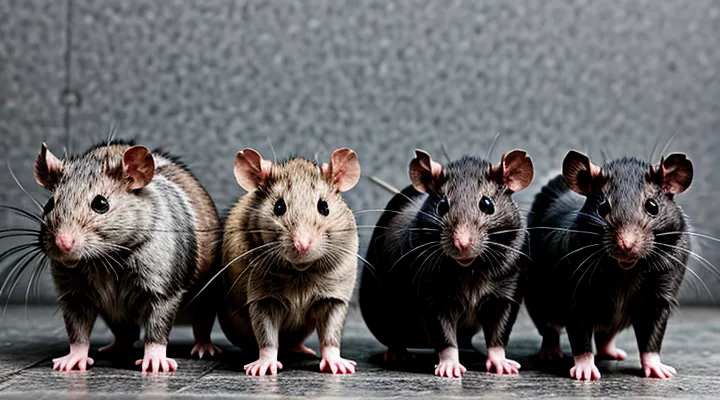
Rat Coat Color Genetics: An Overview
Basic Principles of Inheritance
Dominant and Recessive Alleles
Gray and black coat phenotypes in rats result from specific gene variants that follow classic Mendelian inheritance. The primary locus governing pigment intensity is the melanocortin‑1 receptor (Mc1r) gene, where a dominant allele (E) produces black eumelanin, while a recessive allele (e) reduces eumelanin synthesis, allowing phaeomelanin to dominate and generate gray or brown tones. In the presence of the dominant E allele, a single copy is sufficient to mask the effect of the recessive e allele, producing a solid black coat. Homozygosity for the recessive e allele eliminates black pigment, yielding a uniform gray coat.
Additional loci modify the basic black or gray outcome:
- Agouti (A) locus: dominant A adds banded hairs, creating a mixed pattern; recessive a produces solid coloration.
- Dilution (D) locus: dominant D maintains full pigment intensity; recessive d reduces pigment density, lightening black to charcoal gray and gray to a softer shade.
- Albino (c) locus: recessive c blocks melanin production entirely, resulting in a white coat regardless of other alleles.
Allelic interactions follow predictable ratios in controlled breeding:
- Cross of a heterozygous black (E/e) rat with a homozygous gray (e/e) produces a 1:1 distribution of black to gray offspring.
- Cross of a black carrier of the dilute recessive (D/d) with a non‑dilute black produces a 1:1 ratio of full‑black to diluted gray offspring.
- When both the Agouti and Dilution loci are heterozygous, phenotypic ratios expand to 9:3:3:1, reflecting combined dominant and recessive effects.
Understanding which alleles are dominant or recessive enables precise prediction of coat color outcomes in breeding programs, ensuring desired gray or black phenotypes are reliably produced.
Polygenic Traits
Gray and black fur in laboratory and wild‑type rats results from the combined action of several pigment‑related genes. Each gene contributes a modest effect on melanin synthesis, distribution, or degradation, and the final phenotype reflects the sum of these contributions.
The polygenic nature of coat coloration can be summarized as follows:
- Multiple loci encode enzymes (e.g., tyrosinase, dopachrome tautomerase) that regulate the conversion of tyrosine to eumelanin, the pigment responsible for dark shades.
- Modifier genes alter the intensity of melanin deposition, shifting the appearance from deep black to lighter gray.
- Allelic variations at each locus display incomplete dominance; heterozygotes produce intermediate pigment levels, which blend with effects from other loci.
- Epistatic interactions can suppress or enhance pigment production, allowing certain gene combinations to mask the influence of others and generate distinct shade patterns.
Because each contributing allele exerts a quantitative effect, the spectrum between pure black and various gray tones represents a continuum rather than discrete categories. Breeding experiments that track inheritance across generations reveal that offspring phenotypes often fall within the range predicted by additive genetic models, confirming the multigenic architecture.
Understanding these genetic mechanisms enables precise manipulation of coat color in experimental rat strains, facilitates the study of pigment‑related disorders, and provides a model for complex trait inheritance in mammals.
Gray Coat Varieties
Agouti-Based Gray Colors
Agouti
Agouti describes a pigment distribution in which each hair contains alternating bands of dark and light melanin, creating a speckled appearance. In rats, this pattern is produced by the agouti signaling protein (ASIP) that regulates melanocyte activity, shifting melanin synthesis between eumelanin (black/brown) and pheomelanin (yellow/red). The result is a coat that combines gray‑toned hairs with interspersed darker tips, giving the animal a muted, natural coloration.
Genetically, the agouti allele (A) is dominant over the non‑agouti (a) allele, which yields a solid coat of uniform color. When combined with genes that intensify eumelanin, such as the black (B) locus, the agouti pattern can appear as a darker, charcoal‑gray background with pronounced black bands. Conversely, interaction with the dilution (d) gene lightens the overall hue, producing a soft gray that retains the characteristic banding.
Key points of agouti expression in gray‑ and black‑focused rat varieties:
- Dominant A allele generates the banded hair structure; recessive a produces solid coloration.
- Presence of the B locus enhances eumelanin, deepening the dark bands within the agouti pattern.
- Dilution (d) reduces pigment intensity, shifting the visual effect toward a lighter gray while preserving banding.
- Modifier genes may alter the width of pigment bands, resulting in variations from subtle speckles to pronounced striping.
Understanding agouti’s genetic interactions clarifies why some gray and black rat breeds display a complex, multi‑tonal coat rather than a uniform shade. The pattern reflects a balance between melanin types regulated by ASIP and the modifying influence of additional coat‑color genes.
Cinnamon
Cinnamon denotes a reddish‑brown hue found in laboratory and pet rat populations. Although the primary focus of coat color studies emphasizes shades of gray and black, cinnamon represents a distinct pigment expression linked to the same melanogenesis pathways.
The cinnamon phenotype results from a specific allele of the A (agouti) locus that modifies eumelanin production, reducing black pigment and allowing pheomelanin to dominate. Consequently, the fur displays a uniform, warm brown rather than the typical slate or charcoal tones.
Key characteristics:
- Appearance: uniform reddish‑brown coat, often with a slightly lighter undercoat.
- Genetics: recessive allele at the A locus; homozygosity required for full expression.
- Compatibility: can be combined with dilute or albino modifiers, producing variations such as dilute cinnamon or cinnamon‑albino.
- Breeding considerations: carriers appear phenotypically normal; genetic testing confirms heterozygosity.
In breeding programs that target gray and black variants, cinnamon serves as a genetic reference point for tracing melanin pathway alterations. Its presence confirms the functional diversity of the melanocortin system, offering a measurable contrast to darker phenotypes and assisting in the validation of genotype‑phenotype correlations.
Non-Agouti Gray Colors
Blue
Blue rats exhibit a dilution of the standard black pigment, resulting from a recessive allele that reduces melanin concentration in the hair shaft. The phenotype appears as a uniform slate‑gray to steel‑blue coat, often accompanied by pinkish eye rims due to reduced pigment in the iris. This coloration is genetically linked to the same locus that produces classic black coats, with the blue allele representing a loss‑of‑function mutation that interferes with melanin synthesis.
Key characteristics of the blue coat include:
- Uniform coloration across the entire body, without the speckling typical of gray variants.
- Slightly lighter shade on the ventral surface, a common feature of many rat color morphs.
- Pink or light‑colored eyes, distinguishing it from the dark eyes of true black individuals.
Breeding blue rats requires pairing two carriers of the dilution allele or a blue individual with any rat possessing the allele in heterozygous form. Offspring ratios follow Mendelian expectations: a cross between two heterozygotes yields approximately 25 % blue, 25 % black, and 50 % carriers of the dilution gene. Selecting for blue coat consistently eliminates the dominant black allele from the lineage, allowing the establishment of a stable blue strain.
In comparative terms, blue rats occupy an intermediate position between the deepest black coats and the lighter gray variants. While gray rats derive from a separate set of dilution genes affecting both eumelanin and pheomelanin, blue rats specifically alter only the eumelanin pathway, preserving the overall darkness of the coat but shifting its hue toward cooler tones. This distinction is essential for hobbyists and researchers who require precise color identification when tracking genetic experiments or maintaining aesthetic standards in laboratory colonies.
Russian Blue
The Russian Blue is a domestic cat breed distinguished by a dense, short‑haired coat that displays a uniform, slate‑gray coloration. The pigment results from a dilution of the black eumelanin gene, producing a cool, bluish tone that mirrors the muted gray shades observed in certain rat fur varieties. The coat’s texture is fine yet resilient, reducing the visibility of surface scratches and maintaining a sleek appearance under varied lighting conditions.
Key attributes of the Russian Blue coat include:
- Uniform, solid gray hue with minimal patterning
- Silver‑tinged undercoat that enhances depth of color
- High density of cutaneous melanin, comparable to the deep black fur found in some rat strains
- Low propensity for color fading, owing to the genetic stability of the dilution allele
These characteristics make the Russian Blue a reference point for studying the genetic mechanisms that produce gray and black pigmentation across small mammals, including rats. The breed’s consistent coloration provides a model for correlating melanin expression levels with observable coat shades.
Platinum
Platinum represents a distinct shade within the gray‑black spectrum of rat pelage. The coloration results from a dilution of the standard black pigment, producing a silvery‑gray appearance that resembles metal. Genetic analysis identifies the dilution allele (d) as the primary factor, which modifies eumelanin production without affecting phaeomelanin. Homozygous d/d individuals display the full platinum effect, while heterozygous carriers exhibit a lighter gray tone.
Key characteristics of the platinum phenotype include:
- Uniformly light‑gray fur with a subtle metallic sheen.
- Darker pigmentation retained on the nose, ears, and tail, providing contrast.
- Eyes ranging from pink to red, reflecting reduced melanin in the iris.
- Consistent coat color across generations when the dilution allele is maintained through selective breeding.
Breeders seeking to preserve platinum must avoid introducing dominant black alleles, as these mask the dilution effect. Maintaining a closed line of d/d rats ensures stability of the coat, while occasional outcrosses to other gray or black lines require careful genetic tracking to prevent reversion to darker shades.
Black Coat Varieties
True Black
Genetics of Black
The black coat in laboratory and pet rats results from the production of eumelanin, the dark pigment synthesized by melanocytes. High levels of eumelanin mask the lighter pigments that normally generate gray or brown shades.
Key genetic elements influencing black coloration include:
- Melanocortin‑1 receptor (Mc1r) gene – activates eumelanin synthesis when functional.
- Agouti (A) locus – encodes an antagonist that limits eumelanin; loss‑of‑function alleles remove this restriction.
- Extension (E) locus – determines the presence of pigment overall; dominant alleles permit pigment deposition.
- Black (b) allele – a recessive mutation that eliminates agouti signaling, leading to uniform eumelanin.
Inheritance follows classic Mendelian patterns. The black phenotype appears when a rat carries two copies of the recessive b allele in the absence of functional agouti alleles. In heterozygous carriers (b/+) the coat remains gray or brown, illustrating recessive expression. Epistatic interactions occur when dominant extension alleles suppress pigment formation entirely, producing albino offspring regardless of the black allele status.
Modifier genes can subtly alter shade intensity, producing jet‑black, dark chocolate, or bluish tones. However, the core determinant remains the b allele’s disruption of agouti signaling, which permits uninterrupted eumelanin deposition across the fur.
Variations in Shade
Rats exhibiting gray and black pelage display a continuous range of shades rather than discrete color blocks. Shade variation originates from the interaction of multiple pigment genes, notably the Agouti, Extension, and dilution loci, which regulate the production and distribution of eumelanin and pheomelanin. Specific allelic combinations produce incremental changes in darkness, from pale ash to deep jet.
Genetic composition determines the baseline hue, while modifiers such as the Dilute (d) allele reduce melanin intensity, yielding softer grays. The presence of the Black (B) allele amplifies eumelanin, pushing the coloration toward richer blacks. Heterozygous configurations often result in intermediate tones that bridge the gray‑black spectrum.
External factors influence observed shade. Age-related melanocyte activity can darken coats over time. Nutritional status affects melanin synthesis; deficiencies may render fur lighter, whereas optimal nutrition sustains pigment density. Health conditions that alter hormone levels can also shift coloration temporarily.
Typical shade categories observed in gray‑black rats include:
- Light slate: faint gray, minimal contrast
- Dove gray: medium gray with subtle silver sheen
- Charcoal: dark gray approaching black, high melanin concentration
- Midnight black: uniform deep black, maximal eumelanin expression
Accurate identification of these shades assists breeders in selecting mating pairs to achieve desired coat outcomes and supports researchers in tracking phenotype inheritance across generations.
Black with Markings
Hooded Black
Hooded black rats display a striking contrast between a deep, uniform black dorsal surface and a lighter ventral area that may range from off‑white to pale gray. The phenotype results from a dominant allele that suppresses pigment production on the belly while allowing full melanin expression on the back and tail. Breeders recognize the pattern by the sharp line where the dark and light zones meet, often extending from the neck to the base of the tail.
Key attributes of the hooded black variety include:
- Color distribution: solid black on the head, back, and tail; clear demarcation of a lighter belly and sometimes a pale throat patch.
- Genetic basis: single‑gene inheritance (dominant hood gene) interacting with the black pigment gene; carriers exhibit the hooded pattern even when crossed with other coat colors.
- Health considerations: no specific health issues linked to the coat; standard rat health protocols apply.
- Breed standards: uniformity of the dark‑light boundary, absence of stray spots or patches outside the designated zones, and consistent intensity of black pigment across the dorsal area.
Understanding the hooded black pattern aids selective breeding programs aimed at preserving the visual integrity of the coat while maintaining overall vigor. Accurate identification of the dominant hood allele ensures predictable outcomes when pairing with other color morphs.
Berkshire
Berkshire rats exhibit a coat pattern that aligns closely with the gray‑dominant spectrum while incorporating distinct black pigmentation. The primary pigment, eumelanin, produces a deep black base; dilution genes modify this base to a slate‑gray tone, creating the characteristic Berkshire appearance. This combination results from the interaction of the agouti locus (A) with the dilution allele (d), where heterozygous expression yields a muted gray overlay on a black undercoat.
Key genetic markers:
- A locus (agouti): controls distribution of black pigment across the body.
- d allele (dilution): reduces melanin intensity, shifting black to gray.
- b allele (brown): may appear in minor patches, but is typically masked by dominant dilution.
Breeding considerations:
- Pairing a Berkshire with a pure black individual can reintroduce stronger black expression in offspring, useful for expanding color range.
- Maintaining the dilution allele requires careful selection; backcrossing to Berkshire parents preserves the gray‑black balance.
- Phenotypic assessment should focus on coat uniformity, avoiding individuals with excessive white spotting, which indicates unwanted modifier genes.
Health implications linked to coat color are minimal; however, the dense pigmentation offers modest protection against ultraviolet exposure, a factor observable in outdoor colony settings.
Irish
The Irish rat is a distinct lineage recognized for its consistent presentation of deep gray and solid black pelage. Breeders value the line for its predictable inheritance patterns, which simplify the production of uniform coat colors in litters.
Genetic basis
- The melanocortin‑1 receptor (MC1R) allele responsible for black coloration is homozygous in Irish rats, eliminating the expression of agouti or brown modifiers.
- A separate dilution allele, often denoted “d,” reduces the intensity of black pigment, producing the characteristic slate‑gray shade. Irish specimens typically carry a single copy of this dilution gene, resulting in a balanced gray that retains the solid appearance of the underlying black.
Phenotypic traits
- Coat: uniform, glossy, and devoid of spotting or patterning; gray individuals display a consistent slate hue, while black individuals exhibit a deep, matte finish.
- Eyes: dark brown to black, matching the coat intensity.
- Body conformation: standard laboratory rat morphology, with no skeletal or health issues linked to the coat genes.
Breeding considerations
- Pairing two black Irish rats yields a 100 % probability of black offspring, provided no external dilution alleles are introduced.
- Introducing a carrier of the dilution allele into the line produces predictable gray litters; the ratio follows Mendelian inheritance (approximately 50 % gray, 50 % black when one parent is heterozygous for the dilution gene).
- Maintaining the line’s purity requires avoidance of outcrosses with strains carrying dominant agouti or brown alleles, which would disrupt the solid coloration.
Overall, the Irish rat serves as a reliable source for researchers and hobbyists seeking consistent gray or black coat phenotypes, with straightforward genetic management and stable health profiles.
Factors Influencing Coat Color Expression
Environmental Factors
Diet
Rats with gray or black fur require a diet that supplies the precursors and cofactors necessary for melanin production. Adequate levels of the amino acid tyrosine, the primary substrate for melanin synthesis, directly affect pigment intensity. Copper and zinc act as enzymatic cofactors in the melanogenic pathway; deficiencies result in lighter or uneven coloration.
A balanced rodent feed should contain:
- Protein: 18–20 % of total calories, emphasizing sources rich in tyrosine (e.g., soy, fish meal).
- Fat: 5–7 % of calories, providing essential fatty acids for skin health.
- Vitamin A: 1 500–2 000 IU/kg, supporting epithelial maintenance.
- Vitamin B complex: especially B6 and B12, facilitating amino‑acid metabolism.
- Minerals: copper 10–15 ppm, zinc 30–40 ppm, selenium 0.3 ppm, to sustain enzymatic activity.
Feeding schedule influences coat condition. Offer fresh feed twice daily, maintain constant access to clean water, and replace uneaten food within 24 hours to prevent nutrient degradation. Observe fur quality weekly; any loss of sheen or emergence of pale patches may indicate dietary adjustment is needed.
Consistent provision of these nutrients preserves the characteristic darkness of gray and black coats, while supporting overall health and vitality.
Sunlight Exposure
Sunlight exposure directly influences the pigmentation of rats with gray and black fur. Ultraviolet (UV) radiation stimulates melanocyte activity, increasing melanin production in the epidermis and hair follicles. In darker coats, higher eumelanin concentrations provide greater UV protection, while lighter gray coats exhibit a more pronounced response to UV‑induced melanin synthesis.
The physiological consequences of regular sun exposure include:
- Enhanced melanin density, which darkens hair shafts and reduces susceptibility to UV‑induced DNA damage.
- Accelerated hair growth cycles, as UV‑triggered hormonal changes promote follicular activity.
- Potential bleaching of gray fur when exposure is excessive, leading to a pallid appearance due to melanin degradation.
- Increased risk of skin lesions in areas lacking dense pigmentation, particularly on ventral surfaces.
Behavioral adaptations mitigate these effects. Rats typically seek shelter during peak daylight hours, limiting direct UV contact. When outdoors, they position themselves with the sun at a low angle, reducing the intensity of radiation on the dorsal coat. Controlled exposure, such as brief daily intervals, can maintain optimal melanin levels without compromising skin health.
Genetic Modifiers
Dilution Genes
Dilution genes modify the intensity of melanin pigments in rat fur, producing lighter versions of the standard black and gray coats. The primary locus, designated d, encodes an enzyme that reduces the production of eumelanin, the pigment responsible for dark coloration. When the recessive dd genotype is present, the usual black coat appears as a steel‑blue shade, while standard gray (often termed “dove” or “lilac”) becomes a pale, silvery‑blue hue.
Key genetic characteristics:
- Allelic relationship: The dominant D allele yields full pigmentation; the recessive d allele causes dilution. Heterozygotes (Dd) display normal coloration, masking the dilution effect.
- Phenotypic expression:
- dd on a black background → steel‑blue coat.
- dd on a gray background → lilac (pale gray) coat.
- Interaction with other loci: Dilution acts independently of the agouti (A) and albino (c) loci, but when combined with other modifiers (e.g., the e allele for coat pattern), the final appearance may vary.
- Inheritance pattern: Dilution follows Mendelian recessive inheritance; two carriers (Dd) produce a 25 % chance of a diluted offspring per litter.
Breeders seeking consistent steel‑blue or lilac rats must ensure both parents carry the dd genotype. Genetic testing or careful pedigree analysis can confirm carrier status, preventing unexpected phenotypes in litters.
Marking Genes
Marking genes determine the distribution of pigment patches that modify the basic gray or black coloration of laboratory and pet rats. The primary loci involved include:
- Agouti (A) – directs the production of a banded hair pigment, converting solid black to a sable pattern; in gray backgrounds it creates a lighter dorsal stripe.
- Extension (E) – controls the synthesis of eumelanin; loss‑of‑function alleles reduce black pigment, allowing underlying gray tones to dominate.
- Dilution (D) – reduces pigment intensity, turning deep black to a slate gray and lightening gray coats to a silvery hue.
- Spotting (S) – introduces white or pale patches on the flanks, belly, or head; expression varies with allele dosage.
- Harlequin (H) – produces irregular, high‑contrast patches that can overlay gray or black fields, often creating a marbled appearance.
- Mack (M) – restricts pigment to specific body regions, generating a “mask” of darker fur on a lighter background.
Interactions between these loci produce the full spectrum of patterns observed in rats with predominantly gray or black coats. For example, a rat carrying the recessive e allele (extension) together with a dominant D allele will display a diluted gray coat with minimal black pigment, while the presence of S can add distinct white markings that break the uniformity of the base color. Epistatic relationships, such as the dominance of the Agouti allele over Extension, further refine the final phenotype. Understanding these genetic mechanisms enables precise breeding strategies for desired coat appearances.
Breeding for Specific Gray and Black Hues
Ethical Considerations in Breeding
Breeding rats for specific coat colors, such as gray and black, raises several ethical issues that must be addressed by breeders, researchers, and regulatory bodies. The primary concern is the welfare of the animals; selective breeding should not compromise health, cause genetic defects, or increase susceptibility to disease. Breeders must monitor litters for inherited conditions linked to pigmentation genes, such as ocular abnormalities or skin sensitivity, and discontinue lines that demonstrate consistent health problems.
Key ethical principles include:
- Genetic diversity: Maintaining a broad gene pool prevents inbreeding depression and preserves resilience against pathogens.
- Transparency: Documentation of breeding practices, health screenings, and lineage provides accountability and enables informed decisions by buyers and institutions.
- Purpose justification: Breeding for aesthetic traits should be justified by scientific, educational, or conservation goals rather than solely by market demand.
- Humane handling: Standard operating procedures must guarantee proper housing, nutrition, enrichment, and veterinary care throughout the animals’ lives.
- Regulatory compliance: Adherence to national and international animal welfare legislation, as well as institutional animal care guidelines, is mandatory.
Breeders who ignore these considerations risk producing animals with reduced quality of life, undermining public trust in scientific research, and violating ethical standards upheld by the scientific community. Implementing rigorous health monitoring, avoiding excessive line narrowing, and providing clear records constitute responsible practices when developing gray and black coat variants.
Understanding Color Standards
American Fancy Rat and Mouse Association («AFRMA») Standards
The American Fancy Rat and Mouse Association (AFRMA) defines precise criteria for gray and black coat varieties, which serve as the benchmark for exhibition and breeding programs. Standards address hue, pattern, texture, and genetic consistency, ensuring uniformity across judged specimens.
Gray coats are categorized into three primary shades: steel, charcoal, and dove. Steel gray requires a uniform, metallic sheen with no brown undertones; charcoal gray demands a deep, uniform darkness resembling soot; dove gray calls for a soft, muted tone with a slight blue tint. All gray varieties must exhibit a consistent density of hair throughout the body, with the ventral side matching the dorsal hue in intensity.
Black coats are limited to a single, true black classification. The coat must display a solid, glossy appearance with no iridescence, fading, or spotting. The ventral surface must mirror the dorsal color precisely, and the fur should be dense, smooth, and free of any white or gray hairs.
AFRMA specifications for these colors include:
- Minimum weight and body condition standards that must accompany color assessment.
- Prohibited markings: any white patches, spots, or mixed colors on a gray or black specimen.
- Acceptable hair length: short to medium, with no excessive curl that could alter the visual uniformity of the coat.
- Genetic verification: breeders are encouraged to document lineage to confirm the inheritance of the desired gray or black phenotype.
Compliance with these standards determines eligibility for show classes, breeding endorsements, and official recognition within the rat fancy community.
National Fancy Rat Society («NFRS») Standards
The National Fancy Rat Society establishes precise criteria for evaluating gray and black coat varieties in show‑quality rats. Standards focus on hue, uniformity, and permissible markings, providing a uniform framework for judges and breeders.
Gray coats are classified into three primary shades: steel, mouse, and blue‑gray. Each shade requires a consistent color throughout the body, with the head, ears, and tail matching the designated tone. Acceptable minor variations include a faint dusting of white on the whisker pads; any distinct patches or mottling disqualify the specimen.
Black coats are defined by a deep, solid coloration without iridescence. The following elements must be present:
- Uniform black pigment covering fur, skin, and whiskers.
- Absence of any visible white, gray, or brown spots.
- Smooth, glossy texture indicating healthy hair growth.
- No color dilution on the tail, paws, or ventral surface.
Compliance with these specifications determines eligibility for championship status and influences breeding decisions within the NFRS community.