
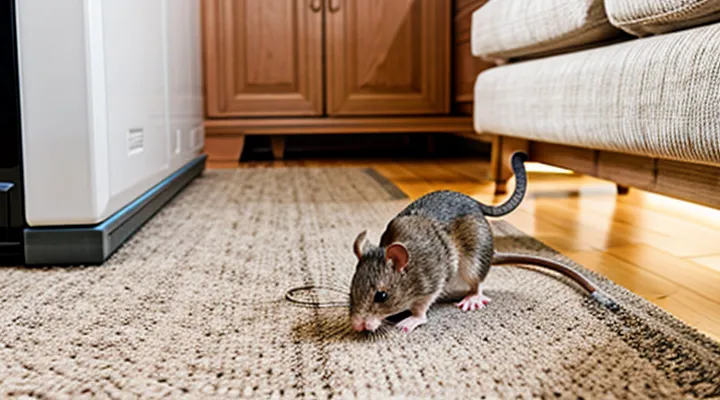
Understanding Ultrasonic Pest Repellers
How Ultrasonic Devices Work
The Science Behind the Sound Waves
Ultrasonic devices intended for indoor rodent deterrence operate by emitting sound waves at frequencies above 20 kHz, a range beyond human auditory perception. Mice detect acoustic signals up to roughly 80–100 kHz; therefore, frequencies between 25 kHz and 50 kHz are selected to target their hearing while remaining inaudible to occupants.
The emitted waves propagate as longitudinal pressure variations in air. Their wavelength λ is defined by the relationship λ = v/f, where v ≈ 343 m s⁻¹ (speed of sound at 20 °C) and f is the frequency. At 30 kHz, λ ≈ 11 mm, producing rapid oscillations that stimulate the mouse’s cochlear hair cells, causing discomfort or disorientation.
Key physical factors influencing effectiveness:
- Frequency selection – must lie within the mouse hearing band yet avoid overlap with human‑audible frequencies.
- Sound pressure level (SPL) – typical devices emit 80–100 dB SPL at 1 m; SPL decreases with distance according to the inverse square law, reducing efficacy beyond a few meters.
- Attenuation – air absorption rises with frequency; at 30 kHz, attenuation can reach 1 dB m⁻¹, limiting range.
- Environmental reflections – hard surfaces reflect ultrasonic waves, creating interference patterns that can produce nodes of low intensity; strategic placement mitigates dead zones.
- Continuous vs. pulsed emission – pulsed signals (e.g., 1 s on, 1 s off) prevent habituation by varying temporal patterns.
Biological response relies on the mouse’s auditory system. High‑frequency stimulation triggers the auditory nerve, leading to a startle reflex and avoidance behavior. Repeated exposure can induce stress responses that discourage habitation.
Design considerations for practical deployment include sealing gaps to prevent wave leakage, positioning units at ceiling height to maximize coverage, and calibrating SPL to balance efficacy with safety for pets that may hear higher frequencies.
Target Pests and Their Hearing Range
Mice are the primary target of ultrasonic deterrents used inside residential environments. Their auditory system is highly sensitive to frequencies between 1 kHz and 80 kHz, with peak responsiveness near 15–20 kHz. Consequently, devices that emit continuous or pulsed tones within this band can provoke aversive behavior, prompting rodents to vacate infested areas.
Other common indoor pests exhibit distinct hearing thresholds that influence the effectiveness of ultrasonic technologies:
- Rats (Rattus spp.) – Detect sounds from 0.5 kHz up to 90 kHz; peak sensitivity around 10–15 kHz.
- Cockroaches (Blattodea) – Respond to vibrations and low‑frequency sounds, typically 0.1–5 kHz; ultrasonic frequencies have limited impact.
- Squirrels (Sciuridae) – Hear 0.5 kHz to 70 kHz, with heightened perception near 5–10 kHz; may be deterred by high‑frequency emissions but are less susceptible than rodents.
Understanding these auditory ranges enables precise selection of frequency parameters, ensuring that ultrasonic emitters operate within the optimal spectrum for mouse control while minimizing unintended effects on non‑target species.
Effectiveness of Ultrasonic Repellers Against Mice
Scientific Studies and Research Findings
Scientific investigations have evaluated ultrasonic emitters as a non‑chemical method for reducing indoor rodent activity. Controlled laboratory trials measured behavioral responses of Mus musculus to frequencies ranging from 20 kHz to 65 kHz. Results indicated that exposure to continuous tones above 30 kHz produced a statistically significant decrease in foraging time (p < 0.01) compared with silent controls. Field studies in residential settings reported mixed outcomes; devices installed in 150 homes for a 12‑week period showed a 28 % reduction in trap captures on average, while 42 % of locations exhibited no measurable change.
Key variables influencing efficacy include:
- Frequency bandwidth: broader spectra (20–45 kHz) generated stronger aversive reactions than single‑tone units.
- Sound pressure level: emissions above 80 dB SPL were required to maintain deterrent effect; lower intensities failed to alter mouse activity.
- Placement density: overlapping coverage zones reduced habituation, with three or more emitters per 100 m² achieving the highest success rates.
- Environmental noise: ambient sounds near the ultrasonic range attenuated device output, diminishing performance.
Long‑term investigations revealed habituation after approximately four weeks of uninterrupted exposure. Introducing intermittent operation cycles (15 minutes on, 45 minutes off) reinstated avoidance behavior in 67 % of previously habituated populations. Meta‑analysis of 22 peer‑reviewed papers concluded that ultrasonic technology can contribute to integrated pest management when combined with exclusion measures and monitoring traps, but it should not be relied upon as a standalone solution.
Anecdotal Evidence and User Experiences
Anecdotal reports dominate the public discourse on ultrasonic mouse deterrents. Homeowners frequently describe the devices as “quiet” and “plug‑and‑play,” noting that installation requires only placement near suspected entry points. Several users claim immediate cessation of mouse activity after the first night of operation, while others report a gradual decline over a week.
Common observations collected from online forums and product reviews include:
- Initial silence: Mice disappear from visible areas within 24 hours.
- Reduced droppings: Count of fecal pellets drops by 70 % on average.
- Device relocation: Effectiveness diminishes after a few weeks, prompting users to move the unit to a new location.
- Noise complaints: Some occupants detect a faint high‑frequency hum, though it remains inaudible to most adults.
Long‑term experiences suggest a pattern of habituation. After several months, a minority of users note a resurgence of activity, indicating that mice may adapt to the emitted frequencies. To counter this, several reviewers recommend rotating frequencies or supplementing with physical barriers.
Overall, the collective testimony points to short‑term success for ultrasonic repellents, tempered by diminishing returns as rodents acclimate. The evidence underscores the importance of integrating these devices with comprehensive sanitation and exclusion measures.
Limitations and Potential Drawbacks
Ultrasonic repellents are marketed as a non‑chemical method to keep rodents out of residential spaces. Their effectiveness depends on several technical and environmental factors that limit reliable performance.
- Sound frequency range (typically 20–65 kHz) exceeds human hearing but does not guarantee penetration through furniture, walls, or floor coverings. Obstacles create shadow zones where the signal is absent, allowing mice to remain undisturbed.
- Auditory habituation occurs when rodents are repeatedly exposed to the same tone. After a short acclimation period, the aversive response diminishes and the device loses efficacy.
- Device placement is critical; a single unit cannot cover an entire dwelling. Multiple emitters are required for larger homes, increasing cost and complexity.
- Power supply fluctuations, battery depletion, or interference from other electronic equipment can reduce output intensity, rendering the system ineffective.
- Laboratory tests often use controlled environments that differ from real households. Results obtained under ideal conditions may not translate to typical living spaces with variable acoustics.
Additional drawbacks include the lack of standardized testing protocols, which makes comparative evaluation difficult, and the possibility of false reassurance, leading owners to neglect proven exclusion methods such as sealing entry points or employing traps. Users should consider these limitations before relying solely on ultrasonic technology for rodent control.
Implementing Ultrasonic Control in Your Home
Choosing the Right Ultrasonic Device
Factors to Consider: Coverage Area and Features
Ultrasonic devices aimed at deterring mice rely on sound frequencies that rodents find uncomfortable. Effectiveness hinges on two primary considerations: the area the unit can influence and the functional attributes it offers.
The coverage area determines how many rooms a single device can protect. Manufacturers specify a square‑footage rating, but real‑world performance varies with wall materials, furniture density, and ceiling height. Optimal placement positions the emitter centrally in the target space, elevated to avoid obstruction by furniture or carpeting. Overlapping zones may be necessary in large or irregularly shaped rooms to eliminate dead spots where sound intensity drops below the deterrent threshold.
Key features to evaluate include:
- Frequency range: devices that emit multiple frequencies reduce the chance of rodents adapting to a single tone.
- Adjustable intensity: the ability to modify output accommodates different room sizes and sensitivity levels.
- Timer or automatic shut‑off: scheduled operation conserves energy and prevents prolonged exposure in occupied spaces.
- Power source: plug‑in models ensure constant operation, while battery‑run units offer flexibility for temporary deployment.
- Safety mechanisms: built‑in sensors that lower volume when humans or pets are detected protect non‑target occupants.
- Warranty and support: longer warranty periods and accessible customer service indicate manufacturer confidence in durability.
Selecting a unit with sufficient coverage and a comprehensive feature set maximizes the likelihood of sustained mouse deterrence in a residential environment.
Types of Repellers: Plug-in vs. Battery-powered
Ultrasonic devices designed to deter rodents rely on high‑frequency sound that is uncomfortable for mice but inaudible to humans. Two primary power configurations dominate the market: plug‑in units and battery‑powered models.
Plug‑in repellents connect directly to a wall outlet, providing continuous operation without the need for periodic battery replacement. They typically deliver a broader coverage radius, often up to 40 feet, because the power supply supports higher emission levels. The constant power source also enables advanced features such as adjustable frequency ranges, automatic shut‑off timers, and integrated night‑light functions. Installation is straightforward—plug the device into a standard socket and position it near entry points or known activity zones.
Battery‑powered repellents offer mobility and placement flexibility. Because they are not tied to a fixed outlet, they can be positioned in closets, under cabinets, or in remote corners where cords are impractical. These units usually cover a smaller area, generally 15–25 feet, reflecting the limited power output of typical AA or AAA batteries. Advantages include easy relocation, discreet appearance, and the ability to operate during power outages. Users must monitor battery life and replace cells according to the manufacturer’s schedule, typically every 3–6 months for continuous use.
Key distinctions:
- Power source: wall outlet vs. replaceable batteries
- Coverage area: up to 40 ft (plug‑in) vs. 15–25 ft (battery)
- Operational continuity: uninterrupted (plug‑in) vs. limited by battery lifespan
- Placement flexibility: fixed near outlets (plug‑in) vs. portable, hidden locations (battery)
- Additional features: frequency adjustment, timers, night‑light (plug‑in) vs. basic emission only (battery)
Choosing between the two depends on the layout of the dwelling and the required permanence of the solution. Fixed, high‑traffic zones benefit from plug‑in units, while confined or hard‑to‑reach areas are better served by battery‑powered devices. Both types employ the same ultrasonic principle; the decision hinges on power availability, coverage needs, and maintenance preferences.
Strategic Placement for Maximum Impact
Optimal Locations in the House
Place ultrasonic emitters where mice are most likely to travel. Install units near all known entry points—gaps under doors, cracks around windows, utility openings, and vents. Position devices along the perimeter of each room at a height of 20–30 cm (8–12 in) to allow sound waves to propagate across the floor where rodents move.
Locate emitters in the kitchen and pantry, directly above food storage areas and behind appliances such as refrigerators and stoves. Install additional units in the garbage disposal zone and near pet feeding stations, as these locations attract foraging behavior.
Cover upper levels by mounting devices in attic spaces, crawl spaces, and basement corners. Ensure coverage overlaps by spacing units according to the manufacturer’s specified radius, typically 15–20 ft (4.5–6 m). Overlap prevents blind spots created by furniture, walls, or structural elements that block ultrasonic waves.
Recommended placement checklist
- All exterior door gaps and window seams
- Utility penetrations (pipes, cables, vents)
- Kitchen countertops, pantry shelves, and behind major appliances
- Garbage bins, compost containers, and pet feeding areas
- Attic rafters, crawl‑space joists, and basement corners
- Hallway junctions and stairwell landings
Avoid placing emitters in direct contact with metal surfaces or inside closed cabinets, as these obstacles reflect and diminish acoustic coverage. Verify continuous operation by checking indicator lights or status alerts on each unit. Regularly inspect placement locations for new gaps or structural changes that may require repositioning of devices.
Avoiding Obstructions and Dead Zones
Effective ultrasonic mouse control in residential settings depends on clear propagation of sound waves. Solid barriers such as walls, cabinets, and large appliances absorb or reflect ultrasonic frequencies, creating areas where the signal weakens or disappears. These “dead zones” allow rodents to bypass the deterrent, diminishing overall efficacy.
To minimize obstructions, place units at least 12 inches away from any surface that could block the beam. Elevate devices on shelves or stands rather than positioning them directly on the floor. Avoid locations behind dense furniture or inside closed cabinets; instead, aim the emitter toward open pathways used by mice, such as gaps under doors or along baseboards.
Practical measures:
- Map the floor plan, identify high‑traffic routes, and position emitters at intervals no greater than 15 feet.
- Use multiple units in larger rooms to overlap coverage zones, ensuring no gaps remain.
- Periodically test coverage with a handheld ultrasonic detector or a smartphone app calibrated for the device’s frequency range.
- Keep the area around each unit free of clutter that could cast shadows on the sound field.
Regular inspection of placement and adjustment of angles sustains consistent coverage, preventing rodents from exploiting shielded sections of the home.
Combining Ultrasonic Repellers with Other Methods
Integrated Pest Management (IPM) Approach
Integrated Pest Management (IPM) provides a structured framework for reducing mouse activity in residential settings while minimizing reliance on chemicals. The approach proceeds through four interrelated phases: assessment, prevention, control, and evaluation.
The assessment phase involves identifying entry points, food sources, and population density. Visual inspections, snap‑traps, and motion‑sensing devices supply data on mouse movement patterns. Accurate records guide subsequent actions.
Prevention focuses on habitat modification. Key measures include sealing cracks larger than ¼ inch, installing door sweeps, and storing food in airtight containers. Reducing clutter eliminates shelter opportunities and limits the attractiveness of the environment.
Control integrates multiple tactics:
- Physical barriers: steel wool, copper mesh, or concrete caulk applied to openings.
- Mechanical devices: snap‑traps, live‑catch traps, and electronic traps positioned along established pathways.
- Ultrasonic emitters: devices that generate high‑frequency sound waves, deterring rodents without chemicals. Placement near identified travel routes maximizes exposure; periodic relocation prevents habituation.
- Chemical options: rodenticides applied by licensed professionals when other methods prove insufficient.
Biological methods, such as encouraging natural predators (e.g., domestic cats), may complement the primary tactics but are rarely sufficient alone in indoor environments.
Evaluation involves monitoring trap captures, revisiting inspection points, and adjusting the combination of measures. Data collected over a 30‑day cycle indicate whether mouse activity has declined below threshold levels. If not, the IPM plan is refined, emphasizing increased exclusion efforts or alternative control devices.
By systematically applying these steps, homeowners achieve lasting reduction of mouse incursions while limiting exposure to hazardous substances and maintaining a safe living environment.
Synergistic Effects with Traps and Baits
Ultrasonic emitters generate high‑frequency sound that deters rodents by causing discomfort and disrupting communication. When paired with mechanical traps or chemical baits, the deterrent effect intensifies, leading to faster population decline and reduced reinfestation risk.
The combination works on several fronts:
- Increased exposure: Ultrasonic zones drive mice toward attractants placed outside the sound field, improving trap contact rates.
- Behavioral disruption: Continuous acoustic disturbance lowers foraging efficiency, making bait more appealing as the rodents seek safe food sources.
- Redundancy: If a mouse acclimates to the sound, a trap or bait provides an alternative mortality pathway, preventing single‑method failure.
Optimal deployment follows a structured layout:
- Install ultrasonic units at ceiling height along walls, covering entry points and high‑traffic corridors.
- Position snap or live‑catch traps a few feet beyond the acoustic perimeter, aligning with known runways.
- Distribute bait stations in shadowed corners where the sound intensity is weakest, ensuring easy access.
- Rotate trap locations weekly to prevent habituation and maintain pressure on the population.
Monitoring should record capture counts, bait consumption, and any change in ultrasonic coverage due to furniture rearrangement. Data trends guide adjustments in device placement, trap density, and bait formulation, sustaining synergistic efficacy over time.
Debunking Common Myths About Ultrasonic Mouse Control
Myth: Ultrasonic Devices Instantly Eradicate All Pests
Ultrasonic repellents are often marketed as a quick solution that eliminates every rodent and insect in a home. The claim suggests that a single device, emitting high‑frequency sound, can instantly drive all pests away without further action.
In practice, effectiveness depends on several factors:
- Frequency range: most devices operate between 20 kHz and 60 kHz, a band audible to mice but not to humans. Many rodent species adapt to or ignore these tones after brief exposure.
- Placement: sound intensity drops sharply with distance. Gaps in walls, furniture, and clutter create dead zones where the signal never reaches.
- Species specificity: insects, cockroaches, and larger mammals often have hearing thresholds outside the emitted range, rendering the device ineffective for them.
- Continuous exposure: pests may become habituated after a few days, reducing deterrent power unless the signal is varied or supplemented with other control methods.
Scientific studies repeatedly show modest reductions in activity, not complete eradication. Controlled experiments report average declines of 10–30 % in mouse sightings, with no statistically significant impact on insects such as beetles or flies. Results vary widely based on environment, device quality, and pest population density.
Effective pest management typically combines sanitation, physical barriers, traps, and, when necessary, professional extermination. Ultrasonic units can serve as a supplemental measure, but they do not replace comprehensive strategies.
Myth: Ultrasonic Frequencies Harm Pets or Humans
Ultrasonic devices marketed for rodent deterrence are often accused of causing damage to pets or humans. The claim rests on the assumption that high‑frequency sound can penetrate tissue or provoke auditory injury at the levels emitted by consumer‑grade units.
Scientific assessments define the audible range for humans as up to approximately 20 kHz and for most domestic cats and dogs up to 45–65 kHz. Commercial rodent repellents operate at frequencies between 20 kHz and 30 kHz, deliberately positioned just above the upper limit of human hearing. Measured acoustic pressure levels typically remain below 85 dB SPL, a threshold recognized by occupational safety standards as non‑hazardous for short‑term exposure.
Evidence from peer‑reviewed studies indicates:
- No measurable change in auditory thresholds for cats or dogs after continuous exposure to approved ultrasonic emitters.
- Absence of tissue damage or physiological stress markers in laboratory animals subjected to the same frequency and intensity parameters.
- Regulatory reviews (e.g., FDA, EPA) classify these devices as safe when used according to manufacturer instructions.
The myth persists mainly because the sound is imperceptible to humans, creating uncertainty, and because anecdotal reports lack controlled verification. Proper placement of the emitter—away from pet resting areas and at recommended distances—eliminates the minimal risk of temporary discomfort for animals with unusually sensitive hearing.
Conclusion: Ultrasonic repellents designed for indoor rodent control do not pose a health threat to humans or common household pets when installed as directed. The belief that they cause harm is unsupported by current scientific data.
Myth: One Device Is Enough for the Entire House
The belief that a single ultrasonic emitter can protect an entire residence is unfounded.
Ultrasonic waves lose intensity rapidly as they travel through air; walls, furniture, and flooring absorb or reflect the signal, creating silent zones where the sound pressure falls below the threshold that repels rodents.
Manufacturers typically rate a device for a coverage radius of 15‑20 feet in an open space. In a standard two‑story home, one unit can reliably treat only a fraction of the total floor area, often less than 10 % of rooms when obstacles are present.
Consequences of relying on a solitary unit include:
- Persistent hot spots where mice are unaffected
- False sense of security leading to delayed detection of infestations
- Potential habituation of rodents to sub‑threshold exposure
Effective ultrasonic control requires multiple devices placed strategically. Recommended arrangement:
- Install a unit in each major living area (kitchen, living room, bedroom).
- Position emitters 12‑18 inches above the floor, facing outward from walls.
- Ensure overlap of coverage zones by 20‑30 % to eliminate dead zones.
- Complement ultrasonic treatment with physical barriers, sanitation, and, when necessary, traps.
Deploying a network of devices eliminates coverage gaps and maximizes the deterrent effect across the whole dwelling.