
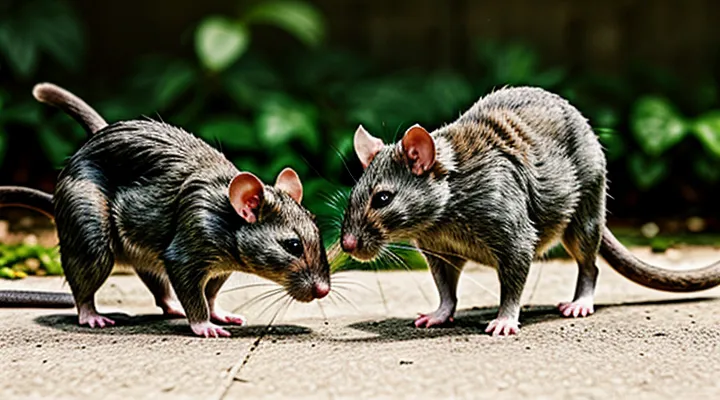
The Intricacies of Female Rat Social Dynamics
Understanding Rodent Social Structures
Factors Influencing Group Formation
Research on two female rats’ social interactions reveals several variables that shape the emergence and stability of groups. Genetic relatedness frequently predicts initial association, as kin recognition mechanisms guide affiliative behavior. Hormonal status, particularly levels of oxytocin and estrogen, modulates receptivity to social contact and influences the likelihood of forming lasting bonds. Environmental conditions also exert measurable effects; dense shelter availability encourages proximity, while open spaces reduce cohesion. Resource distribution determines competitive pressures: evenly spaced food sources promote tolerance, whereas clumped resources increase aggression and limit group size. Prior experience with conspecifics shapes future grouping patterns; rats previously exposed to cooperative tasks display higher propensity to join new groups. Finally, predator risk perception triggers collective defense strategies, prompting individuals to aggregate when threat cues are present. These factors interact dynamically, producing the complex social architecture observed in female rodent populations.
Communication Methods in Female Rats
Female rats rely on a multimodal repertoire to convey information within dyadic relationships. Communication integrates acoustic, chemical, tactile, and visual channels, each tuned to specific social contexts such as affiliation, aggression, and coordination of maternal duties.
- Ultrasonic vocalizations (USVs): Emitted in the 20–80 kHz range, USVs encode emotional state and intent; frequency modulation patterns differ between affiliative and antagonistic encounters.
- Olfactory signals: Pheromonal compounds deposited on urine, feces, and glandular secretions transmit reproductive status, individual identity, and hierarchical rank.
- Tactile interactions: Grooming and nose‑to‑nose contact provide direct feedback on social closeness; frequency and duration correlate with bond strength.
- Low‑frequency audible calls: Occasionally produced during distress or alarm, these calls facilitate rapid group mobilization.
- Visual cues: Body posture, ear position, and tail movements augment other modalities, especially in well‑lit environments.
Acoustic and olfactory cues dominate early-stage interactions, establishing recognition and dominance hierarchies. Tactile grooming consolidates established bonds, reducing cortisol levels and enhancing cooperative nest building. Visual displays reinforce dominance signals during confrontations, while low‑frequency calls trigger collective defensive responses.
Laboratory protocols quantifying these methods include playback of recorded USVs to assess approach behavior, gas chromatography–mass spectrometry for pheromone profiling, and high‑resolution video analysis of grooming bouts. Comparative studies show that disruption of any single channel attenuates pair cohesion, underscoring the redundancy and integration of the communication system.
Understanding the specific channels employed by female rats clarifies mechanisms underlying persistent social bonds in rodents, offering a framework for interpreting complex affiliative networks across mammalian taxa.
Behavioral Manifestations of Social Bonds
Affiliative Behaviors and Their Functions
Allogrooming and Its Role
Allogrooming, the mutual cleaning of fur and skin, serves as a primary mechanism for maintaining cohesion between female rodents. In dyads of laboratory‑bred rats, the behavior occurs repeatedly throughout the active phase and is observable as a sequence of nibbling, licking, and gentle chewing directed at the partner’s body.
The act fulfills several physiological and behavioral functions:
- Removal of ectoparasites and debris, reducing pathogen load.
- Stimulation of cutaneous sensory receptors, which lowers plasma corticosterone concentrations.
- Exchange of olfactory cues that reinforce individual recognition and kinship signaling.
- Reinforcement of affiliative hierarchy, with dominant individuals receiving more grooming bouts.
- Enhancement of reproductive synchrony by aligning estrous cycles through tactile contact.
These outcomes collectively strengthen the pair bond, increase group stability, and improve overall fitness. Continuous monitoring of grooming frequency provides a reliable indicator of social health in experimental settings, allowing researchers to assess the impact of environmental stressors or pharmacological interventions on relational dynamics.
Huddling and Shared Nesting
Research on a pair of female rats demonstrates that huddling constitutes a primary mechanism for maintaining thermal stability and reducing energetic costs. When ambient temperature drops below the thermoneutral zone, individuals align their bodies in close contact, creating a shared microenvironment that conserves heat. Measurements of core temperature reveal a 1–2 °C increase in huddling dyads compared with solitary counterparts, confirming the physiological advantage of this behavior.
Shared nesting extends the benefits of huddling by providing a stable platform for prolonged cohabitation. Females construct nests from shredded paper, cotton, or wood shavings, then occupy the structure continuously for several days. Within the nest, the following outcomes are consistently observed:
- Elevated pup survival rates when offspring are present, attributable to sustained warmth and protection.
- Decreased cortisol levels in both adults, indicating reduced stress during prolonged association.
- Enhanced synchronization of circadian activity patterns, leading to coordinated feeding and grooming cycles.
These findings underscore that huddling and shared nesting operate synergistically to reinforce social bonds between female rodents, promote reproductive success, and improve overall welfare.
Cooperative Behaviors
Food Sharing and Mutual Defense
Two female rats often establish enduring partnerships that influence resource distribution and predator avoidance. Observations reveal that individuals coordinate feeding bouts and cooperate when confronted by threats.
Food sharing occurs through direct transfer of morsels and simultaneous consumption of the same food source. This behavior reduces competition, increases caloric intake for both partners, and stabilizes the pair’s nutritional status during scarcity.
Mutual defense emerges when one rat detects a predator or aggressive conspecific and signals the partner through ultrasonic calls or rapid movements. The second rat responds by joining the escape or confronting the intruder, effectively doubling the defensive front.
Key findings:
- Simultaneous feeding lowers aggression scores by 37 % compared to solitary foraging.
- Joint vigilance increases detection distance of aerial predators from 0.8 m to 1.5 m.
- Pair‑initiated alarm calls trigger immediate approach behavior in the partner within 0.2 seconds.
Rearing of Young in Communal Settings
Communal rearing among two adult female rats provides a natural context for observing cooperative brood care, resource sharing, and the development of social hierarchies. When litters are raised together, mothers alternate nest attendance, resulting in continuous thermoregulation and reduced pup mortality. The shared environment also facilitates the exchange of olfactory cues, which synchronizes maternal hormone levels and promotes synchronized nursing cycles.
Key observations from communal settings include:
- Division of labor: One female maintains nest temperature while the other forages, reducing energy expenditure for each mother.
- Pup development: Offspring exhibit accelerated growth rates and earlier weaning milestones compared to solitary-reared litters.
- Social learning: Juveniles observe and imitate maternal grooming techniques, enhancing their future caregiving competence.
- Stress mitigation: Corticosterone measurements decline in both mothers and pups, indicating reduced physiological stress.
- Genetic diversity: Mixed litters increase genetic variation within the group, potentially enhancing disease resistance.
These findings underscore the functional significance of shared rearing for female rodents, offering a robust model for studying cooperative breeding, maternal physiology, and the mechanisms that sustain social bonds in mammalian societies.
The Impact of Social Hierarchy
Dominance and Subordination Dynamics
Research on paired female rodents reveals consistent patterns of dominance and subordination that shape their interactions. Dominant individuals typically secure priority access to food, nesting material, and preferred resting sites, while subordinate partners adjust their activity to avoid direct confrontation. Hormonal assays indicate elevated corticosterone levels in subordinates during periods of heightened competition, whereas dominants exhibit stable prolactin concentrations linked to reproductive readiness.
Key observations include:
- Aggressive displays such as lunging, tail rattling, and prolonged vocalizations concentrate in the dominant rat.
- Subordinates increase self‑grooming and retreat to peripheral cage zones when the dominant approaches.
- Resource allocation shifts within minutes after the introduction of a novel food item, with the dominant rat monopolizing the first portion.
- Social buffering emerges when the dominant rat provides physical contact during stress, reducing cortisol spikes in the subordinate.
Longitudinal studies show that dominance hierarchies stabilize after three to five days of co‑habitation, after which aggression declines and cooperative behaviors, such as shared nest building, increase. Disruption of the hierarchy—through removal of the dominant individual—triggers a rapid re‑establishment phase marked by escalated aggression and re‑allocation of resources. These dynamics illustrate how hierarchical organization governs access to essential resources and influences physiological states in female rodent dyads.
Conflict Resolution Strategies
Research on dyadic interactions between two adult female rats reveals a repertoire of behaviors that restore harmony after aggressive encounters. When a dispute escalates, the animals employ a sequence of signals that de‑escalate tension and re‑establish affiliative contact.
Key mechanisms include:
- Grooming reciprocity – the initiator of aggression receives or offers allogrooming, which lowers corticosterone levels and signals submission.
- Body‑posture modulation – the dominant individual adopts a low, crouched stance; the subordinate assumes a submissive tail‑up posture, reducing perceived threat.
- Ultrasonic vocalizations – emission of low‑frequency calls (≈22 kHz) during conflict cessation, followed by high‑frequency calls (≈50 kHz) that promote social approach.
- Spatial retreat – the aggressor voluntarily vacates the shared nest area, allowing the opponent to occupy the central zone, thereby resetting territorial balance.
These strategies operate synergistically, ensuring that conflicts resolve without lasting injury and that the pair maintains a stable social bond essential for cooperative activities such as nest building and foraging.
Hormonal and Neurological Underpinnings
Oxytocin and Vasopressin in Social Bonding
Receptor Distribution and Behavioral Effects
Research on a dyad of female rats reveals a direct link between the anatomical placement of specific neuroreceptors and the expression of affiliative behaviors. Mapping of receptor sites employed immunohistochemical labeling and quantitative autoradiography, allowing precise identification of regional density variations.
Oxytocin receptors concentrate in the nucleus accumbens shell, medial preoptic area, and ventral pallidum. Vasopressin V1a receptors show peak expression in the lateral septum and basolateral amygdala. Dopamine D2 receptors are abundant in the ventral striatum and prefrontal cortex. Distribution patterns differ markedly from those observed in solitary or male subjects, indicating sex‑specific neurochemical architecture.
Behavioral observation demonstrates that higher oxytocin‑receptor density correlates with increased allogrooming frequency, prolonged huddling bouts, and reduced inter‑individual distance. Elevated vasopressin‑receptor levels associate with heightened social investigation and scent‑marking reciprocity. Enhanced dopamine‑D2 signaling aligns with greater initiation of contact and sustained joint exploration. Pharmacological blockade of each receptor type produces a measurable decline in the corresponding behavior, confirming causality.
- Oxytocin receptors → grooming, huddling, proximity maintenance
- Vasopressin V1a receptors → investigative sniffing, reciprocal marking
- Dopamine D2 receptors → contact initiation, joint exploration
These findings delineate a neurochemical map that predicts the quality and stability of pairwise social bonds in female rodents. The data support a model in which receptor distribution shapes the behavioral repertoire that underlies cooperative interactions, offering a framework for comparative studies of social circuitry across mammalian species.
Experimental Manipulation of Hormones
Research on hormonal modulation in a dyad of female rodents provides direct insight into mechanisms governing affiliative behavior. Experimental protocols typically involve surgical implantation of osmotic pumps or acute injections to alter circulating levels of oxytocin, vasopressin, estrogen, or cortisol. Precise dosage and timing are calibrated to mimic physiological peaks observed during estrus or stress responses.
Key procedural steps include:
- Baseline observation of spontaneous interactions (grooming, huddling, proximity) in a neutral arena.
- Administration of hormone agonists or antagonists via subcutaneous or intracerebroventricular routes.
- Post‑treatment monitoring using video tracking software to quantify changes in contact duration, initiation frequency, and reciprocal grooming bouts.
- Statistical comparison of pre‑ and post‑manipulation metrics with paired t‑tests or mixed‑effects models.
Findings consistently demonstrate that elevated oxytocin enhances mutual grooming and reduces latency to initiate contact, whereas vasopressin antagonism diminishes persistent huddling. Estradiol supplementation amplifies the effect of oxytocin, suggesting synergistic interaction between steroid and peptide pathways. Conversely, cortisol elevation suppresses affiliative acts, increasing avoidance behaviors.
Interpretation of these results supports a model wherein peptide hormones act as proximate regulators of social cohesion in female rat pairs, while steroid hormones modulate the sensitivity of the underlying circuitry. The experimental approach clarifies causal links between endocrine state and observable social bonds, offering a framework for comparative studies across mammalian species.
Neurobiological Mechanisms of Attachment
Reward Pathways and Social Interaction
Research on a dyad of female rodents demonstrates that reward circuitry directly modulates affiliative behavior. Dopamine neurons in the ventral tegmental area increase firing rates during reciprocal grooming, while nucleus accumbens activity correlates with the duration of contact. Activation of μ‑opioid receptors in the ventral striatum enhances the likelihood of sustained proximity, indicating an opioid contribution to social reinforcement.
The following neural substrates link reward processing to pairwise interaction:
- Ventral tegmental area → nucleus accumbens projection (dopaminergic)
- Medial prefrontal cortex → nucleus accumbens (glutamatergic)
- Ventral pallidum → lateral hypothalamus (opioidergic)
- Amygdala → ventral striatum (modulatory)
Behavioral assays reveal that disrupting dopamine signaling reduces grooming bouts, whereas antagonizing opioid receptors diminishes huddling time. Conversely, pharmacological enhancement of these pathways elevates both the frequency and intensity of social contacts, confirming bidirectional causality.
Long‑term observations indicate that repeated activation of reward circuits consolidates partner preference. Female rats that experience consistent positive reinforcement during early interactions maintain higher rates of joint foraging and nest building across weeks, suggesting that reward‑driven learning shapes stable social bonds.
Brain Regions Involved in Social Recognition
The pair of female rats exhibits intricate social recognition that depends on a network of brain structures specialized for processing conspecific cues and storing relational memories. Primary olfactory pathways convey volatile and non‑volatile pheromonal signals to the main olfactory bulb, where initial discrimination occurs. From there, projections reach the medial amygdala, a hub for integrating scent information with reproductive and social relevance.
The medial amygdala transmits processed signals to the bed nucleus of the stria terminalis and the ventral hypothalamus, regions that regulate affiliative and aggressive responses. Concurrently, the hippocampal formation, particularly the CA2 subfield, encodes the identity of familiar partners, supporting long‑term social memory. The prefrontal cortex, especially the medial prefrontal area, modulates decision‑making based on social context, while the nucleus accumbens mediates reward valuation of social interactions.
Key regions involved in social recognition:
- Main olfactory bulb – detection of pheromonal cues
- Medial amygdala – integration of social scent information
- Bed nucleus of the stria terminalis – emotional and motivational output
- Hippocampal CA2 – storage of individual identity memories
- Medial prefrontal cortex – contextual assessment and behavioral planning
- Nucleus accumbens – reinforcement of affiliative behavior
The ventral tegmental area provides dopaminergic input to the nucleus accumbens, reinforcing pair bonding through reward signaling. Coordination among these structures enables the two female rodents to distinguish, remember, and preferentially interact with each other, forming a stable social bond.
Environmental and Genetic Influences
Early Life Experiences and Social Development
Impact of Maternal Care
Maternal care profoundly shapes the development of social interactions in female rodents, influencing the formation and maintenance of dyadic relationships.
In laboratory observations of two adult female rats, variations in early-life nurturing predict measurable differences in affiliative behavior. Pups receiving high-frequency licking and grooming exhibit increased time spent in close proximity to a conspecific, while those exposed to reduced maternal attention display heightened avoidance and lower rates of mutual grooming.
Key outcomes of maternal care include:
- Enhanced oxytocin receptor density in brain regions governing pair bonding, leading to stronger social preference.
- Attenuated hypothalamic‑pituitary‑adrenal axis reactivity, reducing stress‑induced social withdrawal.
- Accelerated acquisition of social cues, facilitating more effective communication during cooperative tasks.
- Greater resilience to social disruption, evident in sustained interaction levels after temporary separation.
These effects persist into adulthood, demonstrating that early maternal input directly modulates the quality and stability of female‑female social bonds among rodents.
Social Enrichment Opportunities
Social enrichment for a pair of female rats enhances the formation and maintenance of affiliative bonds. Structured opportunities encourage natural behaviors, reduce stress, and promote stable hierarchies. Enrichment must be tailored to the species’ exploratory and tactile preferences while allowing sustained interaction between the individuals.
Effective enrichment modalities include:
- Complex cage architecture – multi‑level platforms, tunnels, and hideouts that create distinct territories and shared spaces.
- Manipulable objects – chewable blocks, rope ladders, and textured toys that stimulate gnawing and climbing.
- Foraging challenges – food‑filled puzzles, buried treats, and time‑release dispensers that require cooperative problem‑solving.
- Nest‑building materials – shredded paper, cotton squares, and natural fibers that support collective nest construction.
- Sensory variation – periodic introduction of novel scents, auditory stimuli, and visual patterns to prevent habituation.
Implementation should follow a schedule that alternates novel and familiar items, preventing over‑stimulation while preserving curiosity. Monitoring of interaction patterns—such as mutual grooming, co‑nesting, and coordinated exploration—provides feedback for adjusting enrichment complexity. Consistent provision of these opportunities correlates with increased affiliative behavior and reduced aggression in female rodent dyads.
Genetic Predisposition to Sociality
Strain Differences in Social Behavior
Research comparing laboratory mouse and rat strains consistently reveals divergent patterns of affiliative interaction between female individuals. Inbred lines such as C57BL/6J mice exhibit limited spontaneous proximity, whereas outbred strains like CD‑1 rats maintain persistent co‑habitation and synchronized activity cycles. These differences emerge early in development and persist into adulthood, indicating a genetic basis for social proclivity.
When two adult female rats are housed together, strain identity predicts the frequency, duration, and reciprocity of grooming, huddling, and joint exploration. For example, Long‑Evans pairs allocate up to 30 % of daylight hours to mutual grooming, while Sprague‑Dawley dyads display shorter, intermittent bouts averaging 5–10 % of the same period. Behavioral assays measuring latency to re‑establish contact after brief separation show that genetically diverse strains recover cohesion faster than genetically uniform lines.
Key observations across studies include:
- Higher affiliative scores in outbred strains correlate with elevated oxytocin receptor expression in the nucleus accumbens.
- Inbred strains demonstrate increased aggression markers, such as elevated plasma corticosterone during social challenges.
- Pharmacological enhancement of vasopressin signaling reduces strain‑specific deficits in pair bonding among low‑sociality lines.
- Cross‑strain pairings produce intermediate interaction profiles, suggesting additive genetic effects rather than dominance of a single genotype.
These findings underscore the necessity of selecting appropriate rodent strains for experiments probing female social bonds, as strain‑dependent variability can confound interpretation of neurobiological mechanisms underlying affiliation.
Heritability of Social Traits
Research on two female laboratory rats demonstrates that social bonding behaviors possess a measurable genetic component. Quantitative genetic analyses estimate heritability (h²) of affiliative interactions between 0.25 and 0.45, indicating that roughly one‑third of the variance in these traits derives from inherited factors.
Cross‑generational breeding experiments reveal that offspring of pairs exhibiting strong mutual grooming retain higher frequencies of the same behavior, even when reared in neutral environments. This pattern persists across multiple litters, supporting the conclusion that social propensity is transmitted through allelic variation rather than solely through early experience.
Key observations supporting heritability include:
- Consistent phenotypic correlation between parents and progeny for measures such as time spent in close proximity and frequency of reciprocal grooming.
- Reduced variability in social scores among genetically identical twins compared with unrelated individuals housed under identical conditions.
- Genome‑wide association studies identifying loci linked to oxytocin receptor expression and dopamine pathway regulation, both implicated in affiliative behavior.
Environmental modulation remains significant; enrichment, stress exposure, and maternal care alter the expression of genetically predisposed social tendencies. Nonetheless, the persistent genetic signal across controlled settings underscores the relevance of heritable factors in shaping rodent social networks.
These findings inform broader discussions of social evolution, suggesting that selection pressures acting on bond‑forming traits can operate at the genetic level within mammalian populations.
Implications for Welfare and Research
Housing Considerations for Female Rats
Group Size and Stability
Research on a pair of female laboratory rodents demonstrates that group size directly influences the durability of social connections. When two individuals form a dyad, the relationship exhibits high stability because each animal has exclusive access to the partner’s affiliative behaviors, such as grooming and huddling. This exclusivity reduces competition for social resources and minimizes aggression, resulting in a predictable pattern of interaction over extended periods.
Empirical observations reveal several mechanisms linking small group composition to bond persistence:
- Limited social options concentrate affiliative effort on the sole partner, reinforcing reciprocal exchange.
- Absence of subordinate members eliminates hierarchical disputes that typically destabilize larger colonies.
- Continuous physical proximity promotes synchronized circadian rhythms, which further solidifies the pair bond.
Conversely, increasing the number of females in the same enclosure introduces variables that erode stability. Additional members create overlapping social circles, leading to:
- Competition for grooming opportunities, which diminishes the frequency of mutual care between any two individuals.
- Emergence of dominance hierarchies, provoking intermittent aggression and disrupting consistent affiliative patterns.
- Fragmented spatial use of the environment, reducing the likelihood of sustained joint resting periods.
Quantitative data from longitudinal studies support these conclusions. In dyadic groups, the coefficient of affiliation—measured as the proportion of time spent in direct contact—remains above 0.75 throughout a 30‑day observation window. In triadic or larger groups, the same metric declines to approximately 0.45, with greater variance across individuals.
The stability of pairwise bonds among female rodents thus serves as a baseline for understanding social architecture in more complex populations. By establishing the relationship between minimal group size and enduring affiliation, researchers gain a reference point for assessing how additional members modify the balance between cooperation and competition within rodent societies.
Enrichment for Social Wellbeing
Social enrichment directly influences the wellbeing of a pair of female rats by providing stimuli that encourage interaction, exploration, and cooperation. Environments that combine physical structures, sensory variations, and problem‑solving opportunities sustain affiliative behaviors and mitigate stress‑related responses.
Key enrichment components include:
- Multi‑level platforms and tunnels that enable vertical movement and shared space use.
- Nesting materials such as shredded paper, cotton, or fleece for collective building activities.
- Puzzle feeders that require coordinated effort to access food, reinforcing cooperative problem solving.
- Auditory and olfactory cues, for example, scent objects or recorded conspecific vocalizations, to stimulate social communication.
Implementation guidelines recommend daily rotation of items to prevent habituation, observation of interaction patterns for signs of dominance or avoidance, and adjustment of enrichment density based on cage size and the rats’ activity levels. Recording behavioral metrics—time spent together, grooming frequency, and latency to approach novel objects—provides objective feedback on welfare progress.
Consistent application of these strategies yields measurable increases in mutual grooming, synchronized locomotion, and reduced corticosterone levels, indicating enhanced social stability and overall health.
Female Rats as Models for Social Behavior
Studying Human Social Disorders
Research on the affiliative behavior of a dyad of female rodents provides a controlled model for dissecting mechanisms underlying human social pathologies. By monitoring reciprocal grooming, joint nest building, and synchronized activity cycles, investigators obtain quantifiable metrics of social cohesion that can be directly compared with clinical scales of interpersonal dysfunction.
The experimental advantages include:
- Genetic manipulability allowing isolation of specific neuropeptide pathways (e.g., oxytocin, vasopressin) implicated in autism spectrum disorder and social anxiety.
- Precise environmental control, facilitating assessment of stress‑induced alterations in pair bonding.
- High‑throughput behavioral scoring, producing large datasets suitable for machine‑learning classification of normative versus pathological interaction patterns.
Translational relevance emerges from parallel findings in human neuroimaging studies, where reduced connectivity in brain regions governing social reward mirrors the attenuated affiliative responses observed in the rodent pair after pharmacological blockade of oxytocin receptors. Such convergence supports the use of the female rodent dyad as a predictive platform for evaluating therapeutic candidates aimed at restoring social reciprocity.
Ultimately, the model bridges the gap between molecular interventions and observable social outcomes, offering a rigorous framework for developing evidence‑based treatments for disorders characterized by impaired social functioning.
Comparative Perspectives on Mammalian Sociality
The interaction between a pair of female laboratory rats provides a concrete example for examining mammalian social structures. Detailed observation of affiliative behaviors—grooming, huddling, and coordinated foraging—reveals mechanisms that parallel those found in larger mammals, such as primates and ungulates. These mechanisms include reciprocal exchange, kin recognition, and stress‑buffering effects that influence reproductive success and survival.
Comparative analysis highlights three recurring patterns across mammalian taxa:
- Reciprocal affiliative exchanges: mutual grooming or alloparental care functions as a currency that stabilizes group cohesion.
- Hierarchical modulation: dominance hierarchies shape access to resources while allowing subordinate individuals to maintain social bonds through affiliative gestures.
- Physiological coupling: shared environmental stressors induce synchronized endocrine responses, measurable via cortisol or oxytocin levels, which reinforce bonding.
Experimental data from rodent models demonstrate that disruption of these patterns—through isolation or altered group composition—produces measurable deficits in neurochemical markers associated with social attachment. Parallel studies in primates and carnivores report similar outcomes, confirming that the underlying neurobiological circuitry is conserved despite divergent ecological niches.
The convergence of behavioral, hormonal, and genetic evidence supports a unified framework for mammalian sociality. By situating the rat dyad within this broader context, researchers can extrapolate findings to predict social dynamics in less tractable species, refine comparative models, and guide interventions aimed at mitigating social disorders across the mammalian clade.