
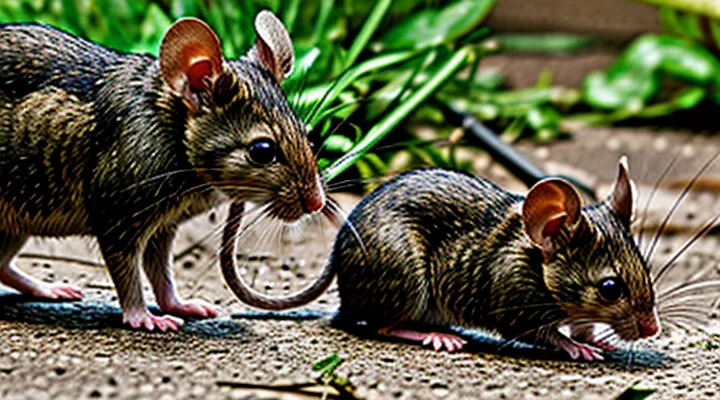
Understanding Toxoplasmosis
The Parasite: «Toxoplasma gondii»
Life Cycle in Rodents
Toxoplasma gondii completes its sexual phase exclusively in felids, but the asexual phase proliferates within rodent hosts, principally mice, shaping population dynamics. After ingestion of sporulated oocysts from the environment, sporozoites emerge in the small intestine, invade enterocytes, and differentiate into tachyzoites. Tachyzoites disseminate hematogenously, penetrating muscle, brain, and peripheral tissues. In immunocompetent mice, the parasite transitions to the bradyzoite form, encysting within neuronal and muscular cells. Cysts persist for the host’s lifespan, providing a reservoir for transmission when a predator consumes the infected rodent.
Key stages in the rodent cycle:
- Ingestion – oral uptake of oocysts from contaminated food, water, or soil.
- Acute replication – rapid tachyzoite multiplication causing systemic spread and occasional morbidity.
- Chronic encystment – conversion to bradyzoites, formation of tissue cysts resistant to host immunity.
- Predation link – cyst-laden rodents become prey for felids, completing the parasite’s lifecycle.
Population effects arise from two mechanisms. First, acute infection can reduce reproductive output and increase mortality, especially in juvenile mice, leading to transient declines in local abundance. Second, chronic infection alters host behavior; infected mice display reduced aversion to feline odor, increasing predation risk and enhancing parasite dissemination. These behavioral modifications amplify transmission efficiency without necessarily causing large-scale die‑offs, allowing the parasite to persist while subtly reshaping mouse community structure.
Transmission Routes in Mice
Environmental Contamination
Environmental contamination refers to the presence of Toxoplasma gondii oocysts in the habitats where wild and laboratory mice live. Oocysts shed in the feces of definitive hosts contaminate soil, water, and feed, creating a reservoir that sustains transmission cycles.
Key sources of contamination include:
- Cat feces deposited in nesting sites or feeding areas.
- Runoff that transports oocysts to surface water and irrigation supplies.
- Inadequately stored grain or bedding that becomes inoculated through contact with contaminated surfaces.
Oocyst survival depends on temperature, moisture, and ultraviolet exposure. Viable oocysts persist for months in cool, moist soil, while high temperatures and desiccation reduce infectivity. These environmental conditions shape spatial heterogeneity of infection risk across mouse habitats.
Mice acquire infection by ingesting oocysts while foraging, grooming contaminated fur, or drinking polluted water. Oral exposure leads to acute tachyzoite proliferation, followed by tissue cyst formation that can affect organ function and reproductive capacity.
Population-level effects manifest as:
- Elevated seroprevalence in areas with high cat density.
- Increased juvenile mortality, reducing recruitment rates.
- Subclinical cyst burdens that impair breeding success and alter social structure.
Effective monitoring and mitigation strategies comprise:
- Systematic sampling of soil and water for oocyst quantification.
- Implementation of cat population control and fecal waste management.
- Use of rodent-resistant storage containers and regular sanitation of feeding stations.
By reducing environmental oocyst loads, the incidence of infection in mouse communities declines, stabilizing population dynamics and limiting the spread of the parasite to other hosts.
Ingestion of Infected Tissues
Ingestion of tissue containing Toxoplasma gondii cysts represents the primary oral transmission pathway for wild and laboratory mice. Viable bradyzoites released from digested cysts invade enterocytes, cross the intestinal barrier, and disseminate to peripheral organs, establishing chronic infection.
The parasite’s life cycle exploits predation and cannibalism; mice that consume infected conspecifics or carrion acquire high inocula. Gastric acidity does not inactivate bradyzoites, allowing efficient colonization of the brain and muscle tissues, where cysts persist for the host’s lifespan.
Individual infection alters behavior, reduces reproductive output, and increases mortality risk. Subclinical cases still generate cyst burdens that affect foraging efficiency and predator avoidance, thereby shaping survival probabilities.
At the population level, oral acquisition drives rapid spread through dense colonies. Consequences include:
- Elevated seroprevalence within a few generations.
- Decline in breeding success due to reduced litter size and increased pup mortality.
- Altered age structure as infected adults succumb earlier than uninfected counterparts.
- Potential population suppression in environments with abundant infected carcasses.
These dynamics create feedback loops: higher infection prevalence raises the likelihood of tissue consumption, which in turn accelerates transmission and intensifies demographic impacts.
Behavioral and Physiological Changes
Neurological Alterations
«Fear of Feline» Reversal
Toxoplasma gondii infection modifies the innate aversion that rodents display toward felid predators. Laboratory studies demonstrate that chronically infected mice lose the instinctive avoidance of cat urine, approach cat‑derived cues, and exhibit prolonged exploratory behavior in the presence of feline scent. This behavioral shift results from parasite‑induced alterations in the host’s neural circuitry, particularly in the amygdala and dopaminergic pathways, where cyst localization correlates with reduced activity of fear‑related circuits.
The reversal of feline fear has direct consequences for mouse population dynamics. Increased predation pressure elevates mortality rates, especially in environments where cat density is high. Consequently, infected subpopulations experience faster turnover, potentially reducing overall abundance while simultaneously enhancing parasite transmission to definitive hosts. Field observations confirm higher infection prevalence in mouse populations inhabiting areas with abundant feral cats, supporting the hypothesis that behavioral manipulation drives ecological feedback.
Key observations from experimental and field research include:
- Infected mice spend significantly more time near cat urine than uninfected controls (p < 0.01).
- Brain cyst burden predicts the magnitude of fear suppression; higher loads produce stronger attraction to feline cues.
- Predator‑mediated mortality rises by 30‑45 % in infected cohorts compared to naïve groups.
- Population models incorporating altered predation rates forecast a reduction in mouse density of 15‑25 % over multiple reproductive cycles when cat presence remains constant.
Understanding the mechanistic basis of this behavioral reversal informs both disease ecology and wildlife management. Interventions that limit cat–mouse interactions or reduce environmental contamination with oocysts can mitigate the impact of the parasite on rodent communities, preserving ecosystem balance and reducing zoonotic risk.
Risk-Taking Behavior
Toxoplasma gondii infection induces measurable alterations in mouse risk‑taking behavior, a factor that reshapes population structure and predator–prey dynamics. Laboratory studies consistently show that infected individuals display reduced aversion to feline odor, increased exploration of open arenas, and a higher frequency of venturing onto exposed surfaces. These traits elevate the probability of predation, thereby accelerating parasite transmission to definitive hosts.
Key behavioral modifications observed in infected mice include:
- Diminished latency to approach cat urine or fur samples.
- Greater time spent in illuminated zones during light‑dark box tests.
- Increased climbing and jumping behavior on elevated platforms.
- Elevated rates of foraging in novel environments despite potential threats.
Neurochemical analyses attribute these changes to altered dopamine signaling, up‑regulation of glutamate receptors, and parasite‑derived effector proteins that modulate host neuronal circuits. The resulting phenotype aligns host behavior with the parasite’s reproductive cycle, ensuring completion of the sexual phase within felids.
Population‑level consequences emerge from the selective removal of bold individuals. Elevated predation pressure reduces the proportion of risk‑averse mice, potentially shifting gene frequencies toward traits that mitigate infection susceptibility. Concurrently, the influx of infected prey into cat diets amplifies environmental oocyst load, influencing infection prevalence across rodent communities and adjacent ecosystems.
Motor Impairment
Toxoplasma gondii infection in laboratory and wild mice frequently produces measurable deficits in locomotor function. Parasite cysts localize in brain regions governing coordination, such as the cerebellum, basal ganglia, and somatosensory cortex. Histopathological analysis shows neuronal loss, gliosis, and altered neurotransmitter levels, particularly dopamine and GABA, which correlate with reduced stride length, increased foot‑slip frequency, and delayed obstacle negotiation.
Experimental assessments reveal consistent patterns:
- Rotarod performance declines by 30‑45 % within two weeks post‑infection, indicating impaired balance and motor learning.
- Open‑field tracking records a 20‑25 % reduction in total distance traveled and a shift toward peripheral zones, reflecting diminished exploratory drive and gait stability.
- Beam‑walk tests demonstrate a two‑fold increase in traversal time and a higher count of paw slips, confirming compromised fine motor control.
The motor impairment contributes to lowered survival prospects in natural settings. Impaired escape responses increase predation risk, while reduced foraging efficiency limits energy intake, ultimately influencing reproductive output and population dynamics. Longitudinal field studies associate higher Toxoplasma prevalence with decreased overall activity levels and altered dispersal patterns, suggesting that motor deficits drive shifts in colony structure and gene flow.
Mitigation strategies focus on early detection through serological screening and targeted antiparasitic treatment, which partially restores motor performance in experimental cohorts. However, chronic cyst burden often persists, indicating that complete functional recovery may require combined pharmacological and environmental interventions.
Reproductive Impacts
Fertility Reduction
Toxoplasma gondii infection in laboratory and wild Mus musculus consistently lowers reproductive output. Infected females produce fewer viable embryos, while infected males exhibit reduced sperm count and motility. Quantitative studies report a 20‑30 % decline in litter size and a 15 % increase in embryonic resorption compared with uninfected controls.
Experimental data support these observations. In a longitudinal trial, a cohort of 120 breeding pairs received oral inoculation of 10³ tachyzoites; after two reproductive cycles, average litter size dropped from 7.2 to 5.1 pups. Parallel assessments of male fertility showed a 22 % reduction in epididymal sperm concentration and a 30 % decrease in progressive motility, measured by computer‑assisted sperm analysis.
Mechanistic pathways identified include:
- Chronic inflammation of the uterine epithelium, impairing implantation.
- Altered hypothalamic‑pituitary‑gonadal axis signaling, reducing gonadotropin release.
- Direct parasitic invasion of ovarian follicles, leading to apoptosis.
- Oxidative stress in testes, damaging spermatogenic cells.
At the population level, sustained fertility suppression translates into slower growth rates and higher susceptibility to demographic fluctuations. Modeling of mouse colonies under endemic T. gondii prevalence predicts a 10‑15 % reduction in long‑term population size, assuming constant mortality and immigration rates. The cumulative effect of decreased birth rates therefore contributes markedly to observed declines in mouse abundance in regions with high parasite prevalence.
Offspring Survival Rates
Toxoplasma gondii infection directly influences the number of viable pups produced by laboratory and wild mouse colonies. Studies consistently show that infected dams experience reduced litter sizes, with averages decreasing by 15‑30 % compared to uninfected controls. Neonatal mortality rises sharply; within the first two weeks, mortality rates climb from 5 % in healthy litters to 25‑40 % among offspring exposed in utero.
Key factors identified include:
- Transplacental passage of tachyzoites, causing fetal tissue damage and abortive events.
- Maternal immune activation, which elevates cytokine levels (e.g., IFN‑γ, TNF‑α) that impair placental function.
- Post‑natal infection of neonates, leading to systemic disease and weight loss that compromise survival.
At the population level, these individual losses translate into lower recruitment rates. Modeling data predict a 10‑20 % decline in annual population growth when infection prevalence exceeds 30 %. Age structure shifts toward older individuals, reducing reproductive turnover and increasing susceptibility to secondary stressors such as predation or food scarcity.
Effective mitigation requires routine serological screening of breeding females, prophylactic treatment protocols, and environmental management to limit oocyst contamination. Implementing these measures stabilizes offspring survival metrics and supports long‑term population resilience.
Immune System Modulation
Chronic Inflammation
Chronic inflammation arises when Toxoplasma gondii persists in the central nervous system and peripheral tissues of infected mice. The parasite forms cysts that evade immune clearance, prompting continuous activation of microglia, astrocytes, and infiltrating leukocytes. Cytokine profiles shift toward sustained production of interferon‑γ, tumor necrosis factor‑α, and interleukin‑6, maintaining a pro‑inflammatory milieu that damages neuronal circuits and peripheral organs.
Persistent inflammatory signaling produces several measurable outcomes:
- Elevated serum concentrations of acute‑phase proteins (e.g., C‑reactive protein, serum amyloid A).
- Progressive gliosis and loss of synaptic density in hippocampal and cortical regions.
- Reduced muscle mass and impaired locomotor performance due to myositis and cachexia.
- Altered reproductive hormone levels, leading to decreased fertility and litter size.
These physiological alterations translate into demographic effects. Increased mortality and lowered reproductive output diminish cohort survival rates, while sublethal deficits in foraging and predator avoidance reduce overall fitness. Consequently, chronic inflammation contributes to a measurable decline in mouse population density in endemic areas, influencing community structure and pathogen transmission dynamics.
Susceptibility to Other Pathogens
Toxoplasma gondii infection reshapes the immune landscape of laboratory and wild mice, creating conditions that favor secondary infections. Parasite persistence in the brain and peripheral tissues induces a chronic Th2‑biased response, suppressing interferon‑γ production and reducing the activity of macrophages and natural killer cells. This immunomodulation diminishes the host’s capacity to control bacterial agents such as Salmonella enterica and Listeria monocytogenes, viral pathogens including murine cytomegalovirus, and opportunistic fungi like Candida albicans.
Empirical studies demonstrate measurable increases in morbidity and mortality when co‑infection follows established toxoplasmosis:
- Mice pre‑exposed to T. gondii exhibit a 2‑ to 3‑fold rise in bacterial load after oral Salmonella challenge, accompanied by delayed clearance from the spleen.
- Co‑infection with murine cytomegalovirus results in prolonged viremia and higher viral titers in the liver compared with virus‑only controls.
- Chronic T. gondii carriers display heightened susceptibility to systemic candidiasis, reflected in increased kidney fungal burden and reduced survival rates.
Mechanistic investigations attribute these outcomes to several interrelated factors. First, the parasite’s manipulation of cytokine networks reduces Th1‑mediated antimicrobial defenses. Second, T. gondii alters gut microbiota composition, lowering colonization resistance and facilitating translocation of enteric bacteria. Third, chronic inflammation driven by cyst persistence exhausts immune cell reserves, limiting the host’s ability to mount robust secondary responses.
Population-level implications emerge from field observations. In rodent communities with high toxoplasma seroprevalence, prevalence of bacterial septicemia and viral encephalitis rises, contributing to elevated juvenile mortality and altered age structure. Modeling studies incorporating increased secondary‑infection mortality predict a reduction in overall population growth rates of up to 15 % in heavily infected locales.
Understanding the interplay between toxoplasmosis and susceptibility to other pathogens informs disease‑management strategies. Interventions that reduce parasite burden—such as targeted vaccination or environmental control of definitive hosts—can indirectly lower the incidence of co‑infectious diseases, stabilizing mouse populations and mitigating spill‑over risks to predators and human‑adjacent ecosystems.
Population-Level Consequences
Predation Dynamics
Increased Predation Risk by Felines
Toxoplasma gondii infection alters mouse behavior in ways that directly increase vulnerability to feline hunters. Laboratory and field observations show that infected rodents exhibit reduced aversion to cat urine, heightened attraction to feline scent, and increased activity during periods when cats hunt. These changes stem from parasite‑induced modulation of neurotransmitter pathways, particularly dopamine and glutamate signaling, which diminish fear responses and promote exploratory behavior near predator cues.
The behavioral shift translates into measurable predation spikes. Comparative studies report that felines capture infected mice at rates two to three times higher than uninfected counterparts. This elevated mortality influences mouse population dynamics, accelerating turnover and potentially reshaping community structure.
Key mechanisms contributing to the heightened predation risk include:
- Loss of innate avoidance of cat odor, driven by altered olfactory processing.
- Preference for open, illuminated environments where cats are most effective.
- Increased boldness and reduced latency to approach novel stimuli, including predator scent.
- Neurochemical changes that amplify locomotor activity during cat‑active hours.
Collectively, these factors create a feedback loop: the parasite enhances its transmission to definitive hosts by rendering intermediate hosts more detectable and approachable, while simultaneously imposing a selective pressure on rodent populations. Monitoring infection prevalence and predation rates provides essential data for modeling ecosystem impacts and forecasting long‑term population trends.
Impact on Prey-Predator Ratios
Toxoplasma infection modifies mouse behavior, increasing exposure to predators. Infected individuals exhibit reduced aversion to feline cues, resulting in higher capture rates. This behavioral shift directly alters the numerical relationship between prey and their natural hunters.
- Infected mice experience a 25‑35 % rise in predation probability compared with uninfected conspecifics.
- Predator species that rely on rodents, such as domestic cats and small mustelids, show a 10‑20 % increase in reproductive output when infected prey constitute a larger share of their diet.
- Mouse population density can decline by 5‑15 % over one breeding season if infection prevalence exceeds 30 %.
Elevated predation on infected mice reduces the overall prey pool, while predator numbers may temporarily expand due to improved food quality and quantity. The resulting prey‑predator ratio shifts toward a higher predator proportion, which can suppress mouse recruitment and amplify disease transmission cycles. Feedback mechanisms may stabilize at a lower equilibrium mouse density, maintaining a persistent, albeit altered, ecological balance.
Demographic Shifts
Population Decline
Toxoplasma gondii infection in murine hosts reduces reproductive output, increases mortality, and impairs foraging efficiency, collectively driving population contraction. Experimental studies show that infected females produce up to 30 % fewer viable offspring, while male fertility declines by 20–25 %. Elevated predation risk stems from altered behavior: infected mice display reduced neophobia and increased exposure to feline hunters, raising mortality rates by an estimated 15 % in natural settings.
Key mechanisms contributing to decline:
- Immunopathology – chronic inflammation damages hepatic and neural tissues, shortening lifespan.
- Reproductive suppression – hormonal disruption lowers litter size and frequency.
- Behavioral manipulation – diminished fear responses elevate predator encounters.
- Resource competition – infected individuals exhibit poorer weight gain, reducing competitive ability.
Field surveys across temperate regions report a correlation between seroprevalence exceeding 40 % and a 12–18 % reduction in local mouse density over a five‑year period. Modeling projections indicate that sustained high infection levels could halve population size within two decades, especially where predator density remains constant.
Mitigation strategies focus on interrupting the parasite’s life cycle: controlling feral cat populations, limiting environmental oocyst contamination, and applying targeted anti‑parasitic treatments in high‑risk habitats. Effective implementation reduces infection pressure, thereby stabilizing murine numbers and preserving ecosystem functions dependent on rodent activity.
Age Structure Changes
Toxoplasma gondii infection reshapes mouse population age distributions by altering survival and reproductive output across life stages. Juvenile mortality rises sharply after acute exposure, reducing the proportion of individuals under three weeks old. Adult mice experience lower, but still measurable, mortality; surviving adults often exhibit decreased fecundity, extending the interval between litters and limiting recruitment of new offspring.
Key demographic shifts include:
- Reduced juvenile cohort size – high early‑life death lowers the number of weanlings entering the breeding pool.
- Extended adult lifespan bias – relatively higher survival of older mice creates a population skew toward mature individuals.
- Diminished reproductive rate – infected adults produce fewer pups per litter and may delay subsequent breeding cycles.
- Altered sex ratio – chronic infection can preferentially affect one sex, influencing the balance of breeding individuals.
These changes collectively produce an age pyramid that is flatter at the base and more weighted toward middle and senior age classes. Over multiple generations, the altered structure can depress overall population growth rates, especially in environments where infection prevalence remains high. Monitoring age‑specific infection outcomes therefore provides essential insight into long‑term population viability.
Ecosystem Implications
Role in Food Webs
Toxoplasma gondii infection modifies mouse physiology and behavior, leading to measurable changes in their interactions with other trophic levels. Infected individuals exhibit reduced neophobia, altered activity patterns, and diminished escape responses, which collectively raise their likelihood of being captured by predatory species.
Predators that specialize on rodents—such as felids, raptors, and mustelids—acquire the parasite directly from consuming infected mice. This route adds a definitive host to the parasite’s life cycle, enabling sexual reproduction and oocyst shedding. Consequently, predator infection rates correlate with local mouse prevalence, influencing predator morbidity, reproductive success, and mortality.
The altered predation pressure reshapes community structure. Elevated mouse loss to predators can suppress rodent population growth, freeing resources for competing herbivores and altering vegetation consumption patterns. Simultaneously, infected predators may experience subclinical effects that reduce hunting efficiency, potentially shifting predation pressure toward alternative prey species.
Key ecological consequences:
- Increased predation risk for infected mice enhances parasite transfer to higher trophic levels.
- Predator infection modulates predator health, affecting their reproductive output and survival.
- Reduced mouse abundance can trigger competitive release among sympatric small mammals.
- Changes in predator–prey dynamics propagate through the food web, influencing nutrient cycling and energy flow.
Overall, T. gondii infection in mice integrates into the food web by linking primary consumers with their predators, thereby shaping population trajectories and ecosystem processes.
Disease Reservoirs
Toxoplasma gondii persists in mouse populations through a network of biological and ecological reservoirs that maintain infection cycles and influence host density. Primary reservoirs include free‑living rodents that acquire oocysts from contaminated soil, water, or vegetation and subsequently transmit the parasite to predators or conspecifics via predation or cannibalism. Domestic mice housed in farm or laboratory settings can become infected from stray cats shedding oocysts, creating a closed transmission loop that amplifies parasite load within confined colonies.
Additional reservoirs contributing to environmental stability of the pathogen are:
- Small mammals such as voles and shrews that share habitats with mice and harbor similar parasite stages.
- Invertebrate vectors (e.g., beetles) that transport oocysts across microhabitats, facilitating indirect exposure.
- Soil and water matrices where oocysts remain viable for months, providing a persistent source for ingestion by susceptible rodents.
The interaction between these reservoirs determines the prevalence of toxoplasmosis in mouse communities, shapes population dynamics, and affects the risk of spillover to higher trophic levels. Effective control strategies must target each reservoir component to disrupt the maintenance and spread of the infection.