
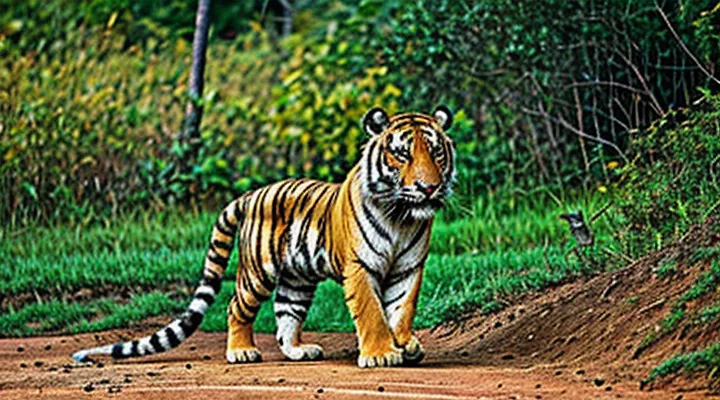
The Apex Predator: An Overview of Tigers
Physical Characteristics and Adaptations
Size and Strength
Tigers rank among the largest felids, with adult males weighing 220–660 lb (100–300 kg) and measuring 2.5–3.3 m (8–11 ft) from head to tail. Muscular shoulders and a bite force near 1,000 psi enable rapid subdual of prey far larger than a typical rat. Their skeletal structure supports explosive acceleration, allowing a sprint of up to 35 mph (56 km/h) for short distances.
Rats average 0.2–0.5 lb (90–230 g) and 6–9 in (15–23 cm) in body length, excluding the tail. Their jaw generates roughly 0.2 psi, sufficient for gnawing tough materials but inadequate against large vertebrates. Nevertheless, a rat’s low mass confers high maneuverability; it can change direction within fractions of a second and navigate burrow networks inaccessible to a tiger.
Key implications of the size and strength disparity:
- Predatory advantage: The tiger’s mass and power allow a single strike to incapacitate a rat instantly, eliminating the need for prolonged chase.
- Escape mechanisms: The rat’s diminutive size permits rapid entry into narrow tunnels, where the tiger’s body cannot follow, providing a refuge despite the predator’s strength.
- Energy efficiency: Capturing a small, abundant prey like a rat yields minimal caloric return for a tiger, influencing hunting frequency and selection of larger targets when available.
- Risk assessment: The tiger’s ability to kill small mammals with negligible effort reduces injury risk, whereas a rat’s defensive bites pose limited threat to the predator’s health.
Overall, the stark contrast in dimensions and force generation shapes a dynamic where the tiger’s overwhelming power dominates overt encounters, while the rat’s agility and concealment offer survival strategies against a vastly stronger adversary.
Camouflage and Stealth
Camouflage and stealth shape the outcomes of encounters between tigers and rats. Both species rely on visual concealment and silent movement to gain advantage, yet the mechanisms differ markedly.
Tigers employ a coat pattern that disrupts their outline against dappled forest light. Dark stripes intersect with bright fur patches, creating a mosaic that obscures the animal’s true shape. The pattern adapts to varying vegetation density, allowing the predator to approach prey without triggering visual detection. Additional stealth factors include low‑frequency footfall and a flexible spine that enables sudden direction changes without audible cues.
Rats exploit background matching and rapid, low‑profile locomotion. Fur coloration mirrors leaf litter, soil, and bark tones, reducing contrast in early‑morning and twilight conditions. Whisker sensitivity detects airflow changes, prompting immediate cessation of movement when a predator’s presence is sensed. Burrowing behavior provides an underground refuge that further limits visual exposure.
The interaction of these adaptations produces a dynamic detection–evasion cycle:
- Tiger’s stripe pattern reduces silhouette visibility, increasing the probability of closing distance before a rat perceives motion.
- Rat’s coloration and whisker feedback lower the latency of escape responses, often leading to a missed strike.
- When a rat ventures into open ground, the tiger’s camouflage advantage becomes decisive; when the rat remains within cover, its stealth mechanisms dominate.
Effective camouflage in the tiger and rapid concealment in the rat together dictate the success rate of each hunting attempt, illustrating how visual and auditory stealth drive predator‑prey outcomes.
Hunting Strategies and Behavior
Solitary Hunters
Tigers operate as solitary predators, relying on stealth, power, and precise ambush techniques to capture prey. Their solitary nature reduces competition for food and allows each individual to establish and defend a personal territory that often overlaps with the habitats of small mammals such as rats.
Key characteristics of solitary big‑cat hunters:
- Territorial fidelity: A tiger’s range can span 20–60 km², marked by scent glands, scratch marks, and vocalizations that signal ownership to conspecifics.
- Stealth approach: Low‑frequency muscle vibrations and padded paws enable silent movement through dense vegetation, minimizing detection by vigilant rodents.
- Burst speed: Short‑range acceleration reaches 49 km/h, sufficient to close the gap with fast‑moving prey before it can flee to a burrow.
- Killing method: A powerful fore‑limb clasp and a bite to the neck or throat deliver rapid incapacitation, preventing the prey from escaping.
Rats exhibit counter‑strategies that influence tiger hunting behavior:
- Burrow networks: Complex underground tunnels provide immediate refuge, forcing a tiger to rely on surface attacks rather than pursuit underground.
- High reproductive rate: Large litter sizes maintain population levels despite occasional predation, reducing the impact of any single successful hunt.
- Alertness: Acute hearing and whisker‑based vibration detection allow early warning of approaching predators, prompting rapid retreat.
The interaction between a solitary tiger and a rat illustrates a dynamic balance: the predator’s isolation optimizes energy expenditure and territorial control, while the prey’s social and burrowing adaptations mitigate individual loss. Understanding these mechanisms clarifies why solitary hunting remains an effective strategy for large carnivores in ecosystems where small, agile rodents coexist.
Ambush Tactics
Tigers employ precise ambush techniques when targeting small rodents such as rats. The predator selects concealment sites—dense underbrush, fallen logs, or shadowed riverbanks—where movement is minimal and visual detection by the prey is reduced. By remaining motionless for extended periods, the tiger minimizes auditory cues that could alert the rodent.
When a rat approaches a known foraging trail, the tiger initiates a rapid, low‑angle burst, exploiting the element of surprise. The attack sequence follows a predictable pattern:
- Stalk phase: slow, silent approach within 5–10 meters of the target.
- Freeze phase: complete stillness to align body posture with the surrounding cover.
- Launch phase: explosive acceleration covering the remaining distance in under a second.
- Capture phase: powerful forelimb strike combined with a bite to the neck, ensuring immediate incapacitation.
Rats counter ambush attempts through heightened vigilance and erratic movement. Their whisker sensitivity detects subtle air currents, prompting immediate retreat into burrows or complex tunnel networks. The success rate of tiger ambushes on rats remains low, reflecting the prey’s rapid sensory processing and the predator’s reliance on stealth over stamina.
The Ubiquitous Prey: An Overview of Rats
Physical Characteristics and Adaptations
Size and Agility
Tigers weigh between 220 kg and 310 kg, with a shoulder height of 90 cm to 110 cm, granting them a powerful stride and the ability to cover 60 km / h in short bursts. Their muscular build and retractable claws enable rapid acceleration and the capacity to pounce on prey up to three meters away.
Rats typically measure 20 cm to 30 cm in body length, weigh 0.2 kg to 0.5 kg, and possess a low center of gravity. Their skeletal structure supports swift changes in direction, allowing speeds of 13 km / h and the execution of tight, erratic turns that a tiger’s bulk cannot match.
Key contrasts:
- Mass advantage – Tigers generate force sufficient to overcome a rat’s defensive bites; rats lack the strength to resist a direct strike.
- Speed burst – Tigers excel in straight‑line acceleration; rats dominate in sustained, agile movement within confined spaces.
- Maneuverability – Rats exploit narrow tunnels and cluttered terrain; tigers rely on open ground and ambush positions.
- Sensory coordination – Tigers coordinate vision and proprioception for powerful lunges; rats integrate whisker feedback for precise navigation through obstacles.
The size gap dictates the predator’s hunting strategy: tigers position themselves near burrow entrances or along established pathways, using brief, high‑force attacks. Rats counter with rapid, unpredictable routes, leveraging their small stature to slip through gaps and evade capture.
Sensory Acuity
Tigers rely on acute vision, especially in low‑light conditions, to locate small mammals moving through underbrush. Their retinal structure contains a high density of rod cells, granting them superior night perception and motion detection at distances up to 30 meters. Forward‑facing eyes create overlapping fields of view, enabling precise depth judgment essential for a swift pounce.
Rats possess a contrasting sensory suite. Their vibrissae (whiskers) detect minute air currents and surface textures, allowing rapid assessment of nearby obstacles and predator proximity. The somatosensory cortex allocates extensive cortical area to whisker input, translating tactile cues into immediate escape responses. Auditory sensitivity peaks between 8 kHz and 30 kHz, a range that captures the rustle of foliage and the low‑frequency footsteps of a stalking feline.
Both species compensate for each other’s strengths:
- Tigers’ smell detects rat urine and feces, establishing a chemical trail that guides pursuit even when visual cues are obscured.
- Rats’ olfactory receptors discern tiger pheromones and scent marks, triggering heightened alertness and shelter‑seeking behavior.
- The tiger’s ear can swivel up to 180°, locating the faint squeak of a fleeing rat, while the rat’s ears pivot to localize the predator’s growl, facilitating rapid direction changes.
The interaction of these sensory modalities defines the outcome of encounters. When a tiger’s vision and hearing converge on a moving target, the rat’s whisker‑driven navigation and acute hearing provide the split‑second information required to evade capture. The balance of sensory acuity thus shapes the dynamic between these apex predator and its diminutive prey.
Survival Strategies and Behavior
Rapid Reproduction
Rats reproduce at a pace that reshapes their relationship with large carnivores. A single female can produce up to seven litters annually, each containing three to twelve offspring. This turnover generates a constantly expanding prey base, compelling tigers to adjust hunting strategies and territory use.
Key implications of rapid rodent reproduction:
- Population spikes occur within weeks, reducing the time between predator encounters.
- High juvenile mortality rates are offset by sheer birth numbers, ensuring a steady supply of vulnerable individuals.
- Seasonal breeding peaks align with periods of increased tiger activity, intensifying predation pressure.
- Genetic diversity rises rapidly, potentially affecting the susceptibility of rats to disease and, indirectly, to predator detection.
These dynamics create a feedback loop: abundant rat populations sustain tiger energy requirements, while tiger predation removes a fraction of the young, influencing subsequent reproductive output. Understanding this cycle is essential for wildlife managers assessing ecosystem balance between apex predators and prolific small mammals.
Evasive Maneuvers
Tigers frequently attempt to capture rats, yet the small mammals rely on rapid, unpredictable movements to survive.
- Sudden directional changes: rats execute sharp 90‑degree turns within a few strides, disrupting a tiger’s forward momentum.
- Vertical leaps: brief hops over obstacles raise the rat’s profile, allowing escape from a low‑lying predator’s reach.
- Zigzag sprinting: alternating left‑right patterns increase the distance a tiger must cover, exhausting its stamina faster than a straight chase.
- Burrowing entry: immediate descent into shallow soil or leaf litter creates a physical barrier that a tiger cannot traverse quickly.
These tactics exploit the tiger’s larger mass and slower acceleration, reducing capture probability. The combination of speed, agility, and terrain exploitation enables rats to persist despite the predator’s superior strength.
Unlikely Encounters: Tiger and Rat Interactions
Documented Observations
Direct Predation
Tigers occasionally capture rats during opportunistic hunts, demonstrating that even apex carnivores exploit small mammals when larger prey are scarce. Direct predation on rats involves a swift pounce, a precise bite to the neck, and immediate consumption. The behavior is documented in field observations across Asian habitats where feral and wild tigers coexist with dense rodent populations.
Key aspects of tiger‑rat predation:
- Hunting trigger: Sudden movement of a rat near a tiger’s resting site prompts an instinctive attack.
- Capture technique: Tiger lowers its body, uses forelimb claws to immobilize the rodent, then applies a crushing bite.
- Energy return: A single rat provides approximately 30–40 kcal, sufficient for short‑term energy needs during lean periods.
- Ecological effect: Removal of rats reduces competition for other small prey and may limit disease vectors in the tiger’s territory.
Studies indicate that rat predation accounts for less than 5 % of a tiger’s overall diet, yet it reflects adaptive flexibility. The practice underscores the predator’s ability to exploit a broad prey spectrum, reinforcing its role as a versatile hunter in diverse ecosystems.
Indirect Impacts
Tigers suppress rat populations through direct hunting, yet the consequences extend far beyond immediate mortality. By lowering rat density, tigers indirectly modify seed‑dispersal networks; fewer rats mean reduced seed predation, allowing certain plant species to increase reproductive success and altering forest composition.
Reduced rat numbers also affect pathogen dynamics. Rats serve as reservoirs for hantavirus, leptospirosis, and other zoonoses; their decline diminishes environmental pathogen loads, decreasing infection risk for other wildlife and for humans living near forest edges.
Behavioral shifts in surviving rats create secondary effects. When tiger presence intensifies, rats retreat to deeper burrows and adjust activity periods, which reduces surface foraging on agricultural fields and minimizes crop loss. Conversely, in areas lacking tigers, rats expand into open habitats, intensifying damage to stored grain and increasing competition with native granivores.
Economic outcomes stem from these ecological changes. Communities adjacent to tiger territories report lower expenditures on rodent control, fewer losses of stored produce, and reduced veterinary costs associated with rodent‑borne diseases.
Key indirect impacts include:
- Altered plant regeneration patterns via changed seed predation rates.
- Decreased prevalence of rodent‑borne pathogens in ecosystems and human settlements.
- Modified rat foraging behavior, leading to reduced agricultural damage.
- Lower financial burden on local populations for pest management and disease mitigation.
Ecological Niche and Food Web Dynamics
Role of Tigers in Ecosystems
Tigers, as apex carnivores, regulate herbivore numbers, preventing overgrazing that can degrade vegetation structure and soil quality. By limiting the abundance of large ungulates, they create space for a diversity of plant species, which in turn supports a broader array of insects, birds, and small mammals.
Their predation pressure also influences mesopredator dynamics. Reduced populations of mid‑size carnivores lessen competition for resources, allowing species such as rats to experience altered survival rates. This indirect effect shapes the composition of rodent communities and their role in seed dispersal and disease transmission.
Key ecological contributions of tigers include:
- Maintaining balanced trophic levels through selective hunting.
- Promoting habitat heterogeneity by creating gaps in vegetation via prey movement patterns.
- Facilitating nutrient cycling as carcasses decompose and enrich the soil.
- Modulating mesopredator populations, which indirectly affects smaller prey species.
The presence of healthy tiger populations correlates with robust ecosystem functions, underscoring their significance in sustaining biodiversity and ecological resilience.
Role of Rats in Ecosystems
Rats maintain population balance by serving as a primary food source for a wide range of carnivores, including small felids and, in rare instances, large predators that opportunistically target them. Their high reproductive rate ensures a steady supply of biomass, supporting predator reproductive success and stabilizing trophic cascades.
Through foraging activities, rats transport seeds and fungal spores across fragmented habitats. This movement enhances plant colonization, increases genetic diversity, and promotes regeneration of disturbed areas. Their burrowing behavior aerates soil, improves water infiltration, and facilitates nutrient cycling, thereby influencing plant growth and microbial activity.
Rats act as vectors for parasites and pathogens that regulate host population dynamics. By hosting a variety of disease agents, they contribute to natural selection pressures on both prey and predator species, shaping immune system evolution.
Key ecological contributions of rats:
- Primary prey for mesopredators and occasional large carnivores.
- Seed and spore dispersers that aid vegetation recovery.
- Soil engineers that modify physical and chemical properties.
- Hosts for pathogens that drive coevolutionary processes.
Collectively, these functions integrate rats into ecosystem structure, affect energy flow, and influence the outcomes of predator‑prey interactions involving top carnivores.
Cultural and Symbolic Meanings
Tigers in Folklore and Mythology
Power and Ferocity
Tigers command physical power through muscular build, a skeletal framework that supports rapid acceleration, and a jaw capable of delivering forces exceeding 1,000 newtons. This strength enables the cat to subdue prey far larger than a typical rat, yet it also permits the capture of small, agile rodents when larger targets are scarce.
Rats exhibit ferocity in the form of heightened aggression, rapid bite reflexes, and a propensity for group defense. A single rat can inflict wounds that disrupt skin and muscle, while colonies coordinate evasive maneuvers that increase survival odds against larger predators.
Key comparative observations:
- Force output: Tiger forelimbs generate torque sufficient to lift a 200‑kg animal; rat forelimbs produce torque for climbing and gnawing, not for overpowering large carnivores.
- Bite pressure: Tiger bite reaches up to 1,050 psi; rat bite averages 120 psi but concentrates force on incisors, causing deep tissue damage.
- Speed: Tigers sprint up to 65 km/h over short distances; rats sprint up to 13 km/h but sustain bursts longer, facilitating escape through narrow burrows.
- Defensive tactics: Tigers rely on stealth and ambush; rats employ collective alarm calls, tunnel networks, and rapid directional changes.
The interaction of raw power and aggressive ferocity shapes outcomes: a tiger’s overwhelming force can terminate a solitary rat instantly, while a rat’s aggressive bite and social cohesion can deter a tiger from pursuing densely populated rodent habitats.
Cultural Significance
Tigers and rats appear together in numerous cultural narratives that illustrate the tension between strength and survival. Folklore from South and East Asia often portrays the tiger as a guardian of the forest while the rat embodies resourcefulness, creating a symbolic rivalry that reinforces moral lessons about humility and respect for the natural order.
In Chinese tradition, the tiger occupies the third position of the zodiac, representing bravery and authority, whereas the rat, placed first, signifies intelligence and adaptability. Stories that feature a tiger hunting a rat emphasize the limits of power; the rat’s ability to evade capture serves as a reminder that cunning can outmaneuver brute force. These tales are employed in educational settings to teach strategic thinking and humility.
Visual arts and performance genres repeatedly draw on this predator‑prey dynamic. Paintings depict the tiger’s poised muscles contrasted with the rat’s swift silhouette, while operatic and dance productions stage chase scenes that dramatize the balance between aggression and evasion. Festivals in rural communities include mask parades where participants embody either animal, reinforcing communal identity through shared symbolism.
Contemporary media leverages the tiger‑rat relationship to promote wildlife conservation and ecological awareness. Documentaries juxtapose footage of tigers stalking small mammals with commentary on habitat fragmentation, highlighting the interdependence of species across size classes. Educational curricula incorporate case studies of tiger predation on rodent populations to illustrate food‑web complexity.
Key cultural manifestations include:
- Mythical fables that teach ethical behavior through tiger‑rat encounters.
- Zodiac symbolism linking the animals to personality traits.
- Artistic representations that explore power dynamics.
- Festival rituals featuring masks and costumes of both creatures.
- Modern storytelling that connects predator‑prey interactions to environmental stewardship.
Rats in Folklore and Mythology
Resourcefulness and Resilience
The interaction between tigers and rats showcases striking resourcefulness and resilience on both sides of the predator‑prey spectrum.
- Rats exploit underground networks, creating extensive tunnel systems that provide escape routes and concealment from ambushes.
- When surface threats arise, rats employ rapid, erratic movements and communal alarm signals that disrupt a tiger’s focus and reduce capture success.
- Tigers adapt hunting tactics to counter rodent evasiveness, using low‑angle stalks, silent footfalls, and precise forepaw strikes that target exposed burrow entrances.
Resilience manifests in the ability of each species to recover from setbacks.
- Rats survive injuries that would incapacitate larger mammals; their high metabolic rate and regenerative tissue growth enable quick recuperation and continued foraging.
- Tigers display physiological endurance, maintaining stamina during prolonged pursuits and healing from wounds through robust immune responses and efficient tissue repair.
These complementary strategies illustrate how a top predator and a diminutive prey maintain a balanced coexistence through continual innovation and durability.
Symbolic Interpretations
The tiger‑rat relationship has long served as a metaphor for asymmetrical power, juxtaposing raw strength with cunning survival. In Asian folklore, the tiger embodies sovereign authority and martial vigor, while the rat symbolizes adaptability and covert influence. Their encounters illustrate the tension between overt dominance and subtle subversion, a duality that resonates across political and social narratives.
Interpretations of this predator‑prey pairing appear in literature as allegories for class struggle. The tiger represents the ruling elite, imposing order through force; the rat reflects the marginalized populace, exploiting hidden pathways to persist. This contrast underscores the perpetual negotiation between oppression and resistance, offering a framework for analyzing historical revolutions and contemporary movements.
Psychological analysis treats the tiger as an externalized embodiment of the ego’s aggressive drive, whereas the rat embodies the shadow’s instinctual cunning. Their interaction models the integration process described by Jungian theory: confronting the shadow (rat) enables the ego (tiger) to achieve greater self‑awareness and balance.
Key symbolic themes include:
- Authority vs. Subversion: Direct power challenged by indirect tactics.
- Survival through Adaptation: Smallness leveraged to outmaneuver larger threats.
- Balance of Forces: Mutual dependence that sustains ecological and cultural equilibrium.
Conservation Status and Human Impact
Threats to Tiger Populations
Habitat Loss
Habitat loss reduces the range of both apex carnivores and small mammals, directly altering the dynamics of their encounters. Deforestation, agricultural expansion, and urban sprawl fragment forest corridors, forcing tigers into smaller, isolated patches while pushing rats into the same limited spaces.
- Shrinking territories increase the frequency of tiger‑rat interactions, as both species concentrate around remaining water sources and prey abundance.
- Fragmented landscapes hinder tiger movement, limiting their ability to patrol large areas and decreasing opportunities to encounter rats in natural hunting grounds.
- Edge habitats created by clearing favor rodent populations, providing abundant food and shelter for rats, which in turn may attract opportunistic tiger predation.
- Human‑driven habitat conversion often introduces waste and grain stores, boosting rat densities and creating new, potentially hazardous contact points for tigers near settlements.
- Reduced forest cover diminishes prey diversity for tigers, prompting a shift toward smaller, more readily available targets such as rats, altering traditional predation patterns.
Overall, the loss of natural habitats reshapes predator‑prey relationships by compressing spatial overlap, modifying prey availability, and increasing the likelihood of conflict between large felines and their diminutive counterparts.
Poaching
Poaching removes large carnivores from ecosystems, disrupting the natural balance between predators and their prey. Illegal hunting of tigers directly reduces the number of apex hunters that normally control rodent populations, leading to measurable ecological shifts.
The decline of tiger numbers produces several observable outcomes:
- Lower predation pressure on rats and other small mammals.
- Expansion of rat habitats into areas previously regulated by tiger activity.
- Increased competition among rat species for food resources, sometimes resulting in crop damage.
Reduced tiger presence also affects human communities. With fewer natural predators, rats can proliferate near settlements, heightening the risk of disease transmission and agricultural loss. Communities dependent on agriculture may experience higher pest control costs, while wildlife tourism revenues decline as charismatic megafauna disappear.
Mitigation strategies focus on strengthening law enforcement, enhancing anti‑poaching patrols, and providing alternative livelihoods to reduce incentive for illegal hunting. Conservation programs that monitor tiger populations and track rodent density help assess the cascading effects of poaching, allowing adaptive management to restore equilibrium between predators and prey.
Management of Rat Populations
Urban Environments
Urban environments create a unique arena where apex carnivores and small mammals intersect. Tigers that occasionally stray into city outskirts encounter dense populations of commensal rodents, especially rats that thrive on waste streams and shelter in infrastructure. This proximity forces both species to adapt their hunting strategies, movement patterns, and risk assessment.
Rats exploit the fragmented green spaces, sewers, and abandoned structures to avoid detection. Their nocturnal activity aligns with the crepuscular tendencies of large felines, increasing the likelihood of encounter during twilight hours. Tigers, accustomed to open forest cover, must navigate artificial lighting, traffic noise, and human presence, which can alter pursuit efficiency and success rates.
Key observations from field studies and camera traps include:
- Increased latency before attack as tigers assess human activity levels.
- Preference for open alleys and parks where rats are abundant but cover is limited.
- Higher incidence of aborted hunts when sudden disturbances, such as vehicle horns, occur.
- Evidence of learned avoidance in rats, using elevated drainage pipes and building gaps to escape.
Management implications focus on mitigating conflict and preserving ecological balance. Strategies involve securing waste containers, maintaining green corridors that limit direct overlap, and monitoring tiger movements through GPS collars to predict urban incursions. Effective implementation reduces accidental injuries to both wildlife and residents while sustaining the natural predator‑prey dynamic within metropolitan landscapes.
Agricultural Contexts
Tigers roaming near cultivated fields influence rodent dynamics that directly affect grain yields. When tigers occupy forest edges adjacent to farms, they suppress medium‑sized carnivores that would otherwise prey on rats, allowing the felines to indirectly reduce rat pressure on crops.
Rats consume stored grains, damage seedlings, and contaminate produce. Their activity lowers harvest quality and increases post‑harvest losses. The presence of a top predator can limit rat populations by inducing behavioral avoidance of open fields, thereby decreasing the frequency of rodent incursions into cultivated plots.
Livestock losses arise when rats gnaw feed bags or spread disease agents that threaten cattle and poultry. Tiger predation on rats reduces the vector potential for pathogens such as leptospirosis, indirectly protecting animal health and reducing veterinary costs.
Effective agricultural management incorporates the following measures:
- Preserve buffer zones of native vegetation to maintain tiger corridors while limiting rat access to fields.
- Install reinforced storage facilities that deter rodent entry and reduce attractants near field edges.
- Implement community‑based compensation schemes for crop damage attributed to tiger activity, encouraging coexistence.
- Deploy non‑lethal rodent control methods (e.g., bait stations, traps) in conjunction with monitoring of tiger movements to avoid unintended harm.
These practices balance food production objectives with the ecological role of apex predators, fostering sustainable outcomes for both farmers and wildlife.