
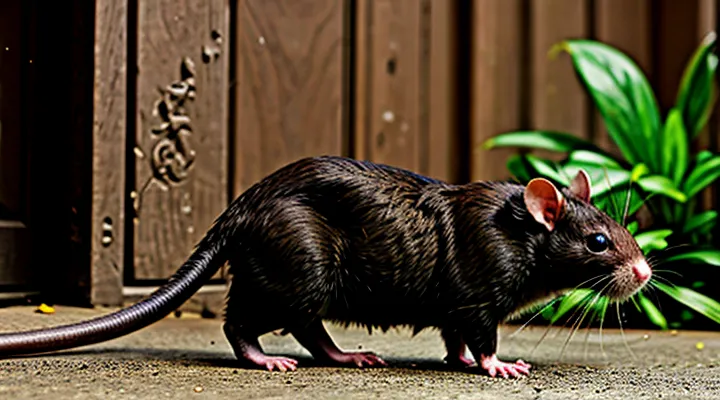
The Allure of Large Rodents
Cultural Fear and Fascination
Cultural narratives about oversized rodents generate both dread and curiosity. Ancient myths describe monstrous rats as omens of plague, while modern stories portray them as thrilling antagonists in horror cinema. The duality reflects a deep‑seated ambivalence: fear of disease‑carrying vermin coexists with fascination for the uncanny.
Historical sources reveal a pattern. Folklore from Southeast Asia, medieval European chronicles, and Japanese ukiyo‑e prints depict giant rats ravaging villages, symbolizing chaos and moral decay. Literary works such as “The Rats” by James Herbert amplify this imagery, turning the creature into a vehicle for exploring societal anxieties.
Psychological factors reinforce the response. The instinctual aversion to rodents stems from their association with pathogens; the exaggerated size intensifies perceived threat. Simultaneously, the grotesque form triggers a morbid attraction, allowing audiences to confront danger at a safe remove.
Contemporary media exploit the paradox. Films, video games, and viral memes repeatedly feature colossal rats, each iteration reshaping public perception. The following examples illustrate the spectrum:
- Horror film “The Swarm” (2022) – giant rats as central menace.
- Survival game “Rattus” – players navigate environments overrun by massive rodents.
- Internet meme “Big Rat Energy” – comedic personification of oversized rats.
Scientific observations contradict many mythic elements. Large Rattus norvegicus individuals rarely exceed 500 g and lack the predatory capabilities described in fiction. Studies of urban rat populations show that size variation is limited by habitat constraints and resource availability.
The cultural interplay between dread and intrigue sustains the legend of terrifying rats. Mythical exaggeration fuels entertainment, while empirical data gradually tempers expectations, preserving a dynamic tension that continues to shape collective imagination.
Historical Accounts of Giant Rats
Historical chronicles from diverse cultures contain references to unusually large rodents that exceeded the size of typical city rats. Chinese annals from the Han dynasty describe “huge vermin” that devastated grain stores, with measurements approaching the length of a domestic cat. Medieval European pestilence reports mention “monster rats” in siege conditions, sometimes estimated at over a foot in length, capable of gnawing through wooden beams. Early 20th‑century colonial writings from Southeast Asia recount sightings of giant Rattus species inhabiting mangrove swamps, with specimens recorded at 30 cm body length and a tail of similar size.
- Han dynasty (circa 2 CE): Court records note a plague of oversized rats that required the deployment of fire‑brands to control the outbreak.
- Siege of Paris (1429): Contemporary chronicles describe rats large enough to swallow a chicken whole, contributing to famine conditions.
- British India (1895): Naturalist surveys list Rattus rattus specimens weighing up to 600 g, significantly larger than typical urban rats.
- Papua New Guinea (1932): Expedition journals record a species locally called “giant rat,” measured at 35 cm body length, with a robust skull structure.
Archaeological excavations support the textual evidence. Bones recovered from a Bronze Age settlement in the Levant reveal femur dimensions comparable to modern large‑bodied rodents, suggesting the presence of a sizable rat population. Radiocarbon dating places these remains at roughly 3,500 years ago, aligning with written accounts of agricultural losses attributed to “monster vermin.”
The persistence of these reports across millennia indicates that encounters with unusually large rats were not merely mythic exaggerations. Empirical data from zoological collections confirm the existence of rat species capable of attaining dimensions far beyond the average Rattus norvegicus. Consequently, historical narratives provide a credible foundation for understanding the origins of contemporary fears surrounding oversized rodents.
Deconstructing the «Scariest Rat» Archetype
Mythological Beasts and Urban Legends
The Sewer Monster Narrative
The Sewer Monster Narrative describes a recurring legend of an oversized rat dwelling in underground drainage systems. Stories portray the creature as a hulking, aggressive predator that attacks workers and spreads disease. Early accounts appear in 19th‑century urban folklore, where limited sanitation knowledge amplified fear of unseen vermin. Over time, the tale merged with sensational newspaper reports, creating a feedback loop that reinforced the monster’s reputation.
Scientific investigations reveal a stark contrast between myth and reality. Field surveys of city sewers regularly document Norway rats (Rattus norvegicus) averaging 250–300 g, with occasional individuals reaching 600 g under abundant food supplies. No evidence supports the existence of specimens exceeding one kilogram, the size frequently cited in anecdotal reports. Laboratory studies show that rat growth is constrained by genetics, diet, and space, making the imagined behemoth biologically implausible.
Key factors sustaining the narrative include:
- Visual distortion: dim lighting and water flow cause misperception of size.
- Media amplification: sensational headlines emphasize extreme dimensions.
- Psychological projection: urban decay fuels collective anxiety about hidden threats.
The narrative persists because it satisfies a cultural need for dramatic cautionary tales, despite empirical data confirming that sewer‑dwelling rats remain within normal size ranges.
Tales of Human-Sized Rats
Stories of rats the size of humans appear in folklore across continents, often serving as cautionary symbols of unchecked ambition or disease. In medieval European chronicles, a creature described as a "cat-sized vermin" terrorized villages, allegedly devouring livestock and spreading pestilence. Asian mythologies recount a gigantic rat guardian of grain stores, whose sudden growth foretold famine. Indigenous narratives from the Amazon speak of a colossal rodent emerging from flooded forests, embodying the unpredictable power of water.
Historical records occasionally reference unusually large specimens. A 16th‑century explorer noted a "monster rat" measuring over a foot in length, while 19th‑century naturalists documented captive brown rats reaching near‑human weight under extreme feeding regimes. These accounts, though exaggerated, reflect genuine observations of size variation within the species Rattus norvegicus when provided with abundant resources.
Scientific analysis distinguishes mythic exaggeration from biological possibility. Factors influencing rat growth include genetics, diet, and environmental stressors. Controlled studies demonstrate that, even with optimal nutrition, adult rats rarely exceed 500 g, far short of a human‑scale body. Morphological constraints—skeletal strength, respiratory capacity, and thermoregulation—limit further enlargement. Consequently, the notion of a rat capable of standing upright and matching adult human height remains biologically untenable.
Key elements recurring in human‑sized rat narratives:
- Sudden emergence during periods of scarcity or disease
- Association with hidden or underground habitats
- Symbolic function as a harbinger of disaster
- Emphasis on overwhelming size to amplify fear
Understanding these tales clarifies how cultural anxieties project onto a familiar pest, transforming ordinary rodents into monstrous figures that persist in literature, film, and oral tradition.
Sensationalism in Media and Folklore
Exaggeration and Misinformation
Exaggerated accounts of oversized rodents dominate popular narratives, yet scientific observation offers a markedly different picture. Reports of rats reaching the size of small dogs often stem from misidentified species, sensational photographs, or anecdotal recollections lacking verification. Researchers consistently document the maximum body length of the largest known Rattus species at approximately 40 cm, with weight rarely exceeding 1 kg—far below the dimensions propagated in urban legends.
Common sources of misinformation include:
- Mislabelled media – viral videos frequently feature capybaras, muskrats, or feral pigs presented as monstrous rats.
- Historical exaggeration – 19th‑century pest control pamphlets inflated rat size to justify extermination campaigns.
- Social‑media amplification – unverified claims spread rapidly, reinforced by dramatic language and lurid imagery.
Empirical studies reveal that fear of large rats often reflects a psychological bias toward unfamiliar or misunderstood wildlife rather than actual threat levels. Bite incidents involving truly massive rats are statistically rare, and disease transmission rates align with those of standard urban rat populations.
Accurate assessment requires distinguishing verified measurements from speculative storytelling. By scrutinizing primary sources, applying rigorous taxonomy, and referencing peer‑reviewed data, one can separate myth from reality and mitigate unwarranted alarm.
The Role of Hoaxes
Hoaxes have repeatedly shaped public perception of gigantic rodents, turning isolated sightings into widely accepted legends. Early newspaper reports in the 19th century described monstrous rats emerging from sewers, often based on exaggerated eyewitness accounts. Publishers capitalized on these stories, reprinting them without verification, which amplified fear and curiosity.
The mechanisms behind hoax propagation include:
- Sensational headlines that attract readership.
- Photographs altered through double exposure or digital manipulation.
- Social media posts that circulate without source attribution.
- Commercial products (e.g., novelty toys) that reference alleged giant rats, reinforcing the myth.
Scientific investigations typically reveal that alleged “giant” specimens are either ordinary brown rats (Rattus norvegicus) measured under unusual conditions or fabricated composites. Dissections and DNA analyses confirm normal size ranges, while forensic imaging debunks visual anomalies. Consequently, hoaxes obscure genuine ecological concerns, such as urban rat population growth and disease transmission, by diverting attention toward fictitious monsters.
Reality Check: The Largest Rat Species
Known Giants: The Gambian Pouched Rat
Habitat and Behavior
Large rodents that attain extraordinary size occupy a range of environments, from dense urban sewers to agricultural fields and temperate forests. In cities, they exploit underground pipe networks, abandoned basements, and waste accumulation zones where food is abundant and predators are scarce. Rural settings provide access to grain stores, compost heaps, and burrowable soil, allowing individuals to construct extensive tunnel systems that can reach depths of several meters. Coastal marshes and riverbanks offer moist substrates and abundant invertebrate prey, supporting populations that thrive on seasonal flooding cycles.
Behaviorally, these rats display several adaptive traits:
- Nocturnal activity – peak foraging occurs during darkness, reducing exposure to diurnal predators.
- Opportunistic diet – consumption includes grains, meat scraps, carrion, and contaminated waste, enabling survival across diverse habitats.
- Social hierarchy – colonies establish a dominant individual that regulates access to food and nesting sites, while subordinates assist in burrow maintenance.
- Enhanced burrowing – enlarged incisors and powerful forelimbs allow excavation of extensive tunnel networks for shelter, escape routes, and temperature regulation.
- Aggressive defense – when threatened, they exhibit rapid lunging, biting, and vocalizations that can deter smaller predators and competitors.
Reproductive cycles align with environmental conditions. In temperate zones, breeding peaks in spring and autumn, producing litters of up to twelve offspring. Rapid maturation—sexual readiness within six weeks—facilitates swift population expansion when resources are plentiful. Seasonal migrations are rare; instead, individuals relocate locally in response to food scarcity, flooding, or human disturbance, often traveling several hundred meters to establish new colonies.
Overall, the combination of versatile habitat use and a repertoire of adaptive behaviors underlies the persistence of exceptionally large rat populations in both urban and rural ecosystems.
Size and Physical Characteristics
Large rodents that exceed the dimensions of common city rats attract considerable attention. Typical brown rats (Rattus norvegicus) reach body lengths of 20–25 cm and weigh up to 500 g. Specimens reported in folklore often surpass these limits by a factor of two or more.
- Body length (head‑to‑base of tail): 30–45 cm in unusually large individuals.
- Tail length: roughly equal to or slightly longer than body length, extending 30–50 cm.
- Weight: 800 g to 1.5 kg, with exceptional cases approaching 2 kg.
- Skull width: up to 5 cm across the zygomatic arches, indicating robust jaw musculature.
Physical characteristics scale with size. Muscular development intensifies, producing a broader rib cage and reinforced vertebrae. Fur density remains comparable to average rats, but longer specimens exhibit coarser guard hairs that aid thermoregulation. Coloration ranges from brown to gray, with occasional melanic variants. Dental formula remains constant (I 1/1, C 0/0, P 0/0, M 3/3), but molar surfaces enlarge to accommodate increased gnawing capacity.
Species differences influence maximum dimensions. The brown rat, native to temperate zones, regularly attains the upper range listed, while the roof rat (Rattus rattus) rarely exceeds 300 g. The African giant pouched rat (Cricetomys gambianus) can exceed 2 kg, yet its body shape diverges markedly, featuring a pronounced cheek pouch and longer limbs. Environmental factors such as abundant food supply, reduced predation pressure, and warm climate correlate with growth beyond average limits.
Scientific measurements confirm that reports of “monster rats” often stem from misidentified large‑pouched species or from isolated individuals experiencing exceptional growth conditions. The data dispel exaggerated narratives while establishing clear parameters for size and morphology in oversized rodent populations.
Other Large Rodent Species
The Nutria: Often Mistaken for a Rat
The nutria (Myocastor coypus) is a large, semi‑aquatic rodent native to South America. Adult individuals weigh 5–9 kg and measure up to 60 cm in body length, dimensions that overlap with the upper size range of common rats. This size similarity often leads observers to identify nutria as oversized rats, especially in regions where the species has become invasive.
Key characteristics that distinguish nutria from true rats:
- Tail morphology: Nutria possess a broad, flat, paddle‑shaped tail adapted for swimming; rats have a long, cylindrical tail covered in sparse hair.
- Body covering: Nutria are covered by coarse, waterproof fur with a distinct orange‑brown hue; rat fur is generally finer and ranges from gray to brown.
- Dental structure: Both have continuously growing incisors, but nutria incisors are larger and more robust, reflecting a diet of aquatic vegetation.
- Habitat preference: Nutria thrive in wetlands, marshes, and riverbanks; rats prefer urban or agricultural settings and are less dependent on water.
Myths surrounding nutria often portray them as aggressive, disease‑carrying pests comparable to large rats. Evidence shows nutria are primarily herbivorous, feeding on reeds, cattails, and other wetland plants. While they can damage crops and flood defenses, they rarely exhibit predatory behavior toward humans or pets. Their presence can, however, alter ecosystems by overgrazing vegetation, leading to erosion and loss of native biodiversity.
Reality confirms that nutria are distinct species with unique ecological impacts. Their misidentification as giant rats stems from superficial size resemblance, but anatomical, behavioral, and habitat differences are clear upon closer examination. Understanding these distinctions helps manage public perception and informs control measures in areas where nutria populations threaten agricultural and environmental stability.
Capybaras: The World's Largest Rodents
Capybaras hold the title of the planet’s largest rodent, reaching lengths of up to 1.3 m and weights near 66 kg. Their massive size often invites comparison with legendary giant rats that populate folklore and sensational media, yet the biological realities differ sharply.
The species inhabits wetlands and riverbanks across South America, where it grazes on grasses, aquatic plants, and occasional fruit. Adaptations include partially webbed feet for swimming, a robust digestive system capable of fermenting cellulose, and a high reproductive rate—females can produce litters of four to eight offspring twice yearly.
Myths about oversized, aggressive rats stem from exaggerated sightings of large murids and from fictional narratives that conflate size with danger. Capybaras, despite their dimensions, display docile social structures: groups form hierarchies, individuals engage in mutual grooming, and aggression is limited to brief dominance displays. Their temperament contradicts the notion that greater size equates to heightened threat.
Key facts about capybaras:
- Average body length: 1.0–1.3 m
- Typical weight: 35–66 kg
- Lifespan in the wild: 8–10 years
- Habitat: tropical savannas, marshes, riverbanks
- Social organization: colonies of 10–20, occasionally exceeding 100 individuals
Understanding capybaras clarifies that the most formidable rodent by sheer size does not embody the terror associated with mythic giant rats. Their ecological role emphasizes grazing pressure and seed dispersal rather than predatory menace.
The Limits of Rat Size
Biological Constraints on Growth
Rats cannot exceed a certain size because their genetic program regulates cell proliferation and final body mass. Growth hormones such as IGF‑1 are tightly controlled; any deviation that would produce a markedly larger individual triggers feedback mechanisms that suppress further tissue expansion.
Metabolic demands rise disproportionately with mass. A rat that doubled its typical weight would require roughly three times the energy to sustain basal functions, surpassing the caloric intake achievable in most habitats. Insufficient energy supply forces early maturation or reduced lifespan, preventing sustained growth.
Skeletal and muscular architecture imposes mechanical limits. Bone strength scales with the square of linear dimensions, while body mass scales with the cube. Beyond a modest increase, the skeleton would be unable to support the animal’s weight, leading to structural failure under normal locomotion.
Reproductive biology restricts extreme size. Larger females experience delayed gestation and reduced litter size, diminishing population viability. Natural selection favors individuals that balance size with reproductive output, eliminating outliers that grow excessively.
Environmental pressures, including predation and competition, further constrain size. Oversized rodents would be more visible to predators and less agile in burrows, reducing survival odds. Habitat resources typically support only standard-sized populations, reinforcing the biological ceiling on growth.
Environmental Factors
Large rodents achieve extraordinary size when environmental conditions provide abundant resources and minimal predation pressure. Urban sewers, agricultural warehouses, and flood‑plain debris fields supply consistent food sources, allowing individuals to grow well beyond typical laboratory measurements.
Key ecological variables influencing maximum body mass include:
- Food density – high concentrations of grain, waste, and carrion reduce competition and support rapid growth.
- Temperature stability – moderate climates lower metabolic costs, extending the period for weight gain.
- Shelter availability – complex structures such as pipe networks or stacked timber protect against predators and harsh weather, increasing survival rates.
- Human disturbance – reduced pest‑control activity in neglected areas creates safe zones for population expansion.
Seasonal fluctuations can temporarily inflate size statistics. During wet seasons, floodwaters disperse food and create new nesting sites, prompting a surge in growth. Conversely, drought limits foraging opportunities, leading to smaller average individuals.
Genetic adaptation interacts with these factors. Populations exposed to persistent high‑resource environments develop traits favoring larger size, while those in resource‑poor habitats retain typical dimensions. The combination of resource abundance, climatic moderation, and habitat complexity explains why myths of monstrous rats often arise from localized ecological hotspots rather than species‑wide characteristics.
The Psychology Behind Rat Fear
Innate Aversions and Learned Fears
Humans react to unusually large rats with immediate physiological responses—elevated heart rate, pupil dilation, and a surge of cortisol. These reactions stem from evolutionary mechanisms that associate sudden, sizeable movement with potential threat. The nervous system’s amygdala triggers a “fight‑or‑flight” cascade without conscious deliberation, producing an innate aversion to creatures that exceed typical size parameters for familiar rodents.
Cultural exposure amplifies this baseline response. Stories of monstrous rats in literature, film, and folklore embed visual and verbal cues that the brain later interprets as danger signals. Repeated encounters with such media create associative learning: the sight of a big rat becomes linked to narratives of disease, aggression, or supernatural menace. This learned fear modifies the original instinct, extending avoidance behavior beyond immediate physical danger.
Key contributors to the heightened dread of oversized rats include:
- Visual exaggeration: enlarged silhouettes emphasize unpredictability.
- Narrative framing: plots portray large rats as carriers of plague or malevolent intent.
- Social transmission: anecdotes spread through peer groups, reinforcing collective anxiety.
- Personal experience: direct encounters with unusually large individuals reinforce aversion.
Understanding the split between instinctual avoidance and culturally reinforced terror clarifies why myths about gigantic rats persist despite empirical evidence showing most large rats pose no greater risk than their smaller counterparts.
The «Pest» Persona
Disease Vectors and Unsanitary Conditions
Large rodents, particularly unusually sized specimens, frequently appear in folklore as symbols of dread. Scientific observation confirms that their capacity to transmit pathogens and to thrive in filthy environments contributes to genuine health concerns, separate from mythic exaggeration.
Rats serve as carriers for a range of bacterial, viral, and parasitic agents. Documented agents include:
- Yersinia pestis – causative organism of plague.
- Leptospira spp. – agents of leptospirosis, spread through urine‑contaminated water.
- Salmonella enterica – source of food‑borne gastroenteritis.
- Hantavirus – transmitted via aerosolized rodent droppings.
- Rickettsia spp. – responsible for murine typhus.
- Bartonella spp. – linked to cat‑scratch disease and other febrile illnesses.
Unsanitary conditions arise when rats infiltrate storage areas, sewers, and dwellings. Their activities introduce:
- Accumulated urine and feces that degrade air quality and promote bacterial growth.
- Gnawed packaging that compromises food safety, allowing spoilage and cross‑contamination.
- Burrowing that damages infrastructure, creating pathways for additional pest ingress.
Control measures focus on habitat reduction, sanitation improvement, and population management. Sealing entry points, removing food residues, and employing integrated pest‑management protocols diminish the risk of disease transmission and mitigate the filth associated with oversized rat populations.
Association with Decay and Filth
Large rodents have long been linked to environments where organic matter decomposes and sanitation breaks down. Historical accounts describe massive rats emerging from sewers, abandoned warehouses, and grain storage facilities, reinforcing the image of these animals as harbingers of rot. Contemporary research confirms that high‑density rat populations thrive in locations with abundant waste, moisture, and limited predator pressure. The correlation between size and proximity to decaying material stems from the increased availability of food and shelter, which support rapid growth and reproductive rates.
Key factors that reinforce the decay‑filth association:
- Abundant refuse: Food scraps and spoiled produce provide caloric surplus, enabling larger body mass.
- Moist habitats: Damp basements, drainage systems, and flooded cellars create ideal nesting sites.
- Reduced competition: Human neglect diminishes rival species, allowing rats to dominate the niche.
- Pathogen load: Environments rich in bacteria and fungi increase disease prevalence, further linking rats to unsanitary conditions.
Myths exaggerate the danger by portraying giant rats as supernatural agents of decay. Scientific observations reveal that size alone does not dictate aggressiveness or disease transmission; rather, the environmental context—persistent waste accumulation and structural neglect—drives both the physical growth of the rodents and the public perception of their filthiness. Effective control measures target waste management, moisture reduction, and structural repairs, thereby weakening the ecological foundation that sustains oversized rat populations.
Separating Fact from Fiction
Evidence-Based Information on Rat Size
Rats exhibit a wide range of body lengths, tail lengths, and masses across species and geographic regions. Scientific surveys quantify these dimensions using standardized measurements: head‑body length (HB), tail length (TL), and body mass (BM). Data from museum specimens, live‑capture studies, and pest‑control reports provide a reliable baseline for evaluating size claims.
The most frequently encountered species, Rattus norvegicus (brown rat), averages 20–25 cm HB, 18–22 cm TL, and 250–500 g BM. In urban environments, individuals may reach up to 35 cm HB, 30 cm TL, and 700 g BM, representing the upper extreme of normal variation. Rattus rattus (black rat) typically measures 15–20 cm HB, 12–18 cm TL, and 150–300 g BM, with occasional specimens exceeding 25 cm HB and 400 g BM.
Large‑size reports often reference outliers such as the “giant rat” of the Philippines, identified as Rattus everetti. Peer‑reviewed fieldwork records a maximum HB of 35 cm, TL of 28 cm, and BM of 900 g. These figures remain within the documented range for the species and do not constitute a new, anomalously large form.
Key points derived from peer‑reviewed literature:
- Maximum recorded dimensions (species, HB, TL, BM):
- R. norvegicus: 35 cm HB, 30 cm TL, 700 g BM
- R. rattus: 25 cm HB, 22 cm TL, 400 g BM
- R. everetti: 35 cm HB, 28 cm TL, 900 g BM
- Average urban rat mass: 300–450 g for R. norvegicus, 200–300 g for R. rattus.
- Measurement methodology: live capture with calibrated calipers for HB and TL; electronic scales accurate to 1 g for BM; data recorded in standardized field sheets.
Mythic narratives of “monster rats” exceeding one kilogram lack empirical support. All documented specimens fall below the one‑kilogram threshold, confirming that size exaggerations stem from anecdotal observation rather than measurable evidence.
Challenging Misconceptions About «Giant Rats»
Misconceptions about oversized rats persist despite extensive scientific documentation. Researchers consistently record maximum body lengths of 30–35 cm for wild brown rats (Rattus norvegicus); specimens exceeding this range are rare anomalies, not the norm. Laboratory colonies occasionally produce individuals weighing over 1 kg, but such growth results from controlled diets and limited space, conditions absent in natural habitats.
Key myths and factual corrections:
-
Myth: Giant rats regularly roam urban sewers, posing a lethal threat.
Fact: Urban rat populations consist mainly of average‑sized individuals. Sewer environments lack sufficient food and ventilation to support extreme growth. -
Myth: Large rats transmit more diseases than smaller counterparts.
Fact: Pathogen carriage correlates with population density and hygiene, not body size. Standard rats already transmit leptospirosis, hantavirus, and plague; size adds no additional risk. -
Myth: Sightings of massive rats indicate a new invasive species.
Fact: Documented cases involve escaped laboratory stock or misidentified capybara juveniles. No genetically distinct “giant rat” lineage has been identified in the wild. -
Myth: Bigger rats exhibit heightened aggression toward humans.
Fact: Aggression levels depend on individual temperament and environmental stressors, not size. Even large specimens avoid contact when food is plentiful. -
Myth: Media portrayals reflect typical rat behavior.
Fact: Cinematic depictions amplify fear by exaggerating size, speed, and ferocity for dramatic effect. Empirical studies show rats are primarily nocturnal foragers with cautious avoidance of humans.
Understanding these points refines public perception, aligns fear with evidence, and informs pest management strategies that target population control rather than imagined monstrous variants.
The Impact of Fear on Perception
Fear shapes sensory interpretation, memory encoding, and risk assessment when individuals encounter unusually large rodents. Evolutionary mechanisms prioritize rapid threat detection; heightened anxiety amplifies visual acuity for movement, narrows attentional focus, and accelerates physiological arousal. Consequently, observers often overestimate size, speed, and aggression of the animal.
Neural pathways illustrate this distortion. The amygdala, activated by perceived danger, modulates activity in the visual cortex, enhancing contrast detection while suppressing peripheral detail. The hippocampus stores emotionally charged encounters with vividness that exceeds objective measurements, reinforcing future expectations of menace.
Empirical observations support these processes. Studies comparing measured dimensions of oversized rats with participant estimates reveal systematic inflation of length and mass by 30‑45 %. Similar experiments show increased perceived threat after exposure to horror media featuring giant vermin, even when participants later view calibrated images.
Key factors influencing the fear‑perception loop include:
- Prior cultural narratives of monstrous rats.
- Immediate environmental cues (darkness, confined spaces).
- Individual anxiety traits and past negative encounters.
- Media exposure that dramatizes rodent size and behavior.
Understanding this dynamic clarifies why myths about monstrous rats persist despite scientific evidence showing typical size ranges and largely timid behavior. Recognizing the bias allows more accurate risk evaluation and reduces unwarranted panic in urban pest management contexts.
Living Alongside Large Rodents
Coexistence Strategies
Effective coexistence with unusually large rodents requires a combination of environmental control, community engagement, and humane intervention. Reducing attractants limits the likelihood of encounters. Secure waste containers, eliminate standing water, and repair structural gaps that permit entry into buildings. Regular cleaning of storage areas and removal of debris diminish shelter opportunities.
Implementing monitoring programs provides data for targeted actions. Motion‑activated cameras, periodic trapping records, and citizen reports create a feedback loop that identifies population trends and high‑risk zones. Data-driven decisions replace guesswork and allocate resources efficiently.
Humane population management involves live‑capture devices followed by relocation to suitable habitats distant from human activity. When relocation is impractical, use of trap‑neuter‑release (TNR) techniques curtails reproductive capacity without resorting to lethal measures. Proper handling protocols protect both animals and handlers from disease transmission.
Educational outreach equips residents with practical knowledge. Workshops demonstrate secure food storage, safe waste disposal, and signs of rodent presence. Printed guides and online modules reinforce best practices, fostering collective responsibility.
A concise set of actions can be summarized:
- Seal entry points in structures.
- Store food and waste in rodent‑proof containers.
- Conduct regular inspections and clean‑up of potential shelters.
- Deploy monitoring tools to track activity levels.
- Apply humane capture and TNR where feasible.
- Provide community training on prevention and response.
Adhering to these measures reduces conflict, protects public health, and respects animal welfare while acknowledging the reality of unusually large rat populations.
Pest Control and Management
Large rodents often inspire exaggerated stories that mask the practical challenges of controlling them. Effective management separates fact from folklore, focusing on evidence‑based strategies rather than sensational narratives.
Integrated pest management (IPM) provides a systematic framework. It combines environmental modification, population monitoring, and targeted interventions to reduce rat activity while minimizing non‑target impacts. Core components include:
- Habitat reduction: eliminate food sources, seal entry points, and maintain clean waste storage.
- Population assessment: use bait stations and tracking devices to establish activity levels and identify hotspots.
- Mechanical control: install snap traps or live‑capture devices in verified zones, positioning them perpendicular to walls where rats travel.
- Chemical control: apply rodenticides according to label directions, employing bait stations that limit exposure to humans and pets.
- Biological control: encourage natural predators such as owls or feral cats where appropriate, acknowledging their limited reach in urban settings.
Regulatory compliance governs the use of toxicants. Operators must document bait placement, monitor for secondary poisoning, and rotate active ingredients to prevent resistance. Training programs certify personnel in safe handling, disposal, and record‑keeping.
Continual evaluation distinguishes myth from reality. Data‑driven adjustments—such as increasing trap density after a spike in sightings or revising sanitation protocols—ensure that control measures remain effective against the largest and most persistent rat populations.
Understanding Rodent Behavior
Rodents rely on scent, sound, and tactile cues to navigate environments, establish hierarchies, and locate food. Social structures form around dominant individuals, whose behaviors influence group movement and foraging patterns.
Fear of unusually large rats stems from exaggerated accounts that emphasize size as a proxy for danger. Such narratives often ignore the adaptive reasons behind increased body mass, such as abundant resources or reduced predation pressure, and instead portray size as inherently threatening.
Actual behavior of oversized rats contradicts sensational stories. Large individuals display the same avoidance of humans as smaller conspecifics, retreating when approached. They prefer concealed routes, use burrows for shelter, and exhibit nocturnal activity peaks. Aggression rises only during competition for mates or territory, not as a response to human presence.
Key observations for accurate assessment:
- Activity peaks occur after dusk, regardless of size.
- Food storage behavior intensifies in environments with irregular supply.
- Social grooming and grooming avoidance patterns match those of smaller rodents.
- Escape responses trigger within seconds of perceived threat, leading to rapid retreat into burrows or hidden crevices.