
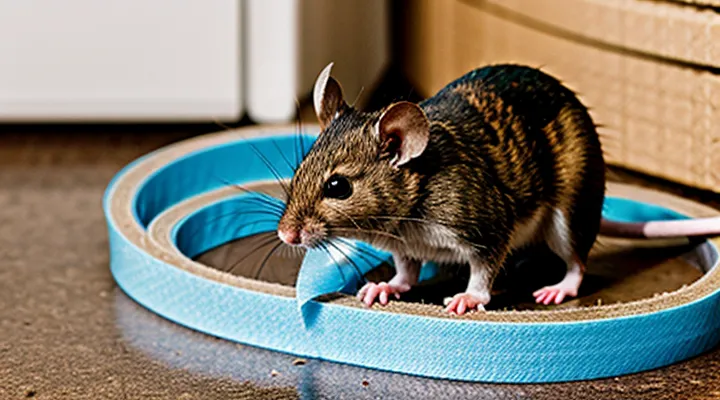
What Are Sticky Tape Traps?
How They Work
Sticky traps consist of a thin backing material coated with a high‑tack adhesive that remains effective in low‑humidity environments. The adhesive is formulated to retain stickiness after repeated contact with fur and paw pads, ensuring that once a mouse contacts the surface, its limbs become firmly attached.
The attraction mechanism relies on two primary cues. First, the trap may be impregnated with a mild scent that mimics food or nesting material, prompting exploratory behavior. Second, the visual contrast of the trap against surrounding surfaces encourages rodents to investigate, increasing the likelihood of contact.
When a mouse steps onto the adhesive surface, the microscopic fibers of its fur interlock with the polymer matrix of the glue. The resulting shear force exceeds the animal’s ability to lift its limbs, causing immediate immobilization. Because the adhesive does not dry quickly, the trap remains functional for extended periods, allowing multiple captures without replacement.
Key factors influencing performance:
- Adhesive composition: synthetic polymers with low‑temperature flexibility.
- Moisture resistance: additives that prevent loss of tack in damp environments.
- Placement strategy: positioning along walls, behind appliances, and near known travel routes.
The result is rapid entrapment, eliminating the need for poisons or mechanical kill devices and providing a reliable method for reducing rodent activity in targeted areas.
Components and Design
The adhesive mouse trap consists of a polymeric backing that provides structural integrity and resistance to tearing. A pressure‑sensitive glue layer, formulated from synthetic rubber compounds, delivers rapid adhesion upon contact with a rodent’s fur or paws. An optional attractant coating, often derived from grain or protein extracts, enhances lure effectiveness without compromising non‑toxic status. A release liner protects the adhesive surface during storage and handling. Dimensional specifications typically range from 12 × 12 cm to 20 × 20 cm, balancing coverage area with concealability. All materials comply with environmental safety standards and retain performance across temperature fluctuations from –10 °C to 40 °C.
Key design features include:
- Flat, low‑profile geometry that minimizes visual detection by target species.
- Rounded corners to reduce snagging on non‑target objects and facilitate placement in confined spaces.
- Integrated anchoring tabs for secure attachment to walls, floors, or baseboards.
- Transparent or muted coloration to blend with typical indoor environments while allowing visual inspection of captured rodents.
- Single‑use construction that eliminates the need for cleaning or re‑application of adhesive.
Packaging employs sealed, moisture‑proof pouches that preserve adhesive potency until deployment. Instructions emphasize positioning along established rodent pathways, near entry points, and in areas where debris accumulation is minimal, ensuring optimal contact and capture rates.
Pros and Cons of Sticky Tape Traps
Advantages in Rodent Control
Adhesive mouse traps serve as a practical component of integrated rodent management. Their design captures rodents upon contact, eliminating the need for lethal chemicals or extensive baiting procedures.
- Immediate immobilization reduces population growth rates.
- Non‑toxic composition protects non‑target wildlife and domestic animals.
- Low purchase price enables widespread deployment in residential and commercial settings.
- Simple placement requires no specialized training or equipment.
- Transparent monitoring allows rapid assessment of infestation levels.
- Minimal waste generation aligns with environmentally responsible pest control practices.
The combination of rapid action, safety, affordability, and ease of use positions glue‑based traps as an effective solution for controlling rodent activity in diverse environments.
Disadvantages and Ethical Concerns
Adhesive traps for rodents present several practical limitations. Their effectiveness declines sharply when target species develop avoidance behavior, leading to repeated placement and increased material costs. Contact surfaces become contaminated with urine and feces, creating sanitation hazards and requiring frequent replacement. Non‑target capture rates rise in cluttered environments, compromising control precision. Disposal of bound animals generates biohazard waste that must be handled according to local regulations, adding operational complexity.
- Reduced efficacy after initial captures
- Elevated sanitation and waste‑management demands
- High likelihood of incidental captures in mixed‑use areas
- Increased financial outlay for repeated deployment
Ethical considerations focus on the suffering inflicted by the glue’s immobilization mechanism. Captured mice experience prolonged distress, dehydration, and eventual death without rapid euthanasia. The method offers no opportunity for humane release, conflicting with animal‑welfare standards that prioritize minimization of pain. Public perception often disfavors visible killing devices, potentially eroding community support for pest‑management programs. Regulatory frameworks in several jurisdictions restrict or prohibit the use of glue‑based traps for vertebrate pests, reflecting broader societal concerns about cruelty.
- Prolonged agony and physiological stress for captured animals
- Absence of humane euthanasia options
- Incompatibility with animal‑welfare guidelines
- Potential legal restrictions based on cruelty considerations
Effective Placement of Sticky Tape Traps
Identifying Rodent Activity
Identifying rodent activity is the first step in an effective adhesive trap program. Visual evidence provides the most reliable indication of presence and movement patterns.
Common signs include:
- Fresh droppings, typically 3‑5 mm long, dark brown, and found along walls, behind appliances, or near food sources.
- Gnaw marks on wood, plastic, or insulation, usually 2‑3 mm deep and rounded at the entry point.
- Nests constructed from shredded paper, fabric, or insulation, often located in hidden corners, under furniture, or within wall voids.
- Grease trails left by paws on vertical surfaces, appearing as faint, oily smears.
- Audible sounds such as scratching or scurrying, most evident at night when rodents are active.
Tracking powders or fluorescent dust can augment visual detection. Dust applied along suspected pathways reveals footprints under ultraviolet light, confirming travel routes without disturbing the animals.
Once activity is confirmed, strategically place adhesive traps along identified pathways. Position traps perpendicular to walls, with the sticky surface facing the expected direction of travel. Replace traps regularly to maintain effectiveness and prevent saturation from non‑target debris.
Continuous monitoring of trap captures validates the presence of rodents and informs adjustments to trap placement. Recording capture dates, locations, and numbers supports data‑driven decision‑making and facilitates long‑term control.
Strategic Placement Locations
Effective deployment of adhesive traps for rodents depends on positioning devices where mice travel most frequently. Placement should target established pathways, concealment zones, and potential entry points.
- Along baseboards and walls where rodents follow edges.
- Behind appliances such as refrigerators and stoves, where shadows provide cover.
- In dark corners of cabinets, closets, and pantries.
- Adjacent to suspected entry openings, including gaps around pipes and vents.
- Near food storage areas, especially grain bins, pantry shelves, and trash receptacles.
- Within attics, crawl spaces, and underfloor voids where foraging activity occurs.
- Along utility conduits and wiring channels that create linear travel routes.
- In areas with observable droppings, gnaw marks, or nesting material.
Positioning devices perpendicular to the wall, with the sticky surface facing outward, maximizes contact as mice brush against the barrier. Ensure surfaces are clean and free of dust to maintain adhesive efficacy. Regular inspection and replacement of traps sustain control effectiveness.
Environmental Considerations
Adhesive traps for mice present specific environmental challenges that must be addressed to prevent unintended ecological impact.
Key considerations include:
- Non‑target capture: glue surfaces attract insects, reptiles, and small mammals. Placement should avoid areas frequented by protected species and be limited to proven rodent pathways.
- Material composition: traps often contain synthetic polymers and petroleum‑based adhesives. Selecting products with biodegradable backing reduces long‑term waste accumulation.
- Disposal protocol: captured rodents and used traps constitute hazardous waste. Immediate containment in sealed containers followed by disposal according to local regulations prevents contamination of soil and water sources.
- Habitat disruption: extensive use in natural settings can alter food webs by removing prey organisms. Integrating traps with habitat‑preserving measures, such as maintaining alternative shelter, mitigates this effect.
- Chemical leaching: some adhesives release volatile organic compounds. Employing low‑emission formulations limits atmospheric pollution and protects indoor air quality.
Implementing these practices aligns rodent management with broader environmental stewardship objectives.
Maximizing Trap Effectiveness
Baits and Attractants
Baits and attractants are essential components when employing adhesive traps for mice in rodent management. Effective lure selection increases capture rates and reduces the number of traps required.
Common attractants include:
- Peanut butter – strong odor, high fat content, attractive to most mouse species.
- Commercial rodent gel – formulated with pheromones and food scents, long‑lasting.
- Seeds and grains – mimic natural foraging sources, suitable for outdoor settings.
- Cheese fragments – traditional choice, works best when paired with a strong scent additive.
Placement guidelines:
- Position traps along walls, behind appliances, and near known gnawing sites.
- Secure bait to the center of the adhesive surface to prevent premature contact with non‑target objects.
- Replace bait every 48 hours to maintain potency, especially in warm environments.
Safety considerations:
- Keep traps out of reach of children and non‑target wildlife.
- Use gloves when handling adhesive surfaces to avoid skin irritation.
- Dispose of captured rodents in sealed containers to prevent disease transmission.
Integrating attractants with sticky traps maximizes efficiency, allowing rapid reduction of mouse activity in infested areas.
Monitoring and Maintenance
Effective rodent control with adhesive mouse traps depends on systematic observation and upkeep. After initial placement, each trap should be inspected at consistent intervals, typically every 24 hours in high‑activity zones and every 48 hours elsewhere. During inspection, record captured specimens, trap condition, and any signs of avoidance; this data informs adjustments to trap density and location.
When a trap becomes saturated, replace it promptly to preserve efficacy. Replace damaged or partially detached adhesive surfaces even if no capture is evident, as reduced stickiness diminishes performance. Dispose of captured rodents following local health regulations, using sealed containers to prevent secondary contamination.
Environmental factors influence trap reliability. Excess moisture can compromise adhesive strength; position traps away from leaky pipes and condensate sources. Temperature extremes may affect glue viscosity; in cold periods, consider traps formulated for low‑temperature operation, while in hot climates, ensure ventilation to avoid premature drying.
Maintain a logbook that details deployment dates, inspection results, and maintenance actions. Regular analysis of this record highlights trends, such as recurring hotspots, and supports evidence‑based decision‑making. Continuous monitoring and timely replacement constitute the core of a sustainable mouse‑control program. «Check traps daily and replace any that show reduced adhesion».
When to Replace Traps
Adhesive mouse tape traps lose effectiveness as the sticky surface degrades. When the adhesive no longer captures rodents on first contact, the trap must be replaced. Visual inspection reveals a dull, oily layer or a buildup of dust and debris; both conditions reduce capture efficiency.
Key indicators for replacement include:
- Failure to retain caught mice after a single encounter.
- Noticeable loss of tackiness when a finger lightly touches the surface.
- Accumulation of hair, urine, or feces that cannot be removed without damaging the adhesive.
A practical schedule recommends changing traps every 7–10 days in high‑infestation zones, even if captures appear satisfactory. In low‑activity areas, a 14‑day interval suffices, provided the adhesive remains intact.
Disposal must follow local regulations for pest‑control waste. Place used traps in sealed containers to prevent secondary infestation, then discard according to municipal guidelines. Regular replacement maintains optimal control and prevents rodent populations from adapting to weakened traps.
Safety and Ethical Considerations
Humane Alternatives
Sticky traps capture rodents without providing a painless release, creating ethical concerns for pest‑management programs.
Humane alternatives prioritize live capture, prevention, and non‑lethal deterrence, allowing removal of mice without injury.
Key methods include:
- Live‑catch traps that confine mice for release at a safe distance from the premises.
- Structural exclusion, such as sealing entry points and installing door sweeps, to prevent ingress.
- Bait stations employing anticoagulant or non‑toxic formulations that attract but do not trap, combined with regular monitoring.
- Ultrasonic emitters that generate frequencies uncomfortable for rodents, reducing activity in targeted zones.
- Natural repellents, for example peppermint oil or dried herbs, applied along pathways to discourage nesting.
- Habitat modification, including removal of food sources, clutter, and excessive moisture, to make environments unattractive to mice.
Implementing these strategies reduces reliance on adhesive devices while maintaining effective rodent control. «Humane pest control reduces animal stress and aligns with ethical standards».
Preventing Accidental Catches
Adhesive traps designed for mouse control can unintentionally capture non‑target species, including beneficial insects, small reptiles, and domestic pets. Preventing such accidental catches requires precise placement, regular monitoring, and environmental modifications.
- Position traps along established rodent pathways: walls, baseboards, and behind appliances. Avoid areas frequented by pets or wildlife, such as open floor spaces and garden edges.
- Use low‑profile traps that sit flush with the surface. Elevated or protruding devices increase the likelihood of contact by unintended animals.
- Install physical barriers where feasible: metal grates or mesh screens over traps limit access to larger organisms while still allowing mouse entry.
- Conduct inspections at intervals of no more than 24 hours. Prompt removal of captured rodents reduces the chance that a non‑target animal encounters a still‑sticky surface.
- Apply deterrent scents, such as citrus or menthol oils, around the perimeter of the trap zone. These odors discourage many insects and small mammals without affecting mouse activity.
Environmental management further reduces accidental captures. Eliminate food sources and clutter that attract both rodents and other creatures. Seal entry points larger than the target species to restrict access to the trap area. Maintaining a clean, organized space supports effective rodent control while protecting non‑target wildlife.
Proper Disposal Methods
Proper disposal of adhesive rodent traps prevents accidental exposure, environmental contamination, and secondary pest attraction. After capture, the trap must be handled with gloves to avoid direct contact with trapped animals and adhesive residues. Place the used trap in a sealed, puncture‑resistant container such as a heavy‑duty plastic bag or a rigid box. Seal the container with tape to ensure no escape of remains.
Follow these steps for safe disposal:
- Wear disposable gloves throughout the process.
- Transfer the trap into a sealed, leak‑proof bag.
- Double‑bag the sealed bag for added security.
- Label the outer bag with «hazardous waste – adhesive trap» to inform waste handlers.
- Dispose of the double‑bagged material according to local regulations for pest control waste, typically through a licensed hazardous‑waste collection service.
- Clean and disinfect tools used during removal, then discard gloves in the same sealed container.
Adhering to the outlined procedure eliminates health risks and complies with regulatory requirements for pest‑control waste management.
Troubleshooting Common Issues
Traps Not Catching Rodents
Traps that fail to capture rodents often result from improper placement, inadequate bait, or insufficient trigger sensitivity. When a device is positioned away from established runways, rodents may ignore it entirely. Bait that lacks strong olfactory appeal loses effectiveness after a short period, reducing capture rates. Mechanical traps with worn springs or misaligned jaws provide insufficient force to secure a quick kill, allowing escape.
Common causes of failure include:
- Placement in low‑traffic zones rather than along walls, behind appliances, or near food sources.
- Use of stale or non‑targeted bait, which does not stimulate a strong feeding response.
- Degraded trigger mechanisms that require excessive pressure to activate.
- Inadequate monitoring, leading to missed captures and reduced bait freshness.
Sticky adhesive tape offers an alternative that addresses these shortcomings. The tape creates a continuous, invisible barrier that does not rely on trigger mechanisms. Once a rodent contacts the adhesive surface, immediate immobilization occurs, eliminating the need for precise bait placement. The adhesive remains effective for extended periods, reducing the frequency of re‑application.
To incorporate adhesive tape into a control program:
- Identify primary rodent pathways by observing droppings, gnaw marks, and travel routes.
- Clean the selected area to remove dust and debris, ensuring optimal tape adhesion.
- Apply the tape with the adhesive side facing outward, securing edges with tape or staples to prevent lifting.
- Inspect the tape daily, removing captured rodents and replacing sections that lose tackiness.
- Complement tape usage with conventional traps in high‑traffic zones to increase overall capture probability.
By understanding why traditional devices fail and employing adhesive barriers strategically, pest managers can achieve more reliable rodent control outcomes.
Rodents Escaping Traps
Rodents often avoid conventional traps by detecting movement, scent, or the presence of bait. Their keen sense of touch enables them to feel the tension of a spring‑loaded mechanism, prompting immediate release before capture. When escape occurs, the infestation persists, leading to increased damage and health risks.
Sticky adhesive tapes designed for rodent control address escape behavior by creating a barrier that immobilizes the animal upon contact. The adhesive surface must be applied to the interior of a trap or to a dedicated capture platform. Proper placement ensures that any attempt to exit triggers adhesion, preventing the animal from reaching the release mechanism.
Effective use of adhesive tape includes the following steps:
- Clean the trap surface to remove dust, oil, or previous adhesive residues.
- Apply a uniform layer of tape on the interior walls, focusing on exit routes.
- Allow the adhesive to cure according to manufacturer instructions; premature use reduces effectiveness.
- Position bait centrally, encouraging the rodent to move toward the adhesive‑covered exit.
- Inspect traps regularly, removing captured rodents and replacing tape when adhesion diminishes.
Common pitfalls involve using low‑quality adhesive that loses tackiness after exposure to humidity, or applying tape to surfaces that rodents cannot reach, such as the outer shell of a trap. Selecting a tape formulated for high‑humidity environments and ensuring full coverage of potential escape paths mitigates these issues.
Monitoring trap performance provides data on escape frequency. Recording the number of untouched bait stations versus captured rodents helps determine whether adhesive placement requires adjustment. Consistent documentation supports rapid optimization of the control strategy.
By integrating adhesive barriers with standard trapping devices, pest managers reduce escape incidents, increase capture rates, and achieve more reliable rodent population suppression.
Combining Sticky Tape Traps with Other Methods
Integrated Pest Management Approach
Integrated Pest Management (IPM) treats rodent suppression as a systematic process that combines preventive measures, monitoring, and targeted interventions. The approach prioritizes long‑term population reduction while minimizing non‑target impacts and chemical reliance. When adhesive traps are incorporated, they function as a tactical component within the broader IPM framework.
Effective IPM implementation follows several sequential actions:
- Conduct a thorough inspection to identify entry points, harborage sites, and activity patterns.
- Apply exclusion techniques, such as sealing gaps and installing physical barriers, to limit access.
- Deploy sticky traps strategically in high‑traffic zones, positioning them perpendicular to walls and near known pathways.
- Record trap captures regularly, noting location, time, and number of rodents, to assess population trends.
- Adjust trap density and placement based on monitoring data, increasing coverage in hotspots and reducing it where activity declines.
- Complement trapping with sanitation measures that remove food sources and nesting materials.
- Review outcomes quarterly, refining exclusion, sanitation, and trapping tactics to maintain control efficacy.
Adhesive traps offer several advantages within IPM: they provide immediate visual confirmation of captures, enable precise mapping of activity, and avoid secondary poisoning risks. Their use should be synchronized with exclusion and sanitation to prevent re‑infestation. Proper placement and consistent monitoring ensure that sticky traps contribute effectively to the overall pest management strategy without compromising environmental safety.
When to Seek Professional Help
Effective rodent management with adhesive boards often resolves minor infestations, yet certain conditions demand the intervention of a licensed pest‑control specialist. Professional assistance becomes advisable when:
- Infestation size exceeds ten active capture sites within a single structure, indicating a population beyond the capacity of passive traps.
- Evidence of structural damage, such as gnawed wiring, insulation, or load‑bearing components, is present, posing safety hazards.
- Traps fail to reduce mouse activity after a consistent two‑week deployment period, despite proper placement and baiting.
- Presence of disease‑vector species (e.g., hantavirus‑carrying rodents) is confirmed, requiring containment protocols beyond standard adhesive methods.
- Legal or regulatory requirements mandate documented eradication procedures, such as in food‑processing facilities or healthcare environments.
- Property owners lack the resources or expertise to safely dispose of captured rodents and contaminated traps, risking secondary contamination.
In these scenarios, a qualified exterminator can conduct comprehensive inspections, implement integrated pest‑management strategies, and provide legally compliant documentation. Prompt engagement with professionals mitigates health risks, protects structural integrity, and ensures long‑term control efficacy.