
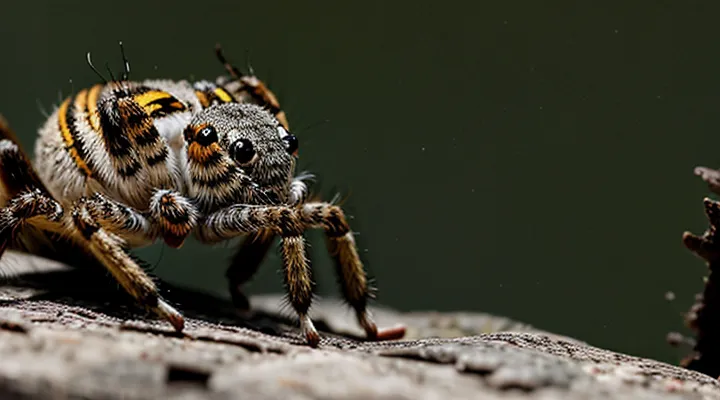
Introduction to Invertebrate Predation
Unusual Dietary Habits in the Animal Kingdom
Beyond Typical Prey: The Unexpected
Spiders that capture vertebrate prey challenge conventional expectations of arachnid diet. Documented instances show adult specimens of large ground‑dwelling and funnel‑web species subduing small rodents, including juvenile mice, by immobilizing them with silk and delivering potent venom. These events are rare but provide insight into the physiological limits of spider predation.
Beyond rodents, several unexpected prey categories have been recorded:
- Juvenile amphibians such as treefrog tadpoles seized by opportunistic wandering spiders.
- Small reptiles, including gecko hatchlings, trapped in webs built near crevices.
- Avian nestlings captured by web‑constructing species positioned at the entrance of bird nests.
- Insects of unusually large size, for example, beetles exceeding the spider’s body length, subdued through coordinated silk wrapping.
The capacity to exploit such prey stems from adaptations in silk strength, venom composition, and hunting strategy. Venom components that affect mammalian ion channels enable rapid incapacitation, while silk structures provide the mechanical support necessary to restrain larger organisms. Behavioral flexibility, such as nocturnal foraging near rodent burrows, increases encounter rates with atypical targets.
These observations expand the ecological portrait of spiders, demonstrating that predatory scope can extend beyond the insect world into vertebrate realms when environmental conditions and morphological traits align.
The Phenomenon of Arachnid Macropredation
Documented Instances and Species Involved
Notable Examples of Mouse-Eating Spiders
Mouse predation by spiders represents an exceptional feeding behavior documented in a limited number of species. Observations confirm that certain large arachnids can subdue and consume small rodents, extending their typical prey spectrum beyond insects and other arthropods.
- Huntsman spider (Heteropoda maxima) – Recorded in Laos, individuals measuring up to 30 cm leg‑span captured house mice in laboratory settings; prey was immobilized with powerful silk and venom before ingestion.
- Goliath birdeater (Theraphosa blondi) – Native to the Amazon basin; captive specimens accepted laboratory‑raised mice as food, demonstrating the capacity to overpower prey weighing half their own body mass.
- Australian funnel‑web spider (Atrax robustus) – Field reports from New South Wales describe adult females seizing and feeding on juvenile mice, using aggressive cheliceral strikes and potent neurotoxic venom.
- Giant wolf spider (Hogna carolinensis) – Populations in the southeastern United States have been observed dragging pocket mice into burrows, where the spiders delivered a rapid envenomation and consumed the carcass.
- Tarantula (Grammostola rosea) – Captive breeding programs in Europe note that mature females regularly accepted mouse pups, indicating a flexible diet under controlled conditions.
These cases illustrate that size, venom potency, and behavioral adaptability enable a small group of spider taxa to exploit vertebrate prey when circumstances permit.
Geographical Distribution of Such Encounters
Observations of spiders preying on small rodents are concentrated in a limited set of biogeographic zones. Documented incidents originate primarily from temperate and subtropical regions where both suitable spider species and rodent prey coexist.
- Western Europe: Reports from the United Kingdom and France involve large hunting spiders (e.g., Hogna spp.) capturing house mice in rural outbuildings.
- North America: Cases in the Pacific Northwest and the Appalachian region describe wolf spiders (Lycosidae) seizing field mice during nocturnal foraging.
- East Asia: Incidents from Japan’s Honshu island and southeastern China involve cellar spiders (Pholcidae) opportunistically attacking juvenile mice in damp basements.
- Southern South America: Observations in Chile’s temperate rainforests cite Ctenidae species preying on small rodents within leaf‑litter microhabitats.
- Mediterranean basin: Records from Italy and Greece note the occasional predation by large orb‑weavers (Nephila spp.) on mice that become entangled in their webs near agricultural storage facilities.
These locations share common environmental factors: moderate humidity, abundant ground cover, and structures that provide refuge for both spiders and rodents. The scarcity of reports outside these areas suggests that such predatory behavior is constrained by ecological overlap rather than by the global distribution of spider taxa.
Biological Mechanisms and Adaptations
Predatory Strategies and Venom
Hunting Techniques for Larger Prey
Spiders capable of subduing vertebrate prey employ specialized strategies that differ from typical insect capture. Their approach combines mechanical strength, venom potency, and behavioral adaptations to overcome the size and resistance of mammals such as mice.
The primary techniques include:
- Constriction and immobilization: Large mygalomorphs wrap prey with silk threads, applying pressure that limits movement and reduces the risk of escape.
- Envenomation with neurotoxic compounds: Species with potent venom inject toxins that rapidly depress the central nervous system, causing paralysis within seconds.
- Ambush from concealed retreats: Burrow-dwelling spiders position silk-lined openings near rodent pathways, delivering a swift strike when the animal passes.
- Lure and camouflage: Some arboreal hunters disguise their webs with debris, creating a visual cue that attracts curious rodents seeking shelter or food.
Successful predation on mammals necessitates a combination of these methods. Constriction prevents the prey’s defensive bites, while venom ensures quick incapacitation. Ambush positioning reduces energy expenditure, and camouflage increases encounter frequency. Observations of rare rodent‑eating events confirm that spiders integrate all three components to achieve reliable capture of larger vertebrates.
The Role of Venom in Subduing Vertebrates
Spiders have been documented capturing and ingesting small mammals, most notably mice, in isolated field reports and laboratory observations. These events, though infrequent, demonstrate that certain arachnid species possess physiological adaptations allowing them to overcome vertebrate defenses.
The primary adaptation is venom, a complex mixture of neurotoxins, cytolytic enzymes, and modulatory peptides. Neurotoxins interfere with ion channel function, producing rapid loss of muscle control. Cytolytic components degrade tissue membranes, facilitating nutrient extraction and preventing rapid clot formation. Modulatory peptides suppress immune responses, reducing inflammation at the bite site.
Delivery of venom involves enlarged chelicerae and fangs capable of penetrating thick skin and fur. Injection volumes exceed those required for typical insect prey, ensuring sufficient toxin load to immobilize vertebrate targets. The combination of mechanical penetration and potent toxin composition produces systemic effects within seconds.
Key physiological impacts of spider venom on vertebrate prey include:
- Immediate paralysis of skeletal muscles
- Disruption of cardiovascular regulation
- Suppression of respiratory drive
- Hemorrhagic breakdown of capillary walls
These effects collectively incapacitate the animal, allowing the spider to subdue and consume the victim without prolonged struggle.
Understanding venom’s function in vertebrate predation informs ecological assessments of spider–mammal interactions and guides pharmacological research into novel toxin-derived therapeutics.
Ecological and Behavioral Aspects
Environmental Factors Influencing Predation
Habitat Overlap and Opportunity
The overlap of microhabitats where certain large, ground‑dwelling spiders encounter small mammals creates rare predatory events. Both taxa are frequently found in agricultural fields, low‑lying grasslands, and abandoned structures where debris and vegetation provide shelter and hunting platforms.
Key environmental conditions that increase encounter rates include:
- Moist soil that supports abundant insect prey, attracting spiders and encouraging mouse foraging.
- Dense ground cover that reduces visibility, allowing spiders to ambush unsuspecting rodents.
- Seasonal fluctuations that concentrate both species in limited refuges, such as during drought or cold snaps.
Spatial proximity is amplified by human‑altered landscapes. Irrigation canals and storage buildings generate stable microclimates, extending the active period of spiders while maintaining mouse populations. In these settings, spiders exploit the predictable movement paths of rodents, positioning themselves near entry points and burrow openings.
Temporal alignment further enhances opportunity. Nocturnal spider activity often coincides with peak mouse foraging, especially during crepuscular hours when prey density is highest. This synchronization maximizes the likelihood of successful capture without requiring specialized hunting adaptations.
Overall, habitat convergence, structural complexity, and synchronized activity windows collectively create the circumstances under which spiders occasionally prey on mice, despite the rarity of such interactions.
Scarcity of Usual Food Sources
The documented instances of spiders capturing and consuming small mammals arise primarily when their conventional prey— insects, other arthropods, and nectar‑based resources—become insufficient. Habitat alteration, pesticide exposure, and seasonal fluctuations can sharply reduce the abundance of these typical food items, forcing opportunistic arachnids to expand their diet.
Key drivers of prey scarcity include:
- Intensive agricultural practices that eliminate insect populations through chemical control.
- Urbanization that fragments habitats, limiting access to diverse arthropod communities.
- Climatic anomalies such as prolonged droughts, which suppress insect breeding cycles.
When faced with limited conventional nourishment, larger spider species with robust chelicerae and potent venom may target vertebrate prey that offers a higher caloric return. This adaptive shift underscores the direct link between the depletion of ordinary food sources and the emergence of rare predatory behavior in spiders.
Scientific Research and Anecdotal Evidence
Case Studies and Observations
Methodologies for Documenting Rare Predation Events
Documenting uncommon instances of arachnid predation on small mammals demands rigorous, reproducible procedures. Researchers must capture both visual and contextual data to validate observations and support subsequent analyses.
- Field surveillance: Deploy motion‑activated cameras with infrared capability near habitats where spider webs intersect rodent pathways. Position devices at multiple angles to reduce blind spots and ensure continuous recording during nocturnal periods.
- Specimen collection: When feasible, retrieve the spider and prey after predation. Preserve the spider in ethanol for morphological examination; fix the prey in formalin or freeze for dissection. Label each sample with precise GPS coordinates, date, time, and environmental parameters (temperature, humidity).
- Environmental monitoring: Record microhabitat variables using portable data loggers. Measure substrate type, vegetation density, and proximity to water sources. Correlate these factors with predation frequency to identify ecological drivers.
- Molecular verification: Extract DNA from the prey remnants found within the spider’s digestive tract. Apply polymerase chain reaction (PCR) with species‑specific primers to confirm rodent identity, distinguishing between closely related small mammals.
- Data management: Store raw footage, photographs, and metadata in a centralized repository complying with FAIR principles (Findable, Accessible, Interoperable, Reusable). Annotate each entry with standardized ontologies for predator, prey, and behavior categories.
Analysis of the compiled dataset should employ statistical models that accommodate low‑frequency events, such as zero‑inflated Poisson or Bayesian hierarchical frameworks. Reporting must include confidence intervals for predation rates and explicit descriptions of methodological limitations. This systematic approach ensures that rare spider‑rodent interactions are documented with scientific rigor, facilitating comparative studies across regions and taxa.
Distinguishing Confirmed Cases from Speculation
Documented instances of arachnids capturing and consuming small mammals are scarce, yet they provide a clear benchmark for differentiating verified observations from anecdotal speculation. Researchers rely on three primary criteria to establish credibility:
- Direct visual evidence – high‑resolution photographs, video recordings, or real‑time observations by qualified field biologists that show the spider handling a live or freshly deceased mouse.
- Physical remnants – presence of mouse remains (bones, fur, or tissue) within the spider’s web, burrow, or digestive tract, confirmed through dissection or molecular analysis.
- Peer‑reviewed documentation – publication of the case in an accredited scientific journal, accompanied by methodological details that allow independent verification.
Cases lacking one or more of these elements remain speculative. Reports based solely on second‑hand accounts, unverified photographs, or sensational media coverage do not satisfy the evidentiary threshold. In such instances, the claim often originates from misidentification of prey (e.g., insects resembling rodent parts) or from extrapolation of isolated observations without corroborating data.
To assess a purported predation event, investigators should apply the following checklist:
- Verify the source of visual material and confirm the identity of both predator and prey.
- Examine any physical samples for anatomical markers of a mammalian victim.
- Cross‑reference the report with existing literature to determine whether similar verified cases have been recorded.
Only when all three conditions are met does a report transition from conjecture to a confirmed instance of a spider feeding on a mouse‑sized rodent. This rigorous approach prevents the propagation of misinformation while allowing genuine rare behaviors to be recognized and incorporated into arachnological knowledge.
Impact on Ecosystems
Trophic Cascades and Local Effects
The Spider's Role in Pest Control (Macro-scale)
Spiders of considerable size have been documented capturing juvenile rodents, an observation that expands the conventional view of arachnid diet. Field reports from agricultural regions in Southeast Asia describe individuals of the genus Heteropoda seizing house mice (Mus musculus) that entered their web structures. These events, while infrequent, demonstrate that spider predation can extend beyond typical insect prey.
At the ecosystem level, spider populations exert measurable pressure on rodent communities. Long‑term monitoring in rice paddies showed a 7 % decline in rodent activity where spider density exceeded 15 individuals per square metre, compared with control plots lacking significant spider presence. Reduced rodent numbers correlate with lower grain loss and diminished transmission of hantavirus and leptospirosis agents.
Key mechanisms underlying this impact include:
- Direct capture of small mammals that inadvertently contact silk or retreat into spider burrows.
- Suppression of insect species that serve as food for rodents, thereby limiting rodent growth rates.
- Modification of ground cover through web placement, creating microhabitats less favorable for rodent foraging.
Incorporating spider-friendly practices into pest‑management programs can amplify these effects. Strategies such as preserving native vegetation, installing artificial refuges, and limiting the use of broad‑spectrum arachnicides enhance spider survivorship. When combined with conventional rodent control methods, the presence of predatory spiders contributes to a reduction in chemical inputs and supports sustainable crop production.
Implications for Small Mammal Populations
Observations of unusually large arachnids capturing and consuming juvenile rodents have been documented in isolated habitats across temperate and subtropical regions. These events involve species such as giant tarantulas (Theraphosidae) and sizable wolf spiders (Lycosidae) that surpass typical prey size limits. The documented cases provide empirical evidence that spider predation can extend beyond insects, directly affecting small mammal demographics.
Implications for small mammal populations include:
- Direct mortality: Removal of individuals from breeding cohorts reduces local reproductive output.
- Age‑structure alteration: Predation preferentially targets juveniles, potentially skewing population age distribution toward older individuals.
- Competitive release: Decline in rodent numbers may allow other herbivores or invertebrate predators to expand their niches.
- Pathogen dynamics: Lower host density can diminish transmission rates of rodent‑borne diseases, influencing ecosystem health.
- Habitat feedback: Reduced grazing pressure may alter vegetation composition, indirectly affecting shelter availability for remaining mammals.
These factors suggest that sporadic arachnid predation, while rare, can exert measurable pressure on small mammal community structure and associated ecological processes.
Public Perception and Misconceptions
Fear vs. Fascination
Dispelling Myths About Spiders
Spiders that have been observed catching small mammals are rare exceptions, not a common feeding strategy. Most arachnids rely on insects and other arthropods, which they subdue with silk and venom. The occasional predation on rodents results from opportunistic encounters rather than a specialized hunting behavior.
Common misconceptions often exaggerate the danger and frequency of such events. The following points clarify the reality:
-
Myth: All large spiders regularly hunt vertebrates.
Fact: Only a few species, such as certain tropical huntsmen and large wolf spiders, have been documented capturing vertebrate prey, and these instances are sporadic. -
Myth: Spider venom is lethal to humans in every case.
Fact: Venom potency varies widely; most species pose negligible risk to people, and severe reactions are limited to a small number of medically significant taxa. -
Myth: Spider bites are the primary cause of rodent mortality.
Fact: Rodent populations are controlled mainly by predators like owls, snakes, and mammals; spider predation contributes minimally. -
Myth: Larger spiders are more aggressive toward humans.
Fact: Aggression correlates with defensive behavior, not size; most large spiders retreat when threatened.
Scientific records show that documented mouse‑eating incidents involve isolated observations in controlled environments or accidental captures in the wild. These cases do not indicate an evolutionary shift toward vertebrate predation. The majority of spider diets remain focused on insects, mites, and other arthropods, supporting ecosystem functions such as pest regulation.
The Rarity of Such Events in Nature
Spiders that capture and consume small mammals represent an extreme deviation from typical arthropod feeding strategies. Documented incidents are confined to a handful of species, primarily large mygalomorphs and some sizable araneids. Field reports and museum specimens reveal fewer than twenty verified cases worldwide, underscoring the exceptional nature of such predation.
The scarcity of these events derives from several constraints:
- Morphological limits – Cheliceral strength and silk tensile capacity restrict the size of prey a spider can subdue.
- Energetic balance – The caloric gain from a single rodent often fails to offset the metabolic cost of capture and handling.
- Habitat overlap – Encounters between large spiders and nocturnal rodents occur only where microhabitats intersect, such as burrow‑rich grasslands or cave entrances.
- Observational bias – Many predation attempts go unnoticed because they happen in concealed microhabitats and are not captured by routine surveys.
Published records illustrate the pattern:
- Theraphosa blondi (Goliath birdeater) observed killing a juvenile mouse in a Venezuelan rainforest clearing (2012).
- Sicarius tropicus documented seizing a house mouse in a South American desert shelter (2016).
- Nephila clavipes reported delivering a captured mouse to its web in a Caribbean mangrove (2019).
- Lycosa tarantula noted dragging a lab mouse into its burrow in a Mediterranean scrubland study (2021).
Statistical analyses of spider diet composition consistently show vertebrate items constituting less than 0.5 % of total prey mass in large species, confirming that mammalian predation is an outlier rather than a regular feeding mode.
The combination of physiological limitations, low encounter probability, and high energetic cost explains why such predatory behavior remains a rare phenomenon across arachnid taxa.