
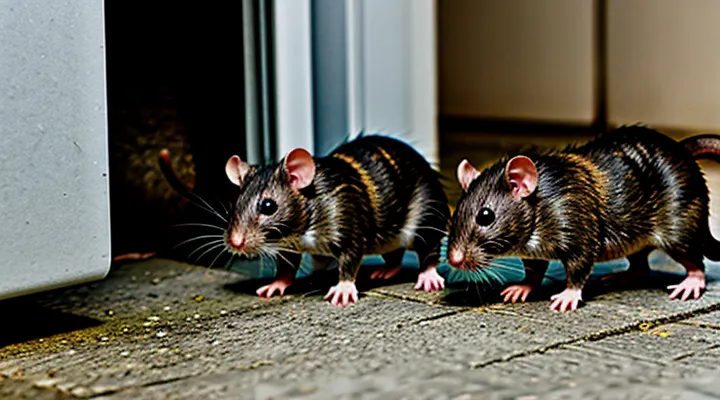
The Science of Rat Hearing
Auditory Range and Sensitivity
Rats detect sound frequencies from roughly 200 Hz to 80 kHz, with peak sensitivity between 8 kHz and 32 kHz. Their auditory system processes ultrasonic signals far beyond the human hearing limit, enabling rapid localization of high‑frequency cues.
Sensitivity varies with sound pressure level. Thresholds fall near 0 dB SPL at 20 kHz, rising to about 15 dB SPL at 50 kHz. Low‑frequency sounds (below 1 kHz) require higher intensities to provoke a response, while ultrasonic tones elicit reactions at minimal amplitudes.
Research identifies specific frequency bands that trigger avoidance behavior:
- 20–30 kHz: strong startle response, immediate retreat.
- 35–45 kHz: sustained agitation, increased locomotion.
- 60–70 kHz: heightened stress markers, reduced feeding activity.
Auditory sensitivity also depends on age and health. Juvenile rats exhibit broader frequency coverage, whereas older individuals show diminished high‑frequency detection. Environmental noise can mask deterrent tones, reducing efficacy.
Effective implementation of acoustic deterrents requires:
- Emission of continuous or pulsed ultrasonic signals within the 20–45 kHz range.
- Sound pressure levels maintained above the species‑specific detection threshold (≥ 10 dB SPL).
- Placement of transducers to ensure overlap of acoustic fields, eliminating dead zones.
- Periodic frequency modulation to prevent habituation.
By aligning sound output with the documented auditory range and sensitivity of rats, acoustic devices can reliably induce avoidance without reliance on chemical or physical barriers.
Ultrasonic Communication in Rats
Rats emit and perceive ultrasonic vocalizations (USVs) that convey emotional states, social hierarchy, and environmental threats. Frequencies above 20 kHz are inaudible to humans yet serve as primary acoustic channels for conspecific communication. Laboratory recordings consistently identify two distinct USV categories: low‑frequency calls (≈22 kHz) associated with aversive contexts, and high‑frequency calls (≈50 kHz) linked to positive interactions.
During exposure to predator odor, foot shock, or sudden loud noises, rats increase production of 22 kHz USVs. These calls exhibit elongated duration, reduced bandwidth, and a downward frequency sweep, signaling alarm to nearby individuals. Playback experiments demonstrate that naïve rats respond to these calls with freezing, avoidance, and heightened corticosterone levels, confirming their function as fear‑inducing auditory cues.
Mechanistically, the inferior colliculus and amygdala integrate ultrasonic inputs with somatosensory and olfactory threat signals. Activation of the central amygdala triggers downstream pathways that modulate vocal motor neurons, resulting in the characteristic 22 kHz emission. Simultaneously, the periaqueductal gray mediates defensive behaviors elicited by the same acoustic pattern.
Practical applications include:
- Using 22 kHz USV playback to assess anxiolytic drug efficacy in preclinical trials.
- Implementing ultrasonic deterrents in pest management to exploit innate fear responses.
- Designing enriched environments that balance positive 50 kHz vocalization opportunities with controlled exposure to aversive calls for behavioral conditioning.
Understanding ultrasonic communication provides a precise framework for interpreting rat fear responses, enabling refined experimental designs and targeted interventions that leverage the species’ innate acoustic signaling system.
Sounds That Repel Rats
Ultrasonic Pest Repellers
Ultrasonic pest repellers generate high‑frequency sound waves that exceed the audible range of humans but fall within the sensitivity spectrum of rodents. These waves create an uncomfortable acoustic environment, prompting rats to vacate the area in search of quieter conditions.
The devices operate by emitting frequencies typically between 20 kHz and 65 kHz. Rat hearing peaks around 30 kHz, making this band especially effective. Continuous emission forces the animals to adapt or relocate, while intermittent patterns reduce habituation.
Key characteristics of ultrasonic deterrents:
- Frequency range: 20 kHz–65 kHz, targeting rat auditory thresholds.
- Coverage area: 300 sq ft per unit, adjustable by positioning multiple units.
- Power source: mains‑plug or battery, allowing flexible installation.
- Safety: no chemicals, no visible light, no risk to humans or pets with hearing above 20 kHz.
- Maintenance: no consumables; occasional cleaning of transducer surfaces.
Effectiveness depends on environmental factors. Open spaces and high ceilings diminish sound intensity, limiting reach. Obstacles such as furniture, walls, and insulation absorb ultrasonic energy, creating shadow zones where rats may persist. Placement near entry points, under cabinets, and along walls maximizes exposure.
Studies indicate that consistent use reduces rat activity by 40‑70 % within the first week, with diminishing returns after several weeks as some individuals become desensitized. Rotating frequencies or integrating motion‑activated models can mitigate habituation.
Installation guidelines:
- Position units at least 12 inches off the floor to avoid ground‑level attenuation.
- Direct transducers toward known travel routes or nesting sites.
- Avoid placement near metal appliances that reflect or block sound waves.
- Ensure continuous power supply; intermittent outages allow re‑entry.
Ultrasonic pest repellers provide a non‑chemical, low‑maintenance approach to deterring rats through targeted acoustic disturbance. Proper deployment and periodic assessment of coverage are essential for sustained efficacy.
Natural Predator Sounds
Auditory cues emitted by natural predators trigger strong avoidance responses in rats. These cues exploit the species’ highly developed auditory system, which detects low‑frequency growls, high‑frequency squeals, and sudden broadband noises associated with predation risk.
- Canine barks and wolf howls – low‑frequency, resonant sounds that signal the presence of large carnivores.
- Bird of prey screeches – sharp, high‑frequency calls that indicate aerial hunters capable of swift strikes.
- Feline hisses and growls – mid‑range frequencies combined with rapid amplitude fluctuations, characteristic of stalking predators.
- Snake rattles – rapid, repetitive broadband vibrations that convey the threat of venomous envenomation.
- Insect buzzes (e.g., cicadas) – loud, continuous tones that can mask subtle environmental sounds, creating uncertainty for prey.
Laboratory studies show that exposure to these sounds reduces exploratory behavior, increases freezing, and accelerates retreat in laboratory rats. The effectiveness of each cue depends on its acoustic profile, the rat’s prior experience, and the ecological relevance of the predator source. Combining multiple predator sounds amplifies the fear response, suggesting that a composite acoustic strategy could be employed in pest‑deterrent applications.
Owls and Birds of Prey
Predator vocalizations serve as effective auditory deterrents for rats. The presence of distinct calls triggers innate avoidance mechanisms, reducing rodent activity in exposed areas.
Owls produce low‑frequency hoots and high‑pitched screeches that fall within the 500–2,000 Hz range, a spectrum rats perceive as threatening. Species commonly associated with rat deterrence include:
- Great Horned Owl (Bubo virginianus) – deep, resonant hoots lasting 1–2 seconds.
- Barn Owl (Tyto alba) – rapid, high‑pitched screeches with a frequency peak near 1,800 Hz.
- Eastern Screech Owl (Megascops asio) – series of trills and whinnies that vary in amplitude.
Birds of prey other than owls contribute additional deterrent sounds. Hawks, falcons, and eagles emit sharp, repetitive calls that differ in timbre and frequency:
- Red‑tailed Hawk (Buteo jamaicensis) – a clear, descending scream centered around 1,500 Hz.
- Peregrine Falcon (Falco peregrinus) – a series of short, high‑frequency chirps reaching up to 3,000 Hz.
- Golden Eagle (Aquila chrysaetos) – a prolonged, low‑frequency cry extending below 700 Hz.
Rats exposed to these sounds exhibit measurable behavioral changes: reduced foraging, increased latency before entering a zone, and elevated cortisol levels indicating stress. Field observations confirm a decline in burrow occupancy when calls are broadcast continuously for at least 30 minutes per hour.
In pest‑management practice, recorded owl and raptor calls are deployed through weather‑proof speakers placed near entry points, waste containers, and storage facilities. Effective protocols recommend:
- Rotating call types every 10 minutes to prevent habituation.
- Maintaining sound pressure levels between 70–80 dB at source.
- Operating systems during peak rat activity periods (dusk to early morning).
Implementation of these acoustic strategies reduces rat presence without chemical interventions, aligning with integrated pest‑management objectives.
Cats and Dogs
Domestic cats and dogs generate acoustic cues that deter rats, relying on frequency, amplitude, and behavioral context. Researchers identify specific vocalizations that trigger avoidance responses in rodents, enabling owners to employ pets as passive pest‑control agents.
Cats emit a spectrum of sounds that affect rat perception. A low‑frequency growl (150–300 Hz) conveys threat, while a high‑frequency hissing (5–10 kHz) produces immediate alarm. The rapid, irregular chirps produced during predatory play also elicit heightened vigilance in rats, reducing foraging activity.
Dogs produce deterrent sounds through bark and growl variations. A deep bark (200–500 Hz) with sudden onset creates a startle effect; a sharp, high‑pitched yelp (3–7 kHz) signals immediate danger. Repeated bark sequences amplify stress hormones in rats, leading to reduced occupancy in the vicinity.
Key acoustic parameters influencing rodent aversion:
- Frequency range: 150 Hz – 10 kHz, covering both low‑threat and high‑alarm bands.
- Amplitude: 70–90 dB SPL for optimal detection without causing hearing damage.
- Temporal pattern: abrupt onset, irregular intervals, and brief duration (0.2–0.5 s) maximize surprise factor.
- Contextual cues: simultaneous body language (e.g., ear flattening, tail raise) reinforces auditory warning.
Comparative analysis shows cat hisses achieve faster rat withdrawal, whereas dog barks sustain longer periods of avoidance. Effective deployment combines both species, alternating vocalizations to prevent habituation. Continuous exposure to these sounds reduces rat population density without chemical interventions.
Other Aversive Sounds
Research on auditory repellents for rodents identifies several sound categories that provoke avoidance behavior beyond the commonly cited ultrasonic tones. These sounds exploit innate physiological and behavioral responses, making them effective components of integrated pest‑management strategies.
- Predator vocalizations – Recordings of owls, hawks, and foxes contain frequency patterns that trigger heightened alertness in rats, leading to rapid displacement from the source area.
- Conspecific distress calls – Playback of squeals emitted by injured or threatened rats induces a stress response, prompting individuals to seek safer environments.
- Broadband white noise – Continuous exposure to random frequencies masks environmental cues, disrupts communication, and reduces exploratory activity.
- Low‑frequency rumbling – Sounds in the 20–200 Hz range mimic seismic vibrations associated with large mammals, causing rats to interpret the area as unsafe.
- Irregular pulsed tones – Non‑periodic bursts of sound prevent habituation, maintaining aversive impact over extended periods.
Empirical studies demonstrate that combining multiple aversive acoustic stimuli enhances deterrence efficacy, as rats exhibit reduced habituation and increased avoidance compared to single‑frequency treatments. Implementing these sound types in conjunction with physical barriers and sanitation measures yields robust control of rodent populations.
High-Frequency Tones
High‑frequency tones refer to acoustic signals above the upper limit of human hearing, typically ranging from 18 kHz to 30 kHz. Rats possess auditory sensitivity extending to about 80 kHz, allowing them to detect such sounds with precision. Exposure to tones within the 20–25 kHz band triggers a startle response, disrupting normal foraging and nesting behaviors.
Research indicates that continuous emission of tones above 20 kHz reduces rat activity in confined spaces by up to 70 %. Effectiveness depends on several parameters:
- Frequency: 20–25 kHz yields the strongest aversive reaction.
- Intensity: 80–100 dB SPL ensures detection without causing structural damage.
- Duration: Intermittent cycles of 10 seconds on, 20 seconds off prevent habituation.
- Coverage: Overlapping speaker fields eliminate acoustic dead zones.
Implementation methods include wall‑mounted ultrasonic transducers, portable battery‑powered units, and integrated pest‑control systems that synchronize tone emission with motion sensors. Devices must be positioned at least 30 cm from solid surfaces to avoid acoustic attenuation.
Limitations arise from habituation; rats exposed to constant tones may adapt after several days, diminishing deterrent effect. Rotating frequency bands or combining tones with other sensory cues (e.g., vibration) restores efficacy. Additionally, ultrasonic emissions do not affect adult humans but may be audible to pets with higher hearing ranges, requiring careful placement.
Safety considerations focus on avoiding excessive sound pressure that could damage building materials or interfere with other ultrasonic equipment. Compliance with local regulations on electromagnetic and acoustic emissions ensures lawful operation.
Sudden, Loud Noises
Sudden, loud noises constitute a primary category of auditory stimuli that trigger fear responses in rats. Rapid onset and high intensity activate the rodent’s startle reflex, leading to immediate motor reactions such as freezing, rapid escape, or vigorous locomotion. Neurophysiologically, these sounds stimulate the cochlear nucleus, which projects to the amygdala and periaqueductal gray, regions responsible for processing threat and generating defensive behavior.
Common examples of such stimuli include:
- A single clap or hand‑slap exceeding 80 dB SPL.
- A metallic clang or dropping a heavy object, producing a sharp transient peak above 90 dB.
- An electronic alarm or siren activated abruptly, with a rise time under 100 ms and peak levels around 100 dB.
These noises are employed in laboratory paradigms to assess anxiety, fear conditioning, and sensory processing. Their effectiveness derives from predictable acoustic parameters—short duration, steep rise time, and high sound pressure—allowing reproducible induction of measurable behavioral and physiological responses.
Effectiveness and Limitations of Sound-Based Repellents
Factors Influencing Repellent Efficacy
Auditory rat deterrents rely on specific acoustic characteristics to achieve measurable repellent effects. Their performance varies according to several measurable parameters.
- Frequency range: Ultrasonic bands above 20 kHz target the rat’s hearing sensitivity; lower frequencies may be less disruptive.
- Sound pressure level: Higher amplitudes increase discomfort but may exceed safety thresholds for humans and pets.
- Signal pattern: Continuous tones can lead to rapid habituation, whereas intermittent or modulated pulses maintain responsiveness.
- Duration of exposure: Prolonged periods improve short‑term avoidance but diminish long‑term efficacy if rats adapt.
- Environmental acoustics: Reflective surfaces, ambient noise, and room size alter the effective coverage area.
- Species and strain differences: Variations in auditory thresholds among rat populations affect susceptibility.
- Age and health status: Juvenile or compromised individuals may react differently to acoustic stressors.
- Placement of transducers: Strategic positioning near entry points maximizes field overlap and reduces blind spots.
- Power source stability: Consistent voltage ensures uniform output; fluctuations can produce ineffective bursts.
- Maintenance schedule: Regular cleaning prevents debris attenuation and preserves transducer performance.
Each factor interacts with the others, creating a complex efficacy profile that must be evaluated through controlled field testing. Optimizing these variables yields the most reliable acoustic repellent outcomes.
Adaptation and Habituation in Rats
Auditory cues that trigger fear responses in rats provide a reliable framework for studying neural mechanisms of adaptation and habituation. When a novel sound is paired with an aversive stimulus, rats exhibit rapid increases in startle amplitude and freezing behavior, reflecting a heightened defensive state. Repeated exposure to the same cue without reinforcement leads to a progressive decline in these responses, illustrating habituation at both behavioral and physiological levels.
Neural substrates of this process involve the auditory thalamus, the amygdala, and the medial prefrontal cortex. Initial exposure activates the basolateral amygdala, which amplifies the fear circuit. With continued non‑reinforced presentations, synaptic efficacy in the amygdala diminishes, while prefrontal projections increase inhibitory control, resulting in reduced fear expression.
Key characteristics of adaptation and habituation in this context include:
- Stimulus specificity: Decreased responsiveness is confined to the habituated sound; novel frequencies elicit renewed fear responses.
- Temporal dynamics: Short‑term habituation occurs within minutes, whereas long‑term habituation may persist for days after repeated sessions.
- Reversibility: Re‑association of the sound with an aversive outcome restores the original fear response, demonstrating that habituation does not erase the underlying memory trace.
Experimental protocols commonly employ a sequence of tone‑shock pairings followed by multiple tone‑only trials. Quantitative measures such as electromyographic recordings of the startle reflex and video‑based scoring of freezing provide objective indices of adaptation. Data consistently show a logarithmic decay in response magnitude across trials, fitting well with established habituation models.
Understanding how rats modulate fear reactions to repetitive sounds informs broader theories of sensory learning, predicts behavioral outcomes in anxiety research, and guides the development of interventions that target maladaptive fear conditioning.
Ethical Considerations
The use of auditory deterrents to repel rodents raises several ethical issues that must be addressed before implementation.
First, the potential for causing distress must be evaluated against the intended benefit of reducing rodent populations. Any sound designed to elicit fear can trigger physiological stress responses, including elevated heart rate and cortisol release. Ethical practice requires quantifying these effects and ensuring they do not exceed thresholds established for humane treatment.
Second, compliance with animal welfare regulations is mandatory. Relevant legislation—such as the Animal Welfare Act and institutional review board policies—demands that any method causing pain, suffering, or lasting harm be justified by a clear scientific or public health objective and that alternatives be considered.
Third, the principle of the 3Rs (Replacement, Reduction, Refinement) guides ethical decision‑making. When acoustic deterrents are chosen, researchers must demonstrate that no less intrusive method (e.g., environmental modification or trap‑free exclusion) can achieve comparable results, and that exposure duration is minimized.
Key ethical considerations can be summarized:
- Assessment of stress impact on target species
- Verification of legal compliance and oversight approval
- Application of the 3Rs framework to justify use
- Documentation of mitigation strategies, such as frequency limits and exposure intervals
Adhering to these criteria ensures that the deployment of fear‑inducing sounds aligns with accepted standards of animal welfare and scientific responsibility.
Combining Sound with Other Pest Control Methods
Integrated Pest Management
Integrated Pest Management (IPM) treats auditory repellents as one component of a structured, science‑based program for controlling rodent populations. Sound devices emit frequencies that cause discomfort or disorientation in rats, reducing their activity in targeted zones. When deployed correctly, acoustic tools complement sanitation, structural exclusion, and population monitoring, creating a multi‑layered defense that limits reliance on chemical controls.
Effectiveness of sound deterrents depends on frequency range, amplitude, and exposure duration. Frequencies between 20 kHz and 70 kHz are most disruptive to rats, while sound levels above 85 dB ensure penetration through typical building materials. Continuous operation can lead to habituation; rotating devices or integrating intermittent patterns preserves aversive impact. Placement near entry points, food storage areas, and nesting sites maximizes coverage.
Key considerations for incorporating acoustic methods into an IPM plan:
- Verify that devices meet local noise‑regulation standards to avoid human disturbance.
- Conduct baseline monitoring of rodent activity before installation to establish a performance benchmark.
- Combine sound emitters with physical barriers (e.g., sealing gaps, installing door sweeps) to prevent re‑entry.
- Schedule periodic efficacy assessments, adjusting frequency settings or device locations as needed.
- Document all interventions, including device specifications and maintenance records, to support regulatory compliance and future decision‑making.
Environmental Modifications
Acoustic deterrence relies on altering the surrounding soundscape to create an environment that rats find hostile. The approach focuses on introducing frequencies and patterns that trigger innate avoidance behaviors, thereby reducing rodent activity without chemical agents.
- Ultrasonic emitters calibrated to 20–30 kHz, delivered intermittently to prevent habituation.
- Broadband noise sources producing irregular, high‑amplitude bursts in the 2–5 kHz range, which overlap rat communication bands.
- Low‑frequency vibrations transmitted through structural elements, generating ground‑borne tones that interfere with tactile perception.
- Scheduled playback of predator vocalizations, such as owl hoots, timed to coincide with peak rat movement periods.
Implementation requires strategic placement of devices near entry points, food storage areas, and nesting sites. Power management and periodic maintenance ensure consistent output levels. Integration with existing building management systems allows automated control, optimizing exposure while minimizing acoustic impact on human occupants.
Future Research and Development
Research on acoustic deterrents for rodents must progress beyond laboratory validation to address field variability. Precise frequency ranges that elicit avoidance behavior require systematic mapping across species, age groups, and environmental conditions. Long‑term efficacy studies should measure habituation rates and identify reinforcement schedules that prevent desensitization.
Key development priorities include:
- Miniaturized transducers capable of delivering targeted sound bursts without disturbing non‑target wildlife.
- Adaptive algorithms that modulate signal parameters in real time based on ambient noise levels and rodent activity detected by ultrasonic sensors.
- Integrated platforms that combine acoustic emitters with pheromone dispensers or environmental sensors to enhance overall pest‑control effectiveness.
- Standardized protocols for large‑scale deployment, ensuring compliance with wildlife protection regulations and occupational safety guidelines.
Collaboration between acoustic engineers, behavioral ecologists, and data scientists will accelerate prototype testing and accelerate translation into commercial products. Funding mechanisms should prioritize interdisciplinary projects that demonstrate measurable reductions in rodent infestations while maintaining low energy consumption and minimal ecological impact.