
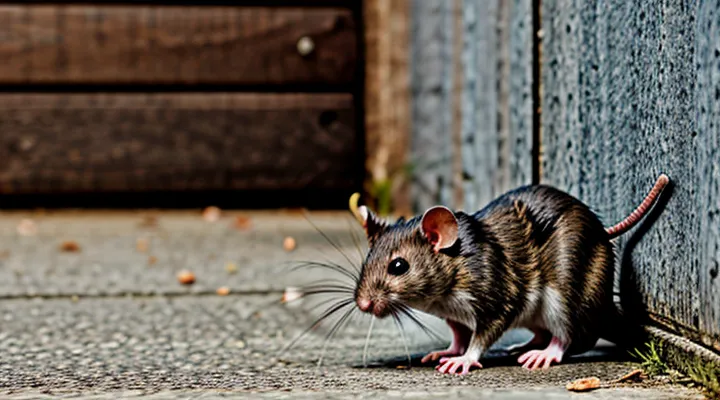
The Auditory Range of Rats and Mice
Frequency Sensitivity
Rodents possess a hearing range that extends well beyond that of humans, with peak sensitivity between 4 kHz and 20 kHz. Within this band, the cochlear hair cells respond most efficiently, allowing detection of low‑intensity sounds that would be inaudible to people. Sensitivity declines sharply above 20 kHz, yet many species still perceive ultrasonic frequencies up to 80 kHz, albeit with higher thresholds.
Effective acoustic repellents exploit this auditory profile by delivering tones that align with the rodent’s most responsive frequencies while remaining uncomfortable or startling. Practical guidelines include:
- Emit continuous or pulsed tones centered around 8–12 kHz for maximal audibility.
- Incorporate ultrasonic components (30–50 kHz) to increase aversive impact without disturbing humans.
- Maintain sound pressure levels above 70 dB SPL at the target zone to ensure detection over ambient noise.
- Vary frequency patterns to prevent habituation; alternating between 6 kHz, 10 kHz, and 40 kHz reduces adaptive desensitization.
Understanding the precise frequency‑sensitivity curve enables designers of rodent‑deterrent devices to select sound parameters that maximize discomfort for the animal while minimizing collateral acoustic disturbance.
Ultrasonic Perception
Rodents possess an auditory system tuned to frequencies far above the human hearing limit, typically extending from 1 kHz to 90 kHz, with peak sensitivity around 20–30 kHz. The cochlear hair cells and auditory nerve fibers respond to rapid pressure fluctuations, allowing detection of ultrasonic signals that are inaudible to people.
Exposure to ultrasonic tones above the species‑specific threshold can trigger innate avoidance responses. Experiments demonstrate that brief bursts of 25–35 kHz at sound pressure levels of 80–100 dB SPL cause immediate locomotor escape, reduced foraging, and increased grooming, behaviors indicative of discomfort or threat perception.
Efficacy depends on several parameters:
- Frequency: must match the species’ most sensitive band; common rodent repellents use 25–30 kHz for rats and 30–40 kHz for mice.
- Intensity: levels below 70 dB SPL often fail to elicit a response; optimal ranges lie between 80 and 100 dB SPL at the animal’s location.
- Temporal pattern: intermittent pulses (e.g., 1 s on, 5 s off) prevent habituation better than continuous tones.
- Spatial coverage: sound attenuates rapidly in air; placement within 1–2 m of target zones ensures sufficient pressure.
Long‑term exposure can lead to auditory adaptation, reducing deterrent effect. Rotating frequencies, varying pulse intervals, or combining ultrasonic emissions with other sensory cues (e.g., vibration) mitigates habituation.
Commercial devices designed to repel rodents incorporate these principles. Typical specifications include:
- Frequency range: 22–38 kHz adjustable.
- Output power: 80–95 dB SPL measured at 1 m.
- Programmable pulse cycles: 0.5–2 s on, 2–10 s off.
- Weather‑proof housing for indoor and outdoor deployment.
Correct installation involves mounting emitters at ceiling height or within wall cavities, directing the acoustic beam toward entry points, and ensuring unobstructed line of sight. Periodic performance checks—measuring SPL at target locations—confirm that acoustic levels remain within the effective window.
Natural Sound Deterrents
Natural acoustic repellents exploit auditory sensitivities of rodents to discourage presence. Predator vocalizations, such as owl hoots or hawk screeches, trigger innate avoidance responses. Field studies show a measurable reduction in rodent activity when recordings are broadcast intermittently throughout nocturnal hours.
Ultrasonic emissions exceed 20 kHz, a range beyond human hearing but detectable by rats and mice. Devices generate frequencies between 25 kHz and 70 kHz, creating an uncomfortable acoustic environment. Laboratory trials indicate a decline in foraging behavior within 48 hours of continuous exposure.
Distress calls recorded from conspecifics convey alarm signals. Playback of these sounds induces stress, prompting rodents to vacate the area. Experiments demonstrate a rapid cessation of nesting activity when distress vocalizations are introduced.
Environmental noises, including rapid water flow or wind rustling, mask communication channels used for breeding and foraging. Implementing artificial waterfalls or wind machines can disrupt colony cohesion, leading to migration.
Key considerations for effective deployment:
- Source authenticity: high‑quality recordings prevent habituation.
- Temporal variation: alternating sound patterns avoid desensitization.
- Coverage area: speakers must encompass the target zone with overlapping fields.
- Power reliability: uninterrupted operation ensures consistent deterrence.
When integrated with sanitation and structural exclusion measures, natural sound deterrents form a robust component of rodent management strategies.
Artificial Ultrasonic Devices
How Ultrasonic Repellents Work
Ultrasonic repellents emit sound waves above the human hearing range, typically 20 kHz to 70 kHz, that fall within the auditory sensitivity of rats and mice. Rodents detect these frequencies with specialized cochlear hair cells, perceiving them as sharply irritating tones. The devices generate continuous or pulsed signals, creating a persistent acoustic environment that triggers avoidance behavior.
The primary mechanisms are:
- Startle response: sudden high‑frequency bursts cause immediate discomfort, prompting rodents to flee the area.
- Habituation disruption: varying pulse patterns prevent the animals from adapting to a constant tone.
- Physiological stress: prolonged exposure elevates stress hormones, reducing feeding and nesting activities.
Effective deployment requires placement near entry points, walls, or food storage locations. Devices should be mounted at a height of 6–12 inches, aimed toward open spaces, and spaced no more than 30 ft apart to maintain overlapping coverage. Power sources include mains electricity, rechargeable batteries, or solar panels, each providing continuous operation without manual intervention.
Safety considerations dictate that frequencies below 30 kHz are avoided to protect small pets such as hamsters and guinea pigs, whose hearing range overlaps with rodents. Proper shielding and compliance with electromagnetic emission standards ensure no interference with human electronics.
Empirical studies show reduction rates of 40 %–70 % in rodent activity when ultrasonic systems are used in conjunction with sanitation and structural exclusion measures. Isolated use yields inconsistent results, emphasizing the need for integrated pest‑management strategies.
Types of Devices
Devices that emit acoustic deterrent signals target rodents by exploiting their sensitivity to specific frequency ranges. These systems operate without chemicals, relying solely on sound to create an unfavorable environment for rats and mice.
- Ultrasonic emitters – generate frequencies above 20 kHz, invisible to humans, with fixed or portable models covering indoor and outdoor zones.
- Audible sonic deterrents – produce high‑decibel tones within the 2–8 kHz range, audible to rodents but uncomfortable for humans, often used in confined spaces.
- Broadband modulators – sweep across a wide frequency spectrum, preventing habituation by varying the emitted tones.
- Hybrid acoustic‑vibration units – combine sound with low‑frequency vibrations, disrupting rodent communication and nesting behavior.
- Smart, sensor‑driven devices – incorporate motion detectors or infrared triggers to activate sound only when rodent activity is detected, conserving energy and reducing noise exposure for occupants.
Power options include mains electricity, battery packs, or solar panels, selected according to installation site and desired autonomy. Effective coverage depends on emitter placement; overlapping fields eliminate blind spots, while mounting height influences propagation distance.
Performance hinges on frequency selection, sound pressure level, and continuous operation. Devices calibrated to emit frequencies that rodents perceive as threatening, at intensities sufficient to cause discomfort without breaching human safety limits, achieve the highest deterrence rates. Proper positioning and periodic maintenance ensure sustained efficacy.
Efficacy and Limitations
Research on acoustic deterrents for rodents demonstrates measurable reductions in activity under controlled conditions. Laboratory trials report a 40‑70 % decline in capture rates when devices emit frequencies between 20 kHz and 65 kHz, with peak effectiveness near 30 kHz for common house mice (Mus musculus) and 45 kHz for Norway rats (Rattus norvegicus). Field deployments in grain storage facilities show comparable short‑term results, especially when devices operate continuously and are positioned at entry points.
Limitations temper the overall reliability of these devices:
- Habituation: Rodents quickly adapt to constant tones, reducing avoidance after 2–3 days of exposure.
- Frequency specificity: Effectiveness varies by species and age; juvenile rats respond less to higher frequencies, while adult mice show limited reaction to lower bands.
- Environmental interference: Ambient noise, structural resonance, and temperature fluctuations can attenuate emitted waves, diminishing deterrent range to 1–2 m.
- Power and maintenance: Battery‑operated units lose output voltage over time, requiring regular replacement to sustain acoustic intensity above 90 dB SPL at source.
- Regulatory constraints: Some jurisdictions restrict ultrasonic emissions in residential areas due to potential impact on pets and wildlife.
Optimizing performance involves rotating frequency patterns, integrating motion sensors to activate bursts only when rodents are detected, and combining acoustic methods with physical barriers or chemical repellents. Without such measures, reliance on sound alone yields inconsistent outcomes, particularly in large, open environments.
Factors Affecting Effectiveness
Acoustic repellents rely on sound characteristics that are perceived as threatening by rodents. Effectiveness varies according to several measurable parameters.
Frequency must match the auditory sensitivity of the target species. Rats respond to frequencies between 20 kHz and 45 kHz, while mice are most sensitive between 30 kHz and 80 kHz. Devices that emit frequencies outside these ranges produce minimal behavioral change.
Amplitude determines whether the sound is detectable over ambient noise. Levels below 70 dB SPL are often masked by background sounds, reducing deterrent impact. Levels above 100 dB SPL may cause hearing damage and violate safety regulations.
Signal pattern influences habituation. Continuous tones allow rodents to acclimate quickly; intermittent bursts, random intervals, or modulated frequencies sustain avoidance behavior longer.
Placement affects exposure. Emitters positioned near entry points, nesting sites, or food sources ensure direct acoustic contact. Obstructions such as walls, furniture, or insulation attenuate the signal and create dead zones.
Environmental conditions alter sound propagation. High humidity and temperature gradients can diminish high‑frequency transmission, while dense clutter can reflect or absorb acoustic energy.
Device quality, including transducer efficiency and power stability, directly impacts output consistency. Low‑quality components generate frequency drift and reduced amplitude over time.
Maintenance schedules, such as battery replacement and cleaning of speaker housings, prevent performance degradation. Failure to follow manufacturer‑specified intervals leads to reduced output and loss of efficacy.
Regulatory constraints limit permissible sound levels in occupied spaces. Compliance with local noise ordinances ensures legal operation and prevents unintended disturbance to humans or non‑target animals.
- Frequency alignment with rodent hearing range
- Sufficient amplitude to overcome ambient noise
- Variable signal pattern to prevent habituation
- Strategic placement near activity zones
- Consideration of humidity, temperature, and clutter
- High‑quality transducers and stable power supply
- Regular maintenance of power source and emitters
- Adherence to noise regulations
Each factor contributes quantitatively to the overall deterrent performance. Optimal results arise when all parameters are calibrated to the specific infestation environment.
Habituation Concerns
Acoustic repellents rely on rodents’ innate aversion to certain frequencies, yet repeated exposure often leads to habituation, reducing effectiveness over time. When a sound pattern becomes predictable, the animal’s nervous system adapts, diminishing the startle response and allowing normal activity to resume.
Laboratory trials demonstrate that rats exposed to a constant ultrasonic tone for more than 48 hours show a 30‑40 % drop in avoidance behavior. Field reports confirm similar trends: devices that emit a single, unchanging frequency lose measurable impact after several weeks of continuous operation.
Habituation arises from two neural processes. First, sensory adaptation lowers the intensity of the auditory signal at the peripheral level. Second, central learning mechanisms recognize the stimulus as non‑threatening, reclassifying it as background noise. Both pathways converge to suppress the avoidance response.
Mitigation requires deliberate variation in the acoustic stimulus. Effective measures include:
- Rotating frequencies within the 20–45 kHz band every 2–4 hours.
- Introducing irregular intervals of silence to prevent pattern recognition.
- Combining sound with other deterrents (e.g., vibration or scent) to create multimodal stress.
- Limiting continuous operation to 8‑hour windows, followed by a 16‑hour rest period.
Pest‑control practitioners should program devices to cycle through multiple tones, embed random pauses, and integrate complementary repellents. Monitoring rodent activity weekly enables timely adjustment of the acoustic schedule before habituation compromises control efforts.
Sounds as Part of an Integrated Pest Management Strategy
Acoustic deterrents constitute a measurable element of integrated pest management for rodent control. Devices emit frequencies that rodents perceive as threatening or disruptive, prompting avoidance of treated zones. The effectiveness of this approach depends on frequency range, sound intensity, and exposure schedule.
Key parameters include:
- Frequency bands between 20 kHz and 60 kHz, which exceed human hearing but remain audible to rats and mice.
- Sound pressure levels of 80–100 dB at the source, decreasing with distance to maintain deterrent effect without causing structural damage.
- Intermittent emission patterns (e.g., 5 minutes on, 15 minutes off) to prevent habituation.
Implementation steps:
- Conduct a site survey to identify entry points, nesting sites, and pathways.
- Install emitters at strategic locations, ensuring coverage of all identified routes.
- Calibrate devices to the prescribed intensity and schedule, using a sound level meter for verification.
- Monitor rodent activity with traps or motion sensors for at least four weeks, adjusting settings if activity persists.
Advantages of acoustic methods include non‑chemical action, minimal residue, and compatibility with other control tactics such as exclusion and sanitation. Limitations involve potential habituation, reduced efficacy in heavily insulated structures, and the need for regular maintenance of power sources.
When combined with physical barriers, habitat modification, and targeted baiting, sound‑based deterrents contribute to a comprehensive, environmentally responsible rodent management program.
Other Sound-Based Repellents and Myths
Audible Sounds and Their Impact
Audible acoustic emissions designed to repel rodents operate within the 2–20 kHz range, overlapping the hearing sensitivity of rats and mice. Frequencies below 5 kHz are readily detected by these species, while higher tones approach the upper limit of their auditory spectrum and can induce discomfort without affecting most human occupants.
The deterrent effect stems from two physiological responses. First, sudden or repetitive sounds trigger a startle reflex, prompting avoidance behavior. Second, sustained exposure to irritating frequencies elevates stress hormones, reducing feeding and nesting activity. Both mechanisms rely on the animal’s acute auditory perception and innate aversion to loud, unpredictable noises.
Empirical assessments reveal variable outcomes. Studies report:
- Immediate displacement in 60–80 % of test subjects when tones exceed 75 dB SPL.
- Diminished efficacy after 48 hours of continuous exposure, indicating habituation.
- Greater success in confined environments (e.g., storage rooms) versus open fields, where sound dissipates rapidly.
Effective deployment requires strategic placement and modulation. Devices should be positioned near entry points, oriented toward interior spaces, and programmed to cycle between frequencies every few minutes to prevent adaptation. Power output must balance deterrence with safety standards to avoid auditory damage to humans and non‑target wildlife. Regular monitoring of rodent activity ensures that acoustic measures remain a viable component of an integrated pest‑management plan.
Common Misconceptions
Rodent‑repelling audio devices are often marketed with exaggerated claims. Many consumers assume that any ultrasonic emitter will instantly eliminate a mouse or rat infestation, that louder sound equals greater effectiveness, and that continuous operation is safe for pets and humans. These beliefs persist despite extensive research indicating otherwise.
- The notion that all frequencies above 20 kHz deter rodents ignores the fact that many species, especially rats, can hear lower ultrasonic ranges and may not react to higher tones.
- The belief that higher volume guarantees success overlooks habituation; rodents quickly become accustomed to constant noise and resume normal activity.
- The idea that ultrasonic emitters are harmless to non‑target animals is inaccurate; some pets, such as cats and dogs, can perceive certain ultrasonic frequencies and may experience stress.
- The assumption that a single device can protect an entire building fails to consider sound attenuation through walls, furniture, and other obstacles, which creates blind spots where rodents remain unaffected.
Scientific evaluations show that sound alone rarely provides reliable control. Effective management typically combines audio deterrents with physical barriers, sanitation, and professional trapping. Users should assess product specifications, verify frequency ranges relevant to the target species, and employ multiple strategies rather than relying solely on acoustic repellent claims.
Implementing Sound Deterrents Effectively
Placement Considerations
Effective deployment of rodent‑repellent acoustic emitters requires attention to spatial variables that influence sound propagation and target exposure. Install devices at ceiling height or on walls where the sound field can cover open floor space without obstruction. Position units near entry points, such as gaps under doors, ventilation openings, and utility penetrations, to intercept incoming rodents before they access interior zones.
Key placement factors:
- Coverage radius: Select emitters whose rated effective range exceeds the distance to the farthest point in the target area; overlap zones when a single unit cannot span the entire space.
- Obstruction avoidance: Mount devices away from dense materials (concrete, metal cabinets) that absorb high‑frequency energy; maintain a clear line of sight to the intended zone.
- Surface reflection: Utilize reflective surfaces (smooth plaster, wood) to enhance sound diffusion; avoid placement directly against thick insulation or acoustic dampening panels.
- Environmental stability: Secure units in locations resistant to temperature extremes, moisture, and dust, which can degrade transducer performance.
- Power and maintenance access: Ensure proximity to power sources or battery replacement points to minimize downtime; incorporate mounting brackets that allow quick removal for servicing.
For multi‑room environments, map the layout, identify overlapping coverage zones, and install emitters at intervals that preserve continuous acoustic presence. Verify performance by measuring sound levels at critical points; adjust positioning until the target frequency maintains the prescribed intensity throughout the area.
Combining with Other Methods
Acoustic repellents increase effectiveness when paired with complementary tactics rather than operating in isolation. Integrated approaches address the multiple behaviors that attract rodents, creating conditions that discourage entry, foraging, and nesting.
- Physical barriers such as sealed entry points and mesh screens block access routes.
- Mechanical traps positioned near sound emitters capture individuals that approach despite the audio stimulus.
- Chemical baits or rodenticides applied in conjunction with ultrasonic devices exploit attraction cues while the sound discourages prolonged residence.
- Habitat modification reduces food and shelter availability; regular waste removal and vegetation trimming limit resources that attract pests.
- Biological control, including encouragement of natural predators, adds pressure that reinforces the deterrent effect of the emitted frequencies.
Optimal deployment requires synchronizing device activation with peak activity periods, typically dusk and night, and placing emitters at strategic choke points. Continuous monitoring of rodent activity informs adjustments to frequency settings, trap density, and barrier reinforcement, ensuring that the combined system adapts to evolving patterns.
The resulting synergy lowers reliance on any single method, diminishes the likelihood of habituation to sound alone, and improves overall control outcomes while minimizing environmental impact.