
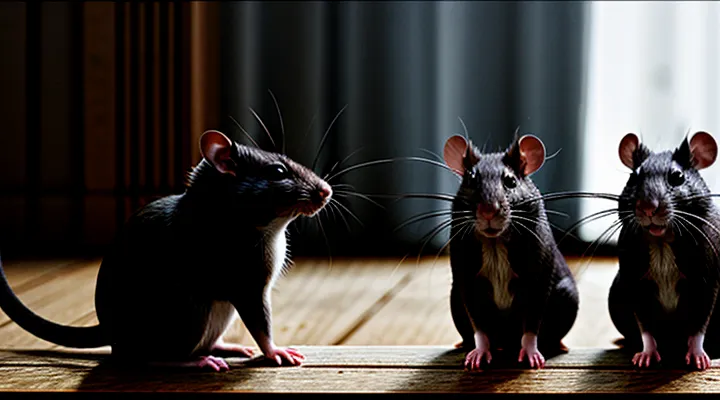
The Enigma of Rat Communication
Understanding Rat Vocalizations
Types of Sounds
Rats communicate through a wide acoustic range that includes audible and ultrasonic elements. Their vocal repertoire can be classified by frequency, purpose, and behavioural context.
- High‑frequency ultrasonic clicks (20–100 kHz): Emitted during social investigation, navigation, and predator avoidance; not audible to humans.
- Short, high‑pitch squeaks (5–10 kHz): Produced when rats experience sudden stress or pain; serve as alarm signals.
- Low‑frequency chirps (1–5 kHz): Used in affiliative interactions such as grooming or play; convey positive social intent.
- Prolonged squeals (10–20 kHz): Associated with intense aggression or territorial disputes; indicate heightened arousal.
- Rapid chatter bursts (10–30 kHz): Occur during mating rituals and courtship; facilitate reproductive coordination.
- Subtle rustling sounds: Generated by footfalls or whisker movements; provide contextual cues about movement and environmental texture.
Contextual Significance
Rat vocalizations provide a measurable indicator of physiological and social states. Acoustic emissions, ranging from ultrasonic chirps to audible squeaks, correlate with stress levels, reproductive status, and hierarchical position, enabling precise assessment of individual condition without invasive procedures.
In natural habitats, these sounds mediate predator avoidance and foraging efficiency. Species that can detect conspecific alarm calls reduce exposure to threats, while coordinated vocal exchanges facilitate group cohesion during resource competition. Monitoring vocal activity therefore yields insight into ecosystem dynamics and species interactions.
Laboratory settings exploit the acoustic profile of rodents to validate disease models and evaluate therapeutic interventions. Changes in ultrasonic call frequency and duration serve as biomarkers for neurodegenerative disorders, pain perception, and drug efficacy, allowing researchers to quantify behavioral outcomes with high temporal resolution.
Urban pest management benefits from acoustic detection technologies that identify infestation levels and activity patterns. Real‑time monitoring of rat calls informs targeted control measures, minimizes unnecessary pesticide use, and supports public health initiatives by reducing disease transmission risk.
Key implications
- Objective metric for physiological and emotional status
- Indicator of ecological relationships and predator‑prey interactions
- Biomarker for neurological and pharmacological research
- Tool for precise, environmentally responsible pest control
Ultrasonic Vocalizations (USVs)
High-Frequency Communication
Social Interactions
Rats employ a diverse acoustic repertoire to coordinate social behavior. High‑frequency ultrasonic squeaks dominate aggressive encounters, while lower‑frequency chirps accompany affiliative activities such as grooming and nest building. Each vocal category conveys specific information about the sender’s intent, dominance status, and emotional state.
Key social functions of rat vocalizations include:
- Territorial defense: Brief, sharp squeaks emitted when intruders approach the perimeter of a familiar burrow.
- Mate attraction: Modulated, rhythmic calls produced by males during courtship, often synchronized with exploratory sniffing.
- Offspring care: Soft, broadband whines from pups that trigger retrieval and nursing responses from the mother.
- Group cohesion: Low‑amplitude chirps exchanged during collective foraging, reinforcing social bonds and reducing conflict.
Neurophysiological studies reveal that the primary auditory cortex differentiates these call types, enabling rapid behavioral adjustments. Playback experiments demonstrate that conspecifics alter movement patterns within seconds of hearing aggression‑related squeaks, whereas affiliative chirps increase proximity and cooperative feeding.
Overall, acoustic signaling constitutes a central mechanism for maintaining hierarchical structure, reproductive success, and group stability among rats.
Emotional States
Rats use a wide acoustic range to convey internal states, linking specific calls to distinct emotions. Ultrasonic vocalizations (USVs) above 20 kHz dominate social interactions, while audible squeaks below 5 kHz appear during overt threats. Each frequency band carries information that observers can decode to assess welfare and behavioral intent.
- Positive affect: 50‑70 kHz USVs, brief and frequency‑modulated, emerge during play, mating, and reward anticipation.
- Mild distress: 22‑28 kHz USVs, longer and flat, accompany mild pain or separation from a familiar conspecific.
- Severe anxiety: 18‑22 kHz USVs, low‑amplitude, accompany exposure to predators or intense restraint.
- Acute alarm: Audible squeaks, irregular and high‑amplitude, accompany immediate physical danger or injury.
Emission patterns depend on limbic activation and respiratory control. Studies employing microphone arrays and neural recordings show that the amygdala modulates call frequency, while the periaqueductal gray regulates call intensity. Contextual cues—such as environmental novelty or social hierarchy—trigger precise neural circuits, producing predictable vocal signatures.
Understanding these acoustic markers enables objective assessment of rodent emotional welfare. Researchers can monitor USV profiles to evaluate analgesic efficacy, environmental enrichment, or stress mitigation without invasive procedures. Accurate interpretation of rat vocal output thus supports both humane husbandry and robust experimental design.
Audible Vocalizations
Low-Frequency Sounds
Alarm Calls
Rats emit alarm calls when they detect predators or other immediate threats. The vocalizations are brief, high‑frequency squeaks that differ markedly from the low‑frequency chirps used in social bonding. Playback experiments demonstrate that conspecifics respond by freezing, retreating to burrows, or increasing vigilance, confirming the calls’ defensive purpose.
Acoustic properties of rat alarm calls include:
- Peak frequencies between 10 and 15 kHz, often exceeding the range of routine contact calls.
- Durations of 30–80 ms, shorter than affiliative vocalizations.
- Sharp amplitude onsets followed by rapid decay, creating a distinctive acoustic signature.
Variability exists across species and populations. Norway rats (Rattus norvegicus) produce slightly lower‑frequency alarms than black rats (Rattus rattus), reflecting differences in ear morphology and habitat acoustics. Juvenile rats begin emitting alarm calls after reaching weaning age, indicating a developmental acquisition of the behavior.
Neurophysiological studies link alarm call production to the amygdala and periaqueductal gray, regions associated with threat processing. Lesions in these areas reduce or abolish the emission of alarm calls, while pharmacological activation heightens call frequency during exposure to predator cues. These findings underscore the calls’ role as a rapid, evolutionarily conserved communication channel for danger detection within the broader spectrum of rat vocal behavior.
Distress Signals
Rats emit a distinct set of vocalizations when experiencing threat, injury, or social tension. These sounds serve as immediate alerts to conspecifics and can influence group behavior.
Typical distress calls include:
- High‑frequency squeaks (≈ 20–40 kHz): brief, sharp bursts emitted during sudden danger; often elicit freezing or flight in nearby rats.
- Mid‑range chirps (≈ 10–15 kHz): longer, repetitive tones produced when an individual is trapped or restrained; provoke rescue attempts from cage mates.
- Low‑frequency whines (≈ 5–8 kHz): sustained, mournful tones observed in prolonged pain or after injury; may sustain group vigilance over extended periods.
Acoustic analysis shows that amplitude rises sharply with urgency, while frequency modulation encodes the nature of the threat. Playback experiments confirm that naïve rats respond selectively to each pattern, adjusting their defensive strategies accordingly.
Pleasure Sounds
Rats emit a distinct set of vocalizations when they experience positive states such as grooming, feeding, or social bonding. These sounds occupy the higher frequency range of the species’ vocal repertoire and differ markedly from alarm or distress calls in duration, modulation, and harmonic structure.
Researchers identify pleasure vocalizations by three acoustic criteria: (1) frequency peaks between 30–80 kHz, (2) short, repetitive bursts lasting 10–30 ms, and (3) smooth amplitude envelopes without abrupt onset or offset. Spectrogram analysis consistently shows a narrow-band profile with minimal frequency jumps, indicating controlled airflow and vocal fold vibration.
Common forms of enjoyable rat sounds include:
- Soft chirps: low-amplitude, rapid pulses emitted during gentle contact with conspecifics.
- Purring-like tones: continuous, low-frequency hums associated with contented resting.
- High-pitched squeaks: brief, upbeat notes produced while exploring novel food items.
Behavioral observations link these vocal patterns to specific contexts: grooming sessions trigger chirps, while shared nesting elicits purring tones. Playback experiments demonstrate that exposure to pleasure sounds reduces stress markers in listeners, confirming their role in social cohesion.
Quantitative studies employ ultrasonic microphones and automated classification algorithms to separate pleasure calls from other categories. Data reveal a consistent increase in call rate during reward-based tasks, supporting the hypothesis that these vocalizations serve as auditory indicators of positive affect.
Factors Influencing Vocalizations
Age and Development
Pup Vocalizations
Rat pups emit a diverse set of vocalizations that occupy the high‑frequency end of the species’ overall acoustic repertoire. These calls appear within the first days after birth and evolve as the offspring mature.
The primary categories of pup vocalizations include:
- Ultrasonic distress calls (≈ 40–80 kHz): emitted when pups are separated from the dam or experience temperature drops; signal urgency to the mother.
- Contact calls (≈ 30–60 kHz): produced during brief reunions with the dam; maintain proximity.
- Exploratory chirps (≈ 20–45 kHz): generated during locomotion in a novel environment; correlate with increased locomotor activity.
- Pleural grunts (≈ 10–25 kHz): low‑frequency sounds associated with feeding bouts; often accompany suckling.
Acoustic analysis shows that call duration, frequency modulation, and harmonic structure vary with physiological state. Younger pups favor shorter, higher‑frequency distress calls, whereas older pups introduce longer, frequency‑modulated chirps as motor control improves.
Research typically employs high‑speed ultrasonic microphones paired with spectrographic software to quantify call parameters. Controlled experiments manipulate temperature, isolation, and maternal presence to isolate stimulus‑response relationships.
Developmental trajectories reveal a gradual shift from predominantly ultrasonic distress signals toward a broader frequency range that includes lower‑frequency components. This transition aligns with maturation of the auditory system and the emergence of social communication skills.
Understanding pup vocalizations contributes to the broader map of rat acoustic behavior, providing baseline data for studies of neurodevelopment, genetic models of communication disorders, and the impact of environmental stressors on early-life signaling.
Adult Variations
Adult rats produce a broad spectrum of vocal signals that differ markedly from juvenile emissions. The adult repertoire includes ultrasonic squeaks, mid‑frequency chirps, and low‑frequency growls, each associated with distinct behavioral states.
Frequency analysis shows three principal bands: ultrasonic calls above 20 kHz, typically emitted during exploratory or mating activities; mid‑frequency sounds between 5 and 20 kHz, common in social grooming and mild aggression; and low‑frequency vocalizations below 5 kHz, linked to intense conflict or alarm. Temporal patterns vary with motivation, ranging from brief, high‑rate bursts to prolonged, modulated trills.
- Ultrasonic squeak: short, high‑pitch, emitted during rapid movement or courtship.
- Mid‑frequency chirp: modulated frequency, occurs in affiliative encounters.
- Low‑frequency growl: sustained, low‑pitch, signals territorial defense.
- Complex trill: alternating frequencies, observed in hierarchical disputes.
Adult vocal output exhibits individual consistency yet reflects sex‑specific trends; males produce higher rates of ultrasonic courtship calls, while females display increased low‑frequency alarm calls. Dominant individuals generate louder, longer calls across all bands, reinforcing social hierarchy.
These adult-specific patterns provide reliable markers for behavioral assays, enable precise monitoring of stress levels, and support the development of automated acoustic classification systems in laboratory settings.
Environmental Impact
Social Group Dynamics
Rats use a wide range of acoustic signals to regulate membership, status, and cooperation within colonies. High‑frequency ultrasonic chirps accompany playful interactions and reinforce affiliative bonds, while low‑frequency squeals accompany confrontations and signal dominance challenges. Vocal exchanges also coordinate foraging excursions, allowing individuals to maintain proximity without visual contact.
Key social functions of rat vocalizations include:
- Establishing hierarchy – brief, sharp squeaks emitted during aggressive encounters convey submission or challenge, influencing rank adjustments.
- Maintaining cohesion – continuous ultrasonic chatter during group activities sustains group identity and reduces stress.
- Alerting to danger – sudden, broadband alarm calls trigger immediate dispersal or defensive posturing among nearby conspecifics.
- Facilitating reproduction – females produce specific ultrasonic patterns that attract males and synchronize mating behavior.
These acoustic mechanisms enable colonies to adapt rapidly to environmental fluctuations, preserve stability, and optimize resource allocation without reliance on visual cues.
Threat Response
Rats emit a distinct set of vocalizations when confronted with predators, competitors, or sudden disturbances. These sounds occupy frequencies above the human hearing range (ultrasonic) and, in some cases, extend into the audible spectrum. The acoustic structure of each call conveys information about the level of danger and the appropriate defensive action.
Key acoustic features differentiate threat‑related calls:
- Ultrasonic chirps (≈ 40–80 kHz): brief, high‑pitched pulses produced during immediate escape; waveform shows rapid rise and fall times.
- Low‑frequency squeals (≈ 3–10 kHz): longer, modulated tones emitted when a rat is restrained or captured; harmonics indicate sustained stress.
- Aggressive growls (≈ 10–30 kHz): low‑to‑mid frequency, irregular amplitude, associated with territorial disputes and defensive posturing.
Behavioral responses align with these vocal patterns. Upon detecting ultrasonic chirps, conspecifics typically increase locomotor activity and seek shelter. Low‑frequency squeals trigger freezing or submissive postures, reducing visibility to predators. Aggressive growls precede forward lunges, bite attempts, or vocal counters from rival individuals.
Experimental recordings confirm that call amplitude rises with proximity of threat, while frequency modulation expands during escalating encounters. Neural pathways linking the auditory cortex to the amygdala mediate rapid interpretation of these signals, enabling immediate physiological adjustments such as heart‑rate acceleration and muscle tension. Consequently, the vocal repertoire functions as an efficient alarm system, coordinating group vigilance and individual survival strategies.
Interpreting Rat Sounds
Research and Analysis Methods
Bioacoustics
Bioacoustics examines the production, propagation, and perception of animal sounds through quantitative analysis of acoustic signals. In the study of rat vocalizations, the discipline provides precise measurements of frequency, amplitude, and temporal structure, enabling discrimination of call types and inference of physiological and behavioral states.
Recordings captured with ultrasonic microphones reveal a continuous spectrum ranging from audible squeaks near 2 kHz to ultrasonic chirps exceeding 80 kHz. Typical call categories include:
- Low‑frequency squeals (2–10 kHz): emitted during social aggression or distress.
- Mid‑frequency chirps (10–30 kHz): associated with exploratory activity.
- Ultrasonic whistles (30–80 kHz): produced in mating rituals and maternal communication.
Spectral analysis employs Fast Fourier Transform (FFT) to extract dominant frequencies and bandwidths, while spectro‑temporal pattern recognition algorithms classify calls automatically. Calibration of recording equipment against known acoustic standards ensures reproducibility across laboratories.
Physiological correlates link specific vocal patterns to respiratory muscle activation and neural circuitry in the brainstem. Comparative studies across strains demonstrate genetic influences on call repertoire, informing models of neurodevelopmental disorders. Environmental variables such as temperature and humidity affect sound attenuation; bioacoustic protocols therefore incorporate real‑time monitoring of ambient conditions.
Application of rat vocalization data extends to non‑invasive assessment of pain, anxiety, and drug efficacy. By quantifying changes in call rate, duration, and frequency distribution, researchers obtain objective biomarkers that complement behavioral observations. The integration of bioacoustic methodology with neuroimaging and genetic analysis strengthens the mechanistic understanding of communication in rodents.
Behavioral Studies
Research on rat acoustic communication focuses on how vocal patterns correspond to specific behaviors, social contexts, and environmental pressures. Experiments typically combine high‑frequency microphones with video tracking to capture ultrasonic calls and observable actions simultaneously, allowing precise correlation between sound type and activity.
Key methodological elements include:
- Broadband recording equipment capable of detecting frequencies up to 100 kHz.
- Automated call classification algorithms that sort syllables by duration, frequency modulation, and harmonic structure.
- Behavioral coding frameworks that label interactions such as aggression, mating, pup retrieval, and exploration.
Empirical results demonstrate that:
- Short, broadband chirps accompany escape responses and predator detection.
- Long, frequency‑modulated trills occur during courtship and territorial displays.
- Low‑amplitude, high‑frequency squeaks signal distress in neonates and elicit maternal retrieval.
These patterns reveal that vocal output functions as a reliable indicator of internal state and intent, enabling researchers to infer motivation, hierarchy, and physiological condition without invasive procedures. Continuous refinement of acoustic analysis tools expands the resolution at which subtle variations in rat calls can be linked to nuanced behavioral shifts.
Implications for Rodent Welfare
Stress Detection
Rat acoustic emissions provide a reliable metric for assessing physiological stress. High‑frequency ultrasonic calls, typically above 20 kHz, increase in rate and amplitude when animals encounter acute stressors such as predator cues or confinement. Concurrently, low‑frequency broadband vocalizations, ranging from 1 to 5 kHz, appear during prolonged distress and correlate with elevated corticosterone levels.
Research protocols exploit these patterns by recording vocal output in controlled environments and applying spectral analysis. Key steps include:
- Capturing continuous audio with ultrasonic microphones calibrated for frequencies up to 100 kHz.
- Segmenting recordings into call categories based on duration, peak frequency, and harmonic structure.
- Quantifying call rates, mean frequencies, and energy distribution across stress‑related intervals.
- Correlating acoustic metrics with physiological markers (e.g., heart rate, hormone assays) to validate stress indices.
Temporal dynamics of rat vocalizations differentiate between immediate threat responses and chronic anxiety. Rapid bursts of ultrasonic chirps signify startle or escape behavior, whereas sustained low‑frequency squeals indicate ongoing discomfort. By mapping these acoustic signatures onto behavioral observations, investigators obtain a non‑invasive, high‑resolution indicator of stress intensity and progression.
Implementation of automated detection algorithms further enhances scalability. Machine‑learning models trained on labeled call datasets achieve classification accuracies exceeding 90 % for stress‑associated vocal types. Integration of such systems into laboratory workflows enables real‑time monitoring, reduces reliance on invasive sampling, and supports reproducible assessment of animal welfare.
Enrichment Strategies
Enrichment directly influences the diversity and frequency of auditory signals emitted by laboratory rats, providing a reliable framework for studying their vocalization spectrum. Structured modifications to the living environment produce measurable changes in call patterns, facilitating accurate behavioral assessments.
- Complex cage architecture with tunnels, platforms, and varied textures.
- Group housing that maintains stable social hierarchies while allowing occasional re‑pairing.
- Playback of conspecific chirps and ultrasonic recordings at scheduled intervals.
- Rotating novel objects that encourage exploration and manipulation.
- Foraging devices that require problem‑solving to access food rewards.
- Positive reinforcement training that associates specific sounds with desired actions.
Implementation requires consistent timing, documentation of introduced stimuli, and regular monitoring of health indicators. Environmental variables should be altered incrementally to isolate the effect of each enrichment component on vocal output.
Outcomes include expanded call repertoires, elevated ultrasonic emission rates, reduced incidence of stress‑related silence, and enhanced reproducibility of acoustic data across experimental cohorts.