
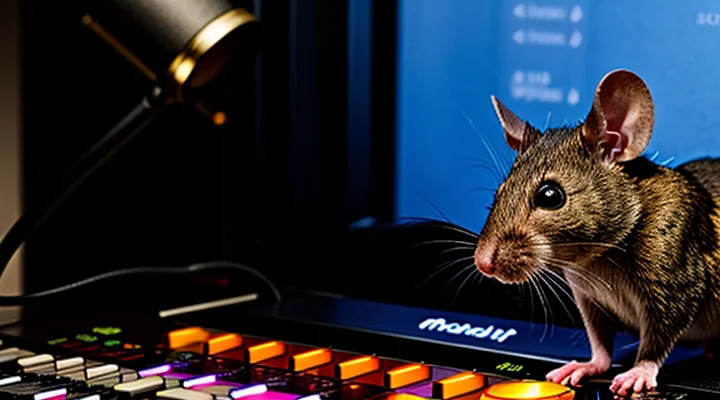
«Introduction to Rodent Bioacoustics»
«Types of Vocalizations in Mice and Rats»
«Ultrasonic Vocalizations (USVs)»
Ultrasonic vocalizations (USVs) are brief acoustic emissions produced by mice and rats at frequencies above the human hearing threshold, typically ranging from 20 kHz to 110 kHz. Emissions originate from the larynx and are generated during specific physiological and behavioral states.
Common contexts for USV production include:
- Courtship and mating interactions
- Pup isolation or distress calls
- Aggressive encounters between conspecifics
- Exploration of novel environments
Recording USVs requires equipment capable of capturing high‑frequency sound without distortion. Specialized microphones (e.g., condenser or piezoelectric transducers) paired with preamplifiers and analog‑to‑digital converters sampling at ≥250 kHz provide sufficient temporal resolution. Experiments are conducted in sound‑attenuated chambers to minimize background noise and reverberation.
Analysis proceeds through several standardized steps. First, raw audio files are filtered to isolate the ultrasonic band. Automated detection algorithms identify candidate syllables based on amplitude thresholds and duration criteria. Segmented syllables are transformed into spectrograms, from which acoustic parameters—peak frequency, bandwidth, duration, and frequency modulation—are extracted. Open‑source tools such as Avisoft‑SASLab Pro, DeepSqueak, and USVSEG facilitate batch processing and statistical export.
Interpretation of USV datasets focuses on call type classification, temporal patterns, and correlation with experimental variables. Hierarchical clustering or machine‑learning classifiers differentiate syllable categories (e.g., simple, frequency‑modulated, complex). Comparative analyses employ mixed‑effects models to account for individual variability and repeated measures. Resulting metrics inform hypotheses about social communication, neurophysiological mechanisms, and the impact of genetic or pharmacological manipulations.
«Audible Vocalizations»
Audible vocalizations are the high‑frequency sounds that mice and rats emit within the human hearing range, typically between 1 kHz and 20 kHz. These calls differ from ultrasonic emissions in both spectral content and behavioral context, appearing during social interaction, distress, and exploratory activities.
The acoustic structure of audible calls includes distinct elements such as syllable duration, peak frequency, and amplitude modulation. Syllable lengths range from 10 ms to 200 ms, while peak frequencies cluster around 5–12 kHz. Amplitude varies with the animal’s emotional state, providing a measurable indicator of arousal.
Recording audible vocalizations requires equipment capable of capturing low‑to‑mid frequency bands without distortion. Effective setups incorporate:
- Condenser microphones with flat response from 0.5 kHz to 25 kHz.
- Pre‑amplifiers offering low noise floor (< 20 dB A‑weighted).
- Digital audio interfaces sampling at ≥ 44.1 kHz, 16‑bit resolution.
- Acoustic isolation chambers to reduce ambient interference.
Signal processing follows standard pipelines: band‑pass filtering to isolate the 1–20 kHz window, segmentation into individual syllables using amplitude thresholds, and extraction of spectral features (e.g., fundamental frequency, harmonic content). Advanced analysis employs time‑frequency representations such as spectrograms and applies machine‑learning classifiers to differentiate call types and correlate them with specific behaviors.
Quantitative metrics derived from audible vocalizations—call rate, inter‑call interval, and spectral entropy—support objective assessment of rodent social dynamics, stress responses, and pharmacological effects. Consistent methodology across experiments ensures reproducibility and facilitates comparative studies within the broader field of rodent acoustic communication.
«Biological Context of Rodent Sounds»
«Communication in Social Interactions»
Rodent vocalizations convey information essential for group cohesion, hierarchy establishment, and threat assessment. High‑frequency ultrasonic calls emitted by mice and rats are captured with specialized microphones and digitized for spectral analysis. Precise timing, frequency modulation, and amplitude patterns differentiate affiliative signals from alarm calls, enabling researchers to map interaction dynamics within colonies.
Key parameters extracted from recordings include:
- Peak frequency and bandwidth, indicating species‑specific call signatures.
- Call duration and inter‑call intervals, reflecting urgency and social context.
- Harmonic structure, distinguishing individual identity and emotional state.
Analytical software quantifies these features, allowing correlation with observed behaviors such as grooming, nest building, and aggressive encounters. Comparative studies reveal that dominant individuals produce longer, lower‑frequency calls, while subordinate rodents emit brief, high‑pitch bursts during submissive displays.
Integrating acoustic data with video tracking yields a comprehensive model of social exchange. Temporal alignment of sound events and movement trajectories identifies trigger‑response patterns, clarifying how vocal cues coordinate collective actions and resolve conflicts. This approach advances understanding of communication mechanisms that regulate rodent societies.
«Distress and Alarm Calls»
Distress and alarm calls are high‑frequency ultrasonic vocalizations emitted by mice and rats when threatened, injured, or isolated. These sounds typically range from 35 to 100 kHz, display rapid onset, and consist of short, repetitive syllables that increase in amplitude during acute stress. Emission occurs during predator encounters, social aggression, or exposure to aversive stimuli, serving to alert conspecifics and mobilize defensive behaviors.
The calls originate from the laryngeal musculature, modulated by the autonomic nervous system under the influence of stress hormones such as corticosterone and adrenaline. Neural pathways involving the periaqueductal gray and amygdala coordinate the timing and intensity of vocal output, linking physiological arousal to acoustic expression.
Recording protocols require ultrasonic microphones with flat frequency response up to at least 120 kHz, low‑noise preamplifiers, and sampling rates of 250 kHz or higher to capture fine temporal structure. Analysis software extracts parameters that differentiate distress from alarm calls, including:
- Peak frequency and bandwidth
- Duration of individual syllables and inter‑syllable intervals
- Amplitude envelope and modulation depth
- Call rate (syllables per second) and total call bout length
Statistical comparison of these metrics across experimental conditions enables quantification of stress levels, assessment of genotype‑specific vocal patterns, and evaluation of pharmacological interventions targeting anxiety‑related circuitry.
«Maternal-Pup Interactions»
Maternal‑pup communication in laboratory rodents consists primarily of ultrasonic vocalizations (USVs) emitted by neonates and modulated by the dam. Pup calls peak between 30 and 80 kHz within the first two weeks of life, providing a reliable indicator of physiological state and distress. Dams respond with low‑frequency vocalizations and selective retrieval behavior, establishing a feedback loop that influences pup survival and developmental trajectories.
Recording protocols employ condenser microphones with a flat response up to 100 kHz, positioned 5–10 cm from the nest chamber. Acoustic isolation chambers reduce ambient noise below 30 dB SPL, enabling detection of calls as brief as 5 ms. Sampling rates of 250 kHz with 16‑bit resolution capture the full spectral content of USVs, facilitating subsequent digital filtering and segmentation.
Analysis focuses on quantifiable parameters:
- Peak frequency (kHz) – identifies call type and developmental stage.
- Duration (ms) – distinguishes distress from isolation calls.
- Call rate (calls min⁻¹) – reflects pup arousal level.
- Harmonic structure – differentiates maternal from pup vocalizations.
Statistical comparison of these metrics across experimental groups reveals genotype‑dependent alterations in communication patterns. For example, mouse models of autism spectrum disorder exhibit reduced call rates and shifted peak frequencies, while maternal stress correlates with delayed maturation of pup USVs.
Interpretation of maternal‑pup acoustic exchange informs neurobehavioral phenotyping, supports validation of therapeutic interventions, and enhances reproducibility of rodent behavioral assays. Continuous refinement of recording hardware and machine‑learning classification algorithms expands the resolution at which subtle vocal dynamics can be quantified.
«Reproductive Behavior»
Rodent reproductive cycles are accompanied by distinct ultrasonic vocalizations that serve as primary communication signals during courtship, mate selection, and parental care. Male mice emit high‑frequency calls when encountering estrous females, while females produce softer, repetitive chirps during receptivity. In rats, ultrasonic bursts accompany mounting behavior and are followed by a cessation of vocal output after successful copulation, indicating a shift in social context.
Experimental protocols for capturing these sounds rely on calibrated microphones with sensitivity above 20 kHz, placed within chambers that minimize acoustic reflections. Continuous recording during defined reproductive phases allows correlation of call parameters—frequency, duration, and pattern—with specific behavioral events observed through synchronized video monitoring. Data are typically segmented into epochs aligned with estrus onset, mating attempts, and litter care periods.
Analysis pipelines transform raw waveforms into spectrograms, then extract quantitative features using automated scripts. Statistical comparisons between male and female call repertoires employ multivariate techniques such as principal component analysis to reveal sex‑specific acoustic signatures. Machine‑learning classifiers further differentiate vocalizations linked to successful versus unsuccessful mating attempts, providing predictive markers of reproductive fitness.
Key considerations for reliable interpretation include:
- Consistent environmental temperature to avoid temperature‑induced frequency shifts.
- Validation of estrus stage through vaginal cytology to align acoustic data with hormonal status.
- Application of noise‑reduction filters calibrated to the recording setup’s baseline noise floor.
«Recording Methodologies»
«Equipment for Sound Capture»
«Microphone Selection (e.g., Ultrasonic, Directional)»
Choosing a microphone for rodent vocalization work requires matching device specifications to the acoustic characteristics of mouse and rat calls. Calls often extend beyond the human hearing range, with fundamental frequencies between 20 kHz and 100 kHz. Consequently, the microphone must provide:
- Frequency response that covers at least 10 kHz – 120 kHz, ensuring capture of both ultrasonic harmonics and lower‑frequency components.
- Sensitivity high enough to detect low‑amplitude emissions without excessive amplification.
- Low self‑noise to preserve signal integrity in quiet laboratory environments.
Ultrasonic microphones, typically condenser types with a small diaphragm, satisfy the frequency and sensitivity requirements. Models equipped with a built‑in preamplifier reduce cable loss and improve signal‑to‑noise ratio. Directional microphones, such as shotgun or hyper‑cardioid designs, limit ambient noise by focusing on a confined acoustic field, useful when multiple animals share a cage or when recordings occur near ventilators and other equipment.
Selection criteria extend beyond raw specifications. Evaluate the microphone’s impedance compatibility with the recording interface; mismatched impedance can introduce distortion. Verify that the housing protects the transducer from moisture and animal contact, as exposure can degrade performance. Consider the mounting system: a stable, vibration‑isolated platform minimizes mechanical artifacts, while adjustable stands allow precise positioning relative to the animal’s vocal source.
When integrating the microphone into a recording chain, pair it with a high‑resolution analog‑to‑digital converter capable of sampling at ≥250 kHz. This sampling rate preserves the full ultrasonic spectrum and supports subsequent spectral analysis. Apply appropriate anti‑aliasing filters to prevent high‑frequency artifacts from folding into the audible band.
In summary, optimal microphone selection balances ultrasonic frequency coverage, directional rejection of extraneous noise, low self‑noise, and robust physical design. Aligning these parameters with the recording hardware ensures reliable acquisition of rodent acoustic signals for quantitative analysis.
«Recording Devices and Software»
Accurate capture of rodent vocalizations requires equipment capable of detecting frequencies up to 100 kHz and preserving signal integrity for subsequent quantitative analysis.
High‑frequency microphones designed for ultrasonic ranges include piezoelectric capsules, condenser models with extended response, and specialized bat‑detector units. Each microphone should be paired with a low‑noise preamplifier that supplies gain while minimizing added distortion. Audio interfaces equipped with 24‑bit depth and sampling rates of 250 kHz or higher ensure that rapid acoustic events are recorded without aliasing. When experiments involve multiple animals or spatial mapping, multichannel data acquisition boards enable simultaneous capture from several microphones, facilitating correlation of vocalizations across locations. Calibration tones and reference microphones provide absolute sound‑pressure level measurements, allowing comparison between sessions and laboratories.
Software tools transform raw recordings into analyzable data sets. Common platforms include:
- Audacity – free editor for waveform inspection, trimming, and basic spectral analysis.
- Raven Pro – specialized for bioacoustic research, offering spectrogram visualization, automated call detection, and batch processing.
- Praat – scriptable environment for formant extraction, pitch tracking, and statistical scripting.
- MATLAB – customizable framework for signal‑processing pipelines, supporting Fourier transforms, wavelet analysis, and machine‑learning classification.
- Sound Analysis Pro – integrated suite for annotation, frequency‑contour extraction, and cross‑species comparison.
Effective workflows typically follow a three‑step sequence: (1) import high‑resolution audio files, (2) apply band‑pass filters matched to the expected ultrasonic band (e.g., 20–100 kHz), and (3) extract temporal and spectral features such as call duration, peak frequency, and harmonic structure. Exported feature tables feed statistical software for population‑level assessments or neural‑correlation studies.
Selection of recording hardware and analysis software should align with experimental goals, frequency range of interest, and required temporal precision. Proper integration of these components yields reproducible acoustic datasets suitable for detailed investigation of murine and rat vocal behavior.
«Acoustic Chambers and Environmental Control»
Acoustic chambers designed for rodent vocalization research must provide airtight isolation from external noise sources while allowing precise placement of microphones and sensors. Walls are typically constructed from multi‑layer composites such as dense gypsum, acoustic foam, and mass‑loaded vinyl to achieve transmission loss above 60 dB across the 10–100 kHz range. Interior surfaces are treated with low‑reflectivity materials to minimize standing waves and reverberation, ensuring that recorded signals represent the animal’s true output. Chamber dimensions are selected to accommodate a standard home cage (≈30 × 20 × 15 cm) with at least 5 cm clearance on all sides for equipment and airflow ducts.
Environmental control within the enclosure stabilizes physiological conditions that influence ultrasonic emissions. Key parameters include:
- Temperature maintained within ±0.5 °C of the target (typically 22 ± 2 °C) to prevent thermally induced frequency shifts.
- Relative humidity kept between 40 % and 60 % to avoid condensation on transducers.
- Light cycles synchronized to the animal’s circadian rhythm, using dim red illumination to reduce stress while permitting visual monitoring.
- Air exchange rate of 10–15 L min⁻¹, filtered through HEPA cartridges to eliminate background aerosol noise without creating turbulent flow.
Operational guidelines recommend periodic calibration of microphones with a reference tone generator covering the ultrasonic spectrum, verification of chamber sealing using a calibrated sound pressure level meter, and routine cleaning of interior surfaces to prevent biofilm accumulation. Data acquisition systems should be synchronized with environmental sensors, allowing post‑hoc correlation of acoustic events with temperature or humidity fluctuations. Adherence to these standards yields reproducible recordings suitable for quantitative analysis of mouse and rat vocalizations.
«Recording Protocols»
«Setup and Calibration»
Accurate recording of rodent vocalizations requires a rigorously defined experimental configuration and systematic calibration of all components.
The recording chamber should be acoustically isolated, constructed from sound‑absorbing materials, and equipped with a ventilation system that does not introduce low‑frequency noise. Interior surfaces must be inspected for resonances; any identified peaks are dampened with acoustic foam or bass traps.
Microphone selection follows a hierarchy of sensitivity, frequency response, and signal‑to‑noise ratio. Condenser microphones with a flat response from 5 kHz to 120 kHz are preferred for capturing ultrasonic emissions. Position the sensor 2–3 cm above the cage floor, centered on the animal’s activity zone, and secure it with a non‑reflective mount to avoid vibration transmission.
Pre‑amplifier gain is set to maximize dynamic range without clipping. A preliminary test tone (e.g., 50 kHz sine wave) verifies linearity across the intended frequency band.
Calibration procedure:
- Place a calibrated ultrasonic speaker at the designated microphone location.
- Emit a series of tones covering the full spectrum of expected rodent calls (e.g., 10, 30, 50, 80, 100 kHz) at known SPL levels (e.g., 60 dB SPL).
- Record each tone, measure the recorded amplitude, and compute the deviation from the reference level.
- Adjust pre‑amplifier gain or apply software correction factors to align recorded amplitudes with reference values.
- Repeat the measurement after any hardware change or weekly to detect drift.
Environmental monitoring includes temperature and humidity sensors, as these parameters influence sound speed and microphone sensitivity. Log values continuously and store them alongside audio files for post‑hoc correction.
Data acquisition software must be configured to sample at a minimum of 250 kHz, with 16‑bit resolution, to preserve ultrasonic detail. Enable real‑time spectral display to verify signal integrity during experiments.
By adhering to this structured setup and calibration protocol, researchers obtain reproducible, high‑fidelity recordings suitable for quantitative analysis of murine and rat acoustic behavior.
«Minimizing Background Noise»
Effective reduction of extraneous acoustic interference is essential for reliable capture of rodent vocalizations. A sealed recording chamber constructed from sound‑absorbing materials (e.g., acoustic foam, dense plywood) blocks external disturbances and prevents reverberation. The chamber should be lined with vibration‑damping pads to isolate mechanical noise from HVAC systems, foot traffic, and equipment.
Microphone selection and placement directly affect signal‑to‑noise ratio. Use a low‑noise condenser microphone with a flat frequency response covering 10–100 kHz, the typical range of mouse and rat sounds. Position the transducer 1–2 cm from the animal’s enclosure, oriented toward the source, and mount it on a rigid arm to eliminate handling noise. Employ a preamplifier with high gain and minimal self‑noise; keep cable lengths short and shielded.
Environmental control further suppresses background contaminants. Maintain a constant temperature and humidity to avoid condensation on microphones. Turn off nonessential electronic devices, and schedule recordings during periods of minimal building activity. Implement a double‑door entry system for the chamber to reduce airflow turbulence.
Digital post‑processing can eliminate residual artifacts without distorting the target signal. Apply a band‑pass filter matched to the expected frequency band (e.g., 20–80 kHz) to exclude low‑frequency rumble and high‑frequency electrical noise. Use adaptive noise‑cancellation algorithms that reference a silent control channel to subtract stationary background components. Finally, verify data quality by calculating the signal‑to‑noise ratio for each recording session and discarding segments that fall below a predetermined threshold.
«Ethical Considerations in Animal Sound Recording»
Recording vocalizations of laboratory rodents demands strict adherence to ethical standards. Researchers must ensure that experimental design minimizes discomfort, employing the lowest effective sound‑capture intensity and limiting exposure duration. Procedures that induce stress invalidate data and breach animal welfare obligations.
Key ethical requirements include:
- Use of non‑invasive microphones positioned to avoid physical contact with the animal.
- Implementation of habituation protocols so subjects become accustomed to equipment before data collection.
- Continuous monitoring of physiological indicators (e.g., heart rate, respiration) to detect distress.
- Immediate cessation of recording if adverse responses are observed.
Justification for sound acquisition must be documented, demonstrating that the scientific question cannot be answered through alternative methods such as computational modeling or existing datasets. Institutional review boards must approve protocols, and all personnel should receive training in humane handling and acoustic equipment operation.
Data management practices must protect animal confidentiality and ensure reproducibility. Raw recordings should be stored securely, with metadata detailing experimental conditions, animal identifiers, and ethical approvals. Publication of results requires transparent reporting of ethical compliance, allowing peers to assess the integrity of the study.
«Analysis Techniques»
«Software for Acoustic Analysis»
«Spectrogram Generation and Interpretation»
Spectrograms provide a visual representation of ultrasonic vocalizations emitted by rodents, allowing precise temporal and spectral analysis. The generation process begins with high‑frequency recordings captured by microphones capable of sampling rates of at least 250 kHz, ensuring that the full bandwidth of mouse and rat calls (typically 20–100 kHz) is retained. Recorded waveforms are first filtered to remove low‑frequency noise, then segmented into overlapping frames using a window function (e.g., Hamming or Hann). Each frame undergoes a Fast Fourier Transform, converting time‑domain data into frequency‑domain amplitude values. The resulting magnitude spectra are assembled sequentially, producing a two‑dimensional matrix where the horizontal axis denotes time, the vertical axis denotes frequency, and pixel intensity reflects signal power.
Key parameters influencing spectrogram quality include:
- Window length: balances frequency resolution (long windows) against temporal precision (short windows); common choices range from 256 to 1024 samples.
- Overlap percentage: typically 50 % to 75 % to smooth transitions between frames.
- FFT size: selected as a power of two equal to or greater than the window length, affecting the granularity of frequency bins.
- Color scaling: linear or logarithmic amplitude scaling highlights low‑intensity components; a decibel conversion (20 log10) is standard for acoustic analysis.
Interpretation relies on identifying characteristic patterns within the spectrogram. Rodent calls often appear as narrowband sweeps, broadband clicks, or complex modulated contours. Frequency bands correspond to specific vocalization types: ultrasonic whistles (30–80 kHz) indicate social communication, while lower‑frequency chirps (10–30 kHz) may signal distress or aggression. Temporal features such as call duration, inter‑call interval, and modulation rate provide additional behavioral context. Automated detection algorithms can extract these metrics by applying thresholding, edge detection, and machine‑learning classifiers to the spectrogram image.
Software platforms—such as MATLAB, Python’s SciPy/Matplotlib stack, and specialized packages like Avisoft SASLab Pro—offer built‑in functions for spectrogram computation and annotation. Calibration against known acoustic standards ensures accurate frequency mapping, essential for cross‑study comparisons. Consistent documentation of acquisition settings, window parameters, and scaling choices enables reproducibility and facilitates meta‑analysis of rodent vocal behavior.
«Feature Extraction (e.g., Frequency, Duration, Amplitude)»
Acoustic recordings of mouse and rat vocalizations contain measurable parameters that characterize each signal. Extracting these parameters converts raw waveforms into quantitative data suitable for statistical and machine‑learning analysis.
Key measurable parameters include:
- Frequency – the pitch of a call, typically expressed as the fundamental frequency or as a spectrum of dominant frequencies; extracted via Fourier transform or autocorrelation methods.
- Duration – the temporal length of a vocal event, obtained by detecting onset and offset points through amplitude thresholds or hidden‑Markov models.
- Amplitude – the signal’s loudness, measured as peak, root‑mean‑square (RMS), or integrated energy; derived from the waveform envelope after filtering to remove background noise.
Extraction procedures rely on standard digital‑signal‑processing steps: band‑pass filtering to isolate the relevant frequency band (often 20–100 kHz for rodent ultrasonic calls), segmentation of individual syllables, and computation of the above metrics using libraries such as MATLAB, Python’s SciPy, or specialized bioacoustic toolkits. Advanced pipelines may also calculate spectral centroid, bandwidth, and entropy to capture timbral aspects.
Quantified features enable classification of call types, correlation with behavioral states, and comparison across experimental conditions. Consistent extraction protocols ensure reproducibility and facilitate integration of datasets from multiple laboratories.
«Machine Learning for Vocalization Classification»
Machine learning enables systematic categorization of rodent vocalizations by converting acoustic recordings into quantitative representations. Signal preprocessing typically includes band‑pass filtering to isolate frequencies associated with ultrasonic calls, segmentation of syllables using energy‑based thresholds, and normalization of amplitude to reduce inter‑session variability. Feature extraction follows, with common descriptors such as Mel‑frequency cepstral coefficients (MFCCs), spectral entropy, and pitch contour statistics providing compact summaries of each vocal element.
Classification models range from classical algorithms to deep neural networks. A concise workflow may be presented as:
- Assemble a labeled dataset of segmented syllables.
- Compute feature vectors (e.g., MFCCs, spectral roll‑off).
- Partition data into training, validation, and test subsets.
- Train a classifier (support vector machine, random forest, or convolutional neural network) using cross‑validation.
- Evaluate performance with metrics such as accuracy, precision, recall, and area under the ROC curve.
- Deploy the trained model for real‑time or batch analysis of new recordings.
Advanced approaches incorporate temporal dynamics by feeding sequences of feature vectors into recurrent architectures (LSTM, GRU) or attention‑based transformers, improving discrimination of complex call patterns. Transfer learning from larger bioacoustic corpora can mitigate limited annotated data, while unsupervised clustering (e.g., Gaussian mixture models) assists in discovering novel vocal categories.
Robust implementation requires attention to class imbalance, which is common when rare call types are underrepresented; techniques such as synthetic minority oversampling or cost‑sensitive loss functions address this issue. Validation on independent recordings confirms generalization across strains, ages, and experimental conditions, ensuring that the machine‑learning pipeline reliably supports quantitative studies of murine and rat communication.
«Interpretation of Results»
«Correlating Sounds with Behavior»
Research on rodent acoustic emissions relies on precise alignment of sound data with observed actions. High‑frequency microphones capture ultrasonic vocalizations while video cameras record locomotion, grooming, and social contacts. Synchronization hardware stamps each modality with a common time code, allowing direct comparison of acoustic events and behavioral markers.
Typical workflow includes:
- Calibration of recording equipment to ensure frequency response up to 100 kHz.
- Continuous acquisition of audio and video streams during experimental sessions.
- Automated segmentation of vocal bursts using threshold‑based detectors or machine‑learning classifiers.
- Annotation of video frames with behavioral categories (e.g., approach, aggression, nesting) by trained observers or pose‑estimation software.
- Statistical linking of vocal parameters (duration, peak frequency, call type) to specific behaviors through correlation analysis, logistic regression, or mixed‑effects modeling.
Key findings demonstrate that:
- Ultrasonic calls of 30–80 kHz frequently precede courtship approaches, indicating anticipatory signaling.
- Rapid bursts of 70 kHz vocalizations accompany defensive postures during predator‑simulated trials.
- Changes in call rate and amplitude correlate with stress‑induced grooming, providing a non‑invasive metric of affective state.
Advanced approaches integrate neural recordings, enabling triadic mapping of brain activity, sound production, and behavior. Real‑time detection pipelines trigger stimulus delivery contingent on specific vocal patterns, facilitating closed‑loop experiments that probe causal relationships.
Robust correlation of rodent sounds with behavior enhances interpretation of social communication, refines phenotypic assessments in disease models, and supports development of automated monitoring systems for laboratory welfare.
«Quantitative vs. Qualitative Analysis»
Acoustic recordings of laboratory rodents generate data that can be examined through two complementary approaches. Quantitative analysis transforms sound waveforms into numerical descriptors such as peak frequency, amplitude, duration, and spectral entropy. These metrics enable statistical comparison across experimental groups, detection of subtle changes over time, and integration with physiological variables. Automated pipelines extract the parameters, apply filters to remove background noise, and produce datasets suitable for multivariate analysis, machine‑learning classification, and hypothesis testing.
Qualitative analysis focuses on the perceptual and contextual characteristics of the vocalizations. Researchers listen to spectrograms, identify distinct call types (e.g., ultrasonic squeaks, broadband chirps), and describe patterns related to social interaction, stress, or developmental stage. This narrative assessment captures nuances that may elude numerical reduction, such as call modulation, sequence structure, and species‑specific syntax. Expert annotation provides a reference framework for training algorithms and validating quantitative thresholds.
Both strategies contribute to a comprehensive understanding of rodent communication:
- Quantitative metrics supply objective, reproducible evidence for statistical inference.
- Qualitative descriptions preserve the richness of acoustic repertoire and guide interpretation of numerical trends.
- Integration of the two yields cross‑validated findings, improves classification accuracy, and informs experimental design.
Choosing the appropriate balance depends on research objectives, available resources, and the level of detail required to address specific questions about rodent vocal behavior.
«Limitations and Challenges in Rodent Sound Analysis»
Rodent acoustic research encounters several technical and methodological constraints that limit data quality and interpretability. Recording devices must capture high‑frequency ultrasonic emissions while minimizing ambient noise, yet many microphones lack sufficient bandwidth or sensitivity, resulting in signal loss. Placement of sensors in naturalistic environments often introduces acoustic reflections and reverberation, distorting waveform characteristics.
Data processing faces additional hurdles. Automated detection algorithms frequently misclassify overlapping calls, especially when multiple individuals vocalize simultaneously. Manual annotation, while more accurate, is time‑consuming and subject to observer bias. Moreover, spectral features of mouse and rat vocalizations vary with age, strain, and physiological state, complicating the creation of universal classification models.
Experimental design must address biological variability. Stress induced by handling or recording apparatus can alter vocal output, producing atypical patterns that do not represent baseline behavior. Housing conditions, such as cage size and enrichment, influence call rates, making cross‑study comparisons difficult without standardized protocols.
Key challenges can be summarized:
- Limited microphone frequency response and signal‑to‑noise ratio.
- Acoustic interference from enclosure materials and surrounding equipment.
- Inadequate algorithms for simultaneous multi‑source detection.
- Labor‑intensive manual labeling and potential observer bias.
- High intra‑species variability linked to developmental and environmental factors.
- Stress‑related alterations in vocal behavior affecting ecological validity.
«Applications of Rodent Bioacoustics Research»
«Neuroscience and Behavioral Studies»
«Understanding Brain Mechanisms of Communication»
Research on the acoustic emissions of laboratory mice and rats provides direct access to the neural circuits that generate and interpret communication signals. High‑resolution microphones capture ultrasonic squeaks and chirps, while simultaneous electrophysiological recordings map activity in auditory cortex, brainstem nuclei, and motor areas responsible for sound production.
Key observations include:
- Specific patterns of neuronal firing in the periauditory region precede the onset of ultrasonic vocalizations, indicating a preparatory command signal.
- Disruption of the motor cortex alters syllable structure without eliminating the ability to emit sounds, separating motor execution from acoustic pattern generation.
- Auditory feedback loops in the inferior colliculus adjust vocal frequency in real time, demonstrating a closed‑loop mechanism for fine‑tuning communication.
These findings converge on a model in which vocal output is orchestrated by a hierarchical network: premotor regions initiate the command, brainstem pattern generators shape the acoustic structure, and auditory pathways provide rapid feedback to maintain signal fidelity.
Understanding this circuitry illuminates general principles of mammalian communication, offering a framework for interpreting how complex vocal behaviors evolve from elementary neural substrates.
«Models for Human Communication Disorders»
Rodent ultrasonic vocalizations provide a direct, quantifiable proxy for the neural mechanisms underlying vocal communication. Precise recording techniques capture frequency, temporal pattern, and amplitude modulation, enabling systematic comparison with human speech parameters. These data form the empirical foundation for translational models of communication deficits.
Researchers construct models for human communication disorders by aligning rodent vocal phenotypes with specific pathophysiological features. Genetic manipulations that disrupt synaptic plasticity produce measurable alterations in call structure, mirroring speech abnormalities observed in autism spectrum disorder and specific language impairment. Pharmacological interventions that modulate neurotransmitter systems yield predictable changes in vocal output, offering a platform for drug efficacy testing.
Key model categories include:
- Knockout or transgenic rodents targeting genes implicated in language development (e.g., FOXP2, CNTNAP2).
- Environmental manipulation models such as early‑life auditory deprivation, reproducing developmental speech delays.
- Neurotoxic lesion models affecting cortical and subcortical regions responsible for vocal control, analogous to acquired aphasia.
- Behavioral training paradigms that shape call repertoire, enabling assessment of learning deficits.
Integration of high‑resolution acoustic analysis with behavioral and molecular assays produces a robust framework for investigating the etiology, progression, and therapeutic response of human communication disorders. The approach leverages the scalability of rodent studies while preserving relevance to complex speech phenomena.
«Drug Discovery and Preclinical Research»
«Assessing Behavioral Phenotypes»
Acoustic phenotyping evaluates mouse and rat behavior by quantifying vocalizations recorded under controlled conditions. The approach captures spontaneous and stimulus‑evoked sounds, linking their acoustic structure to underlying neurological and genetic states.
Standard recording protocols employ ultrasonic microphones positioned above home cages or test arenas, with sampling rates of 250–500 kHz to preserve frequencies up to 100 kHz. Calibration against a known tone ensures amplitude accuracy. Environmental noise is minimized by acoustic shielding and synchronized video tracking for behavioral context.
Feature extraction isolates parameters such as call duration, peak frequency, bandwidth, inter‑call interval, and amplitude modulation. Advanced algorithms decompose complex syllables into constituent elements, enabling classification of call types (e.g., ultrasonic vocalizations, low‑frequency distress calls).
Typical behavioral phenotypes inferred from acoustic data include:
- Social communication deficits: reduced call rate or altered syllable repertoire during male‑female interaction.
- Anxiety‑related patterns: increased emission of high‑frequency, short‑duration calls in open‑field exposure.
- Motor impairment: irregular inter‑call intervals correlating with gait abnormalities.
- Cognitive dysfunction: diminished call diversity during novel object recognition tasks.
Statistical analysis combines multivariate techniques (principal component analysis, discriminant function analysis) with machine‑learning classifiers (support vector machines, random forests) to differentiate genotype or treatment groups. Validation employs cross‑validation and blind scoring to prevent bias. Reproducibility is reinforced by reporting hardware specifications, software versions, and raw data repositories.
«Evaluating Therapeutic Efficacy»
Acoustic monitoring of laboratory rodents provides a quantitative endpoint for assessing the impact of pharmacological or genetic interventions. By capturing ultrasonic vocalizations (USVs) and audible squeaks, researchers obtain a continuous signal that reflects neural circuitry, stress levels, and social communication. Changes in call frequency, duration, and pattern complexity serve as biomarkers for therapeutic outcomes.
Data acquisition requires calibrated microphones, high‑sample‑rate recorders, and standardized housing conditions to minimize environmental noise. Signal processing pipelines extract spectral features, calculate call rates, and classify call types using machine‑learning classifiers trained on validated datasets. Statistical comparison of pre‑ and post‑treatment metrics quantifies efficacy.
Key evaluation steps:
- Define baseline acoustic profile for each experimental cohort.
- Apply treatment and record vocalizations at defined intervals.
- Process recordings to obtain feature vectors (e.g., peak frequency, bandwidth, inter‑call interval).
- Perform within‑subject and between‑group analyses using mixed‑effects models.
- Correlate acoustic changes with physiological readouts (e.g., hormone levels, behavioral scores).
Interpretation hinges on reproducibility of acoustic signatures across sessions and alignment with established therapeutic markers. When a treatment induces statistically significant normalization of USV parameters toward healthy controls, the acoustic data support efficacy. Conversely, absence of measurable change or emergence of abnormal patterns suggests limited or adverse effects, prompting further investigation.
«Environmental Monitoring and Stress Assessment»
Rodent vocalizations serve as direct indicators of physiological state, making them essential data for environmental surveillance and stress evaluation. High‑frequency microphones capture ultrasonic calls, while calibrated acoustic chambers control ambient variables such as temperature, humidity, and lighting. Continuous recording establishes baseline acoustic profiles for specific colonies, enabling detection of deviations that correlate with stressors.
Quantitative analysis extracts parameters—peak frequency, call duration, inter‑call interval, and spectral bandwidth—that reflect autonomic responses. Comparative statistics identify significant shifts when animals encounter altered cage conditions, novel odors, or social disruption. These metrics support objective assessment of welfare and inform adjustments to housing protocols.
Key components of an effective monitoring system include:
- Broadband ultrasonic transducers with flat frequency response up to 100 kHz.
- Real‑time signal processing software that filters background noise and timestamps events.
- Integrated environmental sensors (temperature, CO₂, light intensity) logged alongside acoustic data.
- Automated algorithms that classify call types and calculate stress‑related indices.
Data aggregation across multiple enclosures reveals trends in population health, guides interventions, and provides evidence for regulatory compliance. By linking acoustic signatures to measurable stress markers, researchers achieve reliable, non‑invasive evaluation of rodent well‑being.