
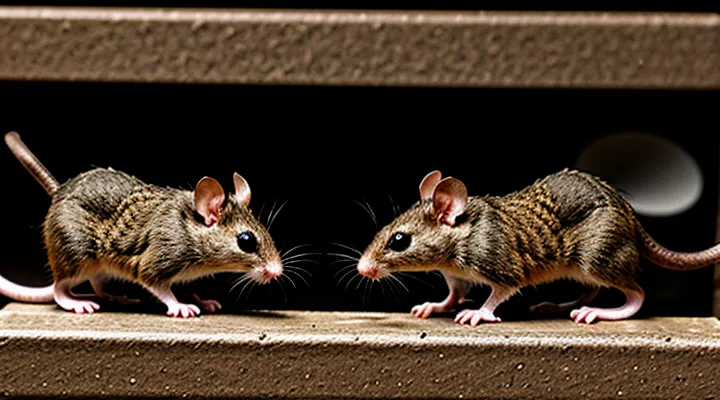
The Diverse Vocalizations of Mice
Ultrasonic Vocalizations (USVs): The Hidden Language
Purpose of USVs in Mice
Ultrasonic vocalizations (USVs) constitute a primary communication channel for mice, transmitting information that cannot be detected by the human ear. These high‑frequency calls are emitted in specific social contexts and shape interaction patterns within and between groups.
Typical functions of mouse USVs include:
- Attraction of potential mates; males increase call rate and complexity during courtship.
- Coordination of mother‑pup exchanges; pups emit distress calls that prompt maternal retrieval, while dams respond with nurturing vocalizations.
- Establishment of dominance hierarchies; subordinate individuals produce submissive calls that reduce aggressive encounters.
- Signaling of emotional state; variations in call duration and frequency correlate with anxiety, reward, or pain.
- Facilitation of group cohesion; synchronized vocal bursts accompany collective behaviors such as nest building or foraging.
Research indicates that USVs modulate neural circuits associated with reward, stress, and social cognition, thereby influencing both immediate behavioral outcomes and longer‑term developmental trajectories.
Characteristics of USVs: Frequency and Pattern
Ultrasonic vocalizations (USVs) emitted by mice occupy a narrow acoustic band that exceeds the human hearing threshold, typically ranging from 30 kHz to 110 kHz. Within this range, distinct frequency clusters correspond to specific call types, allowing researchers to differentiate social contexts and developmental stages.
The temporal structure of USVs varies systematically. Short, broadband bursts often last less than 10 ms and are associated with rapid, high‑arousal events. Longer, frequency‑modulated sweeps extend up to 150 ms and display gradual upward or downward shifts in pitch. Flat, tonal calls maintain a relatively constant frequency for durations of 30–100 ms, while complex “jump” calls combine abrupt frequency steps with intervening plateaus.
Key characteristics can be summarized as follows:
- Frequency range: 30–110 kHz, with peaks commonly observed near 40 kHz (juvenile distress) and 80 kHz (adult courtship).
- Modulation pattern:
- Frequency‑modulated (FM) sweeps: continuous pitch change.
- Flat tones: stable pitch.
- Jump calls: discrete frequency steps.
- Duration: 5 ms (brief bursts) to >150 ms (extended sweeps).
- Amplitude: 60–80 dB SPL measured at 10 cm, sufficient for conspecific detection but invisible to predators lacking ultrasonic sensitivity.
These parameters interact to form a repertoire that conveys information about identity, emotional state, and intent. Precise measurement of frequency and pattern enables quantitative comparison across strains, experimental manipulations, and developmental timelines, providing a robust framework for interpreting mouse acoustic communication.
Audible Sounds: More Than Just Squeaks
Chirps: Greetings and Social Cues
Mouse vocalizations include a distinct category of short, high‑frequency chirps used primarily for greeting and conveying social information. These sounds occur during initial encounters between individuals, after a brief separation, and when a dominant mouse re‑establishes proximity to subordinates. The acoustic structure—rapid rise time, narrow bandwidth, and consistent repetition rate—facilitates rapid identification of the emitter’s identity and emotional state.
Key functions of mouse chirps:
- Signal recognition of a familiar conspecific, reducing aggression during reunions.
- Indicate a non‑threatening intent, allowing subordinate mice to approach without defensive behavior.
- Convey subtle changes in internal condition, such as stress level or reproductive status, through slight variations in pitch and duration.
- Coordinate group activities, including foraging and nest building, by synchronizing movement patterns among participants.
Laboratory observations demonstrate that chirp frequency correlates with the sender’s social rank: higher‑ranking individuals produce chirps at a slightly higher fundamental frequency and with greater regularity. Playback experiments confirm that naïve mice adjust their behavior—approaching or retreating—based on the acoustic cues embedded in these chirps, underscoring their role as a primary mechanism for mouse social communication.
Squeaks: Distress and Warning Signals
Mice emit high‑frequency squeaks when experiencing pain, injury, or extreme discomfort. The acoustic structure typically features a rapid rise in pitch followed by a brief, sharp decay, allowing conspecifics to recognize the urgency of the signal. Laboratory recordings show that these distress calls exceed 20 kHz, often surpassing the hearing threshold of many predators, which suggests an evolutionary advantage in communicating danger without attracting external threats.
In addition to personal distress, squeaks function as warning signals within mouse colonies. When a predator approaches, an individual will produce a series of short, repetitive squeaks that prompt immediate cessation of foraging and increased vigilance among nearby mice. The pattern varies with the level of threat:
- Single, abrupt squeak – indicates minor irritation or mild pain.
- Rapid succession of 3–5 squeaks – signals moderate danger, such as a nearby predator.
- Continuous, high‑rate squeaking – denotes imminent threat, triggering collective escape behavior.
Physiological studies link the production of these calls to activation of the periaqueductal gray and amygdala, brain regions associated with fear and pain processing. The intensity and frequency modulation of the squeaks correlate with measurable stress hormones, confirming that the vocalization reflects the caller’s internal state and serves as a reliable alarm for the group.
Scratches and Rustles: Movement and Exploration
Mice generate a distinctive class of acoustic events when their bodies contact substrates. These events, commonly described as scratches and rustles, arise from rapid limb motions, body shifts, and whisker sweeps across bedding, paper, or plastic surfaces. The resulting waveforms exhibit broadband frequency content, typically spanning 2–10 kHz, with transient rise times under 5 ms and durations of 10–30 ms. Spectral analysis reveals a steep high‑frequency roll‑off, reflecting the brief contact and abrupt cessation of motion.
During foraging, mice probe the environment by dragging forepaws and whiskers over food particles, producing a series of low‑amplitude rustles that convey texture information to conspecifics. In nest construction, repeated scratching of nesting material creates a rhythmic acoustic signature that can be detected by nearby individuals, facilitating coordinated building activity. Exploratory excursions through unfamiliar chambers generate intermittent scratches as the animal negotiates obstacles, providing a continuous feedback loop for spatial mapping.
Research protocols isolate these sounds using high‑sensitivity microphones positioned beneath the experimental arena. Automated classifiers differentiate scratches from vocalizations by applying short‑time Fourier transform features and machine‑learning thresholds calibrated on labeled recordings. The resulting datasets enable quantification of movement patterns, assessment of environmental complexity, and comparison of strain‑specific acoustic profiles.
Typical sources of mouse‑produced scratches and rustles include:
- Forelimb drag across bedding or paper.
- Whisker sweep over textured surfaces.
- Tail brush against cage walls.
- Body rub against enclosure corners during turning maneuvers.
Communication and Behavior
Parental Care and Pup Communication
Maternal Responses to Pup USVs
Maternal mice exhibit rapid, context‑dependent reactions to ultrasonic vocalizations emitted by their pups. These calls, typically ranging from 40 to 80 kHz, convey information about the offspring’s physiological state and immediate needs. Upon detection, a dam adjusts her behavior through a series of coordinated actions:
- Orientation and approach: The mother turns toward the sound source, often within a few hundred milliseconds, and moves directly to the nest.
- Retrieval and grooming: She lifts the pup, transports it to a safe location, and engages in licking, which stimulates thermoregulation and reduces stress hormones in the infant.
- Vocal modulation: The dam may emit her own low‑frequency calls that synchronize with the pup’s emissions, reinforcing the mother‑infant acoustic bond.
Neurophysiologically, auditory pathways in the adult female are sensitized by hormonal changes associated with parturition and lactation. Elevated estrogen and oxytocin levels enhance synaptic efficacy in the inferior colliculus and auditory cortex, enabling precise discrimination of call subtypes such as distress, hunger, or isolation signals. Functional imaging studies reveal increased activity in the medial preoptic area during pup‑directed listening, linking auditory perception to motor output.
Experimental manipulations—such as playback of synthetic USVs or selective silencing of auditory nuclei—demonstrate that maternal responsiveness depends on both innate circuitry and experience. Pups raised in isolation produce atypical vocal patterns, which in turn elicit weaker retrieval behaviors, suggesting a feedback loop where call quality shapes maternal investment.
Overall, the interaction between pup ultrasonic vocalizations and maternal behavior constitutes a tightly regulated communication system. It ensures offspring survival, influences developmental trajectories, and provides a model for studying the neural basis of social communication in mammals.
Courtship and Mating Calls
Male USVs in Attraction
Male ultrasonic vocalizations (USVs) constitute a primary acoustic signal emitted by laboratory and wild‑derived mice during social encounters that involve sexual interest. In the presence of a receptive female, adult males produce rapid bouts of frequencies between 50 and 110 kHz, often organized into syllable types such as “upward sweep,” “flat,” and “complex” motifs. These calls appear within seconds of female detection and persist throughout the courtship phase, indicating a direct association with attraction.
Physiological studies link USV production to elevated testosterone and vasopressin activity in brain regions controlling vocal motor output. Lesions of the periaqueductal gray or disruption of the medial preoptic area markedly reduce call rate, confirming a neural substrate that couples hormonal state to vocal behavior. Genetic analyses reveal strain‑specific differences: C57BL/6J males emit fewer, longer‑duration syllables than BALB/c males, a pattern that correlates with measured female preference in playback trials.
Behavioral experiments demonstrate that females preferentially approach speakers broadcasting male USVs over silent controls or broadband noise. Playback of specific syllable types, particularly those with steep frequency modulation, elicits increased investigation time and accelerates estrous onset. These findings support the hypothesis that male USVs convey information about fitness, vigor, and species identity, thereby influencing mate choice.
Key observations:
- Call onset occurs within 5 s of female introduction.
- Average syllable rate rises from 5 Hz in isolation to 30 Hz during active courtship.
- Frequency range peaks at ~80 kHz; peak amplitude remains below 70 dB SPL, minimizing predator detection.
- Females display heightened locomotor response to USVs containing upward sweeps and complex modulations.
- Hormonal manipulation (testosterone supplementation) restores USV production in castrated males, confirming endocrine dependence.
Collectively, male ultrasonic vocalizations serve as a concise, species‑specific acoustic cue that enhances female attraction and facilitates reproductive success.
Territoriality and Aggression
Warning Calls and Defensive Sounds
Mice emit a distinct set of acoustic signals when confronted with predators or rival conspecifics. These warning calls are brief, high‑frequency chirps lasting 10–30 ms, typically ranging from 30 to 80 kHz. The rapid rise in pitch and abrupt termination make the sounds difficult for many predators to locate, while remaining well within the auditory sensitivity of other mice.
The primary functions of these alarm vocalizations include:
- Alerting nearby group members to immediate danger.
- Coordinating escape routes by triggering collective flight responses.
- Suppressing aggressive encounters by signaling the presence of a higher‑level threat.
Defensive sounds extend beyond vocalizations. When a mouse is restrained or threatened, it produces:
- Squeaks of lower frequency (5–15 kHz) generated by rapid vocal fold vibration, indicating distress.
- Audible foot‑stamping against the substrate, creating broadband noise that can startle predators.
- Scratching noises produced by rapid claw movements on hard surfaces, serving both as a deterrent and as a means to communicate agitation.
Neurophysiological studies show that the auditory cortex of conspecifics responds selectively to these alarm frequencies, increasing neuronal firing rates and prompting immediate freezing or fleeing. Behavioral experiments confirm that playback of warning calls reduces foraging activity and heightens vigilance in naïve mice.
In summary, mouse warning calls and defensive sounds constitute a compact communication system optimized for rapid threat transmission, predator avoidance, and social cohesion within rodent colonies.
Factors Influencing Mouse Sounds
Age and Development
Changes in Vocalizations from Pups to Adults
Mice produce a diverse repertoire of sounds that evolves dramatically from birth to maturity. Neonatal pups emit high‑frequency squeaks when isolated, a reflexive response that peaks within the first week. These emissions are brief, typically under 10 ms, and serve to elicit maternal retrieval. As the auditory system matures, pups begin to generate longer, lower‑frequency chirps during social play, indicating emerging vocal control.
During the juvenile period, vocal output expands in both complexity and context. Mice introduce ultrasonic vocalizations (USVs) that accompany courtship and territorial encounters. The structure of these USVs shifts from simple, single‑tone calls to multi‑note sequences with frequency modulations. Concurrently, audible scratching sounds appear during aggressive interactions, reflecting the integration of somatic and vocal communication channels.
Adult mice display a fully differentiated acoustic profile. Male courtship songs consist of patterned series of frequency‑modulated sweeps, often synchronized with locomotor displays. Female vocalizations are more subdued, emphasizing brief, high‑frequency notes that signal receptivity. In addition, adults produce broadband noise bursts during defensive behaviors, a stark contrast to the pure tones of early development.
Key developmental trends:
- Frequency range narrows from broad ultrasonic peaks in pups to specific bands in adults.
- Call duration increases from sub‑10 ms squeaks to multi‑second sequences in mature individuals.
- Acoustic complexity rises, transitioning from single‑tone emissions to intricate, patterned series.
- Contextual specificity intensifies, with distinct vocal signatures for mating, aggression, and parental care.
Environmental Impact
Influence of Habitat on Sound Production
Mice adapt their acoustic signals to the physical characteristics of their surroundings. In dense, low‑lying vegetation, ultrasonic chirps travel short distances, prompting individuals to emit high‑frequency, brief calls that minimize attenuation. Open fields allow lower‑frequency squeaks to propagate farther, resulting in longer, more resonant vocalizations.
Substrate composition also shapes sound production. Soft bedding, such as leaf litter, dampens vibrations, encouraging mice to increase the intensity of scratch‑based sounds for effective communication. Conversely, hard surfaces like stone or metal amplify mechanical noises, enabling mice to rely on quieter, less forceful scratches.
Environmental noise levels influence signal selection. In habitats with constant ambient sounds—e.g., running water or wind—mice shift toward higher‑frequency chirps that stand out against low‑frequency background noise. In quieter niches, they employ a broader frequency range, including low‑frequency squeaks and audible scratches.
Key patterns observed across habitats:
- Dense cover: high‑frequency, short‑duration ultrasonic calls.
- Open terrain: lower‑frequency, longer‑duration vocalizations.
- Soft substrate: elevated mechanical sound intensity.
- Hard substrate: reduced mechanical effort, reliance on acoustic cues.
- High ambient noise: shift to frequencies above background spectrum.
- Low ambient noise: expanded frequency repertoire, including audible scratches.
Health and Stress
Vocal Indicators of Illness or Discomfort
Mouse vocalizations provide a reliable window into health status. When a rodent experiences pain, infection, or metabolic imbalance, the acoustic profile of its calls shifts predictably. Researchers have documented consistent alterations in frequency range, amplitude, and temporal pattern that correlate with specific physiological disturbances.
Key acoustic markers of illness or discomfort include:
- Elevated fundamental frequency: acute pain often triggers higher‑pitched squeaks, sometimes exceeding the normal 40–70 kHz range.
- Reduced call rate: chronic stress or malaise leads to fewer ultrasonic chirps per minute, reflecting diminished exploratory activity.
- Prolonged call duration: inflammatory conditions extend the length of individual vocal bursts, producing a drawn‑out tonal quality.
- Increased broadband noise: tissue damage or respiratory infection generates irregular, scratch‑like sounds that lack the harmonic structure of typical chirps.
- Altered harmonic structure: metabolic disorders can disrupt the spacing between harmonics, resulting in atypical spectral patterns.
These vocal cues emerge from the mouse’s laryngeal muscles and respiratory control, which respond rapidly to nociceptive and systemic signals. Monitoring such changes enables early detection of disease, supports humane endpoints in laboratory settings, and informs the development of non‑invasive diagnostic algorithms. Continuous acoustic recording, combined with spectral analysis software, yields quantitative metrics that can be tracked across experimental groups, providing objective evidence of health fluctuations without direct handling.
The Role of Sounds in Mouse Research
Understanding Mouse Behavior
Using Vocalizations as Behavioral Markers
Mouse vocalizations provide quantifiable indicators of internal states and external interactions. Researchers record ultrasonic chirps, audible squeaks, and low‑frequency scratches with calibrated microphones, then extract parameters such as frequency, duration, amplitude modulation, and inter‑call intervals. These metrics correlate reliably with specific behaviors, enabling objective classification of aggression, courtship, fear, and exploratory activity.
The analytical pipeline typically follows three steps:
- Signal acquisition: high‑sample‑rate recordings captured in controlled environments minimize background noise.
- Feature extraction: software isolates spectral peaks, harmonic structure, and temporal patterns.
- Pattern recognition: machine‑learning algorithms assign calls to behavioral categories based on training datasets.
Validation studies demonstrate that distinct call types predict outcomes with accuracy exceeding 85 % across strains. For example, rapid 70‑kHz chirps increase in frequency during male‑female encounters, while broadband squeaks accompany defensive postures. Low‑frequency scratches accompany grooming and nest‑building, serving as markers of affiliative states.
Implementing vocalization‑based markers streamlines phenotypic screening in genetic models, reduces reliance on invasive procedures, and enhances reproducibility of behavioral assays. Integration with video tracking further refines context interpretation, allowing simultaneous assessment of acoustic and locomotor variables.
Applications in Neuroscience
Studying Brain Responses to Auditory Cues
Research on how the rodent auditory system processes the diverse sounds produced by mice—ranging from high‑frequency chirps to low‑frequency scratches—relies on precise measurement of neural activity during controlled acoustic stimulation. Electrophysiological recordings from the auditory cortex and subcortical nuclei reveal distinct firing patterns that correspond to specific spectral and temporal features of these vocalizations. For instance, rapid upward sweeps typical of distress calls elicit short‑latency bursts in primary auditory fields, whereas broadband scratching noises generate sustained responses in secondary auditory areas.
Functional imaging studies complement electrophysiology by mapping hemodynamic changes associated with sound perception. When mice are presented with conspecific chirps, increased blood‑oxygen‑level signals appear in the dorsal auditory cortex and adjacent limbic structures, indicating integration of acoustic information with affective processing. Conversely, exposure to self‑generated scratching sounds produces localized activation in somatosensory‑auditory convergence zones, suggesting a multimodal representation of self‑produced noise.
Key methodological considerations include:
- Use of calibrated speakers to reproduce the full frequency range of mouse vocalizations (2–100 kHz).
- Implementation of head‑fixed preparations to minimize movement artifacts while preserving naturalistic hearing.
- Application of spike‑sorting algorithms that differentiate between excitatory and inhibitory neuronal populations during sound presentation.
- Integration of optogenetic manipulation to isolate circuit components responsible for specific response profiles.
Behavioral assays demonstrate that neural discrimination of these sounds influences social interaction and predator avoidance. Lesions of the auditory thalamus impair the ability to distinguish between alarm chirps and exploratory scratches, leading to altered escape responses. Pharmacological blockade of NMDA receptors in the auditory cortex reduces plasticity in response to repeated exposure, confirming the role of synaptic mechanisms in auditory learning.
Collectively, these findings delineate a hierarchical processing scheme in which mouse acoustic signals are encoded by specialized neural ensembles, linked to both perceptual and behavioral outcomes. Continued investigation of brain responses to these sounds will refine models of auditory cognition and inform translational research on hearing disorders.
Comparing Mouse Sounds with Other Rodents
Similarities and Differences in Vocal Repertoires
Distinguishing Mouse Sounds from Rat Vocalizations
Mouse vocalizations occupy a higher frequency band than those of rats. Typical mouse ultrasonic chirps range from 35 kHz to 110 kHz, whereas rat ultrasonic calls cluster around 20 kHz to 80 kHz, with a pronounced peak near 50 kHz. In the audible spectrum, mice produce brief, high‑pitched squeaks (4–10 kHz) that differ from rat squeals, which are longer and lower‑pitched (2–6 kHz).
Temporal patterns also separate the species. Mice emit rapid series of 5–15 ms pulses, often arranged in trills or bursts lasting less than 200 ms. Rat calls frequently consist of longer, modulated syllables extending up to 500 ms, sometimes accompanied by harmonic structures.
Behavioral context provides additional clues. Mice generate ultrasonic chirps during social investigation, mating, and pup‑care. Rat vocalizations appear during aggressive encounters, territorial disputes, and stress‑induced situations. Observing the accompanying posture—mice display grooming or exploratory movements, while rats show dominant posturing or defensive freezing—helps confirm the source.
Practical identification steps:
- Record with a broadband microphone covering 10 kHz–120 kHz.
- Apply a Fast Fourier Transform to isolate peak frequencies.
- Measure pulse duration and inter‑pulse intervals.
- Correlate acoustic data with observed behavior and species‑specific morphology.
Applying these criteria enables reliable discrimination between mouse and rat sounds in mixed‑species environments.