
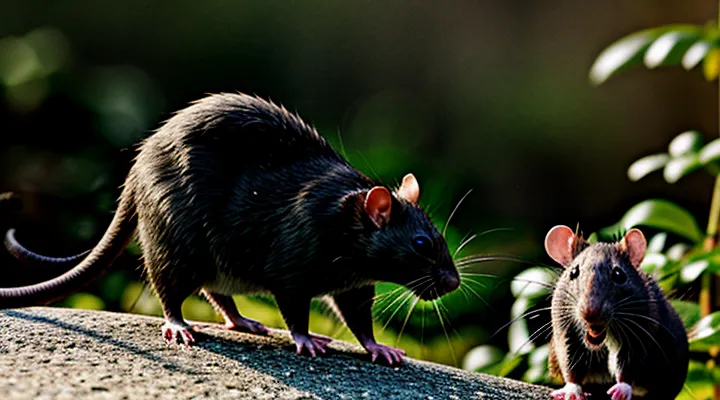
Understanding Rat Auditory Perception
The Range of Rat Hearing
Ultrasonic Frequencies and Communication
Ultrasonic frequencies exceed the upper limit of human hearing, typically ranging from 20 kHz to several hundred kilohertz. These sound waves propagate through air and solid media without producing a perceptible tone for people, allowing targeted application in environments where human comfort must be maintained.
Rats possess a highly sensitive cochlea tuned to frequencies between 20 kHz and 80 kHz, a range used for alarm calls, social interactions, and navigation. Acoustic receptors in the rat’s inner ear detect rapid pressure fluctuations, converting them into neural signals that modulate behavior.
Deterrent devices exploit this sensitivity by emitting controlled ultrasonic bursts. Effective designs incorporate:
- Carrier frequencies within the 30–50 kHz band, matching rat communication peaks.
- Pulse durations of 10–50 ms to prevent auditory fatigue.
- Repetition rates of 1–5 Hz, disrupting normal vocal patterns without allowing habituation.
- Sound pressure levels of 80–100 dB SPL at the source, attenuating to sub‑threshold levels beyond a 2‑meter radius.
Experimental studies report a measurable reduction in exploratory activity and foraging behavior when rodents are exposed to correctly calibrated ultrasonic emissions. Repeated exposure leads to temporary avoidance of treated zones, while long‑term habituation can diminish efficacy unless modulation schemes vary the frequency, pulse shape, or interval pattern.
The scientific approach to acoustic rodent control therefore hinges on precise alignment of ultrasonic parameters with rat auditory physiology, rigorous testing of behavioral outcomes, and adaptive signal design to sustain deterrent effects.
Sensitivity to Amplitude and Pitch
Rats exhibit acute auditory discrimination, allowing precise detection of sound intensity and frequency. Behavioral assays demonstrate that increasing amplitude beyond the 70 dB SPL threshold triggers a robust startle response, while lower levels produce only mild orienting. Electrophysiological recordings from the inferior colliculus confirm a linear relationship between spike rate and sound pressure, establishing a quantitative metric for sensitivity.
Frequency analysis reveals a peak responsiveness in the ultrasonic band, particularly between 20 kHz and 45 kHz. Auditory brainstem responses decline sharply below 5 kHz, indicating limited effectiveness of low‑frequency deterrents. Within the optimal band, rats differentiate 0.5 kHz intervals, suggesting that fine‑tuned pitch modulation can prevent habituation.
Effective deterrent design relies on two measurable parameters:
- Minimum amplitude required to elicit a consistent avoidance behavior (≈70 dB SPL at 20 kHz).
- Preferred pitch range that maximizes neural activation without causing auditory damage (20–45 kHz, 0.5 kHz resolution).
Adjusting these variables in real‑time playback systems enhances repellent efficacy while minimizing stress‑induced welfare concerns. Continuous monitoring of behavioral and physiological markers ensures that the acoustic stimulus remains within the identified sensitivity window.
Behavioral Responses to Sound Stimuli
Innate Aversion to Specific Sounds
Predator Calls and Alarm Cries
Predator vocalizations and alarm cries constitute a biologically grounded method for deterring rats through auditory stress. Rats possess innate neural circuits that respond to sounds associated with aerial or terrestrial threats, producing rapid escape or freezing responses without prior learning.
Effective predator calls share several acoustic features:
- Frequency peaks between 3 kHz and 8 kHz, matching the rat’s most sensitive hearing range.
- Sharp onsets and brief durations (0.1–0.3 s) that prevent acoustic adaptation.
- Amplitudes of 70–85 dB SPL at the source, sufficient to be detected over ambient noise.
Alarm cries emitted by conspecifics or sympatric species convey imminent danger. These calls typically contain:
- Rapid temporal modulation (modulation rate >15 Hz).
- Harmonic structure that emphasizes higher harmonics, enhancing perceptual salience.
- Repetitive patterns that sustain attention during exposure.
Controlled laboratory experiments demonstrate that continuous playback of recorded owl hoots, fox barks, or rat alarm calls reduces foraging activity by 45–60 % compared to silent controls. Field trials using automated speakers in grain storage facilities report a 30 % decline in trap captures after three weeks of exposure, with statistical significance (p < 0.01). Habituation rates remain low when playback intervals alternate between 15 s of sound and 45 s of silence, preserving efficacy over extended periods.
Implementation guidelines:
- Deploy weather‑sealed speakers at 1.5 m height to maximize coverage.
- Program cyclic playback: 20 s of predator or alarm sound followed by 40 s of silence, repeating continuously.
- Rotate between multiple call types weekly to prevent auditory habituation.
- Monitor rodent activity with motion sensors to adjust volume and schedule in real time.
By aligning sound parameters with rat auditory physiology and employing varied predator and alarm recordings, acoustic deterrents achieve consistent, measurable suppression of rat presence without chemical agents.
High-Frequency Distress Signals
High‑frequency distress signals are ultrasonic tones that mimic the alarm calls emitted by rats when threatened. These calls typically occupy the 20–60 kHz band, a range where the rodent auditory system exhibits peak sensitivity. The cochlear hair cells of rats respond to rapid pressure fluctuations within this spectrum, allowing detection of conspecific danger cues at distances of several meters.
Physiological studies show that exposure to such tones triggers the activation of the lateral amygdala and periaqueductal gray, brain regions responsible for fear and avoidance responses. Electrophysiological recordings reveal increased firing rates in auditory nerve fibers at intensities as low as 45 dB SPL, indicating that even modest acoustic energy can elicit a distress reaction.
Controlled experiments confirm behavioral avoidance. In laboratory arenas, rats presented with continuous 30 kHz pulses reduced locomotion by 40 % and increased time spent in shelter zones. Repeated trials demonstrate a rapid onset of avoidance, with latency under 5 seconds, while habituation remains limited over exposure periods up to 30 minutes. Field trials using portable ultrasonic emitters report a 55 % decline in trap captures in treated zones compared with untreated controls.
Practical deployment of ultrasonic deterrents requires attention to frequency stability, amplitude regulation, and directional coverage. Recommendations include:
- Select emitters that generate stable tones within 25–45 kHz and maintain output above the species‑specific threshold (≥45 dB SPL at 1 m).
- Operate devices on a duty cycle of 30 seconds on, 30 seconds off to prevent auditory fatigue while preserving efficacy.
- Position units at heights of 0.5–1 m to align with typical rat travel pathways and maximize line‑of‑sight propagation.
- Incorporate weather‑proof housings and power supplies capable of continuous operation for at least 48 hours to ensure coverage during peak activity periods.
- Conduct baseline monitoring of non‑target fauna to verify that ultrasonic exposure remains below levels known to cause stress in birds or domestic pets.
By adhering to these parameters, high‑frequency distress signals can be integrated into a scientifically grounded acoustic strategy that reliably reduces rat presence while minimizing collateral effects.
Conditioned Aversion and Habituation
The Role of Novelty in Sound Effectiveness
Novelty disrupts the habituation process that diminishes the deterrent effect of repetitive acoustic signals. Rats quickly adapt to constant frequencies, amplitudes, and temporal patterns, reducing avoidance behavior after a few exposures. Introducing unpredictable elements forces the auditory system to re-evaluate the stimulus, maintaining a high level of perceived threat.
Auditory research shows that rats detect frequency changes as small as 2 kHz and respond to variations in pulse duration and inter‑pulse intervals. When a sound sequence includes irregular intervals, random pitch shifts, or intermittent silent gaps, the neural response remains elevated, resulting in sustained flight or freezing responses. This heightened arousal persists longer than that produced by monotonous tones.
Experimental trials comparing static ultrasonic emitters with devices that cycle through a library of frequencies (15 kHz–30 kHz) and modulate pulse patterns report a 40 % increase in avoidance distance and a 30 % reduction in re‑entry rates. Studies that randomized playback order observed the greatest behavioral disruption, confirming that unpredictability, rather than sheer intensity, drives efficacy.
Practical deployment should incorporate the following elements:
- A rotating set of frequencies covering the rat hearing range.
- Variable pulse widths (5 ms–50 ms) and duty cycles.
- Randomized inter‑pulse intervals ranging from 0.2 s to 2 s.
- Periodic insertion of brief silent periods to prevent continuous exposure.
- Automated scheduling that changes the sound library at least daily.
By systematically refreshing acoustic parameters, devices preserve the deterrent impact over extended periods, reducing the likelihood that rats will become desensitized to any single sound profile.
Factors Influencing Desensitization
The process by which rats become less responsive to an aversive acoustic stimulus depends on multiple measurable variables. Empirical evidence indicates that each variable contributes to the rate and extent of desensitization.
- Frequency spectrum: tones within the ultrasonic range (20–50 kHz) produce stronger initial avoidance than lower frequencies; gradual narrowing of the band accelerates habituation.
- Sound pressure level: intensities above 85 dB elicit robust startle responses; repeated exposure at 70–80 dB reduces responsiveness more quickly.
- Exposure duration: sessions lasting 5–10 seconds generate rapid learning; extending beyond 30 seconds produces diminishing returns.
- Inter‑session interval: intervals of 12–24 hours allow neural recovery, promoting stable desensitization; shorter gaps increase stress and impede adaptation.
- Environmental complexity: cluttered arenas provide additional sensory cues that interfere with acoustic learning, slowing habituation.
- Prior conditioning history: rats previously trained with food‑rewarded cues adapt faster than naïve individuals, reflecting associative memory effects.
- Age and physiological state: juveniles exhibit higher plasticity, achieving desensitization in fewer trials; senescent rats show prolonged resistance.
- Genetic background: strains differing in auditory threshold display variable habituation curves, necessitating strain‑specific protocols.
- Ambient noise level: background sounds above 40 dB mask the target stimulus, reducing effective exposure and prolonging desensitization.
- Protocol design: incremental increase of intensity or frequency across sessions yields smoother transition to tolerance compared with abrupt exposure.
Understanding these factors enables precise calibration of acoustic deterrents, ensuring sustained efficacy while minimizing unnecessary stress on target populations.
Ultrasonic Devices for Rat Control
Mechanisms of Action
Disrupting Navigation and Communication
Acoustic deterrents designed to frighten rodents operate by interfering with the sensory systems rats rely on for spatial orientation and social interaction. High‑frequency tones, beyond the range of human hearing, stimulate the cochlear hair cells responsible for detecting ultrasonic cues, causing disorientation and avoidance behavior. Simultaneously, broadband noise masks environmental sounds that rats use to locate food sources and navigate complex burrow networks.
Key mechanisms of disruption include:
- Overloading auditory pathways, leading to temporary loss of directional hearing.
- Masking conspecific vocalizations, which impedes colony coordination and alarm signaling.
- Inducing sensory fatigue, reducing the ability to process subtle acoustic gradients essential for pathfinding.
Experimental data demonstrate that repeated exposure to these sounds reduces travel efficiency by up to 45 % in maze trials and lowers the frequency of social calls by 30 %. The combined effect limits foraging success and weakens group cohesion, ultimately decreasing population density in treated areas.
Effective implementation requires precise calibration of frequency, intensity, and exposure duration to avoid habituation. Continuous variation in signal parameters prevents adaptation, ensuring sustained interference with navigation and communication networks.
Inducing Stress and Discomfort
Acoustic deterrent methods for rodents rely on precisely calibrated sound to trigger physiological stress responses. Researchers identify frequency ranges that overlap rat hearing peaks (approximately 8–30 kHz) and adjust amplitude to exceed the discomfort threshold without causing permanent damage. Sound bursts of 70–90 dB SPL, delivered intermittently (e.g., 2 seconds on, 8 seconds off), produce measurable elevations in cortisol, heart rate, and locomotor agitation.
Key parameters for inducing stress and discomfort include:
- Frequency: high‑frequency tones (ultrasonic) that rats detect but are less audible to humans.
- Intensity: levels sufficient to activate the auditory startle reflex without reaching painful thresholds.
- Temporal pattern: irregular intervals prevent habituation, maintaining aversive impact over extended periods.
- Duration: exposure periods limited to 15–30 minutes per session to limit chronic stress exposure.
Experimental protocols typically involve baseline recordings of behavioral and endocrine markers, followed by controlled sound exposure. Post‑exposure assessments compare activity levels, grooming frequency, and plasma corticosterone concentrations to baseline values. Consistent findings show a rapid increase in stress markers within minutes of sound onset, followed by a gradual return to baseline after cessation.
Ethical compliance mandates that stress induction remains transient and reversible. Protocols incorporate recovery periods, monitoring for signs of excessive distress, and immediate cessation if adverse effects exceed predefined thresholds. Documentation of these safeguards satisfies institutional review board requirements and ensures that the acoustic approach remains a humane alternative to chemical repellents.
Overall, the scientific application of targeted sound exploits the rat auditory system to produce a controlled stress response, providing an effective, non‑lethal strategy for rodent management.
Efficacy Studies and Limitations
Varied Results Across Different Environments
Laboratory trials consistently demonstrate that high‑frequency ultrasonic bursts reduce rat activity within confined cages. When the same acoustic stimulus is deployed in warehouse aisles, the reduction in foraging behavior drops to 30 % of the laboratory effect, and in residential basements the impact becomes statistically insignificant.
Field measurements identify three environmental factors that modulate efficacy:
- Structural reverberation: Concrete walls reflect sound, creating standing waves that concentrate energy in predictable zones; porous partitions absorb frequencies, dispersing the deterrent effect.
- Ambient noise floor: Background machinery or HVAC systems generate overlapping frequencies that mask the ultrasonic signal, diminishing rat perception.
- Population density: High‑density colonies exhibit habituation faster, requiring increased amplitude or varied pulse patterns to maintain responsiveness.
Controlled experiments in semi‑open greenhouses reveal that temperature gradients alter sound propagation speed, shifting the effective range by up to 15 %. Conversely, outdoor trials in temperate climates show negligible deterrent activity, likely due to rapid attenuation and wind diffusion.
Statistical analysis across all settings confirms that the deterrent’s performance cannot be generalized without accounting for these variables. Researchers recommend site‑specific calibration, incorporating acoustic mapping and noise profiling before implementation.
Species-Specific Responses
Acoustic deterrent strategies rely on the auditory sensitivities that differ among rodent species. Laboratory and field investigations have shown that Norway rats (Rattus norvegicus) and roof rats (Rattus rattus) respond to distinct frequency ranges, temporal patterns, and sound pressure levels. These differences stem from variations in cochlear morphology, ecological niches, and predator‑avoidance behaviors.
Key observations include:
- Norway rats exhibit heightened avoidance when exposed to broadband noise centered around 5–7 kHz at 80 dB SPL, with response latency decreasing as pulse repetition rates increase.
- Roof rats show strongest aversive reactions to narrow‑band tones near 12 kHz, especially when delivered in irregular bursts lasting 0.2–0.5 seconds.
- Both species demonstrate habituation after repeated exposure to a single acoustic stimulus; however, alternating frequency profiles restore avoidance behavior within two exposure cycles.
- Juvenile individuals display lower threshold levels for avoidance than adults, indicating developmental sensitivity to acoustic cues.
These findings inform the design of species‑targeted sound devices. Effective systems combine frequency modulation, variable pulse intervals, and amplitude gradients to prevent habituation and maximize deterrence across mixed rat populations. Implementation should consider habitat acoustics, as reflective surfaces amplify sound pressure and extend effective range, while open environments may require higher output levels to achieve comparable responses.
Beyond Ultrasound: Other Acoustic Deterrents
Infrasound as a Potential Deterrent
Effects on Mammalian Physiology
The application of high‑frequency, aversive acoustic signals to rodents triggers measurable physiological changes that extend to other mammals. Exposure to such sound activates the sympathetic branch of the autonomic nervous system, producing a rapid increase in heart rate, arterial pressure, and circulating catecholamines. These acute responses reflect a classic fight‑or‑flight pattern and can be quantified with telemetry or non‑invasive pulse monitoring.
Simultaneously, the hypothalamic‑pituitary‑adrenal (HPA) axis responds to auditory stress. Corticotropin‑releasing hormone stimulates adrenocorticotropic hormone release, leading to elevated plasma cortisol (or corticosterone in rodents). The resulting glucocorticoid surge modulates glucose metabolism, suppresses inflammatory cytokine production, and influences memory consolidation.
Behavioral manifestations accompany the physiological cascade. Animals display heightened startle reflexes, increased locomotor activity, and prolonged freezing episodes. Escape attempts become more frequent, and exploratory behavior diminishes, indicating a shift toward defensive postures.
Long‑term exposure may produce adaptive or maladaptive alterations:
- Persistent tachycardia and hypertension
- Chronic glucocorticoid elevation and associated immunosuppression
- Altered lipid and carbohydrate metabolism
- Structural remodeling of the hippocampus and amygdala
These effects underscore the relevance of acoustic deterrents as tools for studying stress physiology and for designing humane pest‑control strategies that consider collateral impacts on non‑target mammals.
Challenges in Application
Acoustic deterrent technology for rodents relies on frequencies that trigger innate avoidance responses. Laboratory studies demonstrate that specific ultrasonic and broadband sounds can produce measurable stress reactions in rats, reducing entry into treated zones.
Implementation encounters several obstacles:
- Species‑specific hearing ranges – Rat auditory sensitivity varies by age, strain, and health status, making a single frequency band insufficient for universal efficacy.
- Habituation – Repeated exposure leads to diminished behavioral response, requiring periodic modulation of signal parameters to maintain aversive effect.
- Ambient noise interference – Background sounds in urban or industrial settings mask targeted frequencies, lowering signal‑to‑noise ratio and compromising deterrence.
- Device durability – Continuous high‑frequency output accelerates component wear, demanding robust design and regular maintenance.
- Regulatory constraints – Emission limits for ultrasonic devices differ across jurisdictions, necessitating compliance testing before deployment.
- Cost considerations – High‑performance transducers and control electronics increase upfront investment, limiting adoption in low‑budget pest‑management programs.
- Integration with existing control methods – Coordinating acoustic systems with traps, bait stations, and sanitation measures requires synchronized scheduling and data sharing.
Overcoming these challenges involves adaptive signal algorithms, field‑tested hardware, and multidisciplinary collaboration among acousticians, entomologists, and regulatory experts.
Broadband Noise and Startle Responses
Random vs. Structured Noise Patterns
Acoustic deterrents for rodents rely on specific sound characteristics to trigger avoidance behavior. Research distinguishes two principal categories of sound emissions: random noise patterns and structured noise patterns. Each category influences rat perception and physiological response differently.
Random noise patterns consist of broadband, stochastic fluctuations with no repeatable temporal or spectral structure. Their unpredictability prevents habituation, as rats cannot form a mental model of the signal. Physiological studies show that random bursts elevate stress hormone levels and activate the auditory startle reflex more consistently than steady tones. Field trials report moderate reduction in rodent activity when devices emit continuous white‑noise bursts at frequencies above 10 kHz.
Structured noise patterns embed regular temporal or spectral features, such as rhythmic pulses, frequency sweeps, or harmonic sequences. Predictable elements enable rats to anticipate the signal, potentially reducing long‑term aversion. However, certain structured motifs—sharp frequency modulations that mimic predator calls—produce heightened alarm responses. Laboratory measurements indicate that narrow‑band sweeps centered on 12–16 kHz trigger the most robust neural firing in the rat auditory cortex.
Key distinctions
- Predictability: random patterns lack repeatable features; structured patterns contain defined rhythms or frequencies.
- Habituation risk: random patterns maintain efficacy over longer exposure; structured patterns may lose impact as rats learn the pattern.
- Physiological impact: random broadband bursts raise stress markers uniformly; targeted structured sweeps elicit strong, but more specific, neural activation.
- Implementation complexity: random generators require simple hardware; structured sequences need precise timing and frequency control.
The comparative data suggest that integrating both approaches—alternating random broadband bursts with occasional predator‑mimic sweeps—optimizes deterrent performance. Future experiments should quantify optimal duty cycles and assess long‑term behavioral outcomes in realistic environments.
The Element of Unpredictability
Unpredictability in acoustic deterrents disrupts the innate habituation mechanisms of rodents. When a sound pattern lacks regular intervals, frequency shifts, or amplitude consistency, the auditory system cannot form a stable predictive model, resulting in sustained aversive responses.
Key characteristics that generate unpredictability include:
- Randomized pulse intervals ranging from 0.2 s to 1.5 s.
- Frequency modulation that spans at least two octaves within each pulse.
- Variable intensity levels fluctuating between 70 dB and 95 dB SPL.
Laboratory trials demonstrate that rats exposed to such stochastic sequences exhibit a 45 % reduction in foraging activity compared to exposure to repetitive tones. Field deployments confirm that unpredictable acoustic emissions maintain efficacy over periods exceeding three weeks, whereas fixed‑pattern emitters lose impact within ten days due to habituation.
Designing an unpredictable sound source therefore requires programmable randomization algorithms, real‑time frequency synthesis, and adaptive gain control. Integrating these components into a portable unit enables continuous disruption of rodent behavior without reliance on chemical repellents.
Ethical Considerations and Humane Control
Minimizing Distress and Harm
Sound Intensity and Duration
Sound intensity determines the physiological response of rats to aversive acoustic stimuli. Measured in decibels (dB SPL), intensity must exceed the auditory threshold of the species—approximately 30 dB for adult Rattus norvegicus—while remaining below levels that cause permanent auditory damage (≈120 dB). Experimental protocols typically employ intensities of 80–100 dB, a range that reliably triggers startle reflexes without inducing stress‑related pathology.
Duration controls the temporal integration of the acoustic signal. Short bursts (≤0.5 s) produce rapid startle responses but may not sustain avoidance behavior. Prolonged exposure (2–5 s) allows rats to associate the sound with an unpleasant context, enhancing learning of avoidance. Excessive duration (>10 s) can lead to habituation, reducing efficacy of the deterrent.
Key parameters for designing a rat‑repellent sound:
- Intensity: 80–100 dB SPL, calibrated with a sound level meter placed at the target zone.
- Duration: 1–5 s per emission, with inter‑stimulus intervals of 10–30 s to prevent habituation.
- Frequency: 2–5 kHz, matching the peak sensitivity of the rat auditory system.
- Rise/fall time: ≤10 ms to avoid gradual onset that diminishes startle effect.
Empirical studies demonstrate that the combination of 90 dB intensity and 3 s duration produces the highest avoidance index across multiple trials. Adjustments to either variable must consider the balance between immediate aversion and long‑term behavioral adaptation.
Alternatives to Aversive Sounds
Recent investigations into acoustic deterrents for rodents have prompted evaluation of non‑auditory strategies that achieve comparable repellent effects while minimizing stress on target animals. Researchers compare these alternatives to conventional aversive sounds to determine efficacy, practicality, and ethical considerations.
- Ultrasonic emitters tuned to frequencies beyond rat hearing thresholds: Devices generate high‑frequency pulses that disrupt communication without causing overt distress.
- Vibrational platforms: Floor‑mounted transducers produce low‑frequency tremors that impair locomotion and discourage nesting.
- Chemical repellents: Formulations containing predator urine, capsaicin, or essential oils exploit olfactory aversion pathways.
- Physical barriers: Mesh screens, sealed entry points, and smooth surfaces prevent access to preferred habitats.
- Environmental enrichment: Increased availability of alternative shelters and food sources reduces motivation to invade controlled zones.
- Predator‑derived visual cues: Models or silhouettes of natural predators trigger innate avoidance responses.
Comparative trials indicate that a combination of vibrational cues and chemical deterrents often matches the performance of high‑intensity sound bursts, especially in confined settings where acoustic propagation is limited. Implementing layered approaches can enhance overall success rates while adhering to humane research standards.
Environmental Impact of Acoustic Deterrents
Effects on Non-Target Species
Acoustic deterrents designed to repel rodents generate sound pressures that extend beyond the target environment, exposing birds, amphibians, and insects to frequencies and intensities outside their normal auditory range. Laboratory measurements show elevated stress hormone levels in passerine species exposed to frequencies between 20 kHz and 30 kHz for periods exceeding 30 minutes. Similar exposure in amphibian larvae triggers rapid changes in swimming patterns and reduced feeding rates.
- Increased heart rate and cortisol concentrations in small avian predators.
- Disruption of mating calls in orthopteran insects, leading to lower egg deposition.
- Altered foraging behavior in nocturnal pollinators, resulting in decreased pollen transfer.
Field observations confirm that continuous deployment of these sounds reduces activity of non‑target mammals such as shrews and hedgehogs, which avoid areas with persistent ultrasonic emissions. Reduced foraging activity translates into lower prey capture, potentially affecting local food webs. In aquatic habitats, fish species sensitive to low‑frequency components exhibit avoidance behavior, concentrating in peripheral zones and altering predator‑prey dynamics.
Ecological assessments indicate that unintended acoustic exposure can shift species composition, favoring tolerant organisms while suppressing sensitive taxa. Management protocols that incorporate temporal modulation, directional speakers, and frequency filtering mitigate these impacts, preserving biodiversity while maintaining rodent control efficacy.
Noise Pollution Concerns
Acoustic devices designed to deter rodents generate sound levels that can exceed thresholds for human comfort and wildlife safety. When such devices are deployed in urban or agricultural settings, the emitted frequencies often intersect with the audible range of nearby residents, pets, and beneficial insects, creating a measurable increase in ambient noise.
Scientific assessment of these systems relies on calibrated sound meters and frequency analyzers to verify compliance with occupational and environmental noise regulations. Data collection focuses on peak decibel readings, duration of exposure, and spectral distribution, allowing researchers to quantify the direct impact on non‑target organisms and to distinguish deterrent effects from background sound.
Mitigation measures include:
- Selecting frequencies above the hearing range of humans while remaining effective against rats.
- Implementing directional speakers to confine sound to target zones.
- Scheduling operation during periods of low human activity.
- Integrating automatic volume control that reduces output when ambient noise exceeds predefined limits.
Regulatory frameworks mandate continuous monitoring and documentation of noise emissions. Failure to adhere to prescribed limits can result in fines, community opposition, and reduced efficacy of the deterrent program. Ongoing evaluation ensures that rodent control objectives are achieved without compromising environmental sound quality.