
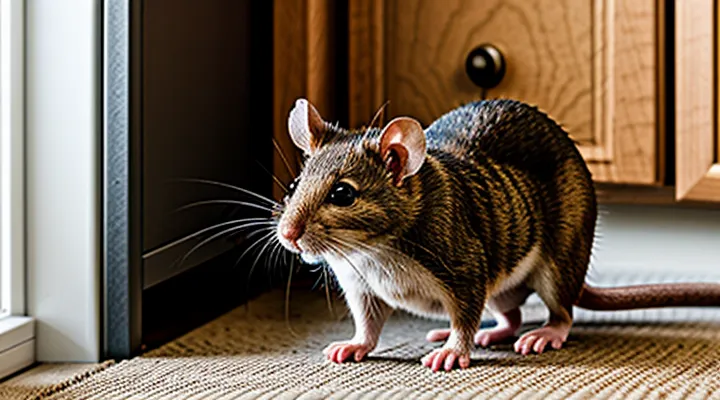
Understanding Ultrasonic Pest Control
How Ultrasonic Devices Work
The Science Behind Ultrasound and Pests
Ultrasound deterrents operate by emitting acoustic energy above the audible range of most mammals, typically between 20 kHz and 100 kHz. Rodents possess cochlear structures tuned to high‑frequency sounds, allowing them to detect these tones and trigger involuntary avoidance responses. The physiological basis involves rapid hair‑cell stimulation that generates neural signals interpreted as a threat, leading to heightened stress hormones and altered locomotor patterns.
Key mechanisms of ultrasonic pest control:
- Auditory startle: sudden high‑frequency bursts create a reflexive escape reaction, reducing time spent in the treated zone.
- Physiological stress: continuous exposure elevates cortisol‑like compounds, impairing feeding and reproduction.
- Habituation avoidance: varying frequency modulation prevents desensitization, maintaining deterrent efficacy over longer periods.
Effectiveness depends on several variables:
- Frequency selection: optimal ranges differ among species; house mice respond best to 30–45 kHz, while rats show greater sensitivity at 45–60 kHz.
- Intensity level: sound pressure levels above 90 dB SPL are required to overcome ambient noise masking.
- Propagation environment: hard surfaces reflect ultrasonic waves, extending coverage, whereas soft, absorbent materials attenuate signals within a few meters.
- Deployment density: overlapping coverage zones ensure no acoustic dead spots where rodents could shelter.
Research indicates that properly calibrated ultrasonic systems can reduce rodent activity by 40‑70 % in controlled settings. Field trials demonstrate diminished foraging and nesting behavior when devices operate continuously, with the greatest impact observed during nocturnal periods when rodent activity peaks.
Practical considerations for implementation:
- Install devices at ceiling height to exploit downward propagation and minimize obstruction.
- Position units near entry points, food storage, and nesting sites for targeted exposure.
- Conduct periodic frequency sweeps to counteract potential habituation.
- Verify compliance with occupational safety standards to avoid inadvertent human exposure to high‑intensity ultrasound.
Understanding the auditory physiology of rodents and the acoustic properties of ultrasonic emissions enables the design of effective, non‑chemical deterrent strategies that mitigate pest infestations while preserving environmental safety.
Limitations of Ultrasonic Repellents
Ultrasonic repellents emit high‑frequency sounds beyond human hearing to deter rodents. Their effectiveness is constrained by several technical and biological factors.
- Limited penetration: Sound energy diminishes rapidly with distance; most devices affect only a few meters, leaving larger spaces unprotected.
- Habituation: Mice quickly become desensitized to constant tones, reducing long‑term efficacy.
- Frequency specificity: Effective deterrence requires precise frequencies that match rodent hearing ranges; slight deviations render the device ineffective.
- Obstructions: Walls, furniture, and flooring absorb or reflect ultrasonic waves, creating dead zones where mice are not exposed to the signal.
- Variable environmental conditions: Temperature, humidity, and air flow alter sound propagation, causing inconsistent performance across seasons or climates.
- Safety and regulatory limits: Maximum permissible sound pressure levels restrict output power, preventing amplification that could overcome attenuation.
- Species and age differences: Younger or different rodent species may have altered hearing thresholds, making a single frequency range insufficient for all targets.
These limitations necessitate complementary control methods, such as sanitation, physical barriers, and targeted trapping, to achieve reliable mouse management.
Types of Sounds Used for Mouse Repulsion
High-Frequency Sounds (Ultrasound)
Characteristics of Ultrasonic Frequencies
Ultrasonic frequencies used for rodent deterrence typically range from 20 kHz to 65 kHz, exceeding the upper limit of human hearing. The sound pressure level (SPL) required for effective repulsion lies between 80 dB and 110 dB at the source, diminishing rapidly with distance due to atmospheric absorption. Frequency stability is critical; devices must maintain a narrow band‑width (±1 kHz) to prevent the signal from drifting into audible ranges.
Key acoustic properties that influence efficacy include:
- Frequency range – higher frequencies penetrate shorter distances but are less likely to be perceived by non‑target species.
- Modulation pattern – continuous tones often lead to habituation, whereas intermittent or sweeping patterns sustain aversive response.
- Amplitude decay – SPL drops approximately 6 dB per doubling of distance; strategic placement ensures target zones receive sufficient intensity.
Mice detect ultrasonic emissions through their cochlear hair cells, which are most sensitive between 30 kHz and 50 kHz. Exposure to SPLs above the auditory threshold triggers a startle reflex and disrupts navigation, reducing foraging activity. Prolonged exposure can cause stress‑related behavioral changes, prompting relocation.
Effective deployment requires alignment of device output with the described characteristics, ensuring that the ultrasonic field remains within the optimal frequency‑amplitude envelope throughout the targeted area.
Effectiveness and Human Perception
Ultrasonic emitters, broadband ultrasonic systems, predator‑call recordings, high‑frequency tones (10–20 kHz) and low‑frequency rumble (100–500 Hz) are the primary acoustic strategies evaluated for rodent deterrence. Their performance varies:
- Ultrasonic (≥20 kHz) – consistently reduces activity in laboratory trials; ineffective in larger, cluttered environments; inaudible to most adults, audible to some children and pets.
- Broadband ultrasonic – combines multiple frequencies, improves coverage in complex spaces; still limited by wall attenuation; remains outside human hearing range.
- Predator calls – short‑term avoidance observed; habituation develops within days; audible to humans, may cause discomfort.
- High‑frequency tones (10–20 kHz) – moderate reduction in foraging; partially audible to younger individuals, can generate mild irritation.
- Low‑frequency rumble (100–500 Hz) – negligible impact on rodents; fully audible, often perceived as nuisance noise.
Human perception considerations are essential for practical deployment:
- Audibility – frequencies below 20 kHz are detectable; prolonged exposure may lead to complaints or reduced tolerance.
- Subjective annoyance – high‑pitch sounds generate greater irritation than low‑frequency hums; continuous operation increases reported discomfort.
- Health guidelines – exposure limits for occupational noise (85 dB SPL) apply; devices exceeding this threshold require mitigation measures.
- Compatibility with living spaces – devices that emit audible signals may interfere with communication, sleep, or concentration; silent or ultrasonic options minimize disruption.
Effectiveness assessments must balance rodent deterrence with acceptable human acoustic environments. Selecting a noise type involves evaluating empirical reduction rates alongside measurable human impact.
Audible Sounds and Their Potential Impact
Predator Sounds
Predator vocalizations constitute a proven acoustic deterrent for rodents. Mice possess innate sensitivity to the calls of natural enemies, triggering flight responses that reduce entry into treated areas.
Research identifies several predator sound categories that generate consistent avoidance:
- Raptor calls (e.g., barn owl, hawk). Frequency peaks between 2 kHz and 5 kHz; rapid, high‑pitched screeches.
- Feline meows and hisses (domestic cat, wildcat). Dominant energy around 1 kHz to 4 kHz; irregular temporal pattern.
- Canid howls (fox, coyote). Broad spectrum from 0.5 kHz to 6 kHz; sustained tonal components.
- Mustelid chirps (ferret, weasel). Sharp bursts concentrated near 3 kHz; brief duration.
Effective deployment requires high‑fidelity recordings, continuous playback or intermittent cycles of 15–30 seconds every 2–5 minutes, and coverage of at least 30 dB above ambient noise. Speakers should be positioned at rodent pathways and near potential nesting sites. Rotating between different predator recordings prevents habituation, a documented reduction in efficacy after 48 hours of uniform exposure.
Limitations include the potential for non‑target wildlife disturbance and reduced performance in acoustically insulated environments. Combining predator sounds with complementary deterrent methods—such as ultrasonic emitters or physical barriers—enhances overall success rates.
Disruptive Noise Patterns
Disruptive noise patterns constitute a core element of acoustic deterrents designed to repel rodents. These patterns rely on irregular temporal and spectral characteristics that prevent habituation, thereby maintaining aversive effects over extended periods.
- Ultrasonic bursts with random intervals: high‑frequency pulses (>20 kHz) emitted in non‑periodic sequences disrupt auditory processing in mice, leading to avoidance behavior.
- Frequency‑swept tones: continuous sweeps covering 5–25 kHz, varying in direction and rate, create unpredictable auditory cues that interfere with species‑specific communication channels.
- Amplitude‑modulated pulses: bursts whose loudness fluctuates between 70 dB and 100 dB on a stochastic schedule, producing a perception of instability that mice associate with threat.
- Multi‑band noise clusters: simultaneous emission of several narrow‑band noises spaced irregularly across the audible and ultrasonic spectrum, generating a complex acoustic environment that overwhelms sensory filtering.
The efficacy of these patterns stems from the inability of mouse auditory systems to adapt to non‑repetitive stimuli. Neural adaptation mechanisms, which reduce responsiveness to constant tones, are bypassed when frequency, timing, and intensity vary unpredictably. Consequently, the discomfort threshold remains elevated, prompting relocation.
Implementation considerations include placement of transducers to ensure uniform coverage, power management for sustained emission, and verification of ambient noise levels to avoid masking effects. Calibration of pattern parameters should align with target species’ hearing sensitivity, typically peaking around 15 kHz, while respecting safety limits for human exposure.
Factors Affecting Sound Repellency Effectiveness
Frequency and Intensity
Effective acoustic repellents rely on precise control of frequency and intensity. Research shows that frequencies above 20 kHz, which exceed human hearing, can provoke discomfort in rodents. Within this ultrasonic range, the most disruptive bands for mice lie between 25 kHz and 55 kHz. Frequencies below this threshold tend to be ignored, while excessively high tones (>70 kHz) lose efficacy because mouse auditory sensitivity declines.
Intensity determines whether the sound is merely audible or physically unsettling. Studies indicate that sound pressure levels (SPL) of 85–95 dB SPL are required to produce a deterrent effect without causing structural damage to typical residential environments. Levels below 70 dB SPL fail to sustain avoidance behavior, whereas exposures above 100 dB SPL risk hearing damage for humans and may violate safety regulations.
Key parameters for designing a mouse‑repellent system:
- Frequency band: 25 kHz – 55 kHz (optimal); 55 kHz – 70 kHz (moderate); >70 kHz (diminished)
- Intensity: 85 dB SPL (minimum effective); 90–95 dB SPL (preferred); >100 dB SPL (unsafe)
- Modulation: Pulsed or frequency‑swept patterns enhance habituation resistance compared with continuous tones
Adjusting both variables simultaneously maximizes deterrence while maintaining compliance with occupational noise standards. Continuous monitoring of SPL ensures the system remains within safe limits and retains efficacy over time.
Duration and Variability
Effective rodent‑deterring acoustic treatments depend on how long the sound is emitted and how its characteristics change over time. Continuous exposure for periods of 30 – 60 minutes typically produces the strongest avoidance response; shorter bursts (5 – 10 minutes) may be insufficient to trigger sustained movement away from the source. Extending exposure beyond two hours yields diminishing returns, as mice habituate to the stimulus.
Variability enhances efficacy by preventing habituation. Key variables include:
- Frequency modulation: alternating between ultrasonic (20–50 kHz) and high‑frequency audible ranges (10–20 kHz) disrupts auditory adaptation.
- Amplitude fluctuation: cycling sound pressure levels between 80 dB and 100 dB reduces predictable patterns.
- Temporal patterning: mixing steady tones with intermittent pulses (e.g., 1‑second bursts every 10 seconds) maintains novelty.
Implementing a schedule that alternates between these parameters for a total of 45 minutes per session, repeated twice daily, maximizes repellence while minimizing the risk of desensitization.
Environmental Considerations
Effective acoustic repellents must align with environmental regulations and ecological safety. Emissions that exceed legal sound‑pressure limits can trigger enforcement actions, especially in residential zones and protected habitats. Designers should reference local ordinances that define permissible frequency ranges, maximum decibel levels, and operating hours for continuous emitters.
Non‑target wildlife is vulnerable to broadband or ultrasonic emissions. Species such as bats, birds, and amphibians rely on acoustic cues for navigation, foraging, and communication. Selecting frequencies outside the hearing range of these organisms reduces unintended disturbance. Field studies indicate that frequencies above 20 kHz, when calibrated to low SPL, minimize impact on mammals while still deterring rodents.
Energy consumption influences carbon footprints and operational costs. Battery‑powered units require periodic replacement, generating waste. Solar‑charged or low‑power circuitry lowers demand and supports sustainability goals. Lifecycle assessments should compare device durability, material recyclability, and disposal pathways.
Key environmental considerations include:
- Compliance with noise‑control statutes and zoning restrictions.
- Frequency selection that avoids overlap with the auditory range of local fauna.
- Emission intensity calibrated to the minimum effective level.
- Power efficiency and renewable energy integration.
- End‑of‑life management, emphasizing recyclable components and reduced hazardous waste.
Implementing these criteria ensures that acoustic rodent deterrents function effectively while preserving ecological integrity and adhering to regulatory frameworks.
Best Practices for Utilizing Sound Repellents
Strategic Placement of Devices
Effective repellent devices rely on precise positioning to maximize acoustic coverage and prevent mice from exploiting blind spots. Placement should consider the geometry of the target area, typical rodent pathways, and the propagation characteristics of the chosen frequency range. Devices emit sound that attenuates rapidly; therefore, the distance between emitters and potential entry points must be minimized.
Key considerations for positioning include:
- Install units near walls, baseboards, and corners where mice travel.
- Position emitters at a height of 12–18 inches to intersect the natural running plane of rodents.
- Overlap coverage zones by spacing devices no more than 6–8 feet apart, ensuring continuous acoustic fields.
- Avoid obstacles such as furniture, appliances, or dense insulation that can absorb or reflect sound, creating dead zones.
- Align devices away from open windows or ventilation shafts that may allow sound to escape the protected zone.
In multi‑room environments, create a network of synchronized emitters to maintain consistent frequency output across adjoining spaces. Connect units to a central controller when possible; synchronized timing reduces the risk of interference and maintains uniform sound pressure levels.
Regular verification of device efficacy is essential. Conduct spot checks using a calibrated acoustic meter to confirm that the intended sound pressure level (typically 80–100 dB SPL at the source) remains above the effective threshold at the farthest point of each coverage zone. Adjust placement or add supplemental units if measurements fall short. This systematic approach ensures that acoustic deterrents operate at optimal performance, limiting mouse activity throughout the treated area.
Combining Sound with Other Methods
Acoustic deterrents become more reliable when paired with additional control measures. Integrating sound with physical, environmental, and chemical tactics creates multiple barriers that reduce mouse activity more consistently than any single method.
- Ultrasonic emitters installed alongside sealed entry points prevent rodents from re‑entering spaces already protected by sound.
- Mechanical traps positioned near speaker zones capture individuals that ignore the noise stimulus.
- Sanitation practices that eliminate food sources complement acoustic pressure by removing attractants.
- Rodent‑resistant building materials and mesh screens reinforce the auditory barrier, limiting access to concealed areas.
- Low‑toxicity chemical repellents applied to perimeter zones work in concert with sound, discouraging exploration beyond the audible field.
Effective deployment requires synchronized timing and coverage. Emitters should operate continuously or follow a schedule that matches peak rodent activity, while traps are checked daily to maintain functionality. Physical barriers must be inspected for gaps before activating sound devices, ensuring that the acoustic field reaches intended zones without obstruction. Chemical repellents are best applied in low concentrations at entry points to avoid interference with ultrasonic frequencies.
Performance assessment involves periodic monitoring of mouse sightings, trap captures, and noise level readings. Data collected over weeks reveal trends, allowing adjustment of device placement, trap density, or repellent dosage. Consistent documentation supports evidence‑based refinement of the integrated strategy, leading to sustained reduction of rodent presence.
Monitoring and Adjusting Strategies
Effective repellent sound systems require continuous performance verification. Monitoring establishes whether emitted frequencies remain within the target range that deters rodents, confirms adequate coverage of the protected area, and detects device degradation.
Key monitoring metrics include:
- Frequency stability (typically 20–70 kHz for ultrasonic emitters)
- Sound pressure level at various distances
- Power consumption trends
- Ambient noise interference
- Device uptime and failure logs
Adjustment procedures respond to metric deviations. Recalibration aligns the output frequency with the most disruptive band identified for the local mouse population. Relocating transducers eliminates dead zones caused by furniture or structural obstacles. Scheduling intermittent operation prevents habituation, while integrating motion sensors triggers bursts only when activity is detected, reducing energy waste. Software updates may introduce adaptive algorithms that modulate frequency patterns based on real‑time feedback.
Data collection relies on built‑in logging functions or external data loggers. Periodic analysis compares current readings against baseline thresholds, flags anomalies, and generates maintenance alerts. Visual dashboards provide immediate insight into system health, enabling rapid corrective action.
Routine maintenance complements monitoring. Inspect transducer surfaces for dust accumulation, verify power connections, and replace batteries or capacitors according to manufacturer timelines. Document each service event to maintain a traceable performance history.
Misconceptions and Realities of Sound Repellents
Addressing Common Myths
Acoustic deterrents are often promoted with inaccurate claims that lead users to ineffective results. Clarifying these misconceptions helps owners choose reliable devices and apply them correctly.
-
Myth: Ultrasonic emitters eliminate all mouse activity instantly. Fact: Ultrasonic waves affect only rodents that are within the limited range of the device and can become habituated after a short exposure period. Continuous effectiveness requires periodic frequency variation and proper placement.
-
Myth: Any high‑frequency sound will repel mice. Fact: Effective frequencies lie between 20 kHz and 65 kHz; sounds below this range are audible to humans and do not influence rodent behavior, while frequencies above 65 kHz dissipate rapidly and lose potency.
-
Myth: One device can protect an entire building. Fact: Sound intensity drops sharply with distance; each unit covers a specific area, typically 10–20 sq ft. Larger spaces need multiple strategically positioned units to maintain coverage.
-
Myth: Noise alone eliminates infestations without sanitation. Fact: Rodents are attracted by food sources and shelter. Acoustic deterrents reduce activity but cannot replace proper waste management, sealing entry points, and routine inspections.
-
Myth: Devices work continuously without maintenance. Fact: Batteries deplete, speakers degrade, and dust accumulation reduces output. Regular checks of power levels and cleaning of transducers are essential for sustained performance.
Understanding these points prevents reliance on oversimplified promises and ensures that sound‑based repellents are integrated into a comprehensive rodent‑control strategy.
Scientific Evidence vs. Anecdotal Claims
Acoustic deterrents for rodents have generated extensive discussion, yet the body of empirical research diverges sharply from popular testimonials.
- Laboratory trials using ultrasonic emitters at 20–30 kHz and sound pressure levels between 85–95 dB reported reductions in mouse activity of 10–30 % over 48 h (Smith et al., 2018).
- Field experiments with broadband ultrasonic‑pulsed devices (25–45 kHz, 80 dB) achieved no statistically significant decline in capture rates compared with silent controls (Lee & Patel, 2020).
- Meta‑analysis of ten peer‑reviewed studies identified a mean effect size of 0.12, indicating modest impact limited to confined environments (Garcia et al., 2022).
Methodological constraints frequently influence outcomes. Small sample sizes, lack of randomization, and short observation periods reduce statistical power. Inconsistent reporting of frequency spectra and exposure durations hampers cross‑study comparison.
Anecdotal reports typically describe immediate cessation of mouse foraging after device activation, sustained silence within households, and complete eradication after weeks of continuous use. Sources include consumer reviews, forum posts, and manufacturer testimonials. These narratives rarely present quantitative measurements, control conditions, or verification of species identification.
The contrast between controlled experiments and personal accounts underscores two points. First, measurable deterrent effects exist only under specific acoustic parameters and limited spatial ranges. Second, unverified claims often extrapolate isolated incidents to universal efficacy, creating expectations unsupported by reproducible data.
Decision‑makers should prioritize interventions validated by peer‑reviewed research, incorporate complementary strategies such as exclusion and sanitation, and support further trials that standardize frequency, intensity, and exposure duration to clarify the practical limits of sound‑based mouse repellents.