
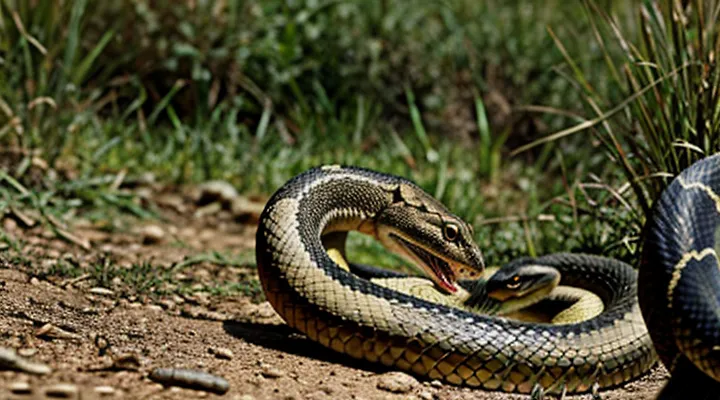
The Foundation of Predator-Prey Dynamics
Ecological Roles of Snakes and Rats
Snakes and rats engage in a direct predator‑prey interaction that shapes community structure and energy flow.
Snakes contribute to ecosystem stability through several mechanisms:
- Regulation of rodent populations, limiting potential crop damage and disease vectors.
- Transfer of biomass to higher trophic levels, supporting birds of prey and mammals.
- Redistribution of nutrients via consumption and excretion, enhancing soil fertility.
Rats fulfill complementary ecological functions:
- Consumption of seeds and fruits, influencing plant recruitment patterns.
- Burrowing activity that aerates soil, promotes water infiltration, and creates microhabitats for invertebrates.
- Provision of prey for a diverse array of predators, sustaining food webs beyond serpentine consumers.
The reciprocal relationship maintains population equilibrium; excessive rat numbers trigger increased snake predation, while declines in snake abundance allow rodent surges, potentially leading to vegetation overgrazing and heightened pathogen transmission. The dynamic illustrates how predator and prey jointly modulate biodiversity, resource distribution, and ecosystem resilience.
Evolutionary Adaptations for Survival
Snake Adaptations for Predation
Snakes possess a suite of adaptations that enable efficient capture and consumption of rodent prey. Their elongated bodies allow entry into burrows and tight spaces where rats often shelter. Flexible skulls and highly kinetic jaws expand to accommodate prey larger than the snake’s head, while powerful muscles generate rapid, forceful strikes.
Sensory specializations locate hidden rodents. Infrared‑sensitive pit organs detect minute temperature differences, revealing the presence of warm‑blooded mammals beneath leaf litter. Jacobson’s organ processes chemical cues from urine or scent trails, guiding pursuit even in darkness. Vision, optimized for motion detection, triggers predatory responses within milliseconds of prey movement.
Venom and constriction represent two primary subduing mechanisms. Venomous species inject neurotoxic or hemotoxic compounds that immobilize and pre‑digest tissue, reducing struggle time. Constrictors apply calibrated pressure that halts circulation, leading to rapid loss of consciousness. Both strategies minimize injury risk and energy expenditure.
Digestive physiology supports infrequent, large meals. Acidic gastric secretions break down bone, fur, and muscle, while specialized enzymes accelerate protein breakdown. Metabolic rates drop after feeding, conserving energy until the next hunting opportunity.
Key adaptations can be grouped as follows:
- Morphological: elongated body, kinetic skull, expandable jaws, muscular strike apparatus.
- Sensory: pit organs, Jacobson’s organ, motion‑sensitive eyes.
- Offensive: venom delivery systems, constriction musculature.
- Digestive: highly acidic stomach, efficient enzyme suite, metabolic downregulation.
These traits collectively enable snakes to locate, immobilize, and digest rats with precision and minimal waste.
Rat Adaptations for Evasion
Rats have evolved a suite of traits that directly counter the hunting strategies of serpentine predators. Continuous selective pressure from venomous and constricting snakes drives morphological, sensory, and behavioral modifications that increase survival odds during encounters.
- Vibrissae sensitivity: Highly innervated whiskers detect minute air currents and ground vibrations, allowing early identification of approaching snakes.
- Auditory acuity: Extended frequency range captures low‑frequency rustles produced by snake movement, prompting rapid withdrawal.
- Rapid locomotion: Muscular hind limbs generate bursts of speed exceeding 12 m s⁻¹; agile maneuvering enables escape through complex burrow systems.
- Tail autotomy potential: In some species, detachable tail segments distract predators, granting the rat time to flee.
- Nocturnal activity: Preference for low‑light periods reduces overlap with diurnal snake hunters, limiting visual detection.
- Scent masking: Production of oily secretions diminishes olfactory cues that snakes rely on for tracking prey.
Each adaptation targets a specific predatory cue: tactile and auditory sensors preempt detection, speed and agility evade capture, tail shedding creates a temporary decoy, nocturnality avoids temporal overlap, and chemical masking interferes with scent tracking. Collectively, these mechanisms sustain the dynamic balance between rodent prey and serpentine hunters, illustrating the intricate co‑evolution of predator and prey.
The Hunt: Strategies and Tactics
Snake Hunting Behaviors
Ambush Predation
Ambush predation dominates the interaction between serpents and rodents, allowing snakes to capture rats with minimal pursuit. The predator remains motionless, often concealed under leaf litter, burrow entrances, or within vegetation, until prey approaches within striking distance. Sensory specialization—heat‑sensitive pits in pit vipers, infrared receptors in boas, and vibration detection in colubrids—enables precise detection of a rat’s presence despite limited visual cues.
When a rat ventures near a concealed snake, rapid muscular contraction propels the predator forward, delivering a bite that either injects venom or immobilizes the prey through constriction. This strike-to-capture sequence unfolds in milliseconds, reducing the likelihood of escape and limiting the rat’s opportunity to alert conspecifics. Venom composition, ranging from neurotoxins to hemotoxins, is tailored to incapacitate the specific physiological systems of rodents, ensuring efficient subdual.
Key characteristics of the ambush strategy include:
- Camouflaged positioning that blends with the substrate.
- Reliance on passive detection mechanisms rather than active pursuit.
- Immediate execution of a high‑velocity strike upon prey proximity.
- Utilization of venom or constriction to secure the capture swiftly.
These adaptations reinforce the predator’s success in environments where rats exhibit nocturnal activity and limited awareness of concealed threats, sustaining a stable dynamic between snakes and their rodent prey.
Active Foraging
Active foraging describes the deliberate movement of predators while searching for prey, contrasting with passive ambush. In the serpentine‑rodent system, snakes initiate locomotion across habitats where rats are active, increasing encounter rates beyond what static concealment provides.
- Snakes employ thermal detection and chemical cues to guide pursuit.
- Rapid serpentine locomotion enables interception of fleeing rodents.
- Vision and vibrational sensitivity allow adjustment of trajectory during chase.
Rats respond to predator motion with heightened vigilance, employing erratic escape routes and spatial memory to avoid areas frequented by active hunters. This reciprocal behavior shapes the dynamics of the predator‑prey interaction, driving adaptations in both snake hunting efficiency and rat avoidance strategies.
Rat Defense Mechanisms
Escape and Concealment
Rats employ rapid locomotion, burrowing, and environmental integration to avoid capture. Quick bursts of speed enable escape from approaching serpents, while extensive tunnel networks provide refuge beyond the reach of surface hunters. Camouflage through fur coloration that matches leaf litter or soil reduces visual detection, especially during nocturnal activity. Chemical secretions, such as strong urine odors, can mask the scent trail that snakes rely on for tracking.
Snakes counteract these defenses with stealthy approach, heat-sensing pits, and vibration detection. When a prey item retreats into a burrow, many snakes elongate their bodies to follow narrow passages, using muscular contraction to navigate confined spaces. Some species flatten their heads and bodies to slip through tight crevices, exploiting the limited maneuverability of rodents within their tunnels. Venom injection, delivered swiftly upon contact, neutralizes the prey before it can flee further.
Key escape and concealment mechanisms:
- Rapid sprinting: bursts of high velocity over short distances.
- Burrow utilization: complex underground systems offering multiple exits.
- Cryptic coloration: fur patterns matching substrate hues.
- Scent masking: excretion of strong odors to disrupt olfactory tracking.
- Behavioral vigilance: constant scanning for predator movement.
Snake adaptations that undermine these defenses:
- Thermal imaging: pit organs detect infrared signatures of warm‑blooded rodents.
- Vibrational sensitivity: jaw receptors sense substrate tremors generated by fleeing prey.
- Morphological flexibility: slender, muscular bodies navigate confined tunnels.
- Venom delivery: rapid immobilization prevents further escape.
Alarm Calls and Social Behavior
Alarm calls constitute the primary acoustic signal that rodents emit when a snake is detected nearby. The calls are produced by individuals that have visually identified a predator, and they propagate through the burrow system and surrounding vegetation, alerting nearby conspecifics to the immediate danger.
The structure of these calls follows a stereotyped pattern: a rapid series of high‑frequency pulses lasting 0.2–0.5 seconds, repeated at intervals of 1–3 seconds until the threat recedes. Playback experiments demonstrate that the calls trigger an increase in vigilance, cessation of foraging, and rapid retreat to sheltered sites in listeners that have not directly encountered the predator.
Social behavior adjusts in response to alarm calls, producing measurable changes in group dynamics:
- Individuals congregate in tighter clusters, reducing the distance between members and thereby limiting individual exposure.
- Foraging bouts are postponed, and food caches are accessed only after the acoustic threat signal has ceased.
- Grooming and other affiliative activities increase after the alarm period, suggesting a stress‑recovery function.
- Juvenile rodents exhibit heightened learning, associating the specific acoustic pattern with predator presence and improving future avoidance.
Predatory snakes exploit the same acoustic environment. Studies show that snakes reduce movement toward areas where alarm calls are frequent, favoring silent routes or ambush positions that minimize detection. Consequently, the predator‑prey dynamics between serpents and rodents are shaped by a feedback loop: rodent alarm calls modify social organization and reduce individual risk, while snakes adjust hunting strategies to avoid the acoustic cues that reveal their presence.
Impact on Ecosystems
Population Control and Balance
Snakes regulate rodent numbers through direct predation, reducing the likelihood of population explosions that can damage crops and spread disease. Their hunting efficiency depends on species-specific traits such as venom potency, ambush tactics, and seasonal activity patterns.
- Adult snakes consume 5–15% of local rodent biomass per month, a rate sufficient to offset typical reproductive output of fast‑breeding rodent species.
- Juvenile snakes rely on abundant small prey, linking early‑life survival to the availability of newborn rodents.
- Seasonal shifts in temperature alter snake metabolism, causing peak predation during warmer months when rodent breeding peaks.
Rodent populations respond to predation pressure by adjusting reproductive cycles, litter size, and dispersal behavior. High snake density can trigger earlier breeding, but increased mortality among juveniles limits net growth. Conversely, reduced snake numbers allow unchecked rodent reproduction, leading to density‑dependent resource depletion and heightened disease transmission.
External factors modify this balance:
- Habitat fragmentation isolates snake populations, diminishing predation pressure and allowing rodent densities to rise locally.
- Agricultural pesticide use can intoxicate both predators and prey, disrupting the natural control loop.
- Climate variability influences snake activity periods, potentially extending or shortening predation windows.
Effective management of the predator‑prey system relies on preserving snake habitats, minimizing chemical interference, and monitoring rodent fluctuations to detect early signs of imbalance. Maintaining this dynamic ensures ecological stability and reduces human‑related conflicts.
Trophic Cascades
The predation of rats by snakes initiates trophic cascades that restructure community composition and ecosystem processes. When snake populations increase, rat abundance declines, reducing herbivory pressure on seeds and seedlings. This relief allows plant regeneration, which in turn supports higher densities of insects and small mammals that depend on vegetation. Conversely, a drop in snake numbers permits rat populations to surge, intensifying seed predation and elevating disease transmission risks for both wildlife and humans.
Key mechanisms of the cascade include:
- Top‑down control: Snakes suppress rat numbers, limiting their impact on lower trophic levels.
- Resource redistribution: Fewer rats mean more seeds reach maturity, enhancing primary productivity.
- Secondary consumer response: Increased plant biomass attracts additional herbivores and predators, diversifying the food web.
Long‑term monitoring shows that fluctuations in snake density correlate with measurable changes in plant cover, insect abundance, and pathogen prevalence. Management actions that maintain healthy snake populations therefore stabilize the cascade, preserving biodiversity and ecosystem services.
Human-Wildlife Interactions
Rodent Control by Snakes
Snakes serve as natural regulators of rodent populations, reducing the need for chemical interventions in agricultural and urban environments. Their predation pressure limits rat breeding success, curtails disease transmission, and diminishes crop damage.
Key mechanisms of rodent control by snakes include:
- Direct capture and consumption of adult rats and juvenile mice.
- Opportunistic hunting of rodents attracted to rodent burrows, waste, or shelter sites.
- Seasonal targeting of peak rodent reproductive periods, which maximizes impact on population growth.
Species most effective in this role are:
- Common garter snake (Thamnophis sirtalis) – abundant in temperate zones, frequently encountered near irrigation canals and garden beds.
- Northern water snake (Nerodia sipedon) – thrives in wetlands and floodplains, preys on semi‑aquatic rodent species.
- Rat snake (Pantherophis spp.) – specializes in hunting rats within barns, grain stores, and forest edges.
- King cobra (Ophiophagus hannah) – dominant in tropical regions, capable of subduing large rodent prey in forested habitats.
Ecological conditions that enhance snake‑mediated rodent control comprise sufficient cover for ambush, adequate prey diversity to sustain snake populations, and minimal disruption from habitat fragmentation. Conservation of native snake habitats therefore directly supports sustainable rodent management.
Perceptions and Misconceptions
Common belief portrays snakes as malevolent hunters and rats as purely destructive pests. Media often exaggerate snake aggression, while urban narratives depict rats as untouchable carriers of disease. These images influence public attitudes toward both species.
Scientific observations confirm that snakes substantially influence rodent numbers. Species such as Natrix and Vipera capture rats using constriction or venom, reducing local population density. This predation contributes to crop protection and limits disease vectors without direct human intervention. The interaction is a natural regulatory mechanism, not an occasional anomaly.
Several misconceptions persist:
- Snakes rely exclusively on rats for food. Most snake species maintain diverse diets, including amphibians, insects, and birds; rats represent only a portion of their intake.
- Rats are immune to snake venom. Laboratory studies demonstrate that rat physiology can be affected by envenomation, though some species exhibit higher resistance due to evolutionary pressures.
- Snake bites pose a greater health threat than rat-borne diseases. Epidemiological data show that rodent-associated pathogens cause more fatalities worldwide than venomous snake incidents in most regions.
- All snakes are dangerous to humans. Only a minority of snake taxa possess venom potent enough to threaten adult humans; many are harmless and avoid confrontation.
Accurate perception requires separating myth from evidence. Recognizing the ecological function of snake predation and the actual risks associated with both groups supports balanced wildlife management and public health policies.
Factors Influencing the Relationship
Environmental Variables
Habitat Structure
Habitat structure shapes the interaction between serpents and rodents by determining where each species can locate food, shelter, and mates. Dense vegetation creates visual concealment for snakes, enabling ambush tactics, while also providing rats with foraging pathways and escape routes. Open ground exposes rodents to detection but allows snakes to travel quickly between hunting sites. Subterranean burrows serve as permanent refuges for rats, reducing predation risk, yet some snake species exploit burrow entrances as entry points.
Key structural elements influencing this dynamic include:
- Vegetation density: affects line‑of‑sight and strike distance.
- Ground cover composition: influences predator concealment and prey movement.
- Burrow availability: provides safe zones for rodents and potential hunting corridors for snakes.
- Water sources: attract both predators and prey, increasing encounter frequency.
- Microclimate gradients: dictate thermoregulatory behavior, altering activity periods for each species.
Variations in these components across ecosystems generate predictable patterns of predator efficiency and prey survival, reinforcing the reciprocal adaptations observed in the serpent‑rodent relationship.
Climate and Seasonality
Climate determines the activity patterns of both serpents and rodents, shaping their interactions across diverse ecosystems. Temperature thresholds dictate when snakes emerge from brumation and when rats increase foraging, creating temporal windows for predation.
Seasonal shifts alter prey availability and predator efficiency. During spring, rising temperatures accelerate rodent reproduction, expanding the food supply for snakes. In summer, higher ambient heat limits snake locomotion, reducing hunting frequency despite abundant prey. Autumn brings declining temperatures, prompting snakes to seek shelter and rodents to store food, lowering encounter rates. Winter imposes prolonged inactivity for many ectothermic predators, while some rodent species remain active underground, further separating the two groups.
Key climatic variables influencing the predator‑prey relationship include:
- Ambient temperature gradients
- Precipitation patterns affecting vegetation and shelter
- Photoperiod changes regulating hormonal cycles
- Extreme weather events that disrupt habitat stability
Understanding these factors enables accurate predictions of population fluctuations and informs management strategies for ecosystems where serpents and rodents coexist.
Prey Availability
Prey availability determines the success of snake populations that rely on rodents. Seasonal breeding cycles cause rat numbers to peak in late spring and early summer, providing abundant food for opportunistic serpents. Conversely, winter declines reduce prey density, prompting snakes to enter periods of reduced activity or to expand their foraging range.
Key factors influencing rodent abundance include:
- Habitat complexity: dense ground cover and burrow networks protect rats from predators and increase local density.
- Food resources: grain storage, waste accumulation, and seed production boost reproductive output.
- Climate variability: temperature and precipitation affect survival rates and breeding timing.
- Human disturbance: pesticide use lowers rat populations, while urban waste can create localized surges.
When prey density exceeds a threshold, snake growth rates accelerate, clutch sizes enlarge, and juvenile survival improves. Below the threshold, individuals experience longer fasting intervals, reduced body condition, and higher mortality. Monitoring rodent population metrics therefore provides a reliable indicator of potential fluctuations in snake demographics and informs conservation or pest‑management strategies.
Predator Density
Predator density refers to the number of snake individuals per unit area within habitats where rats serve as primary prey. High snake density typically correlates with increased encounter rates between predators and rodents, leading to elevated predation pressure. Conversely, low snake density reduces the frequency of predatory events, allowing rat populations to expand more rapidly.
Key factors influencing snake density include:
- Habitat complexity: dense vegetation and abundant shelter sites support larger snake populations.
- Prey availability: sustained rat abundance provides sufficient energy resources to maintain higher predator numbers.
- Climate conditions: temperature and moisture regimes affect snake metabolism, reproduction, and survival rates.
- Human disturbance: land conversion, pesticide use, and direct persecution can depress snake density.
Empirical studies quantify predator density through methods such as:
- Visual encounter surveys conducted along transects to record snake sightings per hectare.
- Pitfall and funnel trapping that capture individuals for population estimates.
- Radio telemetry tracking to assess movement ranges and habitat use, informing density calculations.
Understanding snake density is essential for predicting rat population dynamics. Models incorporating predator density demonstrate that a 25 % increase in snake numbers can reduce rat reproductive output by approximately 15 % in a given season, assuming constant environmental conditions. Management strategies that protect or augment snake habitats—such as preserving riparian corridors and limiting pesticide exposure—can sustain predator density at levels that naturally regulate rodent populations.