
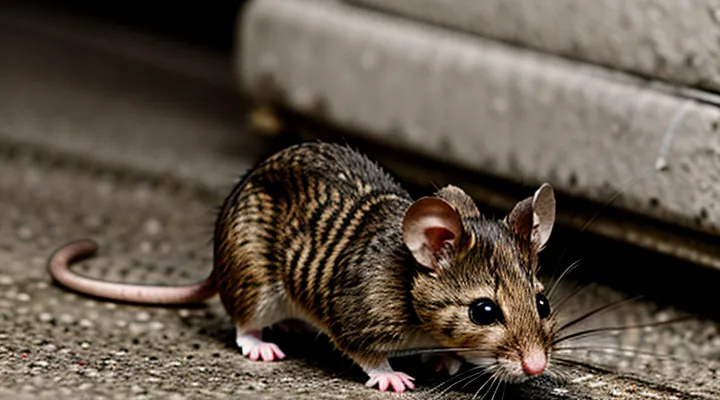
Why Do Mice Smell?
Urine and Droppings
Urine released by rodents contains concentrated nitrogenous compounds, primarily urea and ammonia, which produce a sharp, acrid scent detectable even at low concentrations. The odor intensifies as the urine dries, because bacterial action converts urea into ammonia and other volatile organic compounds. Presence of these chemicals on surfaces such as baseboards, cabinets, or insulation indicates recent activity.
Droppings are small, dark, and tapered, typically measuring 3‑5 mm in length. Fresh feces retain a moist texture and emit a faint, musky smell; older specimens become dry and crumbly, releasing a stronger, pungent odor as they decompose. Accumulation of droppings in concealed areas—behind appliances, within wall cavities, or under furniture—creates localized pockets of odor that can permeate surrounding air.
Key identification points:
- Visual: clusters of tapered pellets, often found in lines or near food sources.
- Olfactory: sharp, ammonia‑like smell from urine; musky, increasingly foul odor from decomposing feces.
- Temporal: fresh urine produces a milder scent; aged urine and droppings generate a more pronounced stench due to microbial breakdown.
Monitoring these indicators enables early detection of rodent presence, facilitating timely remediation before infestations expand.
Glandular Secretions
Glandular secretions constitute the primary source of the distinctive odor associated with rodents. Specialized exocrine glands release a complex mixture of volatile compounds that disperse through the environment, creating a scent profile recognizable by both humans and conspecifics.
Key secretory sources include:
- Preputial glands, producing lipid‑rich secretions rich in fatty acids and steroids.
- Anal glands, emitting a blend of short‑chain fatty acids, sulfides, and indoles.
- Urinary excretions, containing high concentrations of ammonia, urea, and specific pheromonal peptides.
- Salivary glands, releasing proteins that contribute minor aromatic notes.
The interaction of these secretions generates a layered aroma. Volatile molecules such as 2‑methyl‑2‑butenal, skatole, and various aliphatic aldehydes evaporate at ambient temperatures, allowing detection by the human olfactory system. Analytical techniques, including gas chromatography‑mass spectrometry, identify the constituent compounds, confirming their role in the overall scent signature.
Characteristics of Mouse Odor
The scent emitted by rodents possesses distinct sensory markers that enable reliable identification in residential and laboratory environments. These markers arise from a combination of biological secretions, metabolic by‑products, and microbial activity associated with the animal’s physiology.
- «Ammoniacal» notes produced by urine, especially when concentrated, generate a sharp, pungent aroma detectable at low concentrations.
- «Musky» undertones stem from sebaceous gland secretions on fur, contributing a persistent, earthy smell that lingers on surfaces.
- «Fermented» odors result from bacterial breakdown of organic material in droppings, creating sour, slightly sweet nuances.
- «Cheesy» hints may appear when nesting material becomes saturated with saliva and glandular fluids, adding a mild, dairy‑like facet.
- «Metallic» tones can emerge from blood residues in wounds or during aggressive encounters, imparting a faint iron scent.
Recognition of these characteristics supports accurate assessment of rodent presence and informs appropriate mitigation strategies.
Where to Detect Mouse Smell
Common Entry Points
Rodent odor typically enters a building through structural gaps and utility interfaces. Recognizing these pathways enables timely mitigation and prevents widespread contamination.
- Cracks in foundation walls allow scent molecules to travel from subterranean burrows into interior spaces.
- Ventilation ducts and exhaust fans provide direct routes for airborne odor to disperse throughout the structure.
- Gaps around doors and windows serve as conduits for scent carried by wind or animal movement.
- Roof eaves and soffit openings connect attic cavities with exterior nesting sites, facilitating odor migration.
- Crawl‑space access points, often concealed by flooring, transmit scent from hidden rodent activity.
- Sewer and storm‑drain penetrations can convey odor from underground colonies into bathrooms and basements.
- Utility penetrations—electrical conduit, plumbing stacks, and HVAC sleeves—create narrow channels for odor diffusion.
- Damaged or missing insulation creates voids that trap and amplify scent, allowing it to spread more readily.
- Attic access hatches and removable panels, when left unsecured, become entry points for odor‑bearing air currents.
- Exterior siding cracks and weather‑stripping failures permit outdoor air, carrying rodent scent, to infiltrate interior rooms.
Identifying and sealing these common entry points reduces the prevalence of rodent odor and supports a healthier indoor environment.
Hidden Nests
The presence of concealed mouse nests directly influences the pattern of odor that signals an infestation. Nests are typically constructed in secluded areas where food sources and shelter converge, such as behind appliances, within wall cavities, under floorboards, or inside insulation. The material composition—shredded paper, fabric fibers, dried droppings, and urine—creates a distinctive musky scent that intensifies as the nest matures.
Key indicators of a hidden nest include:
- Concentrated ammonia‑like odor near potential entry points.
- Accumulation of fine, grayish particles resembling dust.
- Visible clustering of droppings or urine stains in a confined zone.
- Presence of gnawed materials or shredded insulation.
Detection strategies focus on pinpointing these odor signatures. Professionals employ olfactory assessment combined with visual inspection of likely concealment spots. Portable gas‑detection devices can quantify volatile compounds, confirming the existence of a nest without invasive disruption.
Preventive actions involve sealing entryways, removing food residues, and maintaining low humidity to discourage nest formation. Regular monitoring of the identified odor hotspots ensures early identification and rapid remediation, minimizing the risk of widespread contamination.
Food Storage Areas
The presence of a faint, musky odor in food storage facilities often indicates rodent activity. This scent, described by experts as a combination of urine, droppings, and glandular secretions, can be detected even when visual signs are absent. Early identification prevents contamination, protects inventory value, and reduces health‑code violations.
Key indicators within storage areas:
- Damp, earthy smell near corners, behind pallets, or under shelving.
- Sweet, metallic tang near food packaging, especially in grain or cereal bins.
- Persistent odor that intensifies after cleaning cycles.
Inspection protocols should include:
- Conducting nightly walkthroughs with a trained nose, focusing on low‑traffic zones.
- Using scent‑sensitive pads or absorbent materials placed in suspect locations for up to 24 hours.
- Recording odor intensity on a standardized scale to track changes over time.
Preventive measures rely on eliminating sources that amplify the smell. Sealing cracks, installing metal shelving, and maintaining low humidity reduce the environment that sustains rodent scent. Regular rotation of stock, combined with immediate removal of spillage, deprives mice of food and water, thereby diminishing the characteristic odor.
Prompt response to any detected mouse scent safeguards product integrity and ensures compliance with safety regulations. «Immediate action prevents escalation».
Differentiating Mouse Smell from Other Odors
Rodent Comparisons («Rats» vs. «Mice»)
The odor produced by small rodents serves as a reliable indicator of their presence in residential or commercial environments. Mus musculus releases a distinctive musky scent composed of urine‑derived volatiles, glandular secretions, and skin oils. The scent intensity increases with population density and breeding activity.
In contrast, Rattus norvegicus emits a heavier, ammonia‑rich aroma due to larger urine output and more extensive scent‑marking behavior. Differences between the two species are observable in several measurable aspects:
- Composition: mouse odor contains higher concentrations of aldehydes and ketones; rat odor shows dominant ammonia and sulfur compounds.
- Dispersion: mouse scent spreads rapidly through small crevices; rat scent remains concentrated near nesting sites.
- Detectability: human noses identify mouse odor at lower parts‑per‑million levels than rat odor, which requires higher concentrations for recognition.
Effective identification relies on sensory assessment combined with environmental clues. Presence of shredded paper, gnaw marks, and droppings corroborates olfactory evidence. Regular inspection of concealed areas—attics, crawl spaces, and wall voids—enhances early detection. When an odor matches the described mouse profile, targeted control measures should focus on eliminating entry points and reducing food sources.
Insect Infestations
Insect infestations often coexist with rodent activity, creating a complex olfactory environment that can mask or amplify the characteristic scent of mice. The presence of insects such as beetles, cockroaches, or pantry moths introduces additional volatile compounds, altering the overall odor profile in storage areas, kitchens, and attics.
Key indicators that insect activity influences mouse odor include:
- Increased concentration of fatty acid derivatives, typical of beetle secretions, alongside the musky notes of rodent urine.
- Detection of pheromonal chemicals from pantry pests, which may blend with the ammonia-like smell emitted by mouse droppings.
- Appearance of moldy or musty undertones caused by insect-borne fungal spores, often accompanying both infestations.
Understanding these interactions enhances detection accuracy. Chemical analysis of air samples frequently reveals overlapping peaks of aldehydes, ketones, and terpenes, each linked to specific pest groups. Professionals employ gas chromatography to differentiate rodent-derived compounds from insect-origin markers, enabling targeted remediation.
Effective control strategies require simultaneous elimination of both pest types. Integrated pest management (IPM) protocols recommend:
- Sealing entry points to prevent mouse ingress and insect colonization.
- Deploying bait stations for rodents while using pheromone traps for insects.
- Conducting regular environmental monitoring to track changes in volatile organic compound levels.
By recognizing the synergistic effect of insect infestations on mouse odor, inspectors can diagnose hidden rodent problems more reliably and implement comprehensive treatment plans.
Mildew and Mold
Mildew and mold produce a damp, earthy odor that can mask or imitate the scent emitted by rodents. Recognizing the distinction between these fungal aromas and mouse odor is essential for accurate assessment of infestation.
Key characteristics of mildew and mold odor:
- Moisture‑laden smell, often described as musty or stale.
- Intensifies in humid environments or after water damage.
- Frequently accompanied by visible growth on walls, ceilings, or stored goods.
Rodent scent differs in several ways:
- Sharp, musky note resulting from urine and glandular secretions.
- Detectable even in dry conditions where fungal growth is absent.
- May be localized near nesting sites, food caches, or entry points.
When both sources coexist, prioritize inspection of areas with high humidity to eliminate fungal contributions before attributing odor to rodents. Cleaning, ventilation, and moisture control reduce mildew and mold, thereby clarifying any remaining rodent scent.
Confirming a Mouse Infestation
Visual Cues
Visual cues provide immediate evidence of rodent activity, allowing rapid assessment without reliance on olfactory detection.
Typical indicators include:
- Dark, pellet‑shaped droppings found along walls, near food sources, or within concealed areas.
- Gnawed edges on packaging, wiring, or wooden structures, often displaying irregular bite marks.
- Accumulations of shredded paper, fabric, or insulation forming nests in hidden corners.
- Clear tracks in dust, flour, or soft surfaces, revealing characteristic four‑toed impressions.
- Scattered food debris or chewed food containers, suggesting recent foraging.
These observations enable confirmation of presence, guide targeted inspection, and support timely remediation measures.
Auditory Signs
Auditory cues provide reliable evidence of rodent presence when visual inspection is limited. Distinct sounds correspond to specific behaviors and can be detected with minimal equipment.
- «high‑pitched squeaks» – emitted during social interaction or distress; frequency typically 5–10 kHz, audible to humans as a sharp, intermittent chirp.
- «scratching on hard surfaces» – produced by claws against walls, pipes, or stored items; rhythmic pattern often intensifies at night.
- «gnawing noises» – continuous, low‑frequency grinding when mammals bite through wood, plastic, or insulation; duration varies with material hardness.
- «footfalls» – soft, rapid taps generated by tiny paws on flooring; pattern changes with movement speed and group size.
- «rustling of nesting material» – muffled shuffling when mice rearrange shredded paper, fabric, or debris; audible as intermittent rustle.
Peak activity occurs during twilight and nocturnal hours; sound intensity rises as temperature drops, reflecting increased foraging. Detection benefits from quiet environments, ear protection to reduce background noise, and directional microphones tuned to 4–12 kHz. Recording devices enable later analysis, allowing frequency spectrum comparison with known rodent signatures. Consistent monitoring of these auditory signs enhances early identification and supports timely intervention.
Physical Damage
The odor emitted by rodents frequently signals direct damage to building components. Saliva, urine, and feces contain enzymes and chemicals that degrade wood, insulation, and wiring when they accumulate. Corrosion of metal surfaces occurs as urine deposits create acidic environments, accelerating rust formation. Structural timber exposed to persistent chewing marks loses load‑bearing capacity, increasing the risk of collapse. Insulation contaminated with droppings loses thermal efficiency and becomes a fire hazard.
Common physical effects include:
- Visible gnaw marks on beams, ducts, and cables.
- Softened or crumbling wood fibers adjacent to nesting sites.
- Rusted or discolored metal surfaces near urine pools.
- Compromised electrical insulation, leading to short circuits.
Repair priorities focus on replacing weakened structural elements, treating corroded metal, and reinstalling clean insulation. Preventive measures involve sealing entry points, maintaining regular inspections, and employing detection methods that identify rodent scent before damage escalates. «Early identification of rodent odor reduces the likelihood of extensive physical deterioration».
Addressing the Mouse Odor
Cleaning Affected Areas
When a mouse odor is detected, immediate remediation of the contaminated zone prevents health risks and deters further infestation.
Identify all surfaces that have been in contact with rodent excreta, nesting material, or urine. Remove debris with disposable gloves, placing it in sealed bags for disposal.
Apply an enzymatic cleaner to break down organic residues; follow manufacturer‑specified contact time before wiping. For porous materials such as insulation or carpet, discard and replace, as absorption hampers decontamination.
Rinse treated areas with warm water mixed with a mild detergent, then dry thoroughly to inhibit mold growth.
Sanitize the space using a solution of 1 % sodium hypochlorite (bleach) or an EPA‑approved disinfectant. Allow the solution to remain on surfaces for the recommended dwell period, then ventilate the room until odors dissipate.
Dispose of all cleaning tools that cannot be thoroughly sanitized.
Key steps for effective remediation
- Wear protective equipment (gloves, mask, goggles).
- Isolate the area to prevent cross‑contamination.
- Use enzymatic cleaners before disinfectants.
- Replace irreversibly contaminated porous items.
- Verify odor elimination with a neutral‑smelling test.
Consistent adherence to these procedures restores hygiene and eliminates residual mouse scent.
Ventilation Strategies
Detecting rodent odor in enclosed spaces requires controlled airflow to prevent accumulation and to facilitate early identification. Effective ventilation reduces the concentration of volatile compounds released by mice, thereby improving sensory detection and mitigating health risks.
- Mechanical exhaust systems create negative pressure, drawing contaminated air toward filters or outdoor exhaust.
- Localized extraction units positioned near suspected activity zones capture odor at its source.
- Positive pressurization introduces filtered air, preventing ingress of contaminated outdoor air.
- High-efficiency particulate air (HEPA) filters combined with activated carbon layers remove odor‑bearing particles and gases.
- Humidity regulation lowers moisture levels, limiting the release of odor‑rich aerosols.
Implementation guidelines emphasize proper placement of supply and return vents to ensure uniform air distribution, selection of flow rates that exceed the estimated odor generation volume, and routine maintenance of filters to sustain performance. Monitoring devices calibrated for rodent‑specific volatile compounds can verify system effectiveness and guide adjustments.
Odor Neutralizers
Mouse odor often manifests as a faint, musky scent that lingers in confined spaces such as walls, attics, or pantry corners. Detecting this aroma early prevents infestation escalation and protects indoor air quality.
Odor neutralizers function by chemically altering volatile compounds responsible for the characteristic smell, rendering them less perceptible to human olfaction. Two primary mechanisms dominate: adsorption, where porous materials bind odor molecules, and oxidation, where reactive agents transform odorants into inert substances.
- Activated charcoal filters: high surface area, effective for adsorption of organic volatiles.
- Zeolite granules: microporous structure, selective adsorption of ammonia and amine compounds.
- Ozone generators: produce ozone that oxidizes odor molecules, suitable for large, unoccupied areas.
- Enzymatic sprays: contain enzymes that break down pheromonal proteins, targeting mouse-specific scents.
- Citrus‑based aerosols: natural solvents that dissolve odorants, offering a temporary masking effect.
When selecting a neutralizer, consider the environment’s ventilation, the severity of contamination, and safety constraints. Apply activated charcoal or zeolite in sealed containers placed near suspected entry points for continuous absorption. For acute incidents, deploy ozone generators following manufacturer guidelines to avoid overexposure. Enzymatic sprays require thorough surface coverage and a drying period before re‑occupancy. Citrus aerosols provide rapid relief but should be complemented by longer‑acting solutions for persistent problems.
Regular maintenance, including replacement of adsorbent media and periodic re‑application of enzymatic agents, sustains effectiveness. Integrating odor neutralizers with physical exclusion methods creates a comprehensive strategy for managing rodent‑related scent issues.
Preventing Future Mouse Odors
Exclusion Techniques
Identifying rodent odor requires separating true mouse scent from competing smells. Effective exclusion techniques focus on source isolation, environmental control, and analytical verification.
- Seal entry points and limit access to known infestation zones; confinement prevents external odors from mixing with rodent emissions.
- Employ ventilation strategies that direct airflow away from detection areas, reducing dilution of the target odor.
- Use selective sampling devices calibrated for the specific volatile compounds associated with mice, such as 2‑acetyl‑1‑pyrroline and phenylacetic acid.
- Apply chemical filters or adsorbent materials that capture non‑target volatiles, allowing only mouse‑related molecules to reach the sensor.
- Conduct comparative analysis with reference samples in a controlled laboratory setting to confirm the presence of mouse odor.
Documenting each step ensures reproducibility and minimizes false positives. Continuous monitoring of environmental variables, such as temperature and humidity, supports consistent detection performance.
Sanitation Practices
Detecting the characteristic odor of mice signals a breach in hygiene standards and demands immediate corrective measures. The presence of this scent often correlates with food residues, moisture, and shelter that facilitate rodent activity.
Effective sanitation measures include:
- Thorough removal of food debris from surfaces, floors, and equipment.
- Regular disposal of waste in sealed containers, with collection frequencies adjusted to prevent accumulation.
- Inspection and repair of structural gaps, including cracks in walls, gaps around pipes, and openings under doors.
- Implementation of a scheduled cleaning regime that incorporates disinfectants approved for pest‑related environments.
- Coordination with professional pest‑control services to apply targeted baiting and trapping in accordance with safety regulations.
- Documentation of cleaning activities, waste‑handling logs, and inspection results to track compliance and identify trends.
Consistent application of these practices reduces the likelihood of «rodent odor» reappearing, thereby maintaining a sanitary environment and mitigating health risks associated with rodent infestations.
Regular Inspections
Regular inspections form the cornerstone of early detection of rodent odor within residential and commercial structures. Systematic examination of potential entry points, food storage areas, and concealed spaces reveals the faint, musky scent associated with mice before infestations become visible.
During each inspection, the following actions should be performed:
- Visual scan of gaps around doors, windows, and utility penetrations; seal openings no larger than ¼ inch.
- Examination of insulation, crawl spaces, and attic corners for droppings, gnaw marks, and disturbed insulation fibers.
- Use of scent‑detecting devices or absorbent pads placed in suspected zones for a minimum of 24 hours to capture volatile compounds.
- Documentation of findings with photographs and detailed notes to track changes over time.
Inspection frequency must align with occupancy density and seasonal risk factors. High‑traffic facilities benefit from monthly reviews, while lower‑risk dwellings require quarterly assessments. Increased frequency during warmer months compensates for accelerated rodent activity.
Recorded data enable trend analysis, allowing maintenance teams to prioritize remediation efforts. Prompt repair of identified breaches, combined with targeted sanitation, reduces the likelihood of odor persistence and subsequent health hazards.