
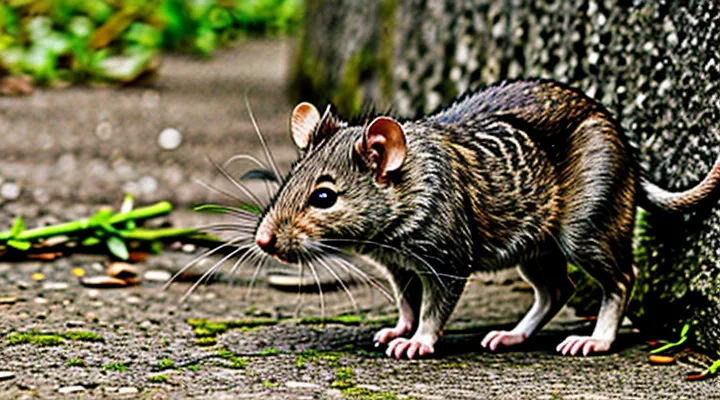
Understanding Wild Rat Dimensions
General Size Parameters
Length of Body and Tail
Adult wild rats typically measure between 20 cm and 30 cm from the tip of the nose to the base of the tail. Body mass correlates with length, ranging from 150 g in smaller individuals to 300 g in larger specimens.
Tail length generally exceeds body length, extending 25 cm to 35 cm. The proportionate tail-to-body ratio averages 1.2 : 1, reflecting adaptation for balance and thermoregulation.
Key measurements:
- Head‑body length: 20–30 cm (8–12 in)
- Tail length: 25–35 cm (10–14 in)
- Tail‑to‑body ratio: approximately 1.2 : 1
- Body mass: 150–300 g (5.3–10.6 oz)
Weight Ranges
Adult wild rats exhibit a broad spectrum of body mass that reflects species, sex, age, and environmental conditions. The most frequently encountered species are the brown rat (Rattus norvegicus) and the black rat (Rattus rattus).
- Brown rat: typical weight 150 – 300 g; exceptional individuals may reach 350 g.
- Black rat: typical weight 60 – 250 g; larger specimens can approach 300 g.
Weight distribution is skewed toward higher values in males, which generally outweigh females by 10 – 20 %. Seasonal fluctuations affect body condition; rats captured in winter often possess greater fat reserves, adding 15 % to average mass. Geographic factors, such as food availability in urban versus rural habitats, also influence the observed ranges.
Accurate weight assessment requires live capture or post‑mortem measurement with calibrated scales. Reporting weight in grams ensures consistency across studies and facilitates comparative analysis of population health.
Sexual Dimorphism in Size
Adult wild rats display measurable sexual size dimorphism, with males consistently exceeding females in both mass and linear dimensions across most species. In Norway rats (Rattus norvegicus), average male body mass ranges from 250 g to 350 g, while females typically weigh 180 g to 260 g. In black rats (Rattus rattus), male masses average 180 g to 260 g, compared with 130 g to 200 g for females. Tail length follows a similar pattern, averaging 12 cm to 15 cm in males versus 10 cm to 13 cm in females.
- Body mass (male): 250–350 g (R. norvegicus), 180–260 g (R. rattus)
- Body mass (female): 180–260 g (R. norvegicus), 130–200 g (R. rattus)
- Head‑body length (male): 20–25 cm
- Head‑body length (female): 18–22 cm
Dimorphism originates from genetic and hormonal mechanisms that promote larger male stature for competitive advantage in territorial disputes and mate acquisition. Elevated testosterone levels stimulate increased muscle mass and skeletal growth, while females allocate resources toward reproductive output, resulting in a comparatively smaller frame.
Data collection involves live‑trapping, followed by standardized measurements of body weight, head‑body length, and tail length using calibrated scales and measuring boards. Statistical analysis typically employs t‑tests or ANOVA to confirm significant differences between sexes, with effect sizes reported as Cohen’s d to quantify the magnitude of dimorphism.
The size disparity influences ecological interactions: larger males dominate burrow systems, affect population structure, and exhibit higher predation risk due to increased visibility. Female size constraints correlate with litter size and pup survival, thereby shaping reproductive rates. Understanding these patterns refines models of disease vector dynamics, as body size affects parasite load and pathogen transmission efficiency.
Factors Influencing Wild Rat Size
Species-Specific Variations
Adult wild rats exhibit marked differences in body dimensions across species, reflecting evolutionary adaptations to distinct habitats and ecological niches. The most widely studied species, the brown rat (Rattus norvegicus), typically reaches a head‑body length of 20–25 cm and a tail length of 18–22 cm, with body mass ranging from 250 to 500 g. In contrast, the black rat (Rattus rattus) displays a slimmer profile: head‑body length of 15–20 cm, tail length often exceeding body length at 20–25 cm, and mass between 150 and 300 g. The lesser known Asian house rat (Rattus tanezumi) occupies a size range intermediate between the two, averaging 18–22 cm in body length, a tail of 16–20 cm, and 200–350 g in weight.
Key factors influencing these inter‑species variations include:
- Geographic distribution: Populations in temperate zones tend toward larger body mass, while tropical counterparts remain smaller.
- Dietary availability: Access to high‑calorie resources correlates with increased body size, particularly in urban environments.
- Sexual dimorphism: Males of most species exceed females by 10–20 % in mass and length, though the degree varies among taxa.
- Habitat structure: Arboreal species such as R. rattus develop longer tails for balance, whereas burrowing species like R. norvegicus possess more robust bodies for excavating.
These metrics provide a baseline for ecological assessments, pest management strategies, and comparative physiological research involving mature wild rats.
Geographical and Environmental Impacts
Mature wild rats exhibit measurable variation in body dimensions across different regions. Temperature gradients influence metabolic rates, which in turn affect growth patterns; colder climates tend to produce larger individuals, while warmer areas favor smaller bodies. Nutrient availability, determined by local vegetation and agricultural practices, directly correlates with average mass and length. Populations near abundant food sources, such as grain fields, regularly exceed the mean size recorded for rats in less productive habitats.
Habitat structure shapes physical development. Dense underground burrow systems limit space for movement, encouraging compact growth, whereas open ground with plentiful cover permits greater limb extension and overall length. Predation pressure also drives size differences: regions with high predator density often see larger rats, which benefit from increased escape capability and deterrence.
Key environmental variables that modify adult rat dimensions include:
- Ambient temperature ranges
- Seasonal and year‑round food abundance
- Soil composition and burrow complexity
- Presence and density of natural predators
- Human‑altered landscapes such as urban waste zones
These factors interact to produce distinct regional size profiles, reflecting adaptive responses to local ecological conditions.
Age and Maturity
Adult wild rats reach full physical dimensions after a defined period of growth. Most species attain adult stature between 10 and 12 weeks of age. During this interval, rapid somatic development yields a body length of 20–30 cm (head‑to‑tail) and a weight of 250–350 g. Once the growth plateau is reached, further changes are limited to minor increases in muscle mass and fat reserves.
Maturity is assessed by reproductive capability as well as skeletal ossification. Sexual maturity in males typically appears at 8–10 weeks, while females may breed slightly earlier, around 7–9 weeks. After the first breeding cycle, rats exhibit stable size metrics; subsequent litters do not produce noticeable growth beyond the established adult range.
Key points linking age to size:
- 0–4 weeks: neonatal stage, body length < 10 cm, weight < 30 g.
- 4–8 weeks: juvenile phase, rapid linear growth, weight 100–200 g.
- 8–12 weeks: transition to adulthood, final size attained, weight stabilizes.
-
12 weeks: mature phase, size remains constant, minor seasonal weight fluctuations.
Understanding the age‑size relationship assists in field identification and population monitoring, as size measurements reliably indicate whether an individual has passed the juvenile stage and entered the mature cohort.
Dietary Influence
Dietary composition directly determines the body dimensions of mature wild rats. High‑protein foods increase lean tissue development, resulting in greater length and mass, while low‑protein diets limit muscle growth and produce smaller individuals.
Key nutritional variables that modulate adult size include:
- Protein content: 15–20 % of caloric intake promotes optimal skeletal and muscular growth; below 10 % leads to stunted development.
- Energy density: diets providing ≥ 12 kJ g⁻¹ support rapid weight gain; energy‑poor foods restrict fat accumulation and overall mass.
- Lipid proportion: moderate fat (5–8 % of diet) enhances energy reserves without impairing skeletal growth; excessive fat may increase body weight without proportionate length gain.
- Micronutrient availability: calcium, phosphorus, and vitamin D are essential for bone elongation; deficiencies result in reduced stature.
Seasonal fluctuations in food quality produce observable size variations. During periods of abundant seed and insect availability, rats attain larger body measurements than in winter months when they rely on low‑nutrient plant material.
Long‑term dietary patterns shape population-level size distributions. Populations with consistent access to high‑quality protein sources exhibit average body lengths 10–15 % greater than those restricted to carbohydrate‑rich, protein‑deficient diets.
Comparison with Other Rodents
Distinguishing from Mice
Adult wild rats typically measure 20–30 cm in head‑body length, with tails adding another 15–25 cm. Their weight ranges from 250 g to 500 g, far exceeding the 15–30 g typical of common mice. These dimensions create a clear visual gap when both species are observed side by side.
Key physical differences include:
- Body size: rats are considerably larger in both length and mass.
- Tail proportion: rat tails are thick, often proportionally shorter than the body; mouse tails are slender and relatively longer.
- Ear size: rats have proportionally smaller ears; mice possess large, prominent ears relative to their head.
- Skull shape: rat skulls are broader with a more robust rostrum; mouse skulls are narrower and more delicate.
Behavioral cues also aid identification. Rats display stronger, more confident movements and can carry larger food items, while mice exhibit rapid, erratic scurrying and handle only tiny fragments. Combining size metrics with these morphological and behavioral markers reliably separates mature wild rats from their smaller rodent counterparts.
Differentiating from Other Rat Species
Adult wild rats exhibit a body length of 20–30 cm (excluding the tail) and a weight of 250–500 g. Tail length typically matches or slightly exceeds body length, ranging from 18 to 30 cm. These dimensions provide a baseline for distinguishing the species from other common rats.
The Norway rat (Rattus norvegicus) generally reaches a body length of 25–35 cm and a weight of 300–500 g, with a tail that is shorter than the body. The roof rat (Rattus rattus) is smaller, with a body length of 15–20 cm, weight of 150–250 g, and a tail longer than the body, often 20–30 cm. The Asian house rat (Rattus tanezumi) overlaps in weight (200–350 g) but usually has a more slender build and a tail proportionally longer than the body.
Key size indicators for field identification:
- Body length: 20–30 cm aligns with the adult wild rat; shorter suggests roof rat, longer suggests Norway rat.
- Weight: 250–500 g matches the adult wild rat; significantly lower points to roof rat, higher indicates large Norway rat specimens.
- Tail proportion: Tail equal to or slightly longer than body length is typical; a tail markedly longer than the body signals roof rat, while a shorter tail favors Norway rat.
Accurate measurement of these parameters enables reliable separation of the adult wild rat from its congeners in ecological surveys and pest management operations.
Implications of Size
Survival and Predation
Adult wild rats typically measure 20–30 cm in body length, with tails adding another 15–20 cm, and weigh between 200 g and 500 g. These dimensions set physiological limits that directly influence daily energy requirements and habitat use.
Larger individuals retain heat more efficiently, reducing metabolic costs during cold periods. Greater muscle mass supports longer foraging trips and the ability to process tougher food items, expanding dietary options. Size also determines dominance hierarchies; heavier rats often secure preferred burrows and access to limited resources, enhancing reproductive success.
Predation pressure correlates with body size. Small rats are more easily seized by aerial hunters such as owls and hawks, while larger rats present a more challenging target, prompting predators to favor opportunistic attacks on juveniles. Increased mass improves sprint speed and agility, allowing rapid escape responses. However, greater bulk reduces maneuverability in tight burrow networks, increasing vulnerability to ambush predators like snakes and feral cats.
Key points:
- Thermoregulation: larger mass → lower heat loss.
- Foraging: greater strength → broader diet, longer ranges.
- Social rank: weight advantage → priority access to shelters.
- Predator selection: size influences predator type and attack strategy.
- Escape ability: mass enhances speed but limits tight-space evasion.
Reproductive Success
Adult wild rats typically weigh 200–300 g, with a head‑body length of 20–25 cm and a tail of similar proportion. These dimensions set the physiological baseline for all reproductive processes.
Body mass positively correlates with fecundity. Larger females produce litters that contain 1–2 additional pups compared with lighter conspecifics, and the newborns weigh 5–10 % more. Heavier males generate higher sperm counts and display greater success in male‑male contests for access to estrous females.
Key mechanisms linking size to reproductive success include:
- Increased energetic reserves that support prolonged lactation and higher pup growth rates.
- Enhanced competitive ability in territorial or dominance interactions, granting priority access to mates.
- Greater gonadal development, resulting in elevated sperm output and higher fertilization probability.
- Larger offspring size, which improves early‑life survival and reduces predation risk.
The advantages of greater size are offset by ecological costs. Higher body mass elevates energetic demand and may increase visibility to predators, potentially shortening adult lifespan and limiting the total number of breeding cycles.
Overall, variations in adult body dimensions exert a measurable influence on the reproductive output of free‑living rats, shaping population dynamics through combined effects on litter size, offspring viability, and mating success.
Habitat Utilization
Adult wild rats typically measure 20–30 cm in head‑body length and weigh 200–350 g. These dimensions constrain the spatial scale of foraging, shelter selection, and movement pathways. Larger individuals can exploit deeper burrow chambers and traverse broader gaps between obstacles, while smaller rats favor narrow crevices and low‑lying cover.
Habitat utilization patterns reflect size‑related capabilities:
- Burrow systems: Rats with greater body mass occupy primary tunnels and nesting chambers; lighter individuals remain in peripheral passages where predator exposure is reduced.
- Surface foraging: Bigger rats travel longer distances across open ground to locate high‑calorie resources such as grain stores; smaller rats concentrate activity near vegetation edges and debris where concealment is abundant.
- Vertical strata: Increased size permits access to elevated structures (e.g., rafters, pipe interiors); reduced size limits use to ground‑level habitats and low overhangs.
Seasonal shifts in resource availability prompt size‑dependent adjustments. During winter, larger rats dominate heated subterranean zones, whereas smaller conspecifics exploit insulated leaf litter and mulch layers. In urban environments, body size influences entry points: larger rats breach larger openings in building foundations, while smaller rats infiltrate narrow utility conduits.
Overall, the physical dimensions of mature wild rats dictate the range of microhabitats they can occupy, shaping patterns of shelter use, foraging distance, and vertical exploitation across both natural and anthropogenic landscapes.
Common Wild Rat Species and Their Sizes
Norway Rat («Rattus norvegicus»)
Typical Body Length
Adult wild rats typically measure 20–25 cm (8–10 in) from the tip of the snout to the base of the tail. This range represents the most common head‑body length observed in the species most frequently encountered in temperate regions, such as the Norway rat (Rattus norvegicus) and the black rat (Rattus rattus).
Factors influencing length include:
- Sex: Males generally exceed females by 1–2 cm.
- Geographic population: Rats from temperate zones tend toward the upper end of the range, while those in arid environments may be slightly shorter.
- Age: Fully mature individuals reach the stated dimensions; sub‑adults fall 2–4 cm below.
Measurements recorded in field studies align closely with laboratory data, confirming the reliability of the 20–25 cm interval as a standard reference for the adult wild rat’s body length.
Typical Tail Length
Adult wild rats exhibit a tail that often matches or exceeds the length of the body. Measurements from field studies and laboratory assessments indicate the following typical ranges:
- Norway rat (Rattus norvegicus): tail length 18–25 cm (7–10 in), frequently 1.0–1.2 times the head‑body length.
- Black rat (Rattus rattus): tail length 20–30 cm (8–12 in), commonly 1.2–1.5 times the head‑body length.
- Brown rat (Rattus brunneus): tail length 16–22 cm (6–9 in), generally comparable to the body length.
Tail proportion remains consistent across populations, with the tail representing 90–120 % of the head‑body measurement. Length variation correlates with regional genetics, habitat density, and nutritional status; individuals from dense urban environments tend toward shorter tails, whereas those in open fields display longer extensions. The tail’s musculature and vertebral count (approximately 40–45 caudal vertebrae) support balance, thermoregulation, and tactile sensing, reinforcing its functional significance within the animal’s overall dimensions.
Average Weight
Adult wild rats typically weigh between 250 g and 500 g, depending on species, age, sex, and seasonal food availability. The most frequently encountered species, the brown rat (Rattus norvegicus), averages 300 g for females and 350 g for males, with occasional individuals reaching 500 g in resource‑rich environments. The black rat (Rattus rattus) is slightly lighter, averaging 200 g to 300 g.
Key factors influencing weight:
- Species: brown rat > black rat
- Sex: males generally heavier than females
- Season: higher body mass in autumn and winter due to increased fat stores
- Habitat quality: abundant food sources raise average weight
Field studies across temperate urban and rural habitats consistently report mean weights of 280 g ± 40 g for adult brown rats and 240 g ± 35 g for adult black rats, reflecting the range described above.
Black Rat («Rattus rattus»)
Typical Body Length
Adult wild rats typically measure 20–30 cm (8–12 in) from the tip of the snout to the base of the tail. This head‑body length excludes the tail, which adds an additional 15–25 cm (6–10 in).
Key points:
- Species variation – Brown rats (Rattus norvegicus) average 22–28 cm, while black rats (Rattus rattus) are slightly smaller, averaging 18–24 cm.
- Sexual dimorphism – Males generally exceed females by 1–2 cm in head‑body length.
- Geographic influence – Populations in temperate zones tend toward the upper end of the range; those in arid regions often fall toward the lower end.
These measurements reflect the typical adult body size observed in natural habitats across the species’ distribution.
Typical Tail Length
The tail of a mature wild rat typically measures between 12 and 18 cm (approximately 4.7–7.1 in). This length represents roughly 70–80 % of the animal’s total body length, which ranges from 18 to 25 cm (7.1–9.8 in).
Key characteristics of the tail include:
- Proportionality – The tail length is proportionally longer than that of many domesticated rat breeds, reflecting adaptations for balance and thermoregulation in natural habitats.
- Variability – Geographic populations exhibit slight differences; coastal rats often have tails at the upper end of the range, while inland individuals may fall toward the lower end.
- Morphology – The tail is slender, covered with sparse hair, and possesses a high density of sensory vibrissae that aid in navigation.
- Environmental influence – Nutritional availability and climate can affect growth rates, leading to modest deviations from the typical range.
Overall, the tail constitutes a significant portion of the adult wild rat’s morphology, consistently falling within the 12–18 cm interval across diverse environments.
Average Weight
Adult wild rats typically weigh between 150 g and 300 g, depending on species and environmental conditions. The most common species, the brown rat (Rattus norvegicus), averages 250–300 g, while the black rat (Rattus rattus) averages 150–250 g.
- Rattus norvegicus: 250 g – 300 g (average adult male); females slightly lighter by 10–20 g.
- Rattus rattus: 150 g – 250 g (average adult); males at the upper end of the range.
Weight variation results from several factors:
- Sex: males generally heavier than females.
- Seasonal food availability: abundant resources increase body mass, scarcity reduces it.
- Geographic location: populations in temperate zones tend to be larger than those in arid regions.
- Age: fully mature individuals reach the upper limits of the species‑specific range.
Researchers obtain weight data using live‑capture traps equipped with calibrated scales, ensuring minimal stress to the animal. Consistent measurement protocols allow comparison across studies and support ecological assessments such as population health and predator‑prey dynamics.
Other Wild Rat Species
Lesser Known Species Dimensions
Adult wild rats typically measure 20–30 cm in head‑body length, with tails adding another 15–25 cm. Several less‑studied murid species fall outside this range, either markedly smaller or larger, and their dimensions are documented in field surveys and museum collections.
- Mongolian dwarf rat (Rattus mongolicus) – head‑body length 12–14 cm; tail 10–12 cm; weight 35–45 g.
- Bornean giant rat (Papagomys armandvillei) – head‑body length 30–35 cm; tail 20–25 cm; weight up to 1.2 kg.
- Andean swamp rat (Scapteromys aquaticus) – head‑body length 18–22 cm; tail 14–18 cm; weight 70–90 g.
- New Guinea water rat (Hydromys chrysogaster) – head‑body length 22–28 cm; tail 18–22 cm; weight 250–350 g.
- Southeast Asian long‑tailed rat (Leopoldamys sabanus) – head‑body length 25–30 cm; tail 35–40 cm; weight 150–200 g.
These measurements illustrate the breadth of size variation among wild rat species. Smaller forms, such as the Mongolian dwarf rat, occupy arid, open habitats where reduced body mass limits water loss. Larger taxa, exemplified by the Bornean giant rat, inhabit dense forest floors where increased size supports a diet of hard seeds and tubers. Understanding these dimensions refines ecological models that predict resource use, predator‑prey dynamics, and disease transmission potential across murid populations.
Regional Size Differences
Adult wild rats display measurable variation in body length, tail length, and mass across geographic zones. Studies of Rattus norvegicus and Rattus rattus reveal systematic trends linked to climate, resource availability, and human settlement density.
- Temperate Europe and North America – Average head‑body length 22–25 cm, tail 20–23 cm, mass 250–350 g. Individuals in urban cores often exceed 300 g, while those in rural fields tend toward the lower end of the range.
- Mediterranean and Subtropical regions – Head‑body length 20–23 cm, tail 18–21 cm, mass 200–280 g. Higher ambient temperatures and shorter breeding seasons correlate with modestly reduced dimensions.
- Arid and Semi‑arid zones (e.g., parts of the Middle East, Central Asia) – Head‑body length 18–21 cm, tail 16–19 cm, mass 150–220 g. Limited water and food resources constrain growth.
- Tropical rainforests (e.g., Southeast Asia) – Head‑body length 21–24 cm, tail 19–22 cm, mass 230–320 g. Abundant food supplies and dense shelter structures support larger sizes than in adjacent dry habitats.
Regional differences arise from Bergmann’s rule, which predicts larger body size in cooler environments to conserve heat, and from ecological pressures such as competition and predation. Within each zone, urban populations consistently outsize their rural counterparts, reflecting higher caloric intake and reduced predation risk. Consequently, accurate assessments of rat size must account for both macro‑regional climate patterns and micro‑level habitat characteristics.