
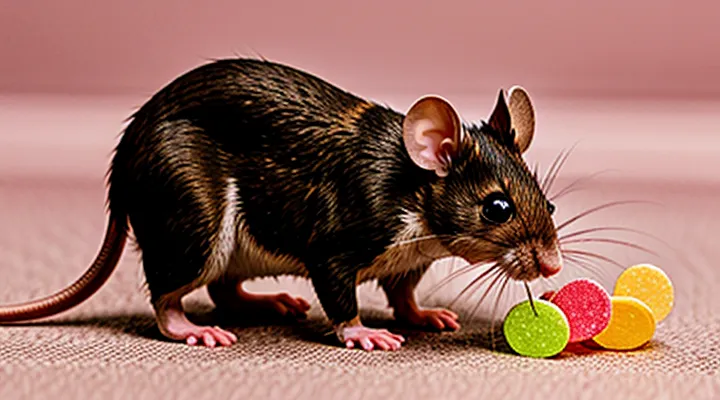
Evolutionary Predispositions
Energy and Survival
Rodents frequently target sugary foods because simple carbohydrates supply immediate caloric value. Glucose from candy is absorbed rapidly, raising blood‑sugar levels within minutes and providing a surge of usable energy without the digestive delay associated with complex starches.
High‑energy confectionery supports short‑term survival tasks. Rapid glucose availability fuels muscular activity required for escape, foraging, and nest construction. It also sustains thermoregulatory processes in cold environments, allowing body temperature to be maintained with minimal metabolic expenditure.
Sweets contribute to long‑term energy reserves. Excess glucose is converted to glycogen and stored in liver and muscle tissue, creating a buffer that can be mobilized during periods of food scarcity. This storage capacity enhances resilience against unpredictable resource availability.
Key physiological effects of sugary intake:
- Immediate rise in blood glucose → quick ATP production.
- Stimulation of insulin release → facilitates glycogen synthesis.
- Elevation of metabolic rate → supports heat generation.
- Provision of substrate for neurotransmitter synthesis → improves alertness and foraging efficiency.
Sweetness as a Sign of Safety
Sweetness functions as an ecological cue that signals food safety to rodents. In natural habitats, sugary substances are rarely associated with toxins, allowing quick assessment of nutritional value. Consequently, rodents develop innate preferences for sweet items, which reduce foraging time and exposure to predators.
Key mechanisms linking sweetness to safety:
- Gustatory receptors detect glucose and fructose concentrations, triggering neural pathways that reinforce approach behavior.
- Metabolic efficiency of simple sugars provides immediate energy, supporting rapid escape responses.
- Low bitterness levels correlate with reduced presence of defensive chemicals, decreasing the risk of ingestion of harmful compounds.
Experimental data support this association. A study of laboratory mice demonstrated a 68 % increase in selection of sucrose‑laden pellets over neutral alternatives, indicating a strong bias toward sweet nutrition. Field observations of wild rodents show frequent visitation of fruiting trees and honey‑laden anthills, environments where sweetness coincides with abundant, non‑toxic resources.
Understanding sweetness as a safety indicator clarifies why confectionery items attract small mammals. The sensory appeal aligns with evolutionary pressures that favor efficient energy acquisition while minimizing toxic exposure.
The Science Behind the Craving
Taste Receptors and Their Sensitivity
Taste receptors in rodents belong primarily to the T1R family, which forms heterodimeric complexes that bind sugars and artificial sweeteners. The T1R2‑T1R3 dimer detects a broad spectrum of sweet compounds, while the T1R1‑T1R3 dimer responds to umami stimuli. Rodent gustatory cells express these receptors at high densities on the circumvallate and fungiform papillae, providing a low detection threshold for monosaccharides and sucrose derivatives. Electrophysiological measurements show activation at concentrations as low as 0.1 mM glucose, a sensitivity that exceeds that of many other mammals.
Key factors influencing receptor sensitivity include:
- Receptor isoform expression: Variants of T1R2 with minor amino‑acid substitutions alter binding affinity for specific sweeteners.
- Signal amplification: G‑protein cascades in taste buds amplify receptor activation, producing robust neural responses to minute sugar amounts.
- Peripheral adaptation: Repeated exposure to high‑sugar diets can up‑regulate receptor expression, enhancing attraction to sweet foods.
The combination of low activation thresholds, efficient signal transduction, and adaptive up‑regulation creates a strong behavioral drive toward sugary items. Consequently, candy and other sweet treats become highly attractive to mice, explaining their frequent presence in environments where such foods are accessible.
Dopamine and the Reward System
Dopamine acts as the primary neurotransmitter linking sweet taste perception to motivational drives in rodents. When a mouse consumes sugary substances, gustatory receptors transmit signals to the ventral tegmental area, prompting dopaminergic neurons to release dopamine into the nucleus accumbens. This surge creates a positive reinforcement signal that strengthens the association between the sensory experience and future seeking behavior.
The reward circuitry operates through a feedback loop:
- Sweet detection → activation of taste pathways
- Dopamine release → reinforcement of reward signal
- Synaptic plasticity → increased likelihood of repeat consumption
Repeated exposure to high‑sugar foods amplifies synaptic connections within the mesolimbic pathway, making the organism more sensitive to similar stimuli. Consequently, rodents develop a heightened preference for confectionery items, demonstrating a biologically driven attraction to sweet rewards.
Why Candy is Particularly Appealing
High Sugar Content
High sugar concentrations stimulate gustatory receptors that are highly sensitive in rodents. The sweet taste triggers rapid neural signaling, encouraging immediate consumption. Elevated glucose levels also provide a quick energy source, satisfying the metabolic demands of small mammals during periods of limited food availability.
Physiological effects of excessive sugar include:
- Increased release of dopamine in the brain’s reward pathways, reinforcing seeking behavior;
- Acceleration of gastric emptying, allowing faster absorption of calories;
- Enhancement of insulin secretion, which temporarily improves blood‑sugar regulation and sustains activity.
These mechanisms collectively explain why sugary foods act as powerful attractants for mice, leading to frequent encounters with confectionery items.
Easily Accessible Energy
Rodents possess high basal metabolic rates that demand frequent replenishment of usable energy. Sweet foods deliver glucose that enters the bloodstream within minutes, satisfying immediate metabolic needs without extensive digestive processing.
Key attributes of easily accessible energy that increase the appeal of sugary items to rodents include:
- Rapid absorption of monosaccharides
- Minimal enzymatic breakdown required
- High caloric density per gram
- Low satiety signals, encouraging repeated consumption
The combination of swift energy delivery and efficient conversion supports sustained activity, making confectionery products a preferred resource for rodents seeking quick fuel. Effective management strategies therefore target the removal or protection of easily digestible carbohydrate sources to reduce attraction and limit infestation.
Palatability and Texture
Rodents exhibit a strong preference for confectionery because the combination of intense sweetness and specific mouthfeel satisfies both gustatory and oral‑mechanical receptors. High concentrations of sucrose, fructose, and glucose activate taste buds tuned to detect energy‑dense nutrients, while aromatic compounds such as vanillin and maltol enhance the hedonic value of the food.
Texture contributes equally to the attraction. A crisp exterior provides tactile stimulation that triggers mechanoreceptors, encouraging rapid ingestion. Soft or chewy interiors reduce the effort required to break down the product, allowing efficient consumption with minimal dental fatigue. The contrast between a hard shell and a pliable core creates a sensory profile that rodents find rewarding.
Key characteristics influencing rodent attraction:
- Elevated sugar content delivering immediate caloric payoff.
- Presence of flavor enhancers that amplify perceived sweetness.
- Crunchy outer layer that activates oral tactile pathways.
- Moist, pliable interior that eases mastication.
- Balanced moisture level preventing desiccation while preserving palatability.
Understanding these parameters informs the design of rodent‑resistant packaging and the development of bait formulations that exploit natural preferences for sweet, texturally appealing foods.
The Dangers of a Sweet Diet for Rodents
Health Consequences
Rodents that regularly consume sugary confectionery experience accelerated enamel erosion, leading to increased susceptibility to dental abscesses and tooth loss. Elevated glucose concentrations in the oral cavity promote bacterial proliferation, which intensifies plaque formation and accelerates caries development.
Excessive intake of simple sugars drives rapid weight gain and disrupts normal metabolic regulation. Persistent hyperglycemia impairs insulin signaling pathways, predisposing individuals to glucose intolerance and early‑onset diabetes mellitus. Fat accumulation in hepatic tissue often accompanies this metabolic shift, increasing the risk of steatosis.
Gastrointestinal disturbances arise from the osmotic effect of high‑sugar diets. Rapid transit through the intestines can cause diarrhea, while fermentation of undigested sugars by gut microbiota produces gas and bloating. Certain artificial sweeteners, frequently present in processed candies, have been linked to dysbiosis and mucosal irritation.
The health status of rodents directly influences their role as disease vectors. Compromised immunity resulting from malnutrition and metabolic stress elevates pathogen carriage rates, facilitating transmission of zoonotic agents to human populations. Monitoring of sugar‑induced health decline therefore supports broader public‑health strategies.
Key health consequences include:
- Dental decay and periodontal disease
- Obesity and insulin resistance
- Hepatic steatosis
- Gastrointestinal upset and dysbiosis
- Heightened pathogen susceptibility
«High sugar intake correlates with increased rodent morbidity», a recent laboratory study confirms, underscoring the necessity of limiting confectionery exposure in rodent populations to mitigate these adverse outcomes.
Behavioral Changes
Rodents exposed to high‑sugar diets exhibit measurable shifts in activity patterns, foraging strategies, and stress responses. Laboratory observations indicate that sugary treats increase exploratory locomotion, reduce latency to approach novel objects, and amplify repetitive chewing motions.
Key behavioral alterations include:
- Elevated nocturnal movement speed, suggesting heightened arousal.
- Preference for confectionery over standard chow, evident in choice tests.
- Decreased avoidance of open spaces, reflecting reduced risk assessment.
- Increased grooming frequency, associated with heightened reward processing.
Neurochemical analyses link these changes to amplified dopamine release in the mesolimbic pathway, reinforcing the pursuit of sweet stimuli. Concurrently, cortisol levels decline, implying a short‑term anxiolytic effect of sugar consumption.
Long‑term exposure correlates with habituation to sweet cues, diminishing sensitivity to natural food sources and fostering dependence on high‑sugar items. This adaptation may compromise survival in environments lacking readily available confectionery.
«Research demonstrates that dietary sugar reshapes rodent behavior through both motivational and physiological mechanisms», reinforcing the conclusion that sweet substances act as powerful modulators of rodent activity.
Practical Implications for Humans
Pest Control Strategies
Rodents are drawn to sugary substances because carbohydrates provide rapid energy, while sweet flavors trigger innate taste receptors that signal high‑calorie availability. The presence of candy, pastries, or sugary spills creates a localized food source that can sustain small populations and encourage breeding.
Effective management of rodent infestations relies on a combination of preventative and reactive measures:
- Sanitation – remove food residues, store consumables in sealed containers, and clean spills promptly to eliminate attractants.
- Exclusion – seal entry points with steel wool, caulk, or metal flashing; install door sweeps and mesh screens to block access.
- Physical trapping – deploy snap traps or electronic devices in high‑traffic zones; position traps along walls where rodents travel.
- Baiting – use anticoagulant or non‑anticoagulant rodenticides formulated for sweet‑bait applications; place baits in tamper‑resistant stations to protect non‑target species.
- Environmental modification – reduce clutter, trim vegetation away from structures, and maintain proper waste management to limit shelter and movement corridors.
- Monitoring – conduct regular inspections, track trap activity, and record signs such as droppings or gnaw marks to assess population trends.
Integrating these tactics creates a layered defense that reduces the appeal of sugary food sources and limits rodent access to buildings. Consistent application of sanitation, exclusion, and targeted control actions sustains low‑population levels and prevents re‑infestation. «Sweet foods attract rodents, but disciplined pest‑management practices deny them the resources they seek».
Preventing Rodent Infestations
Rodent attraction to sugary substances is driven by the high energy content and rapid absorption of glucose, which satisfies the metabolic demands of small mammals. Sweet foods emit volatile compounds detectable by rodent olfactory receptors, creating a strong foraging stimulus. Consequently, unsecured confectionery supplies become focal points for infestation.
Effective control begins with habitat modification. Eliminating food sources reduces the incentive for entry and colonisation. Key actions include:
- Storing all edible items in sealed, rodent‑proof containers made of metal or heavy‑wall plastic.
- Regularly cleaning surfaces to remove crumbs, residues, and spilled sugars.
- Inspecting and repairing structural gaps, especially around doors, windows, and utility penetrations, to deny entry points.
Sanitation practices complement physical barriers. Immediate disposal of waste in containers equipped with tight‑fitting lids prevents scent accumulation. Routine inspection of storage areas for signs of gnawing or droppings enables early detection and rapid response.
Integrated pest management (IPM) combines monitoring, exclusion, and, when necessary, targeted baiting. Monitoring devices such as snap traps or electronic sensors provide data on activity levels, informing the timing and placement of control measures. Bait stations should contain non‑food attractants formulated to avoid accidental consumption by non‑target species, and they must be positioned away from human traffic zones.
Sustained vigilance, combined with rigorous sanitation and structural maintenance, diminishes the likelihood of rodent populations establishing in environments where sweet foods are present.