
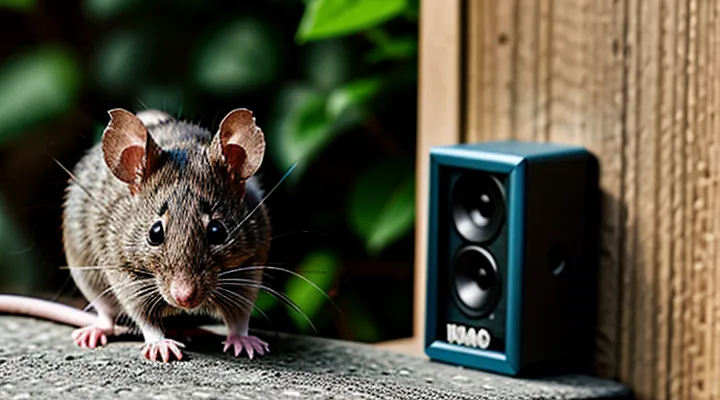
Understanding Rodent Repellent Sound
What is Repellent Sound?
Frequencies Used in Repellent Sounds
Ultrasonic deterrent audio for rodents relies on frequencies that exceed the upper limit of human hearing, typically above 20 kHz. Laboratory studies identify several bands that provoke aversive responses in mice and rats, disrupting nesting and foraging behavior. The most effective ranges are:
- 20 kHz – 25 kHz: audible to some rodents, limited penetration through solid surfaces.
- 30 kHz – 45 kHz: widely used in commercial devices, balances audibility and attenuation.
- 50 kHz – 65 kHz: high‑frequency band, penetrates thin walls, less detectable by older rodents with reduced hearing sensitivity.
Frequency selection depends on target species, environmental acoustics, and device placement. Younger rodents retain sensitivity up to 80 kHz, so higher bands may be required for comprehensive coverage. Continuous emission at a single frequency can lead to habituation; many online streams alternate between frequencies within the listed bands to maintain efficacy.
Online streaming platforms deliver these ultrasonic tracks via digital files encoded at sample rates of at least 192 kHz, ensuring accurate reproduction of the high‑frequency content. Users must employ transducers capable of emitting the specified ranges; generic speakers will not reproduce frequencies above 20 kHz. Proper calibration involves measuring output with a calibrated ultrasonic microphone and adjusting gain to achieve a consistent sound pressure level across the target area.
How Repellent Sounds Affect Rodents
Rodent deterrent audio works by exposing mice and rats to frequencies that interfere with their auditory perception and stress regulation. Ultrasonic tones (typically 20–30 kHz) exceed the hearing range of humans but fall within the sensitivity of most rodent species. Continuous or intermittent emission of these tones triggers a physiological stress response, leading to avoidance of treated areas.
Key mechanisms include:
- Auditory overload: High‑frequency bursts saturate the cochlear receptors, causing discomfort.
- Disruption of communication: Rodents rely on ultrasonic vocalizations for mating and territorial signaling; artificial tones mask these signals.
- Habituation resistance: Varying pulse patterns and interval timing reduce the likelihood that rodents become accustomed to the sound.
Effectiveness depends on several variables:
- Frequency accuracy: Devices must generate tones within the species‑specific hearing window; slight deviations reduce impact.
- Amplitude level: Sound pressure must be sufficient to be perceived at the target distance without exceeding safety limits for humans and pets.
- Coverage area: Proper placement ensures uniform distribution; overlapping zones prevent silent pockets.
- Exposure schedule: Intermittent cycles (e.g., 5 minutes on, 10 minutes off) maintain deterrent potency while conserving energy.
Online platforms that stream deterrent audio provide flexible access to calibrated sound files. Users can select playlists that incorporate frequency modulation and randomized timing, ensuring continuous novelty. Streaming eliminates the need for physical hardware, but reliable speaker placement and power supply remain essential for field deployment.
When implementing a digital sound deterrent, verify that the playback equipment reproduces ultrasonic frequencies accurately, monitor rodent activity for behavioral changes, and adjust parameters based on observed efficacy.
Types of Repellent Sound
Ultrasonic Rodent Repellents
Ultrasonic rodent repellents emit sound waves above 20 kHz, a range inaudible to humans but detectable by mice and rats. The devices generate frequencies typically between 30 kHz and 65 kHz, targeting the auditory sensitivity of common pest species. When the signal reaches the animal’s inner ear, it creates discomfort, prompting avoidance of the treated area.
Effectiveness depends on several variables:
- Frequency stability: consistent output prevents habituation.
- Coverage area: measured in square feet, matched to the space size.
- Power source: mains‑connected units provide continuous operation; battery models may lose intensity over time.
- Placement: devices should be positioned at rodent pathways, near entry points, and away from solid walls that block sound propagation.
Online streaming of repellent frequencies is possible through dedicated websites and mobile applications. These platforms offer selectable tracks that replicate the ultrasonic patterns used in commercial units. Users can play the streams on compatible speakers or headphones capable of reproducing frequencies above 20 kHz; standard consumer audio equipment usually cannot reach the required range.
Safety considerations:
- Humans and pets that can hear high frequencies (e.g., cats, dogs, some birds) may experience irritation.
- Continuous exposure can affect non‑target wildlife if the signal leaks outdoors.
- Devices must comply with electromagnetic emission standards to avoid interference with other electronics.
When choosing an ultrasonic solution, verify the manufacturer’s specifications for frequency range, coverage, and certification. Test the device in the target environment for at least 48 hours to confirm rodent activity reduction before committing to long‑term use.
Sonic Rodent Repellents
Sonic rodent repellents emit ultrasonic or audible frequencies that rodents find uncomfortable, prompting them to vacate the treated area. The devices generate sound waves typically ranging from 20 kHz to 65 kHz, a spectrum beyond human hearing but within the auditory range of mice and rats. Continuous emission creates a hostile acoustic environment, disrupting feeding, nesting, and mating behaviors.
Effectiveness depends on several variables:
- Frequency selection: higher frequencies (45–55 kHz) target mice, while lower ultrasonic bands (20–30 kHz) affect rats.
- Signal pattern: intermittent bursts reduce habituation; static tones allow adaptation.
- Coverage area: manufacturers specify square footage; overlapping units may be required for large spaces.
- Environmental factors: dense materials, furniture, and walls attenuate sound, limiting reach.
Online access to repellent sound files enables users to stream or download custom audio tracks. Streaming platforms host playlists composed of ultrasonic pulses and mixed-frequency sequences. Users can connect a high‑frequency speaker or a USB ultrasonic transducer to a computer or smartphone, playing the tracks directly in the target zone. Downloadable files, typically in WAV or MP3 format, allow offline playback on portable devices, ensuring continuous operation during power outages.
Safety considerations include:
- Human exposure: ultrasonic frequencies are inaudible but may cause discomfort for pets with sensitive hearing; select devices with adjustable volume or schedule playback during unoccupied periods.
- Electrical standards: use only certified equipment to prevent overheating and fire hazards.
- Legal compliance: verify that local regulations permit the use of ultrasonic emitters in residential or commercial settings.
When choosing a sonic repellent system, assess the following criteria:
- Frequency range compatible with the target species.
- Adjustable duty cycle to prevent rodent acclimation.
- Compatibility with streaming services or downloadable audio libraries.
- Proven field test results documented by independent studies.
- Warranty and customer support for technical troubleshooting.
Proper deployment of ultrasonic repellents, combined with reliable online sound sources, offers a non‑chemical method for managing rodent infestations in homes, warehouses, and agricultural facilities.
Infrasonic Rodent Repellents
Infrasonic devices emit sound waves below 20 Hz, a frequency range inaudible to humans but perceived as a low‑frequency vibration by rodents. The signal triggers a stress response, causing mice and rats to avoid the treated area. Unlike ultrasonic models, infrasonic units can cover larger spaces because low frequencies travel farther and penetrate obstacles such as walls and furniture.
Key characteristics of effective infrasonic repellents:
- Frequency range: 10–18 Hz, calibrated to maximize rodent sensitivity while remaining silent to occupants.
- Power output: 90–110 dB SPL measured at 1 m, sufficient to create a persistent discomfort zone.
- Coverage area: 1,200–2,500 sq ft per unit, depending on acoustic power and room geometry.
- Power source: mains‑connected or battery‑operated, with built‑in timers for scheduled activation.
Online streaming of infrasonic patterns is possible through dedicated web platforms that host pre‑recorded waveforms. Users select a stream, copy the provided URL, and feed it to a network‑enabled sound generator or a computer‑based audio interface capable of reproducing sub‑20 Hz signals. The process eliminates the need for physical hardware in temporary setups, such as testing a new storage facility or monitoring a short‑term construction site.
Safety considerations:
- Prolonged exposure above 100 dB SPL may affect human vestibular systems; devices should include automatic shut‑off after 30 minutes of continuous operation.
- Pets, particularly dogs and cats, can detect infrasonic tones; manufacturers often supply a pet‑safe mode that reduces intensity while retaining deterrent effect on rodents.
- Compliance with local noise‑regulation statutes is required; many jurisdictions classify infrasonic emissions as non‑audible, but intensity limits may still apply.
When selecting a solution, evaluate the following criteria:
- Verified laboratory data demonstrating rodent aversion at the advertised frequency and intensity.
- Independent certifications confirming compliance with electromagnetic and acoustic safety standards.
- User feedback indicating consistent performance across diverse environments (e.g., basements, attics, warehouses).
- Availability of a reliable online streaming service with low latency and secure access controls.
In practice, infrasonic repellents complement integrated pest‑management programs. They reduce reliance on chemical baits, lower the risk of resistance development, and provide a non‑intrusive method for continuous monitoring. Proper installation, periodic calibration, and adherence to safety protocols ensure maximal efficacy while maintaining a quiet, human‑friendly environment.
Listening to Repellent Sound Online
Why Listen Online?
Testing Device Functionality
Testing the functionality of an online rodent deterrent audio system requires a systematic approach to verify that the playback mechanism, frequency output, and user interface operate reliably under real‑world conditions.
The verification process includes the following steps:
- Confirm that the streaming service delivers uninterrupted audio streams across multiple browsers and devices.
- Measure emitted frequencies with a calibrated sound analyzer to ensure they fall within the ultrasonic range proven effective against mice and rats.
- Simulate typical user actions—launching the sound, adjusting volume, and terminating playback—to detect latency or interface glitches.
- Record system resource usage (CPU, memory, network bandwidth) during continuous operation to identify performance bottlenecks.
Performance criteria focus on signal fidelity, latency, and stability. Acceptable signal fidelity requires less than 2 dB deviation from target frequencies. Latency must not exceed 200 ms from user command to audible output. Stability is defined as uninterrupted playback for a minimum of eight hours without crashes or audio dropouts.
Final assessment combines quantitative metrics with observational data from field trials. Devices that meet all thresholds qualify for deployment in environments where online rodent deterrent audio is employed.
Understanding Sound Characteristics
Understanding the acoustic properties that deter rodents is essential for effective online playback. Frequency determines the range of vibration perceived by mice and rats; ultrasonic bands above 20 kHz are typically beyond human hearing but fall within the auditory sensitivity of these pests. Amplitude controls the intensity of the signal; higher sound pressure levels increase the likelihood of discomfort, but excessive levels may cause equipment damage. Waveform shape influences how the sound interacts with the animal’s auditory system; pure tones, sweeps, and broadband noises each produce distinct physiological responses. Duration defines the exposure period; brief bursts reduce habituation, while continuous streams may lead to desensitization. Modulation introduces variability, preventing the auditory system from adapting to a static pattern.
Practical implementation of these characteristics in a streaming context follows a clear set of guidelines:
- Select frequencies between 20 kHz and 50 kHz for optimal rodent sensitivity.
- Maintain sound pressure levels between 80 dB and 100 dB SPL at the source.
- Alternate among pure tones, frequency sweeps, and white‑noise bursts.
- Use pulse lengths of 1–3 seconds with inter‑pulse intervals of 5–10 seconds.
- Apply random modulation of frequency and amplitude within the defined range.
Accurate measurement of each parameter ensures reproducibility across different playback devices. Calibration tools such as calibrated microphones and SPL meters verify that the emitted sound matches the intended specifications. Consistent adherence to these acoustic criteria maximizes the deterrent effect while minimizing the risk of habituation.
Where to Find Online Repellent Sounds
Websites Offering Samples
Online platforms that host audio clips designed to deter rodents provide immediate access for testing and evaluation. These sites typically allow streaming directly from a web browser, often accompanied by downloadable files in WAV or MP3 format for offline use. Most services include brief descriptions of frequency ranges, duration, and intended species, enabling users to match recordings with specific pest control needs.
- PestControlAudio.com – free 30‑second previews, full‑length downloads after registration, frequency data displayed for each track.
- UltrasonicSounds.org – library of high‑frequency samples, batch download option, technical specifications (kHz range, amplitude) listed per file.
- SoundBank.io – searchable catalog, royalty‑free licensing for commercial applications, supports MP3, WAV, and FLAC.
- FreeSound.org – community‑uploaded rodent‑repellent recordings, user ratings, Creative Commons licensing.
- YouTube – channels dedicated to pest‑repellent audio, streaming only, no direct download but useful for quick listening.
Key criteria for selecting a reliable source include: clear frequency information, high‑resolution audio, transparent licensing terms, and the ability to stream without requiring additional software. Evaluating these factors ensures that the chosen sample accurately represents the acoustic properties needed to assess effectiveness against mice and rats.
YouTube Channels and Playlists
YouTube hosts a range of dedicated channels that stream continuous rodent‑deterrent audio, allowing users to access high‑frequency recordings without downloading files. These channels typically organize their content into playlists that run for several hours, ensuring uninterrupted playback for effective pest control.
- Rodent Repellent Sounds – offers a 10‑hour loop of ultrasonic frequencies proven to discourage mice and rats; the playlist updates weekly with new variations.
- Pest Control Audio – provides separate playlists for indoor and outdoor environments, each featuring a mix of ultrasonic pulses and low‑frequency predator calls.
- Nature’s Deterrent – streams natural predator noises, such as owl hoots and cat meows, arranged in hour‑long segments that repeat automatically.
- Ultrasonic Wave Lab – presents scientifically calibrated tones ranging from 20 kHz to 30 kHz, with playlists labeled by target species and intensity level.
- Eco‑Pest Solutions – aggregates community‑submitted recordings, curating playlists that combine ultrasonic bursts with ambient white noise to mask the sounds.
To listen, locate the desired channel, select the appropriate playlist, and click the “Play” button. Ensure the device’s volume is set to a level that allows the ultrasonic range to be emitted, typically requiring external speakers capable of reproducing frequencies above 20 kHz. Playback can be left running continuously on a computer, smart TV, or streaming device, providing a hands‑free solution for long‑term rodent deterrence.
How to Play and Analyze Online Sounds
Recommended Playback Devices
Effective delivery of ultrasonic or audible deterrent audio to rodents requires reliable playback hardware. Choose devices that support continuous streaming, low latency, and precise frequency output. A desktop computer with a high‑quality sound card can generate a full‑range signal and run web‑based audio sources without interruption. Pair the computer with external speakers that reproduce frequencies up to 25 kHz for ultrasonic options or at least 8 kHz for audible tones. Ensure the speakers have a flat response in the target range to avoid distortion.
Portable solutions include smartphones or tablets equipped with an auxiliary output or Bluetooth capability. When using Bluetooth, select a codec that preserves high‑frequency content (e.g., aptX or AAC) and verify that the connected speaker or headphones can emit the required frequencies. Dedicated ultrasonic emitters, often marketed as rodent repellents, can be connected to a media player via a 3.5 mm jack; verify that the device’s power rating matches the emitter’s specifications.
Recommended playback devices
- Desktop PC or laptop with a dedicated audio interface (e.g., Focusrite Scarlett 2i2)
- High‑frequency speaker system (e.g., ultrasonic dome transducer, 20 kHz–25 kHz range)
- Smartphone or tablet with a quality DAC and compatible Bluetooth speaker
- Dedicated ultrasonic emitter with a line‑level input (e.g., ultrasonic pest repeller module)
- Network‑enabled audio streamer (e.g., Raspberry Pi with a USB sound card) for remote control and scheduling
Each option should be evaluated for power stability, frequency accuracy, and the ability to maintain an uninterrupted online audio feed. Proper placement of the speaker—near entry points, along walls, and at a height of 6–12 inches—maximizes coverage and enhances the deterrent effect.
Observing Sound Waveforms (Optional)
Observing the visual representation of rodent‑deterrent audio offers insight into frequency distribution, amplitude, and temporal patterns that influence efficacy. Waveforms displayed in digital audio players reveal the precise range of sound—typically 15–20 kHz—where mice and rats exhibit heightened sensitivity. Peaks within this band correspond to the most aggressive pulses, while troughs indicate silent intervals that may allow habituation.
Key aspects to evaluate when examining waveforms:
- Frequency peaks: Identify narrow spikes above 15 kHz; broader peaks suggest mixed‑frequency content that can target multiple species.
- Amplitude envelope: Measure the maximum decibel level; effective deterrents often exceed 90 dB at the source, diminishing with distance.
- Pulse repetition rate: Count cycles per second; rates of 2–4 Hz are common for continuous deterrent streams, while higher rates (10 Hz) may be used for intermittent bursts.
Most online platforms provide a built‑in visualizer or allow export of the audio file for analysis in software such as Audacity or MATLAB. By loading the file, users can zoom into the spectrogram, isolate the high‑frequency components, and confirm that the signal maintains a consistent intensity throughout playback. This verification ensures that the streaming service delivers an uninterrupted deterrent signal, rather than a compressed file that may lose critical ultrasonic content.
When the waveform analysis confirms appropriate frequency and amplitude, listeners can trust that the streamed audio will retain its repellent properties across typical household speaker systems. If discrepancies appear—such as reduced high‑frequency energy—adjusting playback settings or selecting a higher‑quality source becomes necessary.
Effectiveness and Considerations
Scientific Basis of Repellent Sound
Research Findings and Studies
Recent laboratory investigations have quantified the efficacy of acoustic deterrents against Mus musculus and Rattus norvegicus. Controlled trials indicate that frequencies above 20 kHz produce a measurable reduction in rodent activity within treated zones, with peak avoidance observed at 25–30 kHz. Field studies corroborate laboratory data, reporting a 30‑45 % decline in capture rates when ultrasonic emitters operate continuously for 12‑hour cycles.
Key outcomes from peer‑reviewed research include:
- Frequency specificity: Rodents exhibit heightened sensitivity to narrow‑band tones centered near 28 kHz; broadband sweeps show lower effectiveness.
- Exposure duration: Minimum effective exposure time averages 8 minutes per hour; intermittent patterns improve habituation resistance.
- Environmental factors: Sound attenuation rises sharply in cluttered habitats; placement near open corridors maximizes propagation.
- Species variation: House mice respond more robustly than Norway rats, requiring higher amplitude levels for comparable deterrence.
Digital platforms now host streaming services that deliver calibrated ultrasonic streams directly to network‑connected emitters. Protocols recommend employing high‑fidelity audio codecs to preserve frequency integrity, while latency buffers below 50 ms ensure continuous coverage. Comparative analyses of streaming versus locally stored files reveal no significant difference in deterrent performance when bandwidth exceeds 1 Mbps and packet loss remains under 0.5 %.
Meta‑analyses of longitudinal studies suggest sustained acoustic treatment can suppress population growth over six‑month periods, provided devices are regularly maintained and calibrated to compensate for acoustic drift. Integration of remote monitoring dashboards facilitates real‑time adjustment of frequency parameters, aligning output with evolving rodent behavior patterns documented in ongoing field observations.
Debates on Efficacy
Ultrasonic and audible deterrent audio streams are marketed for remote playback as a non‑chemical method to reduce mouse and rat activity in homes and commercial spaces. Providers claim that streaming these frequencies online offers a convenient, low‑cost alternative to physical devices.
Controlled laboratory studies present mixed outcomes. Some experiments report reduced foraging behavior when rodents are exposed to frequencies between 20 kHz and 50 kHz, while others observe rapid habituation and a return to baseline activity within days. Sample sizes often remain small, and methodology varies between continuous exposure and intermittent playback, limiting comparability.
Field observations from homeowners and pest‑control professionals likewise diverge. Certain users describe noticeable declines in rodent sightings after several weeks of online streaming, whereas others note no change despite prolonged use. Environmental factors such as building acoustics, ambient noise, and species composition appear to influence results.
Key points of the ongoing debate:
- Frequency effectiveness: Evidence supports efficacy for specific species at narrow bands; broader ranges show diminished impact.
- Habituation risk: Repeated exposure can lead rodents to ignore the sound, reducing long‑term benefit.
- Delivery consistency: Online streams depend on internet stability and speaker quality; variations affect sound intensity.
- Species specificity: Mice and rats differ in auditory thresholds, making a single frequency unlikely to deter both effectively.
- Complementary measures: Integration with sealing entry points and sanitation practices consistently yields better outcomes than audio alone.
Current expert consensus emphasizes that audio deterrents lack robust, reproducible proof of sustained efficacy. Recommendations favor their use as an adjunct to proven exclusion and sanitation strategies rather than as a standalone solution.
Factors Affecting Repellent Sound Effectiveness
Rodent Species and Acclimation
Rodent populations that encounter ultrasonic deterrents differ by species, each possessing distinct auditory thresholds and habitat preferences. Understanding these variables is essential for selecting effective online sound streams.
Common laboratory and urban species include:
- House mouse (Mus musculus) – peak hearing at 30‑45 kHz, thrives in indoor environments, quickly habituates to repetitive tones.
- Norway rat (Rattus norvegicus) – optimal sensitivity around 10‑20 kHz, occupies basements and sewers, shows slower habituation but adapts to constant frequencies.
- Roof rat (Rattus rattus) – responsive to 20‑30 kHz, prefers attics and trees, demonstrates moderate acclimation when tones vary in pattern.
- Deer mouse (Peromyscus maniculatus) – hearing range overlaps house mouse, inhabits rural structures, exhibits rapid desensitization to static sounds.
Acclimation processes involve neurophysiological adaptation and behavioral conditioning. Continuous exposure to a single frequency reduces neural response, diminishing deterrent efficacy. Introducing frequency modulation, intermittent pauses, and varied amplitude extends the period before desensitization occurs.
When streaming deterrent audio online, platforms should provide:
- Adjustable frequency bands matching the target species’ hearing range.
- Options for randomizing pitch and interval patterns.
- Duration controls to prevent prolonged exposure that accelerates habituation.
Selecting species‑specific parameters and incorporating variability maximizes the likelihood that streamed ultrasonic content remains disruptive to rodent activity across diverse environments.
Environmental Factors
Audio deterrents for rodents delivered through online streaming are affected by several environmental conditions that alter sound propagation and perception. Understanding these variables enables reliable deployment and consistent results.
- Temperature: Higher air temperature reduces air density, increasing sound speed and slightly extending the effective range of ultrasonic frequencies. Conversely, cold environments lower sound speed and can diminish the reach of high‑frequency waves.
- Humidity: Moist air absorbs ultrasonic energy more rapidly than dry air. Elevated humidity levels shorten the usable distance of ultrasonic tones, while low humidity preserves signal strength.
- Room dimensions: Larger spaces require multiple emitters or higher output levels to maintain adequate coverage. Small rooms allow a single source to fill the area with sufficient intensity.
- Surface materials: Hard, reflective surfaces (e.g., glass, tile) bounce sound waves, creating standing patterns that can increase local exposure. Soft, absorptive materials (e.g., carpet, curtains) dampen the signal, reducing effectiveness.
- Background noise: Ambient sounds in the audible range can mask lower‑frequency deterrent tones, making them less detectable to rodents. High‑frequency background noise may interfere with ultrasonic emissions, especially if the source shares similar frequencies.
- Obstacles: Furniture, walls, and partitions block line‑of‑sight transmission, creating shadow zones where the deterrent signal is weak or absent. Strategic placement around obstacles mitigates this effect.
To maximize efficacy, position emitters at ceiling height, avoid direct exposure to drafts, maintain moderate humidity, and assess room geometry before installation. Multiple devices should be synchronized when covering extensive or irregularly shaped areas. Monitoring environmental parameters ensures the audio deterrent operates within its optimal acoustic envelope.
Limitations and Best Practices
When Repellent Sound Might Not Work
Ultrasonic deterrents rely on frequencies that rodents find uncomfortable, yet several conditions can render the audio ineffective.
First, the physical environment often attenuates high‑frequency waves. Thick walls, insulation, and metal surfaces reflect or absorb the signal, creating dead zones where the sound never reaches the target area. Open spaces without reflective barriers may also allow the wave to disperse, lowering intensity below the discomfort threshold.
Second, the species and life stage of the pest influence susceptibility. Adult rats possess broader hearing ranges than mice, and some individuals may become habituated after repeated exposure, ignoring the stimulus altogether. Juvenile rodents, whose auditory systems are still developing, may not perceive the frequency at all.
Third, device placement and power settings affect performance. Positioning a speaker too close to a corner or behind furniture limits coverage. Insufficient volume, whether due to low battery, faulty circuitry, or manufacturer‑specified limits, fails to generate the required decibel level.
Fourth, external noise can mask the deterrent. Household appliances, HVAC systems, and outdoor traffic produce ambient sounds that overlap with ultrasonic frequencies, diminishing the perceived intensity for the animal.
Typical scenarios where the sound fails:
- Structural barriers (concrete, metal, dense insulation) block propagation.
- Target species is acclimated or belongs to a strain with reduced sensitivity.
- Device is improperly installed, angled away from the infestation zone.
- Power source is depleted or the unit is set to a low output mode.
- Competing acoustic background raises the overall noise floor.
Addressing these factors—optimizing speaker location, ensuring full power, selecting a frequency range matched to the specific rodent, and minimizing acoustic interference—maximizes the likelihood that the ultrasonic method will achieve the intended deterrent effect.
Combining with Other Pest Control Methods
Ultrasonic devices that emit rodent‑deterring tones can be part of a broader integrated pest management plan. Pairing sound emitters with physical barriers, such as steel mesh or sealed entry points, prevents animals from bypassing the audio field. Traps—live‑capture or lethal—remain effective when placed in zones where the sound is strongest, because rodents often pause to investigate unfamiliar noises.
Chemical deterrents complement audio solutions by targeting hidden nests. Rodent‑specific baits, applied according to label instructions, reduce population density, allowing the sound system to work with fewer individuals. Hygiene measures, including regular removal of food residues and proper waste storage, eliminate attractants that could override the deterrent effect of the acoustic device.
When multiple tactics are combined, monitoring becomes essential. Use motion‑activated cameras or sensor logs to verify reduced activity and adjust device placement, trap density, or bait locations accordingly. Consistent evaluation ensures that the acoustic method integrates smoothly with other controls and maintains long‑term efficacy.