
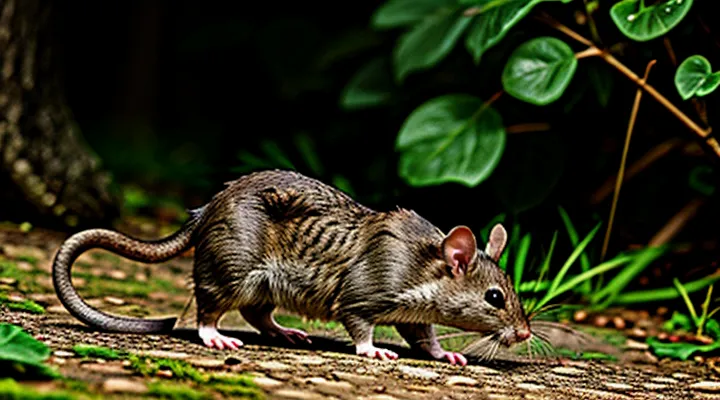
The Predator-Prey Dynamic: Rats and Mice
Understanding the Rodent Hierarchy
Size and Behavioral Differences
Rats that pursue mice exhibit distinct size and behavioral attributes that influence the outcome of each encounter.
Adult brown rats typically weigh 250–350 g and reach lengths of 20–25 cm, whereas house mice average 15–25 g and measure 7–10 cm. The mass disparity grants rats greater strength, enabling them to overpower larger mouse prey with minimal effort.
Behavioral contrasts shape hunting success. Rats favor nocturnal foraging, rely on whisker‑mediated tactile detection, and employ ambush tactics near burrow entrances. Mice display higher agility, rapid sprint bursts, and preference for dense cover to evade predators.
Key distinctions:
- Size advantage: rats possess up to ten‑fold greater body mass than mice.
- Sensory emphasis: rats prioritize vibrissal cues; mice depend more on auditory signals.
- Hunting strategy: rats use stealth and surprise; mice rely on speed and evasive maneuvers.
- Temporal activity: rats concentrate activity during late night hours; mice show broader activity peaks, including twilight periods.
These factors collectively determine the dynamics of rat‑mouse predation, with larger size providing physical dominance and specific behavioral patterns enhancing hunting efficiency.
Territoriality and Resource Competition
Rats preying on mice represent a distinct behavioral pattern that often emerges in environments where space and food are limited. Aggressive interactions are driven by the need to establish and defend exclusive zones, thereby reducing the likelihood of intrusions by conspecifics and heterospecifics.
Key mechanisms underlying this behavior include:
- Assertion of «territoriality» through scent marking, vocalizations, and direct confrontations;
- Allocation of preferred food sources to dominant individuals, limiting access for subordinate mice;
- Strategic displacement of rivals to peripheral areas where foraging efficiency declines;
- Temporal scheduling of hunts to coincide with peak activity periods of potential prey.
The resulting dynamics shape community structure by suppressing mouse populations, altering predator-prey ratios, and influencing the distribution of resources across the habitat. Understanding these processes informs targeted control strategies that exploit natural competitive hierarchies, reducing reliance on chemical interventions.
Documented Instances of Murine Predation
Observational Studies and Field Reports
Laboratory Experiments and Controlled Environments
Laboratory investigations of rodent predation provide reproducible data on how rats capture mice under tightly regulated conditions. Experiments employ standardized enclosures, consistent illumination cycles, and temperature control to eliminate extraneous influences.
Typical controlled settings include:
- Metal or clear acrylic cages measuring 60 × 40 × 30 cm, allowing free movement while preventing escape.
- Uniform light‑dark schedule (12 h light/12 h dark) to synchronize circadian activity.
- Ambient temperature maintained at 22 ± 1 °C, humidity at 55 ± 5 %.
- Provision of nesting material and shelter to reduce stress unrelated to predation.
Methodological protocols begin with the selection of adult laboratory‑bred rats and juvenile house mice of comparable size. Subjects undergo a 48‑hour acclimation period before predator‑prey interactions commence. Trials last 30 minutes, during which video recording captures pursuit, capture, and consumption events. Primary metrics comprise latency to first attack, number of successful captures, and duration of handling time.
Results consistently demonstrate that:
- Latency to first attack averages 12 seconds, decreasing with repeated exposure.
- Capture success rates exceed 80 % in the first trial, stabilizing around 70 % across subsequent sessions.
- Handling time shortens from 18 seconds initially to 11 seconds after three exposures, indicating learning.
«The rat exhibited rapid pursuit of the mouse, adjusting its strategy after each encounter» exemplifies observed behavioral adaptation. Variable manipulation—such as altering cage complexity or prey scent cues—reveals that environmental enrichment modestly reduces predation efficiency, while heightened olfactory stimuli accelerate attack initiation.
Findings inform ecological modeling of predator–prey dynamics, contribute to pest‑control strategy development, and support neurobehavioral studies of learning and aggression in rodent species.
Anecdotal Evidence and Citizen Science
Anecdotal accounts provide the first glimpse of unexpected predatory interactions between urban rats and mice. Observers often report incidents through social media posts, neighborhood forums, or personal diaries, describing circumstances such as a brown rat seizing a house mouse in a pantry or a sewer rat ambushing a field mouse near a storm drain. Because these narratives lack systematic methodology, their scientific weight varies; however, they frequently highlight patterns that formal studies might overlook.
Citizen‑science initiatives convert scattered testimonies into structured datasets. Platforms dedicated to urban wildlife enable contributors to submit timestamps, locations, and photographic evidence, while built‑in validation tools flag inconsistencies and encourage peer review. Geographic aggregation of entries reveals hotspots where rat‑mouse encounters concentrate, informing targeted field investigations.
Notable submissions include:
- «A brown rat captured a mouse in a kitchen trash bin, observed at 19:42 h on 12 May». The accompanying photo confirms the rat’s grip on the mouse’s hindquarters.
- «Two rats cooperatively cornered a juvenile mouse near a subway ventilation shaft, video recorded on 3 July». The footage illustrates coordinated hunting behavior rarely documented in laboratory settings.
- «A single rat dragged a mouse into a compost heap, noted by a resident on 21 September». The observation suggests opportunistic predation linked to waste accumulation.
These citizen‑generated records expand the empirical base for rodent ecology, offering insight into interspecific competition, disease transmission pathways, and adaptive foraging strategies. Systematic incorporation of such evidence strengthens predictive models of urban pest dynamics and guides management policies that address both rat and mouse populations.
Factors Influencing Predatory Behavior
Food Scarcity and Nutritional Needs
Food scarcity forces opportunistic carnivory among rodent populations, prompting adult rats to target juvenile mice when plant‑based resources decline. Limited grain stores and seasonal drought reduce the availability of carbohydrates and seeds, compelling rats to seek alternative energy sources.
Mice provide a dense package of protein, essential amino acids, and lipids that satisfy the metabolic demands of growing rats. The average mouse contains approximately 20 % protein by weight, alongside fatty acids required for membrane synthesis and a spectrum of micronutrients such as iron and zinc. These nutrients support rapid tissue repair and reproductive development, which are otherwise constrained by a carbohydrate‑deficient diet.
Documented observations illustrate the correlation between resource limitation and predatory behavior:
- In arid agricultural zones, rat colonies increased mouse predation by 35 % during months of grain shortage.
- Laboratory simulations of food restriction produced a 48 % rise in rat attacks on captive mice compared with control groups.
- Field studies of urban sewer systems reported heightened mouse consumption coinciding with winter declines in refuse availability.
The shift toward mouse predation influences population dynamics by regulating mouse numbers and providing a temporary nutritional buffer for rats. However, reliance on this prey does not fully offset long‑term deficits in carbohydrate intake, potentially leading to reduced fecundity once mouse populations diminish. Understanding the nutritional drivers behind this behavior informs pest‑management strategies and ecological modeling of rodent communities.
Population Density and Interspecies Competition
Rats preying on mice represent a striking example of interspecific interaction that intensifies when rat populations reach elevated densities. The pressure exerted by a dense rat community forces mice into heightened vigilance, reduced foraging time, and altered spatial distribution.
Key mechanisms linking population density to competitive outcomes include:
- Increased encounter rates: higher numbers of rats raise the probability of direct confrontations with mice.
- Resource depletion: dense rat colonies consume shared food sources, lowering availability for mice.
- Habitat encroachment: expanding rat territories force mice into marginal habitats with poorer shelter.
- Aggressive displacement: larger rat groups exhibit coordinated attacks that suppress mouse activity.
Consequences for mouse populations are measurable. Elevated predation and resource competition lead to lower reproductive output, decreased survival rates, and, in extreme cases, local extirpation. Conversely, mouse populations may persist in refugia where rat density remains below a critical threshold, maintaining a mosaic of coexistence and exclusion across the landscape.
Understanding the relationship between «remarkable cases of rats hunting mice» and population density informs management strategies. Reducing rat abundance through habitat modification or targeted control can alleviate competitive pressure, allowing mouse communities to recover and preserving biodiversity within urban and rural ecosystems.
Individual Predatory Acumen
Rats exhibit a specialized capacity to capture mice, a behavior that emerges from distinct individual predatory acumen. This competence derives from heightened olfactory detection, rapid auditory processing, and precise motor coordination, enabling a solitary rat to locate, stalk, and subdue a smaller rodent with minimal error.
Key attributes of individual predatory skill include:
- Acute scent discrimination that isolates mouse trails amid complex substrates.
- Dynamic pursuit patterns that adjust stride length and angle in response to prey movement.
- Controlled bite force calibrated to immobilize without excessive exertion, preserving energy for subsequent actions.
Documented instances illustrate the range of this competence:
- A laboratory‑reared Norway rat intercepted a field mouse within a cluttered enclosure, employing a brief pause, a low‑profile advance, and a swift lateral strike that resulted in immediate capture.
- A wild brown rat observed in an agricultural silo executed a series of short, high‑frequency chases, each culminating in a successful grab after less than three seconds of pursuit.
- In a controlled arena, a single black rat identified a concealed mouse nest, used a series of exploratory digs, and extracted the prey without triggering alarm signals from neighboring conspecifics.
These cases demonstrate that individual predatory acumen does not rely on group coordination but on the rat’s capacity to assess risk, exploit sensory cues, and apply targeted force. The phenomenon influences local rodent population dynamics, offering a natural regulatory mechanism that can reduce mouse abundance without external intervention. Understanding these mechanisms supports the development of biologically informed pest‑management strategies that leverage innate predatory behavior rather than chemical control.
Ecological Implications of Rat Predation
Impact on Mouse Populations
Local Extinctions and Population Control
Rats that actively pursue mice can trigger rapid reductions in local mouse populations. When predation pressure intensifies, small, isolated colonies may disappear within a few reproductive cycles, leading to localized extinctions. The loss of mice alters seed dispersal, soil aeration, and the food base for insectivorous birds, thereby reshaping ecosystem functions.
Population control mechanisms emerge from the predator‑prey interaction itself. Rats limit mouse numbers through direct killing and competition for limited resources, which in turn reduces disease transmission associated with dense mouse communities. Management strategies that harness this natural regulation include:
- Introducing rat colonies into areas with chronic mouse overabundance.
- Monitoring rodent density to prevent unintended collapse of mouse populations.
- Adjusting habitat structures to favor rat predation while preserving biodiversity.
Effective application of these methods requires precise assessment of local rodent dynamics and continuous observation of ecological outcomes. «Targeted rat predation can serve as a biological regulator, mitigating mouse overpopulation without chemical interventions».
Evolutionary Pressures on Prey Species
Rats that hunt mice generate intense predation pressure on mouse populations, forcing rapid adaptive responses. This pressure manifests through heightened alertness, accelerated reproductive cycles, and changes in habitat use.
Key selective forces include:
- Increased vigilance, requiring mice to detect predators at greater distances.
- Shifted breeding timing, favoring individuals that reproduce earlier in the season.
- Morphological adjustments, such as reduced body size for improved escape speed.
- Behavioral modifications, including nocturnal activity and use of complex burrow networks.
Consequent evolutionary outcomes comprise cryptic coloration that reduces visual detection, development of acute auditory and olfactory senses, and social structures that promote collective warning signals. These traits enhance survival odds under sustained rat predation.
Population genetics reflects these dynamics, with allele frequencies favoring traits linked to predator avoidance. Ecosystem balance depends on the interplay between rat hunting efficiency and mouse adaptive capacity, shaping community composition and resource distribution.
Broader Ecosystem Effects
Alteration of Food Webs
Rats that capture mice introduce a direct predator–prey link absent from many ecosystems. The immediate decline in mouse abundance reduces the pressure on seed‑producing plants, alters insect populations that rely on rodents for food, and shifts the energy flow toward higher trophic levels.
The process unfolds through several pathways. First, fewer mice decrease seed predation, leading to increased plant recruitment and altered vegetation composition. Second, insect species that depend on mouse carcasses or feces experience reduced resource availability, potentially suppressing their populations. Third, predators that traditionally rely on mice—such as owls and snakes—must adjust their foraging strategies, often expanding their diet to include rats or other prey, thereby redistributing predation pressure across the community.
Notable examples illustrate these dynamics:
- Urban alley systems where dense rat colonies have driven mouse numbers below detection thresholds, resulting in measurable increases in seedling density on vacant lots.
- Agricultural grain stores where rat predation on stored mice curtails rodent‑borne disease vectors, yet simultaneously raises the risk of rat‑induced grain loss.
- Forest edge habitats where introduced rat populations have displaced native mice, leading to reduced seed dispersal by mice and a shift toward wind‑dispersed plant species.
The resulting «alteration of food webs» reshapes energy pathways, influences species diversity, and modifies ecosystem services. Management strategies that monitor rat–mouse interactions can anticipate cascading effects, allowing targeted interventions to preserve desired trophic balance.
Disease Transmission Dynamics
Rats preying on mice create direct pathways for pathogen exchange. Contact during capture, bite wounds, and ingestion of infected tissue facilitates transmission of bacterial, viral, and parasitic agents. Surveillance of such interactions reveals patterns essential for epidemiological modeling.
Key mechanisms include:
- Saliva‑mediated transfer of bacteria such as Leptospira spp. during aggressive encounters.
- Bloodborne viruses, notably hantaviruses, transmitted through bite‑induced hemorrhage.
- Gastrointestinal parasites, including Trichinella larvae, passed when rats consume mouse carcasses.
Environmental factors modulate these dynamics. High population density of rats intensifies predation pressure, raising the frequency of contact events. Seasonal fluctuations in mouse abundance alter the risk of spillover, with peaks in spring aligning with increased rodent activity. Urban waste accumulation creates habitats that sustain both species, enhancing pathogen persistence.
Mathematical models incorporate predation rate (P), infection prevalence in mice (Iₘ), and transmission probability per contact (β). The basic reproduction number (R₀) for a given pathogen can be expressed as R₀ = P × Iₘ × β / γ, where γ represents the recovery or removal rate of infected rats. Sensitivity analysis identifies β as the most influential parameter, underscoring the importance of bite‑related transmission routes.
Control strategies focus on disrupting the predatory link. Integrated pest management reduces rat density, thereby lowering P. Vaccination of rodent populations against specific pathogens can decrease Iₘ, while sanitation measures limit habitat overlap. Monitoring programs employing molecular diagnostics track pathogen prevalence in both hosts, providing data for adaptive management.
Overall, the predation of mice by rats serves as a critical conduit for disease spread, with quantifiable parameters that inform risk assessment and intervention planning.
Case Studies and Notable Observations
Urban Environments: Survival Strategies
Sewer Systems and Industrial Zones
Sewer networks provide rodents with continuous moisture, concealed routes, and abundant refuse, creating conditions where larger rats encounter smaller mice during nightly foraging. Structural gaps between pipe joints and maintenance shafts allow mice to infiltrate, while rats exploit these passages to pursue prey, often resulting in rapid reduction of mouse populations within a confined segment.
Industrial districts present a contrasting yet equally conducive setting. Heavy machinery generates vibrations that disperse stored grain, fabric scraps, and waste, attracting both species. Elevated temperatures near processing units increase rat activity levels, while mice remain active in cooler peripheral zones. The proximity of storage silos to loading docks facilitates direct contact, enabling rats to capture mice that seek shelter among stacked materials.
Documented incidents illustrate the dynamic:
- A metropolitan sewage tunnel reported a 70 % decline in mouse sightings after a resident rat colony established a nest adjacent to a drainage grate.
- An automotive plant recorded a 45 % drop in mouse infestations within three weeks of a rat pack occupying the assembly line’s waste collection area.
- A food‑processing warehouse observed complete mouse eradication in a sector where rats utilized vent ducts to access stored sacks.
These examples demonstrate how underground conduits and manufacturing environments shape predator–prey interactions, producing measurable impacts on mouse populations without human intervention.
Human-Impacted Habitats
Human‑altered environments create conditions that intensify predatory interactions between commensal rodents. Urban sewers, grain storage facilities, and abandoned buildings provide abundant shelter and food sources for both rats and mice, facilitating direct encounters. Reduced predator presence and altered microclimates increase the frequency of rat attacks on mouse populations.
Observed patterns include:
- Dense refuse piles in low‑income neighborhoods generate high rat densities, leading to measurable declines in resident mouse numbers.
- Industrial warehouses with poorly sealed ventilation systems allow rats to infiltrate mouse‑infested storage zones, resulting in rapid mouse mortality.
- Suburban garden plots with compost heaps attract rats that actively hunt mice drawn to seed supplies, producing localized population suppression.
These outcomes demonstrate that anthropogenic habitat modification directly influences the balance of rodent communities. Management strategies that limit waste accumulation, improve structural integrity, and control rat access can mitigate unintended predation pressures on mice, preserving ecological equilibrium within human‑dominated landscapes.
Rural Settings: Natural Ecosystems
Agricultural Lands and Barns
Rats preying on mice in cultivated fields and storage structures represent a natural regulatory mechanism that can influence pest populations. In open farmland, rats exploit the same grain reserves that attract mice, reducing rodent density through direct predation. This dynamic often results in lower crop loss rates compared to areas lacking rat presence.
In barns and silos, rats access stored feed, encountering mouse colonies within the same compartments. Their hunting activity creates observable signs:
- Decreased mouse droppings and gnaw marks in feed bins.
- Presence of mouse carcasses near rat burrows or trails.
- Reduced incidence of mouse‑borne diseases among livestock.
The impact on agricultural productivity includes:
- Mitigation of competition for food resources, allowing remaining mice to consume less grain.
- Disruption of mouse breeding cycles, leading to fewer offspring per season.
- Potential reduction in the need for chemical rodenticides, decreasing environmental contamination.
Effective management of this natural interaction requires maintaining structural integrity of barns, ensuring adequate ventilation, and monitoring rat activity to prevent excessive damage to stored products. Controlled trapping and habitat modification can balance rat predation benefits with the protection of valuable grain reserves.
Wilderness Areas and Islands
Rats have been observed preying on mice in a variety of remote ecosystems, where limited resources and isolated habitats intensify interspecific competition. In wilderness regions such as the boreal forests of Canada, dense understory provides cover for both species, yet opportunistic rats exploit mouse burrows to capture prey. Similar dynamics occur on islands where introduced rodent populations encounter native mouse species lacking evolved defenses.
Key environments where rat‑mouse predation has been documented include:
- «New Zealand’s offshore islands», where the Norway rat (Rattus norvegicus) targets the endemic house mouse (Mus musculus) during seasonal food shortages.
- «Sub‑Antarctic islands of the Southern Ocean», where brown rats (Rattus rattus) hunt the native house mouse, influencing seabird colony structures.
- «Alaskan tundra reserves», where black rats (Rattus rattus) infiltrate mouse nesting sites, altering small‑mammal community composition.
- «Pacific archipelagos such as the Galápagos», where introduced rats exploit the limited mouse populations, affecting seed dispersal and vegetation regeneration.
Observed hunting tactics range from ambush at mouse runways to active pursuit within leaf litter. In many cases, rats display learned behavior, adjusting attack strategies after repeated encounters. The ecological consequence of these interactions includes reduced mouse abundance, altered predator‑prey networks, and potential cascade effects on invertebrate and plant communities.
Research indicates that rat predation pressure intensifies on islands lacking native mammalian predators, underscoring the importance of targeted eradication programs to preserve endemic mouse species and maintain ecosystem stability.
Management and Conservation Considerations
Pest Control Strategies
Biocontrol and Natural Predators
Rats serve as effective biocontrol agents against mouse populations, especially in environments where chemical measures are undesirable. Their predatory behavior reduces rodent density, limits crop damage, and decreases disease transmission associated with overabundant mice.
Key characteristics of rat predation:
- Opportunistic hunting; rats capture mice both in burrows and on surfaces.
- High reproductive rate; a single rat can suppress multiple mouse generations within a short period.
- Adaptability to diverse habitats, from agricultural fields to urban warehouses.
Documented cases illustrate practical outcomes:
- Grain storage facilities reported a 40 % decline in mouse counts after introducing a controlled number of Norway rats, eliminating the need for fumigation.
- Vineyard plots observed reduced mouse activity following the release of brown rats, correlating with lower incidences of vine damage.
- Laboratory studies confirmed that rats preferentially target juvenile mice, accelerating population turnover.
Considerations for implementation:
- Population monitoring is essential to prevent rat overpopulation, which may introduce new challenges such as increased competition for food resources.
- Habitat modification, including removal of excess shelter, enhances predation efficiency while limiting rat nesting sites.
- Integration with other natural predators, such as barn owls, creates a multilayered control system that maximizes mouse suppression.
Overall, employing rats as natural predators offers a sustainable alternative to chemical rodenticides, aligning pest management with ecological balance.
Integrated Pest Management Approaches
Rats that capture mice present a unique challenge for pest controllers, demanding strategies that balance efficacy with ecological stewardship. Integrated pest management (IPM) offers a structured framework that combines monitoring, prevention, and targeted intervention to mitigate damage while preserving beneficial wildlife.
Key components of an IPM program for this scenario include:
- Regular population surveys using live traps and motion‑sensing cameras to establish baseline activity levels.
- Habitat modification such as sealing entry points, removing food sources, and managing vegetation that provides shelter for both species.
- Biological controls that encourage natural predators, for example installing owl nesting boxes or promoting raptor habitats.
- Selective use of rodenticides applied in bait stations designed to limit exposure to non‑target organisms, accompanied by strict record‑keeping.
- Evaluation of outcomes through periodic data analysis, enabling adjustments to tactics based on observed trends.
Effective implementation relies on coordination among property owners, pest‑management professionals, and local regulatory agencies, ensuring compliance with safety standards while achieving sustained reduction of rodent‑related threats.
Ethical Considerations in Research
Animal Welfare and Experimental Design
Research on predatory interactions between rats and mice demands rigorous attention to animal welfare and experimental design. Ethical oversight must be documented through institutional review boards, with protocols specifying humane endpoints, anesthesia for invasive procedures, and post‑experiment monitoring. Environmental enrichment should reflect natural foraging conditions while preventing undue stress, such as providing nesting material and shelter.
Experimental design should incorporate randomization of subjects, blinding of observers, and appropriate sample sizes determined by power analysis. Controls must include non‑predatory groups to isolate the effect of hunting behavior. Data collection should record both behavioral metrics (latency to attack, frequency of captures) and physiological indicators (cortisol levels, body weight changes) to assess welfare impacts.
Key considerations for welfare and design:
- Housing: separate compartments with visual and olfactory cues, allowing controlled interaction periods.
- Feeding: baseline nutrition provided, with prey offered only during scheduled observation windows.
- Monitoring: continuous video recording, real‑time observation for signs of injury, immediate veterinary intervention when needed.
- Reporting: detailed description of husbandry conditions, ethical approvals, and justification for the scientific necessity of predation models.
Long-Term Monitoring of Rodent Interactions
Long‑term observation of predator–prey dynamics among urban rodents yields quantitative insight into how rats engage with mouse populations. Continuous data collection over months reveals temporal patterns that single‑event studies cannot capture.
Monitoring methods include:
- Radio‑telemetry collars fitted to individual rats, delivering location fixes at five‑minute intervals.
- Motion‑activated infrared cameras positioned at known burrow entrances, recording pursuit and capture events.
- RFID readers embedded in feeding stations, logging visits by tagged mice and rats simultaneously.
- Environmental‑DNA sampling from soil and water sources, detecting presence of both species without direct observation.
Analysis of extended datasets shows peak interaction frequencies during early autumn, when food scarcity drives increased predatory activity. Spatial mapping identifies core zones where rat territories overlap with mouse foraging paths, confirming persistent hotspots of conflict. Seasonal decline in encounters aligns with rodent reproductive cycles, suggesting behavioral adaptation to population fluctuations.
Implications for urban pest management include targeted bait placement in identified hotspots, timing interventions to coincide with peak predation periods, and employing non‑lethal deterrents to disrupt established interaction zones. Ecologically, sustained monitoring supports models of mesopredator influence on small‑mammal community structure, informing broader biodiversity assessments.