
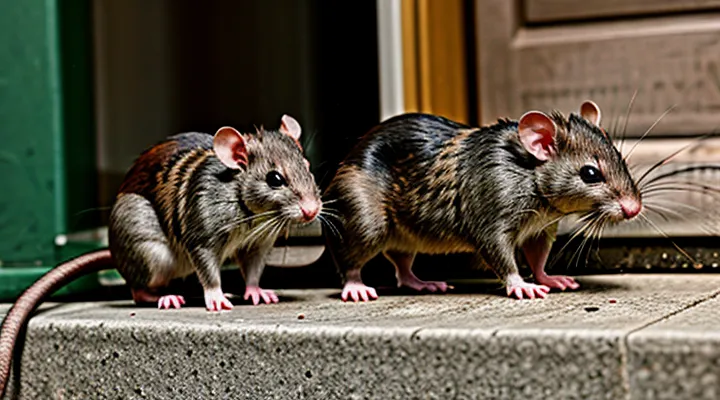
«Introduction to Rat Dexterity»
«More Than Just Walking: The Versatility of Rat Paws»
«Distinguishing Features of Rat Paws»
Rat paws exhibit several anatomical adaptations that enable precise manipulation of objects, a capability uncommon among most rodents. The front limbs possess five digits, each ending in a sharp, curved claw that can be retracted slightly to allow fine motor control. Musculature around the wrist and metacarpal region is highly developed, providing the strength needed for sustained grip while maintaining dexterity.
Key distinguishing characteristics include:
- Opposable-like thumb: The first digit is reduced but functions similarly to an opposable thumb, facilitating pinching motions.
- Enhanced tactile pads: Dense arrays of mechanoreceptors cover the ventral surface, delivering acute sensory feedback during object handling.
- Flexible carpal joints: Increased articulation permits a wide range of paw orientations, supporting both climbing and grasping tasks.
- Robust nail curvature: Curved claws generate a self‑locking mechanism on varied substrate textures, preventing slippage.
These features collectively allow rats to grasp, manipulate, and transport items with a level of precision that challenges traditional assumptions about rodent motor abilities.
«Sensory Capabilities: Touch and Exploration»
Rats rely on a highly developed tactile system to investigate their environment. Their forepaws contain dense innervation, allowing precise detection of surface texture, temperature, and pressure. This sensory feedback guides the manipulation of objects, from food fragments to complex obstacles, enabling fine motor adjustments during grasping.
Whiskers complement paw sensation by providing spatial information about nearby structures. Each vibrissa transmits high‑frequency signals to the somatosensory cortex, creating a three‑dimensional map that the animal integrates with paw input. The combined data stream supports rapid assessment of object shape and orientation before contact.
Key aspects of rat touch and exploration include:
- Paw pad receptors: Merkel cells and Meissner‑type corpuscles detect static and dynamic touch, respectively.
- Neural pathways: Signals travel through the dorsal column‑medial lemniscal system to the primary somatosensory area, where they are processed for fine discrimination.
- Behavioral adaptation: When confronted with novel items, rats exhibit exploratory bouts that involve repeated probing, repositioning, and adjustment of grip force.
- Learning component: Repeated tactile encounters strengthen synaptic connections, enhancing future handling efficiency.
These mechanisms underlie the rodent’s ability to perform unusual grasping actions, demonstrating that tactile perception is central to their exploratory repertoire.
«Mechanism of Grasping»
«Anatomy of the Rat Paw for Grasping»
«Bone Structure and Musculature»
The forelimb of rats exhibits a compact skeletal framework that supports precise manipulation. The humerus forms a short, robust shaft that resists torsional stress during grasping. The radius and ulna are partially fused, limiting pronation but enhancing stability when the digits close around objects. Metacarpal bones are elongated, providing leverage for the terminal phalanges, which are equipped with sharp, curved claws.
Muscular architecture complements the bone design. Primary contributors include:
- Biceps brachii – contracts to flex the elbow, drawing the forearm toward the body.
- Flexor digitorum profundus – pulls the distal phalanges inward, generating a firm grip.
- Extensor carpi radialis – extends the wrist, allowing rapid release.
- Palmar interossei – fine‑tune digit opposition, enabling the characteristic paw clasp.
The tendinous insertions of these muscles attach near the distal ends of the metacarpals, creating a short lever arm that maximizes force output. This arrangement permits rats to secure objects as small as seed hulls and as large as twigs, demonstrating a functional adaptation that underlies their atypical paw‑grasping behavior.
«Pads and Claws: Functionality in Grasping»
Rats possess highly specialized forelimb structures that enable precise manipulation of objects. The ventral pads consist of thick, hairless skin rich in mechanoreceptors, providing tactile feedback essential for detecting surface texture and slip. Beneath the pads, the digital claws are curved, keratinized extensions that generate directed forces, allowing the animal to secure items against the pad surface.
The interaction between pads and claws follows a coordinated sequence: the pads first establish contact, assess grip quality, and then the claws engage to increase friction and prevent displacement. This mechanism supports a range of activities, including:
- Climbing vertical substrates by anchoring claws while pads maintain balance.
- Handling food items, where pads position the object and claws prevent loss during transport.
- Constructing nests, with claws digging and pads shaping collected materials.
Musculoskeletal adaptations reinforce this system. The flexor tendons attach to the distal phalanges, granting rapid claw extension, while the extensor muscles enable fine pad repositioning. Neural pathways linking the somatosensory cortex to the forelimb ensure real‑time adjustments, allowing rats to modify grip strength in response to varying loads.
Overall, the synergy of adhesive pads and hooked claws constitutes an efficient grasping apparatus, granting rats versatile interaction with their environment and contributing to their reputation as adept manipulators among rodents.
«Neurological Control of Paw Movements»
«Brain Regions Involved in Fine Motor Skills»
Rats exhibit precise paw grasping that serves as a model for studying fine motor control. The behavior requires coordinated activity across multiple neural structures that encode movement planning, execution, and sensory feedback.
- Primary motor cortex (M1): generates descending commands that drive forelimb muscles during object manipulation.
- Premotor cortex (PMC): integrates sensory cues and prepares sequential hand movements.
- Somatosensory cortex (S1): processes tactile information from the pads, enabling adjustments in grip force.
- Cerebellar cortex: refines timing and force scaling through error‑correction loops.
- Deep cerebellar nuclei: transmit corrective signals to brainstem motor nuclei.
- Basal ganglia (striatum, globus pallidus, substantia nigra): modulate movement initiation and suppress competing actions.
- Red nucleus: relays corticospinal output to spinal motoneurons that innervate forelimb flexors.
- Spinal cord ventral horn: executes final motor commands to the paw muscles.
Neurophysiological recordings in freely moving rats demonstrate that M1 neurons fire in patterns tightly linked to grip onset, while cerebellar Purkinje cells adjust firing rates to compensate for load variations. Lesion studies reveal that disruption of the red nucleus or cerebellar output significantly reduces grasp precision, confirming their indispensable contributions. The integration of cortical planning, subcortical modulation, and cerebellar fine‑tuning underlies the sophisticated paw grasp observed in these rodents.
«Proprioception and Haptic Feedback»
Rats demonstrate a sophisticated integration of internal and external sensory signals when they manipulate objects with their forepaws. Proprioceptive receptors located in muscles, tendons, and joint capsules continuously inform the central nervous system about limb position, velocity, and force. This internal map enables precise adjustment of grip pressure and finger spacing without visual guidance.
Haptic feedback complements proprioception by transmitting tactile information from mechanoreceptors in the paw pads and digits. These receptors detect texture, vibration, and shear forces, allowing rats to discriminate between surfaces and to modulate their grasp in real time. The combined sensory streams produce a closed-loop control system that supports rapid, adaptive handling of food, nesting material, and experimental apparatus.
Key components of the sensory-motor loop include:
- Muscle spindle afferents that encode stretch and contribute to joint angle awareness.
- Golgi tendon organs that monitor tension, preventing excessive force that could damage delicate structures.
- Merkel cell complexes and Ruffini endings in the paw pads that convey pressure and skin stretch.
- Rapid spinal and cortical pathways that relay signals to motor neurons, facilitating immediate corrective actions.
Experimental observations reveal that disrupting either proprioceptive input or cutaneous feedback reduces grip stability, increases slip frequency, and alters the timing of paw closure. Such findings underscore the necessity of both internal position sense and external tactile cues for the characteristic paw-grasping proficiency exhibited by rodents.
«Behavioral Observations of Grasping»
«Grasping in Foraging and Feeding»
«Manipulating Food Items»
Rats employ their forepaws to reposition, break, and extract edible parts from a wide range of food items. This motor skill surpasses simple gnawing, allowing the animal to handle objects with precision comparable to that of primates.
The manipulation relies on a combination of tactile receptors in the pads, coordinated muscle contractions, and rapid visual feedback. Rats can adjust grip strength to accommodate soft fruit, hard seeds, or slippery insects, and they frequently alternate between both paws to achieve a stable hold.
Typical food‑handling actions include:
- Twisting open shells to access inner kernels.
- Peeling bark or husk layers to expose underlying flesh.
- Biting off small sections while maintaining a grip on the remaining portion.
- Using one paw to steady an object while the other extracts a bite‑sized piece.
These behaviors provide insight into neural circuitry governing fine motor control. Experimental observations suggest that training protocols that exploit paw dexterity improve problem‑solving performance in laboratory rodents. Moreover, understanding such manipulation informs the design of more effective bait stations, as devices that accommodate paw‑based handling increase capture rates.
«Tool Use and Object Interaction (Limited Cases)»
Rats occasionally manipulate objects with their forepaws in ways that qualify as primitive tool use. Observations confirm that such behavior emerges under specific experimental conditions and remains rare in natural settings.
Documented instances include:
- Use of a wooden stick to pull a food pellet out of a narrow groove.
- Insertion of a plastic tube into a water bottle to access liquid when the original spout is obstructed.
- Pressing a lever with a paw to trigger a food dispenser after a brief training period.
- Placement of sand over a small object to conceal it from conspecifics, demonstrating an understanding of concealment.
- Bending a thin wire to bridge a gap between two platforms, allowing the animal to cross.
These cases share common experimental factors: enriched environments, operant conditioning protocols, and tasks that require a single, clearly defined motor solution. When the problem complexity exceeds the rat’s immediate motor repertoire, performance declines sharply.
Neuroanatomical studies link the observed dexterity to the highly developed somatosensory cortex and the fine motor control of the forelimb musculature. Electrophysiological recordings reveal rapid cortical reorganization during acquisition of object‑manipulation tasks, suggesting a capacity for short‑term plasticity that supports novel motor strategies.
The limited frequency of these behaviors does not diminish their relevance for comparative cognition. They provide concrete evidence that rodents possess the neural substrate for basic tool interaction, albeit constrained by ecological necessity and task design.
«Grasping in Social Interactions»
«Grooming and Social Bonding»
Rats display a distinctive form of self‑maintenance that intertwines personal hygiene with group cohesion. When an individual uses its forepaws to manipulate fur, it simultaneously removes parasites and stimulates skin receptors, which triggers the release of oxytocin‑like neurochemicals. This physiological response reinforces affiliative bonds among conspecifics present during the grooming episode.
Key aspects of this dual function include:
- Reciprocal grooming: pairs or small clusters exchange cleaning actions, establishing a predictable pattern of mutual care.
- Stress mitigation: tactile stimulation reduces cortisol levels, creating a calmer social environment.
- Hierarchy reinforcement: dominant individuals often receive more grooming, subtly affirming rank without aggression.
- Information transfer: scent markers embedded in saliva convey health status and reproductive readiness to observers.
Experimental observations reveal that rats engaging in paw‑assisted grooming spend longer periods in close proximity to partners, exhibit higher rates of cooperative foraging, and show reduced aggression after repeated sessions. These findings underscore the integral role of grooming as both a hygienic necessity and a mechanism for strengthening social structure within rodent colonies.
«Play Behavior and Object Manipulation»
Rats exhibit sophisticated play routines that involve deliberate handling of objects with their forepaws. Laboratory observations reveal that juveniles repeatedly retrieve, rotate, and toss small items such as wooden blocks, plastic beads, or food pellets, demonstrating fine motor coordination and spatial awareness.
During play sessions, rats alternate between rapid, chaotic movements and precise grasping actions. The latter include:
- Pinching the object between the thumb‑like digit and the opposing finger.
- Adjusting grip strength in response to object weight and texture.
- Releasing and re‑grasping to explore different orientations.
Neurophysiological recordings indicate activation of the motor cortex and somatosensory regions when rats manipulate objects, suggesting that these behaviors reinforce neural pathways linked to dexterity. Comparative studies show that rats raised in enriched environments develop more varied manipulation techniques than those in standard cages.
The observed pattern of object interaction supports the hypothesis that playful grasping serves as a developmental mechanism for refining forelimb control, preparing individuals for tasks such as foraging, nest building, and predator evasion.
«Evolutionary Significance»
«Adaptations for Survival and Niche Exploitation»
«Accessing Difficult Food Sources»
Rats employ their dexterous forepaws to retrieve food hidden behind barriers, inside narrow crevices, or sealed within containers. This capability stems from a combination of tactile sensitivity, muscular control, and problem‑solving instincts. When confronted with a sealed jar, a rat will manipulate the lid by rotating it, applying pressure with its paws while simultaneously using its incisors to create a gap. In cluttered urban environments, individuals have been observed squeezing through gaps as small as 1 cm to reach discarded grains or fruit cores.
Key techniques observed in laboratory and field studies include:
- Paw‑driven lever manipulation: Rats pull levers or push bars to release trapped food.
- Rotational grasp: Using opposable thumb‑like digits to turn screw‑type caps.
- Forceful tearing: Applying coordinated bite and paw pressure to split sealed bags.
- Tool‑use imitation: Selecting objects such as twigs to extend reach or pry open obstacles.
Neurological research links these behaviors to heightened activity in the motor cortex and somatosensory regions, indicating that tactile feedback directly guides paw movements. Evolutionary pressure in dense habitats has refined these skills, allowing rats to exploit food sources inaccessible to many competitors.
Understanding this adaptive foraging strategy informs pest‑management protocols. Effective control measures must account for the animal’s ability to bypass standard traps, seal containers tightly, and eliminate small entry points that facilitate paw‑based entry.
«Escaping Predators and Navigating Environments»
Rats employ their dexterous forepaws to seize objects, a capability that directly influences escape strategies and spatial orientation. When threatened, individuals grip nearby structures—such as pipe edges, twigs, or loose debris—to create footholds that accelerate retreat and reduce exposure to predators. This tactile engagement also enables rapid assessment of terrain, allowing the animal to select routes with optimal cover and minimal obstacles.
The grasping action serves multiple functions during predator evasion:
- Securing a temporary anchor on vertical surfaces to climb away from ground‑based threats.
- Pulling loose items into the path to obstruct pursuers or create visual barriers.
- Manipulating debris to open concealed passages or enlarge existing gaps.
- Stabilizing the body while navigating narrow conduits, preventing loss of balance.
In complex urban environments, rats exploit the same skill to negotiate irregularities such as brickwork, drainage grates, and electrical conduits. The ability to hold and reposition objects grants them access to hidden corridors that would otherwise be impassable. Consequently, their forepaw dexterity expands the effective habitat range, linking foraging zones with safe refuges.
Research indicates that neural circuitry governing forelimb coordination is highly adaptable, allowing rapid modification of grip strength and precision in response to varying threat levels. This plasticity underlies the species’ success across diverse ecosystems, from sewers to agricultural fields, where predator pressure and environmental heterogeneity demand swift, skillful maneuvering.
«Comparison with Other Rodents and Mammals»
«Similarities in Manual Dexterity»
Rats exhibit a precise grip using their forepaws, a capability that mirrors the fine motor control observed in primate hands. The musculoskeletal arrangement of the rat’s digits, including opposable thumb‑like digits and flexible wrist joints, enables manipulation of small objects such as food pellets and laboratory apparatus.
Comparative anatomy reveals that the tendon architecture in rat forelimbs parallels that of other mammals possessing dexterous appendages. Both groups possess elongated flexor tendons, reinforced digital pads, and a high density of mechanoreceptors, facilitating tactile discrimination and force modulation.
Electrophysiological recordings show that the primary motor cortex of rats generates patterned bursts comparable to those driving hand movements in primates. Motor neurons fire in coordinated sequences that adjust grip strength and finger positioning, indicating a shared neural strategy for precision handling.
Practical outcomes of these similarities include:
- Development of bio‑inspired robotic grippers that replicate rat forepaw dynamics.
- Refinement of rodent models for studying motor disorders affecting human hand function.
- Enhancement of rehabilitative protocols by leveraging the rat’s capacity for task‑specific training.
«Unique Aspects of Rat Grasping»
Rats exhibit a sophisticated grip mechanism that distinguishes them from many other rodents. Their forepaws possess highly mobile digits, each equipped with sharp, retractable claws that can adjust pressure in real time. This dexterity enables precise manipulation of objects as small as seed husks and as large as twine fragments.
The grasping process involves three coordinated stages:
- Contact – tactile receptors on the paw pads detect surface texture and shape, prompting the rat to align its digits.
- Enclosure – flexor muscles contract, drawing the digits around the object while the claws embed lightly to prevent slippage.
- Stabilization – the central digit exerts the greatest force, maintaining grip while the remaining digits fine‑tune orientation.
Research has identified several unique aspects of this behavior:
- Adaptive force modulation – rats increase grip strength when handling slippery or heavy items, decreasing it for delicate tasks to avoid damage.
- Tool‑use potential – laboratory observations show rats can lift, pull, and reposition small tools, such as tweezers, using their paws in problem‑solving experiments.
- Learning retention – after repeated exposure, rats refine grip patterns, demonstrating memory consolidation of motor skills over weeks.
- Sensory integration – whisker input complements paw feedback, allowing rats to assess object dimensions without direct visual cues.
These characteristics underline the evolutionary advantage of rat paw dexterity, supporting foraging efficiency, nest construction, and exploratory behavior in complex environments.
«Implications for Research»
«Rats as Models for Motor Control Studies»
«Neuroscience Research on Dexterity»
Recent investigations have quantified the neural circuits that enable rats to manipulate objects with their forepaws. Electrophysiological recordings from motor cortex and basal ganglia reveal patterned firing that precedes each grasp, indicating a feed‑forward control strategy.
Key findings include:
- Precise timing of corticospinal spikes correlates with paw closure velocity.
- Inactivation of the primary motor cortex reduces grip strength by approximately 30 %, while leaving locomotor function intact.
- Optogenetic stimulation of the dorsolateral striatum enhances fine finger‑like adjustments during object handling.
Structural imaging demonstrates that the somatosensory barrel field expands in individuals trained on complex tasks, suggesting experience‑dependent plasticity. Synaptic density measurements show increased spine formation on layer 5 pyramidal neurons after prolonged dexterity training.
Behavioral assays employing force‑sensing platforms confirm that trained rats can exert calibrated pressures comparable to primate hand movements. These results support the view that rodent forelimb dexterity relies on a distributed network encompassing motor planning, sensory feedback, and modulatory pathways.
«Rehabilitation and Prosthetics Development»
Rodent paw grasping behavior provides a natural model for studying limb loss and functional recovery. Researchers exploit this innate ability to evaluate rehabilitation strategies and to validate prosthetic devices designed for small mammals.
Injury models focus on forelimb amputation, nerve transection, and musculoskeletal degeneration. These conditions produce measurable deficits in grip strength, coordination, and object manipulation, allowing quantitative assessment of therapeutic interventions.
Prosthetic development follows three core criteria:
- Biocompatible materials that withstand repetitive loading without inducing tissue irritation.
- Lightweight structures that mimic the geometry of a rat’s paw, preserving range of motion.
- Integrated control systems that translate residual neural or muscular signals into graded actuator output.
Experimental protocols combine treadmill locomotion, reach‑to‑grasp tasks, and force‑plate analysis. Success metrics include restoration of pre‑injury grip force, reduction in compensatory limb use, and consistency of prosthetic activation across trials.
Current efforts explore closed‑loop feedback using electromyographic sensors and optogenetic modulation of motor circuits. Advances aim to improve prosthetic adaptability, reduce latency, and extend device lifespan, thereby enhancing the translational relevance of rodent models for human limb‑replacement research.
«Understanding Rodent Cognition and Behavior»
«Problem-Solving Abilities Linked to Paw Use»
Rats demonstrate advanced problem‑solving when their forepaws are engaged in task execution. Laboratory mazes equipped with movable levers reveal that individuals using paws to manipulate objects solve puzzles up to 30 % faster than those restricted to oral or nasal exploration. The speed advantage persists across varying difficulty levels, indicating a consistent benefit of tactile interaction.
Key observations from controlled experiments include:
- Paw‑based lever pulling reduces latency in reaching a food reward by an average of 2.8 seconds.
- Sequential tasks requiring paw placement on colored panels improve accuracy from 68 % to 92 % after three training sessions.
- Rats that receive brief periods of paw‑restriction exhibit a temporary decline in solution efficiency, which rebounds within 24 hours of restored paw access.
Neurophysiological recordings show heightened activity in the somatosensory cortex and the prefrontal region during paw‑mediated problem solving. This pattern suggests that tactile feedback from the forelimbs integrates with executive functions to guide decision‑making processes. Consequently, the forepaw serves not only as a mechanical tool but also as a conduit for sensory information that enhances cognitive performance.
«Impact on Environmental Enrichment for Captive Rats»
Captive rats frequently use their forepaws to grip objects, a behavior that directly informs the design of enrichment devices. When enrichment items incorporate elements that can be grasped—such as textured ropes, wooden dowels, or manipulable puzzles—rats demonstrate increased interaction time and more complex foraging sequences.
Studies measuring stress biomarkers reveal lower corticosterone levels in groups provided with graspable substrates compared to those offered only flat platforms. Behavioral observations record a rise in exploratory bouts and a reduction in stereotypic pacing when graspable structures are present.
Key implications for husbandry protocols include:
- Incorporating detachable, grip‑friendly components into cages to promote natural handling skills.
- Rotating a variety of graspable objects to prevent habituation and maintain novelty.
- Monitoring usage patterns to adjust enrichment schedules, ensuring optimal engagement without overcrowding.
Implementing these strategies aligns enrichment practices with the species‑specific motor repertoire, thereby enhancing welfare outcomes and supporting more accurate experimental baselines.