
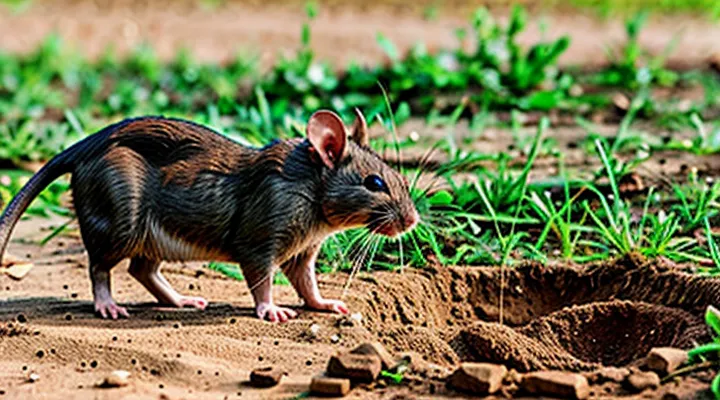
Why Rats Dig Burrows
Evolutionary Advantages of Burrows
Protection from Predators
Rodents that excavate subterranean passages create a primary barrier against predators. The depth, complexity, and concealment of these tunnels reduce the likelihood of detection by visual hunters and limit access for larger carnivores.
Burrow architecture contributes to safety through multiple mechanisms:
- Multiple entrance shafts enable rapid escape routes.
- Narrow tunnel diameters prevent entry of animals larger than the resident.
- Soil reinforcement with compacted walls resists collapse and hinders forced entry.
- Strategic placement of chambers away from surface vegetation limits exposure.
Behavioral adaptations complement structural defenses. Individuals maintain vigilance at entrance points, emit alarm calls when threats approach, and coordinate group movements to block openings with bodies or debris. Nighttime activity aligns with reduced predator visibility, further decreasing encounter rates.
Environmental factors enhance protection. Loose, well‑drained soils allow quick digging of escape tunnels, while proximity to dense root systems provides additional cover. Seasonal adjustments, such as deepening burrows before winter, counteract increased predator activity during colder months.
Thermal Regulation
Rats construct extensive underground networks that create a stable thermal environment distinct from surface conditions. Soil insulation reduces temperature fluctuations, maintaining a relatively constant temperature that aligns with the animal’s physiological optimum. This microclimate minimizes the energy required for thermogenesis during cold periods and prevents overheating when ambient temperatures rise.
Behavioral adjustments complement the physical properties of the burrow. Rats relocate to deeper chambers during winter, where temperatures remain near 10 °C, and shift toward shallower sections in summer to exploit cooler soil layers. Such spatial selection within the tunnel system allows rapid response to external thermal cues without leaving the protective shelter.
Physiological mechanisms support the thermal advantages of subterranean living:
- Increased brown adipose tissue activity for heat production when burrow temperatures dip below the set point.
- Vasoconstriction of peripheral blood vessels to conserve core heat during exposure to colder soil zones.
- Enhanced evaporative cooling via respiratory panting when occupying warmer tunnel sections.
Collectively, the architectural design of rat burrows, coupled with strategic positioning and innate physiological responses, provides an efficient framework for maintaining body temperature within a narrow, optimal range. This integration of environmental engineering and biological adaptation reduces metabolic cost and improves survival across seasonal temperature extremes.
Rearing Young
Rats construct extensive underground tunnel systems that serve as secure sites for raising offspring. The mother selects a deep chamber, often lined with dry vegetation, to provide insulation and protection from predators. Litters typically consist of five to twelve pups, born after a gestation period of about 21 days.
Key aspects of juvenile rearing include:
- Thermoregulation: The burrow’s stable temperature maintains pup body heat until fur development, reducing metabolic stress.
- Nutrition: The dam supplies milk rich in protein and fat; pups begin to ingest solid food, such as seeds and insects, around the third week.
- Hygiene: Mothers continuously remove waste and dead nest material, preventing bacterial growth and disease transmission.
- Social learning: Pup interaction within the confined space fosters hierarchy establishment and grooming behaviors essential for future colony cohesion.
- Weaning: By the fourth week, most young are fully weaned and start exploring peripheral tunnels, preparing for independent foraging.
Successful rearing relies on the burrow’s structural integrity, which the adult rats maintain through regular excavation and reinforcement. This combination of environmental control and parental investment ensures high juvenile survival rates within subterranean colonies.
Factors Influencing Burrowing Behavior
Soil Type and Composition
Rodents that excavate tunnels rely on soil that can be displaced without collapsing and that retains enough cohesion to support tunnel walls. Soil texture, structure, and chemical makeup determine whether a burrow remains intact or fails during construction.
Sandy soils consist mainly of coarse particles, drain quickly, and require minimal effort to move. Low cohesion leads to rapid tunnel collapse unless reinforced by compacted layers or root networks. Loamy soils combine sand, silt, and clay in roughly equal proportions; they offer moderate drainage, sufficient bite resistance, and enough plasticity to hold tunnel walls together. Clay-rich soils possess fine particles that bind tightly when moist, providing excellent structural support, but they become hard and resistant to digging when dry, increasing energetic costs for the animal. Silty soils fall between sand and clay, allowing relatively easy excavation while maintaining adequate cohesion under moderate moisture.
Soil composition further influences burrow stability:
- Mineral fraction – proportion of sand, silt, and clay controls particle size distribution and bulk density. Higher clay content raises shear strength; higher sand content reduces it.
- Organic matter – decomposed plant material improves aggregate formation, enhances moisture retention, and adds tensile strength to the matrix.
- Moisture content – water lubricates particles, lowering shear resistance during digging, yet excessive saturation reduces effective stress, promoting wall failure.
- pH and salinity – extreme values alter particle aggregation and affect the activity of soil biota that contribute to aggregate stability.
Optimal conditions for durable tunnels combine moderate moisture (≈10‑20 % by weight), balanced loam texture, and 3‑5 % organic matter. Under these parameters, rodents can excavate with reasonable energy expenditure while maintaining tunnel integrity for nesting and foraging activities.
Food Availability
Rodents that excavate subterranean tunnels depend on the spatial and temporal distribution of edible material to sustain colony growth. When nutritious seeds, tubers, or insects are abundant near the surface, individuals allocate less energy to deep digging and concentrate activity within shallow chambers. Conversely, scarcity forces expansion of tunnel networks toward deeper soil layers where root systems and hidden invertebrates reside.
Seasonal shifts in food supply trigger predictable modifications in burrow architecture. Summer abundance supports compact nests with limited ventilation shafts, while winter depletion prompts construction of longer foraging tunnels and additional storage chambers. These adjustments reduce exposure to predators and maintain thermal stability during periods of low intake.
Key relationships between food availability and burrowing behavior:
- Increased resource density → reduced excavation depth, higher colony density in surface zones.
- Decreased resource density → extended tunnel length, creation of peripheral foraging shafts.
- Persistent scarcity → development of dedicated storage chambers, reinforced structural support.
- Fluctuating supply → periodic remodeling of tunnel entrances to optimize access to new food patches.
Overall, the quantity and location of edible resources directly shape the spatial organization, energy expenditure, and structural complexity of underground habitats created by these mammals.
Presence of Water Sources
Rats locate burrow entrances near reliable water supplies to maintain hydration and support reproductive cycles. Access to moisture reduces the energetic cost of foraging, allowing individuals to allocate more energy to nest construction and offspring care.
Proximity to water influences burrow architecture. Systems built within a few meters of surface runoff or underground streams often feature shallower tunnels, increased ventilation shafts, and reinforced walls to prevent collapse from saturated soil.
The presence of water also determines colony density. Areas with permanent water sources host larger groups, leading to complex tunnel networks that facilitate efficient movement and resource distribution. Conversely, locations lacking water exhibit sparse, isolated burrows with limited expansion potential.
Key effects of water availability on rat burrowing:
- Shallow depth of tunnels to stay within moist soil layers.
- Enhanced structural stability through reinforced chambers.
- Higher population density and expanded network complexity.
- Reduced foraging distance, conserving energy for reproduction.
Understanding these relationships informs pest management strategies, habitat modification, and ecological impact assessments.
Characteristics of Rat Burrows
Burrow Design and Structure
Entrance and Exit Points
Rodents that excavate subterranean tunnels construct entrance and exit points with precise functional considerations. The primary opening typically aligns with the surface’s most stable soil layer, reducing collapse risk while allowing rapid emergence. Secondary exits are positioned to create alternative routes, enhancing escape capability when predators approach or when the main shaft becomes obstructed.
Key characteristics of these openings include:
- Depth variation: Main entrances often lie shallow enough for quick access but deep enough to avoid surface disturbances; secondary exits may be deeper, providing concealed escape routes.
- Orientation: Openings face away from prevailing winds to minimize sand and debris ingress, and they may be oriented toward vegetation that offers cover.
- Structural reinforcement: Soil compacted around the lip of each opening forms a natural lintel, preventing erosion and maintaining tunnel integrity.
- Ventilation: Openings serve as air exchange points, allowing oxygen inflow and carbon dioxide outflow, which stabilizes internal temperature and humidity.
- Sealing mechanisms: Rodents deposit compacted earth or plant material at the entrance margins, creating a barrier that deters predators while still permitting movement.
Multiple openings also facilitate foraging efficiency. By linking separate chambers to distinct surface points, individuals can access diverse food sources without traversing the entire tunnel network. Seasonal changes prompt rodents to modify entrance sizes; during wet periods, larger openings accommodate increased water flow, whereas in dry seasons, smaller apertures reduce moisture loss.
Overall, the design of entrance and exit points reflects an adaptive balance between accessibility, protection, and environmental regulation, ensuring the burrow system remains functional throughout varying conditions.
Tunnel Systems
Rats construct extensive tunnel networks that interconnect multiple chambers beneath the soil surface. These systems consist of primary shafts, lateral passages, and ancillary tunnels, each serving a specific function within the burrow complex.
The architecture typically includes:
- Main vertical shafts extending to stable moisture zones;
- Horizontal tunnels linking nesting chambers, food caches, and escape routes;
- Dedicated nesting chambers lined with soft material for breeding and rearing young;
- Storage chambers positioned away from the entrance to preserve collected seeds and insects;
- Ventilation shafts that maintain airflow and regulate temperature.
Structural design promotes efficient airflow, reducing carbon dioxide buildup and stabilizing humidity. Temperature gradients remain within a narrow range, providing a thermally buffered environment. Multiple exits enhance predator avoidance, allowing rapid displacement when threats approach. Social dynamics are reflected in tunnel branching patterns, with dominant individuals occupying central nodes while subordinate rats use peripheral passages.
Nest Chambers
Rodent burrows contain specialized sections called nest chambers, which serve as the primary site for resting, breeding, and offspring development. These chambers are typically situated near the deepest part of the tunnel system, providing thermal stability and protection from predators. Soil composition, moisture level, and ambient temperature influence chamber construction; compacted earth and fine sand are favored for their insulating properties.
Key characteristics of nest chambers include:
- Location – positioned at the lowest vertical point of the network to minimize temperature fluctuations.
- Structure – rounded or oval shape, lined with soft materials such as plant fibers, shredded bark, and gathered leaves.
- Size – varies with species and colony size; a single adult may require 0.02–0.05 m³, while breeding pairs expand the volume to accommodate litters.
- Ventilation – connected to adjacent tunnels that allow airflow while maintaining a sealed environment against external contaminants.
During the breeding season, females modify the chamber interior by adding additional bedding and creating separate compartments for each litter, reducing the risk of cannibalism and disease transmission. Food caches are often stored in peripheral niches adjacent to the main nest, enabling rapid access without leaving the protected zone.
Physiological benefits arise from the chamber’s microclimate: consistent temperature (approximately 15–20 °C for temperate species) and high humidity (60–80 %) lower metabolic costs for thermoregulation and maintain optimal conditions for neonatal growth. The structural integrity of the chamber, reinforced by compacted soil walls, resists collapse even under heavy rainfall or surface disturbance.
Overall, nest chambers represent a critical adaptation that enhances survival, reproductive success, and colony stability within subterranean environments.
Common Locations for Rat Burrows
Near Foundations of Buildings
Rats commonly excavate tunnels close to the footings of structures, exploiting the moist soil and shelter provided by the surrounding landscape. Their burrowing activity creates voids that can undermine the stability of concrete slabs, masonry walls, and steel reinforcement. When tunnels intersect foundation footings, load distribution shifts, leading to settlement, cracking, or even collapse under extreme conditions.
Key consequences of rat‑induced subsidence include:
- Formation of uneven settlement patterns that manifest as visible cracks in walls and floors.
- Accelerated corrosion of embedded steel due to increased moisture infiltration through burrow openings.
- Compromised waterproofing membranes, allowing water ingress and promoting mold growth.
Detection methods rely on both visual inspection and technical surveys. Indicators such as fresh soil mounds, gnaw marks on foundation materials, and localized depressions signal active burrows. Ground‑penetrating radar and infrared thermography provide non‑destructive means to map subterranean networks without disturbing the site.
Mitigation strategies involve a combination of exclusion, control, and repair:
- Install sealed barriers—metal flashing or concrete skirts—around the perimeter of the foundation to prevent entry.
- Employ bait stations and trapping devices to reduce the local rat population.
- Fill identified voids with flowing grout or expanding foam, ensuring complete contact with surrounding soil and structural elements.
- Reinforce affected footings using steel plates or additional concrete pours, calibrated to restore original load‑bearing capacity.
Regular monitoring after intervention is essential. Periodic inspections should verify the integrity of barriers, assess for new burrow activity, and confirm that repaired sections maintain structural performance. Prompt action minimizes long‑term damage and preserves the safety of the building.
Under Dense Vegetation
Rats construct underground tunnels beneath thick plant cover, where roots and litter provide structural support and concealment. The dense foliage creates a stable microclimate, maintaining humidity and temperature levels favorable for burrow integrity and foraging activity.
Key influences of heavy vegetation on rat burrowing include:
- Soil reinforcement by intertwined root systems, reducing collapse risk.
- Increased organic matter, softening soil and facilitating excavation.
- Concealment from predators, allowing entrance and exit points to remain hidden.
- Elevated moisture retention, preventing desiccation of tunnel walls.
These conditions enable rats to establish extensive networks that connect feeding sites and nesting chambers, enhancing colony resilience and reproductive success.
Along Riverbanks and Ditches
Rats frequently establish tunnel systems along riverbanks and ditches, where water proximity creates a favorable microenvironment for excavation. The soft, moist soils reduce resistance during digging, allowing rapid expansion of burrow networks.
Key factors that attract rodents to these locations include:
- Elevated humidity that maintains tunnel stability.
- Abundant organic debris and vegetation providing food sources.
- Natural cover that conceals entrances from predators.
Burrows in riparian zones typically feature shallow entry points, reinforced walls, and multiple chambers that accommodate nesting, food storage, and escape routes. Vertical shafts connect chambers to the surface, facilitating ventilation and drainage during periods of heavy rain.
The presence of these underground structures influences the surrounding ecosystem. Soil turnover enhances aeration and nutrient cycling, while the tunnels create pathways for other small fauna. Conversely, dense burrow clusters can increase the risk of pathogen transmission among rodent populations and raise the likelihood of human–wildlife conflict in agricultural settings.
Impact of Rat Burrows
Ecological Consequences
Soil Aeration and Drainage
Burrowing rodents excavate extensive tunnel networks that intersect the soil matrix, directly modifying its physical properties. The passage of air through these voids raises the concentration of oxygen in the root zone, while the open channels facilitate the movement of water away from saturated layers.
Tunnels act as conduits for both gas exchange and hydraulic flow. Air infiltrates from the surface, displaces stagnant gases, and restores equilibrium in deeper horizons. Water percolates along the same pathways, bypassing compacted strata and entering lower soil layers, which reduces surface runoff and limits ponding.
The resulting changes increase bulk porosity and decrease bulk density. Greater pore continuity improves root expansion, enhances microbial activity, and mitigates the formation of anaerobic pockets. Soil aggregates become less prone to collapse under load, preserving structural integrity.
Key effects of rodent burrowing on soil aeration and drainage:
- Elevated oxygen levels throughout the profile
- Accelerated infiltration rates
- Lowered water table proximity to the surface
- Reduced risk of compaction‑induced stress
- Improved conditions for plant root development
Understanding these dynamics informs land‑management practices that either harness natural burrowing to promote soil health or mitigate excessive disturbance where stability is required.
Impact on Local Flora
Burrowing rats modify soil structure by creating extensive tunnel networks that increase aeration and water infiltration. The resulting loose substrate promotes seed germination, especially for opportunistic species that require light and oxygen at the seed bank level.
The altered microenvironment produces several measurable effects on plant communities:
- Enhanced germination rates for annual herbs and pioneer grasses.
- Reduced root density of deep‑rooted perennials due to soil disturbance.
- Increased presence of invasive forbs that exploit disturbed ground.
- Higher nutrient turnover from organic matter mixed into the upper soil layers.
These changes shift competitive balances, often leading to a temporary rise in species richness followed by dominance of fast‑growing, disturbance‑tolerant plants. Long‑term vegetation patterns depend on the frequency of burrowing activity and the resilience of native flora.
Human-Related Problems
Damage to Infrastructure
Burrowing rodents create extensive tunnel networks that intersect with urban and rural utilities. Their activity compromises structural integrity, leading to costly repairs and service interruptions.
The primary forms of infrastructure damage include:
- Water and sewage pipelines: gnawed or displaced sections cause leaks, contamination, and loss of pressure.
- Electrical conduits and fiber-optic cables: exposed or severed lines result in outages and data loss.
- Roadways and sidewalks: collapsed surfaces create hazards and require frequent resurfacing.
- Building foundations: undermined support structures generate cracks, settlement, and potential collapse.
- Gas distribution lines: punctured or displaced pipes create safety risks and fire hazards.
Mitigation measures rely on regular inspection, reinforced pipe coatings, and physical barriers that prevent rodent entry into critical zones. Early detection reduces downtime and limits financial impact.
Agricultural Crop Damage
Burrowing rats create extensive tunnel systems that intersect cultivated fields. Their movements loosen soil, collapse seedbeds, and expose roots to environmental stress. Direct gnawing on stems and leaves further reduces plant vigor.
The principal ways these rodents damage crops include:
- Soil disturbance that impedes seed germination and root development.
- Consumption of young shoots, leaves, and fruit.
- Contamination of harvests with urine, feces, and hair, leading to market rejection.
- Increased susceptibility of plants to fungal and bacterial pathogens introduced through tunnel openings.
Economic losses arise from reduced yields, additional labor for field repair, and costs of pest‑control interventions. Damage assessments often reveal yield reductions of 10‑30 % in heavily infested areas, with higher percentages for high‑value vegetables and grains.
Effective management combines cultural, mechanical, and chemical measures. Practices such as deep plowing, removal of vegetation that shelters burrows, installation of underground barriers, and targeted baiting programs have demonstrated measurable reductions in rodent populations and associated crop loss. Continuous monitoring and timely response are essential to maintain crop productivity in regions where underground rat activity is prevalent.
Health Risks to Humans and Pets
Rodents that excavate underground tunnels often bring their burrows close to human dwellings and pet habitats, creating pathways for disease transmission and environmental contamination.
Health hazards associated with these burrows include:
- Bacterial infections: leptospirosis, salmonellosis, rat‑bite fever.
- Viral diseases: hantavirus, lymphocytic choriomeningitis virus.
- Parasitic infestations: fleas, mites, ticks, and internal worms that may transfer to humans or animals.
- Food and water contamination: urine, feces, and saliva introduce pathogens to stored provisions and drinking sources.
- Structural damage: tunnel collapse can cause injuries or expose occupants to sharp debris.
Pets face additional risks such as direct bites, exposure to the same pathogens, and heightened parasite loads, which can lead to secondary infections or severe illness.
Effective mitigation relies on sealing entry points, maintaining clean environments, employing professional rodent control, and ensuring pets receive regular veterinary preventive care.
Managing Rat Burrows
Identification of Active Burrows
Visual Cues
Rats rely on visual information to locate suitable digging sites and to navigate within their underground networks. Light gradients, shadow patterns, and surface vegetation indicate soil moisture and stability, helping rodents select areas where tunnel construction is feasible. When a rat approaches a potential entrance, the contrast between open sky and surrounding ground informs depth perception, allowing accurate assessment of the excavation angle.
Key visual cues influencing burrow formation include:
- Surface texture variation – smoother patches often correspond to compacted soil, which resists digging; rougher areas signal looser material.
- Vegetation density – dense grass or low shrubs create shaded zones that retain moisture, attracting rats seeking stable tunnel walls.
- Color differentials – darker soil patches may contain higher organic content, providing easier excavation and better structural integrity.
- Sunlight direction – the angle of incoming light reveals slope and elevation changes, guiding rats toward downhill sections where drainage improves tunnel longevity.
During tunnel expansion, rats monitor changes in illumination at tunnel termini. Increased light exposure signals proximity to the surface, prompting adjustments in tunnel direction to avoid premature emergence. Visual feedback from the tunnel ceiling, such as reflected light or visible cracks, assists in maintaining structural alignment and prevents collapse.
Overall, visual cues serve as immediate, reliable inputs that complement tactile and olfactory signals, enabling rats to efficiently select dig locations, orient themselves underground, and sustain functional burrow systems.
Tracking Methods
Tracking the subterranean activity of rats requires techniques that operate below the soil surface and capture the dynamics of tunnel construction.
Radio telemetry attaches miniature transmitters to individual rodents, allowing real‑time location data to be triangulated even when the animal is underground. Signal attenuation limits depth, but combined with surface antenna arrays it yields precise movement paths through burrow networks.
Passive integrated transponder (PIT) tags placed subcutaneously produce unique identifiers readable by handheld scanners or fixed antenna loops installed at tunnel entrances. This method records entry and exit events without visual observation.
Soil disturbance mapping employs high‑resolution ground‑penetrating radar (GPR) to detect changes in density and moisture associated with freshly excavated passages. Repeated scans generate three‑dimensional models of expanding burrow systems.
Acoustic monitoring stations, equipped with sensitive microphones, capture the characteristic sounds of digging and locomotion. Automated spectral analysis distinguishes rat activity from background noise and provides temporal activity patterns.
Tracer dyes introduced at known entry points seep through the tunnel network, staining soil and exposing hidden chambers when excavated. The visual trace confirms connectivity and directionality of the burrow layout.
Camera traps positioned at strategic surface openings record emergence and re‑entry events, supplementing other methods with direct visual confirmation of individual behavior.
Each technique offers distinct advantages: radio telemetry excels in continuous tracking, PIT tags provide definitive identification, GPR reveals structural development, acoustic sensors monitor activity cycles, tracer dyes map connectivity, and camera traps verify surface interactions. Selecting a combination tailored to research objectives maximizes data reliability on rat burrowing behavior.
Methods for Burrow Control
Trapping Techniques
Rodents that excavate subterranean tunnels cause structural damage, contaminate food stores, and spread disease. Effective control depends on intercepting individuals within their burrow systems before populations expand.
Live-catch devices combine a tunnel entry with a trigger mechanism that closes a door when the animal passes. Placement at active tunnel openings maximizes capture rates. Bait such as grain, peanut butter, or commercial rodent attractants should be secured to the trigger plate to ensure immediate engagement.
Snap traps positioned along established runways deliver rapid lethal action. Metal spring traps equipped with a weighted trigger plate respond to the animal’s weight, closing a steel bar onto the neck. To increase success, align traps perpendicular to the burrow entrance and use a small amount of scent-strong bait.
Glue boards placed at tunnel junctions immobilize rodents without killing them instantly. The adhesive surface must be renewed regularly; otherwise, escaped individuals may suffer injury and become wary of the trap.
Electronic devices emit a high‑frequency pulse when the rodent contacts a sensor plate, delivering a fatal voltage shock. These units require a power source and periodic cleaning of the sensor surface to prevent false triggers.
Integrated pest‑management programs combine these methods with habitat modification. Removing debris, sealing cracks, and reducing food sources diminish the attractiveness of burrow sites, enhancing trap efficacy and reducing reinfestation.
Baiting Strategies
Effective baiting against subterranean rodents requires precise selection, strategic placement, and systematic evaluation.
Choosing an appropriate attractant hinges on species‑specific dietary preferences. Grain‑based baits, such as millet or wheat, appeal to granivorous populations, while protein‑rich formulations—cooked fish, meat scraps, or commercial rodent blocks—target omnivorous individuals. Adding a modest amount of oil or peanut butter enhances palatability and prolongs exposure time.
Placement determines accessibility and reduces non‑target interference. Recommended practices include:
- Inserting bait stations directly into active tunnel openings, positioned 5–10 cm below the surface to match the depth of burrow entrances.
- Securing stations with weighted covers that allow rodent entry but deter larger mammals and birds.
- Distributing stations at intervals of 2–3 m along identified runways to ensure coverage of the entire colony.
Timing influences success rates. Deploy baits during periods of heightened foraging activity—dusk and early morning—when rodents emerge from nests. Maintain bait freshness by rotating stock every 48 hours, preventing desiccation and loss of potency.
Safety considerations demand strict adherence to pesticide regulations. Use anticoagulant or neurotoxic agents only in approved concentrations, and label each station with hazard warnings. Record the exact location, bait type, and dosage in a field log to facilitate traceability and post‑application assessment.
Monitoring involves regular inspection of stations for consumption evidence and signs of mortality. Replace depleted baits promptly and document any non‑target captures for corrective action. Continuous data collection enables adjustment of bait composition and density, optimizing control efficacy over successive cycles.
Exclusion and Prevention
Rats construct extensive underground networks that undermine foundations, irrigation systems, and crop roots. Their ability to penetrate soil and create hidden passages makes early intervention essential for property protection.
Effective exclusion relies on eliminating access points and creating physical obstacles. Recommended actions include:
- Install steel mesh or hardware cloth (minimum ¼‑inch gauge) around building footings, utility openings, and vent chutes.
- Apply cement‑based sealants to cracks, gaps, and joints larger than ¼ inch.
- Place concrete curbs or buried metal flashing at the perimeter of structures to deter burrowing.
- Remove dense ground cover and prune vegetation within a two‑meter radius of foundations to reduce concealment.
Prevention focuses on reducing attractants and monitoring activity. Key measures are:
- Store waste in sealed containers; eliminate spillage of food residues.
- Maintain dry conditions by fixing leaks, improving drainage, and using dehumidifiers in basements.
- Deploy motion‑activated traps or underground monitoring probes to detect early signs of tunneling.
- Rotate compost piles and keep them covered to deny nourishment sources.
Combining barrier installation with diligent site management interrupts the development of subterranean passages and limits rat populations before they become entrenched.