
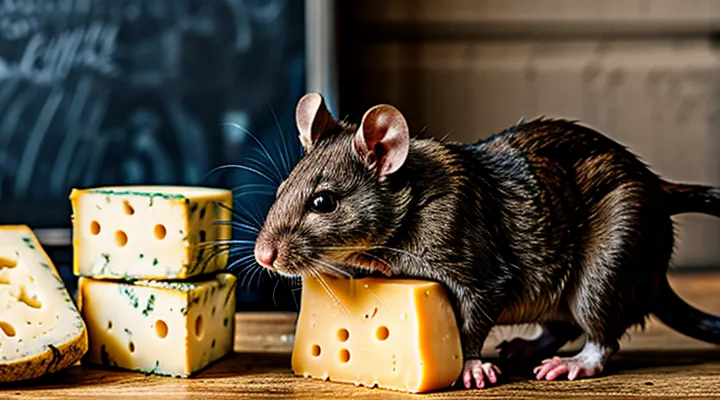
Introduction to Rodent Diets
The Omnivorous Nature of Rats
Rats possess a flexible diet that includes both plant and animal matter. Their digestive system processes grains, fruits, insects, carrion, and even small vertebrates, allowing them to thrive in diverse habitats.
Key components of a typical rat diet:
- Seeds, nuts, and cereals
- Fresh fruits and vegetables
- Invertebrates such as beetles and worms
- Dead animals and meat scraps
- Human‑derived waste, including dairy products
The capacity to consume dairy does not imply a preference for cheese; rather, rats exploit any high‑energy resource available. Laboratory studies show that when presented with cheese alongside other foods, rats select cheese only when it offers comparable caloric value. Consequently, the myth that rats are attracted exclusively to cheese oversimplifies their opportunistic feeding behavior.
Common Food Sources in Wild Environments
Rats thriving in natural habitats rely on a limited set of readily available foods. Their diet reflects the abundance of plant matter, animal protein, and opportunistic resources found outside human settlements.
- Seeds from grasses and herbaceous plants
- Nuts and acorns from deciduous trees
- Berries, fruits, and tubers during growing seasons
- Insects, larvae, and other arthropods providing protein
- Small vertebrate carcasses and carrion
- Fungi, including mushroom caps and mycelial mats
- Organic refuse such as discarded fruit skins or grain husks
Seasonal shifts dictate the prominence of each item. Spring and early summer favor seeds and fresh vegetation; autumn introduces nuts and fallen fruit; winter forces reliance on stored seeds, fungi, and carrion. Protein intake peaks when insect populations surge, while drought periods increase consumption of dry seeds and detritus.
The prevalence of cheese in popular narratives does not align with observed foraging patterns. Natural environments lack dairy products; rodents obtain calcium and fat from bone fragments, shellfish, and certain seeds instead. Consequently, myths linking cheese to wild rat diets overlook the ecological reality of available nutrients.
The Myth of Cheese
Origins of the «Rats Love Cheese» Stereotype
Cultural Influences
Rats and cheese have been paired in storytelling across centuries, creating a recognizable motif that shapes public perception of both animals and dairy products. The association originates in medieval folklore, where rodents were depicted as cheese thieves, reinforcing a narrative of cunning pests invading food stores.
Historical records cite several recurring myths:
- Rats stealing cheese from granaries during famine periods.
- Cheese serving as bait in traps designed to control rodent populations.
- The belief that cheese emits a scent that attracts rats more than other foods.
Literary works and visual media perpetuate these ideas. Fables, cartoons, and advertisements frequently portray a mouse or rat eyeing a wedge of cheese, reinforcing the image of cheese as a universal lure for rodents. This visual shorthand simplifies complex ecological relationships into a single, memorable scene.
Culinary traditions sometimes exploit the motif for marketing. Cheese producers reference the legend in branding, using imagery of a small rodent to suggest authenticity or traditional craftsmanship. Conversely, pest‑control campaigns employ the same imagery to emphasize the necessity of protection against rodent damage.
Cultural variations modify the theme. In East Asian folklore, rats are occasionally celebrated as symbols of prosperity, and cheese is less central, while in European tales the cheese‑stealing rat remains dominant. These differences illustrate how local values reshape a shared narrative.
Overall, the persistent link between rodents and dairy products demonstrates how myth, commerce, and regional belief systems interact to maintain a stable cultural construct.
Historical Context
Rats have been linked to cheese in cultural narratives for millennia, yet the connection originates in specific historical circumstances rather than universal behavior. In ancient Egypt, grain stores attracted commensal rodents, and depictions of mice and cheese appear on tomb reliefs, indicating early recognition of the association. Medieval European chronicles describe rats infiltrating cheese wheels during long winter storage, reinforcing the image of rodents as cheese thieves. The industrial revolution intensified the link: mass‑produced cheese required large, temperature‑controlled cellars, environments that also supported rodent populations, leading to widespread pest‑control measures documented in 19th‑century trade manuals.
Key developments that shaped the perception include:
- Agricultural surplus – storage of dairy and grain created habitats conducive to rodent proliferation.
- Urban sanitation – 19th‑century public health campaigns targeted rats as disease vectors, indirectly emphasizing their proximity to foodstuffs such as cheese.
- Scientific observation – early zoological studies noted that rats prefer protein‑rich diets, yet experiments consistently show a preference for meat or grain over cheese, contradicting popular belief.
The myth of rats seeking cheese persists because literary works and folklore repeatedly exploited the image for humor and moral lessons. Historical evidence, however, demonstrates that the association emerged from practical storage challenges and later was amplified by cultural storytelling rather than by innate dietary preference.
Scientific Evidence and Rat Preferences
Preferred Food Types for Rats
Rats exhibit distinct dietary preferences that influence their interaction with dairy products. Laboratory observations and field studies consistently show a hierarchy of preferred foods, with certain categories providing both nutritional value and sensory appeal.
- Fresh grains (wheat, barley, oats) – high carbohydrate content, easy to gnaw.
- Protein sources (hard‑boiled eggs, cooked meat, insect larvae) – support growth and reproductive health.
- Nuts and seeds (peanuts, sunflower seeds, pumpkin kernels) – rich in fats and minerals.
- Fruit and vegetables (apple slices, carrot sticks, leafy greens) – supply vitamins and hydration.
- Cheese varieties (mild cheddar, soft mozzarella) – favored for texture and salt, but consumed less frequently than the items above.
When cheese is presented alongside these alternatives, rats typically select it only after exhausting higher‑ranked options. This pattern underscores the myth that cheese is a primary attractant; in reality, it ranks lower in the rat’s preference hierarchy.
Nutritional Value of Cheese for Rats
Cheese is frequently offered to laboratory and pet rats, yet its composition influences health outcomes.
Rats obtain protein, fat, calcium, and vitamin A from cheese, while lactose and sodium present potential challenges.
- Protein: 25 g per 100 g, providing essential amino acids for tissue growth.
- Fat: 33 g per 100 g, supplying dense energy; excessive intake accelerates weight gain.
- Calcium: 800 mg per 100 g, supporting skeletal development and enamel formation.
- Vitamin A: 300 IU per 100 g, aiding vision and immune function.
- Lactose: 2–3 g per 100 g, tolerable for most rats but may cause digestive upset in lactose‑sensitive individuals.
- Sodium: 400 mg per 100 g, excessive levels can strain renal function.
Balanced inclusion of cheese can augment protein and calcium intake, but high fat and sodium levels require strict portion control. Low‑salt, reduced‑fat varieties minimize adverse effects while preserving nutrient benefits.
Guidelines: limit cheese to no more than 5 g per 100 g body weight per week; monitor body condition and stool consistency; prioritize fresh, unprocessed cheese over flavored or processed types. These practices ensure cheese contributes positively to rat nutrition without compromising health.
Why Rats Might Avoid Cheese
Strong Odors and Neophobia
Strong odors significantly influence rodent feeding decisions. Laboratory studies show that volatile compounds released by aged cheese trigger olfactory receptors in rats, leading to heightened exploratory behavior toward the source. Conversely, pungent chemicals such as ammonia or strong spices suppress approach, causing immediate retreat.
Neophobia, the reluctance to consume unfamiliar items, interacts closely with odor perception. When presented with a novel cheese variety, rats exhibit a latency period before sampling; the duration shortens if the scent resembles familiar dairy aromas. If the odor is markedly different or unpleasant, the neophobic response intensifies, often resulting in complete avoidance.
Key observations:
- Odor intensity: Higher concentration of familiar cheese volatiles reduces neophobic latency by up to 40 % in controlled trials.
- Odor composition: Presence of short‑chain fatty acids (e.g., butyric acid) enhances acceptance, while sulfur‑rich compounds increase rejection rates.
- Learning effect: Repeated exposure to a consistent strong odor diminishes neophobia, indicating associative learning rather than innate preference.
- Species variation: Norway rats (Rattus norvegicus) display stronger odor‑driven acceptance than roof rats (Rattus rattus), reflecting ecological differences in foraging habitats.
These findings clarify misconceptions about rodents indiscriminately preferring cheese. Acceptance hinges on odor familiarity and the degree of neophobic inhibition, demonstrating that strong scents can both attract and repel depending on their chemical profile.
Lactose Intolerance in Rodents
Rats possess the enzyme lactase primarily during the neonatal period; production declines sharply after weaning, rendering most adult individuals unable to digest lactose efficiently. Genetic analyses confirm that the lactase‑phlorizin hydrolase (LPH) gene in rodents is down‑regulated post‑weaning, mirroring the pattern observed in many non‑human mammals.
When lactose reaches the colon undigested, bacterial fermentation produces short‑chain fatty acids and gases, leading to:
- abdominal distension
- diarrhea
- reduced nutrient absorption
Experimental data indicate that even modest lactose concentrations (2–4 % of diet) trigger these symptoms in adult rats, whereas suckling pups tolerate higher levels without adverse effects.
Practical implications for laboratory and pet care include:
- Excluding dairy products from standard rodent chow unless the formulation contains pre‑hydrolyzed lactose.
- Monitoring gastrointestinal health when using cheese‑based bait in behavioral studies, as intolerance may confound results.
- Selecting lactase‑supplemented feed for specific experiments that require lactose as a carbohydrate source.
Understanding the limited lactase capacity of mature rodents prevents misinterpretation of feeding trials and supports humane husbandry practices.
Real Dangers of Feeding Cheese to Rats
Health Implications of High-Fat Foods
The popular narrative that rodents are irresistibly drawn to cheese often masks the genuine health consequences of diets rich in fat. High‑fat foods influence the body through measurable biochemical pathways, independent of any folklore.
- Elevated low‑density lipoprotein (LDL) concentrations predict arterial plaque formation.
- Excess caloric density promotes adipose tissue expansion, increasing body‑mass index and obesity risk.
- Saturated and trans fatty acids impair insulin signaling, accelerating the onset of type 2 diabetes.
- Chronic consumption raises systemic inflammation markers, contributing to cardiovascular events and certain cancers.
Saturated fats saturate cell membranes, reducing fluidity and disrupting receptor function. Trans fats generate oxidative stress, damaging endothelial cells and accelerating atherogenesis. Unsaturated fats, particularly omega‑3 fatty acids, counterbalance these effects by enhancing lipid profiles and attenuating inflammatory responses.
Dietary guidelines recommend limiting saturated fat to less than 10 % of total energy intake, substituting with monounsaturated and polyunsaturated sources such as olive oil, nuts, and fatty fish. Monitoring portion sizes and prioritizing whole‑food sources mitigate the adverse outcomes associated with high‑fat consumption.
Potential for Digestive Issues
Cheese contains lactose, saturated fat, and protein levels that can exceed the digestive capacity of many rodents. Lactose intolerance is common among laboratory‑bred rats; undigested lactose draws water into the intestinal lumen, producing loose stools and dehydration risk. High‑fat varieties increase bile secretion, which may overwhelm the small intestine and trigger abdominal cramping.
- Lactose intolerance → osmotic diarrhea, electrolyte loss
- Excess fat → bile‑acid irritation, abdominal pain
- Protein overload → delayed gastric emptying, reduced nutrient absorption
- Salt‑rich cheeses → electrolyte imbalance, heightened thirst
Myths suggesting that cheese is a primary attractant for rats overlook these physiological limits. While aromatic compounds entice brief investigation, sustained consumption often results in self‑regulation, as rats avoid foods that cause discomfort. Observational studies show reduced intake after initial exposure to rich cheeses, supporting a natural aversion to digestive distress.
Management strategies focus on limiting exposure and selecting low‑lactose options. Offering cheese in quantities below 1 g per 100 g body weight minimizes osmotic effects. Fermented cheeses with reduced lactose content further lower risk. Monitoring fecal consistency provides immediate feedback on tolerability, allowing rapid adjustment of diet.
Effective Rodent Control Strategies
Best Baits for Trapping Rats
Peanut Butter
Peanut butter frequently appears in studies of rodent foraging because its strong aroma and high fat content attract rats similarly to cheese, yet the attraction stems from different sensory cues. Laboratory experiments show that rats detect the volatile compounds of roasted peanuts more rapidly than dairy-derived odors, leading to quicker approach behavior. Nutritional analyses confirm that peanut butter provides protein, essential fatty acids, and micronutrients that can supplement a rat’s diet when natural food sources are scarce.
Confirmed facts
- Rats locate peanut butter through olfactory receptors tuned to aromatic aldehydes and Maillard reaction products.
- Consumption of small amounts does not cause immediate health issues; the caloric density may contribute to weight gain if access is unrestricted.
- Peanut butter can be used as a bait in pest‑control traps, offering a reliable alternative to traditional cheese‑based attractants.
Common misconceptions
- Peanut butter is a natural food for wild rats.
- Its sugar content exceeds that of cheese, making it more hazardous.
- Rats prefer peanut butter over all other foods in every environment.
Scientific reviews refute these points: wild rats typically encounter peanuts only in human‑derived waste, and the sugar level varies widely among commercial brands. Preference tests reveal that individual rats may favor cheese, peanut butter, or grain depending on previous exposure and nutritional status. Consequently, peanut butter serves as a useful experimental tool and bait, but it does not replace the ecological role of traditional dairy products in rat foraging behavior.
Grains and Seeds
Grains and seeds constitute a significant portion of the rodent diet, influencing both health and foraging behavior. Unlike the exaggerated focus on dairy products, research shows that wild and laboratory rats regularly consume cereals such as wheat, barley, and oats, as well as oilseeds like sunflower and flax. These foods provide carbohydrates, essential fatty acids, and protein that support growth, reproduction, and cognitive function.
Typical grain and seed items found in rat habitats include:
- Wheat kernels
- Barley grains
- Oat flakes
- Corn kernels
- Sunflower seeds
- Flax seeds
- Millet
The nutritional profile of these items explains several observed patterns. High carbohydrate content supplies rapid energy for nocturnal activity, while fiber aids digestive efficiency. Fatty acids from seeds improve coat condition and immune response. Consequently, dietary preferences shift toward grains when cheese is scarce, contradicting popular myths that portray cheese as the primary attractant for rodents.
Preventing Rat Infestations
Proper Food Storage
Rats are often depicted as cheese‑loving pests, yet the presence of rodents around dairy products is largely a result of improper storage. Secure handling of cheese eliminates food sources that attract infestations and preserves quality.
Refrigeration at 34–38 °F (1–3 °C) slows bacterial growth and reduces odor emission that lures rodents. Freezing below 0 °F (‑18 °C) is suitable for long‑term preservation, provided the cheese is wrapped to prevent freezer burn.
airtight containers made of plastic, glass, or metal block access and contain moisture. Wrap cheese in parchment or wax paper before placing it in a sealed vessel to maintain texture and limit scent diffusion.
Store cheese away from walls, floors, and waste receptacles. Keep storage areas clean, inspect for gaps, and seal entry points with steel wool or caulk.
Key practices for rodent‑proof cheese storage
- Maintain consistent refrigeration temperature.
- Use double‑layer packaging: paper wrap plus sealed container.
- Position cheese on elevated shelves, at least six inches from the floor.
- Conduct weekly inspections for signs of gnawing or droppings.
- Replace damaged seals immediately; discard compromised cheese.
Adhering to these measures prevents rodent attraction, safeguards food safety, and upholds the integrity of dairy products.
Sealing Entry Points
Rodents enter storage areas through openings as small as a quarter‑inch, allowing them to reach cheese and other products. Eliminating these pathways removes the most direct route for infestation.
Typical entry points include:
- Gaps around doors and windows
- Cracks in walls, floors, and foundations
- Openings around pipes, cables, and vent ducts
- Unsealed utility penetrations
- Damaged or missing weather‑stripping
Effective sealing follows a systematic process:
- Conduct a thorough inspection to locate all potential gaps.
- Choose appropriate materials—steel wool, copper mesh, silicone sealant, or expandable foam—based on size and exposure.
- Apply the chosen filler, ensuring complete coverage and a tight bond.
- Install reinforced barriers such as metal flashing or hardware cloth where movement or pressure is expected.
- Schedule regular visual checks to verify integrity and repair any new damage promptly.
Consistent sealing prevents rodents from reaching cheese, reduces contamination risk, and supports overall sanitation standards.
Understanding Rat Behavior
Sensory Perception and Food Detection
Rats locate edible items through a highly developed sensory system that integrates chemical, tactile, auditory, and visual cues. Their olfactory receptors can detect volatile compounds at concentrations far below human thresholds, allowing rapid identification of nutrient-rich sources. Gustatory papillae on the tongue discriminate between sweet, salty, sour, bitter, and umami tastes, guiding acceptance or rejection of potential food. Whisker follicles provide precise spatial mapping of surfaces, while low-frequency hearing alerts to movement of hidden prey or stored provisions. Vision, though limited in color discrimination, contributes to motion detection and navigation in low-light environments.
Key sensory modalities involved in food detection:
- Olfaction: detection of fatty acids, amino acids, and fermentation by‑products; primary driver of foraging decisions.
- Gustation: evaluation of nutrient content after initial contact; influences immediate consumption.
- Tactile (whiskers): assessment of texture and shape; aids in distinguishing solid objects from debris.
- Auditory: perception of subtle rustling or vibrations indicating concealed food sources.
- Visual: detection of movement and contrast; supports orientation and escape responses.
Popular belief holds that rats are irresistibly drawn to cheese, yet empirical studies show a modest preference compared with high‑fat seeds, grains, and sugary substances. Cheese offers protein and fat, but its strong odor is less attractive than that of fermenting grains. Consequently, the myth of an innate cheese obsession overshadows the broader reality: rats prioritize caloric density and ease of access, employing their multimodal sensory apparatus to locate any nutritionally advantageous item.
Adaptive Feeding Habits
Rats exhibit flexible feeding strategies that enable survival in environments where cheese is either abundant or scarce. Their dentition continuously grows, allowing them to gnaw through hard substances, including aged cheeses, without damaging teeth. The ability to metabolize lactose varies among populations; some urban rats possess gut bacteria capable of breaking down dairy sugars, while others rely on alternative carbohydrate sources.
Key adaptive mechanisms include:
- Dental adaptation: Ever‑growing incisors paired with strong jaw muscles facilitate consumption of a wide range of textures.
- Digestive flexibility: Microbial communities in the gut shift in response to dietary exposure, enhancing lactose digestion when dairy is regularly encountered.
- Behavioral opportunism: Rats assess food availability through olfactory cues, prioritizing high‑energy items such as cheese when present, but readily switching to grains, fruits, or waste when necessary.
- Seasonal modulation: During colder months, increased fat storage from calorie‑dense foods like cheese supports thermoregulation and reproductive cycles.
Empirical studies demonstrate that the myth of rats exclusively seeking cheese is oversimplified. Field observations reveal a preference hierarchy driven by nutrient density rather than species‑specific cravings. Consequently, adaptive feeding habits reflect a pragmatic response to fluctuating resources, allowing rats to thrive across diverse habitats.