
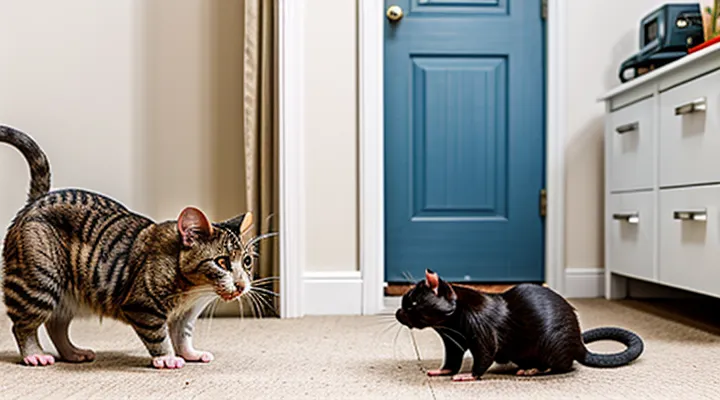
Understanding the Natural Dynamics
Predator and Prey Instincts
Cat’s Hunting Behavior
Cats rely on a series of instinctive actions when confronting rodents in a domestic setting. The process begins with sensory detection: whiskers sense air currents, ears capture high‑frequency squeaks, and eyes perceive rapid movement in low light. Once a potential prey is identified, the cat enters a stalking phase, lowering its body, moving silently, and aligning its trajectory to the target’s escape routes.
The attack sequence follows a predictable pattern:
- Crouch: Muscles contract, tail remains steady, weight shifts onto the fore‑legs.
- Pounce: Hind‑leg thrust propels the cat forward, claw extension timed to contact the prey.
- Capture: Front paws clamp around the rodent’s torso, immobilizing it.
- Kill bite: A bite to the neck or base of the skull delivers rapid incapacitation.
Variations in hunting efficiency arise from breed characteristics, age, and prior exposure to rodents. High‑energy breeds such as Bengal or Abyssinian exhibit longer pursuit distances, while senior cats may rely more on ambush tactics near known rodent pathways. Indoor‑only cats often retain the predatory sequence but may lack the experience to secure a kill, resulting in “play” attacks that leave the rodent unharmed.
From a household management perspective, a cat’s hunting behavior can reduce rodent populations, yet uncontrolled predation may produce unwanted messes or expose the cat to disease. Owners can channel instincts by providing enrichment that mimics hunting—interactive toys, feather wands, and puzzle feeders—thereby decreasing the likelihood of accidental indoor attacks on non‑target animals.
Effective coexistence requires monitoring: observe the cat’s response to rodent sightings, ensure vaccinations are current, and keep food sources inaccessible to both species. When a cat consistently captures rats, regular cleaning of the capture area and safe disposal of carcasses prevent secondary health risks.
Rat’s Evasion Strategies
Rats have evolved a suite of behaviors that reduce the likelihood of detection and capture by domestic felines. These tactics focus on minimizing visual, auditory, and olfactory cues while exploiting structural features of human dwellings.
- Nocturnal activity: Rats concentrate foraging and movement during the darkest hours, when cats’ visual acuity diminishes.
- Silent locomotion: Pad-to-pad contact and low‑frequency footfalls limit sound production, preventing cats from locating prey through auditory cues.
- Scent suppression: Frequent grooming and the use of soiled nesting material dilute individual odor signatures, hindering a cat’s ability to track rats by smell.
- Utilization of narrow passages: Rats navigate gaps and conduits smaller than a cat’s body width, such as wall voids, pipe interiors, and furniture crevices, creating escape routes inaccessible to larger predators.
- Burrowing and nesting depth: Construction of deep, layered nests within insulation or under flooring adds physical barriers that cats cannot breach without assistance.
- Rapid directional changes: Erratic zigzag patterns and sudden reversals disrupt a cat’s pursuit trajectory, increasing the chance of evasion.
These strategies collectively diminish a cat’s hunting success within residential environments, compelling felines to rely on heightened vigilance, extended stalking periods, and occasional use of elevated perches to compensate for the rat’s concealment tactics.
Potential Scenarios of Interaction
Direct Encounters
Aggressive Confrontations
Aggressive encounters between domestic felines and rodents arise when a cat perceives a rat as prey or a threat to its territory. The cat’s predatory instinct triggers rapid pursuit, high‑frequency vocalizations, and clawing, while the rat responds with defensive biting, rapid retreats, and aggressive lunges aimed at the cat’s face and limbs. Both species display heightened physiological arousal: elevated heart rate, increased cortisol, and adrenaline release, which intensify the conflict and can result in injuries to either animal.
Typical signs of an escalating confrontation include:
- Cat’s low, crouched posture and focused stare.
- Rat’s flattened body, raised fur, and rapid side‑to‑side movement.
- Audible hissing or growling from the cat, accompanied by squeaking or chattering from the rat.
- Physical contact such as claw swipes, bite attempts, or body pushes.
Consequences of repeated aggression may involve:
- Lacerations, puncture wounds, and bruising on the cat.
- Bite wounds, ear or tail loss, and stress‑induced immunosuppression in the rat.
- Persistent fear responses that alter normal feeding and grooming behaviors for both animals.
Mitigation strategies:
- Separate feeding stations and hideouts to limit direct access.
- Provide elevated perches for the cat and secure burrow‑like shelters for the rat, reducing proximity.
- Employ scent‑based deterrents (e.g., citrus or menthol) near rat pathways, avoiding areas frequented by the cat.
- Supervise initial introductions, intervening at the first sign of aggressive posturing.
- Conduct regular health checks to treat injuries promptly and monitor stress indicators.
Implementing these measures reduces the likelihood of harmful clashes while preserving the coexistence of both species within the household environment.
Playful Engagements
In many households, rats and cats encounter one another, producing a distinct pattern of playful interaction. The exchange typically involves brief chases, gentle pounces, and mock wrestling, each animal displaying instinctual movements while remaining within safe limits.
Rats respond with rapid darting, tail flicks, and occasional squeaks that signal curiosity rather than fear. Cats counter with low‑frequency growls, measured swats, and controlled stalking that avoids lethal force. Both species benefit from the activity: muscular coordination improves, stress levels decline, and environmental enrichment increases.
Safety depends on supervision, spatial separation when tension rises, and clear escape routes for the rodent. Preventing injury requires observation of body language; signs such as flattened ears, rigid posture, or persistent biting indicate escalation beyond play.
Guidelines for facilitating constructive engagement:
- Introduce animals in a neutral, clutter‑free area.
- Keep the rat in a secure carrier or enclosure for the initial encounter.
- Allow the cat to observe from a short distance, rewarding calm behavior.
- Gradually reduce the barrier while monitoring vocalizations and movement.
- End the session if either animal exhibits prolonged aggression or stress signals.
Consistent application of these steps creates a controlled environment where playful exchanges enhance the well‑being of both pets without compromising safety.
Indirect Interactions
Scent Marking and Territoriality
Scent marking provides the primary chemical communication channel for both rodents and felines sharing a household. The signals convey individual identity, reproductive status, and spatial boundaries, shaping how each species occupies the environment.
Rats deposit urine and glandular secretions along preferred routes, nest entrances, and feeding zones. These deposits create a chemical map that other rats read to avoid intrusion and to locate resources. The same markings are detectable by cats, alerting them to the presence of potential prey and influencing their movement patterns.
Cats employ urine spraying, facial rubbing, and claw marks to broadcast ownership of specific areas. The pheromonal profile of feline scent discourages intruders, including rats, from entering marked zones. Cats also use scent to reinforce hierarchical status within the shared space.
Interaction between the two scent systems generates a dynamic territorial overlay. Rat‑derived odors can repel cats from certain corners, while feline markings may force rats to relocate to less contested zones. The resulting spatial segregation reduces direct encounters but can lead to heightened alertness and stress for both parties.
Practical considerations for caretakers:
- Maintain regular cleaning of urine‑stained surfaces to prevent persistent chemical cues.
- Provide separate feeding stations to limit overlap of scent territories.
- Use scent‑free bedding materials to reduce inadvertent marking.
- Monitor for excessive marking behavior, which may indicate territorial disputes or stress.
Resource Competition
Rats and domestic cats frequently encounter each other while seeking food, water, shelter, and nesting sites inside residential spaces. Competition for these limited resources shapes their spatial distribution, activity patterns, and survival rates.
Food availability drives direct encounters. Both species exploit human‑derived waste, pet food, and stored grains. When supply dwindles, cats increase hunting pressure on rats, while rats expand their foraging range to include hidden caches and elevated surfaces previously avoided due to feline presence. This reciprocal pressure can lead to temporal segregation, with rats shifting activity to nocturnal periods when cats are less active.
Water sources, such as pet water bowls or leaking pipes, represent another contested commodity. Cats often dominate accessible containers, forcing rats to rely on condensation or low‑profile drips. Limited water access reduces rat reproductive output, influencing population dynamics within the household.
Shelter competition involves nesting in wall voids, attic spaces, and under appliances. Cats prefer elevated perches and closed compartments, whereas rats favor concealed, warm cavities. Overlap in preferred microhabitats can trigger aggressive encounters, prompting either species to relocate.
Key resources contested by rats and cats:
- Food (trash, pet kibble, stored grains)
- Water (pet bowls, leaks, condensation)
- Shelter (wall voids, attics, under appliances)
- Nesting material (fabric scraps, insulation)
Outcome of resource competition varies with environmental density, human management practices, and species adaptability. Reducing accessible food waste, sealing entry points, and providing dedicated feeding stations for cats diminish direct conflict and lower the likelihood of rat persistence in the home.
Managing the Relationship in a Shared Environment
Safety Measures for Both Animals
Providing Separate Spaces
Providing separate spaces reduces stress for both rodents and felines and prevents accidental injuries. Designate distinct zones for food, water, and bedding to eliminate competition. Use sturdy containers or cages for rats, positioned on a high shelf or in a room inaccessible to the cat. Ensure the cat’s litter box and feeding area are located away from any rodent equipment.
Key considerations for effective segregation:
- Physical barriers: Install solid doors, mesh panels, or baby gates that the cat cannot breach but allow ventilation for the rodents.
- Vertical separation: Place rat habitats on elevated surfaces or within closed cabinets; cats cannot reach these heights without assistance.
- Scheduled access: Allow supervised interaction only during controlled sessions, keeping both animals confined to their respective areas before and after.
- Cleaning protocols: Clean rodent enclosures before entering the cat’s space and vice versa to avoid cross‑contamination of scents and pathogens.
- Escape prevention: Check cages for gaps, loose latches, or chewable components that a cat could exploit.
Monitoring the layout regularly ensures that barriers remain intact and that each species retains a stress‑free environment. Adjust placement of toys, hideaways, and feeding stations as needed to maintain clear boundaries.
Supervised Interactions
Supervised interactions between household rodents and felines require careful planning to prevent injury and reduce stress for both animals. Begin by securing a dedicated enclosure for the rat that allows clear visibility but prevents escape. The enclosure should have solid walls, a secure lid, and ventilation that does not expose the cat to direct contact.
Introduce the cat to the enclosure from a distance, observing its reaction for signs of predatory focus such as intense stare or rapid tail movement. If the cat remains calm, gradually reduce the distance over several sessions, always keeping the barrier intact. Limit each exposure to five minutes, extending the duration only when both animals display relaxed body language.
Maintain a neutral environment by removing food, toys, or bedding that could attract the cat’s attention toward the rat’s space. Provide the cat with alternative stimulation—interactive toys, scratching posts, or puzzle feeders—to divert its hunting instinct during the supervised period.
Record observations after each session: note any vocalizations, attempts to breach the barrier, or signs of fear in the rat. Use this data to adjust the frequency and length of interactions. If aggressive behavior persists, discontinue direct exposure and consult a veterinary behavior specialist.
A structured routine enhances predictability for both pets. Recommended schedule:
- Day 1–3: Visual contact only, barrier intact, 3‑minute sessions.
- Day 4–7: Reduced distance, 5‑minute sessions, introduce gentle verbal cues for the cat.
- Day 8 onward: Evaluate readiness for limited, leashed proximity under constant supervision.
Successful supervised encounters depend on consistent barriers, brief controlled exposure, and continuous monitoring of animal responses.
Behavioral Training for Cats
Discouraging Hunting Instincts
Cats naturally exhibit predatory drives that can threaten household rodents. Managing these impulses preserves both animal welfare and the stability of the indoor ecosystem.
Effective measures focus on environmental modification, behavioral redirection, and dietary adjustment.
- Provide enriched play zones with interactive toys that mimic prey movements; regular sessions satisfy chase instincts without involving actual pests.
- Install vertical pathways such as shelving or cat trees to channel energy into climbing and surveying rather than hunting.
- Offer high‑protein meals timed to coincide with typical hunting periods; a satiated cat shows reduced drive to stalk.
- Apply safe, scent‑based deterrents (e.g., citrus or commercial feline repellents) near rodent hiding spots; the unpleasant odor discourages pursuit.
- Use clicker training to reinforce calm behavior when a rodent appears; consistent cues condition the cat to ignore the stimulus.
Monitoring progress involves recording incidents of predation and adjusting the combination of tactics accordingly. Consistent application of these strategies diminishes the cat’s urge to attack, fostering a more harmonious coexistence between felines and rodents within the home.
Promoting Positive Reinforcement
Positive reinforcement is the most reliable method for shaping the behavior of both pet rats and domestic cats when they share a household. It creates an environment where desired actions are repeated without causing stress or aggression.
The technique relies on immediate, consistent rewards following a specific response. Rewards may include food treats, verbal praise, or brief play sessions. Timing must be precise; the animal should associate the reward directly with the action performed.
Effective strategies for rat‑cat coexistence:
- Separate initial introductions – keep the cat on a leash or behind a barrier while the rat explores a secure enclosure. Offer treats to the cat when it remains calm, and to the rat when it exhibits confident, non‑flight behavior.
- Reward calm observation – each time the cat watches the rat without attempting to chase, deliver a high‑value treat. Gradually increase the duration of observation before rewarding.
- Conditioned redirection – if the cat shows predatory interest, use a clicker or cue word, then provide a toy or treat to shift focus. Repetition teaches the cat to choose alternative activities.
- Encourage gentle interaction – when the cat gently paws at a barrier and the rat remains still, reward both animals simultaneously. This reinforces tolerance and mutual curiosity.
- Maintain consistent schedules – deliver rewards at the same times each day to solidify expectations and reduce uncertainty.
Continuous monitoring ensures safety. Observe body language for signs of stress, such as flattened ears in cats or rapid breathing in rats. If tension arises, pause training and return to basic separation before resuming reinforcement.
Implementing these steps establishes a predictable, reward‑based framework that fosters peaceful cohabitation between rats and cats in a home setting.
Environmental Enrichment for Rats
Creating Safe Havens
Creating distinct zones where both small rodents and felines can retreat reduces stress and prevents accidental injury. Separate areas must be physically isolated, ventilated, and equipped with species‑specific resources.
Physical barriers such as fine‑mesh cages, acrylic enclosures, or dedicated rooms with secure door locks create reliable separation. Position barriers away from high‑traffic pathways to limit disturbances. Ensure any openings are smaller than the smallest rodent to prevent escape.
Provide each zone with appropriate shelter and enrichment:
- Rodent enclosure: multiple levels, nesting material, chewable objects, and hiding spots placed near the floor.
- Cat sanctuary: elevated perch, soft bedding, scratching posts, and toys that encourage natural play without reaching into the rodent space.
Environmental controls support health and safety. Maintain temperature within the optimal range for each species (approximately 18‑24 °C for rodents, 20‑26 °C for cats). Install low‑noise fans or filters to keep air quality high and odors minimal.
Feeding stations must be isolated. Use lockable feeders for rodents and separate dish locations for cats. Clean each feeding area daily to prevent cross‑contamination.
Routine inspection detects wear on barriers, escaped items, or signs of stress. Replace damaged mesh, tighten latch mechanisms, and adjust enrichment items as needed. Document observations to track the effectiveness of the safe havens over time.
Mental Stimulation
Mental stimulation for both rodents and felines sharing a household reduces stress, encourages natural problem‑solving abilities, and prevents repetitive behaviors that can lead to injury.
Enrichment methods focus on sensory, cognitive, and motor challenges. Providing varied textures, scents, and visual cues engages the animals’ curiosity and promotes adaptive learning.
- Puzzle feeders that require manipulation to release food.
- Rotating toy sets with moving parts, dangling strings, or crinkling material.
- Structured training sessions using clicker signals or hand cues.
- Safe climbing structures and tunnels that create vertical and horizontal pathways.
- Interactive play periods where a human or another pet initiates chase or hide‑and‑seek games.
Safety measures include supervising initial interactions, selecting toys free of small detachable pieces, and ensuring all materials are non‑toxic. Placement of enrichment items should avoid areas where one species could trap the other.
Progress monitoring involves observing focused engagement, repeated attempts to solve a task, and reduced signs of anxiety such as excessive grooming or vocalization. Adjust difficulty by altering puzzle complexity or introducing new stimuli when the animals display mastery.
Risks and Benefits of Coexistence
Health Concerns
Disease Transmission
Rats that enter residential spaces harbor bacteria, viruses, and parasites capable of infecting domestic cats. Direct contact, ingestion of contaminated prey, or exposure to rat urine and feces constitute primary transmission routes.
Common agents include:
- Leptospira spp. – causes leptospirosis, presenting with fever, jaundice, and renal impairment.
- Salmonella spp. – leads to gastroenteritis, vomiting, and diarrhea.
- Bartonella henselae – responsible for cat‑scratch disease; rats may act as reservoirs.
- Toxoplasma gondii – oocysts shed by infected rats can be ingested by cats, increasing the risk of toxoplasmosis.
- Flea‑borne pathogens such as Rickettsia spp. – fleas move between rats and cats, spreading infection.
Cats infected by these agents may exhibit lethargy, anorexia, weight loss, or organ‑specific symptoms. Early veterinary assessment and laboratory testing are essential for accurate diagnosis and targeted therapy.
Human occupants face indirect exposure when infected cats shed pathogens or when rat infestations contaminate the environment. Zoonotic transmission can result in febrile illness, gastrointestinal upset, or more severe systemic disease, particularly in immunocompromised individuals.
Effective risk mitigation relies on integrated measures:
- Seal entry points, install screens, and maintain clutter‑free interiors to deter rodent access.
- Employ professional pest‑control services that use bait stations and traps while minimizing secondary poisoning.
- Conduct regular veterinary examinations; vaccinate cats against common bacterial infections where vaccines exist.
- Implement strict hygiene: clean droppings with disposable gloves, disinfect surfaces with EPA‑approved agents, and wash hands after handling pets or cleaning areas.
- Use flea control products on cats to interrupt vector‑borne cycles.
Consistent application of these protocols reduces disease transmission between rodents, felines, and human residents, preserving health within the household environment.
Injury Prevention
Rats and cats frequently share indoor spaces, creating situations where bites, scratches, and accidental trauma can occur. Injuries may affect the animals themselves, other household members, or both.
Common sources of harm include:
- Direct aggression: cat bites or rat bites can transmit infections.
- Traps and poisons: improperly placed devices can injure cats or cause accidental exposure for humans.
- Environmental hazards: cluttered areas increase the risk of falls, entanglement, or strangulation.
- Disease vectors: rodents carry pathogens that may be transferred to cats and subsequently to people.
Effective injury prevention relies on three pillars: environment, supervision, and health management.
Environmental measures:
- Eliminate food sources that attract rodents by storing perishables in sealed containers.
- Seal entry points such as gaps under doors, vents, and utility lines.
- Keep floors clear of debris, cords, and loose objects that could trap or injure either animal.
Supervisory actions:
- Observe interactions, especially when a cat hunts or investigates a rat.
- Use humane traps placed in locations inaccessible to cats; monitor traps frequently.
- Store toxic baits out of reach of pets and children, preferably in locked containers.
Health management:
- Provide regular veterinary examinations for cats, including vaccinations against common rodent‑borne diseases.
- Treat any wounds promptly with appropriate antiseptics and seek professional care if infection signs appear.
- Maintain a clean litter area to reduce parasite load and limit disease transmission.
By implementing strict sanitation, securing hazardous devices, and monitoring animal behavior, households can markedly reduce the likelihood of injuries associated with rodent‑feline coexistence.
Behavioral Observations
Stress Indicators in Rats
Rats sharing a household with cats experience stress that manifests through observable physiological and behavioral changes. Recognizing these signals enables owners to assess welfare and adjust environmental conditions.
Physiological markers include elevated corticosterone levels measurable in blood, saliva, or feces; increased heart rate; and altered respiratory patterns. Body temperature may rise or become erratic, and immune function can decline, evidenced by reduced lymphocyte activity.
Behavioral indicators are readily detectable. Common signs are:
- Excessive grooming or self‑mutilation of fur
- Reduced exploration and avoidance of open spaces
- Repetitive pacing or circling along cage walls
- Vocalizations such as high‑pitched squeaks when the cat is present
- Decreased food and water intake, leading to weight loss
Additional observations involve changes in sleep patterns, such as fragmented rest or prolonged inactivity, and heightened aggression toward conspecifics or objects.
Assessment methods combine non‑invasive sampling (e.g., fecal corticosterone assays) with systematic video monitoring to quantify activity levels and interaction frequencies. Baseline data collected before cat introduction provide a reference point for evaluating stress progression.
Mitigation strategies rely on environmental enrichment—providing hiding places, elevated platforms, and chewable toys—to restore a sense of control. Spatial separation, such as secure cages positioned away from cat pathways, reduces direct encounters. Gradual habituation, using scent exchange and visual barriers, can lower acute stress responses.
Monitoring stress indicators in rats under feline cohabitation offers a practical framework for maintaining animal health and preventing long‑term welfare deterioration.
Changes in Cat Demeanor
Cats exhibit distinct behavioral shifts when rodents occupy the same household. Initial exposure often triggers heightened alertness; pupils dilate, ears swivel, and tail posture becomes more rigid. These physiological markers signal a transition from routine relaxation to focused predation mode.
A measurable increase in activity levels follows. Cats typically:
- Extend hunting sequences, including stalking, pouncing, and rapid sprinting across rooms.
- Produce sharper, more frequent vocalizations such as chirps and low growls, aimed at communicating prey detection.
- Display intensified grooming after encounters, removing scent traces that could alert potential prey.
Stress responses may also emerge. Prolonged coexistence with rats can lead to:
- Elevated cortisol concentrations, detectable in saliva or fur samples.
- Periodic bouts of agitation, manifested as sudden bouts of sprinting or frantic clawing on furniture.
- Temporary suppression of play behavior unrelated to hunting, as energy is redirected toward vigilance.
Adaptation over time varies by individual temperament and prior hunting experience. Cats with extensive outdoor predation histories tend to maintain consistent aggression levels, whereas indoor‑only cats may oscillate between curiosity and defensive avoidance. Monitoring these changes enables owners to adjust environmental enrichment, ensuring safety for both feline and rodent occupants while preserving the cat’s natural instincts.
Unexpected Bonds and Friendships
Rats and cats sharing a domestic environment often develop relationships that contradict traditional predator‑prey expectations. Observations from shelters, multi‑pet households, and scientific studies reveal several mechanisms that foster mutual tolerance and, occasionally, genuine companionship.
- Shared feeding routines: Providing separate but adjacent feeding stations reduces competition and allows both species to associate meals with the presence of the other.
- Early socialization: Introducing a kitten to a juvenile rat during the critical socialization window (first 12 weeks) encourages curiosity rather than aggression.
- Environmental enrichment: Incorporating climbing structures, tunnels, and hiding places creates neutral zones where both animals can interact without feeling threatened.
- Individual temperament: Calm, low‑energy cats and confident, non‑aggressive rats are more likely to coexist peacefully, sometimes engaging in gentle grooming or resting side by side.
Case studies illustrate these dynamics. In a suburban home, a rescued feral cat gradually began to nap beside a rescued laboratory rat, both displaying relaxed postures and synchronized breathing. In a veterinary clinic, a therapy cat regularly visited a cage of rats, offering scent contact that reduced stress markers measured by cortisol levels.
Understanding these patterns informs pet owners and professionals about the potential for cooperative coexistence. By managing resources, timing introductions, and selecting compatible personalities, households can nurture unexpected bonds that enhance the welfare of both species.