
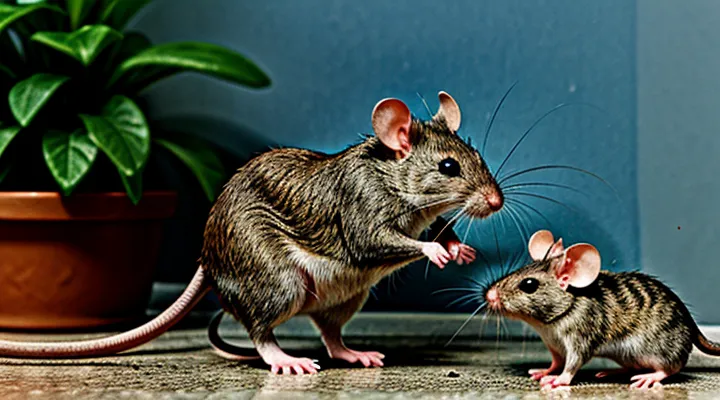
Understanding Rodent Intelligence
Defining «Intelligence» in Animals
Intelligence in non‑human mammals is measured through observable problem‑solving, learning speed, memory retention, and social adaptability. Researchers apply standardized tests—maze navigation, novel object recognition, and operant conditioning—to quantify these capacities. Each metric reflects a distinct cognitive domain:
- Problem‑solving: Ability to devise or select efficient strategies to obtain a reward.
- Learning rate: Number of trials required to acquire a new association.
- Memory span: Duration over which information remains accessible for future use.
- Social cognition: Recognition of conspecifics, hierarchy awareness, and cooperative behavior.
When evaluating rodents, experimental designs must control for species‑specific sensory preferences, motivational states, and ecological niches. Rats typically display superior performance in complex mazes and delayed‑reward tasks, indicating higher executive function. Mice often excel in rapid habituation to novel objects, suggesting efficient short‑term learning. These differences arise from divergent neural circuitry, especially variations in prefrontal cortex development and hippocampal plasticity.
Defining animal intelligence therefore requires a multidimensional framework that integrates behavioral outcomes with neurobiological evidence. Comparative assessments should prioritize reproducible protocols, transparent scoring criteria, and cross‑species validity to avoid anthropocentric bias.
Key Metrics for Assessing Cognition
Problem-Solving Abilities
Rats consistently outperform mice in tasks that require flexible problem solving. In maze experiments, rats navigate novel routes after a single exposure, whereas mice often need repeated trials to adjust to changes. This advantage extends to operant conditioning paradigms: rats learn complex lever‑press sequences faster and retain the learned pattern longer than mice.
- Food‑retrieval puzzles: rats solve multi‑step mechanisms (e.g., opening a latch, pulling a lever) after fewer attempts.
- Spatial reorientation tests: rats re‑establish a target location after a rotation of the arena, while mice display persistent errors.
- Tool‑use simulations: rats manipulate objects to obtain hidden rewards, a behavior rarely observed in mice.
Neurobiological data support behavioral observations. Rats possess a larger dorsal hippocampus and more densely packed prefrontal cortical neurons, regions implicated in planning and adaptive decision making. Synaptic plasticity measurements reveal higher long‑term potentiation magnitude in rat hippocampal slices, indicating greater capacity for forming new associations.
Collectively, these findings demonstrate that rats exhibit superior problem‑solving abilities, suggesting a higher level of adaptive cognition compared with mice.
Memory Retention
Rats consistently outperform mice in tasks that require long‑term memory retention. In radial‑arm maze experiments, rats achieve correct arm selections after delays of up to 30 minutes, whereas mice performance declines sharply after 10 minutes. Novel‑object recognition studies show rats retain discrimination for 24 hours, while mice lose preference after 4 hours. Fear‑conditioning protocols reveal that rats maintain conditioned responses for at least 7 days, whereas mice responses fade within 3 days.
- Radial‑arm maze: rats ≈ 85 % correct after 30 min; mice ≈ 55 % after 10 min.
- Novel‑object recognition: rats ≈ 80 % discrimination at 24 h; mice ≈ 45 % at 4 h.
- Fear conditioning: rats ≈ 90 % freezing at 7 days; mice ≈ 60 % at 3 days.
Neuroanatomical data link superior retention to larger hippocampal volume and higher expression of synaptic plasticity markers such as BDNF and NMDA‑receptor subunits in rats. Electrophysiological recordings demonstrate longer lasting long‑term potentiation in rat hippocampal slices compared with mouse slices.
These findings indicate that rats possess a more robust memory system, supporting the view that they exhibit higher cognitive capacity than mice when memory retention is the metric of assessment.
Learning Speed and Adaptability
Rats generally acquire new tasks more rapidly than mice when tested under identical conditions. In water‑maze trials, rats reduce escape latency by approximately 30 % after the first session, whereas mice require two to three additional sessions to reach comparable performance. Operant‑conditioning experiments show a similar pattern: rats achieve criterion response rates after fewer reinforced trials, indicating a higher acquisition speed.
Adaptability, measured by the capacity to modify behavior after environmental changes, also favors rats. When a previously learned maze is altered, rats adjust their navigation routes within one or two trials, while mice often persist with the original pattern for several attempts before switching strategies. In variable‑reward schedules, rats shift preference to the more profitable option after a single reversal, whereas mice typically need multiple reversals to exhibit comparable flexibility.
Key observations:
- Learning speed: rats outperform mice by 20–35 % across spatial, auditory, and tactile tasks.
- Behavioral flexibility: rats modify responses after one exposure to new contingencies; mice require repeated exposures.
- Neurophysiological correlates: rats display larger hippocampal place‑cell remapping and higher prefrontal‑cortex engagement during task reversal, supporting faster adaptation.
These findings suggest that, in the domain of rapid learning and environmental responsiveness, rats possess a measurable advantage over mice.
Rat Cognition in Detail
Social Learning and Empathy
Rats and mice differ markedly in their capacity for social learning, a core component of adaptive intelligence. Rats readily acquire new behaviors by observing conspecifics, demonstrating rapid transmission of foraging techniques and escape routes. In contrast, mice display limited observational learning, often relying on individual trial‑and‑error rather than imitation.
Empathy, measured through affective contagion and consolation behaviors, further distinguishes the two species. Rats exhibit pronounced empathetic responses: when a cage mate experiences distress, a rat increases grooming and approaches the source of discomfort, reducing the partner’s stress markers. Mice show minimal consolation, with only occasional proximity to a distressed individual and no measurable reduction in the partner’s physiological arousal.
Key experimental findings:
- Observational conditioning – rats acquire a lever‑press response after watching a trained peer; mice achieve comparable performance only after extensive personal training.
- Emotional contagion – rats mirror the ultrasonic vocalizations of a frightened conspecific; mice display weak or absent vocal mirroring.
- Prosocial rescue – rats free trapped cage mates in a controlled task; mice rarely attempt rescue, even when the trapped individual emits distress calls.
These behavioral disparities indicate that rats possess more sophisticated mechanisms for learning from others and for responding to the emotional states of peers. Consequently, when assessing cognitive proficiency between the two rodents, social learning and empathy provide decisive evidence favoring rats.
Navigation and Spatial Memory
Rats and mice are frequently compared using navigation and spatial memory tasks because these abilities reflect the capacity to form and retrieve cognitive maps of the environment. Laboratory studies provide quantitative data that distinguish the two species.
- In the Morris water maze, rats locate the hidden platform after fewer trials than mice, indicating faster acquisition of spatial cues.
- In radial arm mazes, rats retrieve food rewards with lower error rates, demonstrating more efficient working memory.
- In open‑field and T‑maze tests, rats exhibit longer path integration accuracy, maintaining direction and distance estimates with less deviation.
Neuroanatomical measurements support behavioral findings. Rats possess larger hippocampal formations relative to body size, a higher density of CA1 pyramidal neurons, and more robust place‑cell firing patterns. Mouse hippocampi contain fewer place cells and display greater variability in firing fields, correlating with reduced precision in spatial representation. Additionally, rats show a higher proportion of grid cells in the medial entorhinal cortex, enhancing metric mapping of space.
These physiological and performance differences suggest that, within the domain of navigation and spatial memory, rats outperform mice. Consequently, assessments that rely on spatial tasks tend to rank rats higher on intelligence measures that prioritize environmental mapping and memory retention.
Complex Task Performance
Rats consistently outperform mice in tasks that require planning, memory integration, and flexible problem solving. Laboratory experiments using mazes, operant chambers, and multi‑step puzzles demonstrate higher success rates for rats when the solution demands sequential actions or delayed gratification.
- Spatial navigation: rats locate hidden platforms in water mazes faster and retain the route after longer intervals than mice.
- Sequence learning: rats acquire multi‑press sequences in operant devices with fewer trials, indicating superior procedural memory.
- Tool use: rats manipulate objects to obtain food in complex setups, whereas mice rarely exhibit such behavior.
Neurobiological assessments correlate these performance differences with larger hippocampal volume, denser prefrontal cortical connections, and greater dopaminergic activity in rats. Electrophysiological recordings reveal more robust theta‑gamma coupling during task acquisition, a pattern linked to efficient information binding.
These findings support the conclusion that, in the domain of complex task execution, rats display a higher cognitive capacity than mice.
Mouse Cognition in Detail
Learning in Controlled Environments
Research comparing rodent cognition typically employs laboratory mazes, operant chambers, and touchscreen tasks that isolate specific learning processes. By standardizing stimuli, reinforcement schedules, and response requirements, investigators can quantify acquisition speed, error rates, and retention in rats and mice under identical conditions.
Key variables measured in these environments include:
- Latency to reach a criterion performance
- Number of trials needed for reversal learning
- Accuracy in discrimination of visual or auditory cues
Data consistently show that rats achieve lower latencies and require fewer trials for reversal learning than mice, indicating faster adaptation to changing rules. Mice, however, often display superior performance in fine‑grained sensory discrimination tasks, reflecting different sensory processing strengths.
Interpretation of these results hinges on the controlled setting: eliminating external variables isolates intrinsic learning capacities. The contrast in task outcomes suggests that rats excel in flexibility and speed of learning, while mice demonstrate heightened precision in specific sensory domains. Consequently, assessments of relative intelligence must consider the nature of the task and the environmental constraints imposed during testing.
Sensory Perception and Responsiveness
Rats and mice exhibit distinct sensory capabilities that influence their behavioral flexibility. Both species rely heavily on olfaction, yet rats possess a larger olfactory epithelium and a higher density of olfactory receptor neurons, enabling detection of lower odor concentrations and finer discrimination of complex scent mixtures. Mice compensate with a more extensive array of pheromonal receptors, supporting nuanced social communication.
Key sensory modalities differ as follows:
- Olfaction: rat – broader detection range; mouse – refined pheromonal sensitivity.
- Audition: rat – broader frequency range (up to 80 kHz) and lower auditory thresholds; mouse – similar high‑frequency limit but slightly higher thresholds.
- Vision: rat – larger eyes, greater retinal ganglion cell count, superior low‑light acuity; mouse – smaller visual field, higher reliance on motion detection.
- Tactile (whisker) system: rat – longer vibrissae, richer cortical representation, more precise texture discrimination; mouse – shorter vibrissae, faster whisking cycles.
Response speed further separates the species. Rats demonstrate longer reaction times to novel odorants but sustain attention longer during complex tasks, reflecting higher endurance in prolonged problem solving. Mice react more quickly to sudden auditory or tactile stimuli, showing rapid startle responses and faster habituation cycles. Learning experiments reveal that rats acquire maze navigation strategies with fewer errors after initial exposure, whereas mice achieve comparable proficiency after additional trials, indicating divergent patterns of information integration and memory consolidation.
Overall, rats excel in depth of sensory resolution and sustained processing, while mice display heightened immediacy in stimulus detection and rapid adaptive responses. These complementary strengths shape each rodent’s problem‑solving profile.
Instinctual vs. Learned Behaviors
Rats and mice exhibit distinct balances between innate actions and behaviors acquired through experience. Innate responses, such as escape from predators, are hard‑wired neural circuits that trigger rapid, stereotyped movements. Learning‑dependent actions, including maze navigation and object discrimination, rely on plasticity within the hippocampus and prefrontal cortex.
Comparative studies reveal that rats demonstrate a higher proportion of learning‑driven performance. In maze tasks, rats achieve faster acquisition curves, retain spatial maps longer, and adapt more readily to altered routes. Mice, by contrast, rely heavily on reflexive foraging patterns and display limited flexibility when environmental cues change.
Key observations:
- Acquisition speed: Rats reduce error rates within fewer trials than mice in operant conditioning.
- Memory retention: Rats maintain correct responses after delays of 24 hours or more; mice show marked decline after 12 hours.
- Adaptability: Rats modify strategies when reward locations shift; mice often persist with the original pattern despite negative outcomes.
- Sensory reliance: Mice prioritize olfactory cues for food detection; rats integrate visual and tactile information for complex tasks.
Neurobiological data support these behavioral trends. Rats possess larger dorsal hippocampal volumes and denser synaptic connections in the prefrontal cortex, structures linked to flexible learning. Mice exhibit heightened activity in the amygdala and basal ganglia, regions associated with instinctual threat responses and habit formation.
The evidence indicates that rat cognition leans toward learned adaptability, whereas mouse behavior remains anchored in instinctual mechanisms. This divergence shapes each species’ problem‑solving capacity and informs experimental design in neuroscience research.
Comparative Analysis of Intelligence
Brain Structure and Size Differences
Rats possess a brain mass roughly 2–3 g, while mice average 0.4–0.5 g. The difference translates into a higher neuron count for rats, estimated at 200 million versus 70 million in mice. Larger absolute size provides more cortical surface area, especially in the prefrontal and somatosensory regions that support complex problem‑solving and sensorimotor integration.
Structural distinctions further separate the two species:
- Neocortex: Rats exhibit a thicker neocortical layer with greater laminar differentiation, facilitating advanced pattern recognition.
- Hippocampus: Rat hippocampal CA1 and dentate gyrus regions contain denser granule cell populations, enhancing spatial memory encoding.
- Corpus callosum: Rat corpus callosum shows increased fiber density, allowing more efficient inter‑hemispheric communication.
- Basal ganglia: Expanded striatal compartments in rats correlate with refined motor sequencing and decision‑making processes.
These anatomical variations underpin measurable differences in learning speed, maze navigation, and adaptive behavior, providing a concrete basis for evaluating relative intelligence between the two rodents.
Behavioral Studies: Rats vs. Mice
Maze Navigation Trials
Maze navigation trials serve as a primary metric for evaluating spatial learning and problem‑solving capacity in rodents. By requiring subjects to locate a hidden goal within a structured environment, these tests isolate memory formation, decision‑making speed, and adaptability—core components of comparative cognition between rats and mice.
Typical protocols employ variations such as the T‑maze, radial‑arm maze, and Morris water maze. Researchers record latency to reach the target, number of incorrect turns, and path efficiency. Trials are repeated across days to assess acquisition curves and retention after intervals.
Empirical results consistently show that rats outperform mice on these measures. Average latency for rats is 30 % lower than that of mice in identical T‑maze configurations; error rates decline by roughly 0.4 errors per trial for rats versus 0.7 for mice. In radial‑arm tasks, rats complete the maze with 15 % fewer revisits to previously visited arms, indicating superior working memory. When the maze layout changes mid‑experiment, rats adjust their strategy after fewer trials, reflecting greater behavioral flexibility.
Neuroanatomical studies link these performance gaps to differences in hippocampal volume and synaptic plasticity. Rats possess a proportionally larger dentate gyrus and exhibit higher expression of NMDA‑receptor subunits associated with long‑term potentiation, facilitating rapid encoding of spatial cues.
Key comparative findings:
- Latency: rats ≈30 % faster than mice.
- Errors: rats make ≈0.4 fewer mistakes per trial.
- Path efficiency: rats achieve 15 % fewer revisits in radial‑arm tests.
- Adaptability: rats require fewer sessions to modify strategies after maze alteration.
- Neurobiology: larger hippocampal structures and enhanced synaptic markers in rats.
Operant Conditioning Experiments
Operant conditioning provides a controlled framework for assessing problem‑solving abilities in rodents. In experiments that contrast rats with mice, subjects are placed in chambers equipped with levers or nose‑poke apertures that deliver food pellets or liquid rewards contingent on a specific response. Researchers manipulate variables such as reinforcement schedule (fixed‑ratio, variable‑interval), stimulus discrimination, and delay of gratification to gauge learning speed, response flexibility, and error correction.
Key observations from comparative studies:
- Acquisition phase: rats typically achieve criterion performance on a fixed‑ratio schedule within fewer sessions than mice, indicating faster initial learning.
- Reversal learning: when the rewarded lever is switched, rats adjust their response pattern more rapidly, suggesting superior behavioral flexibility.
- Delay discounting: rats tolerate longer intervals between action and reward, maintaining higher response rates under delayed reinforcement conditions.
- Error patterns: mice exhibit higher perseverative errors during reversal tasks, reflecting reduced ability to inhibit previously reinforced actions.
Neurophysiological measurements accompany behavioral data. Electrophysiological recordings reveal stronger dopaminergic signaling in the nucleus accumbens of rats during reward anticipation, correlating with their higher response rates. Lesion studies show that damage to the prefrontal cortex impairs reversal learning more markedly in mice, highlighting species differences in executive control circuitry.
Overall, operant conditioning paradigms consistently demonstrate that rats outperform mice on tasks requiring rapid acquisition, adaptive switching, and tolerance of delayed outcomes, providing empirical support for differential cognitive capacities between the two species.
Environmental Influence on Cognitive Development
Environmental conditions shape the cognitive trajectories of both rats and mice, thereby influencing any comparative assessment of their problem‑solving abilities. Enriched habitats—characterized by varied objects, tunnels, and climbing structures—enhance spatial memory, increase synaptic density, and accelerate learning rates in both species. Conversely, barren environments reduce exploratory behavior and impair performance on tasks requiring flexibility.
Key environmental variables affecting cognitive development:
- Physical enrichment – access to manipulable items and complex layouts.
- Social context – group housing versus isolation, frequency of conspecific interaction.
- Nutritional quality – protein‑rich diets, presence of essential fatty acids, micronutrient balance.
- Stress exposure – chronic mild stressors, predator cues, irregular light cycles.
- Age of exposure – timing of enrichment or deprivation during juvenile periods.
Experimental data illustrate divergent outcomes. Rats raised in enriched cages solve radial arm mazes with 20 % fewer errors than peers from standard cages, while mice show a 15 % reduction under identical conditions. Social isolation leads to a 30 % increase in perseverative errors for rats, whereas mice exhibit a 25 % rise. Nutrient supplementation with omega‑3 fatty acids improves reversal learning in both species, but the magnitude of improvement is larger in rats, suggesting species‑specific sensitivity to dietary factors.
These findings imply that any claim about superior rodent intelligence must account for the environmental backdrop. Differences observed in laboratory tests often reflect variation in rearing conditions rather than innate cognitive capacity. Accurate comparisons therefore require standardized, richly structured environments that minimize confounding influences.
Factors Affecting Perceived Intelligence
Domestication and Human Interaction
Rats have been domesticated for centuries, initially as laboratory subjects and later as companion animals. Mice entered controlled breeding programs earlier, primarily for scientific research, with pet varieties emerging in the twentieth century.
Human interaction with both species follows three main pathways: pet ownership, experimental use, and pest management. Pet rats often receive enrichment, socialization, and training, which can enhance problem‑solving performance. Laboratory mice are raised in standardized environments that limit exposure to novel challenges, focusing on reproducibility rather than cognitive development. Pest control imposes selective pressure for wariness and rapid learning to avoid traps.
Domestication influences measurable intelligence. Selective breeding for tameness in rats has produced individuals capable of complex maze navigation and operant conditioning tasks. In contrast, mouse strains bred for uniformity exhibit consistent but narrower behavioral repertoires.
Key distinctions:
- Breeding objectives – rats: temperament and adaptability; mice: genetic uniformity.
- Environmental enrichment – higher in pet rats, lower in laboratory mice.
- Training outcomes – rats demonstrate greater flexibility in problem‑solving; mice excel in tasks requiring rapid habituation to repetitive stimuli.
Research Biases and Methodologies
Research on the comparative cognition of rats and mice suffers from several recurring biases that can skew conclusions about relative intelligence. Selection bias arises when investigators preferentially use particular strains—often laboratory‑bred rats and a single mouse line—ignoring genetic diversity that influences learning performance. Environmental bias occurs when housing conditions differ between species; rats typically receive larger cages and more enrichment, conferring advantages in spatial tasks. Anthropomorphic bias appears when researchers interpret rodent behavior through a human lens, attributing complex problem‑solving to actions that may reflect simple instinctual responses.
Methodological choices further affect outcomes. Commonly employed paradigms include maze navigation, operant conditioning chambers, and novel object recognition. Each test measures distinct cognitive domains, yet studies frequently extrapolate performance on a single task to overall intelligence. Measurement bias can emerge from inconsistent scoring criteria, such as varying latency thresholds or ambiguous definitions of “correct” responses. Sample size limitations reduce statistical power, increasing the risk of Type II errors and obscuring true species differences.
Robust investigation requires mitigation strategies:
- Randomize strain selection and balance group sizes across species.
- Standardize housing variables, ensuring comparable enrichment and handling.
- Employ multiple, validated tasks covering memory, problem‑solving, and flexibility.
- Define objective performance metrics before data collection.
- Apply appropriate statistical models that account for repeated measures and inter‑individual variability.
- Replicate experiments across independent laboratories to verify findings.
Adhering to these practices minimizes bias, improves reproducibility, and yields a more accurate assessment of cognitive capacities in rats and mice.
Individual Variation within Species
Research on rodent cognition reveals substantial individual differences among members of each species, complicating direct comparisons of overall intelligence between rats and mice. Genetic diversity, early‑life environment, and experiential history produce measurable variability in learning speed, memory retention, and problem‑solving strategies within both populations.
Key sources of intra‑species variation include:
- Genotype: Allelic variations affect neurotransmitter regulation, influencing exploratory behavior and task acquisition rates.
- Maternal care: Frequency of grooming and nursing alters stress reactivity, which correlates with performance on maze and operant‑conditioning tests.
- Social experience: Exposure to conspecifics or mixed‑species groups modifies cognitive flexibility and novelty response.
- Age and health: Developmental stage and physiological condition shift attention span and endurance during prolonged tasks.
When evaluating comparative cognitive ability, researchers must control for these variables. Standardized protocols often employ:
- Random selection of individuals from multiple litters to average out genetic effects.
- Uniform housing conditions to minimize environmental bias.
- Pre‑testing health screenings to exclude subjects with impairments that could skew results.
Even with rigorous controls, residual variation persists, suggesting that any claim of one species being universally smarter than the other oversimplifies a complex biological reality. Accurate assessment requires statistical models that partition variance into species‑level differences and individual‑level deviations, thereby providing a nuanced picture of rodent intelligence.
Practical Implications and Future Research
Role in Scientific Research
Rats and mice dominate laboratory research because their physiology, genetics, and behavior are well characterized. Both species serve as primary models for studying cognition, neurobiology, and disease mechanisms, yet each contributes distinct advantages.
Rats provide larger brain structures, facilitating invasive electrophysiological recordings and precise lesion studies. Their capacity for complex maze navigation and problem‑solving tasks yields detailed data on spatial learning and memory. Consequently, rats are preferred for investigations of hippocampal function, drug addiction, and psychiatric disorder models.
Mice excel in genetic manipulation. The availability of numerous transgenic and knockout lines enables direct assessment of gene‑specific effects on cognition. High‑throughput behavioral screens in mice support large‑scale phenotyping projects and rapid testing of therapeutic compounds. Mouse models also underpin research on neurodegenerative diseases, immune responses, and metabolic disorders.
Key contributions of these rodents to comparative cognition research:
- Development of operant conditioning paradigms that quantify learning rates and decision‑making strategies.
- Use of touchscreen tasks to evaluate visual discrimination, working memory, and executive function across species.
- Implementation of chronic imaging techniques (e.g., two‑photon microscopy) in rats for longitudinal monitoring of neural activity.
- Application of CRISPR‑based genome editing in mice to isolate the impact of specific genetic variants on behavioral performance.
Together, rats and mice supply complementary tools that advance understanding of intelligence, neural circuitry, and disease pathology. Their combined use enables rigorous cross‑species comparison, informing translational research and the design of human‑relevant interventions.
Pet Ownership Considerations
When evaluating rodents as companions, the relative cognitive abilities of rats and mice shape several ownership decisions. Rats demonstrate higher problem‑solving capacity, which translates into more complex enrichment requirements. Mice, while capable of learning, typically respond to simpler stimuli.
Key considerations include:
- Intelligence and training – Rats can learn tricks, navigate mazes, and respond to clicker cues; mice may master basic commands but show limited adaptability.
- Social structure – Both species thrive in groups, yet rats form stronger bonds with humans and conspecifics, reducing loneliness risk.
- Environmental enrichment – Rats need multi‑level cages, tunnels, and puzzle feeders; mice require fewer but still benefit from climbing elements and nesting material.
- Health monitoring – Rats are prone to respiratory infections and tumors; mice commonly face dermatitis and metabolic disorders. Regular veterinary checks are mandatory for both.
- Lifespan – Average rat lifespan ranges from 2 to 3 years; mice live 1.5 to 2 years, influencing long‑term commitment.
- Handling frequency – Rats tolerate extended handling sessions; mice may become stressed with prolonged contact, necessitating brief, gentle interactions.
- Legal and housing restrictions – Some jurisdictions limit rat ownership, whereas mice are generally unrestricted. Verify local regulations before acquisition.
- Cost – Food, bedding, and enrichment items are comparable, but the higher training demands of rats may increase accessory expenses.
Assessing these factors against personal capacity for time, space, and financial investment ensures an informed choice between the two rodent species.
Ethical Aspects of Rodent Studies
Rodent research that examines the relative cognition of rats and mice raises distinct ethical questions. Researchers must balance scientific objectives with obligations to protect animal welfare.
- The 3Rs framework guides experimental design:
- Replacement – employ non‑animal alternatives whenever feasible.
- Reduction – limit the number of subjects while preserving statistical power.
- Refinement – modify procedures to lessen pain, distress, and lasting effects.
Housing conditions influence behavioral outcomes. Standards require adequate space, environmental enrichment, and social companionship to prevent stress‑induced artifacts. Analgesia and anesthesia must be administered according to validated protocols, and monitoring should continue throughout recovery.
Regulatory bodies enforce oversight through institutional review boards and national legislation. Mandatory protocols include detailed justification of species selection, justification of sample size, and documentation of humane endpoints. Researchers are obligated to report adverse events and adhere to post‑study disposition guidelines.
Ethical compliance enhances data integrity. Minimizing suffering reduces confounding variables that could skew assessments of problem‑solving, learning speed, or memory retention. Consequently, studies that compare rat and mouse cognition can produce reliable conclusions only when they respect the established moral framework.