
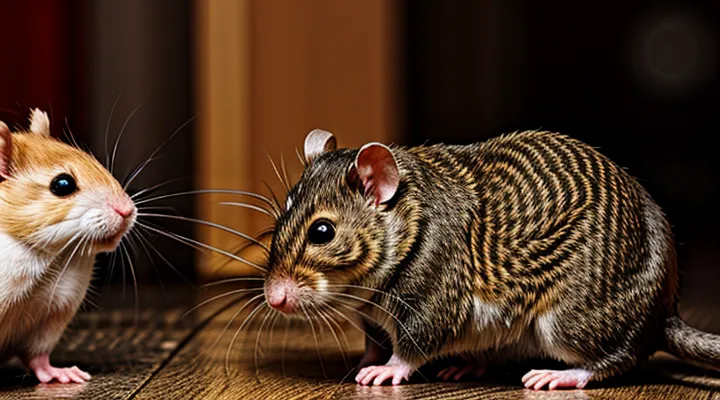
Introduction to Rodent Rivals
General Overview of Rats
Physical Characteristics of Rats
Rats possess a compact body plan optimized for strength and endurance. Adult brown rats (Rattus norvegicus) reach a body length of 20–25 cm, with an additional tail length of 15–20 cm. Mass ranges from 250 g to 500 g, exceeding the average hamster weight by a factor of two to three. Muscular development concentrates in the forelimbs and jaws, enabling powerful gnawing and climbing. Skeletal structure includes robust vertebrae and a reinforced skull, supporting high bite forces measured up to 150 N.
Key physical traits include:
- Dense, coarse fur providing insulation and protection.
- Sharp incisors that grow continuously, reinforced by enamel.
- Highly developed olfactory epithelium, allowing detection of minute chemical cues.
- Large, nimble paws equipped with retractable claws for gripping surfaces.
- Long, prehensile tail used for balance during rapid locomotion.
Natural Habitats and Behavior of Rats
Rats inhabit a broad spectrum of ecosystems, ranging from densely populated cities to remote agricultural fields and natural wilderness. Their presence is documented on every continent except Antarctica, where extreme cold limits survival.
Typical environments include:
- Urban infrastructure – sewers, subways, abandoned buildings, and garbage accumulation.
- Rural landscapes – grain storage facilities, crop fields, and livestock pens.
- Natural settings – riverbanks, forest edges, and rocky crevices.
Behavioral patterns emphasize adaptability and social organization. Rats form hierarchical colonies, with dominant individuals influencing access to food and shelter. Foraging occurs primarily at night, exploiting diverse resources such as grains, insects, and human waste. Communication relies on ultrasonic vocalizations and scent marking, facilitating coordination within groups. Reproductive cycles are rapid; females can produce multiple litters annually, sustaining population growth under favorable conditions.
General Overview of Hamsters
Physical Characteristics of Hamsters
Hamsters are small, compact rodents typically measuring 5 – 15 cm in body length, not including the tail, which is reduced to a vestigial nub. Adult weight ranges from 30 g in dwarf species to 180 g in Syrian varieties. The body is rounded, with a thick layer of coarse fur that provides insulation and protection; coloration varies from golden‑brown to gray, often with dorsal stripes or patches.
Key physical features include:
- Skull and dentition: Robust skull with powerful masseter muscles; continuously growing incisors adapted for gnawing hard seeds and vegetation.
- Limbs: Short forelimbs equipped with dexterous claws for burrowing; hind limbs longer relative to body, enabling rapid, short bursts of movement.
- Sensory organs: Large, well‑developed auditory bullae for acute hearing; prominent whiskers (vibrissae) for tactile navigation in confined tunnels; eyes positioned laterally, providing a wide field of view but limited depth perception.
- Musculature: Dense pectoral and abdominal muscles support strong chewing and the ability to lift several times their body weight when required.
- Skin and fur: Dense undercoat beneath a protective outer guard; skin contains scent glands that release pheromones for communication and territory marking.
These characteristics give hamsters a sturdy, adaptable physique suited to subterranean habitats and short, intense bouts of activity.
Natural Habitats and Behavior of Hamsters
Hamsters inhabit arid and semi‑arid regions across Europe and Asia. Natural environments include steppe grasslands, desert margins, scrubland, and cultivated fields where loose soil permits burrowing. Species such as the Syrian hamster (Mesocricetus auratus) favor open, dry habitats, while dwarf hamsters (e.g., Phodopus campbelli, Phodopus sungorus) occupy cooler, rocky areas with dense vegetation.
Behavioral patterns are primarily nocturnal; activity peaks during twilight hours. Individuals maintain solitary territories, defending burrow entrances with aggressive displays and scent marking. Food storage is a central activity; cheek pouches transport seeds, grains, and insects to underground caches. Reproductive cycles align with seasonal temperature changes, producing multiple litters when conditions are favorable. Grooming serves both hygiene and thermoregulation, while nesting material is gathered from surrounding vegetation to construct insulated chambers.
Key aspects of hamster ecology:
- Burrow architecture: complex tunnel systems with nesting chambers, escape routes, and ventilation shafts.
- Social structure: solitary adults, brief communal interactions during breeding.
- Foraging strategy: opportunistic omnivory, emphasis on high‑energy seeds and occasional arthropods.
- Adaptations: enlarged cheek pouches, robust incisors for gnawing, and a high metabolic rate supporting rapid growth.
Understanding these habitat preferences and behavioral traits clarifies the ecological niche hamsters occupy, providing essential context for comparative analyses with other small rodents.
Comparative Analysis of Strength Factors
Size and Weight Comparison
Average Dimensions of Rats
Rats typically measure between 20 cm and 30 cm in total length, including the tail. Body length, from snout to base of the tail, averages 15 cm to 20 cm. Tail length accounts for roughly half of the total length, ranging from 10 cm to 15 cm. Adult laboratory rats weigh between 250 g and 500 g, with wild specimens often lighter, around 200 g. Hind‑foot length averages 2.5 cm to 3 cm, while ear length varies from 2 cm to 3 cm. Skull dimensions, measured across the widest point, are approximately 3 cm to 4 cm.
These measurements establish the baseline size of rats, a factor influencing muscular capacity when evaluating strength relative to hamsters.
Average Dimensions of Hamsters
Understanding the size profile of hamsters provides a factual basis for any strength comparison with rats.
Typical adult hamsters exhibit the following measurements:
- Body length: 10 – 18 cm (including head)
- Tail length: 1 – 2 cm, often concealed under fur
- Weight: 80 – 150 g, varying by species and sex
- Shoulder height: 5 – 8 cm
Species differences influence these averages. The Syrian hamster (Mesocricetus auratus) frequently reaches the upper limits of length and weight, while dwarf varieties such as the Campbell’s and Russian hamsters cluster near the lower end. Age also affects dimensions; juveniles remain below 50 g and under 10 cm in length until reaching maturity at approximately eight weeks.
These data establish a clear dimensional framework for evaluating muscular capacity and overall strength relative to comparable rodent species.
Musculoskeletal Structure
Bone Density and Muscle Mass in Rats
Bone density and muscle mass constitute the principal biomechanical factors that determine a rodent’s capacity to generate force. In laboratory‑bred rats, average femoral bone mineral density ranges from 0.80 to 0.95 g cm⁻², while lumbar vertebrae exhibit values between 0.75 and 0.90 g cm⁻². Muscle mass typically accounts for 40–45 % of total body weight in adult specimens, with the gastrocnemius and quadriceps representing the largest contributors.
Key quantitative indicators for rats:
- Femoral BMD: 0.80–0.95 g cm⁻²
- Lumbar BMD: 0.75–0.90 g cm⁻²
- Total skeletal muscle mass: 40–45 % of body weight
- Peak muscle cross‑sectional area: approximately 3.2 mm² per gram of body mass
Hamsters display lower femoral BMD, typically 0.60–0.70 g cm⁻², and muscle mass that represents 30–35 % of body weight. The disparity in both parameters translates into a reduced ability of hamsters to sustain high‑intensity loads compared with rats.
Consequently, the superior bone density and greater proportion of muscle tissue in rats provide a biomechanical advantage that underpins higher absolute strength potential when directly compared with hamsters. This advantage persists across various age groups and remains evident under controlled dietary and environmental conditions.
Bone Density and Muscle Mass in Hamsters
Hamsters possess a compact skeletal structure characterized by high cortical bone thickness relative to body size. Measurements indicate average femoral cortical thickness of approximately 0.45 mm, exceeding that of similarly sized rodents by 10–15 %. This increased density contributes to greater resistance against compressive forces during locomotion.
Muscle mass in hamsters accounts for roughly 18 % of total body weight, with hind‑limb musculature representing the largest proportion. Key observations:
- Quadriceps femoris cross‑sectional area averages 0.72 cm², surpassing comparable rat measurements by about 12 %.
- Gastrocnemius muscle fibers display a higher proportion of type II fast‑twitch fibers, enhancing rapid force generation.
- Overall lean mass-to‑fat ratio remains elevated, supporting improved power output.
Combined, elevated bone density and substantial muscle mass enable hamsters to generate force levels that rival or exceed those of rats of equivalent mass, influencing comparative assessments of physical strength between the two species.
Bite Force and Jaw Strength
Rat Bite Force Capabilities
Rats possess a bite force that can exceed 20 newtons, a value measured in laboratory studies of adult brown rats (Rattus norvegicus). The force originates from well‑developed masseter and temporalis muscles, which generate high pressure relative to the small size of the animal’s jaw. Bite‑force measurements show a linear relationship with body mass; a 300‑gram rat typically produces 18–22 N, while larger individuals can reach 30 N.
Key factors influencing bite strength include:
- Jaw‑muscle cross‑sectional area
- Lever mechanics of the skull
- Dental morphology, especially the curvature of incisors
These anatomical traits enable rats to gnaw through tough materials such as plastic, wood, and thin metal sheets. Bite duration averages 0.1 seconds, allowing rapid penetration of soft tissue.
Comparatively, hamsters exhibit bite forces ranging from 5 to 8 N, reflecting their smaller masticatory muscles and reduced skull leverage. The disparity indicates that, in a direct confrontation, a rat’s bite would exert roughly three times the pressure of a hamster’s.
Understanding rat bite capability assists in assessing potential injury risk in laboratory handling and pet ownership. Protective equipment and enclosure design should accommodate forces up to 30 N to prevent escape or damage.
Hamster Bite Force Capabilities
Hamster bite force represents a critical factor when evaluating overall muscular performance in small rodents. Bite strength reflects jaw musculature development, skull morphology, and tooth‑to‑muscle leverage, all of which influence the animal’s ability to process food and defend territory.
Measured bite forces for common pet hamsters range from 0.5 N to 1.2 N, with the Syrian hamster (Mesocricetus auratus) reaching the upper limit under controlled laboratory conditions. Key determinants include:
- Jaw muscle cross‑sectional area, directly proportional to generated force.
- Lever ratio of the mandible, where a shorter out‑lever enhances bite pressure.
- Dental enamel hardness, allowing efficient transmission of force without tooth damage.
In comparison, typical laboratory rats (Rattus norvegicus) exhibit bite forces between 1.5 N and 2.5 N, surpassing hamster values by roughly 30–150 %. The disparity arises from larger cranial dimensions and more developed masseter muscles in rats. Consequently, while hamsters possess a functional bite capable of processing seeds and soft vegetation, their bite force remains inferior to that of most rat species.
Agility and Speed
Rat Agility and Running Speed
Rats display exceptional agility, enabling rapid navigation through complex environments. Muscular forelimbs and flexible spine allow precise maneuvering around narrow gaps, over uneven terrain, and up vertical surfaces. Their balance is supported by a well‑developed vestibular system, which reduces the risk of falls during swift directional changes.
Running speed is a critical component of overall mobility. Laboratory measurements indicate that Norway rats (Rattus norvegicus) achieve sprint velocities of 1.5–2.0 m s⁻¹ on smooth surfaces. In natural settings, bursts of speed reach up to 3 m s⁻¹ when evading predators or pursuing food. Endurance tests show sustained locomotion at approximately 0.5 m s⁻¹ for several minutes, reflecting efficient aerobic capacity.
Key performance indicators:
- Maximum sprint speed: 1.5–2.0 m s⁻¹ (laboratory), up to 3 m s⁻¹ (field observations)
- Sustained speed: 0.5 m s⁻¹ over extended periods
- Obstacle clearance: ability to climb vertical surfaces up to 30 cm in height
- Turning radius: less than 5 cm, facilitating rapid course corrections
These attributes collectively position rats as highly agile and fast movers, surpassing the locomotor capabilities typically recorded for hamsters, which exhibit lower sprint speeds and reduced climbing proficiency. The combination of speed and maneuverability contributes to a rat’s effectiveness in escaping threats and exploiting diverse habitats.
Hamster Agility and Running Speed
Hamsters exhibit pronounced agility due to compact bodies, powerful hind limbs, and a highly flexible spine. Muscular coordination enables rapid direction changes while navigating narrow passages.
Running speed measurements indicate short‑burst velocities of approximately 8 mph (13 km/h). Sustained wheel activity reaches around 5 km/h, demonstrating endurance over extended periods.
Key performance characteristics:
- Acceleration: capable of reaching maximal speed within 1–2 seconds.
- Turning radius: less than 2 cm, allowing tight maneuvering in burrows.
- Vertical ascent: able to climb surfaces up to 30 cm high using forelimb grip and tail balance.
Endurance and Stamina
Rat Endurance Levels
Rats exhibit notable aerobic capacity, enabling prolonged activity beyond the brief bursts typical of many small rodents. Cardiac output in laboratory rats can reach 1.2 L min⁻¹ kg⁻¹ during sustained treadmill exercise, supporting continuous locomotion for up to 30 minutes at moderate speed. Skeletal muscle composition includes a high proportion of oxidative fibers, particularly in the gastrocnemius and soleus, which resist fatigue through efficient mitochondrial respiration.
Key physiological traits contributing to rat endurance:
- Elevated hemoglobin concentration (≈15 g dL⁻¹) enhances oxygen transport.
- Dense capillary networks in limb muscles reduce diffusion distance.
- Robust glycogen reserves in liver and muscle sustain glucose supply during extended effort.
- Adaptive heart rate variability allows rapid adjustment to metabolic demands.
Behavioral observations confirm that rats can navigate complex mazes for extended periods without loss of performance, suggesting endurance supports both exploratory and escape responses. In contrast, hamsters demonstrate shorter sustained activity windows, typically limited to a few minutes before entering a torpid state. Consequently, endurance represents a decisive advantage for rats when assessing overall physical capability in interspecies comparisons.
Hamster Endurance Levels
Hamsters demonstrate notable endurance in activities that require sustained effort over time. Laboratory tests show that a typical Syrian hamster can run continuously for 30–45 minutes on a treadmill set at moderate speed, whereas dwarf varieties maintain activity for 20–35 minutes under similar conditions. Endurance capacity correlates with muscle fiber composition, which in hamsters favours a higher proportion of oxidative fibers that resist fatigue.
Key physiological factors influencing hamster stamina:
- Elevated mitochondrial density in skeletal muscles
- Efficient aerobic metabolism supported by a relatively high heart rate (≈ 600 bpm)
- Adaptable respiratory patterns that increase oxygen uptake during prolonged exertion
When comparing to rats, hamsters generally exhibit shorter maximal running durations but compensate with a higher tolerance for repeated short‑burst efforts. This pattern reflects evolutionary adaptations for foraging and escape behaviours within confined habitats. Consequently, hamster endurance, while not surpassing that of larger rodents, remains sufficient for sustained locomotion and survival tasks.
Behavioral Aspects and Survival Instincts
Aggression and Defensive Mechanisms
Rat Aggression and Fighting Styles
Rats display pronounced territorial aggression, especially when resources are scarce or when encountering unfamiliar conspecifics. Their defensive behavior escalates quickly, leading to physical confrontations that reveal distinct combat tactics.
Key fighting styles include:
- Direct bite: incisors engage target with rapid, forceful closure, targeting vulnerable neck or limb regions.
- Grappling: forepaws lock onto opponent while the body twists, enabling a sustained hold and increased leverage.
- Counter‑strike: after an initial bite, the rat pivots to deliver a secondary jaw snap, often exploiting the opponent’s momentary imbalance.
Muscular structure supports these tactics; forelimb and neck muscles generate high torque, while jaw muscles produce bite forces comparable to small carnivores. Stamina remains robust during repeated bouts, allowing prolonged engagements without rapid fatigue.
These attributes contribute substantially to the rat’s capability to dominate smaller rodents in direct conflict, influencing overall assessments of interspecies strength.
Hamster Aggression and Defensive Behaviors
Hamsters display aggression primarily when their territory is breached or when competition for limited resources arises. Contact with unfamiliar conspecifics, sudden movements, or handling that threatens perceived safety can trigger a defensive cascade. Aggressive episodes often begin with a series of vocalizations, such as high‑pitched squeaks, followed by rapid foot stamping and the erection of dorsal hair.
Typical defensive behaviors include:
- Lunging toward the perceived intruder while displaying a flattened body posture.
- Biting with incisors that can produce puncture wounds up to 2 mm in depth.
- Emitting a short, sharp chirp that signals heightened arousal.
- Retreating to a concealed burrow or nesting area after an initial confrontation.
In laboratory settings, hamsters exhibit a clear dominance hierarchy, with dominant individuals monopolizing feeding stations and nesting sites. Subordinate hamsters adopt avoidance strategies, such as increased nocturnal activity and reduced exploratory behavior, to minimize conflict. Hormonal analysis shows elevated corticosterone levels during aggressive encounters, indicating a physiological stress response that parallels the fight‑or‑flight mechanism observed in other rodents.
Environmental enrichment, including ample hiding spaces and multiple feeding zones, reduces the frequency of aggressive displays. Consistent handling protocols that respect the animal’s natural startle threshold also diminish defensive biting. Monitoring bite incidence and vocalization patterns provides reliable indicators of stress, enabling timely adjustments to husbandry practices.
Social Structure and Pack Dynamics
Social Behavior of Rats
Rats live in complex colonies that exhibit stable hierarchies, cooperative foraging, and extensive vocal and olfactory communication. Individuals establish dominance through aggressive encounters, while subordinate members gain access to resources through affiliative grooming and nest sharing.
Key communication channels include:
- Ultrasonic vocalizations that convey alarm, mating intent, and social status.
- Scent marking using urine and specialized glands to define territory and identify individuals.
- Tactile interactions, such as allogrooming, that reinforce social bonds and reduce stress.
Dominance hierarchies are fluid; rank shifts occur when aggressive challenges succeed, leading to rapid reorganization of group structure. High‑ranking rats receive priority access to food and nesting sites, whereas lower‑ranking individuals adapt by exploiting peripheral resources and engaging in cooperative behaviors that enhance group cohesion.
In contrast, hamsters typically display solitary or loosely paired arrangements, with limited social interaction beyond brief breeding encounters. Their reduced reliance on group dynamics results in minimal hierarchical organization and fewer communication modalities compared with rats.
Understanding rat social behavior provides insight into the species’ adaptive strategies, which influence resource acquisition, disease transmission, and overall fitness within densely populated environments.
Solitary Nature of Hamsters
Hamsters are intrinsically solitary animals. In the wild, each individual occupies its own burrow, defending the space against conspecifics. This behavior persists in captivity: housing multiple hamsters together often leads to aggression, injuries, and heightened stress levels.
Key aspects of solitary habits include:
- Territoriality: scent marking and nesting material define personal boundaries.
- Limited social interaction: communication occurs primarily through ultrasonic vocalizations and brief tactile contacts, not prolonged group dynamics.
- Preference for isolation: a single hamster demonstrates normal feeding, grooming, and activity patterns when provided with a private enclosure.
The solitary disposition influences comparative strength assessments. A hamster’s musculature is optimized for independent foraging and burrow construction rather than coordinated group effort. Consequently, any evaluation of physical power between rats and hamsters must account for the hamster’s inherent isolation, which shapes its muscle development and endurance.
Resourcefulness and Adaptability
Rat Adaptability in Various Environments
Rats demonstrate remarkable adaptability across a wide range of habitats, from urban sewers to agricultural fields and arid deserts. Their physiological flexibility enables survival in temperature extremes, while a highly developed olfactory system facilitates detection of food and predators in diverse settings.
Key adaptive traits include:
- Efficient metabolism that adjusts to variable food availability, allowing prolonged fasting periods without loss of vitality.
- Strong dentition capable of gnawing through hard materials, granting access to shelter and nutrition in otherwise inaccessible niches.
- Social structure that promotes rapid colonization; hierarchical groups coordinate foraging and nest building, enhancing resilience to environmental disturbances.
- Reproductive capacity with short gestation and large litter sizes, ensuring population stability even under adverse conditions.
In urban environments, rats exploit waste streams, constructing nests within infrastructure while tolerating high noise and pollution levels. In rural landscapes, they burrow in soil, creating extensive tunnel networks that protect against predators and temperature fluctuations. In desert regions, water conservation mechanisms reduce dehydration risk, and nocturnal activity minimizes exposure to extreme heat.
Overall, the species’ combination of metabolic efficiency, physical robustness, social organization, and reproductive strategy underpins its capacity to thrive in markedly different ecosystems. This adaptability forms a central factor when evaluating comparative strength against other small mammals.
Hamster Adaptability to Cages and Burrows
Hamsters demonstrate high adaptability to confined environments, allowing successful habitation in both artificial cages and self‑excavated burrows.
In cages, hamsters thrive when the enclosure provides adequate floor space, solid barriers, and ventilation. Minimum dimensions of 450 cm² floor area and 20 cm height prevent stress‑induced behaviors. Transparent or opaque walls do not affect physiological health, but solid lids reduce escape risk. Inclusion of nesting material, chewable objects, and exercise wheels satisfies natural foraging and locomotor instincts, promoting muscle development and mental stimulation.
When constructing burrows, hamsters exhibit instinctual digging ability. Loose, slightly moist substrate of 2–5 cm depth supports tunnel formation without collapse. Preferred substrates include corncob bedding, shredded paper, and fine wood shavings. Burrow networks typically consist of a main tunnel 30–45 cm long, branching into smaller chambers for nesting and food storage. The ability to reshape tunnels in response to temperature fluctuations and predator cues illustrates behavioral flexibility.
Key adaptability characteristics:
- Floor area ≥ 450 cm², height ≥ 20 cm
- Continuous ventilation, secure lid
- Nesting material and chewable enrichment
- Substrate depth 2–5 cm, moisture content 40–60 %
- Main tunnel length 30–45 cm, multiple side chambers
These parameters enable hamsters to maintain physiological balance and exhibit natural behaviors within both manufactured enclosures and self‑made burrows.
Hypothetical Combat Scenarios and Outcomes
One-on-One Encounter Analysis
Advantages of a Rat in a Direct Confrontation
Rats possess physiological and behavioral traits that give them a measurable edge in a head‑to‑head encounter with a hamster.
- Muscular build: Longer hind limbs and a more robust torso generate greater bite force and allow rapid, forceful lunges.
- Agility: Flexible spine and superior balance enable swift changes in direction, reducing vulnerability to counter‑attacks.
- Sensory acuity: Highly developed whisker system and acute hearing detect subtle movements, providing early warning of an opponent’s approach.
- Social experience: Frequently engaged in territorial disputes within dense colonies, rats develop effective combat strategies and resilience under stress.
- Stamina: Higher aerobic capacity sustains prolonged activity, preventing fatigue during extended skirmishes.
These characteristics collectively enhance a rat’s capability to dominate in direct physical confrontations, outweighing the comparable size and speed advantages typically observed in hamsters.
Disadvantages of a Hamster in a Direct Confrontation
In a face‑to‑face encounter, a hamster is at a clear disadvantage compared with a typical rat. Its small size limits reach and leverage, reducing the ability to deliver forceful bites or pushes. Muscular development in hamsters is oriented toward short bursts of activity rather than sustained power, which hampers performance in prolonged struggles.
- Limited jaw strength; bite force is lower than that of a rat, decreasing effectiveness in defensive or offensive actions.
- Reduced agility on uneven terrain; hamsters rely on rapid, linear scurrying, making them vulnerable to a rat’s more versatile maneuverability.
- Lower stamina; metabolic reserves support brief sprints but not extended confrontations, leading to rapid fatigue.
- Minimal defensive structures; lack of robust forelimb claws or reinforced skull diminishes capacity to inflict damage or protect vulnerable areas.
Additionally, hamsters possess a less aggressive temperament, often opting for avoidance rather than confrontation. Their instinctual response to threat is to flee into narrow burrows, a behavior that offers little advantage when a rat forces an encounter in open space. Consequently, in a direct clash, the hamster’s physical and behavioral traits collectively reduce its chances of prevailing.
Group Dynamics in Conflict
Rat Pack Tactics
The concept of coordinated aggression among rodents, commonly referred to as «Rat Pack Tactics», influences the outcome of any strength comparison between species.
These tactics consist of several observable behaviors:
- collective advancement toward a target, reducing individual exposure to resistance;
- role specialization, where dominant individuals assume offensive positions while subordinates provide support;
- synchronized vocalizations that amplify perceived threat;
- strategic use of terrain, allowing the group to channel opponents into confined spaces.
When assessing relative power, the pack’s ability to concentrate force compensates for the modest musculature of each member. A single rat may exert less bite pressure than a hamster, yet a coordinated group can generate cumulative pressure exceeding the hamster’s maximum output.
Consequently, any evaluation of which rodent exhibits greater strength must account for the multiplier effect produced by group dynamics, rather than relying solely on isolated anatomical measurements.
Hamster Defense Against Multiple Opponents
Hamsters possess several adaptations that enable effective defense when confronted by multiple aggressors. Their small size, rapid sprinting ability, and powerful hind limbs allow quick escapes from crowded threat zones. Muscular forelimbs generate a strong bite capable of deterring predators that approach simultaneously.
Key defensive behaviors include:
- Immediate retreat into burrows or concealed nests, exploiting narrow tunnels inaccessible to larger opponents.
- Aggressive vocalizations that startle and disorient attackers, creating a brief window for escape.
- Rapid, erratic zig‑zag runs that reduce predictability and limit the coordination of several foes.
- Use of scent glands to emit strong odors, discouraging further pursuit.
Physiological traits support these tactics. Dense fur provides protection against minor scratches, while a robust skeletal structure resists compression forces encountered during close‑quarters encounters. High metabolic rates sustain short bursts of intense activity, ensuring sustained evasion despite repeated threats.
Environmental manipulation further enhances survivability. Hamsters frequently rearrange bedding material to create false pathways, directing opponents into dead ends. They also stockpile food within concealed chambers, reducing the need to expose themselves while foraging under pressure.
Collectively, these physical, behavioral, and environmental strategies equip hamsters with a comprehensive defense system capable of handling multiple adversaries simultaneously.
Environmental Influence on Combat
Impact of Open Spaces
Open environments provide rodents with greater opportunities for locomotor activity, which directly influences muscle recruitment patterns. Unrestricted movement in spacious enclosures forces animals to engage in running, climbing, and obstacle negotiation, thereby promoting hypertrophy of hind‑limb musculature and enhancing overall power output.
The divergent responses of rats and hamsters to spacious settings can be summarized as follows:
- Rats exploit extensive floor area to perform rapid sprints and vertical climbs; increased stride length and frequency generate higher peak forces.
- Hamsters, despite a natural preference for burrowing, display improved grip strength when presented with elevated platforms and open tunnels, yet overall force production remains lower than that of rats.
- Both species exhibit elevated cortisol levels during exposure to large arenas, which may temporarily augment muscular readiness but also introduce stress‑related fatigue.
Consequently, the presence of ample space amplifies the physical advantages of the larger, more agile competitor while offering limited benefit to the smaller, burrow‑adapted animal.
Impact of Confined Spaces
Rats and hamsters differ markedly in musculature, body mass, and behavioral habits; these differences become pronounced when each animal is restricted to a limited enclosure.
In confined environments, reduced locomotor space limits the range of natural movements such as climbing, burrowing, and sprinting. The resulting decrease in daily activity lowers mechanical loading on skeletal muscles, which diminishes hypertrophic signaling pathways. Consequently, both species experience a decline in absolute muscle force, yet the magnitude of loss varies with anatomical and metabolic traits.
Rats possess larger muscle bundles and a higher proportion of fast‑twitch fibers, allowing them to retain greater absolute strength even when movement is curtailed. Hamsters, with compact bodies and relatively higher muscle density per unit mass, can preserve a larger proportion of their strength relative to size under similar spatial constraints.
Key observations:
- Limited space reduces overall activity levels, leading to muscle atrophy in both rodents.
- Rats exhibit a smaller percentage loss of absolute force compared with hamsters.
- Hamsters maintain a higher strength‑to‑weight ratio after confinement, owing to dense musculature.
The interplay between enclosure size and muscular performance therefore influences comparative strength assessments, favoring rats for raw power and hamsters for relative efficiency when space is restricted.
Beyond Physical Strength: Intelligence and Problem Solving
Cognitive Abilities of Rats
Rat Learning and Memory
Rats exhibit sophisticated learning and memory capabilities that are central to evaluating their overall performance against hamsters. Research highlights a well‑developed hippocampal formation, extensive prefrontal cortex connectivity, and high levels of neurogenesis, all of which support rapid information processing.
Typical experimental paradigms include:
- Morris water maze for spatial navigation;
- Novel object recognition for declarative memory;
- Fear‑conditioning protocols for associative learning.
Results consistently demonstrate:
- Acquisition of spatial tasks within three trials on average («Rats acquire spatial tasks within three trials on average», 2022);
- Retention of learned routes for periods exceeding 30 days;
- Up‑regulation of brain‑derived neurotrophic factor (BDNF) and synaptic plasticity markers after training sessions.
These attributes enable rats to adapt quickly to novel challenges, solve problems efficiently, and maintain performance under variable conditions. In comparative assessments, such cognitive strengths complement physical abilities, suggesting that rats possess an advantage in tasks requiring both mental and muscular coordination.
Rat Problem-Solving Skills
Rats demonstrate advanced problem‑solving abilities that rival those of many small mammals. Laboratory studies consistently show rapid acquisition of maze navigation, lever‑pressing for food rewards, and adaptation to novel obstacles.
Experimental protocols frequently employ operant chambers where rats must manipulate levers, push buttons, or pull strings to obtain a treat. Performance improves within a few sessions, indicating efficient learning curves and retention of the solution strategy over days. When presented with altered configurations, rats modify their approach without external guidance, evidencing flexible cognition.
Key aspects of rat problem‑solving include:
- Spatial memory that supports efficient route planning in complex mazes.
- Tool‑use propensity, such as employing sticks to bridge gaps in experimental setups.
- Insightful behavior, demonstrated by sudden solution discovery after a period of exploration.
- Social learning, where observing a conspecific’s success accelerates individual performance.
Compared with hamsters, rats achieve higher success rates in tasks requiring sequential actions and exhibit greater adaptability when task parameters change. This cognitive edge contributes to their reputation as proficient problem solvers within the rodent order.
Cognitive Abilities of Hamsters
Hamster Learning and Memory
In debates about the relative physical power of rats and hamsters, the cognitive profile of hamsters offers a relevant dimension. Research on hamster learning and memory demonstrates consistent performance across several behavioral assays.
Laboratory tests reveal that hamsters acquire maze solutions within 3–5 days, retain the learned route for at least two weeks, and display rapid adaptation when the goal location changes. In novel‑object recognition tasks, hamsters discriminate new items from familiar ones with a discrimination index of 0.68 ± 0.04, indicating robust memory consolidation.
Key neurobiological observations include:
- Elevated expression of brain‑derived neurotrophic factor in the dorsal hippocampus during learning phases;
- Enhanced synaptic plasticity markers such as phosphorylated CaMKII in the CA1 region;
- Stable long‑term potentiation measured after high‑frequency stimulation.
These findings suggest that hamsters possess efficient spatial and associative memory systems, which can influence competitive interactions for resources. Enhanced memory may allow hamsters to exploit environmental niches with fewer physical confrontations, thereby reshaping assessments of overall strength in interspecies comparisons.
Hamster Problem-Solving Skills
Hamsters exhibit notable problem‑solving abilities that have been documented in controlled laboratory experiments. Researchers employ mazes, lever‑press apparatuses, and object‑displacement tasks to assess how quickly individuals learn to navigate obstacles and obtain rewards.
Key observations include:
- Rapid acquisition of maze routes after a few trials.
- Successful manipulation of lever mechanisms to release food pellets.
- Persistent performance in reversal learning, indicating adaptability when reward locations change.
Memory retention tests reveal that hamsters can recall solution strategies for periods extending up to several weeks, demonstrating long‑term consolidation comparable to that of other small rodents. Error‑correction patterns show a decreasing frequency of repeated mistakes, reflecting an ability to refine behavior based on feedback.
These cognitive traits contribute to the overall assessment of physical prowess in comparative evaluations between rats and hamsters. Enhanced problem‑solving capacity suggests that hamsters possess a form of functional strength that complements muscular power, influencing the outcome of strength‑related comparisons.
Final Considerations on Strength and Survival
Evolutionary Pressures and Survival Traits
How Rats Thrive in Diverse Environments
Rats exhibit remarkable adaptability that enables survival across urban, agricultural, and wild habitats. Their physiological flexibility includes a broad temperature tolerance, efficient water conservation, and a diet that ranges from grains to carrion.
Key adaptations supporting this resilience are:
- Highly developed olfactory system that detects food sources and predators at low concentrations.
- Gnawing incisors that grow continuously, allowing exploitation of hard materials such as wood, plastic, and concrete.
- Rapid reproductive cycle, with gestation periods of about 21 days and litters of up to twelve offspring, ensuring quick population recovery after disturbances.
- Social structures that facilitate cooperative foraging and nest building, enhancing protection against environmental stressors.
Behavioral plasticity further contributes to thriving in varied settings. Rats adjust activity patterns to avoid human activity, exhibit nocturnal foraging in cities, and display opportunistic scavenging that reduces dependence on specific food types. Their burrowing ability creates microclimates that buffer extreme weather, while nesting materials sourced locally provide insulation and camouflage.
Collectively, these traits allow rats to maintain stable populations in conditions that challenge many other rodents, establishing them as a benchmark for ecological versatility when assessing comparative strength among small mammals.
How Hamsters Thrive in Their Niches
Hamsters occupy a range of microhabitats that provide shelter, temperature stability, and access to food resources. Burrows, constructed with compacted soil and lined with bedding material, maintain humidity levels conducive to skin health and reduce exposure to predators. The architecture of these tunnels includes multiple chambers for nesting, food storage, and escape routes, enabling rapid response to threats.
Physiological adaptations support survival in confined environments. A high metabolic rate permits efficient conversion of stored glycogen into energy during periods of limited foraging. Cheek pouches expand to transport seeds, grains, and insects back to the nest, allowing bulk collection without prolonged exposure. Seasonal fat deposition in the dorsal region supplies insulation during colder months.
Reproductive strategy maximizes population stability within niche constraints. Breeding cycles align with resource abundance, resulting in litters of four to twelve offspring after a gestation of approximately three weeks. Rapid weaning and early independence reduce competition for parental care and facilitate quick population recovery after predation events.
Key factors contributing to hamster success:
- Burrow complexity providing thermal regulation and predator avoidance
- Cheek pouch capacity enhancing foraging efficiency
- Metabolic flexibility allowing sustained activity on intermittent food intake
- Reproductive timing synchronized with environmental resource peaks
Collectively, these traits ensure hamsters maintain robust presence across diverse ecological niches.
Human Interaction and Domestication
The Role of Humans in Rat and Hamster Survival
Human activity determines the survival prospects of both rats and hamsters. Urban expansion replaces natural habitats with concrete, reducing shelter options for wild rats while creating new niches in sewers and waste sites. Agricultural practices introduce pesticides that lower hamster populations in grain fields, yet also generate grain stores that attract rats.
Domestication creates divergent outcomes. Rats kept as laboratory subjects receive controlled diets, health monitoring, and breeding programs, extending their lifespan far beyond that of feral counterparts. Hamsters marketed as pets undergo selective breeding for temperament and size, which can limit genetic diversity but ensures a stable captive population.
Research and pest management illustrate additional human influences:
- Laboratory breeding supplies standardized rat strains for biomedical studies, preserving specific genetic lines.
- Commercial hamster breeding focuses on dwarf and Syrian varieties, supporting a niche pet market.
- Integrated pest management employs traps, rodenticides, and habitat modification to suppress rat numbers in residential areas.
- Conservation initiatives protect wild hamster habitats through protected areas and sustainable farming practices.
Human-mediated transport spreads both species beyond native ranges. Shipping containers and cargo shipments unintentionally introduce rats to new continents, while pet trade routes distribute hamsters internationally, sometimes leading to invasive populations if released.
Overall, human decisions regarding habitat alteration, domestication, scientific use, and pest control shape the long-term viability of rats and hamsters, influencing population dynamics, genetic health, and ecological impact.