
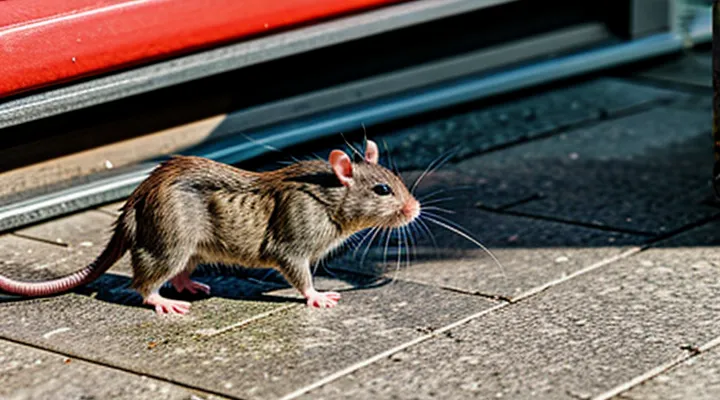
Morphological Characteristics
Length and Proportion
The rat tail typically measures between 5 cm and 12 cm in adult specimens, representing roughly 30‑40 % of total body length. This proportion varies with species, age, and nutritional status; laboratory strains often display shorter tails due to selective breeding, while wild populations exhibit the upper range. Tail length correlates with thermoregulatory efficiency, as a longer surface area facilitates heat dissipation in warm environments and conserves warmth when the tail is curled around the body.
Key aspects of tail proportion include:
- Relative mass: Tail mass accounts for about 0.5‑1 % of total body weight, providing sufficient structural support without imposing excessive energetic cost.
- Segmental ratio: The distal third of the tail is proportionally thinner and more flexible, enhancing maneuverability during climbing and nesting activities.
- Growth pattern: Tail elongation follows a logarithmic curve, with rapid extension during the first four weeks post‑natal and a decelerating rate thereafter, stabilizing near adult proportions.
Understanding these dimensional relationships informs experimental design, veterinary assessment, and comparative anatomy studies involving rodent models.
Anatomy of the Tail Vertebrae
The rat’s caudal column consists of a series of small, cylindrical vertebrae that extend from the sacrum to the tip of the tail. Each element contributes to the overall length, flexibility, and sensory capacity of the organ.
Typically, a laboratory rat possesses 25–30 caudal vertebrae. The proximal vertebrae are larger, with robust centra and well‑developed transverse processes, while the distal vertebrae become progressively reduced, culminating in a cartilaginous tip. The vertebrae are arranged in a linear, semi‑flexible series that permits multidirectional movement without compromising structural integrity.
Key anatomical components of the tail vertebrae include:
- Centrum – short, round cross‑section providing the primary load‑bearing surface.
- Neural arch – arches over the spinal cord, forming a protective canal.
- Pedicles and laminae – connect the centrum to the arch, reinforcing the vertebral unit.
- Transverse processes – serve as attachment points for musculature and ligaments, more pronounced in anterior segments.
- Intervertebral joints – fibrocartilaginous pads allowing smooth articulation and shock absorption.
- Caudal vertebral foramina – openings for nerve roots that extend to the tail’s sensory receptors.
The vertebral arrangement grants the tail high degrees of lateral and axial flexion, enabling rapid directional changes during locomotion and facilitating balance. The tapering morphology reduces inertia at the distal end, enhancing the animal’s ability to use the tail as a tactile probe. Muscular attachments to the transverse processes generate precise movements, while the spinal cord segments within the vertebral canal transmit proprioceptive feedback essential for coordinated tail positioning.
Musculature and Flexibility
The rat tail exhibits a specialized muscular arrangement that enables precise positioning and a wide range of motion. Longitudinal muscle fibers run the length of the tail, alternating between dorsal and ventral bundles. These bundles contract independently, allowing the tail to bend laterally, curl, and straighten with minimal effort. A thin layer of circular smooth muscle surrounds the core, providing subtle adjustments in diameter that aid in balance and tactile sensitivity.
Flexibility derives from the combination of elastic connective tissue and the low‑density skeletal structure. The vertebrae are small, loosely articulated, and separated by intervertebral discs rich in proteoglycans. This configuration permits angular deflection exceeding 120 degrees without compromising structural integrity. The tail’s skin contains abundant collagen fibers oriented parallel to the muscle axis, which distributes tensile forces evenly during rapid movements.
Key functional aspects:
- Independent dorsal‑ventral muscle activation for directional control.
- Circular smooth muscle modulation of tail girth for fine‑tuned pressure sensing.
- Elastic intervertebral discs that absorb shock and maintain flexibility.
- Collagen‑rich dermal layer that prevents tearing during extreme bends.
Collectively, these anatomical features grant the rat tail exceptional maneuverability, facilitating locomotion, environmental exploration, and communication through dynamic tail gestures.
Sensory Receptors
The rat tail contains a dense array of sensory receptors that convert external stimuli into neural signals. These receptors are embedded in the skin, subcutaneous tissue, and underlying musculature, providing the animal with rapid feedback about its surroundings.
- Mechanoreceptors: Merkel cells, Meissner’s corpuscles, and hair follicle receptors detect pressure, vibration, and touch. Their receptive fields are small, allowing precise discrimination of surface texture.
- Thermoreceptors: Free nerve endings respond to temperature changes, distinguishing between warm and cold environments. Their activation thresholds align with the thermal range encountered in typical habitats.
- Nociceptors: Polymodal C-fibers and Aδ-fibers trigger pain responses to potentially damaging stimuli such as extreme heat, cold, or mechanical injury.
The spatial distribution of these receptors varies along the tail length. Proximal segments exhibit higher mechanoreceptor density, supporting fine tactile exploration, while distal regions show increased nociceptor concentration, enhancing protection against peripheral threats. Histological studies reveal that each receptor type is associated with specific epidermal structures; for example, Meissner’s corpuscles reside just beneath the dermal–epidermal junction, whereas thermoreceptors are situated deeper within the dermis.
Functionally, the sensory network of the tail contributes to three primary processes:
- Environmental scanning: Rapid detection of substrate characteristics assists the rat in maintaining balance and navigating confined spaces.
- Thermoregulation: Temperature-sensitive endings inform behavioral adjustments, such as tail cooling or warming, to maintain core body temperature.
- Defensive signaling: Nociceptive activation initiates reflexive withdrawal and alerts central circuits to potential injury, reducing the risk of damage to the tail.
Collectively, the specialized receptors of the rat tail form an integrated system that enhances the animal’s interaction with its environment and supports survival‑critical behaviors.
Functional Roles
Thermoregulation
The rat’s tail functions as a specialized thermoregulatory organ. Its elongated, sparsely furred structure provides a high surface‑to‑volume ratio, enabling rapid heat exchange with the environment. Blood vessels within the tail are densely packed and highly responsive to autonomic signals, allowing precise control of heat loss or retention.
Key physiological mechanisms include:
- Vasodilation: When ambient temperature rises, sympathetic inhibition causes expansion of peripheral vessels, increasing blood flow to the tail surface and accelerating convective and radiative heat loss.
- Vasoconstriction: In cooler conditions, sympathetic activation narrows vessel diameter, reducing blood flow and conserving core temperature.
- Counter‑current heat exchange: Arterial blood delivering warm core heat runs adjacent to venous blood returning from the tail, moderating temperature gradients and preventing excessive cooling of the core.
- Behavioral adjustments: Rats frequently expose the tail to air currents or withdraw it into a curled posture, modulating heat dissipation without metabolic cost.
These processes collectively allow rats to maintain homeostasis across a broad thermal range, supporting activity levels and metabolic efficiency.
Balance and Locomotion
The rat’s tail functions as a dynamic stabilizer during rapid movements and static postures. Muscular and skeletal structures create a flexible lever that counters angular momentum, allowing the animal to maintain equilibrium on narrow surfaces. Sensory receptors embedded in the skin provide continuous feedback on orientation, enabling immediate corrective adjustments.
Key contributions to balance and locomotion include:
- Counter‑balancing torque generated by tail swings that offset body rotation.
- Real‑time proprioceptive input that refines gait patterns.
- Extension of the center of mass rearward, reducing the risk of tipping during vertical climbs.
- Modulation of tail stiffness through selective muscle activation, adapting to varied terrain.
These mechanisms integrate with limb coordination to produce precise, agile navigation across complex environments.
Arboreal Movement
The tail of a rat provides essential support for climbing and navigating complex three‑dimensional environments. Its elongated, flexible structure acts as a counterbalance, allowing rapid shifts in body orientation without loss of stability. Muscular control along the vertebral column enables precise adjustments that keep the center of mass aligned with the substrate during vertical and diagonal movements.
Sensory receptors distributed across the tail surface detect minute pressure changes and surface textures. This tactile feedback informs the animal about branch diameter, inclination, and slip risk, prompting immediate corrective actions. The tail’s skin, covered with fine, overlapping scales, reduces friction while maintaining enough grip to prevent uncontrolled sliding.
Key contributions of the rat tail to arboreal locomotion include:
- Dynamic balance – continuous, low‑amplitude oscillations counteract gravitational torque during ascent and descent.
- Postural stabilization – activation of dorsal musculature locks the tail against the body, creating a rigid extension that supports the torso.
- Tactile perception – mechanoreceptors relay real‑time data on substrate characteristics, enhancing grip precision.
- Energy efficiency – by serving as a passive stabilizer, the tail reduces the need for excessive limb muscle activation, conserving metabolic resources.
Empirical observations show that rats with impaired tail function exhibit reduced climbing speed, increased slip frequency, and a tendency to adopt more cautious, ground‑based routes. These findings underscore the tail’s integral role in enabling swift, agile movement through arboreal habitats.
Bipedal Posture
The rat’s tail serves as a dynamic stabilizer when the animal adopts an upright stance. Muscular contractions along the vertebral column generate fine‑tuned movements that counteract shifts in the center of gravity, allowing precise balance on two limbs. Sensory receptors embedded in the tail’s skin and subdermal tissue relay proprioceptive data to the spinal cord, enabling rapid adjustments to posture without visual input.
Key contributions of the tail to bipedal posture include:
- Counterbalance: The tail’s mass and flexibility generate torque opposite to the body’s forward lean, reducing the effort required by hind‑limb muscles.
- Feedback loop: Mechanoreceptors detect angular displacement, transmitting signals that modulate limb muscle activation.
- Energy efficiency: By offloading balance control to the tail, the hind limbs conserve metabolic resources during prolonged upright activity.
- Adaptation: Evolutionary modifications in tail length and musculature correlate with the frequency of bipedal behavior across rodent species.
These mechanisms collectively enhance stability, responsiveness, and endurance when rats stand or move on two legs, illustrating the tail’s integral role in locomotor versatility.
Communication and Social Signaling
The rat tail serves as a versatile communication organ, transmitting visual, tactile, and olfactory cues that influence group dynamics. When a rat raises or vibrates its tail, conspecifics perceive the movement as an indicator of alertness, aggression, or submission, allowing rapid adjustment of behavior without vocalization.
Tail posture and motion encode hierarchical status. Dominant individuals often display an erect, stiff tail, while subordinate rats adopt a lowered, relaxed tail. This contrast reduces the need for physical confrontation by providing an immediately recognizable signal of rank.
Olfactory signaling relies on the tail’s dense hair and glandular secretions. Rats spread scent marks by dragging the tail across surfaces, depositing pheromones that convey identity, reproductive condition, and territorial boundaries. The resulting chemical trail guides navigation and reinforces social cohesion.
Key signaling functions of the rat tail include:
- Visual alerts (e.g., rapid flicking to signal danger)
- Postural displays that denote dominance or submission
- Chemical deposition for individual and territorial identification
- Tactile interaction during grooming, reinforcing social bonds
These mechanisms collectively enable efficient information exchange, supporting group stability and adaptive responses to environmental challenges.
Tail Posture in Dominance Displays
Tail posture serves as a primary visual cue during rat dominance encounters. When an individual assumes a raised, erect position, the tail extends upward and stiffens, creating a clear silhouette against the environment. This configuration signals superiority and deters subordinate rivals without necessitating physical confrontation.
Typical postural elements observed in dominance displays include:
- Tail elevation above the horizontal plane, often reaching 30–45 ° relative to the body axis.
- Reduced lateral flexion, resulting in a straight, rigid rod.
- Concurrent body arching that accentuates the tail’s prominence.
Experimental observations reveal that tail elevation correlates with increased aggression scores in staged encounters. Rats that maintain a high, immobile tail for longer durations achieve higher win‑rates in territorial disputes. Electromyographic recordings indicate sustained activation of the caudal musculature, particularly the levator caudalis, during these displays.
Physiological mechanisms underpinning the posture involve sympathetic modulation of the tail’s vascular smooth muscle, producing a transient vasoconstriction that stiffens the appendage. This response complements muscular contraction, ensuring the tail remains upright despite ambient temperature fluctuations.
In natural settings, tail posture integrates with other signals—vocalizations, scent marking, and facial expressions—to construct a multimodal dominance hierarchy. Individuals that consistently exhibit the described tail configuration occupy higher ranks, gain preferential access to resources, and influence group cohesion.
Warning Signals
The rat tail serves as a visual and tactile alarm system that alerts conspecifics and predators to potential danger. Its coloration, motion, and sensory feedback provide immediate information about threat level.
- Contrast coloration: Darkened or white‑spotted sections appear when the tail is exposed, creating a high‑visibility signal that can be detected at a distance.
- Vibrational cues: Rapid shaking generates substrate‑borne vibrations, warning nearby individuals of an approaching predator.
- Chemical release: Specialized glands along the tail emit pungent secretions when the animal feels threatened, deterring predators and marking the area.
- Auditory rustle: Movement through foliage produces a distinctive rustling sound, serving as an acoustic alert in dense environments.
These mechanisms operate together, allowing the animal to convey urgency, coordinate escape responses, and reduce the likelihood of predation.
Defensive Mechanisms
The tail of a rat serves several defensive functions that enhance survival when predators threaten. Its structure, musculature, and sensory capabilities combine to create an effective deterrent system.
Rats employ the following mechanisms:
- Autotomy – Muscular contraction can detach a portion of the tail, allowing escape while the detached segment continues to twitch, distracting the attacker.
- Tail whipping – Rapid, forceful swings generate impact sufficient to injure small predators or discourage further assault.
- Vibrissal signaling – Specialized hair follicles detect vibrations in the environment, alerting the animal to approaching threats before visual cues appear.
- Chemical secretion – Glands along the tail release a pungent odor when the animal feels threatened, reducing predator interest.
- Camouflage – Dark coloration and a tapered shape break the silhouette, making the tail less conspicuous during rapid movement.
Each mechanism operates independently but often overlaps during a single encounter, providing layered protection. The combination of physical injury, sensory warning, and chemical deterrence creates a multifaceted defense that compensates for the rat’s modest size.
Grasping and Support
The rat tail consists of a flexible vertebral column surrounded by skin, muscle, and a dense network of sensory receptors. Its structure permits precise movements and sustained contact with substrates, enabling both manipulation and stabilization.
- Muscular control provides fine motor adjustments, allowing the tail to wrap around objects and maintain grip.
- High concentration of mechanoreceptors detects pressure and vibration, informing the animal of surface conditions during grasping.
- Segmented vertebrae create a semi‑rigid backbone that resists bending forces while permitting curvature needed for secure attachment.
In addition to manipulation, the tail contributes to postural stability. By extending opposite the body’s center of mass, it counterbalances shifts in weight during rapid locomotion or vertical climbing. The tail’s ability to generate corrective torque reduces the risk of falls and supports sustained elevation on narrow or irregular surfaces.
Evolutionary Adaptations
Variations Across Rat Species
Rats exhibit considerable tail diversity, reflecting adaptations to distinct ecological niches and phylogenetic lineages. Morphology, vascularization, and sensory capacity differ markedly among species, influencing locomotion, thermoregulation, and environmental perception.
- Length relative to body: Rattus norvegicus possesses a tail approximately 70–80 % of body length, whereas Rattus rattus often exceeds body length, enhancing balance in arboreal habitats.
- Scale arrangement: Rattus exulans displays densely packed, overlapping scales that reduce friction during climbing; desert-dwelling Rattus argentiventer features larger, more spaced scales, facilitating heat dissipation.
- Prehensility: Species such as Rattus rattus develop muscular control enabling partial grasping of branches, a trait absent in ground-dwelling counterparts.
- Vascular network: High‑density arteriovenous shunts in tropical species support rapid heat exchange, while temperate species rely on fewer shunts, conserving body heat.
- Sensory innervation: Enhanced mechanoreceptor density in the tails of nocturnal rats improves tactile feedback during navigation; diurnal species exhibit reduced receptor counts.
These variations correlate with habitat use, predator avoidance, and foraging strategies. Comparative studies of tail structure provide reliable markers for species identification and contribute to understanding evolutionary pressures shaping rodent morphology.
Genetic and Environmental Influences
Genetic determinants shape the morphology, growth rate, and structural integrity of the rat tail. Specific alleles regulate keratin expression, vertebral segmentation, and the distribution of adipose tissue along the tail. Mutations in the Krt gene family can produce altered scale patterns, while polymorphisms in the Hox clusters influence vertebral length and flexibility. Epigenetic modifications, such as DNA methylation of developmental regulators, further modulate tail phenotype across generations.
Environmental conditions modify tail development through temperature, nutrition, and mechanical stress. Cold exposure induces vasoconstriction and increased fur density, enhancing thermal insulation. Dietary protein levels affect collagen synthesis, influencing tail strength and elasticity. Repetitive locomotor activity triggers adaptive remodeling of vertebral joints, optimizing balance and maneuverability.
Key influences can be summarized:
-
Genetic factors
- Allelic variation in keratin and Hox genes
- Epigenetic regulation of developmental pathways
- Inherited structural anomalies affecting vertebrae
-
Environmental factors
- Ambient temperature and thermoregulatory response
- Nutrient availability, especially protein intake
- Mechanical loading from locomotion and substrate interaction
Understanding the interplay between hereditary codes and external stimuli clarifies how rat tails achieve their functional diversity and adaptive capacity.
The Rat Tail in Research
Biomedical Applications
The caudal appendage of rodents serves as a versatile platform for biomedical research. Its elongated, flexible morphology enables precise manipulation in experimental settings, while its vascular and neural composition provides a realistic model for studying peripheral systems.
Key biomedical uses include:
- Drug delivery testing – the tail’s accessible vasculature allows direct infusion of compounds, facilitating pharmacokinetic and pharmacodynamic assessments.
- Tissue engineering – grafts harvested from the tail offer a source of collagen-rich matrix for scaffold development and regeneration studies.
- Neurophysiology – peripheral nerve fibers within the tail permit electrophysiological recordings, supporting investigations of nerve conduction and injury repair.
- Thermal regulation research – the tail’s thermoregulatory properties provide a controllable system for evaluating heat exchange mechanisms and related therapeutic interventions.
- Genetic modeling – transgenic rodents with tail-specific modifications enable targeted analysis of gene function in musculoskeletal and vascular contexts.
These applications exploit the tail’s anatomical characteristics to advance drug development, regenerative medicine, and physiological understanding, reinforcing its relevance across multiple biomedical disciplines.
Behavioral Studies
The rat’s tail has been the focus of numerous behavioral investigations that link its morphology to specific actions and environmental interactions. Researchers have documented how tail use varies across contexts such as locomotion, thermoregulation, and social communication.
Key behavioral observations include:
- Locomotor support – during climbing and balance tasks, rats actively position the tail to counteract angular momentum, improving stability on narrow surfaces.
- Heat dissipation – in warm environments, rats increase tail blood flow, exposing the appendage to air currents to lower core temperature; this response is measurable through infrared imaging.
- Social signaling – tail posture and movement convey dominance or submission during encounters; dominant individuals often hold the tail erect, while subordinates display lowered or tucked tails.
- Stress modulation – exposure to novel or threatening stimuli triggers rapid tail licking and shaking, behaviors that correlate with elevated cortisol levels.
Experimental paradigms typically employ arena designs that isolate tail-dependent tasks, allowing quantification of performance metrics such as latency to balance, tail surface temperature changes, and frequency of tail‑related gestures. Data from these studies support the view that the tail functions as a multifunctional organ, directly influencing survival‑related behaviors and serving as a reliable indicator of physiological state.
Common Tail Ailments
Tail Necrosis
Tail necrosis represents a localized loss of tissue viability in the distal portion of the rodent tail. The condition disrupts the integumentary barrier, compromises vascular supply, and may progress to infection if untreated. Primary etiologies include ischemic injury, thermal exposure, chemical irritation, and traumatic compression. Secondary factors such as poor husbandry, excessive bedding humidity, and inadequate nutrition can exacerbate susceptibility.
Key clinical indicators are:
- Darkened, non‑elastic skin segment
- Absence of palpable pulse in the affected region
- Presence of foul odor or purulent discharge
- Reduced or absent tail movement
Diagnostic confirmation relies on visual assessment, pulse oximetry, and, when necessary, histopathological examination to differentiate necrosis from ulcerative dermatitis. Early intervention reduces the risk of systemic spread.
Management protocol:
- Isolate the affected animal to prevent cross‑contamination.
- Debride necrotic tissue under aseptic conditions.
- Apply topical antimicrobial agents and protective dressings.
- Administer systemic antibiotics if secondary infection is evident.
- Monitor wound healing daily; consider amputation of the necrotic segment if necrosis extends proximally.
Preventive measures focus on maintaining optimal environmental conditions: stable ambient temperature, dry bedding, and regular tail inspections during routine health checks. Nutritional supplementation with essential fatty acids supports epidermal integrity and vascular health, decreasing the likelihood of necrotic events.
Degloving Injuries
Degloving injuries involve the separation of skin and subcutaneous tissue from underlying fascia, creating a flap that remains attached only by its vascular pedicle. In rodents, the tail’s distal segment is particularly vulnerable because its skin is loosely adherent to the underlying musculature and the vascular network is confined to a narrow axial artery. When a traumatic force shears the tail skin from the shaft, the resulting wound mirrors the pathophysiology seen in larger mammals, but the limited tissue mass accelerates ischemia and necrosis.
Clinical presentation includes a circumferential skin tear exposing the underlying vertebral column, loss of palpable pulses in the distal tail, and rapid discoloration of the flap. Early assessment must verify arterial flow with Doppler ultrasound or direct palpation of the dorsal artery. Failure to restore perfusion within hours leads to irreversible tissue loss and potential infection of the exposed bone.
Management proceeds in a stepwise fashion:
- Immediate irrigation with sterile saline to remove debris.
- Application of a tourniquet proximal to the injury only if hemorrhage threatens hemodynamic stability.
- Re‑approximation of the skin flap using tension‑free sutures or tissue adhesives, preserving any viable vessels.
- Administration of broad‑spectrum antibiotics to prevent bacterial colonization.
- Monitoring of distal perfusion every 30 minutes for the first six hours, then hourly until stability is confirmed.
Prognosis hinges on the extent of vascular compromise and the timeliness of intervention. Partial degloving with preserved arterial flow often heals with minimal scarring, while complete circumferential loss typically requires amputation of the distal tail segment. Rehabilitation focuses on preventing secondary infection and maintaining limb function in the animal’s remaining tail.
Prevention strategies include minimizing exposure to high‑velocity objects, providing protective barriers in environments where rodents are handled, and training personnel to recognize early signs of skin‑muscle separation. These measures reduce the incidence of severe tail injuries and improve overall animal welfare.
Parasitic Infections
The tail of a rat serves as a habitat and conduit for a range of parasitic organisms. Its keratinized surface, vascular network, and constant exposure to the environment create conditions that support the life cycles of ectoparasites and facilitate the transmission of internal parasites.
Ectoparasites commonly found on rat tails include:
- Siphonaptera (fleas) – attach to the tail skin, feed on blood, and can move to other hosts.
- Acari (mites and ticks) – embed their mouthparts in the epidermis, causing irritation and serving as vectors for bacterial agents.
- Nematodes (e.g., Strongyloides spp.) – penetrate the tail’s thin epidermis during larval migration, establishing infection in the host’s gastrointestinal tract.
Internal parasites exploit the tail’s vascular supply for dissemination. Blood-feeding ectoparasites introduce pathogens such as Leptospira and Rickettsia directly into the circulatory system, leading to systemic disease. Additionally, the tail’s proximity to the perineal region facilitates the spread of intestinal helminths through fecal contamination of the tail fur.
Research indicates that tail length and grooming behavior influence parasite load. Longer tails provide a larger surface area for colonization, while frequent grooming reduces ectoparasite numbers but may increase the risk of mechanical transmission of internal parasites through oral ingestion of larvae.
Control measures targeting rat tails focus on:
- Chemical ectoparasiticides – topical applications penetrate the tail’s cuticle to eliminate fleas and mites.
- Environmental sanitation – removal of nesting material reduces tail exposure to infective stages.
- Biological monitoring – regular inspection of tail condition serves as an early indicator of infestation intensity.
Understanding the relationship between rat tail morphology and parasitic infections informs effective management strategies in both laboratory colonies and urban pest control programs.