
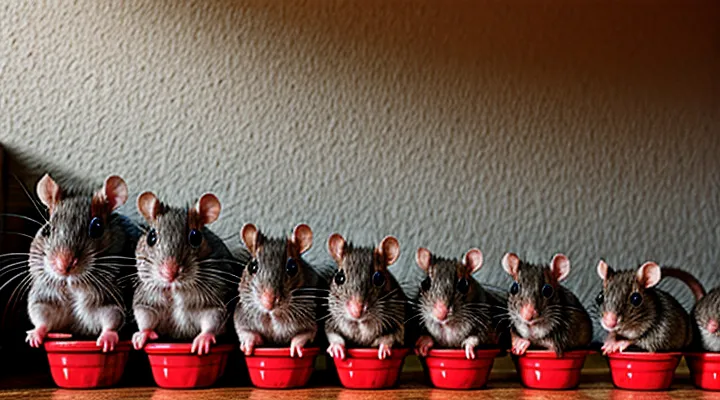
Understanding Rat Sizes: A Comprehensive Overview
Factors Influencing Rat Size
Genetics and Breed
Genetic composition directly determines the size range observed in domestic rats, from miniature specimens to exceptionally large individuals. Distinct alleles control skeletal growth, muscle development, and metabolic rate, producing measurable differences in adult body mass and length.
Key genetic factors include:
- Variants of the growth hormone receptor gene that increase somatic expansion.
- Mutations in the myostatin pathway that reduce inhibitory signals on muscle growth.
- Polygenic contributions affecting bone density and limb proportion.
Breeds cluster around three size categories:
- Dwarf lines, characterized by recessive alleles that limit overall growth, typically reaching 50–80 g.
- Standard varieties, carrying a balanced mix of growth‑promoting and restraining genes, averaging 150–250 g.
- Giant strains, selected for dominant growth alleles, often exceeding 500 g.
Selective breeding amplifies desired size traits through controlled matings, backcrossing, and genetic screening. Breeders monitor allele frequency, avoid inbreeding depression, and apply marker‑assisted selection to maintain health while achieving target dimensions.
Understanding the genetic‑breed relationship enables precise size prediction, informs husbandry protocols, and supports scientific use of rats where body size influences experimental outcomes.
Diet and Nutrition
Rats exhibit a broad size spectrum, from diminutive species weighing less than 20 g to large representatives exceeding 500 g. Size directly shapes dietary requirements, influencing energy demand, nutrient balance, and foraging behavior.
Smaller individuals possess elevated mass‑specific metabolic rates, necessitating frequent intake of calorie‑dense foods. Their digestive tracts process high‑protein and high‑fat items efficiently, while limiting bulk. Larger rats sustain lower relative metabolism, can process greater volumes of fibrous material, and benefit from a more varied diet that includes coarse vegetation and larger prey.
Key nutritional factors across the size range:
- Protein: 18–24 % of dry matter for small rats; 14–20 % sufficient for larger specimens.
- Fat: 8–12 % for diminutive species to meet rapid energy turnover; 5–10 % adequate for larger rats.
- Fiber: Minimal (<3 %) for tiny rats to avoid gastrointestinal slowdown; 5–10 % for large rats to support hindgut fermentation.
- Micronutrients: Calcium‑phosphorus ratio of 1.2:1 recommended for all sizes; vitamin E and selenium requirements increase with body mass.
- Water: Small rats require multiple fresh water sources daily; large rats can tolerate lower frequency but need ample volume.
Feeding protocols for captive populations adjust portion size to body weight, applying a scaling factor of 0.04 g of food per gram of body mass per day. Monitoring body condition scores and fecal consistency ensures diets remain appropriate as individuals grow or shrink.
Understanding size‑dependent nutrition informs habitat management, captive breeding, and experimental design, reducing mortality linked to improper feeding and supporting healthy populations across the full spectrum of rat body sizes.
Environment and Habitat
Rats occupy a broad size spectrum, and body dimensions directly affect the environments they can exploit. Small-bodied species thrive in confined, structurally complex microhabitats, while larger individuals require open spaces that accommodate greater energetic demands.
The smallest rat species, such as the African pygmy rat (Mus minutoides) and other dwarf varieties, are found in dense ground cover, leaf litter, and shallow burrows beneath shrubs. Their limited mass permits navigation through narrow crevices and reliance on fine-grained food sources like seeds and insects. These habitats provide protection from predators and maintain stable microclimates essential for thermoregulation.
Medium-sized rats, exemplified by the brown rat (Rattus norvegicus), dominate urban infrastructure, agricultural fields, and temperate forests. They exploit sewers, basements, and storage facilities where food waste is abundant. In rural settings, they occupy burrow systems adjacent to crop rows, benefiting from both shelter and readily available grains. Their size allows efficient foraging over larger territories while still accessing concealed refuges.
The largest rat species, including the giant bamboo rat (Rhizomys sinensis) and the giant Norway rat (Rattus norvegicus var. giganteus), inhabit open wetlands, riverbanks, and forest clearings. These environments supply substantial vegetation and aquatic invertebrates required to sustain high metabolic rates. Burrows are extensive, often extending several meters horizontally and vertically, providing space for storage of food caches and offspring rearing.
Habitat associations by size class
- Very small rats: leaf litter, shallow burrows, dense shrub layers, rock crevices.
- Medium rats: urban sewer networks, basement spaces, farm storage buildings, temperate forest edge burrows.
- Large rats: wetland margins, riverbanks, bamboo groves, expansive ground burrow complexes.
Size-driven habitat selection shapes foraging strategies, predator avoidance, and reproductive success across the rat size continuum.
Age and Development
Rats undergo a predictable pattern of growth that links age to body dimensions across the entire size spectrum. Newborn pups, weighing less than five grams, exhibit rapid weight gain during the first two weeks, reaching approximately 30 % of adult mass by day 14. This early phase is characterized by skeletal elongation, dental eruption, and the onset of independent foraging.
From the third to sixth week, juveniles double their weight each week, with tail length extending proportionally to support balance during increased locomotor activity. Muscle fibers mature, and metabolic rate stabilizes, allowing sustained growth without the high caloric fluctuations seen in neonates.
Adult rats, depending on species, display a broad range of final sizes. Small‑to‑medium species such as the common house rat typically attain 250–300 g, while larger breeds like the giant Norway rat can exceed 1 kg. Growth plates close between eight and twelve weeks, marking the end of linear size increase; thereafter, weight fluctuations reflect diet, health, and environmental conditions rather than developmental progression.
Key developmental milestones:
- Birth: <5 g, eyes closed, reliance on maternal care.
- 2 weeks: 30 % adult weight, eyes open, initial solid food intake.
- 4 weeks: 60 % adult weight, coordinated movement, weaning complete.
- 8 weeks: skeletal maturity, sexual maturation begins.
- 12 weeks: growth plates fuse, adult size reached, reproductive capability established.
Understanding these age‑linked changes clarifies why size variation among rats spans from minute newborns to sizable mature individuals, and informs husbandry, research design, and pest‑management strategies.
The Spectrum of Rat Sizes
Smallest Rat Species and Breeds
African Pygmy Mouse (Not a True Rat, but Often Compared)
The African pygmy mouse (Mus minutoides) measures 5–8 cm in head‑body length, with a tail roughly equal to the body. Adult weight ranges from 3 to 12 g, placing it among the smallest rodents commonly likened to rats. Despite its name, the species belongs to the Muridae family, not to the Rattus genus, yet its morphology and behavior often lead to informal comparison with true rats.
Key characteristics:
- Body size: 5–8 cm (head‑body); tail 4–7 cm.
- Weight: 3–12 g.
- Habitat: savanna and grassland regions of sub‑Saharan Africa.
- Diet: seeds, insects, soft plant matter.
- Reproduction: gestation 21 days; litters of 3–7 pups.
In the spectrum of rodent dimensions, the African pygmy mouse represents the lower extreme, contrasting sharply with the larger species such as the giant cane rat (up to 1.5 kg) and the common brown rat (up to 500 g). Its diminutive size, rapid reproductive cycle, and adaptability illustrate the breadth of body plans found among rat‑like mammals, reinforcing the need to distinguish true rats from similarly sized but taxonomically distinct species.
Dwarf Fancy Rats
Dwarf Fancy Rats represent the smallest category within the spectrum of domesticated rat sizes. Adult individuals typically measure 8–10 cm in body length, with tails adding another 6–8 cm. Their compact frame results from selective breeding for reduced stature while preserving the breed’s characteristic coat patterns and temperament.
Weight ranges from 120 to 180 g, considerably lighter than standard Fancy Rats. This reduced mass influences housing requirements: cages with lower bar spacing prevent escapes, and bedding depth can be shallower without compromising comfort. Nutrition guidelines recommend high‑protein pellets supplemented with occasional fresh vegetables; overfeeding leads quickly to obesity due to the breed’s limited capacity for energy storage.
Key considerations for owners include:
- Health monitoring: Dwarf Fancy Rats are prone to respiratory infections; regular veterinary checks detect early symptoms.
- Social needs: Despite small size, they maintain the species’ strong social drive; group housing of at least two individuals prevents stress‑induced behaviors.
- Enrichment: Small tunnels, chew toys, and climbing structures accommodate their agility while encouraging natural foraging activity.
Breeding practices focus on maintaining genetic diversity to avoid inbreeding depression. Pedigree records track lineage, and breeders select pairs with complementary health histories to sustain vigor across generations.
Medium-Sized Rats
Common House Rat (Rattus rattus)
The common house rat, Rattus rattus, typically measures 16–24 cm in head‑body length, with a tail of equal or slightly longer length (18–25 cm). Adult weight ranges from 75 g to 200 g, placing it among the smaller members of the global rat spectrum.
- Head‑body length: 16–24 cm
- Tail length: 18–25 cm
- Weight: 75–200 g
Compared with the larger Norway rat (Rattus norvegicus), which reaches up to 40 cm in body length and exceeds 300 g, the black rat’s compact dimensions facilitate navigation through narrow openings and dense vegetation. Its size influences diet, predation risk, and reproductive output, enabling rapid colonization of human dwellings and coastal environments.
Habitat preference includes attics, walls, and stored grain areas where crevices accommodate its slender frame. The species’ agility and reduced mass allow efficient climbing and jumping, traits directly linked to its morphological proportions.
Norway Rat (Rattus norvegicus)
The Norway rat (Rattus norvegicus) represents the larger end of the size spectrum among common rat species. Adult individuals typically measure 20–25 cm in head‑body length, with an additional 15–20 cm tail. Body mass ranges from 250 g to 500 g, occasionally exceeding 600 g in well‑fed populations.
Key dimensions:
- Head‑body length: 20–25 cm (8–10 in)
- Tail length: 15–20 cm (6–8 in)
- Weight: 250–500 g (0.55–1.1 lb)
Morphologically, the Norway rat possesses a robust skull, thick fur ranging from brown to gray, and a relatively short, scaly tail. These traits distinguish it from smaller counterparts such as the roof rat (Rattus rattus), which averages 150–250 g and exhibits a longer, more slender tail.
Ecologically, the species thrives in urban and agricultural environments where abundant food and shelter support its growth potential. High caloric intake and reduced predation pressure contribute to the upper limits of size observed in dense populations.
In comparative context, the Norway rat’s dimensions exceed those of most dwarf rat species, yet remain smaller than the giant pouched rat (Cricetomys gambianus), which can reach 1.5 kg and a head‑body length of 35 cm. This placement illustrates the gradation of size across the rodent group, with the Norway rat occupying a central, sizable niche.
Largest Rat Species and Breeds
Gambian Pouched Rat
The Gambian pouched rat (Cricetomys gambianus) ranks among the largest rodent species commonly referred to as rats. Adults typically measure 40–50 cm in head‑body length, with a tail adding another 30–40 cm, resulting in a total length of up to 90 cm. Body mass ranges from 1.0 to 1.4 kg, substantially heavier than most urban rat species such as the brown rat (Rattus norvegicus), which averages 250 g.
- Head‑body length: 40–50 cm
- Tail length: 30–40 cm
- Total length: up to 90 cm
- Weight: 1.0–1.4 kg
The species possesses large cheek pouches that can expand to hold up to 300 g of food, facilitating transport of seeds and insects. Its robust build supports a primarily terrestrial lifestyle, though it can climb and swim when necessary. Distribution spans sub‑Saharan Africa, favoring savanna, woodland, and cultivated areas where it exploits abundant ground resources.
In research and practical applications, the Gambian pouched rat is valued for its keen olfactory abilities. Trained individuals detect landmines and tuberculosis samples with high accuracy, leveraging a brain mass proportionally larger than that of smaller rat species, which correlates with enhanced scent discrimination.
Overall, the Gambian pouched rat exemplifies the upper size spectrum of rat-like rodents, combining considerable body dimensions with functional adaptations that distinguish it from its smaller counterparts.
Cloud Rats
Cloud rats, members of the genus Phloeomys, represent the upper extreme of the size continuum observed among rodents. Native to the Philippines, they occupy montane and lowland forests where dense canopy cover provides shelter and food sources.
Adult cloud rats exhibit substantial body dimensions. Typical measurements include:
- Head‑body length: 30–45 cm
- Tail length: 20–35 cm, often shorter than the body
- Weight: 1.2–2.5 kg, with some individuals exceeding 3 kg
These metrics place cloud rats among the heaviest and longest rat species, contrasting sharply with the diminutive members of the same order that measure less than 5 cm in body length.
Morphologically, cloud rats possess a dense, wool‑like pelage that ranges from gray‑blue to brown, aiding camouflage among moss‑laden branches. Their robust skulls and strong incisors enable consumption of bark, leaves, and fruit, while a well‑developed olfactory system assists in locating food within the forest understory.
Reproductive biology aligns with their size. Litters typically contain one to three offspring, with a gestation period of approximately 30 days. Juveniles reach near‑adult size within six months, reflecting a growth rate adapted to the resource‑rich but competitive forest environment.
Ecologically, cloud rats function as both seed dispersers and foliage consumers, influencing forest regeneration patterns. Their presence indicates healthy, mature forest ecosystems, and population declines often signal habitat degradation.
Conservation assessments classify several cloud‑rat species as vulnerable or endangered due to deforestation and hunting pressure. Protective measures focus on preserving primary forest habitats and enforcing anti‑poaching regulations.
Giant Fancy Rats
Giant fancy rats represent the upper extreme of domestic rat size, often exceeding 1 kg and reaching lengths of 30 cm when measured from nose to tail tip. Breeds such as the “Dumbo” and “Rex” have been selectively enlarged for show purposes, producing a robust skeletal structure, dense musculature, and a coat that may be smooth, curly, or feathered.
Key characteristics include:
- Body mass typically between 1 kg and 1.5 kg, with occasional specimens surpassing 2 kg.
- Skull dimensions enlarged proportionally to accommodate stronger jaw muscles.
- Coat variations achieved through targeted breeding, resulting in textures ranging from sleek to heavily plush.
- Temperament noted for calm demeanor and tolerance of handling, making them suitable for exhibition and companionship.
Management requirements differ from smaller counterparts. Diet must provide higher caloric density, incorporating quality laboratory rodent pellets supplemented with protein-rich treats. Enclosures need reinforced flooring and increased space, preferably a minimum of 120 cm² per kilogram of body weight, to prevent joint stress and promote natural activity. Environmental enrichment—tunnels, climbing platforms, and chewable objects—supports musculoskeletal health and reduces stereotypic behavior.
Health monitoring focuses on respiratory and cardiovascular systems, as enlarged size can predispose individuals to heart strain and obstructive airway conditions. Routine veterinary examinations should include auscultation, weight tracking, and dental checks, with particular attention to overgrown incisors that may affect feeding efficiency.
Breeding programs aim to maintain genetic diversity while preserving size traits. Controlled pairings, avoidance of inbreeding coefficients above 0.125, and systematic record‑keeping ensure stable lineage development and reduce hereditary defects.
Overall, giant fancy rats occupy a distinct niche within the spectrum of domestic rat dimensions, combining impressive physical stature with specialized husbandry demands. Their presence in exhibitions underscores the success of selective breeding in producing aesthetically striking yet manageable rodents.
Implications of Rat Size
Ecological Role and Impact
Predation and Prey Dynamics
Rats exhibit a broad spectrum of body dimensions, and this variation directly shapes their roles as prey and as predators. Size determines susceptibility to specific hunters, influences hunting tactics, and alters the flow of energy through terrestrial food webs.
Smaller individuals experience heightened exposure to aerial and nocturnal predators. Typical threats include:
- Barn owls, which capture prey in low‑light conditions.
- Small mustelids such as weasels, capable of entering tight burrows.
- Ground‑hunting snakes that rely on rapid strikes.
These predators exploit the rats’ limited defensive musculature and reduced ability to flee long distances. In response, diminutive rats adopt strategies such as increased nocturnality, heightened vigilance, and the use of complex tunnel networks.
Larger rats face a narrower predator set. Apex carnivores—foxes, coyotes, and large raptors—remain capable of killing them, but the frequency of successful attacks declines. Additional pressures stem from:
- Human harvesting, where size correlates with market value.
- Larger mustelids and feral dogs that can overpower bigger rodents.
Greater body mass affords stronger bite forces, enhanced stamina for prolonged escape runs, and the capacity to defend nests against intruders. Consequently, large rats often dominate intraspecific competition, securing superior resources and influencing population structure.
Predator selection pressure scales with rat size, producing a dynamic equilibrium: as small rats are removed, larger individuals expand into vacant niches, while predators adapt hunting techniques to target the most abundant size class. This size‑dependent interplay regulates rodent population density, controls disease vectors, and sustains biodiversity across habitats.
Ecosystem Engineering
Rats exhibit a wide spectrum of body sizes, from diminutive individuals barely a few centimeters long to considerably larger specimens approaching the size of small mammals. This size gradient influences the ways in which rats modify their environments, creating measurable changes in soil composition, vegetation structure, and resource distribution.
Smaller rats tend to burrow shallowly, increasing soil aeration and facilitating water infiltration. Their frequent foraging on seed caches reduces seed density near the surface, promoting the germination of wind‑dispersed species that require open ground. Larger rats excavate deeper tunnels, generating substantial bioturbation that redistributes organic matter across soil horizons. Their consumption of larger fruits and nuts transports nutrients into subterranean chambers, enriching the microbial community.
Key engineering effects linked to rat size include:
- Soil turnover: shallow vs. deep excavation alters bulk density and porosity.
- Seed dispersal patterns: limited-range caching by small individuals versus long-distance transport by larger ones.
- Nutrient cycling: surface litter breakdown by small rats compared with deep organic deposition by large rats.
- Habitat heterogeneity: creation of microhabitats such as burrow walls, chambers, and surface runways that support diverse invertebrate assemblages.
The cumulative impact of these activities reshapes plant community composition and influences predator–prey dynamics. By altering physical and chemical properties of their surroundings, rats of varying sizes function as agents of ecosystem transformation, driving feedback loops that affect biodiversity and ecosystem resilience.
Pet Rat Considerations
Housing Requirements
Rats exhibit a broad spectrum of body dimensions, and enclosure design must reflect these differences to ensure health, safety, and behavioral fulfillment. Smaller individuals require compact yet spacious habitats that prevent overcrowding, while larger specimens need expanded floor area and reinforced structures to accommodate greater weight and activity levels.
Key considerations for all size categories include:
- Minimum floor space: at least 0.5 sq ft per small rat, 1 sq ft per medium rat, and 2 sq ft per large rat. Vertical space should provide climbing opportunities equal to half the floor area.
- Bar spacing: 0.5 in for juveniles, 0.75 in for adults, and 1 in for the largest rats to prevent escape and injury.
- Substrate depth: 2 in for small enclosures, 3 in for medium, and 4 in for large, allowing for digging and nesting without excessive waste buildup.
- Structural support: reinforced corners and reinforced wire mesh for habitats housing rats above 12 oz to withstand increased pressure and activity.
- Enrichment density: one shelter, one chewable object, and one climbing element per 0.5 sq ft of floor space, scaled proportionally for larger enclosures.
Temperature regulation remains constant across sizes; maintain ambient temperature between 68–75 °F and humidity at 40–60 %. Ventilation must deliver at least 10 air changes per hour, regardless of enclosure dimensions.
Cleaning protocols must adjust to volume: small cages require weekly spot cleaning, medium cages bi‑weekly deep cleaning, and large cages weekly thorough sanitation. Waste removal should occur daily to prevent ammonia buildup, which can affect respiratory health in all size groups.
By aligning enclosure specifications with the physical demands of each rat size, caretakers provide environments that support optimal growth, activity, and well‑being.
Health and Lifespan Variations
Rats exhibit marked differences in physiological condition and longevity that correspond to their body dimensions. Smaller species, such as dwarf or pygmy rats, display rapid metabolic rates, higher heart frequencies, and shorter average lifespans of 1–2 years. Their compact size limits fat storage, making them more susceptible to temperature fluctuations and disease outbreaks. Conversely, larger rats, including the giant cane and brown rat variants, possess slower metabolism, lower resting heart rates, and typical lifespans extending to 3–4 years under optimal care. Greater body mass supports more extensive energy reserves, enhancing resilience to environmental stressors and infection.
Key health patterns linked to size:
- Thermoregulation: Tiny rats lose heat quickly, requiring higher ambient temperatures; larger rats retain heat, tolerating cooler environments.
- Dietary needs: Small rats need frequent, nutrient-dense meals to sustain fast metabolism; large rats benefit from larger, less frequent feedings with higher fiber content.
- Reproductive output: Diminutive species produce multiple litters annually, often with larger brood sizes; larger species have fewer litters, each with fewer offspring, reflecting longer gestation periods.
- Disease susceptibility: High metabolic demand in small rats predisposes them to respiratory and gastrointestinal issues; larger rats face increased risk of obesity-related conditions, such as diabetes and cardiovascular strain.
Management strategies must align with these physiological distinctions. For diminutive rats, provide heated enclosures, frequent fresh food, and vigilant monitoring for rapid health decline. For sizable rats, ensure adequate space for movement, balanced diets to prevent excess weight, and regular health screenings focusing on metabolic disorders. Adjusting care protocols to size-specific needs optimizes both wellbeing and lifespan across the full spectrum of rat dimensions.
Pest Control Challenges
Trapping and Exclusion Strategies
Effective control of rodent populations requires strategies that correspond to the physical dimensions of the target animals. Small rats, often weighing less than 100 g and measuring under 15 cm in body length, can navigate narrow openings and evade large‑bore devices. Larger specimens, exceeding 300 g and reaching 30 cm, demand more robust equipment and broader exclusion gaps.
Trapping techniques
- Snap traps with 10‑mm trigger plates capture juveniles and slender adults; larger snap traps (15‑mm plates) are necessary for bulkier rats.
- Live‑catch cages equipped with fine mesh (2‑mm) prevent escape of small individuals while allowing larger ones to enter through widened entry slots.
- Electronic traps set at 120 V deliver rapid mortality for medium and large rats; lower voltage models are preferable for tiny rats to avoid non‑lethal shock.
- Placement height varies: ground‑level stations target small rats that remain close to floorboards; elevated stations (30‑40 cm) intercept larger rats that use ceiling joists.
Exclusion measures
- Seal gaps smaller than 6 mm to block juveniles; larger openings up to 12 mm must be closed to prevent entry of adult rats.
- Install steel‑wool or copper mesh around vent pipes; mesh gauge of 4 mm is sufficient for small rats, while 8 mm is required for larger individuals.
- Reinforce door sweeps with heavy‑duty rubber; additional brush strips deter larger rats that can push through loose fittings.
- Repair structural defects in foundations and crawl spaces; use concrete or cement mortar for gaps exceeding 15 mm, which accommodate the biggest rats.
Integrating appropriately sized traps with comprehensive sealing of entry points produces durable reductions in activity across the entire size spectrum. Regular inspection of bait stations and gap integrity ensures continued effectiveness and prevents re‑infestation.
Population Management
Population management of rats requires strategies that accommodate the full spectrum of individual dimensions, from miniature specimens to substantially larger individuals. Effective control hinges on understanding how size influences reproductive capacity, resource demand, and susceptibility to interventions.
Smaller rats reach sexual maturity earlier, generate larger litters, and disperse rapidly, leading to exponential growth under favorable conditions. Larger rats exhibit higher caloric intake, occupy broader territories, and often dominate resource acquisition, which can suppress smaller counterparts but also increase human‑rat conflict due to their visibility and damage potential.
Accurate monitoring combines capture data with size classification. Trapping records provide estimates of abundance, while measurements of body length and weight enable demographic segmentation. Statistical models that integrate size‑specific survival and fecundity rates produce forecasts of population trajectories.
Management actions can be organized as follows:
- Habitat alteration: eliminate shelter opportunities, reduce food sources, and limit access points, targeting environments preferred by both size groups.
- Size‑selective trapping: deploy bait stations calibrated for smaller rats and larger mechanical traps designed for heavier individuals.
- Chemical control: apply rodenticides in concentrations calibrated to body mass, ensuring efficacy while minimizing non‑target exposure.
- Biological agents: introduce predators or pathogens with proven effectiveness across the size range, monitoring for resistance development.
Continuous evaluation compares observed population metrics against model predictions. Adjustments to bait density, trap placement, or habitat modifications occur promptly when deviations arise, maintaining alignment with public health and infrastructure protection objectives.