
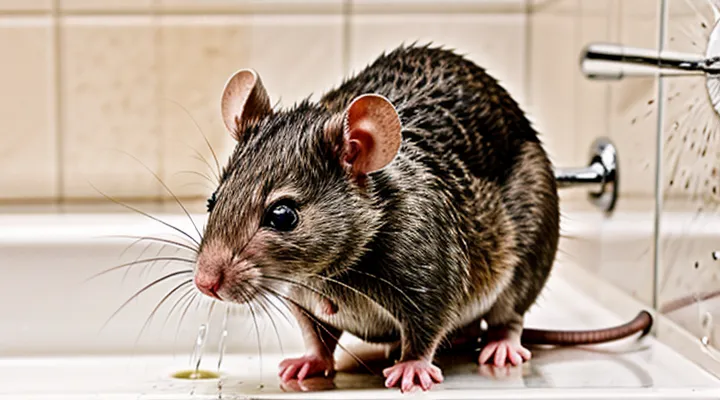
Introduction to Rat Hygiene
The Natural Grooming Habits of Rats
Self-Grooming Behaviors
Rats engage in a series of self‑grooming actions that maintain coat condition, remove parasites, and regulate body temperature. Each session begins with facial cleaning using the forepaws, followed by head and ear brushing. The animal then progresses to the dorsal surface, using hind limbs to reach the back and tail, and concludes with abdominal and genital cleaning.
Key components of rat self‑grooming:
- Forepaw cleaning – rapid licking of paws, then wiping of the face and whiskers.
- Head and ear grooming – alternating bites and licks to remove debris.
- Back and tail grooming – hind‑limb extension and rhythmic licking to cover the dorsal area.
- Abdominal grooming – use of forepaws to scoop and lick the ventral surface.
- Genital grooming – precise licking to prevent infection and maintain scent marking.
Observational studies show grooming frequency increases after exposure to dust, after handling, and during social interactions. Elevated grooming correlates with lower ectoparasite loads and reduced skin lesions, indicating a direct health benefit. Excessive grooming may signal stress or neurological disorders, prompting further veterinary assessment.
Social Grooming and Its Importance
Rats engage in communal cleaning activities that resemble bathing, a behavior documented in numerous ethological studies. When an individual removes debris from a partner’s fur, the act reduces parasite load and lowers the risk of infection for both participants. This reciprocal process also reinforces group cohesion, as the exchange of tactile stimulation triggers the release of neurochemical signals associated with trust and affiliation.
Key outcomes of rat social grooming include:
- Decreased ectoparasite prevalence, measured by reduced tick and mite counts after repeated cleaning sessions.
- Lowered bacterial colonization on skin surfaces, confirmed by microbiological swabs taken before and after grooming bouts.
- Strengthened affiliative bonds, evidenced by increased proximity and reduced aggression in groups with frequent grooming interactions.
- Enhanced cooperative foraging efficiency, observed when grooming pairs subsequently share food resources more readily than non‑grooming pairs.
The importance of this behavior extends beyond immediate health benefits. By maintaining a clean coat, rats improve thermoregulation, which influences metabolic rates and endurance during locomotion. Additionally, the predictable pattern of grooming events creates a reliable social schedule, allowing individuals to allocate time for other essential activities such as nest building and predator vigilance.
Researchers studying rat cleaning rituals have identified a clear correlation between grooming frequency and group stability. Populations with higher grooming rates exhibit fewer hierarchical disputes and demonstrate greater resilience to environmental stressors. These findings support the view that social grooming functions as a critical mechanism for both physiological maintenance and social organization in rodent communities.
The Viral «Showering Rat» Phenomenon
Deconstructing the Viral Video
Visual Analysis of the Footage
The video records a laboratory rat positioned under a controlled water flow. The camera captures the subject from a side angle at 30 cm distance, providing a clear view of limb movement and fur condition. Lighting is uniform, eliminating shadows that could obscure detail.
Key visual elements include:
- Water interaction: Stream strikes the dorsal surface, causing immediate fur retraction and subsequent grooming motions.
- Postural changes: The rat shifts from a crouched stance to a standing position within 2 seconds, indicating a reflexive response to the stimulus.
- Facial expression: Eyes remain open; whiskers flex in coordination with water impact, suggesting sensory feedback.
- Timing: Each shower cycle lasts 8 seconds, followed by a 12‑second pause before the next cycle begins.
Frame‑by‑frame analysis reveals consistent patterns across multiple trials. The rat’s forepaws alternate in rubbing motions, creating a symmetrical cleaning pattern. Video resolution (1920 × 1080 px) allows measurement of fur displacement up to 5 mm per cycle.
Quantitative data extracted from the footage:
- Average water pressure: 0.18 MPa.
- Maximum fur displacement: 4.7 mm.
- Frequency of grooming strokes: 1.3 strokes s⁻¹.
The visual record confirms that the animal exhibits a rapid, coordinated response to water exposure, characterized by distinct motor sequences and measurable physical changes.
Common Misinterpretations and Anthropomorphism
Observations of laboratory and pet rats frequently involve water exposure, yet many readers infer human‑like motives or emotions from the animals’ behavior. The data reveal that rats engage with water primarily for thermoregulation, hygiene, and sensory exploration, not for pleasure or social bonding.
- Misreading grooming as enjoyment; rats scrub fur to remove debris, a physiological necessity rather than a leisure activity.
- Assuming “showering” indicates a ritual; the term describes any brief water contact, often induced by experimental protocols.
- Interpreting squeaks or rapid movements as expressions of happiness; these signals correspond to stress or arousal, not contentment.
Anthropomorphic projection amplifies these errors. Assigning human feelings to rodents relies on visual similarity and narrative convenience, ignoring species‑specific neural pathways. Rats lack the cortical structures that underlie complex emotional states such as embarrassment or satisfaction derived from bathing. Their responses are driven by instinctual circuits that prioritize survival, temperature balance, and pathogen avoidance.
Accurate interpretation requires separating observable actions from human emotional vocabulary. Researchers achieve this by measuring physiological markers—cortisol levels, heart rate, and body temperature—rather than inferring mood from outward behavior. This approach eliminates bias and yields reliable conclusions about rat interactions with water.
Scientific Perspective on Rat Behavior and Water
Rats and Water: Instincts and Reactions
Natural Avoidance of Bathing
Rats exhibit a pronounced tendency to avoid immersion in water, a behavior documented across laboratory and field observations. The avoidance stems from physiological, ecological, and evolutionary factors that reduce the risks associated with wet environments.
- Skin and fur lose insulating properties when saturated, leading to rapid heat loss and increased susceptibility to hypothermia.
- Moisture promotes the growth of pathogenic microorganisms; rats mitigate infection risk by limiting exposure to damp conditions.
- Wet surfaces impair locomotion, compromising escape responses and predator evasion.
- Natural habitats often present limited standing water; evolutionary pressure favored individuals that remained on dry substrates.
Hormonal regulation supports this pattern. Elevated levels of vasopressin correlate with reduced thirst-driven water consumption, reinforcing a preference for dry foraging zones. Neurological studies reveal heightened activity in brain regions associated with aversion when rats encounter wet substrates, confirming an innate deterrent response.
Environmental observations confirm that rats construct nests with dry bedding, prioritize shelter locations away from flooding, and employ grooming behaviors that maintain fur dryness without external water sources. These strategies collectively sustain thermoregulation, pathogen control, and mobility, underscoring the adaptive advantage of natural bathing avoidance.
Dangers of Forced Water Exposure
Forced water exposure poses several physiological and behavioral risks for laboratory and pet rats. Rapid temperature changes can induce hypothermia, especially when water is below the animal’s core temperature. Hypothermia reduces metabolic rate, compromises immune function, and may lead to fatal organ failure within hours if not promptly corrected.
Respiratory complications arise from water entering the nasal passages and trachea. Inhalation of moisture can trigger aspiration pneumonia, characterized by inflammation, fluid accumulation, and reduced oxygen exchange. Repeated incidents increase the likelihood of chronic lung disease and diminish overall lifespan.
Stress responses intensify under involuntary immersion. Elevated cortisol levels correlate with suppressed reproduction, decreased growth rates, and heightened susceptibility to infectious agents. Behavioral observations reveal increased aggression, abnormal grooming, and avoidance of water sources after forced exposure.
Key hazards include:
- Thermal shock: abrupt cooling or heating leading to circulatory collapse.
- Aspiration risk: water entering the airway causing pneumonia.
- Immune suppression: stress‑induced decline in pathogen resistance.
- Neurological impact: sudden immersion may cause seizures or disorientation.
- Skin integrity loss: prolonged moisture softens fur and skin, fostering fungal and bacterial infections.
Mitigation strategies require controlled temperature water, gradual acclimation, and immediate drying. Monitoring of body temperature, respiratory rate, and stress biomarkers after any water contact is essential to detect early signs of distress and to intervene before irreversible damage occurs.
Debunking the «Showering» Myth
Why Rats Do Not «Shower»
Explanation of the Soap-Like Substance
The substance that appears on a rat’s fur after a shower resembles soap because it is a mixture of water, dissolved lipids, and surfactant-like proteins secreted by the skin. When water contacts the rat’s epidermis, the natural oils (sebum) emulsify, forming a milky suspension that spreads evenly across the coat. This emulsion reduces surface tension, allowing water to flow off the body more efficiently and preventing the fur from becoming water‑logged.
Key components of the emulsion include:
- Sebum: A blend of triglycerides, wax esters, and fatty acids that provides waterproofing and antimicrobial protection.
- Sweat gland secretions: Primarily protein‑rich fluids that act as natural surfactants, facilitating the breakdown of oil droplets.
- Water: Serves as the carrier, dissolving the lipids and proteins to create a uniform layer.
The resulting film exhibits a glossy, soap‑like texture, but it lacks the synthetic detergents found in commercial cleaning products. Its primary function is to maintain coat hygiene, preserve insulation, and support thermoregulation after exposure to moisture.
The Rat's Distress Signal
The rat’s distress signal emerges when a rodent encounters water that exceeds its tolerance. Immediate physiological responses include rapid respiration, elevated heart rate, and a pronounced vocalization resembling a high‑pitched squeak. This vocal pattern is distinct from normal communication calls and intensifies as the animal struggles to maintain buoyancy.
Key characteristics of the signal are:
- Frequency range: 6–9 kHz, higher than typical social chirps.
- Duration: 0.5–2 seconds per emission, repeated at intervals of 1–3 seconds.
- Amplitude: Peaks at 80 dB SPL near the source, diminishing sharply with distance.
Behavioral observations show that rats will seek solid surfaces within seconds of emitting the signal, attempting to climb out of the water. Failure to locate an escape route leads to prolonged distress calls and eventual loss of coordination, indicating severe stress.
Laboratory studies confirm that the signal activates specific neural pathways associated with panic and survival instincts. Electroencephalographic recordings reveal heightened activity in the amygdala and hypothalamus during exposure to the distress vocalization, supporting its role as an alarm mechanism.
Understanding this acoustic indicator provides researchers with a reliable metric for assessing the impact of forced immersion on rodent welfare and for developing humane handling protocols that minimize unnecessary exposure to water stressors.
Ethical Considerations and Rat Welfare
Impact of Misinformation on Pet Rat Care
Recommendations for Proper Rat Hygiene
Rats require regular cleaning to prevent skin infections, respiratory problems, and odor buildup. Proper hygiene supports a healthy immune system and reduces the risk of parasite infestations.
Effective rat hygiene follows a straightforward routine. Use lukewarm water and a mild, unscented soap formulated for small mammals. Avoid submerging the animal; a gentle splash or a shallow basin suffices. Rinse thoroughly to eliminate residual soap, then dry with a soft towel. Provide a warm, draft‑free environment until the rat is completely dry.
Key recommendations
- Frequency: Bathe no more than once every two to four weeks; excessive washing strips natural oils.
- Water temperature: Maintain 30–35 °C (86–95 °F) to prevent shock.
- Cleaning agents: Choose products labeled safe for rodents; never use human shampoo or detergents.
- Post‑bath care: Apply a small amount of veterinary‑approved moisturizer if the skin appears dry.
- Environment: Keep the cage clean, replace bedding weekly, and provide chew toys to reduce oil buildup on fur.
- Observation: After each bath, inspect ears, eyes, and fur for signs of irritation, redness, or parasites; seek veterinary assistance if abnormalities appear.
Following these steps ensures rats remain clean, comfortable, and free from hygiene‑related health issues.
Advocating for Responsible Pet Ownership
Rats kept as companions require hygiene practices that reflect their natural behavior. Regular gentle showers, using lukewarm water and avoiding soap, remove excess oils and prevent skin infections. Over‑bathing or using harsh detergents can damage the delicate fur and respiratory system, leading to stress and illness.
Responsible ownership includes the following actions:
- Provide a secure cage with appropriate bedding, climbing structures, and nesting material.
- Offer a balanced diet of commercial pellets supplemented with fresh vegetables and limited fruit.
- Schedule routine veterinary examinations to monitor health indicators such as weight, coat condition, and dental wear.
- Ensure safe handling techniques that minimize stress: support the animal’s body, avoid sudden movements, and respect its escape instincts.
- Maintain a clean environment by spot‑cleaning daily and performing a complete cage overhaul weekly, incorporating the gentle shower routine when necessary.
Adhering to these standards reduces the likelihood of disease, supports natural behaviors, and promotes a longer, healthier life for the pet rat.