
The Allure of «Rat on White Background» Photography
Why Choose a White Background?
Aesthetics and Visual Impact
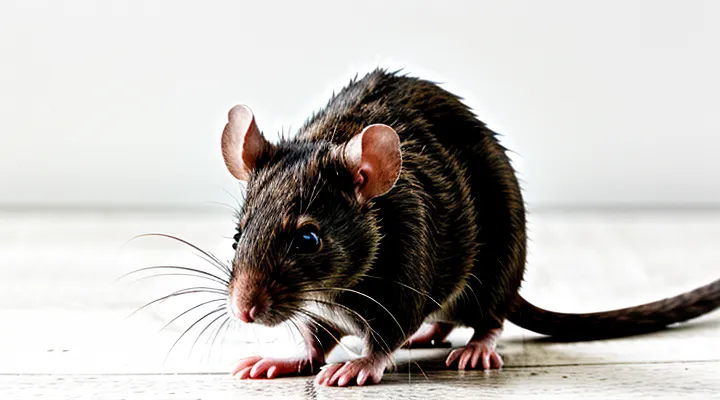
The photograph presents a rat positioned against an unadorned white backdrop, eliminating visual distractions and directing attention solely to the animal’s form. High‑resolution capture preserves fine details such as fur texture, whisker articulation, and anatomical proportions, which remain discernible without competing colors or patterns.
White space functions as a neutral field that amplifies contrast, allowing the subject’s natural coloration to stand out. Uniform illumination reduces shadows, ensuring even exposure across the body and preventing misleading depth cues. Consistent lighting also supports accurate color reproduction, essential for reproducible scientific documentation or precise commercial illustration.
Aesthetic considerations follow classic compositional rules. Central placement balances the image, while surrounding negative space creates a sense of openness and reduces visual clutter. The clear separation between subject and background facilitates easy cropping, scaling, and integration into multi‑panel layouts without compromising visual integrity.
The visual impact serves several practical purposes:
- Immediate recognizability of the rat’s features.
- Professional appearance that meets editorial standards.
- Versatility for inclusion in research articles, textbooks, or marketing materials.
- Compatibility with print and digital media due to high contrast and clean edges.
Isolation of the Subject
A rodent captured against a uniform white backdrop requires precise isolation to ensure the animal remains the sole visual focus. Position the subject at a distance of 0.5–1 meter from the background to prevent spill‑over of light and to maintain a clean edge. Use a diffuser to soften shadows, allowing the silhouette of the rat to stand out without harsh contrast.
Key technical steps:
- Employ a medium‑format or high‑resolution DSLR with a macro lens to render fine details of fur and whiskers.
- Set aperture between f/8 and f/11 to achieve sufficient depth of field while preserving background uniformity.
- Use a strobe or continuous LED panel positioned at a 45° angle to the animal, combined with a reflector opposite the light source to fill shadows.
- Capture multiple exposures for later stacking, reducing noise and enhancing texture.
Post‑capture processing should reinforce subject isolation. Apply a selective mask to the white plane, increasing brightness to pure 255 RGB where no detail is lost. Perform edge refinement with a feathered radius of 2–3 pixels to avoid halo artifacts. Convert the image to a lossless format such as TIFF before exporting to publication‑ready JPEG or PNG.
Consistent isolation across a series of images supports reproducibility in scientific or editorial contexts, enabling straightforward integration into layout grids and ensuring the rat remains the unequivocal focal point.
Versatility for Various Publications
A high‑resolution photograph of a rat placed against a plain white backdrop offers a neutral visual element suitable for editorial integration. The image’s simplicity enables seamless inclusion in layouts without competing with surrounding graphics or text.
The photograph adapts to multiple publishing formats:
- Scientific journals: detailed anatomical studies, experimental reports, and species identification guides.
- Academic textbooks: chapter illustrations, lab manuals, and reference sections.
- Veterinary and pet‑care magazines: feature articles, health advisories, and product reviews.
- News outlets: investigative pieces, environmental reports, and human‑interest stories.
- Marketing brochures: product packaging, promotional flyers, and brand collateral.
- Online platforms: blog posts, educational websites, and social‑media graphics.
- Educational posters: classroom displays, museum exhibits, and conference banners.
Technical specifications support diverse production requirements. The file is available in 300 dpi TIFF and PNG formats, with an optional transparent layer for overlay use. Color profiles comply with CMYK and sRGB standards, facilitating both print and digital workflows.
Licensing permits unrestricted reproduction across all listed media. No attribution is required, and the image may be modified, cropped, or combined with other visual assets to meet specific design objectives.
Technical Aspects of Capturing the Perfect Shot
Lighting Setup
Softbox and Diffusers
A softbox provides controlled, even illumination that minimizes harsh shadows on a small animal positioned against a white backdrop. The enclosure’s reflective interior spreads light from a single source, producing a smooth fall‑off that preserves detail in the rat’s fur while keeping the background uniformly bright. This consistency is essential for images intended for print or digital publication, where tonal balance must remain predictable across multiple shots.
Diffusers placed in front of the light source further soften the output. By scattering photons, they reduce specular highlights on glossy fur and prevent overexposure on the white surface. When combined with a softbox, a diffuser creates a gentle, wrap‑around quality that reveals texture without introducing glare.
Key considerations for setting up the equipment:
- Position the softbox at a 45‑degree angle relative to the subject to achieve three‑dimensional modeling while maintaining even background illumination.
- Use a diffusion panel or silk fabric of 1‑2 stops of light loss to achieve the desired softness without sacrificing exposure control.
- Mount the rat on a stable platform to keep the subject steady, allowing the soft light to wrap evenly around the body.
- Adjust the distance between diffuser and light source to fine‑tune contrast; a greater gap yields softer light, a shorter gap yields slightly higher contrast.
Properly calibrated white balance, combined with the consistent light quality from the softbox‑diffuser system, ensures that the final image meets the exacting standards required for editorial use.
Eliminating Shadows
When a rodent is captured against a white backdrop for editorial use, shadows compromise the visual clarity required for print and digital media. Shadows introduce unwanted gradients, obscure anatomical details, and disrupt the uniformity essential for consistent layout.
Effective shadow removal relies on controlled lighting and post‑processing techniques:
- Position multiple soft light sources at 45‑degree angles to the subject, minimizing directional contrast.
- Employ a large diffuser or softbox to spread illumination evenly across the animal and background.
- Use a reflector opposite each light to fill in residual shadows without creating hotspots.
- Capture the image in RAW format to preserve dynamic range for later adjustments.
- Apply a light‑fill channel in editing software, selectively brightening shadowed areas while preserving texture.
- Flatten the background with a high‑key exposure, ensuring the white surface remains free of tonal variation.
Consistent application of these methods yields a clean, shadow‑free presentation that meets the standards of professional publications.
Camera Settings and Equipment
Lens Selection for Detail
When photographing a small rodent against a plain white surface for editorial use, lens choice determines the clarity of fine features such as whiskers, fur texture, and eye detail.
A lens that reproduces sharpness across the entire frame is essential. Macro optics with a 1:1 reproduction ratio provide the necessary magnification without compromising edge definition. Fixed‑focus lenses in the 90 mm to 105 mm range deliver a comfortable working distance, reducing shadow casting from the photographer’s equipment. Zoom lenses covering 60–180 mm allow quick framing adjustments while maintaining macro performance, provided they include a constant maximum aperture.
Key parameters to evaluate:
- Maximum aperture – Wide apertures (f/2.8–f/4) isolate the subject, but stopping down to f/8‑f/11 ensures uniform sharpness and depth of field across the entire animal.
- Optical stabilization – Helpful for handheld shooting, yet can introduce micro‑vibrations; disable when using a tripod.
- Distortion control – Lenses with low barrel distortion preserve straight lines of the background, preventing unwanted shading.
- Tilt‑shift capability – Allows plane‑of‑focus manipulation, useful for extending depth of field without increasing aperture.
For consistent results, pair the selected lens with a sturdy macro rail or bellows system to fine‑tune focus distance. Use a diffusion panel to soften harsh lighting, maintaining even illumination on the white backdrop. The combination of appropriate focal length, controlled aperture, and precise positioning yields images that meet publication standards for detail and reproducibility.
Aperture, Shutter Speed, and ISO Balance
When photographing a small rodent against a clean white backdrop for editorial use, precise control of exposure parameters determines image clarity and reproducibility.
- Aperture – Select a moderate f‑stop (f/5.8 – f/8) to keep the animal’s entire form sharp while preserving a slight depth of field that separates it from any residual background texture. Wider openings risk soft edges; smaller values increase diffraction and reduce overall sharpness.
- Shutter Speed – Use a speed of 1/200 s or faster to freeze the subject’s movements and avoid motion blur. If the rat is stationary, a slightly slower speed (1/125 s) may be acceptable, but maintain a margin that prevents camera shake when handheld.
- ISO – Keep the sensor sensitivity at the lowest native value (ISO 100 – 200) to maximize signal‑to‑noise ratio and retain the pure white of the background. Raise ISO only if lighting constraints force a reduction in aperture or shutter speed, and do so in incremental steps to monitor grain introduction.
Balancing these three settings ensures consistent exposure across multiple shots, facilitates straightforward post‑processing, and produces images that meet the strict standards of print and digital publication.
Rat Preparation and Handling
Ensuring Animal Welfare
A photograph of a laboratory rat placed on a clean white surface for editorial use requires strict adherence to animal‑welfare standards. The animal must be sourced from an accredited facility, with health records confirming absence of disease and suitability for handling. Prior to the shoot, a veterinarian should assess the rat’s condition and approve its participation.
During the session, the following measures protect the subject:
- Use gentle restraint devices that allow natural posture without causing pain.
- Maintain ambient temperature within the species‑specific comfort range.
- Keep lighting intensity low enough to avoid retinal damage while providing sufficient exposure for image quality.
- Limit the duration of each pose to a few minutes, interspersed with rest periods in the home cage.
All personnel involved must complete training on humane handling techniques and recognize signs of stress. Documentation of the procedure, including the number of animals used, duration of exposure, and post‑shoot monitoring, should be filed with the institutional animal‑care committee. Regular audits ensure compliance with national and international regulations governing the use of vertebrate subjects in visual media.
Posing Techniques for Scientific Accuracy
Accurate representation of laboratory rodents requires precise control of body orientation, limb placement, and facial exposure. Proper positioning eliminates distortion, facilitates measurement, and ensures reproducibility across studies.
- Align the spine parallel to the camera plane; use a low‑profile platform to keep the torso level.
- Extend forepaws forward and rear paws slightly apart to display the full skeletal outline without overlapping.
- Position the head so that both eyes and nasal bridge are visible; a slight upward tilt prevents shadowing of the snout.
- Secure the tail against the body with a gentle clip or soft loop to avoid curving that could obscure vertebral landmarks.
- Employ a neutral, high‑reflectance surface; a matte white panel eliminates background variation and simplifies segmentation.
Lighting must be even, with diffused sources placed at 45° angles to reduce glare and highlight fur texture. Calibration charts included in the frame provide scale reference for morphometric analysis. Capture multiple frames per pose to select the sharpest image and to verify consistency.
Documentation of each pose—camera settings, distance, and animal orientation—creates a repeatable protocol. When combined with standardized background and illumination, these techniques produce images suitable for peer‑reviewed publications and archival databases.
Applications in Scientific and Educational Publications
Biological Research and Studies
Illustrating Anatomy and Physiology
A high‑resolution photograph of a laboratory rat positioned against a uniform white backdrop provides an optimal visual reference for detailed anatomical and physiological illustration. The clean background eliminates distracting elements, allowing precise delineation of morphological features such as cranial structure, limb articulation, and pelage pattern. Researchers can overlay vector graphics to label bone landmarks, musculature layers, and sensory organ locations without interference from background textures.
The image serves as a foundation for constructing comparative diagrams that integrate internal systems with external morphology. By aligning the photograph with cross‑sectional data, educators can demonstrate:
- cardiovascular pathways from the aortic arch to peripheral vessels;
- respiratory anatomy, including tracheal bifurcation and alveolar distribution;
- digestive tract organization from esophagus to colon;
- nervous system segments, highlighting cranial nerves and spinal cord regions.
Physiological concepts benefit from the visual consistency of the white background, which supports quantitative image analysis. Software tools can extract pixel‑based measurements of organ dimensions, calculate surface area ratios, and generate three‑dimensional reconstructions. Consistent lighting and exposure settings preserve color fidelity, enabling accurate representation of tissue perfusion and vascular staining in experimental images.
When incorporated into scholarly articles, the rat photograph enhances clarity of methodological descriptions and results presentation. Its reproducibility across multiple publications ensures that readers interpret anatomical references uniformly, facilitating cross‑study comparisons and cumulative knowledge building.
Documenting Behavioral Experiments
A high‑contrast image of a laboratory rat positioned on a plain white backdrop provides a consistent visual reference for behavioral studies. Precise documentation of such photographs enhances reproducibility, facilitates peer review, and supports data integration across experiments.
Key elements of documentation include:
- Camera settings: Record make, model, lens focal length, aperture, shutter speed, ISO, and white‑balance mode. Consistency in these parameters reduces variability caused by lighting or exposure differences.
- Lighting conditions: Note light source type (e.g., LED panel), intensity (lux), angle of illumination, and use of diffusers or reflectors. Uniform illumination eliminates shadows that could obscure anatomical features.
- Subject details: Capture animal identifier, strain, sex, age, weight, and experimental condition (e.g., baseline, post‑treatment). Include information about any markings or implants visible in the image.
- Environmental context: Document ambient temperature, humidity, and noise level at the time of imaging. These factors can influence animal behavior and posture.
- File metadata: Embed EXIF data with date, time, and researcher name. Maintain a separate log linking each image file to the corresponding experimental record.
- Image processing: Specify any post‑capture adjustments (e.g., cropping, contrast enhancement) and the software version used. Preserve original raw files for verification.
Adhering to these practices ensures that each photograph serves as a reliable datum within the broader behavioral experiment. The resulting dataset supports quantitative analysis, cross‑study comparison, and compliance with journal standards for visual documentation.
Veterinary Medicine and Pet Care
Identifying Breeds and Characteristics
Photographic documentation of laboratory and pet rats demands precise breed identification to ensure accurate representation in scientific and editorial material. Distinguishing features appear clearly against a uniform white backdrop, allowing evaluators to assess morphology without background interference.
Key breeds commonly presented in such images include:
- Standard laboratory rat (Rattus norvegicus) – smooth fur, medium body length (20–25 cm), short ears, straight tail.
- Dumbo rat – enlarged, low‑set ears that extend laterally, compact body, often short tail.
- Rex rat – velvety, curly fur covering the entire body, including tail; ear size comparable to standard.
- Hairless rat – near‑absence of fur, visible skin texture, prominent whiskers, slender tail.
- Satin rat – glossy, sleek coat with a subtle sheen, normal ear placement, proportionate tail.
Identification relies on observable characteristics:
- Fur texture – smooth, curly, or absent; assess by light reflection and tactile cues in the image.
- Ear morphology – size, placement, and angle relative to the head; Dumbo rats exhibit markedly broader, lower ears.
- Tail proportion – length relative to body, presence of fur, straightness; hairless and Rex rats may show reduced fur coverage.
- Body shape – overall mass, neck length, and limb visibility; laboratory rats display a balanced torso, whereas fancy breeds may appear more compact.
- Color pattern – uniform coat, spots, or markings; color aids in breed verification but does not replace structural analysis.
When preparing images for publication, ensure the rat occupies the central frame, lighting eliminates shadows, and the white background remains uniform. This setup highlights the diagnostic traits listed above, facilitating reliable breed classification and supporting the integrity of the accompanying text.
Health and Disease Representation
The image of a laboratory rat positioned on a uniform white surface serves as a precise visual reference for studies involving health and disease. By isolating the animal from distracting background elements, the photograph emphasizes anatomical features, enabling clear comparison between normal physiology and pathological conditions.
Key aspects of the visual representation include:
- High‑resolution capture of external morphology, facilitating measurement of body weight, fur condition, and limb posture.
- Consistent lighting that reveals skin lesions, edema, or tumor growth without shadows that could obscure details.
- Scale markers placed within the frame to allow accurate quantification of tumor size or wound dimensions.
When incorporated into scientific publications, the image enhances communication of experimental outcomes. It provides readers with an unambiguous visual baseline, supports reproducibility of animal models, and aids in the assessment of therapeutic efficacy across studies.
Educational Materials and Textbooks
Engaging Visuals for Learning
A high‑contrast rat photograph set against a pure white backdrop provides a clear, distraction‑free visual element that can be integrated into instructional materials. The stark separation between subject and background emphasizes anatomical details, behavioral cues, and experimental setups without competing visual noise.
- Precise identification of morphological features supports accurate terminology acquisition.
- Uniform lighting enhances color fidelity, aiding discussions of tissue coloration and pathology.
- Scalable resolution permits use in print, digital slides, and interactive modules.
When incorporated into scholarly articles, the image serves as a reference point for methodological descriptions, allowing readers to verify experimental conditions quickly. In classroom settings, the same visual can anchor lectures on laboratory techniques, animal welfare standards, or comparative anatomy, fostering retention through consistent visual cues.
The visual’s simplicity aligns with cognitive load theory: learners allocate processing resources to conceptual content rather than parsing complex backgrounds. Consequently, the rat image becomes a tool for reinforcing key concepts while maintaining visual clarity across diverse publication formats.
Demonstrating Laboratory Procedures
A high‑resolution photograph of a laboratory rat positioned on a uniform white backdrop serves as a visual standard for scientific publications, instructional manuals, and conference materials. The plain background isolates the animal, allowing clear presentation of procedural steps without visual distraction.
The image supports demonstration of core laboratory techniques:
- Restraint and handling methods
- Administration of anesthetic agents
- Preparation of the surgical field
- Placement of imaging equipment
- Collection of tissue or blood samples
Each step can be overlaid on the photograph or referenced in accompanying captions to illustrate proper technique and safety considerations.
When incorporating the photograph into written work, maintain the original resolution, include a scale bar, and provide a concise caption that identifies the species, the procedure shown, and any relevant ethical compliance statements. This practice ensures reproducibility and facilitates peer verification across diverse research contexts.
Artistic and Commercial Uses
Stock Photography and Licensing
Meeting Industry Standards
The image of a rodent set against a uniform white backdrop must comply with established publishing specifications to ensure reproducibility across print and digital platforms. Technical compliance begins with resolution; a minimum of 300 dpi at the final output size guarantees sharpness in high‑quality journals. Color consistency requires the use of the sRGB IEC61966‑2.1 profile for web‑based publications and Adobe RGB 1998 for printed materials, with calibrated monitors verifying accurate rendering.
File preparation involves several mandatory steps. First, the photograph should be saved in a lossless format such as TIFF or PNG, preserving detail and preventing compression artifacts. Second, embed EXIF metadata that records camera settings, capture date, and author attribution, facilitating traceability. Third, apply a transparent or solid white background layer without shadows, ensuring the subject isolates cleanly during layout integration.
Adherence to ethical and legal standards is equally critical. Obtain documented permission for any animal handling, referencing institutional animal care guidelines. Secure model releases for any identifiable contributors and verify that the image does not infringe on third‑party copyrights. Include a clear usage license that aligns with the intended distribution channel, whether open‑access or restricted.
Key industry benchmarks for this type of visual content can be summarized as follows:
- Minimum resolution: 300 dpi at target dimensions
- Accepted color spaces: sRGB for digital, Adobe RGB 1998 for print
- Preferred file formats: TIFF (uncompressed) or PNG (lossless)
- Mandatory metadata: camera settings, capture date, author, rights statement
- Background requirement: uniform white, free of gradients or shadows
- Ethical compliance: documented animal welfare approval, appropriate releases
- Legal compliance: verified copyright clearance, explicit usage license
By systematically applying these criteria, the photograph meets the rigorous expectations of scientific journals, educational textbooks, and commercial media, ensuring consistent visual quality and regulatory conformity.
Keyword Optimization for Discoverability
A clear, high‑resolution image of a rat positioned against a plain white backdrop is a valuable asset for scientific journals, educational materials, and commercial publications. Visibility in stock libraries, image databases, and search engines depends on precise keyword selection.
Effective keyword optimization begins with a structured hierarchy. Identify the most specific term that describes the content—“laboratory rat” or “white‑background rodent”—as the primary keyword. Complement it with secondary terms that capture context, such as “anatomical reference,” “behavioral study,” or “species Rattus norvegicus.” Incorporate long‑tail phrases that reflect typical user queries, for example, “high‑resolution white‑background rat photo for research articles.”
- Use singular and plural forms where appropriate.
- Include taxonomic identifiers (e.g., “Rattus norvegicus”).
- Add descriptive attributes (e.g., “side view,” “full body,” “isolated”).
- Attach usage‑related tags (e.g., “publication‑ready,” “open‑access”).
Metadata must mirror the keyword set. File names should follow a concise pattern, such as “rat_white_background_full_body.jpg.” Alt‑text requires a brief, accurate description: “Full‑body image of a laboratory rat on a white background.” Captions can reinforce key terms without redundancy, e.g., “White‑background photograph of a laboratory rat suitable for scientific publication.”
Track performance through analytics provided by image platforms. Review search rankings quarterly, adjust underperforming terms, and add emerging descriptors as research trends evolve. Consistent refinement sustains discoverability and maximizes the image’s utility across publishing channels.
Pet Photography and Animal Advocacy
Showcasing Individuality
The photograph featuring a rat positioned on a stark white surface serves as a precise visual tool for editorial purposes. By isolating the subject, the image eliminates distractions, allowing viewers to focus exclusively on the animal’s distinctive traits.
Highlighting individuality in this context involves several deliberate choices:
- Composition: Centered placement emphasizes symmetry while the empty background accentuates form and posture.
- Lighting: Soft, even illumination reveals texture, fur pattern, and subtle color variations that differentiate this specimen from generic representations.
- Expression: Captured moments of alertness or curiosity convey personality, transforming a generic laboratory subject into a recognizable character.
- Resolution: High‑definition capture preserves fine details, supporting accurate reproduction across print and digital media.
These elements collectively convert a simple animal portrait into a compelling narrative device, enabling publications to convey specificity, engage audiences, and reinforce brand or scientific messaging through a single, unmistakable visual.
Promoting Ethical Treatment
The use of a rat captured against a plain white backdrop for scholarly and commercial publications requires strict adherence to humane standards. Researchers, photographers, and editors share responsibility for ensuring that the animal experiences minimal stress and receives appropriate care throughout the imaging process.
Key practices include:
- Handling the rat only with trained personnel who understand species‑specific behavior and stress signals.
- Providing a familiar enclosure, temperature control, and adequate ventilation during positioning and lighting adjustments.
- Limiting exposure time to the bare minimum needed for a clear image; any prolonged restraint must be avoided.
- Using non‑invasive lighting setups that do not cause glare or heat buildup.
- Documenting the animal’s health status before, during, and after the session, with veterinary oversight when necessary.
Ethical presentation of the image also demands transparency. Publications should disclose that the subject was treated according to recognized animal welfare guidelines, and they should reference the specific protocol employed. This information reassures readers that the visual material was obtained responsibly and supports the credibility of the work.
Compliance with institutional animal care committees, national regulations, and professional codes of conduct safeguards both the subject and the integrity of the publication. By integrating these measures, creators can produce high‑quality visual content while upholding the highest standards of ethical treatment.
Marketing and Advertising
Product Integration and Branding
The photograph of a laboratory rat set against a clean white backdrop offers a versatile asset for product integration and brand communication. Its neutral setting isolates the subject, allowing seamless insertion of logos, packaging visuals, or promotional messages without visual conflict. The simplicity of the composition ensures that added elements retain focus and readability across print, digital, and multimedia channels.
Effective integration follows a structured approach:
- Position brand identifiers near the rat’s head or tail to draw attention while preserving natural sight lines.
- Apply consistent color treatment to logos, matching the image’s tonal balance for cohesive appearance.
- Use transparent or semi‑transparent overlays to embed product shots, maintaining the image’s clarity and depth.
- Align typography with the image’s horizontal axis, ensuring legibility against the white background.
Branding benefits include heightened recognizability, immediate association between the organism and the advertised product, and adaptability for varied publication formats. The image’s minimalistic design reduces the risk of visual clutter, supporting precise messaging and reinforcing brand identity across targeted audiences.
Creating Memorable Visuals
A high‑contrast photograph of a laboratory rat placed against a plain white backdrop serves as a versatile asset for scientific journals, textbooks, and promotional materials. The visual impact of such an image depends on precise control of lighting, composition, and post‑production techniques.
- Use a soft, diffused light source positioned at a 45‑degree angle to minimize shadows and highlight fur texture.
- Position the animal centrally while allowing negative space on all sides to accommodate captions or graphic overlays.
- Employ a medium‑format camera with a macro lens to capture fine details without distortion.
- Set aperture between f/5.8 and f/8 to achieve sufficient depth of field, keeping the entire subject in focus.
During post‑processing, adjust exposure to maintain a neutral white background, ensuring the rat’s silhouette remains distinct. Apply selective sharpening to the fur edges while preserving a smooth tonal transition across the body. Convert the final file to a lossless format (TIFF) for archival storage, and generate compressed JPEG versions for web distribution.
When integrating the image into publications, align the visual style with the surrounding layout. Reserve ample margin for annotations, and match the grayscale palette of accompanying figures to reinforce visual cohesion. Consistent application of these practices yields a memorable visual that conveys scientific information clearly and professionally.