
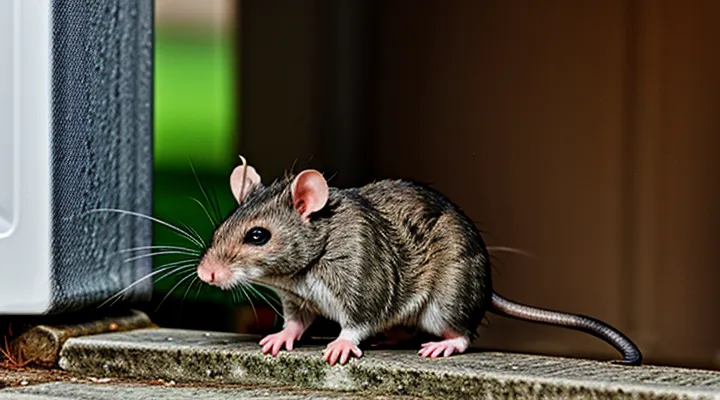
Understanding Rat Intelligence: A Broad Perspective
Defining «Intelligence» in Animals
Intelligence in animals is commonly defined as the capacity to acquire, retain, and apply information to solve problems, adapt to changing environments, and exhibit flexible behavior. Researchers operationalize this concept through observable traits that can be measured across species.
Key indicators of animal intelligence include:
- Learning speed and retention across trials.
- Ability to navigate novel mazes or obstacles.
- Use of tools or manipulation of objects to achieve goals.
- Social learning, such as imitation or teaching.
- Problem‑solving strategies that involve planning or insight.
Neurobiological metrics complement behavioral assessments. Relative brain size, especially the encephalization quotient, provides a coarse predictor of cognitive potential, while specific structures—prefrontal cortex analogues, hippocampal formation, and basal ganglia—correlate with memory, spatial reasoning, and decision‑making. Electrophysiological recordings and functional imaging reveal patterns of neural activation associated with learning tasks, offering a direct link between brain activity and intelligent behavior.
Comparative studies employ standardized test batteries, such as the Morris water maze or object‑recognition tasks, to evaluate performance across taxa. By controlling for sensory modalities and motor abilities, researchers isolate cognitive components that reflect true intellectual capacity rather than peripheral skills.
In the context of rodent cognition, these definitions guide the design of experiments that measure rats’ problem‑solving efficiency, flexibility in changing reward contingencies, and capacity for abstract rule learning. The resulting data provide a quantitative framework for assessing how rat intelligence aligns with broader animal cognition.
How Do We Measure Animal Intelligence?
Common Cognitive Tests for Rats
Rats are routinely evaluated with standardized tasks that quantify learning, memory, problem‑solving, and sensory discrimination. Each assay isolates specific cognitive domains while controlling for motor ability and motivation.
-
Morris water maze – a circular pool filled with opaque water; a hidden platform forces the animal to use spatial cues to locate the escape. Performance metrics include latency to find the platform and path efficiency, reflecting hippocampal‑dependent spatial memory.
-
Radial arm maze – an eight‑arm apparatus with food rewards at the ends. Correct entries without revisiting previously visited arms measure working memory and reference memory capacities.
-
T‑maze and Y‑maze alternation – simple bifurcating corridors where rats must choose the opposite arm on successive trials. Alternation rates indicate short‑term memory and decision‑making speed.
-
Novel object recognition – exposure to two identical objects followed by replacement of one with a novel item. Increased exploration of the new object quantifies recognition memory and attention.
-
Odor discrimination task – presentation of two odorants, one associated with a reward. Accuracy in selecting the rewarded scent assesses olfactory learning and perceptual discrimination.
-
Operant conditioning chambers (Skinner boxes) – lever presses or nose pokes deliver food or water under variable schedules. Response rates, acquisition speed, and extinction patterns reveal reinforcement learning and impulse control.
-
Puzzle boxes – multi‑step escape challenges requiring manipulation of levers, doors, or strings. Solution latency and strategy changes track problem‑solving flexibility and executive function.
These tests collectively generate quantitative indices that serve as proxies for rat intelligence, enabling comparative research across strains, developmental stages, and experimental manipulations.
Limitations of Current Testing Methods
Current approaches to measuring rat cognition rely heavily on maze navigation, object recognition, and operant conditioning tasks. These paradigms produce quantifiable outcomes but introduce several methodological constraints.
- Ecological relevance – Laboratory mazes simplify spatial challenges, ignoring natural foraging complexity and social cues that influence problem‑solving in wild environments.
- Task specificity – Success in a single assay often reflects training history or sensory bias rather than a broad intelligence spectrum.
- Motivational variability – Food or water restriction, commonly used to drive performance, creates fluctuating motivation levels that confound comparative scoring.
- Individual differences – Genetic strain, age, and stress exposure generate heterogeneous baseline abilities, yet many studies pool data without adjusting for these factors.
- Temporal resolution – Conventional tests capture performance at a single time point, overlooking learning curves, memory consolidation, and strategy shifts over extended periods.
These limitations restrict the interpretive power of existing rat intelligence assessments and highlight the need for multidimensional, longitudinal testing frameworks that integrate naturalistic behaviors and control for individual variability.
Evidence of Rat Cognitive Abilities
Problem-Solving Skills
Mazes and Navigation
Laboratory mazes serve as controlled environments for testing rodent spatial abilities. Common designs include the radial arm maze, which measures working memory by requiring rats to remember which arms have been visited, and the Morris water maze, which evaluates long‑term spatial memory through hidden platform location. Variations such as T‑mazes and Y‑mazes isolate decision‑making processes by presenting binary choices. All configurations demand precise locomotion, sensory integration, and memory retrieval.
Rats navigate these structures using a combination of cues. Visual landmarks provide external references, while proprioceptive feedback informs body position. Hippocampal place cells generate internal maps that encode specific locations, enabling route planning and error correction. Experiments reveal that rats can switch between egocentric (self‑centered) and allocentric (environment‑centered) strategies depending on task demands, demonstrating flexibility in spatial processing.
Empirical results consistently show rapid acquisition of maze solutions, often within a few trials. Performance improves with repeated exposure, indicating robust learning capacity. Comparative studies place rat navigation efficiency above many other small mammals, supporting the view that rodents possess sophisticated cognitive mechanisms for spatial problem‑solving.
Tool Use and Innovation
Rats demonstrate measurable capacity for tool use and the generation of novel solutions when confronted with challenges that require manipulation of objects. Laboratory experiments have recorded instances where rats employ sticks to retrieve food from narrow apertures, modify plastic barriers to create passageways, and combine multiple items to achieve a goal. These behaviors indicate an ability to recognize functional properties of objects and to apply them flexibly.
Key observations include:
- Use of a metal rod to lift a platform holding a treat, followed by adaptation to a longer rod when the original becomes insufficient.
- Construction of a temporary bridge from cardboard pieces to cross a gap, then dismantling it after crossing.
- Sequential problem solving where rats first open a latch, then push a lever to release a reward, showing planning across steps.
Innovation emerges when rats encounter novel configurations. In one study, individuals altered a familiar tool by attaching a piece of string, extending reach and enabling access to previously unattainable food. Subsequent trials revealed rapid adoption of the modified technique by peers, suggesting social transmission of the invented method.
Comparative analyses place rat tool-related performance above that of many other rodents yet below primate and corvid levels. The observed proficiency aligns with the species’ ecological adaptability and the neural circuitry underlying executive functions. Consequently, tool use and innovation constitute robust indicators of rat cognitive sophistication.
Memory and Learning
Long-Term and Short-Term Memory
Rats possess distinct short‑term and long‑term memory systems that together shape their problem‑solving performance. Short‑term memory retains information for seconds to minutes, enabling rats to navigate mazes, remember recent food locations, and perform immediate discrimination tasks. Experimental data show that rodents can hold 5–7 items in working memory, with performance declining after a 30‑second delay in delayed‑match‑to‑sample tests.
Long‑term memory consolidates experiences over hours to months, supporting persistent spatial maps and conditioned responses. Hippocampal lesions impair acquisition of new spatial layouts but leave previously learned routes intact, indicating that long‑term storage relies on structural changes within the dentate gyrus and CA3 region. Retention tests reveal that rats maintain maze solutions for at least 30 days without reinforcement, demonstrating durable encoding.
Key distinctions between the two memory types:
- Duration: seconds–minutes (short‑term) vs. days–months (long‑term).
- Neural substrates: prefrontal cortex and dorsal striatum (short‑term) vs. hippocampus and cortical association areas (long‑term).
- Behavioral assays: delayed‑response tasks (short‑term) and water‑maze or fear‑conditioning protocols (long‑term).
These mechanisms together define the cognitive capacity of rats, providing a measurable basis for assessing their intelligence.
Associative Learning and Conditioning
Associative learning provides the primary experimental framework for assessing rat cognition. Classical conditioning pairs a neutral stimulus with an unconditioned stimulus, producing a conditioned response that quantifies the animal’s ability to form predictive relationships. Typical protocols, such as tone‑shock pairing, reveal latency reductions in freezing behavior after a few trials, indicating rapid acquisition of the association. Extinction trials, where the conditioned stimulus is presented without reinforcement, measure the persistence of the learned response and the capacity for behavioral flexibility.
Operant conditioning extends the assessment to voluntary actions. Lever‑press or nose‑poke tasks linked to food rewards generate response curves that map learning speed, response vigor, and sensitivity to reinforcement schedules. Variable‑ratio schedules produce higher response rates than fixed‑ratio schedules, demonstrating rats’ ability to adapt to probabilistic reward structures. Reversal learning, in which the previously rewarded action becomes non‑rewarded and vice versa, gauges cognitive flexibility and the willingness to modify established contingencies.
Key observations derived from associative paradigms include:
- Acquisition thresholds typically reached within 5–10 trials for simple discriminations.
- Extinction rates correlate with the strength of the original conditioning, providing a metric for memory durability.
- Performance on reversal and set‑shifting tasks exceeds that of many non‑mammalian species, supporting a high degree of adaptive intelligence in rodents.
Social Intelligence
Empathy and Prosocial Behavior
Rats display measurable responses that align with the concept of empathy, demonstrated by increased distress when observing conspecifics in pain and by attempts to alleviate that distress. Experiments using a “pain‑induced” model show that observer rats increase grooming and approach behaviors toward a trapped partner, indicating an affective resonance with the partner’s state.
Prosocial actions in rats include food sharing, rescue of trapped individuals, and cooperative problem‑solving. Notable observations are:
- An observer rat releases a restrained peer from a restrainer apparatus, even when no direct reward is offered.
- Rats preferentially allocate food to a cage‑mate that previously provided assistance, reflecting reciprocal altruism.
- Groups of rats coordinate lever presses to obtain a shared reward, demonstrating joint effort beyond individual gain.
These behaviors suggest that rat cognition encompasses more than simple stimulus‑response patterns; they involve assessment of another’s welfare and strategic actions that benefit others. Consequently, assessments of rat intelligence should incorporate social cognition metrics alongside traditional maze and learning tasks, providing a fuller picture of their mental capacities.
Communication Methods
Rats communicate through a multimodal system that supports complex social interactions and problem‑solving. Their ability to exchange information contributes significantly to assessments of cognitive capacity.
- Vocalizations: Emit a range of audible calls (e.g., distress chirps, contact squeaks) and ultrasonic frequencies beyond human hearing. Ultrasonic emissions convey precise location, identity, and emotional state, enabling rapid coordination in dense environments.
- Chemical signals: Produce pheromones from anal glands and urine to mark territories, signal reproductive status, and reinforce hierarchies. Olfactory cues persist longer than acoustic signals, providing a stable information layer.
- Tactile contact: Use whisker (vibrissae) feedback and direct body contact to assess proximity, texture, and social intent. Whisker‑driven exploration informs decisions about food sources and nest construction.
- Visual cues: Rely on body posture, ear position, and tail movements to indicate aggression, submission, or curiosity. Visual signals complement other modalities during daylight activity.
These communication channels interact synergistically, allowing rats to transmit detailed, context‑specific messages that support learning, memory formation, and adaptive behavior. Experimental evidence shows that disruption of any single modality impairs performance in maze navigation and social recognition tasks, underscoring the integral role of communication in rat intelligence.
Adaptability and Environmental Resilience
Rats demonstrate rapid behavioral adjustments when confronted with novel or altered habitats. Their sensory systems detect changes in food availability, predator presence, and structural complexity, prompting immediate modifications in foraging routes and nesting sites. Laboratory studies show that when maze configurations are altered, rats re‑learn optimal paths within a few trials, indicating a capacity for flexible problem solving.
Key aspects of environmental resilience include:
- Dietary flexibility – ability to exploit a wide range of organic matter, from grains to carrion.
- Habitat exploitation – occupation of subterranean burrows, urban sewers, and agricultural fields without loss of reproductive success.
- Stress tolerance – maintenance of physiological homeostasis under fluctuating temperature, humidity, and contaminant exposure.
Genetic analyses reveal selection for traits that enhance survival in unpredictable conditions, such as heightened olfactory receptors and robust immune responses. These adaptations support the view that rat cognition encompasses not only abstract learning but also practical, context‑driven problem solving that sustains populations across diverse ecosystems.
Factors Influencing Rat Intelligence
Genetics and Heredity
Genetic variation underlies measurable differences in rat cognition. Studies of inbred strains reveal distinct performance on maze navigation, object recognition, and problem‑solving tasks. Quantitative trait loci mapped to chromosomes 2, 7, and 12 account for a substantial portion of the observed variance. Specific alleles of the Grin2b and Dcx genes correlate with enhanced spatial memory, while polymorphisms in the Bdnf promoter influence learning speed.
Heritability estimates derived from parent‑offspring regression and twin‑type designs consistently exceed 0.5, indicating that more than half of the variability in cognitive test scores can be attributed to inherited factors. Selective breeding for high or low maze efficiency over successive generations produces lineages with divergent performance, confirming the transmissibility of intelligence‑related traits. Cross‑breeding experiments demonstrate additive genetic effects, with heterozygous offspring displaying intermediate scores between parental lines.
Epigenetic mechanisms modulate the expression of cognition‑related genes without altering DNA sequence. Environmental enrichment, stress exposure, and dietary composition generate methylation patterns that can enhance or suppress neuronal plasticity. These modifications are sometimes transmitted to subsequent generations, suggesting a layer of heredity that operates alongside classical genetic inheritance.
Key genetic components influencing rat intelligence
- Grin2b – NMDA receptor subunit, linked to synaptic plasticity.
- Dcx – microtubule‑associated protein, affects neuronal migration.
- Bdnf – brain‑derived neurotrophic factor, regulates learning and memory.
- COMT – catechol‑O‑methyltransferase, modulates dopamine metabolism.
- Nr3c1 – glucocorticoid receptor, mediates stress response effects on cognition.
Environmental Enrichment
Impact of Social Interaction
Social interaction profoundly shapes rat cognition. Cohabitation with conspecifics enhances neural plasticity, evident in increased dendritic branching within the hippocampus. Isolated individuals display reduced performance on maze navigation tasks, indicating that peer exposure directly affects spatial learning capacity.
Experimental data reveal several specific outcomes of group living:
- Elevated problem‑solving speed when rats observe trained partners solving novel puzzles.
- Greater flexibility in adapting to changing reward contingencies after repeated social encounters.
- Enhanced memory retention for odor cues associated with group members, compared with solitary controls.
Neurochemical analyses link these behavioral changes to heightened release of oxytocin and dopamine during affiliative exchanges. The hormonal surge facilitates synaptic strengthening, thereby improving information processing efficiency.
Longitudinal studies confirm that rats raised in enriched social environments maintain superior cognitive function into adulthood, whereas prolonged isolation accelerates decline in executive tasks. Consequently, social dynamics constitute a primary determinant of rat intellectual performance.
The Role of Diet
Diet directly influences rat cognitive performance, affecting scores on maze navigation, object recognition, and problem‑solving tests. Variations in nutrient composition produce measurable differences in learning speed and memory retention.
Key dietary components linked to enhanced cognition include:
- Omega‑3 fatty acids: improve synaptic plasticity and signal transmission.
- B‑complex vitamins: support neurotransmitter synthesis and energy metabolism.
- High‑quality protein: provides amino acids necessary for neuronal growth.
- Antioxidants (vitamins C and E, flavonoids): mitigate oxidative stress that impairs neural function.
Controlled experiments demonstrate that rats receiving enriched diets outperform those on standard chow in tasks requiring spatial memory and flexible reasoning. For example, a 12‑week study with supplemented omega‑3 showed a 15 % reduction in error rates on a radial arm maze, while protein‑restricted groups exhibited slower acquisition of discrimination tasks.
Researchers must standardize feed formulations, monitor caloric intake, and document nutrient profiles to avoid confounding results. Consistent dietary conditions enable reliable comparisons across strains, ages, and experimental manipulations.
When evaluating rat intelligence, nutritional status should be treated as a variable that can elevate or depress performance metrics. Adjusting for diet ensures that observed differences reflect underlying cognitive capacity rather than transient metabolic effects.
Brain Structure and Function
Similarities to Human Brains
Rats share several structural and functional features with human brains that underpin comparable cognitive abilities. Their neocortex, although smaller, exhibits layered organization and columnar architecture similar to that of humans, supporting complex information processing. Both species possess a hippocampus with distinct subfields (CA1, CA3, dentate gyrus) that mediate spatial navigation and episodic memory formation. The prefrontal cortex in rats, while less differentiated, performs executive functions such as decision‑making and working memory, paralleling human prefrontal activity.
Neurochemical systems also align closely. Dopaminergic pathways, particularly the mesolimbic and mesocortical circuits, regulate reward learning and motivation in both rats and humans. Serotonergic and noradrenergic projections modulate mood, attention, and stress responses across the two species. Synaptic plasticity mechanisms—long‑term potentiation (LTP) and long‑term depression (LTD)—operate in analogous ways within the hippocampus and cortex, enabling experience‑dependent strengthening or weakening of connections.
Key similarities can be summarized:
- Layered cortical organization – six‑layer neocortex with columnar units.
- Hippocampal subfield structure – identical CA regions and dentate gyrus.
- Prefrontal executive function – comparable roles in planning and working memory.
- Dopamine‑driven reward circuitry – parallel mesolimbic and mesocortical pathways.
- Synaptic plasticity mechanisms – LTP/LTD present in both species.
These convergences provide a biological basis for using rats as models to investigate human cognition, learning processes, and neuropsychiatric disorders.
Neuroplasticity in Rats
Neuroplasticity refers to the capacity of the rat brain to reorganize synaptic connections in response to experience, learning, and environmental changes. Experimental studies demonstrate that adult rats exhibit rapid dendritic spine turnover in the hippocampus after maze training, indicating structural adaptation linked to spatial memory acquisition. Electrophysiological recordings reveal long‑term potentiation (LTP) enhancements in the prefrontal cortex following operant conditioning, confirming functional remodeling that supports problem‑solving abilities.
Key observations include:
- Increased expression of brain‑derived neurotrophic factor (BDNF) after chronic enrichment, correlating with improved performance on novel object recognition tasks.
- Up‑regulation of NMDA receptor subunits in the dorsal striatum during habit formation, reflecting synaptic strengthening associated with procedural learning.
- Persistent neurogenesis in the dentate gyrus of adult rats exposed to complex environments, providing a cellular substrate for flexible information processing.
Pharmacological manipulation of plasticity pathways offers insight into intelligence metrics. Administration of a TrkB antagonist reduces maze efficiency, while ampakine compounds enhance LTP magnitude and accelerate learning curves. These interventions illustrate that modulating plasticity mechanisms directly influences measurable cognitive outcomes.
Collectively, the evidence establishes neuroplasticity as a measurable, dynamic factor underlying rat cognition. Structural remodeling, molecular signaling, and functional synaptic changes converge to determine problem‑solving performance, providing a biological basis for assessing intelligence in rodent models.
Comparing Rat Intelligence to Other Species
Rodents vs. Other Mammals
Rats demonstrate cognitive abilities that rival many small‑to‑medium mammals. Their performance in maze navigation, object discrimination, and social learning places them above typical rodents such as mice, yet below primates and some carnivores. Comparative data reveal distinct patterns across three key dimensions.
- Brain mass relative to body size: Rodents possess brains that are roughly 1–2 % of body weight; rats average 2 % while larger mammals such as dogs and cats reach 3–4 %. Primates exceed 5 %. The higher proportion in rats contributes to enhanced sensory integration and memory capacity.
- Neuronal density in the cerebral cortex: Rats contain approximately 20 million cortical neurons per gram of brain tissue, surpassing mice (≈15 million) but falling short of dogs (≈30 million) and primates (≈50 million). This density supports rapid processing of tactile and olfactory cues.
- Problem‑solving and social learning: Laboratory tests show rats can solve multi‑step puzzles, exhibit delayed gratification, and transmit learned behaviors through observation. Comparable tasks performed by squirrels and raccoons yield similar success rates, whereas many ungulates fail to master such problems without extensive training.
Rats excel in tasks requiring spatial memory, odor discrimination, and flexible adaptation to novel environments. Their social structures, featuring hierarchical groups and communal nesting, foster observational learning that rivals the social intelligence observed in canids. Conversely, larger mammals often display superior abstract reasoning, tool use, and long‑term planning, reflecting the evolutionary pressures of their ecological niches.
Overall, rodents occupy a middle tier of mammalian intelligence: superior to many small mammals, yet limited relative to primates and certain carnivores. Their combination of high cortical neuron density and sophisticated social dynamics makes them a valuable model for studying the neurobiological foundations of cognition.
Individual Differences in Rat Intelligence
Rats display measurable variation in problem‑solving speed, memory retention, and adaptability to novel tasks. Experimental paradigms such as maze navigation, operant conditioning, and object recognition consistently reveal that some individuals learn a new rule after a single exposure, while others require repeated trials. These disparities persist across strains and are observable even when environmental conditions are tightly controlled.
Key contributors to individual differences include:
- Genetic background: selective breeding for traits like anxiety or exploratory behavior correlates with distinct performance profiles.
- Neurochemical status: baseline levels of dopamine and acetylcholine predict learning efficiency in reinforcement schedules.
- Early life experiences: maternal care quality and weaning age influence synaptic plasticity and subsequent cognitive flexibility.
- Age and health: senescence reduces processing speed, whereas acute illness temporarily impairs task acquisition.
Statistical analyses of large cohorts reveal that performance distributions are often skewed, with a minority of rats achieving exceptionally high scores while the majority cluster around median levels. This pattern suggests that rat intelligence is not a uniform metric but a spectrum shaped by interacting biological and experiential factors.