
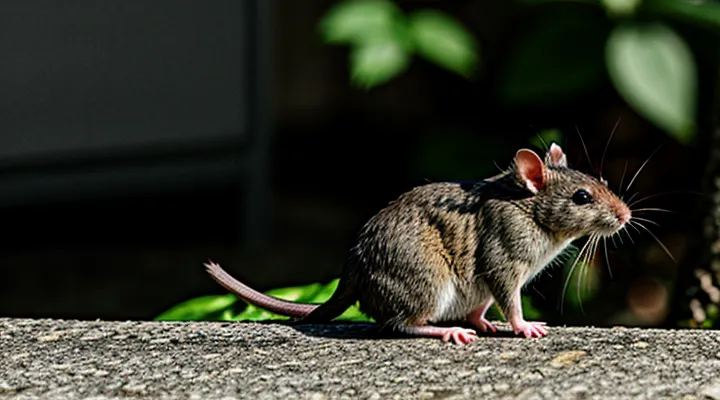
General Characteristics
Size and Build
Body Length
The body length of a rat, measured from the tip of the nose to the base of the tail, typically ranges from 18 cm to 25 cm in adult specimens. Variations depend on species, sex, and age:
- Species: Brown rats (Rattus norvegicus) average 20–25 cm; black rats (Rattus rattus) average 18–22 cm.
- Sex: Males generally exceed females by 1–2 cm.
- Age: Juveniles under eight weeks measure less than 12 cm; growth stabilizes after sexual maturity.
Standard practice involves placing the animal on a flat surface, aligning the spine with a calibrated ruler, and recording the distance without including the tail. Accurate body‑length data support morphological identification, health assessment, and comparative research across rodent populations.
Tail Length
The tail of a rat extends beyond the body and serves as a primary metric for visual assessment. Length typically ranges from 75 % to 120 % of head‑body length, reflecting species, age, and health status. A proportionally longer tail indicates a mature, well‑developed individual, while a shorter tail may suggest juvenile age or certain genetic traits.
Typical measurements:
- Common brown rat (Rattus norvegicus): 15–20 cm, often exceeding body length by 10–20 %.
- Black rat (Rattus rattus): 18–25 cm, frequently 120 % of body length.
- Laboratory strains: 12–16 cm, closely matching body length (≈100 %).
- Juvenile specimens: 8–12 cm, representing 70–90 % of adult proportions.
Tail length, together with fur coloration and ear size, provides a reliable reference for species identification and health evaluation.
Weight
Weight constitutes a measurable element of a rat’s outward characteristics.
Adult laboratory rats typically fall within a mass range of 200 g to 500 g, with males averaging slightly higher values than females. Dwarf or miniature strains may weigh as little as 30 g, while large‑breed specimens can exceed 600 g.
Key variables influencing individual weight include:
- Age: juveniles increase rapidly until sexual maturity, after which growth plateaus.
- Sex: males generally attain greater mass than females of the same age and strain.
- Genetic line: selective breeding produces distinct size categories.
- Nutritional regimen: caloric density and protein content directly affect body mass.
Weight is obtained using calibrated scales, preferably digital balances with a resolution of 0.1 g. Measurements should be recorded after a brief acclimation period to reduce stress‑induced fluctuations.
Accurate weight data support health assessments, dosing calculations for experimental protocols, and comparative studies of phenotypic traits across rat populations.
Fur
Color Variations
Rats display a broad spectrum of coat colors that are determined by genetic loci influencing pigment production, distribution, and dilution. Each hue results from specific allele combinations, creating distinct visual profiles that can be identified by experienced observers.
Common color categories include:
- Black – solid, deep pigmentation covering the entire body.
- Brown – ranging from chocolate to mahogany; often accompanied by a lighter underbelly.
- Agouti – alternating bands of dark and light hairs, producing a speckled appearance.
- White – lack of pigment; eyes may be pink (albino) or red.
- Gray – medium-tone fur with a uniform shade.
- Beige (Sable) – light brown to tan, sometimes with darker points on ears, tail, and paws.
Pattern variations are equally diverse:
- Hooded – darker coloration confined to the head, shoulders, and tail, with a lighter body.
- Piebald – irregular patches of white interspersed with colored fur.
- Dun – diluted version of agouti, yielding a muted, sandy tone.
- Cinnamon – reddish-brown hue, often with a lighter belly.
Genetic mutations such as the c (albino) and c^h (chocolate) alleles modify basic colors, while the d (dilution) allele reduces pigment intensity, producing pastel variants. Breeders rely on these genetic markers to predict offspring coloration and maintain colony diversity.
Texture
The texture of a rat’s outward characteristics defines how the animal is perceived in close observation. Fur covers the body in a dense, fine coat that varies from sleek to slightly coarse depending on breed and health. The dorsal fur typically presents a uniform smoothness, while the ventral area may feel softer and more pliable. Whiskers exhibit a rigid, hair‑like consistency, providing tactile feedback and contributing to the animal’s silhouette. Skin under the fur is thin, supple, and lightly pigmented, allowing easy identification of underlying coloration patterns. The tail displays a segmented surface with a leathery texture, alternating between smooth sections and slightly rough, scale‑like ridges that aid in grip and balance.
Key texture elements include:
- Fur density and fineness
- Whisker rigidity
- Skin suppleness
- Tail surface composition
- Paw pad granularity
Each component influences the tactile impression of the rat, supporting accurate visual profiling and facilitating species identification.
Grooming Habits
Rats maintain their coat through regular self‑grooming, a behavior essential for hygiene and thermoregulation. The process involves meticulous cleaning of fur, whiskers, and paws using their forepaws and teeth. Grooming occurs several times daily, with increased activity after eating, during periods of stress, or following exposure to dust and debris.
Key aspects of rat grooming include:
- Fur cleaning: Rats lick their bodies, removing loose hair and external particles. The action distributes natural oils, preserving fur softness and water resistance.
- Whisker maintenance: Precise strokes with the forepaws straighten and straighten vibrissae, ensuring optimal sensory function.
- Paw care: Rats bite and rub their hind limbs to keep pads free of dirt, reducing the risk of infection.
- Social grooming: Individuals may assist conspecifics by cleaning hard‑to‑reach areas, reinforcing group cohesion and reducing parasite load.
Effective grooming supports skin health; neglect can lead to matting, alopecia, or dermatological issues. Observing grooming frequency and technique offers reliable indicators of a rat’s overall condition and can aid in early detection of illness.
Head and Sensory Organs
Snout and Whiskers
Function of Vibrissae
When examining a rat’s exterior features, the whisker system stands out as a highly specialized tactile organ. Each vibrissa consists of a thick, keratinized shaft anchored in a follicle richly supplied with nerves. The direct connection to the trigeminal sensory pathway enables rapid transmission of mechanical information to the brain.
- Detects airflow patterns, allowing the animal to sense approaching predators or obstacles before visual contact.
- Measures object size, shape, and texture through contact, supporting precise navigation in confined spaces.
- Provides spatial mapping of the surrounding environment, facilitating orientation during nocturnal activity.
- Conveys social cues during interactions, as whisker positioning and movement communicate dominance, aggression, or curiosity.
These functions arise from the strategic arrangement of whiskers around the muzzle, cheeks, and above the eyes, creating a three‑dimensional detection field. The length and stiffness of each vibrissa are tuned to specific ranges of stimulus, ensuring that even minute displacements generate reliable neural signals. Consequently, the vibrissal apparatus integrates mechanical feedback into the rat’s behavioral repertoire, influencing foraging, predator avoidance, and social behavior without reliance on vision.
Whisker Patterns
Rats possess a distinctive arrangement of facial vibrissae that serves as a primary sensory interface. The whiskers are organized in four symmetrical rows on each side of the snout, extending laterally and forward. Each row contains a specific number of hairs, typically ranging from three to five, with the outermost row featuring the longest and most robust vibrissae.
Key characteristics of rat whisker patterns include:
- Length gradient: Outer whiskers may reach up to 30 mm, while inner hairs are shorter, often under 10 mm, creating a tapered profile that enhances detection of spatial gradients.
- Density distribution: The anterior region exhibits higher follicle density, providing finer resolution for forward navigation; posterior rows are sparser, supporting broader tactile sweeps.
- Morphological variation: Different species display unique curvature and thickness; for example, the Norway rat (Rattus norvegicus) has relatively straight, thick whiskers, whereas the roof rat (Rattus rattus) shows slightly curved, slender hairs.
- Age-related changes: Juvenile rats present shorter, less pigmented whiskers; adult specimens develop longer, darker vibrissae, reflecting maturation of the sensory system.
- Health indicators: Abrasions, breakage, or discoloration of whiskers can signal trauma, nutritional deficiency, or disease, making pattern assessment a practical diagnostic tool.
The precise spatial arrangement and physical properties of these vibrissae enable rats to construct detailed tactile maps of their environment, supporting navigation, foraging, and predator avoidance. Understanding whisker patterns contributes to accurate species identification and informs experimental designs that rely on somatosensory processing.
Eyes
Vision Capabilities
Rats possess a visual system adapted to a primarily nocturnal lifestyle. Their eyes are positioned on the sides of the skull, granting a panoramic field of view that exceeds 300 degrees and reduces blind spots when navigating tight spaces.
- Visual acuity: Low compared with diurnal mammals; rats resolve fine details at distances of a few centimeters, sufficient for detecting predators and locating food.
- Color perception: Dichromatic vision based on two types of cone photoreceptors, sensitive to short‑wave (ultraviolet/blue) and medium‑wave (green) spectra. This enables discrimination of objects against the dim, earthy background of their habitats.
- Light sensitivity: A high density of rod cells enhances performance under low illumination. The retina contains a reflective tapetum lucidum that redirects photons, improving night vision.
- Depth perception: Overlapping visual fields provide modest stereoscopic cues, supplemented by whisker input for precise spatial judgments.
These attributes collectively support the rat’s ability to forage, avoid hazards, and interact with conspecifics in dimly lit environments.
Eye Color
Rats display a range of eye colors that reflect genetic background, age, and health status. Common hues include:
- Dark brown, typical of most laboratory and wild strains.
- Light amber or reddish‑brown, often seen in albino individuals where melanin is reduced.
- Pink or red, resulting from the lack of pigmented iris tissue, allowing blood vessels to show through.
- Black or near‑black, associated with certain pigmented breeds and indicating high melanin concentration.
Eye color may change slightly as rats mature; juveniles often have lighter irises that darken with age. Abnormal coloration, such as cloudy or yellowed eyes, can signal ocular disease or systemic illness and warrants veterinary assessment.
Ears
Ear Shape and Size
Rats exhibit a range of ear morphologies that influence both sensory capability and visual identification. The pinna is generally thin, hairless, and triangular, extending laterally from the skull. Its apex points outward, creating a sharp angle that distinguishes rat ears from those of other rodents. The surface area of the pinna varies among species and breeds, with laboratory strains typically displaying smaller ears, while wild varieties possess larger, more pronounced structures.
Key dimensions:
- Length: 1.5–2.5 cm in adult specimens; length correlates with overall body size.
- Width: 0.8–1.2 cm at the base, narrowing toward the tip.
- Thickness: approximately 0.2 cm, allowing flexible movement.
Ear size affects auditory acuity; larger pinnae capture low‑frequency sounds more efficiently, whereas smaller ears favor higher frequencies. The cartilage framework provides rigidity, while the underlying muscles enable rotation for directional hearing. Variations in ear shape—such as a more rounded versus sharply pointed apex—serve as reliable markers for breed identification and health assessment.
Hearing Acuity
Rats possess acute auditory capabilities that complement their external morphology. Their large, upright ears and mobile pinnae enhance sound capture, allowing detection of frequencies up to 80 kHz—well beyond the human hearing range. The ear structure includes a thin tympanic membrane and a highly vascularized cochlea, which together support rapid signal transduction and precise frequency discrimination.
Key aspects of rat hearing acuity:
- Frequency range: 250 Hz – 80 kHz, with peak sensitivity around 20 kHz.
- Temporal resolution: ability to discern brief acoustic events as short as 5 ms.
- Directional hearing: asymmetrical ear placement provides accurate sound localization within a few centimeters.
These auditory traits are integral to the rat’s sensory profile, influencing behaviors such as foraging, predator avoidance, and social communication.
Limbs and Locomotion
Paws
Forepaws (Hands)
The forepaws of a rat constitute a compact, five‑digit structure optimized for manipulation and locomotion. Each digit ends in a sharp, keratinized claw that can be retracted slightly for digging and grasping. The pads beneath the digits are densely furred, providing tactile sensitivity while protecting the skin from abrasive surfaces. Fur on the forepaws typically matches the body coat in color and texture, ranging from light gray to brown tones, with occasional lighter patches on the ventral side.
Key anatomical characteristics:
- Five digits per forepaw, arranged symmetrically.
- Curved claws measuring 2–3 mm in length, capable of fine adjustments.
- Palmar pads covered by short, stiff hairs, enhancing grip.
- Muscular tendons visible through the skin, indicating strong flexion ability.
- Coloration consistent with overall coat, aiding camouflage.
Functionally, the forepaws enable precise handling of food items, construction of nests, and navigation through narrow burrows. Their dexterity rivals that of other small mammals, allowing rats to manipulate objects such as food pellets, wires, and laboratory equipment with notable accuracy. The combination of claw geometry, pad sensitivity, and muscular control defines the forepaws as a versatile tool for survival and interaction with the environment.
Hindpaws (Feet)
The hindpaws of a rat exhibit a compact, muscular structure adapted for climbing, digging, and rapid locomotion. Each paw contains five digits, with the first digit (the hallux) reduced and positioned laterally, providing a stable grip on irregular surfaces. The pads are thick, keratinized, and textured, allowing efficient traction on diverse substrates.
Key anatomical features include:
- Digit arrangement: Five toes per hindpaw; the hallux is opposable, supporting grasping actions.
- Claw morphology: Curved, sharp unguis on each digit, facilitating excavation and climbing.
- Pad composition: Dense epidermal layers with a high concentration of sweat glands, contributing to moisture regulation and tactile sensitivity.
- Musculature: Well-developed flexor and extensor groups enable precise foot placement and powerful propulsion.
Overall, the hindpaws contribute directly to the rat’s agile movement and ability to navigate complex environments, reflecting the species’ evolutionary specialization for versatile terrestrial activity.
Nails
The rat’s external features include a set of keratinized nails that protect the distal phalanges and facilitate locomotion. Each nail is a compact, curved plate composed of a hard outer layer and a softer inner matrix that generates continuous growth. The curvature matches the contour of the toe, allowing the animal to maintain grip on varied substrates.
Color varies from pale pink in younger individuals to darker brown or black in mature specimens, reflecting melanin deposition. Growth rate averages 0.2 mm per day, requiring regular wear through activity to prevent overgrowth. Nails on the forepaws tend to be slightly longer and more robust than those on the hind paws, supporting digging and climbing behaviors.
- Composition: keratin fibers embedded in a dense, mineralized matrix.
- Structure: proximal nail bed, middle plate, distal tip.
- Growth: continuous, regulated by nail matrix cells.
- Coloration: pink to brown, linked to age and melanin.
- Functional differences: forepaw nails larger for manipulation; hind paw nails smaller for traction.
- Maintenance: natural abrasion through movement prevents excessive length.
Gait and Agility
Rats exhibit a distinctive locomotion pattern that combines fluid forward motion with precise limb coordination. Their quadrupedal gait relies on alternating diagonal pairs of limbs, allowing continuous ground contact and minimizing vertical displacement. The hind limbs generate the primary propulsive force, while the forelimbs adjust stride length for terrain variations. Tail movements counterbalance rotational forces, maintaining stability during rapid acceleration.
Key aspects of rat agility include:
- Ability to negotiate openings as small as 2 cm in diameter.
- Rapid directional changes achieved through pivoting on a single hind foot.
- Climbing proficiency supported by sharp, retractable claws and strong forelimb grip.
- Vertical jumps reaching heights of up to 30 cm from a standing position.
These locomotor traits enable rats to exploit complex environments, from cluttered burrows to elevated structures, with minimal energy expenditure and high maneuverability.
Distinctive Features
Tail
Hairlessness
Hairlessness in a rat’s visual profile manifests as a smooth, unpigmented skin surface where typical fur would be present. The condition can be congenital, resulting from genetic mutations that disrupt keratin production, or acquired through disease, injury, or severe nutritional deficiency.
Key observable traits include:
- Absence of hair across the dorsal and ventral regions, sometimes limited to patches.
- Visible vascular patterns and underlying musculature, giving the skin a glossy or matte appearance depending on moisture.
- Increased susceptibility to temperature fluctuations, abrasions, and dehydration due to the loss of insulating fur.
Diagnostic assessment relies on direct inspection and tactile examination. Absence of hair should be confirmed across multiple body zones to differentiate true hairlessness from temporary shedding. Histological analysis may reveal reduced follicular density or malformed hair shafts, supporting a genetic etiology.
Management strategies focus on environmental control and supportive care:
- Maintain ambient temperature within the species’ thermoneutral range to prevent hypothermia.
- Apply hypoallergenic, barrier-forming ointments to protect exposed skin from irritants and infection.
- Provide a diet enriched with essential fatty acids, vitamins A and E, and adequate protein to promote skin integrity.
Prognosis varies with cause. Genetic hairlessness, when isolated, does not inherently affect lifespan but requires continual protective measures. Acquired hair loss linked to systemic illness often resolves with treatment of the underlying condition; failure to address it may lead to secondary complications such as dermatitis or systemic infection.
Scaling
The visual representation of a rat must be adjusted to maintain proportional accuracy across different display sizes. Scaling determines how the animal’s features—such as fur texture, whisker length, and body contours—appear when rendered at various resolutions or printed on media of differing dimensions.
Key aspects of scaling include:
- Uniform scaling: applies a single factor to height, width, and depth, preserving the rat’s overall shape.
- Non‑uniform scaling: modifies individual dimensions, useful for emphasizing specific anatomical traits without distorting the whole figure.
- Resolution dependency: higher pixel densities allow finer detail retention; lower densities require simplification of patterns to avoid visual clutter.
- Aspect ratio preservation: ensures that the rat’s silhouette remains true to its natural proportions, preventing elongation or compression.
Effective scaling ensures that the rat’s appearance remains recognizable and consistent, regardless of the viewing context or output format.
Prehensile Abilities
Rats exhibit highly adaptable forelimbs that terminate in five digits, each equipped with a claw and a flexible pad. The pads generate friction against surfaces, allowing the animal to grip and manipulate objects as small as seed fragments or as large as twine. Muscular control of the digits is coordinated by a dense network of motor neurons, producing rapid adjustments during climbing or foraging.
The tail, although not fully prehensile, contributes to balance and can wrap loosely around narrow supports, enhancing stability when the rat ascends vertical shafts. Fur density on the tail diminishes toward the tip, reducing drag and permitting swift repositioning.
Key prehensile characteristics include:
- Opposable thumb‑like digit on each forepaw, enabling pinch grip.
- Sensitive palmar pads that detect texture and pressure, facilitating precise handling.
- Strong flexor tendons that generate forceful closure of the digits.
- Coordinated wrist rotation, allowing the paw to orient in multiple planes without repositioning the body.
- Tail-assisted anchoring, providing auxiliary support during extended reaches.
Sexual Dimorphism
Size Differences
Rats display considerable variation in overall size, a factor that shapes their visual profile and influences handling, habitat suitability, and health assessment. Size differences arise from species genetics, developmental stage, sex, and environmental conditions.
Key determinants of rat size:
- Species: Norway rats (Rattus norvegicus) typically reach 250–300 mm body length, while roof rats (Rattus rattus) average 200–250 mm.
- Age: Juveniles measure 30–70 mm at birth, progressing to adult dimensions over 8–10 weeks.
- Sex: Males generally exceed females by 10–20 % in body mass and length within the same species.
- Nutrition and housing: High‑calorie diets and spacious enclosures promote greater growth; crowding and limited resources constrain size.
These dimensions affect external characteristics such as fur coverage, tail proportion, and skeletal robustness, providing measurable criteria for species identification and welfare monitoring.
Other Visible Distinctions
Rats display several visual traits beyond basic coloration and size. These traits aid identification, health assessment, and breed differentiation.
- Tail length relative to body, often exceeding body length in wild specimens, shorter in domesticated strains.
- Ear shape and placement; large, thin membranes positioned low on the skull indicate heightened auditory sensitivity.
- Whisker density and length; dense, long vibrissae enhance tactile navigation and signal neurological integrity.
- Fur texture and sheen; glossy, fine coats suggest optimal grooming, while coarse or dull fur may signal dermatological issues.
- Eye size and pupil dilation; large, dark eyes with responsive pupils reflect superior low‑light vision.
- Nose cleft depth; pronounced clefts improve olfactory surface area, supporting scent detection.
Each characteristic provides measurable data for researchers and caretakers, facilitating precise classification and health monitoring.