
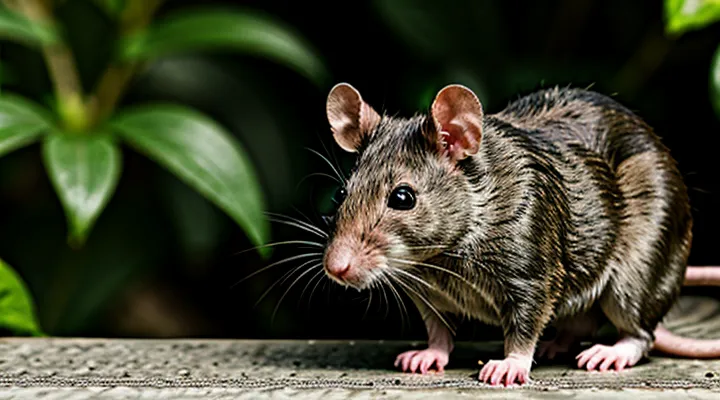
Understanding the Scientific Name
The Binomial Nomenclature System
Linnaeus and the Naming Convention
Linnaeus introduced a universal binomial system that assigns each organism a two‑part Latin designation. The system organizes living beings into hierarchical categories, beginning with the genus and followed by the specific epithet. This framework replaced descriptive Latin phrases with concise, standardized names, facilitating communication among naturalists.
For the common rat, Linnaean taxonomy yields the name «Rattus rattus» for the black rat and «Rattus norvegicus» for the brown rat. Both names follow the same structural rules: the genus name is capitalized, the species name is lowercase, and together they identify a single taxonomic entity.
Key elements of the Linnaean naming convention:
- Genus name: first letter capitalized, all other letters lowercase.
- Species epithet: entirely lowercase.
- Both parts written in Latin, traditionally italicized in printed form.
- The two words together form a unique identifier for each species.
Linnaeus’ method provides a stable reference for scientific literature, enabling precise identification of rodent species across disciplines.
Genus and Species Explained
The Latin designation for the common rat belongs to the genus «Rattus», a taxonomic group that gathers rodents sharing specific morphological and genetic traits. Members of this genus possess a single pair of continuously growing incisors, a characteristic skull shape, and a well‑developed auditory bullae. The genus name, derived from classical Latin, serves as the first element of the binomial nomenclature for each species.
Within the genus, each distinct organism receives a species epithet, forming a two‑part scientific name. The epithet distinguishes populations that are reproductively isolated and exhibit consistent phenotypic differences. For the brown rat, the complete Latin name is «Rattus norvegicus», indicating its placement in the genus and its specific identity. The black rat carries the name «Rattus rattus», reflecting a separate evolutionary lineage.
Key species of the genus include:
- «Rattus norvegicus»: widely distributed, adapted to urban environments, notable for its robust body size.
- «Rattus rattus»: smaller, agile, historically associated with seafaring trade routes.
- «Rattus exulans»: the Pacific rat, endemic to many remote islands, often introduced by human activity.
The binomial system, established by Carl Linnaeus, provides a universal framework for identifying organisms. The genus component groups related species, while the species component specifies the exact organism, ensuring precise communication across scientific disciplines.
The Genus «Rattus»
Characteristics of the Genus
The genus Rattus comprises medium‑sized, omnivorous mammals characterised by a robust skull, continuously growing incisors and a high reproductive rate. Members display a flexible body plan, enabling rapid locomotion on the ground and adept climbing in arboreal species. Their fur varies from brown to gray, providing camouflage across diverse habitats.
Key morphological and physiological traits include:
- Strong, chisel‑shaped incisors that self‑sharpen through gnawing.
- Short, broad molars adapted for grinding plant material and seeds.
- Well‑developed auditory bullae, enhancing hearing sensitivity to low‑frequency sounds.
- A keen sense of smell, mediated by an enlarged olfactory epithelium.
- Reproductive cycles capable of producing multiple litters per year, each with 5–12 offspring.
Ecologically, Rattus species exhibit remarkable adaptability, inhabiting urban environments, agricultural fields and natural ecosystems. Their diet encompasses grains, fruits, insects and carrion, reflecting opportunistic foraging behaviour. Social structures range from solitary individuals to complex colonies, with hierarchies established through scent marking and vocalisations.
The Latin designation for the common rat, Rattus norvegicus, exemplifies the taxonomic conventions that classify these rodents within the family Muridae. Genetic analyses reveal a high degree of similarity across the genus, supporting the phylogenetic cohesion of its members.
Common Species within «Rattus»
The genus «Rattus» comprises several species that have adapted to human‑dominated environments worldwide. These rodents are characterized by robust bodies, short tails, and high reproductive capacity, which contribute to their success as commensal mammals.
- Rattus norvegicus – commonly called the brown rat; widespread in temperate regions; primary carrier of zoonotic pathogens. - Rattus rattus – known as the black rat; prefers warmer climates; historically associated with plague transmission. - Rattus exulans – the Polynesian rat; smallest of the genus; found on many Pacific islands. - Rattus argentiventer – the ricefield rat; inhabits Southeast Asian rice paddies; notable for agricultural impact. - Rattus tanezumi – the Asian house rat; prevalent in tropical urban settings; often confused with R. rattus.
Each species exhibits distinct ecological preferences, yet all share a capacity for rapid population growth and close association with human settlements. Their scientific classification under the Latin name provides a standardized framework for research, disease monitoring, and pest management.
The Species «Rattus norvegicus»
Common Names and Distribution
The Latin designation for the common rat species includes Rattus norvegicus and Rattus rattus. Both taxa possess multiple vernacular names that vary by region and language.
- Rattus norvegicus – brown rat, Norway rat, sewer rat, street rat
- Rattus rattus – black rat, roof rat, ship rat, house rat
The brown rat occupies temperate zones worldwide, thriving in urban environments, agricultural fields, and coastal areas. Its range extends across North America, Europe, Asia, and parts of South America and Africa. The black rat favors warmer climates, predominantly inhabiting tropical and subtropical regions. Its distribution covers the Mediterranean basin, sub‑Saharan Africa, Southeast Asia, and numerous islands where it arrived via human activity. Both species have established populations on most continents, often coexisting with human settlements.
Key Features and Biology
The Latin designation for the common rodent is «Rattus norvegicus», with the closely related species «Rattus rattus» also classified within the same genus. Both names follow the binomial system established by Carl Linnaeus, placing the organism in the family Muridae, order Rodentia, class Mammalia.
Taxonomically, the genus Rattus belongs to the subfamily Murinae, which groups together a diverse array of murid rodents. The species epithet distinguishes the brown rat (norvegicus) from the black rat (rattus), reflecting historical geographic associations rather than strict morphological differences.
Key morphological characteristics include:
- Body length 16–20 cm, tail length comparable to or slightly longer than the torso.
- Dense fur, brown to grey in R. norvegicus, black to brown in R. rattus.
- Prominent incisors with continuously growing enamel, adapted for gnawing.
- Scapular and pelvic girdles structured for agile climbing and rapid terrestrial locomotion.
Reproductive biology features rapid maturation: sexual readiness occurs at 5–6 weeks, gestation lasts 21–23 days, and litter sizes range from 5 to 12 offspring. Females can produce up to eight litters per year under favorable conditions, supporting high population turnover.
Ecologically, these rodents exhibit extreme adaptability, thriving in urban, agricultural, and natural habitats. They exploit diverse food sources, from grains to waste material, and serve as vectors for numerous pathogens, influencing public‑health dynamics. Their burrowing and foraging activities modify soil structure and seed dispersal patterns, contributing to ecosystem processes.
The Species «Rattus rattus»
Common Names and Historical Significance
The Latin designation for the common rat, Rattus, appears under several vernacular names across languages and cultures. Contemporary English identifies the species primarily as “brown rat,” “black rat,” or simply “rat.” In French, the terms «rat brun» and «rat noir» are standard; German uses «Ratte» and Spanish employs «rata». Indigenous languages often render the animal with onomatopoeic or descriptive labels, for example, the Māori word «kiore» designates the Pacific rat (Rattus exulans).
Historical records reveal the rodent’s significance in human societies. Early agricultural settlements documented the black rat (Rattus rattus) as a vector for plague, a factor that reshaped demographic patterns in medieval Europe. The brown rat (Rattus norvegicus) spread globally during the 18th and 19th centuries, accompanying maritime trade and contributing to urban pest management practices. Scientific classification by Carl Linnaeus introduced the binomial name «Rattus rattus» in 1758, establishing a framework for subsequent zoological research. The Latin terminology facilitated cross‑regional communication among naturalists, enabling comparative studies of behavior, disease transmission, and ecological impact.
Distinguishing Characteristics
The Latin designation for the common rat is Rattus norvegicus, a binomial that follows the conventions of zoological nomenclature. The genus name derives from the Old Latin rattus, meaning “rodent,” while the specific epithet norvegicus references the species’ early identification in Norway. This taxonomic label distinguishes the organism at both the generic and species levels, providing a universal reference for scientific communication.
Distinguishing characteristics of the species, as reflected in its Latin name, include:
- Body length ranging from 20 mm to 30 mm, measured from the tip of the nose to the base of the tail.
- Tail length equal to or slightly longer than the head‑body length, a trait emphasized in the species description.
- Fur coloration ranging from brown to gray, with a dorsal surface darker than the ventral side.
- Dental formula 2/1, 1/0, 3/3, indicating a single pair of incisors in each jaw and three pairs of molars, a key feature separating Rattus from other murid genera.
- Chromosomal count of 42 diploid chromosomes, a genetic marker used in taxonomic verification.
These morphological and genetic markers are encoded in the scientific name, enabling precise identification across regions and languages. The binomial format also signals the organism’s placement within the family Muridae, reinforcing its relationship to other rodents while highlighting its unique attributes.
Other Notable Rat Species
Less Common but Relevant «Rattus» Species
The genus Rattus comprises dozens of species; several are seldom encountered yet hold significance for biodiversity research and disease ecology.
«Rattus exulans», the Pacific rat, inhabits islands across Oceania and the western Pacific. Its small size and opportunistic diet enable rapid colonisation of remote archipelagos, influencing native bird populations.
«Rattus argentiventer», the silver‑backed rat, occupies high‑altitude forests of the Indonesian archipelago. Morphological adaptations include a dense, silver‑tinged dorsal pelage and robust incisors suited for processing hard seeds.
«Rattus tanezumi», the Asian house rat, ranges from Southeast Asia to the Indian subcontinent. Unlike the ubiquitous brown rat, it prefers cultivated fields and exhibits a higher tolerance for humid environments.
«Rattus everetti», the Mindanao rat, is endemic to the Philippines’ mountainous regions. Limited to montane cloud forests, it serves as an indicator species for habitat integrity.
«Rattus satarae», the Satara rat, is restricted to the Western Ghats of India. Its presence in fragmented forest patches underscores the importance of corridor conservation.
«Rattus leucopus», the white‑footed rat, occurs in the lowland rainforests of New Guinea. Distinctive pale hind feet differentiate it from sympatric congeners, and its diet includes a notable proportion of fungi.
Each of these taxa contributes to the ecological complexity of their respective regions and provides valuable data for phylogenetic studies within the Rattus clade.
Related Rodent Genera
The rat’s scientific designation, Rattus norvegicus, belongs to the family Muridae, which comprises numerous closely related genera. These genera share morphological traits such as a robust skull, omnivorous dentition, and a high reproductive rate, distinguishing them from more distantly related rodent families.
Key genera allied with the rat include:
- « Rattus » – the principal genus containing the true rats, encompassing species such as the brown rat and the black rat.
- « Mus » – the mouse genus, characterized by smaller body size and a wider geographic distribution.
- « Apodemus » – the field mouse genus, noted for its adaptation to forested habitats.
- « Microtus » – the vole genus, distinguished by short tails and a preference for grassland ecosystems.
- « Peromyscus » – the deer mouse genus, recognized for its nocturnal activity and diverse coloration.
These genera collectively illustrate the evolutionary diversification within Muridae, providing a framework for comparative studies of behavior, disease transmission, and ecological impact across related rodent groups.
Significance of Scientific Classification
Clarity and Global Communication
The Latin designation for the common rat, «Rattus», serves as a single, unambiguous identifier recognized by scientists worldwide. By replacing vernacular names with a standardized term, the potential for misinterpretation across linguistic boundaries is eliminated.
Clarity arises from the fixed structure of binomial nomenclature. Each species receives a two‑part name composed of a genus and a specific epithet, both derived from Latin or Latinized roots. This structure ensures that any reference to «Rattus» conveys exactly the same organism, regardless of the native language of the reader.
Global communication benefits from the universal acceptance of the scientific name. Researchers, policymakers, and educators can exchange data, publish findings, and draft regulations without translating species names. The result is streamlined collaboration and reduced risk of errors in international projects.
Key advantages include:
- Consistent labeling in scientific literature and databases.
- Simplified cross‑border trade documentation for pest control and laboratory supplies.
- Uniformity in biodiversity assessments and conservation reports.
- Efficient indexing in multilingual information systems.
Evolutionary Relationships and Phylogeny
The Latin designation for the common rat belongs to the genus «Rattus», which includes several species of biomedical and ecological relevance. The most widely studied representatives are the brown rat, «Rattus norvegicus», and the black rat, «Rattus rattus». Both species reside within the family Muridae, subfamily Murinae, and share a common ancestor with other murine rodents.
Within Murinae, molecular analyses place «Rattus» in a sister relationship to the genus «Mus» (house mice) and to the tribe Rattini, which comprises a diverse assemblage of Asian and African murids. Phylogenetic trees derived from mitochondrial cytochrome b, nuclear IRBP, and whole‑genome sequencing consistently recover the following hierarchy:
- Clade A: «Rattus» + «Mus» (shared murine ancestry)
- Clade B: Rattini tribe (including «Rattus», Asian bamboo rats, and related genera)
- Clade C: Outgroup comprising non‑murine Myodonta (e.g., voles, lemmings)
Divergence estimates based on relaxed molecular clocks indicate that the split between «Rattus» and its closest murine relatives occurred approximately 12–15 million years ago, during the Miocene. Within «Rattus», the split between «R. norvegicus» and «R. rattus» is dated to roughly 1.5 million years ago, coinciding with the expansion of human agricultural habitats that facilitated worldwide dispersal.
Recent phylogenomic studies employing thousands of ultraconserved elements have refined the internal topology of the genus, revealing cryptic lineages in Southeast Asia that predate the global spread of the two commensal species. These findings underscore the importance of comprehensive sampling and high‑resolution genomic data for reconstructing the evolutionary history of rat species.