
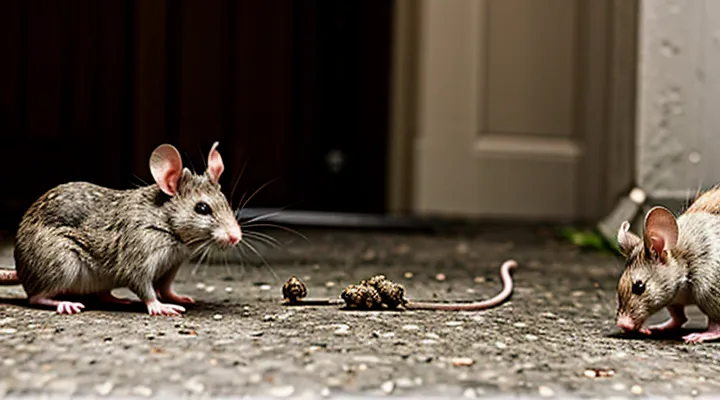
The Distinctive Features of Rat and Mouse Feces
Appearance and Morphology
Size and Shape Variations
Rodent droppings exhibit measurable differences in dimensions and outlines that enable reliable species discrimination. Rat pellets commonly range from 10 mm to 20 mm in length, with an average width of 3 mm to 5 mm; they display a cylindrical form, often tapering slightly toward one end. Mouse feces are markedly smaller, typically 4 mm to 8 mm long and 1 mm to 2 mm wide, and assume a more oval or spindle shape with rounded termini.
Key morphological parameters include:
- Length: rat > mouse, measurable with calipers or image analysis software.
- Width: proportionally greater in rat specimens, providing a secondary discriminant.
- Aspect ratio (length ÷ width): higher values indicate rat origin; mouse pellets approach a ratio near 4–5.
- Surface texture: rat droppings often show a smoother coating, whereas mouse pellets may present fine granularity.
Variations within each species arise from diet composition, age, and health status. High‑fiber diets increase pellet bulk, extending length and width, while protein‑rich or low‑fiber intake yields compact feces. Juvenile rodents produce shorter, less developed pellets, reflecting immature gastrointestinal processing. Pathological conditions such as gastrointestinal inflammation can alter shape, producing irregular contours or fragmented pellets.
Accurate measurement of size and shape supports field surveillance, laboratory identification, and epidemiological modeling. Standardized protocols—consistent lighting, calibrated measurement tools, and repeat sampling—ensure reproducibility across studies.
Color and Texture Indicators
Rodent feces provide immediate clues about the animal’s recent diet, gastrointestinal health, and environmental exposure. Color and texture are the most accessible diagnostic features and can be evaluated without specialized equipment.
-
Color variations
- Dark brown to black: typical for mature rats and mice consuming standard laboratory chow or grain‑based diets.
- Light brown or tan: indicates a diet rich in fibers, seeds, or plant material.
- Red or orange specks: suggest ingestion of blood, hemoglobin breakdown, or beetroot pigments.
- Yellowish or pale: may result from high fat content, bile accumulation, or malabsorption.
- White or chalky: often associated with calcium overload, mineral supplements, or severe dehydration.
-
Texture characteristics
- Firm, dry pellets: reflect normal water balance and efficient colon absorption.
- Soft, moist clumps: point to increased intestinal fluid, possible infection, or dietary excess of moisture.
- Gelatinous or mucus‑laden masses: signal inflammation, parasitic infection, or ulcerative conditions.
- Crumbly, fragmented pieces: may arise from rapid transit time, stress‑induced motility changes, or poor nutrient absorption.
Interpretation requires correlation with species, age, and environmental conditions. Consistent deviations from expected color and texture patterns warrant further laboratory analysis, such as microscopic examination or chemical assays, to identify pathogens, nutritional deficiencies, or toxic exposures.
Composition and Contents
Undigested Food Particles
Undigested food particles found in rat and mouse droppings serve as direct indicators of recent dietary intake. Their physical characteristics—size, shape, and resilience—reflect the degree of mechanical breakdown and enzymatic processing within the gastrointestinal tract. Hard, fibrous fragments such as seed coats, insect exoskeletons, and plant stems typically survive passage, while softer tissues are largely absorbed.
The analytical value of these remnants includes:
- Species identification: Certain particles are exclusive to specific prey or plant species, allowing inference of local foraging behavior.
- Habitat assessment: Presence of agricultural residues or urban waste components signals proximity to human activity and potential contamination sources.
- Health monitoring: High frequencies of indigestible foreign material may correlate with gastrointestinal disorders or nutritional deficiencies in rodent populations.
- Pathogen surveillance: Co‑occurrence of undigested remnants with bacterial or parasitic markers can guide targeted sampling for zoonotic threats.
Microscopic examination combined with DNA barcoding of residual material enhances taxonomic resolution, enabling precise reconstruction of feeding patterns. Chemical analysis of associated organic matter quantifies nutrient composition, informing ecological models of energy flow in urban and peri‑urban ecosystems.
Interpretation of undigested particles must consider digestive efficiency variations among rodent species, age classes, and seasonal diet shifts. Comparative studies reveal that omnivorous mice exhibit a broader spectrum of particle types than strictly granivorous rats, reflecting adaptive foraging strategies.
In practice, systematic collection of fecal samples, followed by standardized sieving and staining protocols, yields reproducible data sets. Integration of these findings with environmental monitoring programs improves risk assessment for disease transmission and supports management decisions regarding pest control and habitat modification.
Hair and Other Debris
Hair and other debris frequently appear in rodent droppings and provide valuable clues about the animal’s environment, diet, and health status. When collected for laboratory examination, these non‑digestible elements are isolated through sieving and microscopic inspection. Their presence confirms ingestion of external materials and helps differentiate between species, as certain rodents preferentially collect specific fibers.
Key aspects of debris analysis include:
- Identification of hair type – mammalian hair morphology (scale pattern, medulla structure) distinguishes domestic, wild, and predator species.
- Fiber composition – synthetic versus natural fibers indicate proximity to human habitation or nesting materials.
- Plant fragments – leaf cuticles, pollen, and seed coats reveal foraging behavior and seasonal activity.
- Inorganic particles – sand, metal shavings, or glass fragments suggest exposure to contaminated substrates.
Quantifying debris proportion relative to fecal mass assists in assessing gastrointestinal function. Elevated hair content may signal excessive grooming, parasitic infestation, or ingestion of contaminated bedding. Conversely, low debris levels often reflect a diet rich in digestible material and minimal environmental contamination.
Interpretation of hair and debris data integrates with microbial and chemical analyses to construct a comprehensive profile of rodent presence, movement patterns, and potential health risks in residential or laboratory settings.
Health Implications and Significance
Identifying Rodent Infestations
Fresh vs. Old Droppings
Distinguishing fresh from aged rodent droppings is essential for accurate interpretation of fecal evidence. Fresh specimens retain moisture, a glossy surface, and a distinct odor, while older samples appear desiccated, matte, and may exhibit discoloration.
Key physical indicators:
- Moisture content: high in recent deposits, low after several days.
- Color: dark brown to black when fresh; lighter, grayish tones develop with age.
- Surface texture: smooth and pliable versus brittle and crumbly.
- Odor intensity: strong, characteristic scent diminishes over time.
Chemical and microbiological profiles shift as degradation progresses. Fresh droppings contain viable pathogens, elevated protein levels, and intact DNA, facilitating molecular detection. In contrast, aged specimens show reduced bacterial viability, partial protein denaturation, and fragmented nucleic acids, which can compromise assay sensitivity.
Field implications are direct. Surveys that prioritize fresh material improve outbreak tracing, allow timely intervention, and increase confidence in species identification. Recognizing old droppings prevents misinterpretation of population density estimates and avoids false negatives in pathogen screening.
Quantity and Distribution Patterns
Rodent fecal output varies widely among species, age groups, and dietary regimes. Laboratory rats typically produce 0.2–0.3 g of dry feces per day, while wild house mice generate 0.05–0.08 g. Seasonal fluctuations in food availability can increase production by up to 40 % during periods of abundant resources. Body mass correlates positively with fecal mass; a 300‑g rat excretes roughly three times the amount of a 100‑g mouse under comparable conditions.
Spatial distribution of droppings reflects foraging behavior and habitat structure. In confined environments such as cages or burrow systems, feces concentrate near feeding stations and nesting zones. In open habitats, deposition follows a gradient:
- High density within 0.5 m of food caches.
- Moderate density along established runways and tunnel entrances.
- Low density in peripheral foraging areas.
Temporal patterns exhibit diurnal peaks aligned with activity cycles. Rats, predominantly nocturnal, deposit the majority of feces during the dark phase, whereas mice show a bimodal distribution with peaks at dawn and dusk. Sampling protocols must account for these cycles to avoid underestimation.
Quantitative assessment commonly employs:
- Direct weight measurement of collected dry material.
- Count of individual pellets after sieving.
- Gravimetric conversion using species‑specific moisture content (≈75 % water for rats, ≈80 % for mice).
Accurate mapping of fecal quantity and its distribution supports ecological monitoring, disease surveillance, and validation of laboratory housing standards.
Disease Transmission Risks
Bacterial Pathogens
Rodent fecal material serves as a primary reservoir for a range of bacterial agents capable of causing disease in humans and livestock. Laboratory examinations consistently isolate gram‑negative enterics, spore‑forming bacilli, and opportunistic opportunists from samples collected in urban, agricultural, and laboratory settings.
Key bacterial pathogens identified in rat and mouse droppings include:
- Salmonella spp., especially serovars Typhimurium and Enteritidis, which survive for weeks under moderate humidity.
- Yersinia pestis, the etiologic agent of plague, persisting in feces for several days and capable of aerosol transmission.
- Leptospira interrogans, shed in urine but frequently recovered from fecal contamination of water sources.
- Clostridium difficile, producing toxin B that remains viable after desiccation.
- Escherichia coli O157:H7 and other Shiga‑toxin producing strains, linked to severe gastroenteritis.
Molecular assays, such as quantitative PCR targeting species‑specific virulence genes, provide rapid detection limits of 10⁴ CFU per gram of feces. Culture‑based methods remain essential for antimicrobial susceptibility profiling, especially for Salmonella and Yersinia isolates. Metagenomic sequencing offers comprehensive insight into community composition, revealing co‑occurrence patterns that influence pathogen persistence.
Public‑health implications arise from direct contact with contaminated surfaces, ingestion of aerosolized particles, and indirect exposure through food and water supplies. Control strategies focus on environmental sanitation, rodent population management, and routine monitoring of fecal hotspots in high‑risk facilities. Integration of surveillance data with predictive modeling enhances early warning capabilities for outbreak prevention.
Viral and Parasitic Threats
Rodent droppings serve as a reservoir for a broad spectrum of pathogenic viruses and parasites that can affect humans, domestic animals, and wildlife. The high density of rats and mice in urban and agricultural settings increases the likelihood of fecal contamination of food, water, and surfaces, creating pathways for disease transmission.
Key viral agents identified in rodent feces include:
- Hantaviruses, responsible for hemorrhagic fever with renal syndrome and hantavirus pulmonary syndrome.
- Lymphocytic choriomeningitis virus (LCMV), capable of causing aseptic meningitis and congenital infections.
- Seoul virus, a hantavirus variant associated with severe respiratory illness.
- Hepatitis E virus genotype 3, linked to acute hepatitis in humans.
Prominent parasitic threats comprise:
- Giardia duodenalis cysts, leading to prolonged diarrheal illness.
- Cryptosporidium spp. oocysts, causing cryptosporidiosis with significant morbidity in immunocompromised individuals.
- Toxoplasma gondii oocysts, contributing to toxoplasmosis and congenital complications.
- Hymenolepis nana eggs, resulting in dwarf tapeworm infection.
Molecular assays, such as quantitative PCR and next‑generation sequencing, provide rapid detection of viral genomes, while immunofluorescence microscopy and antigen capture ELISA remain standard for parasite identification. Environmental monitoring programs that integrate these techniques enable early warning of outbreak potential and inform targeted sanitation interventions.
Effective risk mitigation relies on controlling rodent populations, preventing fecal contamination of food processing areas, and maintaining rigorous hygiene protocols. Surveillance data underscore the necessity of incorporating rodent fecal analysis into public health strategies to reduce the burden of zoonotic infections.
Allergenic Properties
Respiratory Issues
The examination of rodent droppings provides direct evidence of airborne pathogens that can provoke respiratory disease in humans and animals. Laboratory cultures and molecular assays frequently identify bacteria such as Bacillus anthracis, Streptococcus pneumoniae, and Legionella pneumophila in fecal samples, confirming their capacity to become aerosolized during handling or cleaning activities. Viral agents, notably hantavirus and Seoul virus, are also detectable in excreta; inhalation of contaminated dust particles can trigger severe pulmonary syndromes, including hantavirus pulmonary syndrome and hemorrhagic fever with renal syndrome.
Key respiratory hazards associated with exposure to rat and mouse feces include:
- Bacterial infections – Legionellosis, anthrax, streptococcal pneumonia.
- Viral infections – Hantavirus pulmonary syndrome, Seoul virus–induced pulmonary edema.
- Allergic reactions – Sensitization to rodent proteins leading to occupational asthma.
- Fungal spores – Aspergillus spp. proliferating in moist droppings, causing allergic bronchopulmonary aspergillosis.
Mitigation strategies rely on engineering controls (ventilation, containment), personal protective equipment (respirators, gloves), and routine environmental monitoring to detect pathogen load in air and surfaces. Accurate identification of respiratory agents in rodent feces therefore informs risk assessments, guides public‑health interventions, and supports occupational safety protocols.
Skin Reactions
Exposure to rat and mouse droppings can provoke a range of cutaneous responses. Direct contact with fecal particles, urine residues, or aerosolized allergens initiates inflammation in susceptible individuals. The most frequently reported skin conditions include:
- Irritant contact dermatitis: erythema, edema, and pruritus develop at sites of direct contamination; lesions resolve within days if exposure ceases and barrier protection is applied.
- Allergic contact dermatitis: delayed‑type hypersensitivity manifests as vesicular eruptions and intense itching, often requiring patch testing for confirmation.
- Bacterial infection: Staphylococcus aureus or Streptococcus pyogenes may colonize compromised skin, producing purulent lesions that demand antimicrobial therapy.
- Parasitic infestation: rare cases of cutaneous larva migrans arise from accidental ingestion of helminth eggs present in rodent feces, presenting as serpiginous tracks beneath the epidermis.
Diagnostic work‑up should combine a thorough exposure history with physical examination, laboratory analysis of lesion exudate, and, when appropriate, skin biopsy. Management protocols emphasize immediate decontamination, topical corticosteroids for inflammatory reactions, and systemic antibiotics or antiparasitic agents for confirmed infections. Preventive measures—protective clothing, hand hygiene, and environmental rodent control—substantially reduce the incidence of these dermatologic complications.
Collection and Handling Protocols
Safety Precautions
Personal Protective Equipment
When handling rodent droppings for laboratory or field investigations, appropriate personal protective equipment (PPE) protects the operator from zoonotic pathogens, allergens, and chemical contaminants. The selection of PPE must correspond to the exposure risk, sample type, and procedural steps.
Key components of a PPE ensemble for fecal analysis include:
- Disposable nitrile or latex gloves, changed between samples to prevent cross‑contamination.
- Fluid‑impermeable laboratory coat or coverall, with sealed cuffs and front closure.
- Protective eye gear such as goggles or a full face shield to guard against splashes.
- Respiratory protection, typically a N95 or higher‑efficiency particulate respirator, especially when aerosol‑generating techniques are employed.
- Closed‑toe, chemical‑resistant footwear or shoe covers to avoid contact with contaminated surfaces.
Proper donning, doffing, and disposal procedures are essential. Gloves and outer garments should be removed in a designated area, with hands disinfected before exiting the work zone. Contaminated PPE must be discarded in biohazard containers to eliminate the risk of secondary exposure. Regular inspection of equipment for integrity and fit ensures continued effectiveness throughout the sampling campaign.
Ventilation Requirements
Ventilation is a critical control factor when handling rodent droppings in analytical environments. Airflow must prevent accumulation of aerosolized particles and volatile organic compounds released during sample preparation. Continuous exchange of filtered air reduces cross‑contamination between workstations and protects personnel from inhalation hazards.
Key parameters for an effective ventilation system include:
- Minimum air change rate of 12 ACH (air changes per hour) in rooms where fecal material is processed.
- Supply air velocity of 0.2–0.3 m s⁻¹ at the work surface to create a laminar flow that sweeps contaminants away from the operator.
- Exhaust filtration rated at least HEPA (99.97 % efficiency at 0.3 µm) to capture particulate matter and bacterial spores.
- Negative pressure relative to adjacent spaces, maintaining a pressure differential of 2–5 Pa to prevent outward migration of contaminants.
Equipment placement must support airflow design. Fume hoods or biosafety cabinets should be positioned downstream of the primary exhaust. Ductwork should be short, straight, and insulated to minimize pressure loss and temperature fluctuations that could affect sample integrity.
Routine verification of ventilation performance is mandatory. Conduct smoke tests quarterly to visualize airflow patterns, and perform calibrated airflow measurements monthly. Record maintenance of filters and pressure sensors in a log to ensure compliance with occupational safety standards.
Sampling Techniques
Tools and Containers
Accurate collection and preservation of rodent droppings require specialized equipment that prevents contamination and degradation. Sterile, single‑use scoops or spatulas made of stainless steel or polymer are preferred for sampling, allowing precise transfer of material without introducing external microbes. Disposable nitrile gloves and face shields protect personnel from zoonotic agents during handling.
Containers must maintain sample integrity from field to laboratory. Recommended options include:
- Pre‑labeled, airtight cryovials with screw caps for short‑term storage at 4 °C.
- Cryogenic vials compatible with liquid nitrogen or −80 °C freezers for long‑term preservation of DNA and metabolites.
- Vacuum‑sealed, low‑permeability bags for bulk collection, reducing exposure to moisture and oxygen.
- Rigid, chemically inert jars (e.g., polypropylene or glass) equipped with silicone septa for aliquoting and subsequent analytical procedures.
Analytical workflows rely on instruments such as microbalance scales for weighing, homogenizers for sample disruption, and centrifuges for fraction separation. When preparing extracts, use calibrated pipettes and filter units (0.22 µm membranes) to ensure reproducibility across molecular, microbiological, and chemical assays.
Documentation of Location
Accurate recording of collection sites is essential for interpreting rodent droppings and their ecological implications. Each sample should be linked to a unique identifier that references a complete location dataset. The dataset must include:
- GPS coordinates recorded to at least five decimal places.
- Habitat type (e.g., urban alley, agricultural field, forest understory).
- Elevation above sea level.
- Proximity to potential contamination sources (sewage outlets, waste bins, animal feed stores).
- Date and time of collection, using ISO 8601 format.
Metadata should be entered into a standardized database, employing controlled vocabularies for habitat descriptors and contamination categories. Physical labels attached to containers must display the identifier, collection date, and a QR code that links to the digital record. Photographic documentation of the exact spot, with a scale reference, reinforces spatial accuracy and aids future verification.
When multiple samples are gathered within a defined study area, a spatial map illustrating all points should be generated using GIS software. The map must display coordinate grids, habitat boundaries, and any relevant environmental features. Exporting the map in both vector (e.g., Shapefile) and raster (e.g., GeoTIFF) formats ensures compatibility with downstream analytical tools.
Consistent application of these documentation practices enables reliable correlation between fecal characteristics and environmental variables, supporting robust conclusions about rodent activity patterns and health risk assessments.
Disposal Guidelines
Containment Methods
Effective containment of rodent fecal material requires a combination of physical barriers, procedural controls, and chemical inactivation. Primary measures include the use of sealed, puncture‑resistant containers for collection and transport. Containers must be labeled with biohazard symbols and stored in a secondary containment tray to prevent accidental release.
Personnel protection relies on disposable gloves, fluid‑impermeable gowns, and face shields when handling specimens. Laboratory work should occur within a certified biosafety cabinet; airflow patterns must be verified daily to ensure inward‑only ventilation and proper exhaust filtration.
Decontamination protocols mandate the application of an EPA‑registered disinfectant with proven efficacy against bacterial and viral agents commonly associated with rodent excreta. Surfaces should be treated for a minimum of ten minutes, followed by thorough rinsing with clean water.
Waste disposal follows a two‑stage process: (1) autoclave collection bags at 121 °C for 30 minutes, then (2) discard autoclaved material in approved municipal biohazard landfills.
Key containment practices can be summarized as:
- sealed, labeled primary containers
- secondary containment trays
- certified biosafety cabinet operation
- appropriate personal protective equipment
- validated chemical disinfection
- autoclaving before final disposal
Adherence to these methods minimizes exposure risk and maintains the integrity of analytical results derived from rodent fecal samples.
Regulatory Compliance
Regulatory compliance governs every stage of rodent fecal analysis, from collection to reporting. Agencies such as the Environmental Protection Agency, the Food and Drug Administration, the United States Department of Agriculture, and occupational safety authorities prescribe specific protocols that laboratories must follow to ensure data credibility and public health protection.
Sample acquisition must adhere to documented standard operating procedures. These procedures require personal protective equipment, defined collection tools, and chain‑of‑custody forms that record collector identity, date, location, and storage conditions. Failure to maintain accurate records constitutes a violation of federal and state guidelines.
Laboratory processing is subject to accreditation standards, typically ISO 17025 or CLIA, which mandate method validation, instrument calibration, and proficiency testing. Analytical methods—microscopy, culture, polymerase chain reaction, and toxin assays—must be validated for sensitivity, specificity, and limit of detection before use in regulated studies.
Reporting obligations include:
- Submission of results to the appropriate regulatory body within prescribed timeframes.
- Inclusion of method validation data, quality control metrics, and any deviations from the approved protocol.
- Retention of raw data, analytical logs, and supporting documentation for the period required by law (often a minimum of three years).
Non‑compliance triggers enforcement actions ranging from warning letters to fines and suspension of research activities. Continuous monitoring of regulatory updates ensures that laboratories remain aligned with evolving standards and avoid operational disruptions.
Laboratory Analysis Techniques
Microscopic Examination
Identification of Species
Accurate identification of rodent feces relies on a combination of macroscopic observation and molecular techniques. Size ranges differentiate species: rat droppings typically measure 12–20 mm in length, while mouse pellets are 6–10 mm. Shape provides additional clues; rat feces are cylindrical with blunt ends, whereas mouse feces are more tapered. Color varies with diet but generally rat pellets appear brown to dark brown, and mouse pellets range from light brown to gray. Surface texture distinguishes the two: rat feces are smoother, mouse feces often display fine ridges.
Key diagnostic features include:
- Length and width measurements: precise calipers or digital imaging yield reproducible dimensions.
- Microscopic examination: identification of undigested plant fibers, insect exoskeleton fragments, and hair morphology can indicate the host’s feeding habits.
- Chemical composition: nitrogen and fiber content differ markedly; rat feces contain higher protein residues, mouse feces show elevated cellulose.
- DNA barcoding: extraction of mitochondrial cytochrome b or COI sequences provides species‑level resolution, especially when morphological traits overlap.
When field samples are ambiguous, the recommended workflow starts with size and shape sorting, followed by microscopic analysis, and concludes with molecular confirmation. This tiered approach maximizes accuracy while conserving resources, enabling reliable attribution of fecal material to either rat or mouse origins.
Detection of Pathogens
Rodent fecal material serves as a direct source of microbial and viral agents that can affect human and animal health. Detecting pathogens in these samples requires systematic collection, preservation, and laboratory analysis to ensure reliable results.
Effective detection relies on several established techniques:
- Culture on selective media for bacterial isolates such as Salmonella, Yersinia, and Leptospira.
- Quantitative PCR targeting specific gene regions of bacterial, viral, and protozoan agents.
- Metagenomic sequencing to identify broad-spectrum microbial communities, including unculturable organisms.
- Antigen-based immunoassays for rapid screening of viral agents like hantavirus.
Sample integrity influences assay performance. Immediate cooling of fresh droppings, storage at –80 °C for long‑term preservation, and inclusion of nucleic‑acid stabilizers reduce degradation. Homogenization of fecal pellets prior to extraction improves uniformity of nucleic‑acid yields.
Interpretation of results must consider background flora, environmental contamination, and assay sensitivity thresholds. Positive identification of zoonotic pathogens in rodent feces informs risk assessments, guides mitigation strategies, and supports surveillance programs aimed at preventing disease transmission.
Chemical Analysis
Identification of Rodenticides
Detection of anticoagulant and non‑anticoagulant rodenticides in rat and mouse feces provides direct evidence of exposure, informs efficacy of control programs, and supports regulatory surveillance. Fecal analysis circumvents the need for carcass recovery and reflects recent ingestion because metabolites are excreted rapidly.
Sample acquisition requires fresh droppings, storage at –20 °C, and avoidance of cross‑contamination. Homogenization in organic solvent followed by solid‑phase extraction concentrates target compounds while eliminating matrix interferences.
Analytical platforms routinely employed include:
- Liquid chromatography coupled with tandem mass spectrometry (LC‑MS/MS) for quantification of warfarin‑type anticoagulants (bromadiolone, brodifacoum, difenacoum) and newer agents (flocoumafen, difethialone).
- Gas chromatography‑mass spectrometry (GC‑MS) for volatile or thermally stable rodenticides such as zinc phosphide and diphacinone.
- Enzyme‑linked immunosorbent assays (ELISA) for rapid screening of anticoagulant residues, with confirmatory LC‑MS/MS analysis of positive samples.
Interpretation of concentration data distinguishes sub‑lethal exposure from lethal dosing, guides adjustments in baiting strategies, and identifies off‑target contamination in non‑target wildlife habitats. Compliance with pesticide regulations is verified by comparing measured levels to established residue limits, while risk assessments incorporate fecal concentrations to estimate secondary poisoning potential.
Nutritional Residues
Nutritional residues in rodent feces consist mainly of undigested macronutrients, micronutrient fragments, and metabolic by‑products. The residual protein fraction includes intact peptides and amino acids that escaped enzymatic hydrolysis, providing a direct indicator of protein digestibility. Carbohydrate remnants are represented by resistant starch, non‑starch polysaccharides, and oligosaccharides, reflecting the efficiency of microbial fermentation in the gut. Lipid residues comprise unabsorbed fatty acids, triglyceride fragments, and sterol derivatives, offering insight into dietary fat metabolism and bile acid recycling. Micronutrient traces such as calcium, phosphorus, iron, and trace elements appear in measurable quantities, enabling assessment of mineral absorption and excretion patterns.
Key analytical considerations for nutritional residues:
- Sample preservation: immediate freezing or ethanol fixation prevents microbial alteration of residue composition.
- Extraction protocol: sequential solvent extraction (aqueous, polar organic, non‑polar) isolates distinct nutrient classes with minimal cross‑contamination.
- Quantification methods: high‑performance liquid chromatography for amino acids, gas chromatography–mass spectrometry for fatty acids, and inductively coupled plasma mass spectrometry for minerals.
- Data interpretation: comparison of residue profiles against known dietary inputs reveals digestion efficiency, gut microbial activity, and potential nutritional deficiencies.
Understanding these residues enhances the interpretation of fecal analyses, supports dietary formulation for laboratory colonies, and informs ecological studies of wild rodent populations by linking feeding behavior to nutrient utilization.
DNA Analysis
Species Confirmation
Accurate identification of rodent species from fecal material underpins epidemiological surveys, pest‑control programs, and wildlife‑health assessments. Species confirmation relies on morphological, molecular, and biochemical indicators that distinguish rats from mice despite overlapping diet and habitat.
Morphological assessment examines size, shape, and surface features of dried pellets. Rat feces typically exceed 10 mm in length, display a more robust, cylindrical profile, and possess a coarser texture. Mouse pellets average 5–8 mm, are slender, and exhibit a smoother surface. Microscopic examination of undigested hair, bone fragments, and plant material can provide supplementary clues, although degradation limits reliability.
Molecular techniques deliver higher specificity. Polymerase chain reaction (PCR) targeting mitochondrial cytochrome b or 12S rRNA genes amplifies species‑specific sequences. Following amplification, Sanger sequencing or real‑time PCR with species‑specific probes yields definitive identification. Advantages include detection of mixed‑species samples and compatibility with degraded DNA. Limitations involve laboratory infrastructure and cost.
Biochemical profiling employs enzyme‑linked immunosorbent assays (ELISA) that detect rodent‑specific antigens or metabolites, such as rodent‑derived immunoglobulins preserved in feces. While less precise than DNA methods, ELISA offers rapid screening for large sample sets.
Key considerations for reliable species confirmation:
- Collect fresh pellets, store at –20 °C, and avoid moisture exposure.
- Use sterile tools to prevent cross‑contamination between samples.
- Include positive controls for each target species in molecular assays.
- Validate morphological criteria against a reference collection of known specimens.
Integrating morphological screening with targeted PCR provides a robust workflow: initial sorting reduces molecular workload, while DNA confirmation resolves ambiguous cases. This combined approach enhances data quality for studies of disease vectors, environmental contamination, and rodent population dynamics.
Population Genetics
Fecal material from rats and mice provides a non‑invasive source of DNA for population‑genetic investigations. Extracted genomic fragments enable assessment of allelic frequencies, genetic diversity, and gene flow among urban and rural rodent colonies.
DNA recovered from droppings reflects the genetic composition of the local population because each sample contains epithelial cells, gut microbes, and host mitochondrial DNA. High‑throughput sequencing of these extracts yields single‑nucleotide polymorphisms (SNPs) and microsatellite loci that can be compared across spatial and temporal scales.
Key applications include:
- Detection of introductions or invasions by identifying novel haplotypes.
- Monitoring of resistance alleles linked to anticoagulant rodenticides.
- Reconstruction of dispersal pathways through assignment tests and Bayesian clustering.
- Evaluation of effective population size using coalescent models.
Statistical frameworks such as STRUCTURE, ADMIXTURE, and fastsimcoal2 translate raw genotype data into estimates of population structure, admixture events, and demographic history. When combined with geographic information systems, these analyses pinpoint hotspots of genetic exchange and isolate barriers, informing targeted control measures.
Limitations arise from DNA degradation in the environment, contamination with non‑target species, and uneven sampling coverage. Mitigation strategies involve immediate preservation of samples in ethanol or silica, use of quantitative PCR to assess DNA quality, and implementation of replicate extractions to reduce stochastic error.
Overall, the genetic information embedded in rodent feces furnishes a robust dataset for elucidating evolutionary dynamics, guiding public‑health interventions, and refining ecological models of commensal mammal populations.