
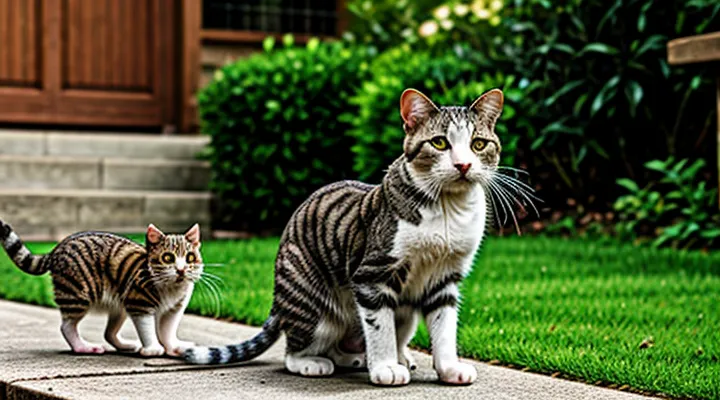
The Core Message: Understanding the Proverb's Meaning
Literal Interpretation: The Feline and Rodent Dynamic
The proverb that pairs a cat with mice rests on a direct observation of predator‑prey interaction. Cats, as obligate carnivores, possess keen sight, acute hearing, and retractable claws that enable swift capture of small mammals. Their hunting cycle follows a predictable pattern: stalk, pounce, and immobilize the target with a bite to the neck. Mice, in turn, exhibit rapid reflexes, heightened alertness, and an instinct to flee through narrow openings inaccessible to larger animals. This reciprocal adaptation creates a constant tension that the saying captures.
Key elements of the literal dynamic include:
- Sensory advantage: Cats rely on motion detection and low‑light vision; mice respond to vibrations and scent cues.
- Physical disparity: A cat’s size and strength overwhelm a mouse, yet the mouse’s small frame allows escape through cracks and gaps.
- Behavioral timing: Cats often hunt during crepuscular hours, matching the periods when mice are most active in searching for food.
Historical records from ancient Egypt, where domestic cats were revered for controlling rodent populations, illustrate the practical origins of the expression. Agricultural societies across Europe and Asia documented similar relationships, noting that effective rodent control directly impacted grain storage. The proverb therefore reflects a straightforward, observable fact: the cat’s presence reduces mouse numbers, while the mice’s evasive tactics test the cat’s skill.
Figurative Interpretation: Absence of Authority
The proverb that contrasts a cat with a group of mice conveys more than a simple animal tale; it encodes a metaphor for power dynamics in which the dominant figure is absent. When the cat is missing, the mice operate without external control, illustrating a state where authority is either relinquished or ineffective.
- The empty predator space creates a vacuum that allows subordinate agents to act freely.
- Lack of surveillance removes the deterrent that normally regulates behavior.
- Self‑organization emerges as the mice negotiate access to resources previously guarded.
In this figurative reading, the cat’s absence symbolizes a leadership void. The mice’s subsequent conduct reflects how groups respond when hierarchical oversight disappears: they may cooperate, compete, or devolve into chaos. The proverb thus warns that the removal of a central figure does not guarantee harmony; it merely shifts responsibility onto the lower tier, exposing the fragility of structures that depend on a single authority.
Tracing the Roots: The Proverb's Historical Journey
Early Appearances in Literature and Folklore
The adage linking a cat with mice appears in medieval European collections of proverbs, where it served to illustrate the inevitability of predation. The earliest Latin version, recorded in the 9th‑century Proverbia Latini, reads “Feles mures devorat” (“The cat devours the mice”). This formulation migrated into vernacular traditions through translations and oral transmission.
In Old English literature, the proverb surfaces in the Exeter Book (late 10th century) as a gnomic couplet: “A cat that chases mice / knows no peace.” The line functions as a moral warning against restless ambition. Similar motifs emerge in Anglo‑Saxon riddles, where the cat’s pursuit symbolizes relentless desire.
The proverb also features prominently in Slavic folklore. Early Russian chapbooks (mid‑16th century) contain the phrase “Кот мышей ловит, а мыши боятся” (“The cat catches mice, and the mice fear”). The expression is embedded in folk songs and fairy tales, often paired with cautionary narratives about cunning predators.
Key early appearances can be summarized as follows:
- Latin proverbs (9th c.) – Proverbia Latini, “Feles mures devorat.”
- Old English verse (10th c.) – Exeter Book gnomic couplet on the cat’s chase.
- Anglo‑Saxon riddles (10th c.) – metaphorical use of the cat‑mouse dynamic.
- Russian chapbooks (16th c.) – folk sayings and songs featuring the cat and mice.
These sources demonstrate that the cat‑mouse proverb predates modern idiomatic usage, reflecting a cross‑cultural awareness of predator‑prey relations and their moral implications.
Cross-Cultural Variations and Adaptations
The proverb that likens a cat’s pursuit of mice to a broader moral lesson appears in numerous linguistic traditions, each shaping the image to fit local values and social structures. In Eastern Europe, a version describes a “cat watching the mouse’s shadow,” emphasizing caution against premature confidence. The Russian variant adds the phrase “the cat will never catch what it never sees,” reinforcing the idea that ignorance protects the timid.
In East Asian cultures, a Chinese saying translates to “the cat, when it sleeps, dreams of mice,” suggesting that hidden desires influence behavior. Japanese folklore adapts the motif into a haiku where the cat’s silent steps serve as a metaphor for discreet ambition. Both renderings shift focus from outright conflict to internal motivation.
African oral traditions retain the predator–prey dynamic but incorporate communal responsibility. A Swahili proverb states, “the cat that shares the kill feeds the village,” turning the cat into a symbol of cooperative success rather than solitary triumph. This alteration reflects societal emphasis on collective benefit.
Western literature often employs the cat‑mouse image for satire. In 19th‑century English poetry, the cat represents authority, the mouse the oppressed, creating a critique of power imbalance. Modern American cartoons reinterpret the chase as a comedic rivalry, stripping moral weight and highlighting entertainment value.
Adaptations across media follow similar patterns. Graphic novels in Latin America portray the cat as a revolutionary figure, the mouse as the oppressed populace, linking the original lesson to political resistance. In digital memes, the image is reduced to a simple caption—“cat watches mouse,” used to comment on trivial pursuits without deeper ethical implication.
These variations demonstrate that the core imagery—cat versus mouse—serves as a flexible scaffold. Cultural context determines whether the proverb conveys caution, ambition, cooperation, critique, or humor, illustrating the dynamic nature of folk wisdom when it crosses linguistic borders.
The Proverb in Modern Contexts
Everyday Applications and Scenarios
The proverb that depicts a cat surrounded by countless mice conveys a warning about overconfidence and the risks of underestimating small adversaries. In daily life it functions as a practical reminder to assess threats realistically and to avoid complacency.
In professional environments, managers apply the saying when a dominant company faces numerous niche competitors that can erode market share. The lesson discourages reliance on size alone and promotes vigilance in monitoring emerging rivals.
In personal finance, individuals use the proverb to justify cautious budgeting despite a seemingly secure income. Small, recurring expenses—subscriptions, impulsive purchases—accumulate and can destabilize savings if ignored.
In education, teachers reference the saying to motivate students to respect minor challenges, such as frequent homework assignments, rather than dismiss them as insignificant. Consistent engagement with these tasks builds competence and prevents larger performance gaps.
In security contexts, the adage influences risk assessments for organizations handling data. Numerous low‑level vulnerabilities, if left unattended, may lead to substantial breaches.
Typical scenarios where the proverb proves useful:
- A startup confronting established corporations that treat it as a negligible player.
- A homeowner addressing minor maintenance issues before they develop into costly repairs.
- A project leader monitoring multiple small delays that together threaten the deadline.
- A health practitioner advising patients to treat minor symptoms seriously to avoid serious illness.
Each example demonstrates the proverb’s relevance: seemingly minor forces, when aggregated, can challenge dominant entities. Recognizing this pattern guides decision‑making, encourages thoroughness, and mitigates unexpected setbacks.
Relevance in Business and Leadership
The proverb that likens a dominant cat to a group of mice illustrates the dynamic between authority and subordinates. Historically, the saying emerged from folk narratives that depicted a predator’s presence as a deterrent to disorder among smaller creatures. The moral underscores how supervision restrains opportunistic behavior.
In corporate environments, the metaphor translates into several practical insights:
- Visible leadership discourages unethical shortcuts; employees adjust conduct when management is attentive.
- Periodic absence of oversight can trigger initiative or, conversely, exploitative actions; balancing presence and autonomy is essential.
- Clear expectations substitute for continuous supervision, allowing the “cat” to delegate without losing control.
- Structured accountability mechanisms replicate the cat’s vigilance, sustaining order while empowering the “mice” to perform.
Leaders who internalize this lesson calibrate monitoring intensity, fostering a culture where responsibility persists even when direct supervision wanes. The proverb thus serves as a concise framework for designing governance, risk management, and employee empowerment strategies.
Expanding on Related Concepts
Similar Sayings and Idioms
The proverb that depicts a cat prowling among mice conveys the idea of a dominant force confronting weaker opponents. Comparable expressions appear in several languages, illustrating the universal recognition of power imbalances.
- “The lion hunts the gazelle” – African proverb highlighting predator‑prey dynamics.
- “When the fox is away, the chickens will feast” – English idiom describing opportunistic behavior when authority is absent.
- “The tiger crouches, the mouse trembles” – Chinese saying that emphasizes fear induced by a superior adversary.
- “A wolf in sheep’s clothing” – Biblical phrase warning of concealed threats.
- “The eagle flies above the sparrow” – Russian proverb emphasizing hierarchical disparity.
Many of these sayings serve the same function: they caution against underestimating a stronger opponent and stress the inevitability of conflict when unequal parties interact. The imagery employed—predators confronting prey—remains consistent across cultures, underscoring a shared understanding of dominance, vulnerability, and the natural order.
The Psychology of Supervision and Freedom
The ancient saying that a cat watches over mice while allowing occasional escapes illustrates the tension between control and autonomy. In psychological terms, supervision creates a perceived safety net, while freedom offers opportunities for self‑direction. The proverb captures how limited monitoring can motivate individuals to explore boundaries without feeling abandoned.
Research on supervisory styles shows that excessive oversight reduces intrinsic motivation, whereas modest guidance encourages problem‑solving and risk‑taking. When a leader adopts a “watchful but permissive” approach, subjects experience sufficient structure to feel secure and enough latitude to experiment. This balance mirrors the cat’s intermittent vigilance, which prevents chaos yet permits the mice to move.
Key mechanisms underlying this dynamic include:
- Feedback loops: Regular, brief check‑ins reinforce expectations while leaving space for personal initiative.
- Perceived competence: Trust that the overseer will intervene only when necessary boosts confidence in self‑management.
- Adaptive flexibility: Adjusting the intensity of supervision to the task’s complexity aligns external control with internal drive.
The proverb’s origin, rooted in observations of predator‑prey behavior, underscores a natural principle: optimal outcomes arise when authority is present but not oppressive. Applying this insight to organizational or educational settings encourages leaders to calibrate their presence, fostering environments where supervision protects without stifling, and freedom inspires growth.