
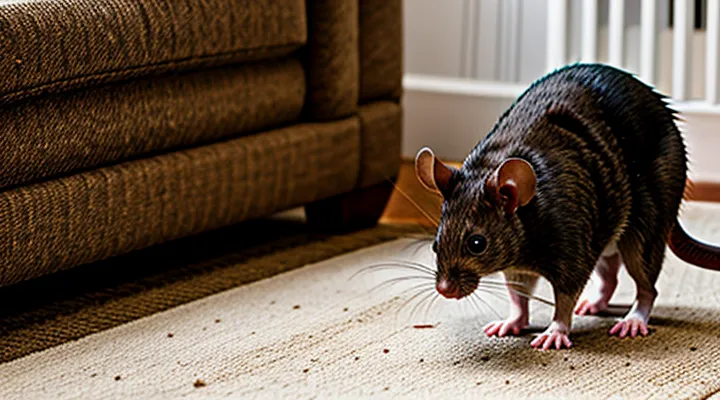
The Persistent Problem of Rodents in Homes
Understanding the Threat
Health Risks Posed by Rodents
Rodents in domestic settings transmit a range of pathogens that can cause serious illness. Direct contact with droppings, urine, or saliva introduces bacteria, viruses, and parasites into the home environment. Key health threats include:
- Hantavirus – inhaled aerosolized particles from dried rodent excreta may lead to severe respiratory disease with a mortality rate up to 38 %.
- Leptospirosis – bacterial infection acquired through skin cuts or mucous membranes exposed to contaminated water or soil, producing fever, jaundice, and renal failure.
- Salmonellosis – ingestion of food or surfaces contaminated by rodent feces, resulting in gastroenteritis, dehydration, and possible bloodstream infection.
- Lymphocytic choriomeningitis virus (LCMV) – transmitted via rodent urine or droppings, causing flu‑like symptoms, meningitis, and, in pregnant women, fetal complications.
- Echinococcosis – tapeworm larvae carried in rodent hosts can form cysts in the liver, lungs, or brain, requiring surgical removal.
Beyond infectious agents, rodent infestations compromise indoor air quality. Decomposing droppings release allergens that trigger asthma attacks and chronic bronchitis. Gnawing damage to wiring and insulation increases fire risk, while structural deterioration creates additional entry points for pests, perpetuating the health cycle.
Mitigating these risks traditionally involves a combination of spiritual practices and practical barriers. Rituals intended to repel rodents are often paired with sealing cracks, maintaining cleanliness, and setting humane traps. This dual approach reduces pathogen exposure while respecting cultural customs that emphasize protective prayers.
Property Damage Caused by Infestations
Rodent infestations inflict measurable damage on residential property. Mice and rats gnaw electrical wiring, compromising safety and increasing fire risk. Their incisors penetrate wood, drywall, and insulation, creating holes that weaken structural integrity and facilitate further pest entry.
Common damage categories include:
- Structural compromise – chewed beams, joists, and framing members.
- Electrical disruption – stripped insulation, exposed conductors, short circuits.
- Food and storage loss – contaminated pantry items, spoiled produce, ruined packaged goods.
- Sanitary degradation – urine and feces stain surfaces, promote mold growth, attract additional insects.
Financial impact extends beyond repair costs. Replacement of damaged wiring can exceed several hundred dollars per circuit; rebuilding compromised framing may require professional contractors and permit fees. Loss of stored food adds recurring expense, while health hazards from contaminated environments raise medical and insurance liabilities.
Traditional rodent‑deterrent prayers serve as a cultural complement to physical barriers. Practitioners invoke protective verses while sealing entry points, setting traps, and maintaining cleanliness. The ritual component reinforces vigilance, encouraging timely inspection and remediation before damage escalates.
Traditional Approaches to Rodent Control
Historical Context of Rodent Management
Folk Remedies and Beliefs
Folk traditions attribute spiritual power to spoken prayers and ritual actions when seeking protection from rodents inside a dwelling. Practitioners recite specific verses, invoke patron saints, or call upon ancestral spirits, believing that the spoken word creates a barrier that deters mice and rats from entering living spaces.
Common folk remedies and associated beliefs include:
- Herbal sachets – bundles of dried lavender, rosemary, or mint placed in corners, thought to emit scents that repel rodents and cleanse the area of unwanted energies.
- Salt lines – a thin line of salt laid across thresholds or along baseboards, believed to form an invisible fence that rodents cannot cross.
- Holy water sprinkling – water blessed by clergy applied to entry points, intended to sanctify the environment and discourage infestation.
- Egg and onion ritual – a raw egg and a peeled onion placed on the kitchen counter overnight; folklore holds that rodents are attracted to the mixture, then become trapped when the items are removed in the morning.
- Mirrored talismans – small mirrors hung near potential entryways, based on the notion that reflective surfaces confuse rodents and redirect their movement.
- Prayer chants – repetitive invocations of specific saints (e.g., Saint Anthony) or traditional verses recited at dusk, intended to invoke divine protection over the household.
These practices persist in rural and urban communities, reflecting a cultural synthesis of religious devotion and practical pest control. The underlying premise remains consistent: verbal and symbolic actions generate a protective field that limits rodent activity within the home.
Cultural Significance of Rodent Extermination
Rodent eradication has long been embedded in domestic rituals that combine practical pest control with spiritual safeguarding. Across regions, households invoke spoken prayers, sacred symbols, and prescribed actions to expel mice and rats, reflecting a belief that infestation threatens physical health and communal harmony.
The association of rodents with disease transmission, grain spoilage, and impurity motivated the development of formalized rites. These rites articulate a worldview in which unwanted animals embody disorder; their removal restores balance and protects the sanctity of the home.
Typical traditional measures include:
- Recitation of specific verses or chants while sprinkling salt or holy water.
- Placement of herb bundles (e.g., sage, mint) at entry points to repel rodents and cleanse the space.
- Drawing protective symbols (such as circles or knots) on walls or thresholds.
- Burning incense or aromatic resins to create an environment hostile to pests.
- Offering a symbolic sacrifice, often a small food item, to appease household deities.
The performance of these practices reinforces communal identity. Elders transmit the precise wording of incantations and the timing of rituals, establishing a lineage of knowledge that validates their authority within the family. Collective participation, especially during seasonal festivals, integrates pest control into broader cultural celebrations.
Modern interest in folk-based pest management frequently references these historic methods. Practitioners cite their dual efficacy—physical deterrence coupled with psychological reassurance—as justification for integrating traditional rites into contemporary home care strategies.
Spiritual Interventions Against Pests
The Role of Prayer in Home Protection
Specific Prayers and Invocations for Rodent Repellence
Prayers designed to keep mice and rats from entering a dwelling rely on the belief that sacred words can create a protective barrier. Practitioners recite these invocations at key moments—before moving into a new home, after noticing signs of infestation, or during regular household rituals. The utterance is intended to invoke divine guardianship, command the pests to depart, and align the household with spiritual order.
-
Psalm 91 (verses 9‑10) – “Because you have made the LORD your refuge… you shall tread upon the lion and the adder; you shall trample the lion and the serpent.” Adapted for rodents: “You shall tread upon the mouse and the rat; they shall not rise against you.” Recited three times at sunrise, then again at sunset, reinforces the claim over the property.
-
St. Basil’s Prayer for Pest Control – “O Holy Basil, patron of the humble, keep the gnawing creatures away from this house; let no rodent find shelter within these walls.” Said while sprinkling holy water around doorframes, the prayer is repeated thrice, each repetition accompanied by a gentle tap on the threshold.
-
Jewish “Mi Shebeirach” for Protection from Vermin – “May the One who protects us from all harm extend protection to this home, driving away the creeping things that threaten our peace.” The prayer is spoken after lighting Shabbat candles, with a small piece of bread placed in each corner as a symbolic offering.
-
Islamic Du’a for Removing Harmful Creatures – “Bismillahi al-ladhi la yadhhabu al-hayawanat al-saghira min bayti” (“In the name of God, may the small creatures be removed from my house”). Recited after the five‑daily prayer, while sweeping the floor, the phrase is repeated five times.
-
Folk Invocation of Saint Nicholas – “Saint Nicholas, guardian of the poor and protector of homes, command the mice to flee and never return.” Delivered aloud while hanging a small copper charm above the kitchen doorway; the charm is replaced annually.
Each prayer follows a pattern: invocation of a divine figure, explicit request for rodent removal, and a physical act that marks the space (sprinkling water, placing bread, hanging a charm). Consistency in timing—morning and evening—or alignment with established worship schedules enhances perceived efficacy. Practitioners report that the combination of spoken word and ritual gesture creates a psychological deterrent, reinforcing vigilance and reducing conditions that attract pests.
Rituals and Blessings for a Rodent-Free Home
Rituals and blessings aimed at keeping a household free of mice and rats have been transmitted through generations in many cultures. Practitioners invoke protective forces, combine sacred words with symbolic actions, and often integrate physical deterrents to reinforce the spiritual barrier.
Common elements include:
- Invocation of a protective deity or saint – reciting a specific prayer at sunrise and sunset, each time naming the divine figure associated with pest control.
- Consecrated water – sprinkling holy water around entry points, foundations, and storage areas while uttering a brief benediction that requests the removal of rodents.
- Herbal fumigation – burning sage, rosemary, or rue in a designated corner, accompanied by a chant that declares the space cleansed of vermin.
- Boundary marking – laying a line of salt, chalk, or iron filings along thresholds, followed by a short blessing that seals the perimeter against intrusion.
In addition to verbal formulas, physical preparations support the ritual’s efficacy. Sealing cracks, storing grain in airtight containers, and maintaining cleanliness eliminate the conditions that attract rodents, thereby aligning material practice with the spiritual intent.
When performing the rites, participants should observe a consistent routine: begin with a moment of silence, state the chosen prayer clearly, execute the accompanying action, and conclude with a phrase that affirms the house’s protection. Repeating this sequence weekly sustains the protective field and discourages infestation.
Complementary Traditional Methods
Herbal and Natural Deterrents
Plants Known to Repel Rodents
Plants that deter rodents offer a practical complement to customary rites aimed at keeping homes free of mice and rats. Their effectiveness derives from strong aromas, bitter compounds, or texture that rodents find unappealing.
- Mentha spp. (mint, peppermint) – leaves and essential oil release menthol, a scent rodents avoid. Plant mint around foundations or place dried leaves in cupboards.
- Lavandula angustifolia (lavender) – floral oil interferes with rodents’ olfactory receptors. Hang dried sprigs in storage areas or diffuse oil near entry points.
- Rosmarinus officinalis (rosemary) – volatile terpenes repel rodents. Sprinkle fresh rosemary on garden beds bordering the house or use crushed leaves in pantry corners.
- Tagetes erecta (marigold) – bitter thiophenes discourage gnawing. Cultivate a border of marigolds around foundations or place dried petals in attics.
- Ruta graveolens (rue) – pungent foliage is toxic to rodents. Plant rue near doors or create sachets of dried leaves for closets.
- Allium spp. (garlic, onion) – sulfur compounds act as a deterrent. Distribute crushed garlic cloves in crawl spaces or grow onion sets at the base of walls.
- Nepeta cataria (catnip) – contains nepetalactone, which repels rodents while attracting cats. Scatter dried catnip in basements or plant it in garden plots adjacent to the house.
- Azadirachta indica (neem) – oil contains azadirachtin, a known rodent repellent. Apply neem oil to wooden structures or plant a neem tree near the property.
- Eucalyptus spp. – eucalyptol fumes are aversive to rodents. Use fresh leaves in vent openings or diffuse eucalyptus oil in storage rooms.
Implementation should follow a consistent schedule: replace dried material every few weeks, trim fresh plantings to maintain vigor, and reapply oils after cleaning. Combining these botanical measures with traditional protective prayers creates a layered defense that reduces rodent activity without reliance on chemical poisons.
Essential Oils and Their Applications
Essential oils provide a natural, aromatic barrier against rodents that enter residential spaces. Their volatile compounds interfere with the sensory systems of mice and rats, reducing attraction to food sources and prompting avoidance of treated areas.
- Peppermint oil: dilute 10 ml in 1 liter of water, spray along baseboards, entry points, and pantry shelves; repeat weekly.
- Eucalyptus oil: apply 5 ml to cotton balls, place in corners, closets, and under appliances; replace every 3–4 days.
- Citronella oil: mix 8 ml with carrier oil, wipe on wooden surfaces and cracks; reapply after cleaning.
- Lavender oil: add 6 ml to a diffuser operating for 30 minutes each evening in rooms where activity is observed; maintain continuous diffusion during high‑risk periods.
Combining these oils with traditional prayers creates a layered deterrent: the auditory or spoken invocation addresses the symbolic aspect, while the chemical repellents deliver a physical effect. Consistent application, proper dilution, and strategic placement maximize efficacy, limiting rodent ingress without reliance on toxic substances.
Maintaining a Protected Home Environment
Proactive Prevention Strategies
Traditional Housekeeping Practices
Traditional housekeeping methods that accompany prayers for rodent deterrence focus on eliminating food sources, sealing access points, and employing natural repellents. Regular removal of crumbs, spilled grain, and pet food deprives mice and rats of sustenance. Sweeping, vacuuming, and wiping surfaces after meals prevents residue accumulation that attracts pests.
Securing structural gaps reduces entry opportunities. Caulking cracks around doors, windows, and foundation walls, installing metal flashing on vents, and fitting tight-fitting lids on containers create physical barriers. Replacing worn weatherstripping and repairing damaged screens further restricts movement.
Natural deterrents complement ritual petitions. Dried lavender, mint, or bay leaves placed in corners, cupboards, and near entryways emit scents rodents avoid. Sprinkling powdered chalk or iron filings along baseboards interferes with their sensory pathways, discouraging traversal.
Maintenance schedules reinforce effectiveness. Weekly inspection of stored food, monthly assessment of seals, and quarterly replacement of herbal deterrents ensure continuous protection. Combining disciplined housekeeping with traditional prayers creates a layered defense that aligns practical measures with cultural practices.
Community Involvement in Pest Control
Community participation strengthens household efforts to deter mice and rats through shared ritual prayers and coordinated actions. Collective chanting in neighborhood gatherings amplifies perceived spiritual protection, while mutual observation of sanitation standards reduces attractants that undermine any ceremonial safeguards.
Coordinated activities provide several measurable advantages. Shared knowledge of effective verses and timing eliminates redundant experimentation. Joint monitoring of waste disposal, building repairs, and entry points creates a unified barrier that individual households cannot maintain alone. Pooling of resources—such as herbs, salt, and protective symbols—lowers costs and ensures consistent application across the area.
Practical measures for organized involvement include:
- Establish regular prayer circles at a central location, assigning specific verses to each session.
- Create a communal inventory of deterrent items (e.g., dried rosemary, black pepper) and rotate distribution according to need.
- Implement a neighborhood reporting log that records sightings, entry points, and remediation actions.
- Conduct quarterly workshops on sealing cracks, proper food storage, and maintenance of ritual objects.
Sustained collaboration transforms isolated domestic practices into a resilient neighborhood network, reinforcing both spiritual and physical defenses against rodent incursions.