
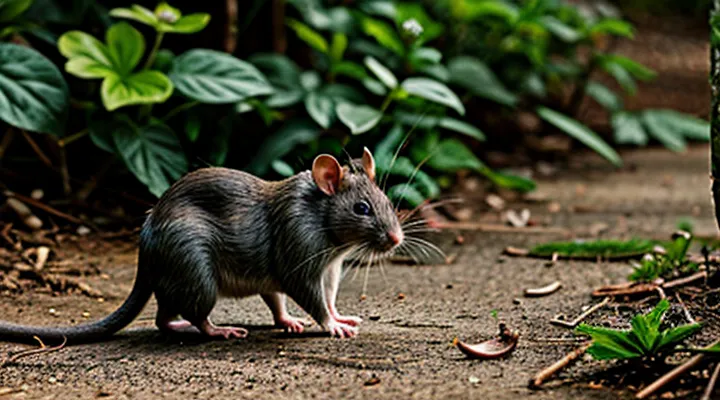
Understanding Rat Behavior in the Wild
Foraging Habits and Diet
Photographic records of common rats in their natural environment reveal consistent foraging patterns. Individuals emerge from burrows at dusk, travel along established runways, and employ tactile whisker sweeps to locate edible material. Search behavior includes probing leaf litter, overturning debris, and exploiting opportunistic food caches left by other species.
Typical diet components observed include:
- Seeds of grasses and wild cereals
- Insect larvae and adult arthropods
- Fruit fragments and berries
- Fungi spores and mycelial fragments
- Small vertebrate carrion
Seasonal shifts modify resource selection. In spring, fresh plant growth and abundant insects dominate intake; summer sees increased reliance on fruit and fungal sources; autumn prompts higher consumption of stored seeds and fallen nuts; winter forces reliance on carrion and scavenged human refuse. These adaptations sustain population stability and influence seed dispersal and invertebrate population dynamics within the ecosystem.
Social Structures and Colonies
Rats captured in field settings reveal distinct social organization that differs markedly from solitary laboratory specimens. Within a typical colony, individuals occupy hierarchical tiers, with dominant males defending a core area while subordinate members remain peripheral. Breeding pairs are usually situated near abundant food sources, allowing rapid offspring recruitment during favorable seasons.
Key characteristics of colony structure include:
- Territorial zones: Core, buffer, and fringe regions defined by scent marking and visual cues.
- Dominance hierarchy: Established through aggressive encounters, vocalizations, and grooming patterns.
- Cooperative foraging: Groups exploit dispersed seeds, insects, and waste, sharing information about resource locations.
- Burrow networks: Interconnected tunnels provide shelter, escape routes, and communal nesting chambers.
Photographic evidence from urban alleys, agricultural fields, and riparian zones documents these patterns. Images show clustered nest entrances, overlapping runways, and multiple individuals engaged in synchronized activities such as grooming or food transport. Seasonal variations appear as expanded tunnel systems during winter and increased surface activity in spring, reflecting adaptive colony scaling.
Understanding these social dynamics aids in interpreting rat behavior observed in natural photographs and informs management strategies that target colony stability rather than isolated individuals.
Reproductive Cycles and Survival
Photographs of common rats captured in their natural surroundings reveal the timing and structure of their reproductive cycles. Female rats enter estrus multiple times per year, with intervals ranging from 4 to 6 days under favorable conditions. Each estrus lasts 12–24 hours, during which ovulation occurs spontaneously. Gestation lasts approximately 21–23 days, producing litters of 5–12 pups on average. Neonates are altricial; they achieve eye opening and fur development by day 10 and are weaned by day 21. Seasonal variations influence litter size, with longer daylight periods and abundant food correlating with larger broods.
Survival mechanisms observed in the images include nest construction, foraging behavior, and social hierarchy. Rats build nests from shredded vegetation, paper, and soft debris, selecting concealed sites near food sources to reduce exposure to predators. Foraging patterns display opportunistic exploitation of seeds, insects, and anthropogenic waste, with individuals traveling up to 100 m from the nest during peak activity periods. Dominant individuals maintain priority access to high‑quality resources, while subordinate members contribute to nest maintenance and juvenile care.
Reproductive timing aligns with resource availability, enhancing offspring survival. Rapid weaning and early sexual maturity—females become fertile as early as 6 weeks—allow populations to expand swiftly after favorable conditions arise. Photographic evidence of overlapping litters and communal nesting underscores the species’ capacity for high reproductive output and cooperative care, factors that sustain dense populations in diverse habitats.
Documenting Rats: Photography Techniques
Equipment for Wildlife Photography
Effective wildlife photography of small rodents requires gear that balances magnification, speed, and durability. A DSLR or mirrorless body with a high‑resolution sensor captures fine detail while maintaining low‑light performance. Full‑frame models offer superior dynamic range, but APS‑C sensors reduce weight and cost without compromising image quality for close‑up work.
A macro lens with a 1:1 reproduction ratio provides the necessary close focusing distance. Prime lenses in the 90–105 mm range deliver sharpness and a wide maximum aperture (f/2.8 or larger) for shallow depth of field and faster shutter speeds. When space is limited, a high‑quality extension tube set can convert a standard telephoto lens into a macro solution.
Fast autofocus and high frame‑rate burst shooting are essential for capturing rapid movements. Cameras that support at least 10 fps with continuous autofocus keep rodents in focus during sudden sprints.
Sturdy support minimizes camera shake. A carbon‑fiber tripod with a ball head offers stability and quick repositioning. When mobility is required, a monopod with a quick‑release clamp reduces fatigue while maintaining alignment.
Lighting considerations include a portable flash with a diffuser to soften harsh shadows and a reflector to fill in side light. For nocturnal settings, a high‑CRI LED panel provides consistent illumination without startling the subjects.
Protective accessories safeguard equipment in outdoor environments. A weather‑sealed camera bag with padded compartments prevents moisture damage. Lens filters—UV for protection and circular polarizer to reduce glare on wet surfaces—extend the lifespan of optics.
Core equipment checklist
- DSLR or mirrorless camera with high‑resolution sensor
- 90–105 mm macro prime lens (f/2.8 or wider)
- Extension tubes (optional)
- High‑speed continuous autofocus and burst mode
- Carbon‑fiber tripod with ball head or monopod with quick‑release
- Portable flash with diffuser and LED panel
- UV and polarizing filters
- Weather‑sealed camera bag and lens cleaning kit
Selecting these components ensures sharp, well‑exposed images of common rats in their natural surroundings while maintaining operational efficiency in field conditions.
Ethical Considerations in Wildlife Photography
Capturing images of typical rats in their natural surroundings demands strict adherence to ethical standards that protect both the animals and their ecosystems.
- Minimize disturbance: Approach quietly, limit the number of shots, and avoid sudden movements that could alter normal behavior.
- Reject baiting: Do not use food or artificial lures to attract subjects, as this interferes with foraging patterns and can create dependency.
- Respect privacy of habitats: Refrain from entering nests, burrows, or protected zones; any intrusion may expose individuals to predators or environmental stress.
- Avoid manipulation: Do not alter lighting, color, or composition in post‑processing to misrepresent the setting or the rat’s condition.
- Secure permissions: Obtain necessary permits from local wildlife authorities and follow regional regulations governing access to urban or rural rodent populations.
- Preserve safety: Use equipment that prevents injury to the animal, such as non‑flash lighting and lenses with appropriate focal lengths to keep distance.
Implementing these practices ensures that photographic documentation contributes to scientific knowledge and public awareness without compromising the welfare of the subjects or the integrity of their habitats.
Capturing Authentic Rat Moments
Capturing authentic rat moments requires a disciplined approach to observation, equipment selection, and ethical handling of the subject. Successful images emerge from patience, knowledge of rodent behavior, and precise control of lighting and composition.
Effective fieldwork begins with understanding rat activity cycles. Rats are crepuscular; they emerge at dawn and dusk to forage and interact. Positioning a camera near known pathways during these periods increases the likelihood of natural behavior being recorded. Avoid startling the animals by using silent shutter modes and maintaining a discreet distance.
Key technical considerations include:
- Use lenses with a focal length of 50‑200 mm to allow close framing without intruding on the rat’s space.
- Set aperture between f/2.8 and f/4 to isolate the subject while preserving enough depth of field for surrounding context.
- Apply ISO settings that balance noise and exposure; modern sensors handle ISO 800–1600 without significant degradation.
- Employ fast shutter speeds (1/500 s or higher) to freeze rapid movements such as scurrying or grooming.
Ethical practices are integral to authentic documentation. Do not bait or trap rats for the sole purpose of photography. Instead, locate existing food sources or burrow entrances and observe from a fixed position. When images require close interaction, use non‑invasive methods such as remote triggers or motion‑activated cameras to minimize disturbance.
Post‑processing should preserve the natural appearance of fur texture, coloration, and surroundings. Adjust contrast and exposure only to reveal details obscured by low light, avoiding artificial color shifts or excessive sharpening that could misrepresent the subject’s true form.
Habitats and Their Inhabitants
Urban Environments: Rats in the City
Rats thrive in densely built environments, where concrete, waste, and water infrastructure create a mosaic of resources. Photographic documentation of these mammals in metropolitan settings provides direct evidence of their spatial distribution, resource use, and interaction with human activity.
- Underground drainage systems and sewer pipes
- Sidewalk cracks and building foundations
- Open-air trash containers and landfill sites
- Public parks and green corridors
- Subway stations and train tunnels
Observations reveal consistent nocturnal foraging, reliance on discarded food, and hierarchical burrow networks that link multiple entry points. Individuals exhibit boldness near human presence, yet retreat when disturbed, indicating a balance between exploitation of anthropogenic resources and predator avoidance.
Effective urban rat photography requires controlled lighting to compensate for low‑light conditions, stable positioning to avoid motion blur, and framing that captures both the animal and its structural context. Respect for property and adherence to health regulations minimize risk to photographer and public.
These visual records enrich ecological datasets, support pest‑management strategies, and inform urban planners about wildlife corridors that intersect city infrastructure.
Rural Settings: Farm and Field Rats
Farm and field environments host several rat species that adapt to open terrain, stored crops, and livestock facilities. These rodents exhibit burrowing behavior, nocturnal foraging, and social structures that differ from urban counterparts. Their coats range from brownish-gray to reddish tones, providing camouflage against soil and vegetation. Eyes are proportionally large, enhancing low‑light vision essential for night activity.
Typical species encountered in agricultural settings include:
- Barn rat (Rattus norvegicus) – prefers barns, grain silos, and feed stores; builds extensive burrow networks beneath flooring.
- Field mouse (Apodemus sylvaticus) – occupies hedgerows and crop rows; nests in shallow ground depressions lined with grasses.
- Rice field rat (Rattus argentiventer) – thrives in flooded paddies; swims proficiently and feeds on seedlings and insects.
Photographic documentation of these rodents requires consideration of lighting, distance, and motion. Use a fast shutter speed (1/500 s or higher) to freeze quick movements, and a wide aperture (f/2.8–f/4) to isolate subjects from background foliage. Position the camera at ground level to match eye height, improving perspective and reducing distortion.
Ecological impact assessment relies on visual records that capture population density, age distribution, and interaction with crops. Repeated imaging across seasons reveals seasonal migration patterns, breeding peaks, and habitat shifts caused by agricultural practices. Accurate visual data support management strategies such as targeted bait placement, habitat modification, and predator encouragement.
Adapting to Diverse Ecosystems
Photographs of typical rats captured in their native environments reveal consistent patterns of physiological and behavioral flexibility that enable survival across a wide range of ecosystems.
Physical traits adjust to local conditions. Dense fur provides insulation in cold, high‑altitude areas, while lighter coats reduce overheating in arid zones. Tail length varies with arboreal versus terrestrial habitats, offering balance for climbing or serving as a fat reserve during scarce periods. Dental structure remains robust, allowing consumption of hard seeds, flesh, and human‑derived waste.
Behavioral strategies complement morphology. Opportunistic foraging permits exploitation of seasonal plant resources, insects, carrion, and refuse. Burrowing depth adapts to soil composition, offering protection from predators and temperature extremes. Social organization shifts from solitary individuals in sparse deserts to dense colonies in urban sewers, optimizing resource use and disease transmission control.
Key adaptive mechanisms observed in the imagery include:
- Dietary breadth – ability to process plant matter, animal protein, and synthetic waste.
- Reproductive plasticity – gestation periods and litter sizes adjust to resource availability.
- Habitat selection – preference for structures offering shelter, moisture, and proximity to food sources, ranging from riverbanks to abandoned buildings.
- Physiological tolerance – resistance to temperature fluctuations, low oxygen levels, and contaminant exposure.
These adaptations collectively explain the species’ capacity to inhabit forests, grasslands, agricultural fields, and densely populated cities, confirming its status as a versatile occupant of diverse ecological niches.
The Impact of Rats on Ecosystems
Predators and Prey Relationships
Photographic documentation of common rats in their native environments frequently captures the dynamic between these rodents and the species that hunt them. Predatory mammals such as foxes, coyotes, and feral cats are often seen stalking or capturing rats, while birds of prey—including owls, hawks, and kestrels—attack from above. Reptilian predators, notably snakes like rat snakes and gopher snakes, ambush rats in burrows or on the ground. Invertebrate threats include large spiders and centipedes that seize rats during nocturnal activity.
Rats also act as predators, feeding on a range of organisms that sustain ecosystem balance. Their diet includes:
- Insects: beetles, caterpillars, and grasshoppers.
- Arachnids: small spiders and scorpions.
- Worms: earthworms and nematodes.
- Seeds and fruits: dispersed after consumption.
The visual record of these interactions illustrates seasonal variations. Summer images often show increased predation by reptiles, whereas winter photographs reveal heightened bird‑of‑prey activity as rodents remain above ground. Night‑vision or infrared captures expose nocturnal hunting by mammals and owls, providing insight into temporal hunting patterns.
Understanding these predator‑prey relationships through imagery informs ecological research, pest‑management strategies, and conservation policies. Accurate visual evidence supports the assessment of population pressures, habitat health, and the effectiveness of natural control mechanisms.
Seed Dispersal and Environmental Roles
Rats observed in field photography often encounter seeds while foraging in gardens, fields, and woodland edges. Their gnawing and transport activities move seeds away from parent plants, creating spatial patterns that differ from wind or gravity dispersal. By carrying seeds in cheek pouches or ingesting them, rats relocate propagules to microhabitats with varying light, moisture, and soil conditions, influencing germination success.
Key effects of rat‑mediated seed movement include:
- Removal of seeds from predator‑dense zones, reducing predation pressure.
- Placement of seeds in nutrient‑rich refuse piles, enhancing seedling vigor.
- Creation of seed caches that may remain dormant until favorable conditions arise.
Beyond dispersal, rat activity modifies ecosystem processes. Burrowing aerates soil, improves water infiltration, and mixes organic matter. Their waste contributes nitrogen and phosphorus, supporting microbial communities that decompose litter and recycle nutrients. Consequently, rat behavior documented in natural‑setting photographs reflects a suite of functions that shape plant community composition and soil health.
Human-Wildlife Conflict and Coexistence
Images of typical rats captured in their natural settings provide concrete evidence of the ways these animals intersect with human environments. Visual records reveal patterns of movement, nesting sites, and foraging behavior that directly influence conflict scenarios.
Conflict manifests as structural damage, contamination of food stores, and competition with livestock. Evidence shows that rats exploit gaps in building foundations, infiltrate grain silos, and occupy compost piles, leading to economic losses and health concerns.
Effective coexistence relies on targeted interventions:
- Seal entry points with durable materials to prevent intrusion.
- Install bait stations that comply with integrated pest‑management standards, reducing reliance on broad‑spectrum poisons.
- Relocate waste containers to inaccessible locations, limiting attractants.
- Conduct community workshops that outline identification of rat activity and safe mitigation practices.
- Apply habitat‑enhancement techniques, such as planting ground cover that discourages burrowing near human dwellings.
Photographic documentation supports policy development by quantifying infestation levels and tracking the impact of mitigation measures over time. Data derived from images enable authorities to allocate resources efficiently, evaluate the success of control programs, and communicate risks to the public with visual clarity.
Visual Storytelling: The Power of Rat Photos
Highlighting Rat Intelligence and Adaptability
Photographic records of common rats captured in their native surroundings reveal a range of cognitive abilities and environmental flexibility. Close‑up images show individuals navigating complex burrow systems, identifying shortcuts, and recalling routes after prolonged periods away from the nest.
Key demonstrations of intelligence include:
- Solving multi‑step puzzles to obtain hidden food rewards.
- Manipulating objects such as bottle caps to access liquid sources.
- Exhibiting long‑term spatial memory by returning to previously visited foraging sites.
Adaptability manifests in several observable patterns:
- Rapid adjustment to fluctuating food availability, shifting from seed consumption to scavenging on human waste.
- Modification of nesting materials, incorporating discarded textiles, plastics, and natural fibers depending on locale.
- Formation of hierarchical groups that coordinate defensive actions against predators and competitors.
These documented behaviors underscore the species’ capacity to thrive across diverse ecosystems, informing both ecological research and effective management strategies.
Challenging Stereotypes Through Imagery
Images of everyday rats captured in authentic environments reveal behaviors that contradict common misconceptions. Photographic evidence shows rodents foraging, grooming, and interacting socially, demonstrating adaptability and intelligence rather than the chaotic menace often portrayed.
- Close‑up shots of rats navigating sewer tunnels display coordinated movement and problem‑solving skills.
- Night‑time photographs of rats sharing food illustrate cooperative feeding and hierarchical organization.
- Portraits of rats in urban parks highlight their role in ecosystem balance, such as seed dispersal and insect control.
- Series documenting mother‑infant interactions expose nurturing behavior and strong parental bonds.
These visual records replace anecdotal fear with observable facts, prompting reassessment of public attitudes. By presenting rats as ordinary participants in their habitats, imagery undermines sensationalist narratives and encourages evidence‑based discourse.
Inspiring Conservation and Understanding
Images of ordinary rats captured in their native environments provide concrete evidence of the species’ ecological functions. Close‑up documentation of foraging behavior, burrow architecture, and social interaction reveals how these mammals contribute to soil turnover, seed dispersal, and predator‑prey dynamics. The visual record eliminates speculation, allowing researchers and policymakers to assess population health and habitat requirements with precision.
The visual narrative serves three conservation objectives:
- Demonstrates the adaptability of rats to diverse microhabitats, countering misconceptions that label them solely as urban pests.
- Highlights regions where habitat degradation threatens local populations, prompting targeted protection measures.
- Engages the public by presenting relatable wildlife, fostering empathy and support for broader ecosystem initiatives.
When integrated into educational programs, the photographs become tools for scientific literacy. They illustrate methodological approaches such as camera trapping and citizen‑science contributions, encouraging community participation in data collection. The resulting dataset strengthens monitoring frameworks and informs management decisions.
Overall, the visual documentation of common rats in situ bridges the gap between observation and action. By presenting unambiguous evidence of their role in natural systems, the images motivate stakeholders to adopt evidence‑based policies that preserve both the species and the habitats it inhabits.