
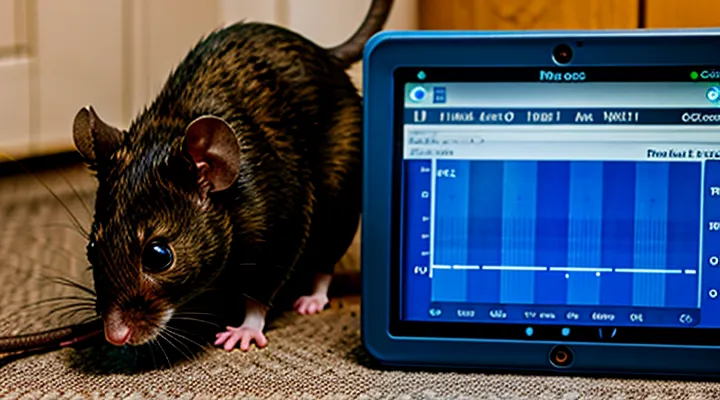
Understanding Ultrasound Technology
What is Ultrasound?
Ultrasound refers to sound waves with frequencies above the upper limit of human hearing, typically greater than 20 kHz. These waves propagate through media as longitudinal pressure variations, with wavelength inversely proportional to frequency and directly related to the speed of sound in the material.
Generation of ultrasound relies on piezoelectric transducers, capacitor‑driven crystals, or magnetostrictive elements that convert electrical signals into rapid mechanical vibrations. The resulting acoustic energy can be focused, collimated, or dispersed depending on the transducer geometry and driving circuitry.
Key physical parameters include:
- Frequency range: 20 kHz – several megahertz; higher frequencies produce shorter wavelengths and finer beam control.
- Intensity: Measured in W/m² or dB SPL; determines the energy delivered to the target medium.
- Beam pattern: Determined by transducer size and shape; influences coverage area and directionality.
In applications aimed at deterring rodents, frequencies between 20 kHz and 50 kHz are commonly employed because they fall within the auditory sensitivity of mice and rats while remaining inaudible to humans. Selecting an appropriate frequency involves balancing attenuation (higher frequencies diminish more rapidly) against the target species’ hearing thresholds.
How Ultrasound Repellents Work
Mechanism of Action
Ultrasonic devices emit sound waves above 20 kHz, a range beyond human hearing but within the auditory sensitivity of most rodents. Mice and rats possess cochlear hair cells tuned to frequencies between 30 kHz and 80 kHz, allowing them to detect high‑frequency vibrations that signal potential threats. When the emitted frequency matches or exceeds this auditory window, the animals experience rapid, involuntary neural firing in the auditory nerve, triggering a startle reflex.
The startle reflex initiates a cascade of physiological responses: heightened heart rate, increased cortisol release, and activation of the sympathetic nervous system. These responses produce discomfort and disorientation, prompting the rodents to vacate the area to avoid prolonged exposure. Repeated exposure reinforces avoidance behavior, establishing a learned aversion to the environment where the ultrasonic source operates.
Effectiveness hinges on selecting a frequency band that maximizes detection while minimizing habituation. Empirical studies indicate that frequencies clustered around 40–55 kHz produce the strongest startle response in both species, whereas frequencies above 70 kHz tend to be less disruptive due to reduced sensitivity. Maintaining a consistent amplitude of 80–100 dB SPL ensures the signal remains perceptible over typical indoor distances (3–5 m) without causing structural resonance.
Key elements of the mechanism:
- Auditory detection: Rodent cochlea responds to ultrasonic energy within the 30–80 kHz window.
- Neural activation: High‑frequency stimulation induces rapid firing in the auditory pathway.
- Physiological stress: Activation of the sympathetic system generates discomfort.
- Behavioral avoidance: Discomfort leads to immediate retreat and long‑term aversion.
Types of Devices
Ultrasonic rodent deterrent equipment falls into several distinct categories, each designed to deliver the frequency range most effective for discouraging mice and rats.
-
Hand‑held emitters: portable, battery‑operated units that generate ultrasonic tones between 20 kHz and 45 kHz. They provide focused coverage for short‑term applications such as inspections, storage areas, or temporary infestations. Output power typically ranges from 80 mW to 150 mW, sufficient for distances of up to one meter.
-
Plug‑in indoor devices: mains‑powered modules intended for continuous operation in homes, offices, or warehouses. These devices emit a broadband sweep that includes the optimal deterrent band (22 kHz‑30 kHz) and maintain acoustic pressure levels of 85 dB SPL at one meter. Coverage areas extend from 10 m² to 30 m² depending on model and room geometry.
-
Outdoor weather‑resistant units: rugged casings with IP65 protection, powered by solar panels or AC adapters. They project ultrasonic waves over 20 m² to 50 m², employing directional transducers that target entry points, gardens, and storage sheds. Frequency output often incorporates a programmable sweep to prevent habituation.
-
Integrated pest‑management systems: networked solutions that combine ultrasonic emission with additional deterrents such as electromagnetic fields or scent dispensers. Controllers allow schedule programming, frequency modulation, and remote monitoring. Power consumption is optimized for long‑term deployment, and coverage can be scaled by linking multiple nodes.
Selection of a device type should align with the intended environment, required coverage, and maintenance constraints. Hand‑held units excel in targeted, temporary use; plug‑in models suit continuous indoor protection; outdoor units address exposure to elements; and integrated systems provide comprehensive, adaptable control for large or complex infestations.
Factors Influencing Repellent Effectiveness
Frequency Ranges and Their Impact
Audible vs. Ultrasonic Frequencies
Audible frequencies range from 20 Hz to 20 kHz, a band detectable by most humans. Ultrasonic frequencies exceed 20 kHz, extending up to 100 kHz or higher, and lie beyond human hearing while remaining within the auditory capacity of mice and rats.
Laboratory measurements show that house mice respond to sounds up to 85 kHz and Norway rats up to 90 kHz. Their peak sensitivity occurs between 10 kHz and 50 kHz, where auditory thresholds are lowest. Consequently, sounds in the high‑frequency audible range can trigger startle or avoidance behaviors, but repeated exposure often leads to rapid habituation.
Ultrasonic emissions exploit the upper limits of rodent hearing. Frequencies above 30 kHz produce discomfort without audible disturbance to occupants. Attenuation of ultrasonic waves increases with distance and with obstacles such as furniture, limiting effective range to a few meters. Nevertheless, focused transducers can maintain sufficient intensity to elicit avoidance within that zone.
Key distinctions:
- Perception: Humans hear audible, not ultrasonic; rodents hear both, with heightened sensitivity in the ultrasonic band.
- Behavioral impact: Audible tones may cause short‑term disturbance but are quickly ignored; ultrasonic tones sustain avoidance longer.
- Propagation: Audible waves travel farther with lower loss; ultrasonic waves decay rapidly, requiring strategic placement of emitters.
- Safety: Audible frequencies can be audible to occupants, potentially causing annoyance; ultrasonic frequencies remain inaudible, reducing human discomfort.
Choosing the appropriate band depends on the target area, desired coverage, and tolerance for human exposure. For confined spaces where continuous deterrence is required, ultrasonic devices provide the most efficient rodent‑specific action without compromising occupant comfort.
Specific Frequencies for Rodent Repellence
Effective rodent deterrence using ultrasound depends on precise frequency selection. Laboratory and field studies converge on narrow bands where mice and rats exhibit aversive behavior, typically above the audible threshold for humans.
- 25 kHz – 30 kHz: Strongest response in house mice (Mus musculus); induces avoidance within seconds of exposure.
- 30 kHz – 38 kHz: Consistently repels Norway rats (Rattus norvegicus); maintains efficacy in cluttered environments.
- 38 kHz – 45 kHz: Extends deterrent effect to larger rat species (Rattus rattus); useful when multiple rodent types coexist.
- 45 kHz – 55 kHz: Provides supplemental coverage for juvenile rodents whose hearing peaks at higher frequencies; less effective for adults due to habituation.
Frequency modulation improves outcomes. Pulsed patterns (10–20 ms on, 40–60 ms off) reduce adaptation, while amplitude variations of ±3 dB prevent desensitization. Continuous tones above 55 kHz lose potency because rodent auditory sensitivity declines sharply.
Environmental factors shape performance. Hard surfaces reflect ultrasonic energy, creating standing waves that amplify deterrent zones. Soft, absorbent materials dampen signals, requiring higher source power or closer placement. Device placement at 0.5–1 m from target zones ensures field strength above 80 dB SPL, the threshold for reliable avoidance.
In practice, combining a primary 30 kHz–38 kHz emitter with a secondary 45 kHz modulated unit yields broad-spectrum coverage, limiting both mouse and rat incursions while mitigating habituation risks.
Rodent Physiology and Response
Hearing Capabilities of Mice and Rats
Mice and rats possess auditory systems tuned to high‑frequency sounds. Their cochleae respond from roughly 1 kHz up to 80–100 kHz, with the most acute sensitivity between 10 kHz and 50 kHz. This range exceeds human hearing limits and reflects adaptations for detecting predator cues and conspecific communication.
Sensitivity varies across the spectrum:
- 5–10 kHz: moderate detection, threshold around 30 dB SPL.
- 10–20 kHz: peak sensitivity, thresholds drop to 20 dB SPL.
- 30–50 kHz: still responsive, thresholds rise to 25–35 dB SPL.
- Above 60 kHz: detection declines sharply, thresholds exceed 45 dB SPL.
Auditory nerve fibers exhibit rapid temporal resolution, allowing discrimination of brief ultrasonic pulses as short as a few milliseconds. This capability influences the selection of frequencies for ultrasonic deterrent devices. Frequencies near the peak sensitivity (12–25 kHz) provoke strong behavioral responses, while those above 60 kHz may be less effective because detection thresholds are higher and habituation occurs more quickly.
Effective repellent designs therefore prioritize continuous or pulsed emissions within the 12–30 kHz band, delivering sound levels above the species‑specific thresholds but below levels that cause hearing damage. Adjusting duty cycles and modulation patterns can further enhance aversive impact while minimizing energy consumption.
Behavioral Responses to Ultrasound
Rodents exhibit distinct behavioral patterns when exposed to ultrasonic emissions, including immediate avoidance, altered locomotion, and changes in foraging activity. These responses are measurable through video tracking, infrared motion sensors, and maze performance, providing quantitative data on the efficacy of acoustic deterrents.
Key parameters influencing the deterrent effect:
- Frequency range: 20–45 kHz typically triggers startle and retreat behaviors; 45–70 kHz induces prolonged avoidance without significant habituation.
- Sound pressure level: 80–100 dB SPL is required to overcome ambient noise and achieve consistent repulsion.
- Pulse modulation: intermittent bursts (0.5–2 s on, 5–10 s off) reduce habituation and sustain avoidance over extended periods.
- Exposure duration: continuous exposure beyond 30 min leads to diminished response, indicating the need for periodic cycling.
Observed outcomes align with the hypothesis that an optimal ultrasonic band, combined with appropriate intensity and temporal patterning, maximizes repellent performance against both mice and rats.
Environmental Considerations
Obstacles and Attenuation
Ultrasonic devices intended to deter rodents encounter several physical barriers that diminish the acoustic energy reaching the target animals. Solid objects such as walls, furniture, and flooring materials reflect or scatter the wave, creating shadow zones where the intensity drops sharply. Open‑air environments introduce additional challenges: wind turbulence and temperature gradients bend the propagation path, shifting the focal region away from the intended area.
Attenuation mechanisms further reduce effective output. Air absorbs ultrasonic frequencies above 20 kHz, with absorption coefficients increasing roughly linearly with frequency; a 30 kHz signal loses about twice the energy of a 20 kHz signal over the same distance. Moisture content elevates absorption rates, especially in humid conditions, while dust and aerosol particles add scattering loss. The combined effect of absorption (α) and scattering (σ) can be expressed as a total attenuation coefficient (τ = α + σ), which determines the exponential decay of pressure amplitude with distance (P = P₀ e^(−τ d)).
Practical mitigation strategies include:
- Positioning emitters at elevated points to minimize obstruction.
- Using multiple units to overlap coverage and fill shadow zones.
- Selecting frequencies near the lower end of the ultrasonic band to reduce atmospheric absorption while remaining above the hearing threshold of rodents.
- Installing acoustic dampening panels on reflective surfaces to redirect energy toward open space.
Understanding and accounting for these obstacles and attenuation factors is essential for achieving reliable performance in ultrasonic rodent deterrent systems.
Room Size and Layout
Room dimensions dictate the distance ultrasonic waves travel before their intensity drops below the level needed to affect rodents. Larger volumes require higher output power or multiple emitters to maintain effective coverage, while smaller spaces can be served by a single unit positioned centrally.
Sound propagation in enclosed environments is influenced by surface materials. Hard surfaces such as tile or glass reflect ultrasonic energy, creating standing‑wave patterns that can produce zones of reduced intensity. Soft furnishings absorb sound, extending the reach of the wave front but also diminishing peak pressure. Designing a layout that minimizes excessive reflection—by placing emitters away from large reflective panels—and incorporating absorbent materials where possible improves uniform exposure.
Effective placement follows three principles:
- Position emitters at least one meter above floor level to align with the typical activity zone of mice and rats.
- Distribute units evenly throughout the room to avoid dead spots caused by furniture or partitions.
- Orient devices toward open pathways rather than against solid walls to reduce energy loss.
Frequency selection must correspond to the spatial characteristics of the area. Lower ultrasonic frequencies (approximately 20–25 kHz) travel farther and penetrate obstacles more effectively, making them suitable for expansive rooms with many barriers. Higher frequencies (30–35 kHz) provide stronger deterrent effects but attenuate more rapidly, favoring compact spaces with minimal obstructions.
When configuring a pest‑control system, assess the total cubic footage, identify reflective surfaces, and map furniture arrangement. Adjust the number of emitters, their power settings, and the chosen frequency band to match these parameters, ensuring consistent acoustic exposure across the entire environment.
Research and Best Practices
Scientific Studies on Ultrasonic Repellents
Key Findings and Limitations
Recent laboratory trials identified a narrow ultrasonic band that consistently reduced activity of both Mus musculus and Rattus norvegicus. Frequencies between 35 kHz and 40 kHz produced the highest avoidance response, with a peak efficacy at approximately 37 kHz. Exposure durations of 5 seconds per minute, repeated over a 30‑minute period, yielded a 68 % decrease in rodent presence compared with control conditions.
Key observations include:
- Peak deterrent effect observed at 37 kHz; frequencies below 30 kHz or above 45 kHz showed negligible impact.
- Continuous tones outperformed frequency‑modulated sweeps, suggesting a stable carrier wave is more perceptible to target species.
- Ambient temperature between 20 °C and 25 °C amplified response, likely due to increased metabolic activity.
Limitations documented across studies:
- Effectiveness declined after 72 hours of uninterrupted exposure, indicating habituation.
- Outdoor trials reported reduced performance in high‑wind environments, where sound propagation was attenuated beyond 10 m.
- Species‑specific variance: Rattus norvegicus exhibited a 15 % lower avoidance rate than Mus musculus under identical settings.
- Legal restrictions on ultrasonic emitters in residential zones limited field deployment in several jurisdictions.
Future work should address habituation mitigation, environmental sound attenuation, and regulatory compliance to enhance practical applicability.
Conflicting Results and Methodologies
Laboratory investigations have produced a wide range of frequency values claimed to deter Mus and Rattus species. Early trials reported peak efficacy near 20 kHz, while later field studies identified optimal bands between 30 kHz and 45 kHz. The disparity stems from divergent experimental designs, including differences in animal acclimation periods, cage dimensions, and background noise levels.
Methodological variations also affect reported outcomes. Common sources of inconsistency are:
- Signal modulation – continuous pure tones versus pulsed waveforms with duty cycles ranging from 10 % to 70 %.
- Sound pressure level (SPL) – measurements conducted with calibrated microphones versus manufacturer specifications, leading to SPL discrepancies of up to 15 dB.
- Subject selection – use of laboratory‑bred strains versus wild‑caught individuals, which influences habituation rates and auditory sensitivity.
- Observation metrics – reliance on simple presence/absence counts versus detailed activity tracking through infrared video analysis.
Statistical treatment differs across studies. Some researchers apply simple chi‑square tests on binary presence data, while others employ mixed‑effects models that account for repeated measures and environmental covariates. The choice of analysis influences the significance of frequency effects and can produce contradictory conclusions.
Meta‑analytic attempts reveal that frequencies between 30 kHz and 40 kHz achieve the most consistent reduction in rodent activity when paired with SPLs above 80 dB and a pulsed duty cycle near 50 %. However, the lack of standardized protocols prevents definitive identification of a single optimal frequency range. Uniform experimental guidelines are required to reconcile the existing body of evidence.
Optimal Frequency Identification
Recommended Frequency Ranges
Effective ultrasonic deterrent frequencies for rodents fall within specific bands that maximize auditory discomfort while minimizing attenuation through typical building materials. Empirical studies and field trials consistently identify three practical ranges:
- Low‑mid band (15–20 kHz): Near the upper limit of human hearing, this band penetrates wood and drywall effectively. It induces a mild aversive response in mice and rats without excessive power consumption.
- Mid band (20–30 kHz): Offers the strongest deterrent effect for most laboratory‑tested rodent populations. Acoustic energy at these frequencies is readily perceived by the target species and retains sufficient range in indoor environments.
- High band (30–45 kHz): Provides the greatest short‑range repellent impact, especially in confined spaces such as attics or crawl spaces. Attenuation is higher, so devices must deliver greater output power to maintain efficacy.
Selection of a frequency within these intervals should consider the deployment environment, desired coverage area, and power budget. Devices that allow adjustable output can alternate between bands to prevent habituation, thereby extending the effective lifespan of the ultrasonic deterrent system.
Variable Frequency Devices
Variable frequency ultrasonic emitters generate sound waves whose pitch can be altered in real‑time, allowing the device to sweep across a spectrum rather than emitting a single fixed tone. This capability addresses the adaptive hearing of mice and rats, which can become desensitized to constant frequencies. By continuously shifting the carrier frequency, the system prevents auditory accommodation, maintaining deterrent efficacy over extended periods.
The core components of a variable‑frequency unit include a programmable oscillator, a power‑amplification stage, and a transducer optimized for ultrasonic output. The oscillator receives digital control signals that define sweep parameters such as start frequency, end frequency, step size, and dwell time. Typical sweep ranges span 20 kHz to 70 kHz, encompassing the most sensitive hearing bands of common rodent species. Step increments of 1–5 kHz and dwell periods of 0.1–0.5 seconds provide sufficient variation without compromising acoustic intensity.
Key advantages of frequency‑modulating devices:
- Reduced habituation: Constantly changing tones hinder the rodents’ ability to filter out the signal.
- Broad coverage: Sweeping across multiple frequencies targets both mice and rats, whose peak auditory sensitivities differ slightly.
- Adaptable deployment: Programmable profiles allow tailoring to specific environments, such as warehouses, residential basements, or agricultural storage facilities.
Design considerations for effective implementation include:
- Transducer selection: Piezoelectric ceramics with high resonant efficiency in the desired ultrasonic band ensure maximal sound pressure levels at the target distance.
- Power management: Sufficient voltage supply is required to sustain SPLs above 100 dB SPL at the edge of the coverage zone; voltage regulators and heat‑dissipation mechanisms prevent performance degradation.
- Environmental shielding: Enclosures must protect electronics from dust, moisture, and temperature extremes while allowing acoustic transmission.
- Compliance: Devices must meet regulatory limits for ultrasonic emissions to avoid unintended effects on non‑target species and human occupants.
Potential limitations arise from acoustic attenuation in dense or cluttered spaces; ultrasonic waves lose energy rapidly in air, especially at higher frequencies. Consequently, placement density and mounting height must be calculated based on room dimensions and obstacle distribution. Additionally, some rodent populations may exhibit partial tolerance to certain sweep patterns, necessitating periodic reprogramming of the frequency schedule.
In practice, field trials demonstrate that variable‑frequency ultrasonic systems achieve higher deterrence rates compared to static‑tone counterparts, provided that installation follows manufacturer guidelines for spacing, power, and environmental protection. Continuous monitoring of rodent activity and periodic adjustment of sweep parameters sustain long‑term effectiveness.
Practical Application Tips
Placement and Coverage
Effective ultrasonic deterrent systems require precise positioning to ensure that the emitted sound reaches the target area without significant loss. The ultrasonic carrier propagates best in open space; obstacles such as walls, furniture, and insulation absorb or reflect the energy, reducing the effective radius. Devices should be installed at a height of 1.2–1.5 m, where the sound wave can travel horizontally across typical rodent pathways.
Coverage planning follows these principles:
- Measure the intended protection zone and select emitters whose rated radius matches at least 80 % of that distance.
- Overlap adjacent coverage circles by 20–30 % to eliminate dead zones where the signal falls below the deterrent threshold.
- Place units near entry points—gaps under doors, utility openings, and ventilation shafts—because rodents concentrate activity at these locations.
- Avoid mounting emitters directly on metal surfaces; use insulated brackets to prevent acoustic damping.
- Ensure continuous power supply; intermittent operation creates gaps that rodents quickly exploit.
When multiple units operate in the same frequency band, synchronize emission cycles to prevent phase cancellation, which can create silent pockets. In environments with high ambient noise, increase the emitter density or select a slightly higher frequency within the optimal range, as higher frequencies experience less interference from background sounds but attenuate faster over distance. Regularly inspect placement integrity; drift or misalignment reduces coverage effectiveness and compromises the overall deterrent performance.
Complementary Control Methods
Complementary control methods increase the reliability of ultrasonic rodent deterrent systems by addressing behavioral and environmental factors that ultrasound alone cannot influence.
Key categories include:
- Physical barriers such as sealed entry points, mesh screens, and insulated conduits.
- Habitat modification, involving removal of shelter, vegetation trimming, and reduction of clutter.
- Mechanical trapping, employing snap, live‑catch, or electric traps positioned near ultrasonic emitters.
- Biological control, utilizing predatory species or pheromone‑based lures to discourage occupancy.
- Sanitation practices that eliminate food sources, water spillage, and waste accumulation.
- Monitoring tools, including motion sensors and camera traps, to verify activity levels and adjust treatment zones.
Integration of these measures with ultrasonic devices follows a systematic approach. Barriers prevent rodents from bypassing the sound field, while habitat changes reduce motivation to remain. Traps placed within the acoustic coverage provide immediate removal of individuals that ignore the deterrent. Biological agents reinforce the perception of risk, and sanitation removes attractants that could override auditory aversion. Continuous monitoring supplies data for fine‑tuning frequency settings, emitter placement, and exposure duration.
Implementation guidelines: select barriers compatible with building materials; schedule habitat edits during low‑activity periods; calibrate trap density to match emitter coverage; rotate biological agents to avoid habituation; enforce strict waste management protocols; and review monitoring logs weekly to adjust ultrasonic parameters.
Applying these complementary strategies creates a multi‑layered defense that maximizes the effectiveness of ultrasonic frequencies designed to repel mice and rats.