
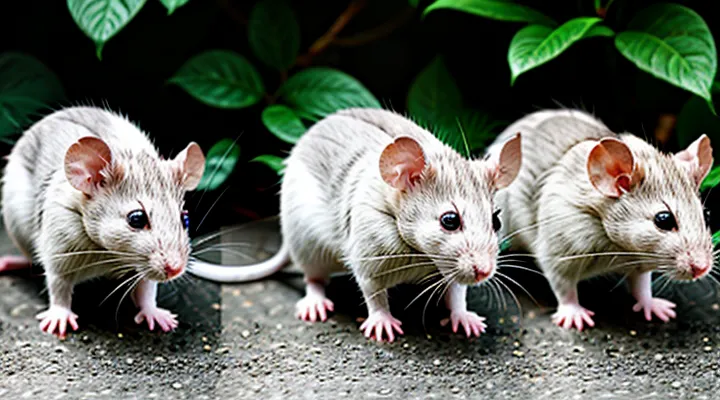
Why Naming Your Rat Is Important
Naming a white female rat provides a clear identifier that distinguishes her from other rodents in a multi‑pet household, simplifies record‑keeping, and reduces confusion during veterinary visits. A distinct name also facilitates precise communication among caretakers, researchers, and suppliers.
Benefits of assigning a name include:
- Immediate recognition during handling, which minimizes stress for both animal and handler.
- Accurate tracking of health data such as weight, diet, and medical history.
- Strengthened bond through consistent verbal interaction, leading to more reliable training outcomes.
- Easier integration into social groups, as individuals respond to vocal cues that differentiate members.
When selecting a name, consider the following guidelines:
- Choose a short, one‑ or two‑syllable term that is easy to pronounce.
- Avoid names that resemble common commands or emergency calls to prevent misinterpretation.
- Reflect the rat’s appearance or personality—e.g., “Pearl” for a pristine coat, “Snowflake” for a gentle demeanor.
- Record the chosen name alongside the animal’s microchip ID or tag for redundancy.
Consistent use of a chosen name enhances management efficiency, improves welfare monitoring, and supports effective interaction with the white female rat throughout her lifespan.
General Naming Tips
Considering Personality and Appearance
Selecting a name for a white female rat should reflect both her visual traits and behavioral tendencies. A name that evokes her pale coat can reinforce recognition, while one that hints at temperament offers insight into her character.
- Snowflake – suitable for a rat with an immaculate, snowy fur pattern and a gentle disposition.
- Pearl – fitting for a sleek, glossy coat and a calm, composed demeanor.
- Ivory – appropriate for a bright, creamy coloration paired with a curious, exploratory nature.
- Blanche – French for “white,” ideal for an elegant appearance and a poised, confident attitude.
- Luna – evokes the pale glow of the moon, matching a silvery coat and a nocturnal, active personality.
- Alba – Latin for “dawn,” works for a light‑colored rat that displays energetic, early‑morning activity.
- Misty – conveys a soft, muted hue and a shy, reserved temperament.
- Coco – contrasts the white fur with a sweet, affectionate behavior, creating a memorable juxtaposition.
- Stella – suggests a bright, sparkling presence, suitable for a rat with a lively, sociable character.
- Frost – reflects a cool, crisp coat and a calm, steady temperament.
When naming, consider the balance between visual description and personality cues. A well‑chosen name enhances identification, strengthens the bond between caretaker and animal, and supports consistent communication in research or pet‑keeping contexts.
Unique vs. Popular Names
Choosing a name for a white female laboratory or companion rat involves balancing recognizability with individuality. Popular choices often draw from classic pet‑name conventions, ensuring easy recall and social acceptance. Typical selections include:
- Snowflake
- Pearl
- Luna
- Daisy
- Bella
These names benefit from immediate association with the animal’s coat color or common feminine motifs, facilitating quick identification in research logs or household settings.
Conversely, unique names emphasize distinctiveness, supporting personalized branding or specialized record‑keeping. Unconventional options might reference mythological figures, scientific terms, or creative wordplay, such as:
- Albedo
- Selene
- Quark
- Nimbus
- Zéphyr
Unique identifiers reduce the likelihood of duplication across colonies or households and can reflect the owner’s interests or the rat’s temperament. Selecting between conventional and original names depends on the desired level of familiarity versus differentiation within the relevant community.
Testing Names
Testing names for albino female laboratory rats requires a systematic approach that ensures each name serves research documentation, animal welfare tracking, and team communication. The process begins with defining clear criteria, proceeds through controlled trials, and concludes with data‑driven selection.
Evaluation criteria
- Uniqueness within the colony to prevent record‑keeping errors
- Pronounceability for rapid verbal reporting during experiments
- Compatibility with digital data‑entry systems (no special characters)
- Emotional neutrality to avoid bias in handling or observation
Testing methodology
- Compile a preliminary list of 30–50 candidate names meeting the criteria.
- Assign each name to a randomly selected group of rats, maintaining equal distribution across experimental conditions.
- Record key metrics over a 14‑day period: frequency of name usage in logs, error rate in data entry, and handler response time.
- Analyze results using ANOVA to identify statistically significant differences in performance indicators.
Outcome implementation Select the top three names that demonstrate the lowest error rates and highest handling efficiency. Document the decision rationale in the colony management protocol and disseminate the final list to all personnel. Continuous monitoring should follow to confirm long‑term suitability.
Classic and Elegant Names
Names from Literature
Literary sources offer a rich pool of elegant names suitable for a pale female rodent. Classical works, modern novels, and poetry provide characters whose qualities align with the delicate appearance and intelligent temperament of such a pet.
Consider the following selections, each accompanied by its origin:
- Lysistrata – Aristophanes, Lysistrata (a clever, strategic heroine).
- Eowyn – J.R.R. Tolkien, The Lord of the Rings (courageous and noble).
- Ophelia – William Shakespeare, Hamlet (graceful and tragic).
- Jane – Charlotte Brontë, Jane Eyre (independent and resilient).
- Scout – Harper Lee, To Kill a Mockingbird (curious and observant).
- Molly – James Joyce, Ulysses (warm and spirited).
- Ada – Mary Shelley, Frankenstein (intelligent and inventive).
- Beatrice – Dante Alighieri, Divine Comedy (guiding and compassionate).
These names convey literary prestige while matching the aesthetic of a white female rat, allowing owners to honor cultural heritage through a personal choice.
Mythological Names
Choosing mythological names for a white female rat adds character and cultural resonance. Classical deities, legendary heroines, and mythic creatures provide memorable options that align with the animal’s pale coat and feminine identity.
- Artemis – Greek goddess of the hunt and wilderness, associated with purity and protection of animals.
- Luna – Roman personification of the moon, evoking the soft glow of a white fur coat.
- Selene – Greek moon goddess, reinforcing nocturnal elegance.
- Eos – Dawn personified in Greek myth, symbolizing the first light that mirrors a bright pelage.
- Freya – Norse goddess of love, beauty, and fertility, suitable for a graceful companion.
- Hestia – Greek goddess of the hearth, representing domestic calm and warmth.
- Isis – Egyptian mother goddess, embodying nurturing qualities.
- Persephone – Queen of the underworld and springtime, a duality that reflects a gentle yet mysterious nature.
- Morrigan – Celtic war goddess, offering a strong, assertive identity for a bold pet.
- Astraea – Greek personification of justice and innocence, fitting for a pristine, white animal.
These selections draw from diverse mythologies, ensuring each name carries a distinct narrative while complementing the aesthetic of a white, female rodent. The chosen name should reflect the owner’s preference for cultural depth and the animal’s unique presence.
Historical Figures
Historical naming conventions for albino female laboratory rats often draw from prominent individuals whose legacies convey strength, intellect, or cultural significance. Researchers select such names to facilitate record‑keeping, enhance memorability, and occasionally honor contributions to science, politics, or the arts.
- Cleopatra – evokes leadership and strategic acumen, suitable for a rat used in complex behavioral studies.
- Ada – references Ada Lovelace, recognized for pioneering computer programming, appropriate for subjects involved in neurocomputational experiments.
- Rosa – honors Rosa Parks, symbolizing resilience, fitting for rats examined in stress‑response research.
- Einstein – derived from Albert Einstein, aligns with investigations into learning and cognition.
- Curie – commemorates Marie Curie, pertinent to studies of radiation effects or metabolic processes.
- Mandela – reflects Nelson Mandela’s legacy of endurance, applicable to long‑term lifespan trials.
- Shakespeare – associates with literary creativity, useful for experiments on auditory perception and vocalization.
- Tesla – alludes to Nikola Tesla, relevant for electrophysiological recordings and bioelectric research.
Selecting names from historical figures provides a systematic yet meaningful framework, supporting precise documentation while reinforcing the cultural relevance of scientific endeavors.
Cute and Sweet Names
Names Inspired by Food
When assigning a moniker to a white female rat, food‑inspired choices convey personality and ease of recall. Such names draw on recognizable flavors, textures, and culinary references, creating a clear association for caretakers and researchers alike.
- Almond – light, nutty character
- Coconut – creamy, tropical feel
- Marshmallow – soft, sweet appearance
- Vanilla – pure and subtle scent
- Sugar – bright and energetic tone
- Peaches – gentle hue and fragrant note
- Rice – plain, understated elegance
- Yogurt – smooth, comforting quality
- Meringue – airy, delicate structure
- Cream – smooth, neutral palette
These selections balance familiarity with the animal’s white coat, facilitating clear communication in both pet‑care and laboratory environments.
Nature-Inspired Names
Nature‑inspired names offer a distinctive way to identify white female rats, drawing on flora, fauna, weather and geological features that echo their pale coat and gentle demeanor.
- Snowdrop – a delicate white flower that blooms early in winter.
- Alba – Latin for “white,” also the name of a mountain‑range lily.
- Pearl – a smooth, iridescent gem formed in marine shells.
- Boreal – refers to the northern forests where snow‑covered trees dominate.
- Daisy – a common white‑petaled blossom symbolising simplicity.
- Nimbus – a cloud formation characterized by bright, fluffy white masses.
- Sierra – evokes the crisp, white peaks of a mountain range.
- Luna – the moon’s luminous, silvery surface.
- Ivory – a material known for its pure, off‑white hue.
- Glacier – massive, slow‑moving ice formations of pristine white.
These selections connect the animal’s appearance with natural elements, providing memorable, descriptive identifiers that avoid generic or repetitive naming conventions.
Diminutives and Nicknames
Diminutives and nicknames give white female rats a personable identity while preserving brevity in records, communication, and caretaking. They often derive from the full name, physical traits, or affectionate associations, and they function well in laboratory logs, breeding programs, and home environments.
- Snowy → Snow – shortens a descriptive name while retaining the color reference.
- Pearl → Pear – trims a classic name, offering a crisp, easy‑to‑write option.
- Luna → Lu – reduces a celestial reference to a two‑letter tag suitable for cage labels.
- Bianca → Bia – removes the final syllable, creating a friendly, gender‑neutral nickname.
- Ivory → Ivy – transforms a material‑based name into a botanical nickname, useful for quick verbal cues.
- Alba → Al – condenses a Latin term for “white” into a single‑syllable identifier.
- Blanche → B – employs an initial‑only format for streamlined data entry.
When selecting a diminutive, prioritize clarity, ease of pronunciation, and consistency across documentation. Avoid overly complex reductions that could cause confusion in experimental logs or inventory systems. Consistent use of these shortened forms enhances communication among researchers, breeders, and owners without sacrificing the distinctiveness of each rat’s primary designation.
Playful and Quirky Names
Pop Culture References
White albino female rodents often receive names drawn from recognizable media figures, allowing owners to convey personality or visual traits through cultural shorthand.
In cinema, characters like “Snow White” (Disney’s 1937 film) and “Elsa” (Frozen) are frequent choices, highlighting the animal’s pale coat and graceful demeanor. Television contributes “Daenerys” (Game of Thrones) and “Gandalf” (Lord of the Rings), both associated with iconic white imagery.
Literature offers “Luna” (Harry Potter) and “Moby” (Moby‑Dick), each evoking a sense of mystique or grandeur. Video games supply “Kirby” (Nintendo) and “Sora” (Kingdom Hearts), both featuring light‑colored protagonists. Music references include “White Rabbit” (Jefferson Airplane) and “Snow” (Red Hot Chili Peppers), directly linking auditory motifs to the animal’s appearance.
A concise list of popular references:
- Snow White – Disney classic
- Elsa – Frozen franchise
- Daenerys – Game of Thrones series
- Luna – Harry Potter novels
- Kirby – Nintendo games
- White Rabbit – 1960s rock song
These selections demonstrate how pop culture supplies a ready inventory of names that resonate with the visual identity of white female rats, reinforcing owner‑animal connection through familiar narratives.
Funny and Punny Names
Choosing a memorable name for a pale female rodent can enhance identification, strengthen the bond between owner and pet, and add a touch of humor to daily care. Effective names often combine visual cues—such as the animal’s coloration—with wordplay that references popular culture, scientific terminology, or everyday objects.
- Snowballina – merges the classic “snowball” image with an elegant feminine suffix.
- Cheese‑Whisker – pairs a favorite rodent snack with a reference to whiskers, creating a playful juxtaposition.
- Alabaster‑Alley – evokes the animal’s ivory coat while hinting at a secretive, urban vibe.
- Pearl‑Pop – blends the gemstone’s sheen with a pop‑culture twist, suitable for a lively personality.
- Ivory‑Ivy – combines the pale hue with a plant known for its climbing nature, suggesting agility.
- Frosty‑Fuzz – highlights the cool color and the soft fur texture in a catchy rhythm.
- Mousse‑Minnie – references a smooth dessert and a classic cartoon heroine, delivering both sweetness and nostalgia.
- Blizzard‑Bette – links the white, stormy appearance with a vintage female name, adding sophistication.
- Lactose‑Luna – plays on the milky shade and the moon’s pale glow, suitable for a nocturnal explorer.
- Snow‑Sass – captures the stark color and a confident attitude in two syllables.
These selections illustrate how humor and puns can be integrated with descriptive elements, resulting in names that are both distinctive and easy to recall.
Names with Unique Sounds
When choosing a designation for a pale‑colored female rodent, the auditory character of the name can enhance memorability and reflect the animal’s distinct presence.
Consider names that incorporate atypical vowel combinations, consonant clusters, or rhythmic patterns:
- Azura – blends a soft “z” with a lingering “a” that creates a melodic echo.
- Quilla – begins with a rare “qu” digraph, followed by a lilting double‑L.
- Xylia – opens with the uncommon “xy” sound, ending in a gentle “ia.”
- Vespera – pairs a crisp “v” with the flowing “era,” offering a twilight resonance.
- Lyra – features a concise “ly” diphthong and a bright terminal “ra.”
- Juno – merges a sharp “j” with a rounded “uno,” yielding a balanced cadence.
- Thalía – introduces the “th” fricative and a melodic accent on the final vowel.
- Eira – employs the rare “ei” vowel pair, producing a crisp, airy tone.
- Zyra – starts with the striking “zy” cluster, concluding with a soft “ra.”
Each of these options avoids conventional phonetic patterns, ensuring the name stands out in any setting where the animal’s identity is recorded or discussed. Selecting a name with a unique sound contributes to clear communication among caretakers, researchers, and enthusiasts.
Names Based on White Appearance
Names Meaning «White»
White-coated female rats often receive names that highlight their distinctive coloration. Selecting a name with a literal meaning of “white” reinforces the visual trait and provides a clear, memorable identifier.
- Alba – Latin for “white”; simple, elegant.
- Blanche – French word for “white”; conveys sophistication.
- Bianca – Italian for “white”; familiar in many cultures.
- Frost – English term for frozen water; evokes cool, pale imagery.
- Snow – Direct reference to fresh snowfall; instantly recognizable.
- Pearl – Symbolic of a lustrous white gem; suggests delicacy.
- Ivory – Material noted for its creamy white hue; conveys smoothness.
- Lumi – Finnish for “snow”; brief and melodic.
- Candida – Latin adjective meaning “bright, white”; formal tone.
- Gwyneira – Welsh compound meaning “white snow”; unique and lyrical.
When choosing among these options, prioritize ease of pronunciation, personal resonance, and compatibility with the rat’s personality. Short, clear names facilitate training and interaction. Cultural relevance may guide the final selection, ensuring the name feels appropriate in the owner’s environment.
Snow and Ice Inspired Names
White albino females benefit from names that echo winter’s clarity and cold elegance. Selecting a moniker that mirrors the animal’s pristine coat enhances identification and reinforces the thematic connection.
Effective snow‑and‑ice names share three qualities: they reference frosty elements, remain short and clear, and avoid overlap with common male names. The choice should suit the rat’s temperament while preserving the visual association with pale fur.
- Frost
- Glacier
- Snowflake
- Iceberg
- Blizzard
- Crystal
- Polar
- Shiver
- Arctic
- Flurry
When finalizing a name, consider the rat’s activity level and vocalization patterns. A lively subject may suit “Blizzard” or “Flurry,” whereas a calmer individual aligns with “Crystal” or “Glacier.” Consistency in pronunciation across caretakers ensures reliable recall during handling and training.
Names of White Objects or Flowers
When selecting a designation for a pale‑coloured female rodent, many owners draw inspiration from objects and flora noted for their immaculate hue. White items and blossoms convey elegance, purity, and visual contrast, making them suitable references for naming.
- Snowflake – evokes the delicate structure of a winter crystal.
- Lily – a classic bloom whose petals are uniformly white.
- Ivory – a material prized for its smooth, unblemished surface.
- Pearl – suggests a subtle sheen and refined appearance.
- Alabaster – references the fine, translucent stone used in sculpture.
- Magnolia – a large, fragrant flower often presented in a pristine shade.
- Dove – a bird whose plumage exemplifies soft, muted white.
- Frost – captures the fleeting, crystalline quality of cold mornings.
- Cotton – denotes the fluffy, pure texture associated with the plant’s fibers.
- Opal – a gemstone that reflects a gentle, milky luminescence.
These terms provide a concise, recognizable pool of options that align the animal’s coloration with familiar white elements in nature and design. Selecting from this list yields names that are easy to recall, culturally resonant, and descriptive of the animal’s visual traits.
International and Exotic Names
French Names
French naming conventions often favor elegance and subtlety, qualities that suit a white female rat. Classic French names convey grace, lightness, or a touch of whimsy, matching the animal’s delicate appearance.
- Lumière – “light,” reflecting the rat’s pale coat.
- Blanche – “white,” a direct reference to color.
- Étoile – “star,” suggesting sparkle and rarity.
- Coco – diminutive of “coconut,” implying a soft, creamy hue.
- Fleur – “flower,” evoking gentleness and beauty.
- Nuit – “night,” an ironic contrast for a light‑colored pet.
- Bijou – “jewel,” indicating preciousness.
- Miel – “honey,” for a warm, sweet disposition.
- Sérène – “serene,” describing a calm temperament.
- Clair – “clear,” alluding to brightness.
When choosing a name, consider pronunciation ease, cultural resonance, and the animal’s personality. Short, two‑syllable options tend to be more readily recognized by rodents. Names with vowel endings often elicit a softer response during training. Selecting a French term that aligns with the rat’s visual traits reinforces the bond between owner and pet.
Japanese Names
Japanese names for white female rats can reflect color, personality, or traditional motifs. Selecting a name that is easy to pronounce and carries a positive meaning enhances the bond between owner and pet.
- Shiro – “white”; straightforward and directly describes coat colour.
- Yuki – “snow”; evokes purity and the animal’s pale hue.
- Hikari – “light”; suggests brightness and liveliness.
- Momo – “peach”; conveys softness and a gentle appearance.
- Sakura – “cherry blossom”; links to delicate beauty and seasonal imagery.
- Koharu – “small spring”; implies freshness and youthful energy.
- Aoi – “blue”; provides contrast while remaining melodic.
- Umeko – “plum child”; combines elegance with a traditional feel.
When choosing a name, prioritize clear vowel sounds to facilitate vocal recognition by the rat. Verify that the meaning aligns with desired traits, avoiding terms with negative connotations in Japanese culture. Ensure the name does not duplicate existing household pet names to prevent confusion.
Applying these criteria yields names that are culturally appropriate, semantically relevant, and practically functional for a white female rat.
Other Global Inspirations
White female rats often receive names that reflect cultural motifs beyond the Anglophone sphere. International sources provide distinctive options that emphasize elegance, mythic resonance, or linguistic nuance.
- Japanese influences – “Shiro” (white) combined with “Kiko” (hope) yields a graceful identifier; “Yuki” (snow) evokes purity and seasonal imagery.
- Arabic heritage – “Layan” (softness) or “Zahra” (flower) convey delicacy; “Safa” (clarity) aligns with the animal’s coloration.
- Nordic folklore – “Eira” (mercy) and “Saga” (story) draw from mythic tradition; “Lumi” (snow) directly references the coat hue.
- African languages – “Amani” (peace in Swahili) and “Nia” (purpose in Swahili) offer concise, meaningful choices; “Kito” (precious) underscores value.
- Latin roots – “Alba” (white) paired with “Serena” (calm) creates a classic composite; “Candida” (bright) mirrors the animal’s appearance.
- Indigenous Australian terms – “Waru” (white) and “Miri” (small) provide succinct, regionally authentic labels.
Each suggestion reflects a cultural lens that enriches the naming process, supplying alternatives that are both descriptively apt and globally resonant.
Considerations for Multiple Rats
Themed Groups
When selecting names for albino female rodents, grouping options streamline the decision process and enhance thematic consistency. Organized categories provide a framework that aligns personality, appearance, and owner preferences.
- Literary Classics – Names drawn from iconic heroines such as Jane, Elizabeth, Ophelia, or Scout convey timeless elegance.
- Mythological Figures – Selections like Athena, Freya, Luna, or Odin (adapted for gender neutrality) evoke strength and mystique.
- Culinary Inspirations – Terms such as Vanilla, Marshmallow, Sugar, or Almond reflect the pale coat and sweet disposition.
- Scientific References – Options including Helix, Genome, Quark, or Pixel appeal to researchers and hobbyists alike.
- Pop‑Culture Icons – Names such as Elsa, Daenerys, Yoda, or Gandalf connect to contemporary media and fan communities.
- Nature Motifs – Selections like Snowflake, Pearl, Ivory, or Nimbus emphasize the animal’s coloration and gentle aura.
Each group supplies a coherent set of choices, allowing owners to match a name’s connotation with the rat’s character and the owner’s interests. By applying a themed approach, naming becomes systematic, memorable, and contextually appropriate.
Contrasting Names
Choosing names that highlight the contrast between a rat’s pale coat and its personality can reinforce identity and aid in record‑keeping. Pairing a soft, delicate sound with a bold or unexpected meaning creates a memorable juxtaposition that distinguishes each animal in a laboratory or breeding program.
- Snowstorm — delicate appearance, fierce intensity
- Pearl — pure hue, sharp intellect
- Frostbite — cold complexion, fiery temperament
- Ivory — bright fur, tough resilience
- Luna — silvery sheen, nocturnal vigor
- Chalk — light color, solid presence
- Ghost — transparent look, strong will
- Marshmallow — soft exterior, robust health
- Alpine — mountain white, adventurous spirit
- Milk — creamy coat, decisive character
These pairings employ opposite cues—gentle visual descriptors with assertive or dynamic connotations—to produce names that are both descriptive and distinctive.
Similar Sounding Names to Avoid
When selecting a name for a pale‑colored female rat, avoid choices that resemble undesirable or confusing terms. Similar‑sounding names can lead to miscommunication, accidental offense, or difficulty in distinguishing the animal in records and conversations.
- Alba – may be mistaken for “Alba,” a common surname or brand, causing ambiguity in veterinary logs.
- Snowy – phonetically close to “snowy” (weather description) and “Snowy” (popular cartoon character), which can create informal associations.
- Pearl – sounds like “pearl,” a jewelry term; the similarity may interfere with inventory systems that classify precious metals.
- Luna – echoes “Luna” (Latin for moon) and several pet products, potentially confusing purchase orders.
- Ivory – resembles “ivory” (material) and “Ivory” (personal name), risking mix‑ups in supply chain documentation.
- Blanche – French for “white,” but also a common female given name; the dual meaning may cause errors in multilingual settings.
- Frost – adjacent to “frost” (weather condition) and “Frosty” (character), which can lead to informal references in professional contexts.
Choosing distinct, unambiguous names minimizes the risk of clerical mistakes and maintains clear communication among caretakers, researchers, and suppliers.
The Joy of Naming Your Pet
Naming a pet establishes an identity that shapes the owner‑animal relationship. A well‑chosen name invites interaction, simplifies training, and reflects the animal’s personality.
When selecting a name for a white female rat, consider coat color, temperament, and cultural references. Short, clear syllables aid recognition; avoid complex sounds that can confuse the animal. Preference for feminine forms or gentle phonetics aligns with the pet’s gender and appearance.
- Snowflake
- Pearl
- Luna
- Ivory
- Bianca
- Frost
- Opal
- Angel
- Daisy
- Misty
Practical steps include writing potential names, testing pronunciation, and observing the rat’s response. Choose a name that feels natural in daily conversation and that fits the pet’s character. Consistent use reinforces the bond and enhances the enjoyment of companionship.