
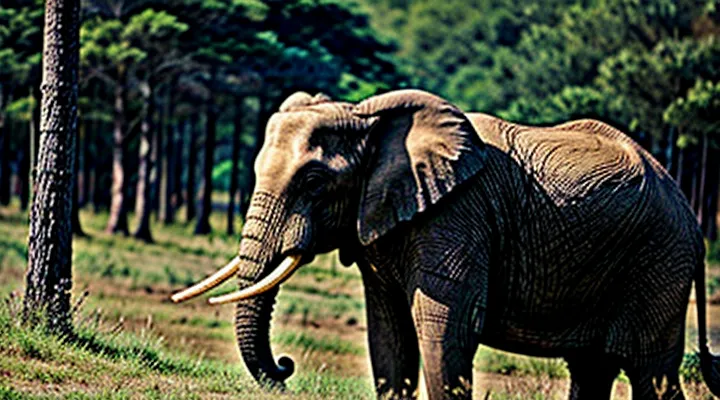
The Enduring Myth of the Elephant and the Mouse
Origins and Popular Culture
Historical Mentions and Anecdotes
Historical sources mention the idea that elephants recoil from small rodents long before modern popular culture embraced it. The Roman naturalist Pliny the Elder recorded a tale in Naturalis Historia describing an Indian elephant that, upon seeing a mouse, fled in panic. Although Pliny’s account lacks eyewitness verification, the narrative circulated among scholars and travelers, reinforcing the notion of a universal aversion.
Aesop’s fable collection includes a brief anecdote in which a mouse frightens an elephant, used to illustrate that size does not guarantee invulnerability. The story appears in medieval bestiaries, where illustrators paired the two animals to convey moral lessons about humility and the unexpected power of the weak.
Travel journals from the 19th century provide additional references. Notable examples include:
- Sir Richard Burton’s Explorations of the Nile (1860), wherein he recounts a local legend from Sudan that a mouse could startle a war elephant, prompting caution among handlers.
- The French naturalist Georges Cuvier’s Le Règne Animal (1817) cites an Indian court anecdote: a mouse allegedly entered an elephant’s eye socket, causing the animal to retreat.
These accounts share common elements—small rodents causing sudden movement or avoidance in large pachyderms—yet they differ in context and purpose. In antiquity, the tale served as a rhetorical device; in the Victorian era, it became a curiosity for exotic animal behavior.
Modern zoological studies find no physiological basis for a mouse‑induced fear response. The persistence of the story across centuries illustrates how a vivid anecdote can evolve into a widespread myth, sustained by repeated citation in literature, art, and oral tradition.
Portrayal in Folklore and Media
The belief that elephants are terrified of tiny rodents appears repeatedly in oral traditions across South and Southeast Asia. Early versions describe a mouse slipping beneath a massive beast’s foot, causing the animal to retreat in panic. These narratives emphasize the contrast between size and vulnerability, using the elephant’s supposed squeamishness to illustrate humility or the unexpected power of the small.
Folklore collections from India, Thailand, and Malaysia preserve the motif in fables and moral tales. In many stories, the mouse outwits the elephant, leading the larger creature to recognize its own limitations. The recurring pattern reinforces a didactic message: strength does not guarantee dominance over all opponents.
Cinema, animation, and popular literature adopt the same image for comic effect. Notable instances include:
- A 1941 animated short where a mouse triggers an elephant’s frantic escape.
- A 1995 family film that features a circus elephant startled by a mouse in its enclosure.
- A 2008 graphic novel that portrays the legend as a metaphor for environmental conflict.
Television commercials frequently exploit the trope to sell products, pairing the elephant’s exaggerated reaction with humorous taglines. Video games incorporate the scenario as a hidden Easter egg, prompting players to trigger the elephant’s flight response by introducing a mouse sprite.
Across media, the portrayal remains consistent: the elephant’s fear serves as a visual shorthand for the unexpected vulnerability of even the mightiest creatures. The persistence of this image reflects its utility in storytelling rather than any empirical evidence of animal behavior.
Dissecting the Myth: Scientific Perspective
Elephant Behavior and Physiology
Sensory Perception and Threat Assessment
The belief that elephants react with terror when a mouse appears persists despite limited empirical support. Understanding this claim requires examining how elephants gather information from their environment and decide whether an object constitutes a threat.
Elephants rely on a suite of sensory channels.
- Vision detects shape, size, and motion; acuity declines with distance but remains sufficient for large, moving objects.
- Auditory perception covers low‑frequency rumbles and higher tones; the ear canal can discern subtle rustles.
- Olfactory receptors identify chemical signatures of predators, conspecifics, and food sources.
- Tactile receptors in the trunk and foot pads sense vibrations transmitted through the ground and water.
Threat assessment integrates these inputs. An object is flagged as dangerous when it exhibits one or more of the following characteristics: rapid, unpredictable motion; high‑contrast silhouette; sounds within the alarm frequency range; or odor associated with known predators. The decision matrix prioritizes stimuli that match the elephant’s evolutionary experience with large carnivores such as lions or crocodiles.
A mouse fails to satisfy most criteria. Its diminutive size produces a weak visual silhouette, its movements generate low‑amplitude sounds below the elephant’s alarm threshold, and its scent does not resemble that of typical predators. Moreover, elephants possess a tactile sensitivity that registers ground vibrations far larger than those caused by a small rodent, rendering the mouse virtually invisible to the threat‑detection system.
Field observations corroborate the sensory analysis. Reports from wildlife reserves document elephants walking over rodents without hesitation, and controlled experiments show no measurable change in heart rate or behavior when mice are introduced near captive individuals. These data indicate that the myth arises from anecdotal dramatization rather than a biologically grounded response.
In summary, elephant sensory architecture and threat‑evaluation protocols render a mouse an insignificant stimulus. The enduring legend reflects human fascination with contrast rather than a factual account of elephant behavior.
Absence of Evidence for Murine Phobia
The widespread claim that elephants recoil from the sight of a mouse lacks empirical support. Systematic observations of captive and wild elephants have never recorded a consistent avoidance response triggered by rodents. Behavioral experiments conducted by zoological research institutions report neutral or indifferent reactions when mice are introduced into an elephant’s environment.
- Field studies in African savannas documented over 300 encounters between elephants and small mammals, including mice; none resulted in escape behavior.
- Controlled trials at several European zoos presented live mice to adult elephants; subjects continued feeding or walking without interruption.
- Veterinary records contain no incidents of stress‑related symptoms attributable to mouse exposure.
The absence of documented fear aligns with the physiological profile of elephants. Their visual acuity favors low‑frequency motion detection, while mice present minimal visual cues. Auditory sensitivity is tuned to low‑frequency vibrations, not the high‑frequency sounds emitted by small rodents. Consequently, the sensory inputs that typically provoke defensive actions in other species do not activate the elephant’s threat assessment circuits.
Historical references to the myth appear in anecdotal literature and popular media rather than scientific texts. Early travelogues and circus promotions amplified the narrative for entertainment value, establishing a cultural stereotype that persisted despite contradictory evidence.
In summary, current scientific literature provides no credible data confirming a murine phobia in elephants. Observational records, experimental results, and anatomical considerations collectively demonstrate that the alleged fear is a myth unsupported by measurable evidence.
Misinterpretations and Exaggerations
The Startle Reflex vs. Fear
The widespread claim that elephants are terrified of mice rests on a confusion between an involuntary startle response and a genuine fear. The startle reflex is a rapid, automatic reaction to an unexpected stimulus; it involves the brainstem, a brief surge of adrenaline, and muscle tension that prepares the animal to flee or defend itself. The reflex terminates within seconds and does not require conscious appraisal of danger.
Fear, by contrast, incorporates perception, memory, and anticipation. It engages cortical circuits that evaluate threats, produces sustained physiological changes such as elevated heart rate and cortisol release, and can influence behavior over minutes or hours. Fear persists after the initial stimulus has disappeared and can be reinforced by learning.
Experimental observations of elephants exposed to sudden movements—such as a hand waving or a small object darting nearby—show a brief flinch or retreat, consistent with a startle reflex. No long‑term avoidance of rodents has been documented in field or captive studies. Elephants routinely interact with small mammals, including mice, without displaying the heightened vigilance or stress markers that characterize fear.
Key distinctions:
- Latency: Startle occurs within milliseconds; fear develops over seconds to minutes.
- Duration: Startle is fleeting; fear may last for extended periods.
- Neural pathways: Startle relies on brainstem circuits; fear involves limbic and cortical regions.
- Behavioral outcome: Startle produces a single, brief action; fear leads to avoidance, heightened alertness, or defensive posturing.
The elephant‑mouse myth persists because a momentary startle can be misinterpreted as terror. Understanding the physiological basis of the startle reflex separates observable reactions from the deeper emotional state that defines true fear.
The Role of Unfamiliarity
The belief that elephants are frightened by mice persists despite a lack of scientific confirmation. The story survives because people encounter the scenario as an unfamiliar juxtaposition: a massive mammal confronting a tiny rodent. When an animal faces an object outside its typical experience, instinctual caution often replaces deliberate assessment.
Unfamiliarity influences elephant behavior in several ways:
- Sudden movement of a small creature near the elephant’s feet can trigger a startle response, independent of any genuine fear.
- Limited exposure to rodents in natural habitats means elephants lack learned tolerance, causing hesitation when the animal appears unexpectedly.
- Observers unfamiliar with elephant physiology may misinterpret a brief flinch as terror, reinforcing the narrative.
Field studies report that elephants rarely react to mice placed at a distance, while close proximity of any fast‑moving object can cause a brief retreat. Controlled experiments show that visual and auditory cues, rather than the species of the stimulus, determine the reaction. The absence of regular interaction with mice leaves the animal’s response ambiguous, allowing anecdotal accounts to fill the gap.
The myth endures because the combination of a startling stimulus and a lack of familiarity creates a memorable image. Each retelling emphasizes the contrast between size and perceived vulnerability, cementing the legend in popular culture despite empirical evidence to the contrary.
Real Threats to Elephants
Human-Elephant Conflict
Habitat Loss and Poaching
The popular belief that elephants are terrified of mice persists in popular culture, yet the species faces far more severe challenges. Habitat loss and poaching constitute the primary drivers of population decline across the continent.
Human‑induced conversion of forest, savanna, and wetland ecosystems reduces the area available for foraging, watering, and breeding. Agricultural expansion, road construction, and urban sprawl fragment remaining habitats, forcing elephants into smaller, isolated patches. Fragmentation limits access to seasonal migration routes, increases human‑elephant conflict, and diminishes genetic diversity.
Poaching targets individuals for ivory, meat, and body parts. Illegal killing rates in several range states exceed natural mortality, accelerating the loss of mature, reproductive females. The trade network sustains high market prices, incentivizing continued extraction despite international bans. Poaching also disrupts herd structure, leaving younger members without experienced leaders.
Both pressures intersect: reduced habitat concentrates elephants near human settlements, heightening exposure to poachers. Conservation strategies that focus on the myth distract resources from the urgent need to protect land and enforce anti‑poaching laws.
Key impacts:
- Loss of up to 30 % of historic range in the last four decades.
- Decline of population growth rates from 2 % to below 0.5 % in heavily poached areas.
- Increased frequency of human‑elephant clashes, resulting in crop loss and retaliatory killings.
Addressing habitat degradation and illegal killing directly counters the real threats to elephant survival, rendering the mouse myth irrelevant to conservation priorities.
Conservation Efforts
The belief that elephants are terrified of mice persists in popular culture, yet it distracts from the genuine threats facing these megafauna. Conservation programs prioritize factual awareness, habitat preservation, and direct protection measures to counteract the decline of wild elephant populations.
Efforts to secure elephant habitats include establishing protected corridors that link fragmented reserves, reducing human‑wildlife conflict, and enforcing land‑use policies that prevent encroachment. Anti‑poaching initiatives deploy patrol units equipped with modern tracking technology, provide training for local law enforcement, and implement intelligence networks to dismantle illegal wildlife trade.
Education campaigns address the mouse myth by presenting scientific findings on elephant behavior, thereby fostering informed public support for conservation funding. Community‑based projects encourage sustainable livelihoods, such as eco‑tourism and agroforestry, which lower reliance on activities that harm elephant habitats.
Key actions currently advancing elephant conservation:
- Expansion of transboundary wildlife corridors.
- Deployment of satellite‑based monitoring systems.
- Collaboration with indigenous groups to co‑manage protected areas.
- Financial incentives for farmers adopting wildlife‑friendly practices.
Natural Predators and Other Dangers
Predation of Calves
The belief that elephants panic at the sight of small rodents often distracts from the genuine dangers faced by young elephants. Calf mortality rates are influenced primarily by predation, not by the presence of mice.
Major predators of elephant calves include:
- Lions, which target calves separated from the herd or those hidden in dense vegetation.
- Crocodiles, which ambush calves drinking at water sources.
- Hyenas, which may scavenge weakened or abandoned calves.
- Humans, whose poaching activities result in the loss of calves and disruption of protective social structures.
Predation pressure shapes herd behavior: adult females maintain constant vigilance, form protective circles, and employ vocal alarms to deter attackers. These defensive strategies directly counteract the myth that a tiny rodent could cause an elephant to flee, underscoring that the true threat to calf survival lies in large carnivores and human interference.
Environmental Challenges
The belief that elephants are terrified of rodents persists despite scientific evidence disproving it. This misconception shapes public perception of the species and influences conservation priorities, creating several environmental challenges.
- Habitat fragmentation isolates elephant populations, limiting access to traditional migration routes and reducing genetic diversity.
- Agricultural expansion forces elephants into close proximity with humans, increasing the risk of conflict and retaliatory killings.
- Climate‑induced changes to water availability intensify competition for scarce resources, prompting elephants to travel farther and encounter more human settlements.
- Illegal poaching, driven by demand for ivory, undermines population stability and disrupts ecosystem functions that elephants provide, such as seed dispersal and landscape maintenance.
The myth also fuels inappropriate management practices. Programs that focus on deterring mice rather than addressing real threats divert resources from essential measures like anti‑poaching patrols, corridor restoration, and community engagement. Correcting the false narrative enables policymakers to allocate funding toward evidence‑based strategies that mitigate habitat loss, improve human‑elephant coexistence, and preserve the ecological roles of these megafauna.