
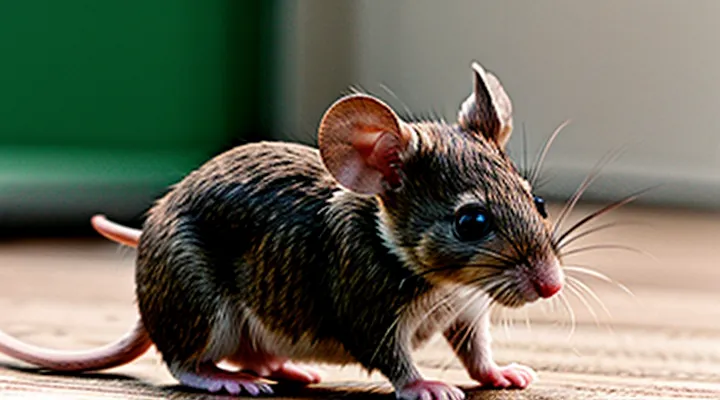
A Tiny Marvel: Biological Overview
Diverse Species and Habitats
Mice, despite their modest size, occupy a wide range of ecological niches across the globe. Their adaptability stems from a rich diversity of species, each tailored to specific environmental conditions.
- Mus musculus – thrives in human‑dominated landscapes, including farms, urban structures, and storage facilities.
- Peromyscus maniculatus – inhabits temperate forests, grasslands, and rocky outcrops throughout North America.
- Apodemus sylvaticus – prefers deciduous woodlands and hedgerows in Europe, where it exploits seed and insect resources.
- Rattus norvegicus – although commonly called a rat, many populations exhibit mouse‑like behaviors in wetlands and riverbanks, feeding on aquatic invertebrates.
- Micromys minutus – occupies low‑lying meadows and floodplain vegetation, relying on dense ground cover for protection.
These species demonstrate varied physiological and behavioral adaptations: cryptic coloration for camouflage, specialized dentition for processing diverse diets, and reproductive strategies that ensure rapid population turnover. Habitat selection reflects moisture availability, temperature ranges, and food abundance, allowing mice to persist from arid deserts to alpine tundra.
Overall, the breadth of mouse species and their corresponding habitats underscores the animal’s ecological resilience and its role in supporting food webs, seed dispersal, and soil aeration across multiple biomes.
Physical Characteristics and Adaptations
Mice possess a compact body averaging 6–10 cm in length, with a tail roughly equal to or slightly longer than the torso. Their weight typically ranges from 15 to 30 g, reflecting a high surface‑to‑volume ratio that facilitates rapid heat exchange. Dense, short fur provides insulation while allowing flexibility; the dorsal coat is usually brown or gray, whereas the ventral side is lighter, enhancing camouflage from aerial predators.
The skeletal structure includes a lightweight skull with enlarged auditory bullae, improving sound detection. Incisor teeth grow continuously, featuring a hard enamel front and softer dentine rear, enabling constant gnawing without wear. Muscular forelimbs support precise manipulation of food and nesting material, while hind limbs generate powerful jumps up to 30 cm in height.
Sensory adaptations are specialized for nocturnal activity:
- Vibrissae (whiskers) detect minute air currents, supplying spatial information in darkness.
- Large, rotatable ears capture a broad frequency range, essential for locating predators and conspecific calls.
- Olfactory epithelium contains millions of receptors, allowing discrimination of food sources and pheromonal signals.
Reproductive physiology contributes to population resilience. Females reach sexual maturity at 5–6 weeks, can produce up to ten litters per year, and each litter averages five to eight offspring. Short gestation (19–21 days) and rapid neonatal development ensure swift turnover in fluctuating environments.
Collectively, these physical traits and adaptive mechanisms enable mice to exploit diverse habitats, from fields and forests to human structures, maintaining their presence across ecological niches.
Remarkable Senses
Mice possess a suite of highly adapted sensory systems that compensate for their diminutive size. Their auditory range extends to ultrasonic frequencies, enabling detection of predator calls and conspecific vocalizations beyond human hearing. The cochlear hair cells respond to rapid pressure changes, translating them into neural signals with millisecond precision.
Olfactory capability is equally refined. Thousands of olfactory receptors line the nasal epithelium, allowing discrimination of complex chemical cues. This sensitivity guides foraging, territory marking, and mate selection, with detection thresholds measured in parts per trillion.
Tactile perception relies on vibrissae—specialized whiskers densely innervated by mechanoreceptors. Each whisker acts as a directional antenna, mapping three‑dimensional space through rhythmic sweeps. Neural encoding of whisker deflection provides real‑time feedback for navigation in low‑light environments.
Vision is limited in acuity but optimized for motion detection. Retinal rods dominate, offering heightened sensitivity to dim illumination. The visual cortex prioritizes temporal changes, allowing rapid response to moving objects despite low spatial resolution.
Key sensory attributes:
- Ultrasonic hearing (up to 100 kHz)
- High‑sensitivity olfaction (detects volatile compounds at ppt levels)
- Whisker‑mediated tactile mapping
- Rod‑dominated vision for low‑light motion detection
Collectively, these senses equip the rodent with the ability to locate food, avoid threats, and communicate within complex habitats.
Ecological Contributions
Crucial Role in Food Chains
Mice form a fundamental link in most terrestrial ecosystems. Their high reproductive rate sustains large populations, providing a reliable food source for a wide array of predators, including birds of prey, snakes, and carnivorous mammals. By converting plant material into animal biomass, mice transfer energy from primary producers to higher trophic levels, thereby maintaining the flow of nutrients through the food web.
Key effects of mouse populations on food chains include:
- Stabilization of predator numbers through consistent prey availability.
- Regulation of vegetation growth via seed consumption and seed dispersal.
- Support of scavenger species that rely on mouse carcasses during population fluctuations.
- Influence on competitive dynamics among other small mammals, shaping community composition.
These interactions demonstrate how a modest-sized rodent underpins ecological balance and biodiversity across diverse habitats.
Seed Dispersal and Ecosystem Health
Mice, as ubiquitous small rodents, interact directly with seeds during foraging. Individual animals collect, transport, and cache seeds, creating spatial patterns of seed deposition that differ from passive dispersal by wind or gravity. By moving seeds away from parent plants, mice reduce density‑dependent mortality and increase the probability of germination in favorable microhabitats.
Key mechanisms of mouse‑mediated seed dispersal include:
- Caching: Temporary burial of seeds in soil or leaf litter, often leading to later germination if caches are not retrieved.
- Transport on fur or paws: Adhesion of seed coats to body surfaces during movement, resulting in deposition at distant sites.
- Selective predation: Preference for certain seed sizes or species, which shapes plant community composition by favoring less‑preferred taxa.
These processes influence ecosystem health. Seed redistribution enhances plant diversity, stabilizes soil structure, and supports trophic interactions by providing food resources for subsequent consumers. In disturbed habitats, mouse‑driven dispersal accelerates vegetation recovery, contributing to resilience against erosion and invasive species.
Pest or Partner: The Dual Nature
Mice inhabit diverse environments, coexist with human activities, and influence ecological balance. Their high reproductive rate and adaptability enable rapid colonization of stored food, grain silos, and residential structures, leading to material loss and contamination. They serve as vectors for pathogens such as hantavirus and Salmonella, increasing health risks in densely populated areas.
Conversely, mice provide indispensable value to scientific inquiry. Their short life cycle and well‑characterized genome make them ideal for genetic manipulation, drug testing, and disease modeling. Experiments on mouse models have yielded breakthroughs in immunology, oncology, and neuroscience, directly informing human medical practice.
Key aspects of the mouse’s dual nature:
- Destructive impact: consumption of crops, damage to infrastructure, transmission of zoonotic diseases.
- Beneficial contribution: reproducible research platform, genetic similarity to humans, facilitation of therapeutic development.
Balancing mitigation strategies with research utilization maximizes overall benefit while minimizing adverse effects.
Mice in Scientific Research
Model Organisms for Medical Breakthroughs
The laboratory mouse serves as a primary model for translating basic biology into clinical advances. Its genome shares approximately 85 % similarity with that of humans, allowing direct investigation of gene function and disease mechanisms. A short reproductive cycle and well‑characterized physiology support rapid experimental turnover and large‑scale studies.
Key contributions of the mouse model include:
- Replication of human metabolic, cardiovascular, and oncogenic disorders.
- Evaluation of pharmacokinetics and toxicity for candidate therapeutics.
- Generation of knockout, knock‑in, and conditional alleles to dissect gene pathways.
- Exploration of immune responses through infection and autoimmunity models.
- Mapping of neural circuits and behavior relevant to neuropsychiatric conditions.
These capabilities enable systematic testing of hypotheses, reproducible data collection, and scalable manipulation of genetic backgrounds. The ease of breeding and availability of extensive strain repositories further streamline comparative analyses across laboratories.
While the mouse offers unparalleled genetic tractability, certain human-specific traits—such as complex brain architecture and long‑term disease progression—require complementary models (e.g., non‑human primates, organoids). Integrating mouse data with alternative systems maximizes translational relevance and accelerates medical breakthroughs.
Contributions to Genetics and Neuroscience
The laboratory mouse serves as a primary model for investigating hereditary mechanisms because its genome is fully sequenced, shares substantial homology with human DNA, and is amenable to precise genetic manipulation. Techniques such as transgenic insertion, knockout, and CRISPR editing have been refined in this species, enabling the creation of disease‑specific alleles and the systematic study of gene function.
In genetics, mouse research has produced several landmark outcomes:
- Identification of the first mammalian oncogene (c‑Myc) through tumor‑prone mouse strains.
- Mapping of quantitative trait loci responsible for complex traits like metabolism and behavior.
- Development of the Cre‑loxP recombination system, now standard for conditional gene disruption.
- Generation of humanized mice carrying patient‑derived mutations for drug testing.
Neuroscience benefits from the mouse’s compact brain, well‑characterized circuitry, and compatibility with in vivo imaging and electrophysiology. Contributions include:
- Elucidation of synaptic plasticity mechanisms via long‑term potentiation studies in hippocampal slices.
- Discovery of neural stem cell niches and their regulation by intrinsic and extrinsic factors.
- Mapping of neuronal subpopulations using optogenetic tools expressed in genetically defined lines.
- Modeling of neurodegenerative disorders such as Alzheimer’s disease through transgenic expression of amyloid‑β and tau proteins.
Collectively, the mouse’s genetic tractability and neurobiological relevance have driven progress in understanding hereditary disease, brain function, and therapeutic development.
Ethical Considerations in Research
The mouse, a diminutive yet significant research model, raises distinct ethical issues that must be addressed throughout experimental design and execution.
Regulatory oversight is mandatory. Institutional Animal Care and Use Committees review protocols, enforce compliance with national statutes, and require justification for each use of the species. The three‑Rs—Replacement, Reduction, Refinement—form the cornerstone of policy, directing researchers toward alternatives, minimizing animal numbers, and improving welfare.
Key ethical concerns include:
- Pain and distress: Analgesics and anesthetics must be administered according to validated schedules; humane endpoints are defined before study initiation.
- Housing and enrichment: Enclosures provide sufficient space, nesting material, and social opportunities to prevent stress‑induced artifacts.
- Genetic manipulation: Gene editing procedures are evaluated for off‑target effects and the potential for unintended suffering.
- End‑of‑life decisions: Euthanasia methods follow accepted veterinary standards to ensure rapid, painless death.
Best practices consolidate these principles. Researchers document all interventions, report adverse events, and share data to prevent unnecessary duplication. Continuous training reinforces competence in handling, monitoring, and recognizing signs of discomfort. By integrating rigorous oversight with the three‑Rs, the scientific community upholds moral responsibility while preserving the mouse’s contribution to biomedical discovery.
Cultural Significance and Human Interaction
Symbolism and Folklore Across Cultures
Mice have long appeared in mythic narratives, serving as symbols of cunning, survival, and transformation. Their diminutive size contrasts with the weight of the meanings they carry, allowing cultures to project complex ideas onto a familiar creature.
- Ancient Egypt: Mice represented plagues and disease; tomb reliefs depict them as agents of chaos that required divine intervention.
- Classical Greece: The rodent was associated with the goddess Demeter, embodying fertility and the hidden cycles of grain storage.
- East Asian traditions: In Chinese zodiac, the mouse is the first sign, symbolizing wealth, resourcefulness, and the ability to seize opportunities. Japanese folklore features the nezumi as a trickster spirit capable of navigating hidden realms.
- Native American lore: Tribes such as the Hopi view the mouse as a messenger of the earth, linking it to humility and the careful stewardship of the land.
- European folklore: Medieval tales describe mice as omens of misfortune or as clever thieves, reflecting societal anxieties about theft and loss.
Across these examples, the mouse functions as a conduit for moral lessons, warning against complacency while celebrating adaptability. Its recurring presence demonstrates how a modest animal can embody profound cultural values, reinforcing the notion that size does not limit symbolic potency.
Mice in Literature and Popular Culture
Mice have long served as narrative devices that convey moral lessons, evoke empathy, and illustrate human traits. Classic fables frequently employ the mouse to demonstrate cleverness or humility, as seen in Aesop’s “The Lion and the Mouse.” In children’s literature, the animal functions as a protagonist who overcomes adversity, exemplified by “Stuart Little,” “The Tale of Despereaux,” and “The Mouse and the Motorcycle.” Contemporary novels such as “The Secret of Nimh” extend this tradition, presenting mice as intelligent societies that mirror human social structures.
In visual media, the rodent appears both as a symbol and a commercial icon. Animated characters like Mickey Mouse and Jerry from “Tom and Jerry” have become global trademarks, influencing merchandising, theme parks, and advertising. Film adaptations—including “Ratatouille,” where a mouse‑like rodent navigates culinary ambition, and “The Secret of NIMH,” which portrays an organized mouse community—demonstrate the animal’s versatility across genres. Video games frequently feature mouse avatars or antagonists, illustrating the creature’s adaptability to interactive storytelling.
Key examples across literature and popular culture:
- Aesop’s fables (e.g., “The Lion and the Mouse”)
- “Stuart Little” by E.B. White
- “The Tale of Despereaux” by Kate DiCamillo
- “The Mouse and the Motorcycle” by Beverly Cleary
- Mickey Mouse, Disney’s flagship mascot
- Jerry, “Tom and Jerry” series
- “Ratatouille” (film, 2007)
- “The Secret of NIMH” (film, 1982)
- Mouse characters in video games such as “Super Mario Bros.” (e.g., “Mouse” power‑up)
Coexistence: Managing Interactions with Humans
Mice occupy urban, agricultural, and natural environments, creating constant contact with people. Their presence influences food safety, structural integrity, and disease transmission, prompting the need for systematic interaction management.
Effective coexistence relies on three core actions:
- Habitat modification: sealing entry points, reducing clutter, and maintaining clean waste disposal diminish attractants.
- Population control: employing integrated pest management (IPM) that combines monitoring, biological agents, and targeted rodenticides limits numbers while minimizing ecological disruption.
- Public education: informing residents about preventive practices and safe handling procedures reduces accidental exposure and promotes responsible reporting.
Monitoring programs quantify infestation levels, evaluate control efficacy, and guide resource allocation. Data collection through traps, visual inspections, and digital reporting platforms enables timely response and trend analysis.
Regulatory frameworks establish standards for rodent control in food establishments, schools, and healthcare facilities. Compliance ensures consistent application of best practices, protects public health, and preserves structural assets while acknowledging the rodent’s ecological role.