
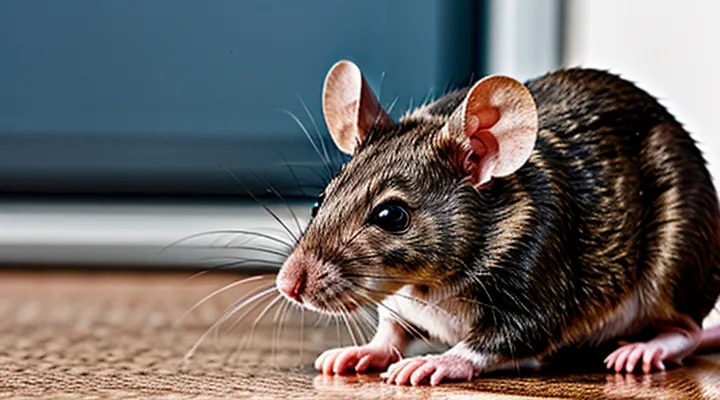
Understanding the Basics: What Defines a Mouse and a Rat«
General Characteristics and Classification«
Accurate identification of small rodents is essential for scientific research, public health initiatives, and pest‑management programs. Mice and rats belong to the same family but differ markedly in taxonomy, morphology, and ecology.
Both groups are classified as follows: Kingdom Animalia, Phylum Chordata, Class Mammalia, Order Rodentia, Family Muridae, Subfamily Murinae. The genus Mus comprises the common house mouse and related species, while the genus Rattus includes the brown rat, black rat, and their relatives.
Key morphological differences:
- Body length: mice typically 6–10 cm; rats range 16–25 cm.
- Tail proportion: mouse tail ≈ equal to body length; rat tail ≈ 1.2–1.5 times body length.
- Ear size: mouse ears large relative to head; rat ears proportionally smaller.
- Snout: mouse snout short and blunt; rat snout longer and more pointed.
- Hind‑foot size: rat hind feet broader, adapted for climbing and digging; mouse hind feet smaller and more delicate.
Behavioral and ecological distinctions:
- Reproductive rate: mice produce up to 10 litters per year with 5–8 offspring each; rats average 5–7 litters with 6–12 offspring.
- Habitat preference: mice favor indoor environments, grain stores, and vegetated ground cover; rats thrive in sewers, basements, and open fields.
- Diet: both are omnivorous, but rats consume larger food items and show a higher tolerance for protein‑rich sources.
- Activity pattern: mice exhibit higher agility and are more active during the early night hours; rats display broader nocturnal activity and larger foraging ranges.
These characteristics provide a reliable framework for distinguishing the two genera in field observations, laboratory settings, and regulatory assessments.
Size and Weight: The Most Obvious Indicator«
Size and weight provide the quickest visual cue for telling a mouse apart from a rat. A typical house mouse (Mus musculus) measures 2–4 inches (5–10 cm) from nose to the base of the tail and weighs 0.5–1 oz (15–30 g). In contrast, a common Norway rat (Rattus norvegicus) ranges 7–10 inches (18–25 cm) in body length and carries 5–12 oz (140–340 g). The tail adds roughly the same length as the body in both species, but the rat’s tail is thicker and proportionally longer.
Key dimensions for field identification:
- Body length: mouse ≤ 4 in (10 cm); rat ≥ 7 in (18 cm)
- Weight: mouse ≤ 1 oz (30 g); rat ≥ 5 oz (140 g)
- Tail thickness: mouse ≈ 1 mm; rat ≈ 4–6 mm
When an animal falls between these ranges, consider age and nutrition; juveniles of either species may appear smaller, but their weight relative to body length remains consistent with the species‑specific pattern. Measuring both dimensions together eliminates most ambiguity.
Key Physical Distinctions«
Head Shape and Size«
Snout Appearance«
The shape of the snout provides reliable visual cues for separating mice from rats. Snout morphology is consistent within each species and remains distinct across age groups and common laboratory strains.
Mice possess a short, triangular snout that tapers sharply toward the tip. The nose is positioned close to the upper lip, creating a compact facial profile. Whisker placement is dense and spread over a relatively narrow area, and the overall snout length does not exceed one‑third of the head width.
Rats display a longer, more cylindrical snout that extends noticeably beyond the mouth opening. The nose sits lower on the face, giving a broader appearance. Whiskers are spaced farther apart and cover a larger surface area, reflecting the increased snout length, which approaches half the head width.
Key visual differences:
- Length: mouse snout ≤ 33 % of head width; rat snout ≈ 50 % of head width.
- Shape: mouse – sharply tapered triangle; rat – elongated cylinder.
- Nose position: mouse – near upper lip; rat – lower on the facial plane.
- Whisker distribution: mouse – dense, narrow; rat – spaced, wide.
Observing these characteristics enables accurate identification without reliance on size or behavior.
Ear Size and Hairiness«
Ear dimensions provide a reliable indicator when separating mice from rats. Mice typically possess ears that are proportionally large relative to their head, often extending beyond the line of the eyes and appearing thin and delicate. In contrast, rat ears are comparatively smaller, set lower on the skull, and exhibit a thicker, more robust structure.
Fur coverage on the ears further clarifies identification. Mouse ears are frequently covered with a fine layer of hair, giving them a velvety texture that obscures the underlying skin. Rat ears generally lack this dense hair, exposing a smoother, less insulated surface.
Key distinctions:
- Mice: large, thin ears; dense hair covering.
- Rats: smaller, thicker ears; minimal or absent hair.
Tail: A Crucial Differentiator«
Length in Proportion to Body«
Body length, measured from the tip of the nose to the base of the tail, provides a reliable metric for separating mice from rats. Adult house mice (Mus musculus) typically exhibit a head‑body length of 7–10 cm, whereas adult Norway rats (Rattus norvegicus) range from 18–25 cm. The disparity remains consistent across sexes and ages, making length a primary diagnostic feature.
Key measurements:
- Head‑body length: 7–10 cm (mouse); 18–25 cm (rat)
- Tail length (relative to body): mouse tail ≈ body length; rat tail ≈ 1.2–1.5 × body length
- Overall size (including tail): mouse ≤ 20 cm; rat ≥ 30 cm
When evaluating a specimen, record the head‑body dimension first. If the measurement exceeds 12 cm, the animal is almost certainly a rat; values below 12 cm indicate a mouse. Complement length data with tail proportion for ambiguous cases: a tail equal to or shorter than the body suggests a mouse, while a longer tail points to a rat. This systematic approach minimizes misidentification in field surveys, laboratory settings, and pest‑control assessments.
Hairiness and Scaly Texture«
Hair distribution provides a reliable visual cue. Mice possess a dense, soft coat that covers the entire body, including the tail, leaving only a thin line of skin at the tail tip. Rats exhibit a coarser, sparser fur; the tail is predominantly naked, revealing a smooth, hair‑free surface along most of its length.
Texture of the skin and tail differs markedly. The mouse’s tail skin is thin and flexible, feeling smooth to the touch. In contrast, a rat’s tail is thicker, with a leathery, slightly rough texture that can feel mildly scaly, especially near the base where small scales overlap.
These characteristics can be assessed quickly in the field:
- Coat density: dense and uniform (mouse) vs. coarse and patchy (rat).
- Tail coverage: fully furred (mouse) vs. mostly bare (rat).
- Tail surface: smooth, delicate (mouse) vs. leathery, scaly (rat).
Observing hairiness and tail texture together yields a clear distinction between the two rodent species.
Body Proportions and Build«
Overall Body Shape«
The overall silhouette of a mouse differs markedly from that of a rat and provides the quickest visual cue for accurate identification. A mouse presents a compact, rounded torso with a short, thin tail that rarely exceeds the body length. Its head is proportionally large relative to the body, giving the animal a distinctly petite appearance. In contrast, a rat exhibits a more elongated, muscular body. The tail is thick, hair‑less, and typically longer than the combined head‑body length. The head of a rat is smaller in proportion to its robust body, creating a sleek, streamlined profile.
Key shape characteristics:
- Torso length: mouse – short and rounded; rat – long and cylindrical.
- Tail proportion: mouse – tail ≤ body length, thin; rat – tail > body length, thick.
- Head‑to‑body ratio: mouse – head relatively large; rat – head relatively small.
- Overall bulk: mouse – lightweight, delicate; rat – heavier, sturdier.
When observing an unfamiliar rodent, assess these dimensions in sequence: torso compactness, tail thickness and length, and head proportion. Consistent alignment with the mouse pattern confirms a mouse; alignment with the rat pattern confirms a rat. This systematic visual assessment eliminates ambiguity and ensures reliable species discrimination.
Leg Length«
Leg length provides a measurable criterion for separating mice from rats when visual identification is required. The hind‑foot of a common house mouse (Mus musculus) measures approximately 7–9 mm, whereas a Norway rat (Rattus norvegicus) displays a hind‑foot length of 12–15 mm. Forelimb dimensions follow a similar pattern: mouse forepaws average 5–6 mm, rat forepaws 8–10 mm.
Body‑to‑leg proportion distinguishes the species further. In mice, the leg length constitutes roughly 15 % of total body length; in rats, the same proportion rises to 20–25 %. Consequently, rats appear more robust, with longer limbs relative to torso size.
When assessing live or captured specimens, observe the following points:
- Place the animal on a flat surface; note the distance from the hip joint to the tip of the longest toe.
- Compare the measured value to the ranges above; values below 10 mm indicate a mouse, above 12 mm indicate a rat.
- Verify the fore‑to‑hind‑foot ratio; a ratio near 0.8 suggests a mouse, while a ratio approaching 1.0 suggests a rat.
- Consider overall body size in conjunction with leg length to avoid misidentification of juvenile rats or large mice.
Accurate leg‑length measurement, combined with proportional analysis, yields a dependable method for distinguishing between these two common rodents.
Behavioral and Habitat Clues«
Droppings: A Silent Indicator«
Size and Shape Differences«
Distinguishing small rodents relies heavily on measurable dimensions and body proportions. Accurate identification prevents misinterpretation of experimental data and ensures appropriate pest‑control strategies.
- Adult house mouse (Mus musculus): body length 6–10 cm, tail length 6–9 cm, weight 15–30 g.
- Adult Norway rat (Rattus norvegicus): body length 20–25 cm, tail length 15–20 cm, weight 250–500 g.
- Juvenile mice reach adult size within weeks; rat juveniles remain substantially larger than mature mice.
Shape characteristics further separate the species:
- Mice possess a relatively slender skull with a pointed snout; rats display a broader skull and a blunt, heavier muzzle.
- Tail texture differs: mouse tails are fine, hairless, and taper gradually; rat tails are thicker, often scaly, and maintain a uniform diameter.
- Ear size relative to head is larger in mice, presenting a conspicuous, rounded appearance; rat ears are smaller and more triangular.
- Hind feet of mice are proportionally longer, aiding in climbing; rat hind feet are shorter but more robust, supporting stronger locomotion on the ground.
These quantitative and morphological markers provide a reliable framework for differentiating the two rodents in laboratory, field, or urban environments.
Quantity and Distribution«
Accurate identification relies on measurable population traits. Mice typically occur in higher numbers per square meter than rats, especially in indoor environments where food sources are abundant. Rat colonies are fewer but occupy larger territories, often extending beyond a single room into adjacent structures.
Key quantitative indicators:
- Population density: 30‑150 individuals per 100 m² for mice; 5‑20 individuals per 100 m² for rats.
- Territorial range: 1‑3 m² per mouse; 10‑100 m² per rat.
- Capture frequency: Traps set in kitchens yield mouse captures weekly; rat captures appear monthly under the same conditions.
Geographic distribution patterns further differentiate the species. Mice dominate in residential apartments, laboratory settings, and grain storage facilities. Rats favor sewer systems, outdoor waste sites, and agricultural fields, where their larger home ranges support lower local densities. Monitoring these numeric and spatial variables enables reliable separation of the two rodent types.
Nesting Habits and Materials«
Mice construct nests primarily in concealed locations such as wall voids, attic insulation, or underneath appliances. Their structures consist of shredded paper, fabric scraps, and plant fibers, often layered thinly to form a shallow cup. Materials are lightweight, collected in small quantities, and displayed in irregular piles near entry points.
Rats build larger, more robust nests situated in basements, sewers, or outdoor burrows. Their constructions incorporate sturdier items—corrugated cardboard, plastic sheeting, wood shavings, and dried vegetation—arranged in dense, multi‑layered mounds. Nest sites frequently feature deep cavities or tunnels that provide protection from predators and environmental extremes.
Key distinguishing features:
- Location: Mice favor elevated, hidden spaces; rats prefer ground‑level or subterranean areas.
- Size: Mouse nests are modest, typically under 10 cm in diameter; rat nests exceed 30 cm and may include extensive tunnel networks.
- Materials: Mouse nests contain fine, soft debris; rat nests contain coarse, durable components and larger quantities.
- Structure: Mouse nests are shallow and loosely organized; rat nests are thick, compact, and often reinforced.
Observing these characteristics enables accurate identification of the species responsible for a given nest, supporting effective pest management decisions.
Diet and Feeding Patterns«
Mice and rats exhibit distinct dietary preferences that aid reliable identification in field and laboratory settings. Recognizing these patterns reduces misclassification and improves experimental outcomes.
Mice typically consume small seeds, grains, and soft plant material. Their limited jaw strength restricts intake to items that can be broken with minimal force. Common components include:
- Wheat and barley kernels
- Sunflower and millet seeds
- Fresh greens and tender shoots
- Insects only when protein demand spikes
Rats possess stronger incisors and a more omnivorous palate. Their diet incorporates larger and tougher items, often reflecting opportunistic scavenging:
- Whole nuts and larger seeds
- Crusts of bread, cereal bars, and processed foods
- Meat scraps, carrion, and pet food
- Waste material containing fats and carbohydrates
Feeding behavior further differentiates the species. Mice forage continuously in brief bouts, favoring concealed microhabitats and storing small quantities near nest sites. Rats display longer foraging excursions, often traveling meters from burrows to exploit abundant resources, and they exhibit food hoarding in communal caches.
Understanding these dietary and foraging distinctions enables accurate species discrimination without reliance on morphological examination alone.
Vocalizations and Sounds«
Vocalizations provide reliable clues for separating mice from rats, especially when visual confirmation is difficult. Mice emit high‑frequency squeaks that peak around 60–80 kHz, often inaudible to humans without ultrasonic detectors. These calls are brief, lasting 10–30 ms, and increase in rate during social interaction or stress. Rats produce lower‑frequency chirps and ultrasonic calls ranging from 20 to 50 kHz, with longer durations of 30–100 ms. Their vocal repertoire includes audible squeals (2–5 kHz) associated with pain or aggression.
Key acoustic distinctions:
- Frequency range: mice > 60 kHz; rats ≈ 20–50 kHz.
- Call duration: mice ≈ 10–30 ms; rats ≈ 30–100 ms.
- Contextual patterns: mice emit rapid series during mating; rats generate patterned “trill” sequences during territorial disputes.
Detection equipment calibrated for the appropriate frequency band can capture these signals, allowing precise identification. Recording a series of high‑frequency, short‑duration squeaks indicates a mouse, whereas a mixture of lower‑frequency chirps and longer ultrasonic calls points to a rat. The combination of frequency, timing, and behavioral context forms a robust acoustic signature for accurate differentiation.
Additional Considerations and Nuances«
Coloration and Fur«
Coloration and fur provide reliable visual cues for separating mice from rats. Mice typically display softer, finer pelage that lies close to the skin, while rat fur is coarser and often appears more bristly. The texture difference is noticeable when the animal is handled or examined against a light source.
Key fur attributes that differentiate the two species include:
- Length and density – Mice possess short, dense hair covering the entire body; rats have longer, sparser guard hairs especially along the dorsal region.
- Color pattern – Mice frequently exhibit uniform shades such as gray, brown, or white, with occasional dorsal striping in wild forms. Rats commonly show a darker dorsal surface with a lighter ventral side, and many laboratory strains present a distinct black or brown coat.
- Tail fur – Mouse tails are sparsely haired or naked, revealing a smooth surface. Rat tails retain a thin layer of hair, giving a slightly fuzzy appearance.
- Ear and whisker coloration – In mice, ear pinnae and whiskers often match the body coat, whereas rats may display contrasting lighter or pinkish ears and whiskers.
When assessing an unknown rodent, examine the fur’s tactile quality, measure the length of dorsal hairs, and note the presence or absence of tail hair. These observable characteristics, combined with body size and head shape, enable accurate species identification.
Common Species and Their Traits«
The most frequently encountered rodents in domestic and urban settings belong to two genera: Mus (mice) and Rattus (rats). Recognizing species-specific characteristics simplifies accurate identification.
-
House mouse (Mus musculus) – body length 7–10 cm, tail slightly longer than head‑body, gray‑brown dorsal fur, pink or dark ears, large eyes relative to head. Tail is hairless, tapered, and lacks a distinct scale pattern. Breeding cycles are rapid; litters average 5–8 pups.
-
Field mouse (various Apodemus spp.) – body length 8–12 cm, tail proportionally longer than house mouse, brown or reddish dorsal coat with a distinct dorsal stripe in some species, ears modestly sized, eyes moderate. Tail shows a faint scale pattern and a dark tip.
-
Norway rat (Rattus norvegicus) – body length 20–25 cm, tail shorter than head‑body, coarse brown‑gray fur, blunt nose, small ears hidden by fur, robust skull. Tail is thick, scaly, and shorter than the body. Weight often exceeds 300 g.
-
Roof rat (Rattus rattus) – body length 16–20 cm, tail longer than head‑body, sleek black or dark brown coat, pointed nose, large ears, slender build. Tail is long, hairless, and proportionally equal to or longer than the body, with a pronounced scale ridge.
Key traits for differentiation include size, tail proportion, fur texture, ear visibility, and tail scale pattern. Mice are consistently smaller, possess longer tails relative to body length, and lack the thick, scaly tail of rats. Rats display greater body mass, shorter relative tails, and a more robust skull structure. These measurable attributes enable reliable distinction between common mouse and rat species in field observations and pest‑management contexts.
When Identification Matters: Practical Applications«
Accurate differentiation between mice and rats becomes critical whenever the species influences decision‑making, safety protocols, or scientific outcomes. In laboratory research, the two rodents exhibit distinct metabolic rates, genetic backgrounds, and behavioral patterns; misidentifying a specimen can invalidate drug efficacy data, skew toxicology results, and compromise reproducibility. Pest‑management contracts rely on species‑specific bait formulations and habitat assessments; using mouse‑targeted poisons on rat infestations reduces control efficiency and raises non‑target exposure risks.
Public‑health surveillance depends on precise species reporting because rats commonly transmit leptospirosis, hantavirus, and plague, whereas mice are vectors for different pathogens such as Lymphocytic choriomeningitis virus. Regulatory agencies require species‑level documentation for food‑processing facilities; failure to separate rat contamination from mouse incurs penalties and jeopardizes product recalls. Veterinary diagnostics differentiate treatment plans: anticoagulant resistance patterns differ, and surgical dosing must reflect size variations.
Practical scenarios where correct identification matters include:
- Designing field studies that compare ecological impacts of each rodent on seed dispersal and soil turnover.
- Implementing biosecurity measures in hospitals, where rat presence triggers stricter quarantine actions than mouse sightings.
- Conducting forensic investigations of rodent‑related damage, where insurance claims depend on species‑specific liability.
- Developing educational curricula for pest‑control certification, which mandates species‑appropriate identification skills.
Each application demonstrates that reliable species discrimination directly affects outcomes, compliance, and resource allocation.