
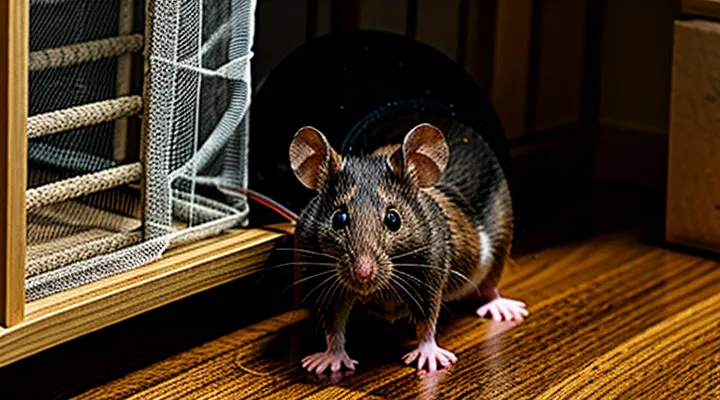
«Understanding the Threat»
«Why Mice are a Problem in Frame Houses»
«Health Risks and Property Damage»
Rodent intrusion in timber-framed dwellings introduces bacterial pathogens, allergens, and parasites that directly affect occupant health. Common vectors include Salmonella, Leptospira, and hantavirus, each capable of causing gastrointestinal, renal, or respiratory illnesses. Persistent exposure to mouse droppings and urine also aggravates asthma and triggers hypersensitivity reactions.
Physical damage to structural components results from gnawing behavior. Mice sever electrical wiring, increasing fire risk and causing outages. They compromise insulation, leading to heat loss and moisture accumulation that promotes mold growth. Damage to plumbing fixtures creates leaks, fostering pest proliferation and further deterioration.
Protective measures focus on installing a fine-mesh barrier tailored for framed houses. The netting must:
- Cover all openings larger than ¼ inch.
- Be mounted securely to prevent gaps.
- Use corrosion‑resistant material for longevity.
- Include a sealing system at joints and penetrations.
Proper implementation eliminates entry points, thereby reducing both health hazards and material loss. Regular inspection ensures the barrier remains intact and effective.
«Ease of Entry and Proliferation»
Rodent barrier systems installed on framed dwellings often permit unintended access points, allowing mice to infiltrate interior spaces with minimal resistance. Structural joints, unsealed penetrations, and undersized mesh create pathways that bypass the intended protective function.
- Gaps at corner brackets and bolt holes larger than 6 mm
- Overlapping sections where mesh tension is insufficient
- Openings around utility conduits without integrated sleeves
- Degraded fastening hardware that loosens over time
Once inside, mice exploit the open framework to establish colonies rapidly. The interior lattice provides shelter, while abundant food residues sustain population growth. Reproduction cycles accelerate under stable microclimates created by the enclosure, leading to exponential increase in numbers.
- Nesting in concealed cavities behind wall panels
- Use of ceiling voids for unhindered movement across rooms
- Exploitation of ventilation ducts as transit routes
- Accumulation of droppings and gnaw marks that compromise structural integrity
Effective mitigation requires elimination of each entry vector and continuous monitoring of mesh condition. Reinforcing joint seals, installing tamper‑resistant fasteners, and selecting mesh with appropriate aperture size reduce the likelihood of infiltration. Regular inspections detect wear before it facilitates proliferation, preserving the intended protective barrier.
«Common Entry Points for Rodents»
«Foundation Gaps and Cracks»
Gaps and cracks in the foundation create direct pathways for rodents to bypass the protective mesh installed around a framed dwelling. These openings undermine the intended barrier, allowing mice to enter interior spaces and compromise structural integrity.
Typical defects include horizontal fissures, vertical settlements, and joint separations caused by soil movement, moisture fluctuations, or inadequate concrete mixing. Early detection relies on visual inspection, moisture meters, and infrared scanning to identify concealed fractures before they enlarge.
Remediation measures focus on sealing, reinforcement, and preventive design:
- Apply epoxy or polyurethane injection to fill cracks up to 10 mm wide.
- Install flexible sealant strips around pipe penetrations and utility conduits.
- Reinforce compromised sections with carbon fiber wraps or steel plates.
- Implement a drainage layer to divert water away from the foundation slab, reducing pressure that drives crack formation.
- Conduct periodic surveys every six months to verify the integrity of repairs and the continuity of the mesh barrier.
By eliminating foundation discontinuities, the mouse exclusion system maintains its effectiveness, preserving both the building envelope and the health of its occupants.
«Utility Line Openings»
Utility line openings present a direct pathway for rodents to enter framed structures equipped with protective netting. When these penetrations are left unsealed, the integrity of the barrier system is compromised, allowing mice to bypass the mesh and reach interior spaces.
Effective mitigation requires a systematic approach:
- Identify every conduit, pipe, or cable entry point during the initial installation survey.
- Install rigid sleeves or expandable inserts that match the diameter of the opening, ensuring a tight fit around the utility.
- Seal the interface between the sleeve and the surrounding frame with fire‑rated, rodent‑resistant caulk or gasket material.
- Verify that the installed sleeve does not create gaps larger than ¼ inch, the maximum size through which mice can squeeze.
- Conduct periodic inspections after construction completion to detect any movement or degradation of the sealing components.
Documentation of each treated opening should include the location, size, type of sealant used, and the date of installation. Maintaining this record supports compliance audits and facilitates timely repairs if damage occurs.
By applying these measures, the protective netting system retains its intended function, preventing rodent intrusion through utility line openings while preserving the safety and durability of the framed building.
«Roof and Eave Vulnerabilities»
Roof and eave structures present the most common entry points for rodents in timber‑framed dwellings equipped with a rodent barrier system. Gaps formed by roof‑covering seams, flashing joints, and soffit openings allow mice to bypass the netting and access interior spaces. Weathering of roofing material creates cracks that enlarge over time, reducing the effectiveness of any installed barrier. Ventilation ducts and chimney flues often lack integrated mesh, providing direct pathways from the attic to living areas. Eave overhangs that are not sealed properly expose the underside of the net to wind‑driven debris, which can tear or displace the mesh.
Key vulnerabilities include:
- Unsealed ridge and hip joints where roofing sheets meet.
- Damaged or missing flashing around skylights and vent hatches.
- Open soffit vents without supplementary screening.
- Gaps between roof decking and netting caused by thermal expansion.
- Loose eave brackets that permit mesh sagging or detachment.
Mitigation measures:
- Install continuous, corrosion‑resistant mesh that overlaps ridge and hip seams, secured with stainless‑steel staples.
- Apply sealant or weather‑proof tape to all flashing edges before attaching the net.
- Fit fine‑mesh inserts into soffit and ventilation openings, ensuring a tight fit around framing members.
- Use adjustable tensioning straps on eave brackets to maintain mesh tautness despite temperature fluctuations.
- Conduct quarterly inspections of roof and eave sections, replacing any compromised mesh sections immediately.
By addressing these specific weaknesses, the rodent barrier maintains its integrity, preventing mouse infiltration through the roof envelope and preserving the structural health of the building.
«The Role of Mouse Netting»
«What is Mouse Netting?»
«Material and Mesh Size Considerations»
Material selection for a mouse barrier installed in a framed enclosure must address durability, environmental resistance, and interaction with the structure. Metals such as galvanized steel or aluminum provide high tensile strength and resist corrosion when coated or anodized. Synthetic options, including UV‑stabilized polyethylene or PVC‑coated fabrics, deliver flexibility, lightweight handling, and long‑term exposure tolerance. Choose a material whose thermal expansion aligns with the frame to prevent gaps under temperature fluctuations.
Mesh size directly influences the barrier’s effectiveness. The opening dimension must be smaller than the smallest possible mouse body width, typically 1.5 cm, to prevent entry. Simultaneously, the mesh should permit adequate airflow and visibility for occupants. A common compromise is a 1 mm × 1 mm aperture, which blocks rodents while allowing ventilation and visual monitoring. Larger openings increase airflow but compromise protection; smaller apertures improve security but may restrict air exchange and increase pressure drop.
Key considerations can be summarized as:
- Structural strength: material must withstand wind load and accidental impacts.
- Corrosion resistance: coating or alloy choice should match local humidity and salt exposure.
- UV stability: polymer components require additives to prevent brittleness.
- Mesh aperture: ≤ 1 mm to block mice, balanced against ventilation requirements.
- Installation compatibility: edges should allow secure fastening to the frame without creating gaps.
Compliance with these criteria ensures a reliable, low‑maintenance barrier that protects the interior space while maintaining functional performance.
«Types of Mouse Netting»
A rodent barrier installed in framed residential or commercial structures must be selected based on material properties, mesh dimensions, and installation requirements. Understanding the available netting options enables designers to achieve reliable exclusion while maintaining structural integrity.
- Galvanized steel mesh: corrosion‑resistant, high tensile strength, mesh apertures typically 4 mm or smaller; suitable for exterior walls and roof eaves where durability is critical.
- Stainless‑steel mesh: superior resistance to rust and chemical exposure, mesh sizes from 2 mm to 6 mm; preferred for environments with high humidity or exposure to cleaning agents.
- Polyethylene (PE) netting: lightweight, flexible, UV‑stabilized; mesh openings usually 6 mm to 12 mm, ideal for interior cavities and temporary installations.
- Fiberglass‑reinforced netting: combines tensile strength with flexibility, mesh apertures around 5 mm; used where metal detection is a concern or where electromagnetic interference must be minimized.
- Composite alloy mesh: blends aluminum and steel, offering reduced weight with adequate strength; mesh sizes range from 3 mm to 8 mm, suitable for retrofit projects with limited clearance.
Selection criteria include exposure to moisture, required lifespan, compatibility with framing materials, and local pest pressure. Proper sealing of seams, attachment to structural members, and regular inspection complete the protective system.
«Benefits of Using Mouse Netting»
«Preventing Entry Points»
A well‑designed rodent barrier for timber‑frame dwellings must eliminate every possible opening that mice could exploit. Sealing gaps, reinforcing vulnerable joints, and maintaining structural integrity are the core actions that prevent intrusion.
- Inspect all exterior joints, including roof eaves, wall studs, and window frames; fill gaps with steel‑wool or silicone‑based sealant rated for pest control.
- Install a continuous mesh of 1 mm gauge stainless steel around the perimeter, overlapping seams by at least 10 cm and securing them with corrosion‑resistant staples.
- Fit door sweeps and vent covers that incorporate mesh; ensure they close tightly against the floor and frame.
- Repair damaged siding, roofing, and soffit panels promptly; replace compromised sections with materials that can support the mesh without deformation.
- Conduct quarterly visual audits, focusing on areas where utilities penetrate the envelope; apply additional mesh or sealant as needed.
Consistent application of these measures creates a sealed envelope that denies mice access, preserving the structural and sanitary conditions of the building.
«Long-Term Protection and Durability»
A rodent barrier installed in a framed building must retain its protective function for years despite exposure to weather, mechanical stress, and biological agents. Selecting a net made from high‑density polyethylene (HDPE) or coated steel ensures resistance to UV degradation and corrosion, extending service life.
Durability depends on several measurable properties:
- Tensile strength above 300 N mm⁻², preventing tears from animal pressure or wind loads.
- UV‑stabilized coating that maintains flexibility after prolonged sunlight exposure.
- Seam welding or reinforced stitching that retains integrity at joint points.
- Resistance to moisture absorption, avoiding dimensional changes that could create gaps.
- Compatibility with building materials to prevent galvanic corrosion at contact zones.
Regular inspection schedules, performed at six‑month intervals, identify early signs of wear such as fraying, coating delamination, or anchor corrosion. Prompt replacement of compromised sections restores barrier continuity without affecting overall structural performance.
When these specifications are met, the rodent exclusion system delivers continuous protection, reducing the need for costly repairs and minimizing the risk of infestation over the building’s operational lifespan.
«Environmentally Friendly Solution»
The rodent barrier installed in timber‑framed structures requires a protective layer that does not compromise ecological standards. Conventional coatings often contain volatile organic compounds and non‑degradable polymers, which increase environmental load and may weaken the net over time.
Eco‑compatible alternatives include:
- Biodegradable polymer films derived from plant starch, offering UV resistance and moisture barrier properties while decomposing harmlessly after service life.
- Natural fiber mats treated with mineral‑based preservatives; hemp or flax fibers provide tensile strength and allow airflow, reducing condensation on the net.
- Recycled polyethylene sheets blended with bio‑based additives; the blend retains durability, resists tearing, and eliminates the need for virgin plastic production.
Implementation proceeds as follows:
- Clean the net surface to remove dust and residues.
- Apply the selected eco‑material using heat‑lamination or adhesive‑free interlocking seams to avoid chemical binders.
- Seal edges with biodegradable tape to prevent infiltration of insects and moisture.
- Conduct a visual inspection and perform a tensile test to confirm compliance with safety specifications.
Adopting these measures reduces toxic emissions, lowers material waste, and extends the functional lifespan of the rodent barrier, aligning structural protection with sustainable construction practices.
«Planning Your Mouse Netting Installation»
«Assessing Your Home's Vulnerabilities»
«DIY Inspection Tips»
When checking rodent barrier installations on timber‑framed homes, focus on the integrity of seams, attachment points, and material condition. Begin by inspecting the netting for tears, punctures, or worn edges that could allow entry. Run a finger along each seam; any gaps larger than 2 mm indicate a failure that must be repaired. Verify that the mesh is taut and properly tensioned; sagging sections create vulnerable zones.
Assess fastening methods. Confirm that staples, screws, or adhesive strips are securely driven into solid framing members without corrosion. Replace any fasteners that show rust, stripping, or loosening. Ensure that the netting overlaps at corners by at least 10 cm and is sealed with weather‑resistant tape or sealant designed for exterior use.
Maintain a checklist for routine inspections:
- Visual scan for holes, abrasions, or insect damage.
- Tension test: pull the mesh gently to detect slack.
- Fastener audit: tighten or replace compromised hardware.
- Overlap verification: measure and confirm proper coverage.
- Sealant condition: reapply where cracking or peeling occurs.
Document findings after each visit, noting location, severity, and corrective action. Regular, systematic reviews prevent rodent ingress and extend the service life of the protective netting system.
«When to Call a Professional»
A professional should be contacted when the rodent barrier installed in a timber‑frame home shows any of the following conditions:
- Damage to the netting material, such as tears, holes, or frayed edges, that compromise its integrity.
- Persistent mouse activity despite a correctly fitted barrier, indicating that the installation may be insufficient or incorrectly positioned.
- Evidence of gnaw marks on structural components adjacent to the net, suggesting the barrier does not extend to all vulnerable entry points.
- Inability to securely attach the net to the frame due to inaccessible or damaged anchoring points.
- Uncertainty about the correct type or mesh size required for the specific building design.
Additional circumstances requiring expert assistance include:
- Installation in complex architectural features, such as roof valleys, recessed windows, or irregular framing, where precise fitting is critical.
- Renovation or retrofitting projects where existing structures must be preserved while adding protective netting.
- Compliance with local building codes or pest‑control regulations that mandate certified installation methods.
Engaging a qualified technician ensures proper assessment, correct material selection, and installation that eliminates gaps, thereby reducing the risk of infestation and protecting the structural integrity of the home.
«Required Tools and Materials»
«Safety Precautions»
When installing a rodent‑exclusion mesh within a framed building, adhere to the following safety measures.
- Verify that all mesh components meet fire‑rating standards appropriate for the structure’s occupancy class.
- Use gloves and safety glasses during handling to prevent cuts from sharp edges and to protect eyes from debris.
- Secure the mesh with corrosion‑resistant fasteners; check torque specifications to avoid over‑tightening that could damage the material.
- Ensure that all electrical wiring and conduit pass through pre‑drilled openings, not through the mesh itself, to eliminate fire hazards and maintain electrical code compliance.
- Conduct a visual inspection after installation to confirm that no gaps larger than 1 mm remain; any opening can become a pathway for rodents.
During maintenance, disconnect power to any adjacent equipment before cutting or adjusting the mesh. Replace damaged sections promptly with material of identical specification to preserve the integrity of the barrier. Document each inspection and repair activity in a log that includes date, personnel, and corrective actions taken.
Following these protocols reduces the risk of injury, maintains structural safety, and ensures continuous protection against rodent intrusion.
«Step-by-Step Installation Guide»
«Sealing Foundation Gaps»
Sealing foundation gaps eliminates entry points that allow rodents to infiltrate the structural envelope of a timber‑framed residence. Gaps often appear around sill plates, service penetrations, and utility openings; even a ¼‑inch opening provides sufficient access for mice.
Effective sealing requires:
- Inspection of all perimeter joints, noting cracks, voids, and unfinished conduit sleeves.
- Application of durable, compressible sealant (e.g., polyurethane foam or silicone) to fill irregular spaces.
- Installation of metal or high‑tensile mesh over larger openings before back‑filling with concrete or mortar.
- Use of expanding foam around pipe collars, then trimming excess to create a smooth, airtight surface.
- Verification of joint integrity after curing, with a pressure test or visual inspection for residual voids.
Combining sealed gaps with a continuous rodent barrier around the building’s base enhances structural protection and reduces the likelihood of infestation. Regular maintenance checks, especially after seasonal temperature fluctuations, ensure the integrity of the seal remains uncompromised.
«Protecting Utility Openings»
Protecting utility openings is essential for maintaining the integrity of a rodent barrier system in framed structures. Openings for electrical conduits, plumbing, ventilation, and service shafts create direct paths for mice and other pests. Unsealed gaps compromise the overall effectiveness of the netting and facilitate infestation within the building envelope.
Effective protection combines physical sealing, material compatibility, and regular inspection. The following measures provide reliable coverage:
- Install stainless‑steel mesh sleeves that extend at least 50 mm beyond the opening perimeter.
- Apply fire‑rated, rodent‑proof caulk around the sleeve edges to seal gaps and meet safety codes.
- Use compression grommets for flexible conduits, ensuring a tight fit without damaging cables.
- Attach reinforced fabric flaps over larger service doors, secured with corrosion‑resistant fasteners.
Installation proceeds in a defined sequence: measure each opening, cut the mesh or sleeve to size, position the component, secure with approved fasteners, and finish with sealant. Verify that all seams overlap the primary net by a minimum of 30 mm to prevent bypass. After installation, conduct a visual audit and record any compromised areas for corrective action.
Maintenance requires quarterly checks of seal integrity, fastener tightness, and mesh condition. Replace damaged sections promptly and reapply sealant where deterioration is observed. Document all interventions to ensure compliance with building protection standards and to sustain long‑term efficacy of the rodent barrier.
«Securing Roof and Eave Areas»
Securing the roof and eave zones is essential for preventing rodent intrusion in timber‑framed dwellings. Effective protection involves a systematic approach that addresses entry points, material durability, and ongoing maintenance.
- Conduct a thorough inspection of all roof sheathing, soffits, and eave trim to locate gaps, cracks, or damaged flashing.
- Seal identified openings with high‑quality, weather‑resistant caulk or expanding foam that adheres to wood, metal, and composite surfaces.
- Install a rodent‑proof mesh (minimum ¼‑inch galvanized steel) over eave vents, soffit openings, and roof penetrations. Secure the mesh with stainless‑steel staples or screws, ensuring overlap of at least 2 inches to eliminate gaps.
- Integrate the mesh into the roof’s drainage system by routing it beneath gutters and downspouts, preventing rodents from using water channels as pathways.
- Apply a protective coating to the mesh and surrounding wood to resist corrosion and rot, extending the lifespan of the barrier.
- Schedule biannual inspections after severe weather events to verify the integrity of seals and mesh attachments; replace compromised sections promptly.
By following these measures, the roof and eave areas become a continuous, resilient barrier that limits rodent access while maintaining the building’s structural and aesthetic integrity.
«Maintenance and Ongoing Protection»
«Regular Inspections»
«Identifying Wear and Tear»
Detecting degradation of the rodent barrier installed in a framed enclosure is essential for maintaining its protective function. Regular assessment prevents gaps that allow intrusion and extends the service life of the system.
- Visible tears or holes in the mesh
- Frayed or unraveled edges
- Corrosion or rust on metal supports
- Loose or missing fasteners
- Discoloration indicating UV exposure or chemical damage
A systematic inspection routine eliminates uncertainty. Begin with a thorough visual scan, focusing on corners, seams, and attachment points. Apply gentle pressure along the mesh to reveal hidden weaknesses. Measure any openings larger than the specified mesh size, typically 6 mm, using a calibrated ruler or caliper. Employ a magnifying lens for fine‑thread inspection. Conduct this review at least quarterly, or after severe weather events.
Record each defect with location, dimensions, and severity. Prioritize replacement of sections where damage exceeds 25 % of the mesh area or where structural support is compromised. Reinforce joints with corrosion‑resistant clips, and verify that all fasteners meet the original torque specifications. Document corrective actions in a maintenance log to track trends and plan future resource allocation.
«Seasonal Checks»
Seasonal inspections are mandatory for maintaining the integrity of rodent netting installed in framed structures. Regular checks prevent gaps, corrosion, and loss of tension that can allow rodent entry.
Spring inspection
- Remove debris accumulated over winter.
- Verify that fasteners remain tight; retighten any that have loosened.
- Examine netting for tears caused by frost expansion; repair immediately.
Summer inspection
- Clean netting of pollen, dust, and insect nests that reduce visibility and strength.
- Assess tension under higher temperatures; adjust to prevent sagging.
- Inspect support brackets for rust or paint degradation; replace compromised components.
Autumn inspection
- Clear fallen leaves and organic material that can conceal damage.
- Test netting for moisture retention; dry any wet sections to avoid mold.
- Check seals around doors and windows for new gaps caused by seasonal shrinkage.
Winter inspection
- Inspect for ice buildup that can strain or puncture the netting.
- Confirm that all connection points remain secure despite thermal contraction.
- Apply protective coating to metal parts to inhibit freeze‑induced corrosion.
Each seasonal cycle concludes with a functional test: pull the netting at several points to ensure it resists deformation and does not yield under moderate force. Document findings and corrective actions to maintain a verifiable maintenance record.
«Tips for Maximizing Netting Lifespan»
«Cleaning and Upkeep»
Effective maintenance of a rodent barrier installed in a timber‑frame dwelling ensures long‑term protection against mouse intrusion. Regular cleaning removes debris that can compromise mesh integrity and prevents nesting material accumulation.
- Inspect the netting weekly for tears, loose knots, or corrosion at attachment points.
- Remove dust, cobwebs, and accumulated organic matter with a soft brush or low‑pressure vacuum.
- Wash sections exposed to external weather using a mild detergent solution; rinse thoroughly and allow to dry before re‑installation.
- Apply a rust‑inhibiting coating to metal fasteners annually to avoid degradation.
A maintenance schedule should include:
- Monthly visual checks for damage.
- Quarterly deep cleaning of all mesh surfaces.
- Bi‑annual lubrication or replacement of hinges and clamps.
- Yearly assessment of overall system performance, replacing any compromised sections promptly.
Adhering to this routine preserves the barrier’s structural strength, maintains its deterrent capability, and extends the service life of the installation.
«Repairing Damaged Sections»
Repairing damaged sections of mouse netting in a timber‑framed dwelling requires precise assessment, appropriate material selection, and secure reinstallation to restore the barrier’s integrity.
First, inspect the entire net for tears, gaps, or loose fittings. Mark each defect, noting its size and location relative to structural members. Remove compromised segments without stressing adjacent fabric, then clean the surrounding frame to eliminate debris that could hinder adhesion.
Next, prepare replacement material that matches the original mesh gauge and UV‑resistant coating. Cut patches with a margin of at least 5 cm beyond the damage. Apply a marine‑grade adhesive to both the patch and the frame, press firmly, and secure with stainless‑steel staples or self‑drilling screws. Ensure overlap of mesh threads to prevent future entry points.
Finally, test the repaired area by pulling the net across its width and inspecting for slack or displacement. Re‑tension the entire barrier if necessary, using adjustable clamps on the frame’s edge. Document the repair date, materials used, and any observations for future maintenance cycles.
«Complementary Rodent Control Measures»
«Sanitation Practices»
Effective sanitation is essential for maintaining the integrity of rodent exclusion systems installed in timber‑frame dwellings. Clean surfaces prevent food residues that attract mice, reducing pressure on physical barriers. Regular removal of waste and debris eliminates hidden pathways that could compromise netting performance.
Key sanitation measures include:
- Immediate disposal of food scraps in sealed containers.
- Daily sweeping of floors and countertops to eliminate crumbs.
- Weekly deep cleaning of storage areas, focusing on corners and behind appliances.
- Routine inspection and cleaning of gutters and exterior drainage to prevent moisture buildup that encourages rodent activity.
- Prompt removal of pet droppings and regular litter box maintenance.
Consistent application of these practices sustains the protective function of rodent nets, extending their service life and preserving structural health.
«Trapping and Baiting (if necessary)»
Effective rodent control in framed structures requires a systematic approach to trapping and, when warranted, baiting. The process begins with a thorough inspection to locate activity hotspots, such as gnaw marks, droppings, and entry points. Once identified, select traps that match the target species and placement conditions; snap traps offer rapid kill, while live‑catch traps enable relocation. Position traps perpendicular to walls, behind insulation, and within concealed cavities, spacing them no more than 12 inches apart in high‑traffic zones.
If inspection reveals persistent activity despite trapping, implement baiting as a supplemental measure. Choose a low‑risk, rodent‑specific bait formulation and place it in tamper‑resistant stations located away from non‑target animals and human contact points. Monitor bait stations daily, replenish as needed, and replace with fresh bait every 48 hours to maintain potency.
Maintain a log documenting trap locations, capture dates, and bait station status. Review the record weekly to adjust trap density, relocate stations, or discontinue baiting when captures decline. Continuous monitoring and prompt removal of captured rodents prevent secondary infestations and support the long‑term integrity of the protective netting system.