
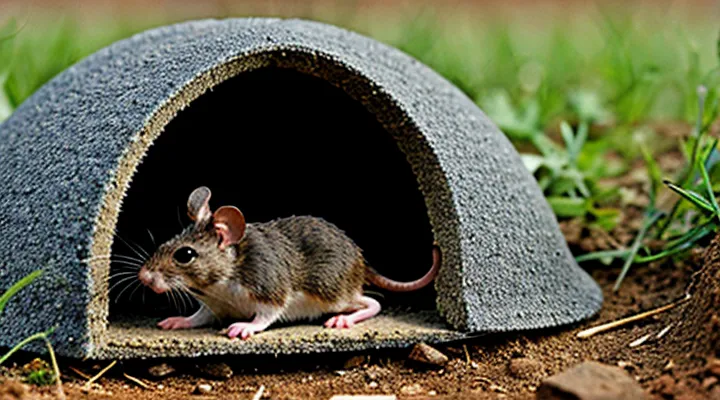
Understanding «Burrow» in the Context of Mice
General Definition of «Burrow»
A burrow is a subterranean passage or chamber excavated by an animal for shelter, protection, and nesting. It typically consists of a network of tunnels that may branch into multiple openings, allowing escape routes and ventilation. The structure often includes a deeper, insulated zone where offspring are reared and food is stored.
Key characteristics of a burrow:
- Constructed by digging into soil, sand, or loose substrate.
- Provides a stable microclimate, maintaining temperature and humidity.
- Offers concealment from predators and harsh environmental conditions.
- May feature separate sections for entry, resting, and waste disposal.
Burrows are found across diverse taxa, including rodents, insects, and reptiles, each adapting the basic design to meet species‑specific needs.
Specific Terminology for Mouse Burrows
Mice construct underground shelters that biologists refer to as burrows. Within this category, several specific terms describe distinct components of the structure.
- Burrow – the entire system of tunnels and chambers excavated by a mouse.
- Nest – a chamber lined with soft material where the mouse rests, breeds, and stores food.
- Tunnel – a narrow passage connecting chambers, often extending several meters from the entrance.
- Lair – a deeper, more protected chamber used for rearing young or escaping predators.
- Gallery – a horizontal passage that may link multiple burrows or provide access to surface foraging routes.
- Den – a shallow, temporary refuge near the entrance, typically used for short stays.
Each term reflects a functional aspect of the mouse’s subterranean habitat. Researchers use this terminology to differentiate between the structural elements observed in field studies and laboratory settings. Accurate labeling facilitates comparative analysis of species’ nesting behavior, ecological impact, and adaptation strategies.
The Anatomy of a Mouse Burrow
Entrance and Exit Points
Mice construct subterranean chambers that serve as shelters, food stores, and breeding sites. Each burrow includes one or more openings that function as both ingress and egress. These passages are deliberately positioned to optimize safety, ventilation, and access to foraging areas.
The primary entrance is typically a shallow, tapered tunnel leading from the surface to the nest chamber. Its diameter matches the mouse’s body size, allowing rapid entry while limiting predator intrusion. Soil at the mouth is often reinforced with compacted earth or leaf litter, creating a stable lip that reduces collapse risk.
Secondary exits, when present, are located laterally or deeper within the network. They provide alternative routes for escape and facilitate airflow, preventing the buildup of carbon dioxide and humidity. These auxiliary openings are narrower and may be concealed by vegetation or debris, enhancing concealment.
Key characteristics of entrance and exit points:
- Size alignment – tunnel width approximates the mouse’s shoulder breadth, ensuring efficient movement.
- Structural reinforcement – compacted soil or fibrous material stabilizes the opening’s rim.
- Strategic placement – primary opening faces away from prevailing predator pathways; secondary openings disperse in different directions.
- Ventilation function – multiple exits create cross‑drafts that refresh interior air.
- Camouflage – surface concealment through natural cover reduces detection.
By integrating these design elements, mice maintain secure, functional burrow systems that support survival and reproductive success.
Tunnels and Passageways
Mice create extensive underground networks that serve as both shelter and foraging routes. These systems consist of primary chambers where food is stored and offspring are reared, connected by a series of narrow tunnels. The tunnels typically measure 2–3 cm in diameter, allowing a mouse to move swiftly while limiting predator access. Soil composition influences tunnel stability; loose, moist earth supports smooth excavation, whereas compacted substrates require reinforcement with plant fibers or shredded material.
Key characteristics of mouse tunnel systems include:
- Branching pattern: Main tunnels diverge into secondary passages, forming a labyrinth that maximizes coverage of the surrounding area.
- Ventilation: Intersections are positioned to promote airflow, reducing humidity and preventing mold growth.
- Escape routes: Secondary passages often terminate at shallow exits, providing rapid egress if a predator approaches.
- Structural reinforcement: Mice line walls with saliva‑mixed debris, increasing cohesion and reducing collapse risk.
Passageways serve multiple functions beyond movement. They act as conduits for scent trails, allowing individuals to communicate territorial boundaries. The network also facilitates temperature regulation; deeper sections maintain a constant 20–22 °C, shielding occupants from surface temperature fluctuations. Seasonal adjustments occur as mice expand or contract tunnels to accommodate changing food availability and reproductive cycles.
Overall, the subterranean architecture of a mouse’s home demonstrates efficient use of limited space, combining protection, resource distribution, and environmental control within a compact, self‑maintaining system.
Nesting Chambers
Nesting chambers are the innermost sections of a mouse’s underground dwelling. Constructed from compacted soil, plant material, and occasional debris, these compartments provide a stable microenvironment that protects against temperature fluctuations and predators.
The primary functions of nesting chambers include:
- Thermal regulation – dense insulation maintains a relatively constant temperature.
- Reproduction – females build nests within the chambers to raise litters, ensuring access to food and safety.
- Food storage – small caches of seeds, grains, or insects are kept nearby for quick consumption.
Structural design typically features a rounded shape with smooth walls, reducing the risk of collapse. Entrances connect the chambers to larger tunnels, allowing swift escape routes while keeping the interior concealed.
Material selection reflects availability and durability. Fine soil offers cohesion, while shredded vegetation adds softness, creating a comfortable bedding layer for newborns. Regular maintenance, such as adding fresh material and removing waste, preserves chamber integrity throughout the breeding season.
Storage Areas
A mouse constructs an underground dwelling composed of multiple chambers, each serving a specific purpose. Among these, designated storage zones retain food and nesting material, ensuring survival during periods of scarcity.
Typical storage zones include:
- Food cache chamber – a sealed compartment located near the entrance, stocked with seeds, grains, and insects.
- Nest chamber – a lined space filled with shredded plant matter and fur, providing insulation and comfort.
- Secondary reserve pocket – a smaller cavity branching from the main tunnel, used for temporary hoarding of excess provisions.
These zones are strategically positioned to balance accessibility with protection from predators and moisture. The separation of food and nesting areas reduces contamination risk, while multiple caches distribute resources throughout the burrow, decreasing the impact of localized loss. The architectural arrangement reflects evolutionary optimization for efficient resource management within the mouse’s subterranean habitat.
Factors Influencing Burrow Construction
Soil Type and Substrate
Mice construct their underground dwellings in soils that provide structural stability, drainage, and protection from predators. The choice of substrate depends on particle size, cohesion, and moisture retention, which together determine tunnel integrity and ease of excavation.
- Sandy soil – large particles, high permeability, low cohesion; suitable for shallow burrows where rapid drainage prevents flooding but may collapse without reinforcement.
- Loamy soil – balanced mix of sand, silt, and clay; offers moderate cohesion and drainage, supporting deeper, more complex tunnel networks.
- Clayey soil – fine particles, high cohesion, low permeability; creates strong, stable tunnels but risks water accumulation and reduced oxygen flow.
- Organic-rich substrate – leaf litter, compost, or humus; provides soft material for easy digging and abundant food resources, often layered over mineral soil.
Effective burrow construction combines a primary structural layer—typically loam or a sand‑clay blend—with an upper layer of organic matter that eases excavation and supplies nutrition. Moisture content must remain within optimal ranges (10–20 % for loam, 5–15 % for sand) to preserve tunnel shape without excessive collapse or saturation. Selecting the appropriate soil type and substrate composition directly influences the durability and habitability of a mouse’s underground residence.
Availability of Materials
Mice construct subterranean chambers commonly referred to as burrows or nests. The structural integrity of these tunnels depends on the immediate supply of suitable substrates.
Soil composition determines the feasibility of excavation. Cohesive loam, fine sand, and loose leaf litter provide the necessary balance of stability and workability. In regions where compacted clay predominates, mice often supplement the burrow walls with shredded plant material or animal fibers to prevent collapse.
Seasonal variations affect material accessibility. Spring and early summer bring abundant vegetation, increasing the availability of grasses, twigs, and moss for lining. Autumn supplies fallen leaves and bark, while winter reduces organic inputs, prompting reliance on pre‑collected debris.
Human activities influence resource distribution. Agricultural tillage exposes fresh soil layers, enhancing excavation conditions. Urban landscaping introduces artificial substrates, such as mulch or synthetic fibers, which some populations incorporate into their dwellings.
Key material categories and typical sources:
- Mineral substrate – native soil, sand, or clay, excavated directly.
- Organic lining – grasses, leaves, twigs, moss, collected from surrounding flora.
- Supplementary reinforcement – animal hair, feathers, or synthetic fibers, obtained from nests, waste, or human refuse.
Availability of these components dictates burrow depth, complexity, and durability across habitats.
Environmental Conditions
A mouse’s underground dwelling, often called a burrow, functions as a tightly regulated microhabitat. The structure provides shelter, breeding space, and a refuge from predators, and its viability depends on precise environmental parameters.
- Temperature: The interior typically remains 2–5 °C below surface ambient temperature, preventing overheating in summer and excessive cooling in winter. Thermal stability is achieved through soil insulation and limited exposure to external air currents.
- Humidity: Relative moisture levels hover between 55 % and 70 %. Adequate humidity prevents desiccation of skin and fur while inhibiting mold growth that could compromise food stores.
- Soil composition: Loose, well‑aerated loam or sandy loam allows easy excavation and structural integrity. High clay content impedes digging and reduces ventilation, whereas excessive gravel creates unstable tunnel walls.
- Ventilation: Small entrance shafts and auxiliary tunnels generate passive airflow, maintaining oxygen levels above 19 % and expelling carbon dioxide buildup.
- Light exposure: Minimal penetration of sunlight preserves darkness, essential for circadian regulation and predator avoidance.
- Predation pressure: Burrow depth, typically 15–30 cm, and the presence of multiple escape routes diminish vulnerability to snakes, owls, and terrestrial mammals.
These conditions collectively sustain the burrow’s functionality, ensuring the mouse can reproduce, store food, and survive seasonal fluctuations.
Predation Pressure
Predation pressure refers to the cumulative threat posed by natural enemies that influences mouse behavior, physiology, and habitat use. High predator density forces mice to allocate time and energy to concealment, rapid escape, and vigilance, thereby shaping the dimensions and complexity of their underground shelters.
The structure of a mouse burrow reflects this selective pressure. Burrows located in areas with frequent predator activity tend to be deeper, contain multiple escape tunnels, and feature narrow, camouflaged entrances. Conversely, populations experiencing low predation risk often construct shallow, single‑entrance systems that prioritize ease of access over concealment.
Terminology for these subterranean retreats varies with ecological context. When predation is intense, the shelter is frequently described as a “refuge tunnel” or “escape burrow,” emphasizing its defensive function. In environments where predators are scarce, the same structure may be termed a “nest chamber” or simply a “run,” highlighting its role in reproduction and foraging. This lexical distinction mirrors the functional shift imposed by predator presence.
Researchers use the correlation between predation pressure and burrow design to infer predator density in unobservable habitats. Measurements of tunnel depth, entrance concealment, and the number of auxiliary exits serve as indirect indicators of the local threat landscape, aiding in population monitoring and habitat management.
Types of Mouse Burrows
Simple Excavations
Mice construct underground homes commonly referred to as nests, lairs, or burrows. These structures consist of a primary tunnel leading to a chamber where food is stored and offspring are reared. The entrance typically opens to the surface, allowing quick escape from predators.
Simple excavations begin with a single passage dug by the mouse’s incisors and forepaws. Soil is loosened, carried backward, and deposited in a small spoil heap near the opening. The tunnel rarely exceeds 30 cm in length and 5 cm in diameter, sufficient for a mouse to move comfortably. Depth ranges from 10 cm to 30 cm, depending on soil compactness and moisture.
Key features of basic mouse burrows:
- Single straight or gently curved tunnel.
- One or two shallow side chambers for nesting material.
- Minimal reinforcement; walls remain loose soil.
- Spoil pile positioned at the entrance for camouflage.
These modest tunnels provide shelter, temperature regulation, and protection while requiring limited energy expenditure. Their simplicity reflects the mouse’s adaptation to diverse environments and rapid reproductive cycles.
Complex Networks
Mice construct underground dwellings that consist of interconnected tunnels and chambers. The collective term for such a structure is a burrow system, also described as a tunnel network or nest complex.
In the framework of complex networks, a burrow system maps naturally onto a graph. Each chamber functions as a node, while each tunnel acts as an edge linking two nodes. This representation permits quantitative analysis of structural properties such as node degree, path length, and clustering coefficient.
Network metrics reveal ecological characteristics:
- Degree distribution identifies chambers with many connections, indicating central hubs for activity.
- Average shortest path length measures the efficiency of movement between distant chambers.
- Clustering coefficient quantifies the prevalence of triangular connections, reflecting localized complexity.
- Modularity detects sub‑communities within the burrow, such as nesting zones separate from foraging tunnels.
Applying these metrics clarifies how information, parasites, or resources propagate through the burrow. High‑degree nodes accelerate transmission, while modularity can contain spread within specific sections. Moreover, comparing burrow graphs across species highlights evolutionary adaptations in spatial organization.
The graph‑based approach also supports simulations of population dynamics. By assigning occupancy probabilities to nodes, models can predict occupancy patterns, reproductive success, and vulnerability to environmental disturbances.
Overall, treating mouse underground dwellings as complex networks transforms a biological structure into a mathematically tractable system, enabling precise assessment of connectivity, resilience, and functional behavior.
Communal Burrows
Communal burrows are underground networks shared by multiple individuals of the same species, typically small mammals such as mice, voles, and ground squirrels. These systems consist of intersecting tunnels, nesting chambers, and escape routes that extend several meters below the surface.
The primary functions of communal burrows include:
- Providing shelter from predators and extreme weather.
- Maintaining stable temperature and humidity levels.
- Facilitating social interaction and cooperative breeding.
- Allowing efficient foraging by creating multiple entry points to surrounding food sources.
Species that habitually construct communal burrows exhibit specific adaptations. For example, the house mouse (Mus musculus) develops complex chambers for nurseries, while the prairie vole (Microtus ochrogaster) expands existing tunnels to accommodate extended family groups. In each case, the burrow’s architecture reflects the species’ social structure and ecological niche.
Construction proceeds in stages. Initial excavation creates a primary tunnel, followed by lateral branches that serve as auxiliary exits. Nesting chambers are reinforced with plant material and shredded fur, and waste is expelled through dedicated shafts to preserve hygiene. Periodic maintenance, such as clearing debris and reinforcing walls, ensures long‑term stability.
Benefits of communal living extend beyond individual protection. Shared burrows reduce the energetic cost of digging, enable rapid communication of alarm signals, and increase reproductive success by providing secure rearing sites for offspring. Studies show that colonies occupying well‑maintained burrows experience higher survival rates compared to solitary dwellers.
In summary, communal burrows represent a sophisticated survival strategy, combining structural engineering with social cooperation to meet the environmental challenges faced by small terrestrial mammals.
Temporary Shelters
Mice construct temporary shelters to escape predators, regulate temperature, and rear offspring. These structures are typically shallow excavations in soil or soft substrate, lined with shredded plant material, fur, and debris. The resulting cavity provides immediate protection while remaining easy to abandon when conditions change.
Key characteristics of these shelters include:
- Depth of 5–15 cm, sufficient to conceal the animal but shallow enough for rapid escape.
- Entrance positioned at a low angle, allowing quick entry and exit.
- Interior packed with soft bedding to retain heat and moisture.
- Walls reinforced with compacted soil or leaf litter to prevent collapse.
Mice often relocate shelters seasonally. In autumn, they may deepen existing burrows to store food, while in spring they create new, lighter nests near abundant vegetation. The transient nature of these dwellings minimizes energy expenditure and reduces the risk of detection by predators that track permanent sites.
Materials for construction are opportunistic. Grass stems, dried leaves, and fungal mycelium are common, providing insulation and structural support. When suitable soil is unavailable, mice may use crevices in rocks, gaps beneath logs, or abandoned insect tunnels, adapting the same principles of concealment and ease of abandonment.
Overall, temporary shelters serve as flexible, low‑maintenance habitats that enable mice to respond swiftly to environmental fluctuations and predation pressure.
The Purpose and Importance of a Mouse Burrow
Protection from Predators
Mice construct underground tunnels that serve as shelters against a wide range of predators. The architecture of these tunnels includes narrow entrances, steeply sloping passages, and multiple exit routes, all of which impede the approach of larger hunters such as snakes, owls, and foxes. By situating the main nesting chamber several centimeters below the surface, mice reduce the likelihood of detection by sight‑based predators.
Key defensive characteristics of the mouse burrow:
- Limited opening width – restricts entry to animals of comparable size, preventing larger predators from passing through.
- Complex network of branches – creates alternative escape paths, allowing rapid retreat when a threat is sensed.
- Depth of nesting chamber – places the core living area below the reach of surface temperature fluctuations and surface‑dwelling hunters.
- Camouflaged soil cover – disguises the entrance, lowering visual cues for predators that hunt by sight.
These structural adaptations collectively enhance survival odds by delaying or denying predator access, thereby securing the mouse’s primary refuge.
Regulation of Temperature
A mouse’s underground dwelling—commonly referred to as a burrow or nest—maintains a relatively stable microclimate that buffers external temperature fluctuations. Soil insulation, limited airflow, and the compact geometry of the tunnel system collectively reduce heat loss during cold periods and limit heat gain when ambient temperatures rise.
Physiological adjustments in the animal complement the passive thermal stability of the burrow:
- Vasoconstriction reduces peripheral blood flow, conserving core heat.
- Non‑shivering thermogenesis via brown adipose tissue generates metabolic heat without muscular activity.
- Behavioral shivering increases heat production when ambient conditions drop sharply.
Environmental modifications implemented by the mouse enhance temperature control:
- Accumulation of shredded plant material creates an insulating layer on the burrow floor.
- Strategic placement of entrance shafts at varying depths exploits temperature gradients within the soil profile.
- Periodic closure of secondary tunnels limits convective airflow, preserving internal warmth.
These combined strategies enable the rodent to sustain optimal body temperature while occupying its subterranean habitat.
Raising Offspring
Mice construct a subterranean chamber, commonly referred to as a nest or burrow, to house their young. The structure consists of compacted soil and shredded plant material, providing insulation and protection from predators.
Gestation lasts approximately 19–21 days, after which a litter of 4–8 pups is born blind and hairless. The mother assumes exclusive responsibility for:
- Keeping the nest clean and warm by rearranging bedding
- Feeding pups with milk rich in proteins and fats
- Stimulating development through regular grooming
- Maintaining a temperature of 30–32 °C within the chamber
Pup development follows a predictable schedule. By day 10, eyes open; by day 14, fur appears; by day 21, solid food is introduced, and the young become independent of maternal milk. The mother gradually reduces nursing frequency, encouraging self‑feeding.
Successful rearing depends on the integrity of the burrow. Adequate depth protects against temperature fluctuations, while sufficient bedding ensures moisture regulation. Any compromise—such as exposure to drafts or contamination—can increase mortality rates among the offspring.
Food Storage
Mice construct underground chambers that serve multiple functions, including nesting, waste disposal, and food preservation. Within this complex, a dedicated compartment is allocated for hoarding supplies. Researchers refer to this area as the “larder chamber” or simply the “food cache.”
The larder chamber is typically situated near the entrance of the burrow, allowing quick access while maintaining a degree of separation from sleeping quarters. Its walls are lined with soft material—such as shredded plant fibers or mouse fur—to protect delicate seeds and grains from moisture and mold.
Common items stored in the cache include:
- Seeds from grasses and cereals
- Nuts and kernels
- Dried insects
- Small pieces of fruit
Storing food enables mice to endure periods of scarcity, reduces foraging exposure to predators, and supports reproductive cycles by ensuring a steady nutrient supply. The arrangement of the cache reflects an instinctive optimization of space, temperature, and humidity, illustrating the species’ adaptive engineering within its subterranean home.
Distinguishing Mouse Burrows from Other Animal Habitats
Similarities with Other Rodent Burrows
Mice construct underground chambers that share several structural and functional traits with the nests of other rodents. Both types of burrows provide protection from predators, regulate temperature, and maintain humidity levels suitable for rearing young. The architecture typically includes a main tunnel leading to one or more side chambers, a pattern also observed in vole, gerbil, and ground‑squirrel burrows.
Key commonalities include:
- Entrance design – narrow openings that minimize exposure while allowing rapid escape.
- Nest chamber – insulated space lined with plant material, fur, or shredded bedding.
- Ventilation – secondary shafts or shallow tunnels that facilitate airflow and reduce carbon dioxide buildup.
- Depth – placement at a depth that balances soil stability with ease of excavation, often ranging from 10 to 30 cm for small rodents and deeper for larger species.
These shared features reflect convergent evolutionary solutions to similar ecological pressures, demonstrating that burrow construction follows a consistent set of principles across diverse rodent families.
Key Differences for Identification
Rodents construct distinct underground habitats that can be distinguished by measurable characteristics. Recognizing these traits enables accurate field identification, informs ecological studies, and guides effective management.
The primary attributes separating one type of mouse dwelling from another include:
- Entrance diameter: narrow (≤ 2 cm) openings indicate solitary chambers; wider (≥ 4 cm) entrances suggest communal systems.
- Tunnel depth: shallow networks (10–20 cm below surface) are typical of temporary shelters; deep tunnels (30 cm +) reflect permanent burrows.
- Chamber arrangement: single‑room structures lack internal partitions, whereas multi‑room burrows contain branching chambers for nesting, food storage, and escape routes.
- Soil displacement volume: minimal displaced soil (small mounds) accompanies brief excavations; extensive spoil heaps signal long‑term excavation activity.
- Proximity to vegetation: burrows located directly beneath dense cover provide protection and humidity, while those in open ground expose occupants to temperature fluctuations.
- Evidence of activity: fresh gnaw marks, scent trails, and recent droppings denote active use; weathered signs indicate abandonment.
These criteria, applied systematically, allow practitioners to differentiate between temporary hideouts, breeding nests, and established burrow systems without ambiguity.
Mouse Burrows in Human Environments
Identification of Infestations
Mice construct underground chambers that serve as nesting sites, commonly referred to as burrows or lairs. Recognizing an active infestation begins with observable evidence at these locations.
Typical indicators include:
- Fresh gnaw marks on wood, plastic, or wiring
- Small piles of shredded paper, fabric, or insulation
- Dark, granular droppings along walls, ceilings, or near food sources
- Odor of urine or a musky scent, especially in confined spaces
- Visible tracks in dust, flour, or soft flooring
Inspection methods rely on systematic examination of potential entry points, such as gaps around pipes, vents, and foundation cracks. Tools like flashlights, magnifying lenses, and infrared cameras enhance detection of hidden activity. Trapping devices placed near suspected burrow entrances provide confirmation of occupancy.
Effective control requires sealing all openings larger than a quarter inch, removing food attractants, and deploying appropriate bait stations or snap traps. Monitoring after intervention ensures that no new burrows develop and that the population remains suppressed.
Impact on Structures
Mice construct underground tunnels that serve as their primary shelter. These passages intersect soil layers, creating voids that alter the physical integrity of the ground. When a network of tunnels expands beneath a building’s foundation, the following effects may occur:
- Reduced load‑bearing capacity of the soil, leading to settlement or uneven sinking of floors.
- Disruption of drainage pathways, causing water accumulation and increased moisture content around structural elements.
- Formation of cavities that compromise the stability of retaining walls and footings.
- Accelerated erosion of surrounding earth, weakening support for adjacent structures.
In agricultural settings, extensive tunnel systems can diminish soil cohesion, making fields prone to collapse under heavy equipment. In urban environments, the presence of mouse tunnels beneath sidewalks and roadways may result in surface depressions and cracks. Mitigation strategies include regular inspection of foundation soils, installation of physical barriers, and targeted pest‑control measures to limit tunnel proliferation.
Ecological Role of Mouse Burrows
Soil Aeration
Soil aeration refers to the movement of air through the earth’s matrix, achieved by the presence of voids, channels, and loosely packed particles. These pathways allow oxygen to reach root systems, microorganisms, and any organisms occupying subterranean spaces. Aerated soil exhibits lower bulk density, improved water infiltration, and reduced accumulation of toxic gases.
For the underground dwelling of a mouse—commonly called a tunnel or burrow—adequate aeration influences several critical factors. The air-filled channels within the surrounding soil maintain a stable temperature, prevent excess moisture buildup, and supply the animal with breathable air. Moreover, aerated soil supports the structural integrity of the tunnel walls, reducing collapse risk caused by compaction or waterlogged conditions.
- Enhanced oxygen availability for the mouse and its microbiome.
- Faster drainage of rainwater, limiting flooding inside the tunnel.
- Lowered soil pressure on tunnel walls, decreasing deformation.
- Promotion of beneficial microbial activity that decomposes organic waste within the burrow.
Proper management of soil aeration, through practices such as mulching, light tillage, or the addition of organic matter, directly improves the habitability and durability of mouse tunnels.
Creation of Microhabitats
Mice construct underground chambers that serve as compact ecosystems, each tailored to specific physiological needs. The primary tunnel leads to a central nest, often termed a den, where bedding, food caches, and waste are segregated into distinct zones.
The creation of microhabitats within the den follows predictable patterns:
- Thermal chamber: Lined with shredded plant material, this area retains heat, stabilizing temperature during cold periods.
- Moisture pocket: Positioned near the tunnel entrance, it collects condensation, providing humidity for skin and respiratory health.
- Food storage alcove: Isolated from bedding, it reduces contamination and preserves cached seeds and insects.
- Waste compartment: Located at the periphery, it isolates excreta, limiting pathogen buildup.
Construction begins with excavated soil compacted to form walls that insulate against external fluctuations. Mice then deposit soft fibers, creating a substrate that enhances insulation and supports fungal growth beneficial to nutrient cycling. The spatial arrangement of these zones creates a self‑regulating environment, allowing the animal to maintain homeostasis without external intervention.