
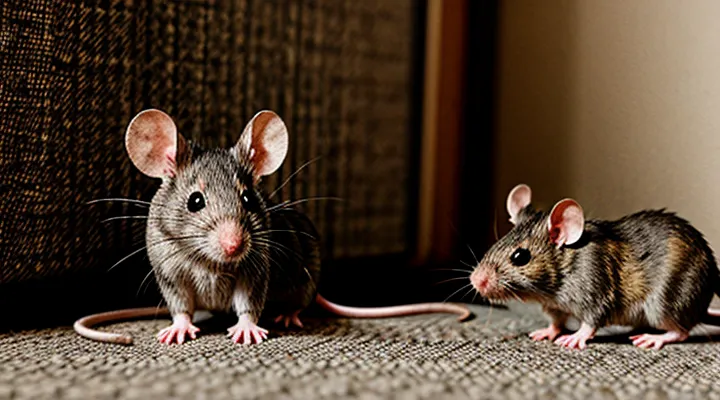
The Silent World of Rodents: More Than Meets the Ear
Ultrasonic Communication: A Hidden Language
Mice and rats emit vocalizations above the range of human hearing, typically between 30 kHz and 110 kHz. These ultrasonic calls convey information about social status, reproductive readiness, territorial boundaries, and predator alerts. The structure of each call—frequency modulation, duration, and repetition pattern—forms a species‑specific code that can be decoded by conspecifics through their highly sensitive cochlear hair cells.
Detection relies on specialized equipment. Common tools include:
- Condenser microphones with flat response up to 150 kHz, paired with low‑noise preamplifiers.
- High‑speed digital recorders capable of sampling rates of 250 kHz or greater to preserve signal fidelity.
- Software packages that perform spectrographic analysis, allowing researchers to isolate individual syllables and measure parameters such as peak frequency and call rate.
Physiological studies show that rodents possess a middle‑ear ossicle arrangement tuned for rapid transmission of high‑frequency vibrations, while the auditory brainstem contains nuclei specialized for processing brief ultrasonic bursts. Behavioral experiments demonstrate that playback of specific call types can induce mating behavior, aggression, or avoidance, confirming the functional relevance of the hidden language.
Monitoring ultrasonic communication provides insight into colony health, stress levels, and the efficacy of environmental interventions. Early detection of abnormal call patterns can signal disease onset or social disruption, enabling timely corrective measures.
Auditory Range of Humans vs. Rodents
Humans detect sounds from roughly 20 Hz to 20 kHz, with peak sensitivity between 2 kHz and 5 kHz. Above 15 kHz, sensitivity declines sharply, and most adults cannot perceive frequencies beyond 18 kHz.
Rodents, including mice and rats, hear from about 1 kHz to 100 kHz. Peak sensitivity lies near 40 kHz for mice and 50 kHz for rats, extending well into the ultrasonic range that humans cannot access.
- Human range: 20 Hz – 20 kHz (peak 2–5 kHz)
- Mouse range: 1 kHz – 100 kHz (peak ~40 kHz)
- Rat range: 1 kHz – 100 kHz (peak ~50 kHz)
The disparity explains why many rodent vocalizations, alarm calls, and social chirps remain inaudible without specialized equipment. Recording devices that capture ultrasonic frequencies are essential for accurate identification and analysis of these sounds.
Common Mouse Sounds and Their Meanings
Squeaks: Distress, Threat, or Social Interaction
Squeaks serve as primary acoustic channels for mice and rats, conveying urgent information about the animal’s internal state and external environment. Researchers and field observers rely on these brief vocalizations to assess welfare, detect predator presence, and interpret social dynamics within colonies.
Distress squeaks emerge when individuals encounter pain, capture, or confinement. They display high‑frequency peaks (typically 30–80 kHz) with rapid onset and short duration, often accompanied by irregular amplitude modulation. The acoustic signature intensifies as the stressor persists, providing a reliable indicator of acute discomfort.
Threat squeaks function as alarm calls directed toward conspecifics and potential rivals. These vocalizations occupy a slightly lower frequency band (20–50 kHz) and feature a steady, repetitive pattern that can persist for several seconds. Their consistent rhythm alerts nearby rodents to danger and can provoke escape or defensive behaviors.
Social interaction squeaks facilitate affiliative exchanges, such as courtship, nest building, or hierarchical negotiation. They are characterized by moderate frequencies (25–60 kHz) with smooth tonal contours and variable pitch sweeps. The modulation complexity often correlates with the intensity of the social context, enabling nuanced communication between individuals.
Key acoustic cues for differentiating squeak types:
- Frequency range: distress > social > threat
- Temporal pattern: irregular bursts (distress), steady repeats (threat), smooth sweeps (social)
- Duration: brief (< 100 ms) for distress, extended (≥ 500 ms) for threat, variable for social
Accurate interpretation of these vocal signals enhances monitoring protocols, informs experimental design, and supports humane management of laboratory and wild rodent populations.
Chirps: Playfulness and Mating Calls
Chirps are brief, high‑frequency vocalizations produced by both mice and rats during social interaction. They occur when individuals engage in spontaneous play, signaling a non‑aggressive environment, and they appear in courtship sequences to attract potential mates.
Key acoustic and behavioral features include:
- Frequency range typically between 20 and 80 kHz, exceeding the human hearing threshold.
- Duration of 10–50 ms, allowing rapid succession in group settings.
- Modulation patterns that differ between playful exchanges (steady tone) and mating calls (increased pitch and rhythm).
Researchers use ultrasonic detectors to capture chirps, then analyze spectrograms for frequency shifts that indicate emotional state or reproductive readiness. Monitoring these sounds provides insight into social hierarchy, stress levels, and breeding cycles without invasive observation.
Whistles: Long-Distance Communication
Whistles serve as the primary acoustic channel for mice and rats when transmitting information over distances that exceed the range of low‑frequency vocalizations. These sounds are produced by rapid airflow through a narrowed oral passage, generating a narrow‑band signal with peak frequencies between 30 and 60 kHz. The high frequency reduces attenuation by foliage and ground absorption, allowing individuals separated by several meters to exchange signals without visual contact.
The functional repertoire of whistle calls includes:
- Territory advertisement: a series of short, repetitive bursts that signal occupancy of a burrow or foraging patch.
- Mate attraction: elongated, modulated whistles emitted by sexually mature males during the breeding season.
- Alarm signaling: abrupt, high‑amplitude whistles that alert conspecifics to predator presence, prompting immediate evasive behavior.
Detection relies on the specialized cochlear region tuned to ultrasonic ranges. Researchers employ ultrasonic microphones and spectrographic analysis to differentiate whistle patterns from other rodent vocalizations. Accurate identification of whistle parameters—duration, frequency sweep, and repetition rate—enables precise monitoring of population dynamics and social structure.
Listening to whistle communication yields several practical benefits:
- Early indication of breeding activity, informing pest‑management timing.
- Real‑time assessment of stress levels within colonies, facilitating humane handling protocols.
- Insight into habitat use and movement corridors, supporting ecological surveys and conservation planning.
By focusing on the ultrasonic whistle component, investigators can capture a comprehensive acoustic profile of rodent communities, enhancing both scientific understanding and applied management strategies.
Buzzing: Aggression and Warning Signals
Buzzing sounds produced by mice and rats serve as clear indicators of aggression and imminent threat. The vocalization consists of rapid, high‑frequency pulses lasting 0.03–0.07 seconds each, with a fundamental frequency between 12 and 20 kHz. Pulse trains occur at rates of 8–15 Hz, creating a continuous, harsh buzz that differs from ultrasonic chirps used in neutral communication.
These calls appear during territorial disputes, confrontations over food, or when an individual perceives a predator. Observers can distinguish buzzing from other vocalizations by noting:
- Persistent, broadband noise rather than tonal whistles.
- Elevated amplitude, often 5–10 dB louder than routine squeaks.
- Synchronization with aggressive postures such as raised fur, tail flicking, and lunging.
Recognition of buzzing assists researchers in mapping social hierarchies within rodent colonies and enables pest‑control professionals to identify escalating conflict zones. Recording equipment tuned to the 12–20 kHz range captures the full acoustic profile, facilitating automated detection algorithms that flag aggressive episodes in real time.
Understanding the function of buzzing enhances interpretation of rodent behavior, informs experimental design, and supports humane management strategies by providing an early warning of hostile interactions.
Common Rat Sounds and Their Meanings
Bruxing (Teeth Grinding): Contentment or Stress
Bruxing, the repetitive grinding or clenching of teeth, appears in two primary behavioral states. In one state, the animal exhibits relaxed muscles, steady breathing, and occasional soft chewing sounds that accompany contented grooming. In the other, the animal shows heightened muscle tension, rapid respiration, and louder, irregular grinding that coincides with agitation or environmental threats.
Physiological markers differentiate the two states. Contented bruxing correlates with low cortisol levels, stable heart rate, and normal mandibular muscle tone. Stress‑related bruxing aligns with elevated cortisol, increased heart rate, and hyperactive masseter activity. Auditory recordings capture these differences: soft, rhythmic clicks versus harsh, erratic grinding bursts.
Researchers studying rodent vocalizations can apply the same diagnostic framework to interpret chewing sounds. By cross‑referencing acoustic patterns with observed behavior, investigators distinguish between benign mastication and stress‑induced grinding, enhancing the accuracy of behavioral assays.
Practical steps for observers:
- Record chewing sounds with a calibrated microphone.
- Monitor concurrent body language: relaxed posture versus defensive stance.
- Measure physiological indicators, such as heart rate or cortisol, when possible.
- Classify grinding episodes based on sound intensity and rhythm consistency.
Accurate identification of bruxing type informs welfare assessments, improves experimental reliability, and clarifies the relationship between auditory signals and emotional states in small mammals.
Chattering: Excitement or Aggression
Rodent chattering consists of rapid, high‑frequency vocalizations lasting from a fraction of a second to several seconds. The sound often contains a series of short pulses with a dominant frequency between 10 and 30 kHz, sometimes accompanied by audible clicks. In laboratory recordings, chattering appears as a repetitive, rhythmic pattern distinct from ultrasonic squeaks or low‑frequency growls.
When the same species exhibits chattering in a confined environment, the context determines whether the behavior signals excitement or aggression. Indicators of excitement include:
- Presence of food or a novel object.
- Calm body posture, relaxed whiskers, and exploratory movement.
- Vocalizations that increase in rate as the animal approaches the stimulus.
Indicators of aggression involve:
- Confrontation with another individual or perceived threat.
- Tense posture, raised fur, and directed lunges.
- Chattering that escalates in amplitude and is followed by biting or chasing noises.
Distinguishing between these states matters for researchers and pest‑management professionals. Recognizing excitement‑related chattering helps assess welfare, enrichment effectiveness, and environmental enrichment needs. Identifying aggression‑linked chattering alerts handlers to potential fights, informs colony housing decisions, and guides the timing of interventions to prevent injury.
Squealing: Pain or Fear
Rodent squeals are brief, high‑frequency vocalizations that rise sharply in pitch and often exceed 20 kHz. The sound is produced by rapid vibration of the larynx and serves as an immediate alarm signal. When a mouse or rat experiences tissue damage, the squeal typically lasts longer, reaches a higher maximum frequency, and displays a pronounced harmonic structure. In contrast, a fear‑induced squeal is shorter, less harmonic, and may be accompanied by rapid breathing sounds.
-
Pain squeal characteristics
• Duration > 0.3 s
• Peak frequency ≥ 30 kHz
• Strong harmonic series -
Fear squeal characteristics
• Duration ≤ 0.2 s
• Peak frequency ≈ 20–25 kHz
• Minimal harmonics, often mixed with ultrasonic clicks
Identifying the emotional state behind a squeal informs humane handling, improves trap‑design efficacy, and enhances data accuracy in behavioral experiments. Listening to these signals allows researchers and pest managers to distinguish between injury‑related distress and situational anxiety, enabling targeted interventions and better welfare outcomes.
Hissing: Defense Mechanism
Hissing is a rapid, high‑frequency exhalation produced when a mouse or rat feels threatened. The sound typically ranges from 6 to 12 kHz, with a sharp onset and brief duration of 0.2–0.5 seconds. Acoustic analysis shows a dominant frequency peak around 8 kHz, accompanied by a broadband noise component that distinguishes it from vocalizations such as squeaks or chirps.
The behavior serves several defensive functions:
- Signals aggression or readiness to fight, deterring predators and conspecific rivals.
- Creates an auditory barrier that can startle an approaching threat, buying the animal time to flee.
- Communicates distress to nearby group members, prompting collective vigilance.
Recognizing hissing in field recordings requires attention to its spectral profile and temporal pattern. Spectrograms reveal a narrow, high‑frequency band with a steep rise and immediate decay, unlike the harmonic structure of normal calls. Listening to recordings at a sampling rate of at least 44.1 kHz ensures the hissing frequency is captured without distortion. Accurate identification allows researchers to assess stress levels, map territorial boundaries, and evaluate the effectiveness of environmental modifications aimed at reducing rodent aggression.
Purring: Affection and Comfort
Purring in rodents signals emotional state and physiological comfort. When a mouse or rat emits a low‑frequency, continuous vibration, the sound typically accompanies relaxed posture, grooming, or close contact with a conspecific. Researchers identify purring by its steady amplitude, lack of pitch modulation, and duration ranging from a few seconds to several minutes.
The function of purring extends beyond simple expression. It facilitates bonding by reinforcing social proximity, reduces stress hormones in both emitter and receiver, and serves as an indicator of a secure environment. In experimental settings, monitoring purring provides a non‑invasive metric for welfare assessment, allowing rapid detection of changes in group dynamics or response to environmental enrichment.
Key acoustic features for recognition:
- Frequency band: 20–80 Hz, often below the audible range for humans.
- Waveform: smooth, sinusoidal with minimal harmonics.
- Temporal pattern: uninterrupted flow, occasional brief pauses during transitions between activities.
- Contextual cues: presence of nest material, mutual grooming, or quiet ambient conditions.
Listening to purring contributes to a comprehensive understanding of rodent communication, complementing the analysis of squeaks, chirps, and ultrasonic calls that dominate the broader field of mouse and rat sound research.
Why Listen to Rodent Sounds?
Early Detection of Infestations
Early identification of rodent activity relies on acoustic signals that precede visible damage. Mice and rats emit distinctive noises during foraging, nesting, and territorial displays; these sounds appear before droppings, gnaw marks, or structural compromise become evident.
Typical auditory indicators include:
- Soft scratching on insulation or stored goods, reflecting movement through confined spaces.
- High‑pitched squeaks produced during feeding or when juveniles communicate with parents.
- Low, repetitive chattering emitted during social interaction or when a group establishes dominance.
Each pattern correlates with a specific phase of infestation, allowing responders to gauge colony size and growth rate.
Effective monitoring procedures consist of:
- Selecting quiet periods—late night or early morning—when ambient noise is minimal.
- Positioning a sensitive microphone or ultrasonic detector near suspected entry points, walls, or storage areas.
- Recording for intervals of 10–15 minutes, then analyzing frequency ranges: 2–5 kHz for mouse activity, 4–8 kHz for rat vocalizations, and above 20 kHz for ultrasonic communications.
- Comparing recordings against baseline environmental sounds to isolate rodent signatures.
Prompt interpretation of these acoustic cues enables targeted remediation before infestation escalates, reducing property damage and health risks.
Identifying Rodent Species
Acoustic monitoring provides a reliable means to separate rodent taxa without visual contact. Species emit distinct vocalizations that reflect anatomical differences, social behavior, and environmental adaptation.
- House mouse (Mus musculus) – high‑frequency squeaks (15–30 kHz), brief duration (10–30 ms), repetitive patterns during foraging or distress.
- Norway rat (Rattus norvegicus) – lower‑frequency chirps (5–12 kHz), longer pulse (30–80 ms), often paired with ultrasonic clicks during territorial displays.
- Deermouse (Peromyscus maniculatus) – mid‑range trills (10–18 kHz), modulated frequency sweeps, common in nocturnal activity bursts.
- Roof rat (Rattus rattus) – rapid series of ultrasonic whistles (20–35 kHz), high repetition rate, associated with climbing and alarm responses.
Effective identification relies on calibrated microphones capable of capturing both audible and ultrasonic ranges, coupled with spectrographic software that isolates frequency, duration, and pattern. Automated classifiers trained on labeled datasets can assign recordings to species with accuracy exceeding 90 %.
Accurate species discrimination supports pest management, biodiversity assessments, and disease‑vector monitoring by enabling targeted interventions based on the presence of specific rodents.
Assessing Population Size
Acoustic monitoring provides a reliable means to estimate the number of rodents inhabiting a given area. By recording vocalizations, researchers can infer activity levels, identify species, and calculate population density without direct capture.
The assessment process follows several steps:
- Deploy ultrasonic recorders at fixed points covering the habitat.
- Collect continuous audio data for a predetermined monitoring period.
- Apply automated classifiers to separate mouse and rat calls from background noise.
- Count distinct vocal events and assign them to individual animals using temporal spacing criteria.
- Convert call frequency into population estimates through calibrated models that relate call rate to known densities.
Calibration requires reference surveys in which actual counts are obtained alongside acoustic recordings. These data generate regression equations that translate call metrics into animal numbers. Repeating calibration across habitats improves model robustness and accounts for variations in call behavior.
Long‑term monitoring reveals trends in abundance, informs pest management, and supports ecological research on community dynamics. By relying on sound, assessments avoid the biases introduced by trapping and provide continuous, non‑invasive population data.
Understanding Rodent Behavior
Rodent vocalizations provide direct insight into activity patterns, social interactions, and stress levels. Recognizing the specific chirps, squeaks, and ultrasonic bursts emitted by mice and rats allows researchers and pest managers to infer feeding times, mating behavior, and territorial disputes without visual observation.
Mice typically produce high‑frequency clicks during exploratory movement and low‑frequency squeaks when threatened. Rats generate broadband ultrasonic calls during play and grooming, while harsh, low‑tone vocalizations accompany aggressive encounters. Distinguishing these sounds requires calibrated microphones capable of capturing frequencies up to 100 kHz and software that isolates frequency bands for analysis.
Understanding the behavioral context behind each sound enhances decision‑making:
- Exploratory phase: rapid, repetitive clicks → indicates safe environment and active foraging.
- Social bonding: soft ultrasonic trills → signals grooming or courtship, suggesting stable colony dynamics.
- Threat response: abrupt, low‑frequency squeals → denotes predator presence or handling stress, prompting immediate mitigation.
- Aggression: harsh, low‑tone barks → marks dominance contests, useful for monitoring hierarchy shifts.
Accurate interpretation supports humane control strategies, improves laboratory animal welfare, and enriches ecological studies by linking acoustic data to specific behavioral states.
Monitoring Pest Control Effectiveness
Acoustic monitoring provides a direct, quantifiable method for evaluating the success of rodent management programs. By recording and analyzing the characteristic squeaks, chirps, and scurrying noises produced by mice and rats, practitioners can determine whether populations are declining, stable, or rebounding after treatment.
Specific vocal patterns correlate with distinct behaviors: high‑frequency squeaks often signal distress or territorial disputes, while low‑frequency chattering indicates social grooming or feeding activity. A reduction in the frequency and duration of these sounds after an intervention typically reflects decreased rodent presence.
Effective acoustic assessment follows a structured protocol:
- Deploy ultrasonic detectors in target zones before treatment to establish baseline activity levels.
- Conduct recordings at consistent intervals (e.g., nightly for seven days) to capture temporal variations.
- Apply control measures (traps, baits, habitat modification) according to the pest management plan.
- Repeat the recording schedule post‑treatment and compare metrics with the baseline dataset.
- Document environmental variables (temperature, humidity) that may influence sound propagation.
Interpretation relies on statistical comparison of pre‑ and post‑intervention data. A statistically significant drop in call count, average call duration, or peak frequency indicates successful suppression. Persistent or rising acoustic activity suggests treatment failure, prompting reassessment of bait placement, trap density, or environmental sanitation.
Integrating sound‑based surveillance into routine pest control cycles yields objective evidence of efficacy, reduces reliance on visual inspections, and supports regulatory compliance by providing auditable records of intervention outcomes.
How to Recognize Rodent Sounds
Utilizing Sound Detection Devices
Acoustic monitoring of small rodents requires devices capable of capturing frequencies beyond the human hearing range. Modern equipment translates ultrasonic emissions into measurable signals, enabling real‑time observation without visual contact.
Key hardware components include:
- Ultrasonic microphones with response up to 100 kHz, low self‑noise, and directional pickup patterns.
- Portable acoustic loggers that store continuous recordings, support programmable duty cycles, and provide weather‑proof housings.
- Integrated sensor modules combining microphone, pre‑amplifier, and digital converter for remote deployment.
Effective field deployment follows a systematic approach:
- Identify high‑traffic zones such as burrow entrances, feeding stations, or structural gaps.
- Mount devices at heights matching typical rodent vocalization planes, ensuring unobstructed line of sight for sound capture.
- Calibrate sensitivity settings against known reference calls to maintain consistent detection thresholds.
- Connect units to power sources or high‑capacity batteries, and configure data transmission to central storage.
Data handling relies on automated processing pipelines:
- Convert raw waveforms into spectrograms, isolating frequency bands characteristic of mouse and rat vocalizations.
- Apply machine‑learning classifiers trained on labeled call libraries to differentiate species, behavioral contexts, and stress indicators.
- Generate summary reports indicating call frequency, duration, and temporal patterns for immediate decision‑making.
Adopting sound detection technology delivers measurable outcomes: early identification of infestation hotspots, reduction of invasive inspection methods, and enrichment of behavioral research datasets. Continuous acoustic surveillance therefore enhances both pest management efficiency and scientific insight.
Differentiating from Other Household Noises
Rodent vocalizations differ from typical household sounds in frequency, pattern, and location. Mice and rats produce high‑pitched squeaks, ultrasonic chirps, and intermittent scratching that contrast with the low‑frequency hum of appliances, the rhythmic thrum of plumbing, or the irregular creak of building materials.
- Frequency range: Rodent noises often exceed 4 kHz, while HVAC systems, refrigerators, and washing machines stay below 2 kHz. Insect wing beats may reach similar heights but are usually brief and higher than 10 kHz.
- Temporal pattern: Mouse squeaks appear as rapid bursts lasting 0.1–0.3 seconds, repeated irregularly. Rat squeals are longer, up to 1 second, with a distinctive descending pitch. Mechanical devices generate continuous or cyclic sounds with predictable intervals.
- Spatial source: Rodent sounds originate from concealed wall voids, attic insulation, or floor joists. Electrical or plumbing noises can be traced to visible fixtures, and creaking follows structural joints.
Effective discrimination relies on targeted listening techniques. Use a directional microphone or a smartphone app with a spectrum analyzer to visualize sound frequencies; isolate peaks above 4 kHz. Record during quiet periods—late night or early morning—when human activity is minimal. Compare recordings with reference samples of mouse squeaks and rat chatter to confirm identification.
By focusing on frequency, timing, and origin, one can reliably separate rodent vocalizations from the myriad noises that populate a residential environment.
Sound Analysis Techniques
The analysis of murine vocalizations requires precise acoustic measurement and systematic data handling. High‑sensitivity condenser microphones capture ultrasonic emissions up to 100 kHz, while analog‑to‑digital converters sample at rates of 250 kHz or higher to preserve signal integrity. Recordings conducted in acoustically isolated chambers minimize ambient interference.
Preprocessing begins with band‑pass filtering to isolate the relevant frequency range, followed by adaptive noise reduction that removes background hiss without distorting transient components. Segmentation algorithms detect individual calls based on amplitude thresholds and temporal continuity, producing discrete units for further examination.
Feature extraction translates raw waveforms into quantitative descriptors. Common metrics include:
- Spectrograms with 1 ms time bins and 0.5 kHz frequency resolution.
- Mel‑frequency cepstral coefficients (MFCCs) calculated over 20 ms frames.
- Peak frequency, bandwidth, and call duration.
- Harmonic‑to‑noise ratio and spectral entropy.
Analytical techniques apply these features to reveal structure. Fast Fourier Transform (FFT) provides frequency‑domain representations; wavelet transforms resolve time‑varying spectral content; autocorrelation functions assess periodicity. Statistical comparisons employ analysis of variance (ANOVA) and multivariate tests to differentiate call types across experimental conditions.
Classification integrates extracted features with machine learning models. Supervised algorithms such as support vector machines (SVM) and random forests achieve high accuracy when trained on labeled datasets. Unsupervised clustering (k‑means, hierarchical) uncovers natural groupings without prior annotation. Model performance is quantified by cross‑validation accuracy, precision, recall, and area under the ROC curve.
Open‑source and commercial software support the workflow. Notable tools include:
- Praat – waveform visualization, spectrogram generation, and basic annotation.
- MATLAB – custom scripts for FFT, wavelet analysis, and statistical modeling.
- Python libraries (SciPy, librosa, scikit‑learn) – end‑to‑end pipelines from preprocessing to classification.
- Acoustic Research Tool (ART) – specialized for ultrasonic rodent calls, offering batch processing and feature extraction.
Effective sound analysis enables reliable identification of mouse and rat vocalizations, facilitates behavioral interpretation, and supports studies of neurophysiological mechanisms underlying communication.
Practical Applications of Sound Recognition
Targeted Pest Control Strategies
Acoustic monitoring provides real‑time data on rodent presence, allowing control measures to focus on verified activity zones. Distinct vocalizations differentiate species, indicate breeding periods, and reveal movement patterns, creating a precise map of infestation hotspots.
- Acoustic‑triggered traps release when a qualifying squeak or chatter is recorded, eliminating idle operation.
- Bait stations activate during peak vocal activity, synchronizing consumption with heightened foraging drive.
- Exclusion efforts concentrate on entry points identified by persistent noise, directing sealant application where breaches are confirmed.
- Habitat modification targets areas with frequent sound detections, reducing shelter availability through vegetation trimming and debris removal.
- Integrated pest management (IPM) programs incorporate sound data into scheduling, reporting, and evaluation cycles.
Implementation follows a defined workflow: deploy calibrated microphones, establish amplitude and frequency thresholds for target species, record and geo‑tag detections, generate heat maps, and assign control tactics to each zone. Continuous data collection validates efficacy, prompting adjustments without expanding treatment area.
Resulting strategy reduces non‑target exposure, limits chemical usage, and improves cost efficiency. Measurable decline in recorded vocalizations confirms population suppression, providing objective evidence for stakeholders.
Behavioral Studies and Research
Research on rodent vocalizations provides a direct window into the emotional and physiological states of laboratory animals. By recording and analyzing ultrasonic calls, investigators can quantify stress responses, social hierarchy, and disease progression without invasive procedures.
Acoustic data are collected with high‑frequency microphones positioned in home cages or experimental arenas. Signals are digitized, filtered to remove background noise, and segmented into syllable units. Automated classifiers extract parameters such as peak frequency, duration, and modulation pattern, enabling rapid comparison across experimental groups.
Key applications include:
- Monitoring analgesic efficacy: reductions in distress calls correlate with pain relief.
- Evaluating neurodegenerative models: altered call structure precedes motor deficits in mouse models of Parkinson’s disease.
- Assessing social cognition: changes in call exchange patterns reveal deficits in autism‑related mouse strains.
- Screening environmental enrichment: increased call diversity indicates improved welfare.
Longitudinal designs track individuals from juvenile stages through adulthood, revealing developmental trajectories of vocal behavior. Cross‑species comparisons between mice and rats uncover conserved acoustic signatures linked to predator avoidance and mating.
Statistical frameworks such as mixed‑effects models accommodate repeated measures and nested cage effects, ensuring robust inference. Open‑source toolkits (e.g., DeepSqueak, Avisoft) standardize analysis pipelines, facilitating replication across laboratories.
Overall, systematic investigation of rodent sounds integrates behavioral phenotyping with neurobiological insight, advancing both basic science and translational medicine.
Enhancing Rodent Management
Effective rodent control relies on early detection of vocal activity. Mice and rats emit distinct ultrasonic and audible calls that signal breeding, territorial disputes, and foraging. Monitoring these sounds provides a non‑invasive indicator of population density and movement patterns.
Integrating acoustic surveillance with traditional traps reduces unnecessary pesticide use and improves targeting of high‑risk zones. The following actions optimize management programs:
- Deploy ultrasonic detectors near entry points, storage areas, and waste stations.
- Calibrate devices to capture frequencies between 2 kHz and 100 kHz, covering the range of common rodent calls.
- Record and analyze call frequency, duration, and repetition to differentiate species and behavioral states.
- Correlate acoustic data with visual inspections to confirm infestation hotspots.
- Adjust trap placement and bait types based on identified activity zones.
Data‑driven adjustments streamline resource allocation, lower labor costs, and limit environmental impact. Continuous sound monitoring also alerts operators to sudden population surges, enabling rapid response before damage escalates.
Advanced Sound Analysis for Rodent Control
Artificial Intelligence and Machine Learning in Sound Recognition
Artificial intelligence techniques enable automated detection of rodent vocalizations with precision comparable to expert analysts. Systems ingest recordings from laboratory cages, field traps, or acoustic monitoring stations, apply noise‑reduction filters, and convert waveforms into time‑frequency representations such as spectrograms or mel‑frequency cepstral coefficients. These features serve as inputs for supervised learning models that discriminate between species, behavioral states, and health conditions.
Common model families include:
- Convolutional neural networks that learn spatial patterns in spectrogram images.
- Recurrent neural networks and long‑short‑term memory units that capture temporal dependencies in raw audio sequences.
- Transformer‑based architectures that attend to long‑range relationships across frequency bands.
Training pipelines employ balanced datasets, data augmentation (pitch shifting, time stretching), and cross‑validation to prevent overfitting. Evaluation relies on accuracy, precision, recall, and area‑under‑receiver‑operating‑characteristic curves, with thresholds adjusted for real‑time alert systems.
Deployed solutions integrate edge‑computing devices that process audio streams locally, reducing latency and bandwidth usage. Cloud‑based inference services complement field units by aggregating large‑scale datasets for continuous model refinement.
Automated acoustic analysis supports early identification of disease markers, quantifies social interactions, and informs pest‑control strategies by pinpointing activity hotspots. The combination of machine‑learning classifiers and scalable hardware delivers reliable, repeatable monitoring of mouse and rat sounds without human intervention.
Future of Acoustic Rodent Monitoring
Acoustic monitoring of rodents is transitioning from isolated field recordings to integrated, real‑time surveillance networks. Sensors equipped with high‑frequency microphones capture ultrasonic squeaks that human ears cannot detect, while edge‑computing modules process the signals locally, reducing latency and bandwidth demands. Data streams feed directly into centralized platforms where machine‑learning classifiers differentiate species, identify behavioral states, and flag abnormal activity patterns.
Key developments shaping the next generation of rodent sound detection include:
- AI‑driven taxonomy: Convolutional neural networks trained on extensive labeled datasets achieve species‑level accuracy above 95 %, enabling automated inventory without expert intervention.
- Distributed IoT arrays: Battery‑free, solar‑powered nodes communicate via low‑power wide‑area networks, allowing coverage of agricultural fields, warehouses, and urban infrastructure.
- Predictive analytics: Time‑series models extrapolate current vocal activity to forecast infestation peaks, supporting proactive pest‑control scheduling.
- Multi‑modal integration: Fusion of acoustic data with infrared motion sensors, environmental monitors, and RFID tags yields comprehensive behavioral profiles.
Operational benefits extend beyond detection. Early acoustic alerts reduce pesticide application by targeting interventions precisely when rodent populations begin to rise. Continuous monitoring supplies longitudinal datasets that inform ecological research, urban planning, and public‑health strategies. Moreover, remote firmware updates ensure that sensor fleets adapt to emerging species or novel vocalizations without physical retrieval.
Challenges persist. Ambient noise in industrial settings can obscure ultrasonic signatures, requiring advanced denoising algorithms. Regulatory frameworks must address data privacy when monitoring in residential zones. Standardization of recording protocols and metadata conventions remains essential for cross‑study comparability. Addressing these issues will solidify acoustic surveillance as a cornerstone of sustainable rodent management.