
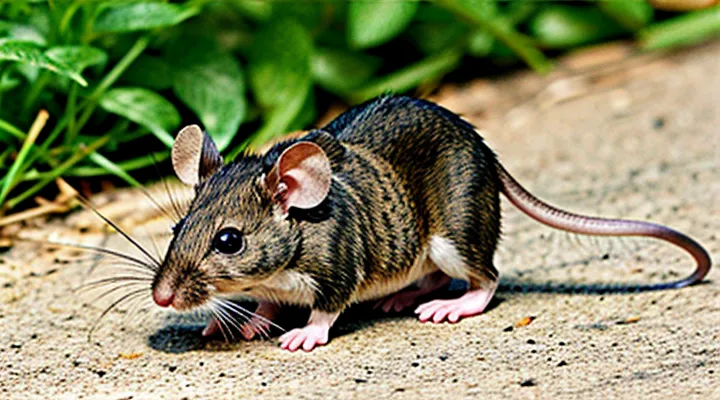
Understanding Mammals
Key Characteristics of Mammals
Warm-Bloodedness (Endothermy)
Mice maintain a constant internal temperature through endothermy, a defining characteristic of mammals. Heat production originates primarily from cellular respiration in mitochondria, where oxidative metabolism converts nutrients into ATP and releases thermal energy.
Key physiological mechanisms include:
- Brown adipose tissue: rich in mitochondria, it generates heat via non‑shivering thermogenesis, especially during cold exposure.
- Vasomotor control: peripheral blood vessels constrict or dilate to conserve or dissipate heat, regulating surface temperature.
- Behavioral adjustments: nesting, huddling, and selection of insulated microhabitats supplement physiological thermoregulation.
Endothermy imposes high metabolic demands; basal metabolic rate in mice exceeds that of similarly sized ectothermic species by several folds. Elevated metabolism ensures rapid enzyme activity, sustained locomotion, and efficient neural processing, supporting the animal’s nocturnal foraging and predator avoidance.
Thermoregulatory efficiency is reflected in the narrow range of core body temperatures (≈ 36–38 °C). Deviations trigger hormonal responses, such as increased thyroid hormone secretion, to adjust metabolic heat output.
Overall, warm‑bloodedness equips the mouse with adaptive flexibility across diverse environments, enabling activity in both temperate and sub‑arctic conditions without reliance on external heat sources.
Hair or Fur
Mice, as placental mammals, possess a dense covering of hair that functions as fur. The integumentary system produces keratinized strands emerging from follicles distributed across the body. These strands serve several physiological roles:
- Insulation: traps air close to the skin, reducing heat loss in cold environments.
- Sensory detection: vibrissae (whiskers) transmit tactile information about nearby objects.
- Protection: shields the epidermis from abrasions, parasites, and UV radiation.
- Camouflage: coloration patterns blend individuals with their habitats, decreasing predation risk.
Hair growth follows a cyclical pattern of anagen (active growth), catagen (transition), and telogen (resting) phases. In laboratory strains, the duration of each phase is genetically determined, influencing coat density and texture. Wild species display seasonal molting, shedding thick winter fur and developing lighter summer coats to regulate body temperature.
Fur composition varies among mouse taxa. Mus musculus exhibits short, fine guard hairs overlying a softer undercoat, whereas arboreal species such as Peromyscus leucopus possess longer, coarser guard hairs that aid in water repellency. Pigmentation is controlled by melanin synthesis pathways; eumelanin produces dark hues, while pheomelanin yields reddish tones. Mutations in melanocortin‑1‑receptor (MC1R) genes can result in albino phenotypes lacking functional pigment.
The presence of hair follicles also supports thermoregulatory vasodilation through arteriovenous shunts, allowing rapid heat dissipation when ambient temperatures rise. Moreover, the sebaceous glands associated with follicles secrete lipid-rich secretions that maintain fur pliability and provide antimicrobial protection.
In summary, the hair covering of mice integrates structural, sensory, and protective functions essential for survival across diverse ecological niches.
Mammary Glands
Mammary glands are a defining feature of all mammals, including the small rodent species under discussion. In this species, the glands are organized in pairs along the ventral surface, typically ranging from five to six pairs depending on strain. Each pair consists of a primary duct that branches into lobular alveoli where milk synthesis occurs.
Development of the glands begins during embryogenesis, with epithelial buds forming under the influence of estrogen and progesterone. Post‑natal maturation is driven by prolactin, which stimulates alveolar differentiation and secretory activity. The onset of lactation coincides with parturition, when hormonal shifts trigger milk secretion.
Milk produced by these glands contains a precise balance of proteins, lipids, carbohydrates, and immunoglobulins that support neonatal growth and immunity. The composition varies slightly among strains, reflecting genetic differences that affect protein isoforms and fatty acid profiles.
Key characteristics relevant to research applications:
- Pairwise arrangement along the abdomen and inguinal region
- Primary duct leading to multiple alveolar clusters
- Hormonal regulation by estrogen, progesterone, and prolactin
- Milk composition rich in casein, whey proteins, and IgG
Understanding the anatomy, development, and secretory profile of «mammary glands» in this rodent provides essential insight into reproductive biology and supports their use as model organisms in biomedical studies.
Live Birth (Viviparity)
Viviparity denotes the development of embryos inside the female’s uterus, resulting in the birth of live offspring. In rodent species such as the common house mouse, this reproductive mode aligns with the broader mammalian classification, distinguishing them from oviparous vertebrates.
The murine reproductive system exhibits several specialized features that support viviparity:
- Placental formation begins shortly after implantation, providing nutrient exchange and waste removal.
- Hormonal regulation, primarily through progesterone, maintains uterine quiescence throughout gestation.
- Litter size ranges from four to twelve pups, with gestation lasting approximately twenty‑three days.
- Neonates are born altricial, possessing underdeveloped sensory organs and relying on maternal care for thermoregulation and feeding.
Viviparity contributes to the taxonomic placement of mice within the order Rodentia and the class Mammalia, reinforcing their status as placental mammals. The live‑birth strategy enhances offspring survival in variable environments by allowing maternal control over developmental conditions until parturition.
Specialized Teeth
Mice possess a dental arrangement uniquely adapted for gnawing and processing a wide variety of foods. The dentition includes a pair of ever‑growing incisors in each jaw, a diastema devoid of teeth, and a set of cheek teeth specialized for grinding.
Incisors exhibit a dual‑layer structure: enamel coats the anterior surface while dentin forms the posterior side. This configuration creates a self‑sharpening edge as the softer dentin wears faster than enamel, maintaining a chisel‑like tip essential for cutting plant material, seeds, and fibrous matter. Continuous growth compensates for constant wear, preventing dental shortening.
Cheek teeth consist of premolars and molars with complex occlusal surfaces. Their cusps interlock to crush and grind food particles, facilitating digestion of both hard seeds and softer organic matter. The enamel pattern on these teeth forms ridges that increase surface area for efficient mastication.
Key specialized features of mouse dentition:
- Continuous incisor eruption regulated by dental pulp activity.
- Self‑sharpening mechanism resulting from differential wear of enamel and dentin.
- Diastema providing clearance for manipulation of food with forepaws.
- Multi‑cusp molar morphology optimizing grinding efficiency.
These adaptations reflect the evolutionary pressures on rodents to exploit diverse ecological niches, reinforcing the role of dental specialization in their survival and success.
Mouse: A Rodent Mammal
Taxonomic Classification
Kingdom: Animalia
The mouse is classified within the kingdom «Animalia», the highest taxonomic rank that groups multicellular, eukaryotic organisms lacking cell walls and obtaining nutrients through ingestion. Members of this kingdom exhibit differentiated tissues, complex organ systems, and developmental stages that include a blastula.
As a vertebrate, the mouse inherits all fundamental traits of «Animalia». These traits include motility at some life stage, response to external stimuli via nervous systems, and reproductive strategies that involve the production of gametes.
Key characteristics of the kingdom «Animalia»:
- Cells possess membrane-bound organelles and lack rigid cell walls.
- Tissues are organized into distinct types (epithelial, muscular, connective, nervous).
- Energy acquisition occurs through heterotrophic metabolism.
- Development proceeds through embryonic stages, typically involving a gastrula.
- Genetic material is housed in a linear chromosome set within a nucleus.
Understanding the placement of the mouse in «Animalia» provides the foundation for subsequent discussion of its class, order, and specific morphological features.
Phylum: Chordata
The mouse is classified within the phylum «Chordata», a major grouping of animals possessing a dorsal nerve cord, a notochord, and pharyngeal slits at some stage of development. Members of this phylum exhibit bilateral symmetry, a post‑anal tail, and a complex nervous system derived from the neural tube.
Key characteristics of «Chordata» include:
- Dorsal hollow nerve cord that develops into the spinal cord
- Notochord serving as a flexible axial support
- Paired pharyngeal openings, often modified into gills or other structures
- Endostyle or thyroid gland
- Muscular, post‑anal tail extending beyond the anus
The mouse displays all defining features of chordates. Its vertebral column originates from the notochord, providing structural support. The spinal cord runs centrally along the dorsal side, coordinating sensory and motor functions. The organism possesses a distinct tail, although reduced in many laboratory strains, fulfilling the post‑anal tail criterion. Thyroid tissue reflects the endostyle derivative, and embryonic development includes transient pharyngeal arches.
Placement of the mouse in «Chordata» situates it among vertebrates, linking its anatomical and physiological traits to broader evolutionary patterns observed across mammals, reptiles, birds, and fish. This taxonomic assignment underpins comparative studies of genetics, development, and disease models.
Class: Mammalia
Mammalia is a vertebrate class distinguished by the presence of mammary glands, hair, three middle ear bones, and a neocortex. Members of this class are endothermic, possess a diaphragm for respiration, and exhibit live birth in most orders. The class is divided into three major subclasses—Monotremata, Marsupialia, and Eutheria—each representing distinct reproductive strategies.
Rodents, including the common mouse, belong to the order Rodentia within the subclass Eutheria. This placement reflects shared characteristics such as continuously growing incisors, a dental formula adapted for gnawing, and a high reproductive rate. Mice exemplify the typical mammalian body plan while displaying specific adaptations for small size and rapid development.
Key mammalian features relevant to mice:
- Presence of hair covering the body, providing insulation and sensory input.
- Mammary glands producing nutrient‑rich milk for offspring.
- Three ossicles in the middle ear (malleus, incus, stapes) enhancing auditory acuity.
- Well‑developed neocortex supporting complex behaviors and learning.
- Endothermy regulated by a high metabolic rate and insulated fur.
Evolutionary traits that separate mammals from other vertebrates include the combination of internal fertilization, placental development (in eutherians), and specialized dentition. In mice, these traits manifest as a short gestation period, altricial young nurtured by lactation, and incisors suited for efficient food processing. The convergence of these characteristics under the class «Mammalia» defines the biological framework within which mice are classified.
Order: Rodentia
The order Rodentia represents the largest group of mammals, encompassing more than 2,400 species worldwide. Members share a distinctive dental arrangement: a single pair of continuously growing incisors in each jaw, backed by a gap (diastema) and a limited set of cheek teeth. This morphology enables efficient gnawing of diverse materials, from seeds to wood.
Key morphological and physiological traits of rodents include:
- Incisors composed of hard enamel on the outer surface and softer dentine on the inner side, creating a self‑sharpening edge.
- Highly adaptable skulls that accommodate strong jaw muscles.
- Rapid reproductive cycles, often characterized by short gestation periods and large litter sizes.
- Sensory specializations such as well‑developed vibrissae and acute hearing.
Rodents occupy a broad range of habitats, from arid deserts to tropical rainforests and urban environments. Their ecological roles involve seed dispersal, soil aeration through burrowing, and serving as prey for numerous predators. Geographic distribution reflects both ancient diversification and recent anthropogenic expansion.
Within this order, the mouse belongs to the family Muridae, subfamily Murinae. Classification relies on dental formulae, cranial measurements, and molecular markers that align mice with other murine rodents. Understanding the defining characteristics of Rodentia therefore provides essential context for the taxonomic placement and biological attributes of the mouse.
Family: Muridae
The family «Muridae» represents the largest lineage within the order Rodentia. It comprises over 700 species, including the common mouse, diverse rat species, and numerous voles and gerbils. Taxonomically, members belong to the suborder Myomorpha, superfamily Muroidea, and are characterized by a single pair of continuously growing incisors in each jaw.
Typical morphological traits of murids include:
- Body length ranging from 5 cm to 20 cm, with proportionally long tails.
- Dental formula 1/1, 0/0, 0/0, 3/3, reflecting the specialization of incisors for gnawing.
- Fur covering that varies in color from brown to gray, providing camouflage in varied habitats.
- Compact skulls with well‑developed auditory bullae, enhancing hearing sensitivity.
Ecologically, murids occupy a broad spectrum of environments—from arid deserts to temperate forests and urban areas. Their omnivorous diet consists of seeds, insects, and plant material, enabling adaptation to fluctuating food resources. Reproductive cycles are rapid; many species produce multiple litters annually, each containing several offspring.
In scientific research, murids serve as primary model organisms for genetics, physiology, and disease studies. Their short generation time, ease of maintenance, and genetic similarity to humans underpin their extensive use in laboratory settings, contributing to advances in biomedical knowledge and conservation biology.
Genus: Mus
The genus «Mus» belongs to the family Muridae, order Rodentia, class Mammalia. It represents a distinct taxonomic group of small rodents characterized by a high degree of adaptability and rapid reproductive cycles.
Key species within the genus include:
- Mus musculus – common house mouse, widely distributed in human‑occupied environments.
- Mus spretus – western Mediterranean mouse, primarily found in southern Europe and North Africa.
- Mus pahari – Chinese mouse, inhabiting forested regions of East Asia.
- Mus caroli – Southeast Asian mouse, occurring in Thailand, Vietnam, and surrounding areas.
- Mus minutoides – African pygmy mouse, noted for its diminutive size and presence across sub‑Saharan habitats.
Morphological traits shared by members of «Mus» comprise a compact body length of 6–10 cm, a pointed snout, prominent ears, and a tail roughly equal to body length. Dental formula reflects continuously growing incisors adapted for gnawing. Reproductive parameters feature a gestation period of 19–21 days and litter sizes ranging from 4 to 12 offspring.
Geographic distribution extends globally, with several species establishing commensal relationships alongside human settlements, while others occupy natural habitats such as grasslands, forests, and arid zones. Ecological flexibility enables survival in diverse climatic conditions.
The genus serves as a primary model for biomedical research; the genome of Mus musculus has been fully sequenced, providing a foundation for studies in genetics, immunology, and pharmacology.
Species: Mus musculus (Common House Mouse)
Mus musculus, commonly called the house mouse, belongs to the class Mammalia and the order Rodentia. Its full taxonomic hierarchy is: Kingdom Animalia, Phylum Chordata, Class Mammalia, Order Rodentia, Family Muridae, Genus Mus, Species Mus musculus.
The species exhibits the following morphological traits:
- Body length 6–10 cm, tail length comparable to body.
- Weight 10–25 g.
- Fur coloration ranges from gray to brown; ventral surface lighter.
- Large, rounded ears and prominent whiskers.
- Sharp incisors adapted for gnawing.
Geographic distribution covers most temperate and tropical regions. Populations thrive in human‑occupied structures, agricultural fields, and natural habitats such as grasslands and forests. Adaptability to varied environments results from flexible diet and nesting behavior.
Reproductive parameters include a gestation period of approximately 19–21 days, litter sizes of 5–8 offspring, and the capacity for multiple litters per year. Sexual maturity is reached at 6–8 weeks, enabling rapid population growth under favorable conditions.
Behavioral characteristics are:
- Primarily nocturnal activity patterns.
- Omnivorous feeding habits, encompassing seeds, insects, and human‑derived food sources.
- Social organization in small colonies, with dominant individuals establishing hierarchical structures.
- Strong scent‑marking and auditory communication for territory and mating signals.
Distinctive Features of Mice
Size and Body Plan
The mouse, a small rodent within the order Rodentia, exhibits a compact body plan that supports rapid locomotion and efficient foraging. Adult individuals typically measure 6–10 cm in head‑body length, with a tail length ranging from 5 to 9 cm, producing an overall length of 11–19 cm. Body mass varies among species, but most laboratory and wild mice fall within 15–30 g; larger species, such as the deer mouse, may reach up to 45 g.
Key structural features include:
- A streamlined skull with a pronounced rostrum, housing large incisors that grow continuously.
- A flexible vertebral column allowing agile movement through narrow burrows.
- Four well‑developed limbs; forelimbs possess dexterous digits for manipulation, while hind limbs are elongated to facilitate jumping.
- A dense, fine coat of fur providing thermal insulation and camouflage.
Musculoskeletal organization reflects a high proportion of fast‑twitch muscle fibers, enabling bursts of speed up to 13 km h⁻¹. The skeletal framework is lightweight yet robust, with a fused sacrum that enhances stability during rapid acceleration. These dimensions and anatomical adaptations collectively define the mouse’s ecological success as a versatile, small‑sized mammal.
Sensory Organs
Mice belong to the order Rodentia and exhibit a suite of sensory adaptations that enable efficient navigation, foraging, and predator avoidance. The mammalian lineage provides a foundation for the development of highly specialized organs that process environmental cues with precision.
- Vision – Large, laterally positioned eyes deliver a wide field of view; retinal architecture includes a high density of rod cells, supporting low‑light detection.
- Audition – External pinnae funnel sound toward a middle ear adapted for high‑frequency transmission; cochlear hair cells translate vibrations into neural signals.
- Vibrissal system – Whiskers (vibrissae) are innervated by mechanoreceptors that convey tactile information about texture, airflow, and object proximity.
- Olfaction – An expanded olfactory epithelium houses numerous receptor neurons, providing acute chemical discrimination essential for food identification and social communication.
Sensory pathways converge in the brainstem and thalamic nuclei, where multimodal integration refines behavioral responses. Rapid processing of visual, auditory, tactile, and olfactory inputs allows mice to adjust locomotor patterns, exploit food resources, and evade threats with minimal latency.
Vision
Mice belong to the order Rodentia, a group of small mammals distinguished by specific anatomical and physiological traits. Their visual system reflects adaptations to a predominantly nocturnal lifestyle and to the demands of navigating confined environments.
The ocular structure of a mouse includes a relatively large cornea, a spherical lens, and a retina densely populated with rod photoreceptors. Rods dominate the photoreceptor mosaic, providing high sensitivity to low light levels. Cones, though fewer, support limited color discrimination in the ultraviolet to green spectrum.
Functional characteristics of mouse vision are summarized below:
- High scotopic sensitivity enables detection of dim illumination.
- Limited visual acuity, approximately 0.5 cycles per degree, restricts detail resolution.
- Broad visual field, exceeding 300°, results from laterally positioned eyes.
- Ultraviolet perception extends the spectral range beyond human capability.
- Rapid pupillary reflex adjusts retinal illumination during sudden light changes.
Nocturnal activity relies on these features to locate food, avoid predators, and communicate via visual cues such as tail‑markings visible under ultraviolet light. Comparative studies show that mouse visual performance aligns with ecological requirements, differing markedly from diurnal mammals that possess higher cone densities and sharper acuity.
Olfaction
Mice possess a highly developed olfactory system that enables detection of volatile compounds at concentrations far below those perceived by many other mammals. The nasal cavity contains an extensive olfactory epithelium lined with millions of sensory neurons, each expressing a single type of olfactory receptor protein. These receptors belong to a large gene family; over 1,000 functional receptor genes have been identified in the mouse genome, providing a broad repertoire for chemical discrimination.
The signal transduction pathway begins when an odorant binds to its receptor, triggering a cascade that leads to neuronal depolarization and transmission of the signal to the olfactory bulb. Within the bulb, mitral and tufted cells organize inputs into spatially distinct glomeruli, creating a topographic map of odorant identity. This map is relayed to higher cortical areas, including the piriform cortex and the amygdala, where odor perception integrates with memory and emotional responses.
Key anatomical and functional characteristics of mouse olfaction include:
- A surface area of the olfactory epithelium exceeding 10 cm², far larger than that of comparable rodents.
- Continuous neurogenesis, with new sensory neurons replacing older cells throughout life.
- High sensitivity to pheromonal cues, mediated by a specialized vomeronasal organ that operates alongside the main olfactory system.
- Rapid odor discrimination, capable of distinguishing among thousands of odorants within milliseconds.
Evolutionary adaptation has refined these features to support foraging, predator avoidance, and social communication. Comparative studies demonstrate that the mouse olfactory apparatus exhibits greater receptor diversity and epithelial expansion than observed in larger mammals, reflecting the ecological reliance on chemical information.
Hearing
Mice possess a highly developed auditory system that enables detection of ultrasonic frequencies far beyond human hearing. The external ear channels sound waves into a tympanic membrane, which vibrates to transmit mechanical energy through the ossicular chain to the cochlea. Within the cochlea, hair cells convert vibrations into neural signals that travel via the auditory nerve to the brainstem.
Key auditory characteristics of mice include:
- Frequency detection range extending up to 100 kHz, with peak sensitivity around 15–20 kHz.
- Temporal resolution capable of distinguishing intervals as brief as 1 ms, supporting rapid communication.
- Sound localization achieved through interaural time and intensity differences, facilitating predator avoidance and social interaction.
Neurophysiological studies reveal that the mouse auditory cortex exhibits tonotopic organization, mirroring the frequency map of the cochlea. Genetic models demonstrate that mutations affecting hair‑cell function result in measurable deficits in sound‑evoked potentials, underscoring the system’s sensitivity to molecular alterations.
Comparative analysis shows that the mouse’s hearing range surpasses that of many other rodents, reflecting ecological pressures such as nocturnal activity and reliance on ultrasonic vocalizations for mating and territorial signaling. The integration of peripheral and central auditory structures provides a robust platform for research into sensory processing, neural plasticity, and disease mechanisms.
Touch (Vibrissae)
Mice rely on a highly developed tactile system in which vibrissae serve as the primary mechanoreceptors for environmental exploration. These specialized hairs are anchored in deep follicular capsules, supplied by a dense network of myelinated nerve fibers that transmit precise deflection signals to the brainstem trigeminal nuclei.
Morphologically, vibrissae differ from ordinary pelage in several respects:
- Length ranging from 2 mm to over 30 mm, proportionate to body size.
- Thick, keratinized shafts with a tapered tip.
- Richly innervated follicle-sinus complex containing mechanoreceptive lanceolate endings.
Functionally, each whisker operates as a lever, converting minute air currents or surface contacts into neural impulses. The resulting whisker‑ballistic coding enables rapid discrimination of texture, shape, and distance. Signal processing occurs in parallel pathways that integrate bilateral input, supporting three‑dimensional spatial mapping.
Ecologically, vibrissal feedback underpins essential behaviors:
- Navigation through confined burrows where visual cues are limited.
- Detection of prey or food items hidden beneath substrate layers.
- Early warning of predators through peripheral airflow disturbances.
In the broader classification of rodents, vibrissae constitute a defining sensory adaptation that distinguishes murine species within their ecological niches. Their structural complexity and neural integration reflect evolutionary refinement for nocturnal and subterranean lifestyles.
Reproductive Cycle
The mouse, a small rodent belonging to the order Rodentia, exhibits a rapid and efficient reproductive system adapted to high predation pressure and short lifespans. Reproduction proceeds through a well‑defined estrous cycle, a brief gestation period, and frequent litters, enabling swift population growth.
The estrous cycle in laboratory and wild mice lasts approximately four to five days. It comprises distinct phases:
- Proestrus: ovarian follicles mature, estrogen levels rise.
- Estrus: ovulation occurs, females become receptive to males.
- Metestrus: corpus luteum forms, progesterone production begins.
- Diestrus: reproductive tract prepares for potential implantation; if fertilization fails, the cycle restarts.
Gestation in mice averages 19‑21 days, after which a litter of two to twelve pups is born. Neonates are altricial, requiring maternal care for thermoregulation and nutrition. Litter size correlates with maternal condition and environmental resources.
Sexual maturity is reached at 5‑6 weeks of age for females and 6‑8 weeks for males. After weaning, females can enter subsequent estrous cycles within a week, allowing multiple litters per year. Males remain fertile throughout life, contributing to the species’ high reproductive output.
Diet and Feeding Habits
Mice are classified as omnivorous mammals, consuming a mixture of plant and animal matter. Their diet reflects the availability of resources in temperate and subtropical environments, with a preference for high‑energy items that support rapid growth and reproduction.
- seeds, grains, and cereals
- fruits, berries, and soft‑stem vegetables
- insects, arachnids, and small invertebrates
- occasional carrion or fungal material
Feeding activity concentrates during nighttime hours, when visual acuity and reduced predation risk facilitate foraging. Constant incisor growth necessitates frequent gnawing on hard substances, which simultaneously provides nutrition and maintains dental health. High metabolic rates demand regular intake; individuals may consume up to 15 % of body weight each day. Food storage behavior includes the creation of small caches in burrows or concealed locations, ensuring access during periods of scarcity.
Mice influence seed dispersal and invertebrate population dynamics, acting as both predators and prey within their ecosystems. Their opportunistic feeding strategy enables adaptation to diverse habitats, from agricultural fields to urban structures.
Social Behavior
Mice belong to the order Rodentia, family Muridae, genus Mus. As small, nocturnal mammals, they exhibit a suite of morphological traits—sharp incisors, high reproductive rate, and a keen sense of smell—that support survival in diverse habitats.
Social organization in mouse populations centers on a fluid hierarchy. Dominant individuals secure preferential access to resources such as food and nesting sites, while subordinate members adjust their activity patterns to avoid direct competition. This structure reduces conflict and optimizes group cohesion.
Communication relies on multimodal signals. Ultrasonic vocalizations convey alarm, courtship, and territorial messages beyond the range of human hearing. Scent marking, achieved through urine and specialized glands, delineates individual territories and provides chemical cues for identification and reproductive status.
Cooperative behaviors reinforce group stability. Allogrooming removes parasites and strengthens social bonds; communal nesting enhances thermoregulation and offspring survival. These interactions demonstrate a balance between competition and collaboration within mouse colonies.
Research applications benefit from the predictable social patterns of this species. Controlled studies of aggression, social learning, and stress responses exploit the inherent hierarchy and communication mechanisms, yielding insights applicable to broader mammalian biology.
Habitat and Distribution
Mice occupy a wide range of habitats, from temperate grasslands and forest understories to arid scrublands and coastal dunes. They exploit ground-level cover such as leaf litter, fallen logs, and dense vegetation, constructing nests from shredded plant material. In human‑dominated landscapes, they inhabit building foundations, storage areas, and agricultural fields, where abundant food sources and shelter are readily available.
Their distribution spans most of the Northern Hemisphere, extending into parts of the Southern Hemisphere where suitable climates exist. Populations thrive in Europe, North America, and large sections of Asia, with isolated colonies reported in northern Africa and South America. Adaptation to diverse temperature regimes enables survival from sub‑arctic tundra to warm Mediterranean zones.
Key factors influencing habitat selection and geographic range include:
- Availability of safe nesting sites
- Presence of seeds, insects, and human food waste
- Minimal predation pressure
- Moderate humidity levels that support burrowing activity
Urban environments often support higher densities due to constant food supply and reduced natural predators, while extreme deserts and high‑altitude regions limit population establishment.