
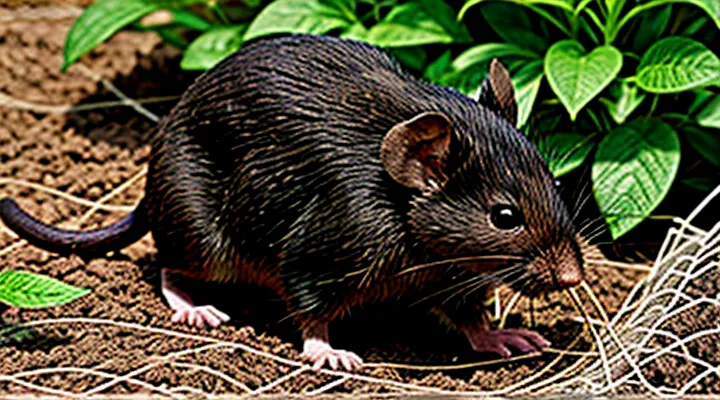
Understanding the Threat: Moles and Mice in Garden Beds
Identifying Mole Damage
Molehills: What to Look For
When installing protective netting in garden beds, pinpointing mole activity begins with recognizing molehills. Accurate identification guides the placement of barriers and prevents unnecessary disturbance of healthy soil.
- Size: typical molehills range from 4 in to 12 in in diameter; larger mounds often indicate an active tunnel system.
- Shape: a smooth, rounded mound with a central depression suggests fresh excavation, while a flattened top points to older, weather‑worn activity.
- Distribution: clusters of hills aligned in parallel rows reveal a primary tunnel network; isolated hills may signal secondary foraging tunnels.
- Location: hills appearing near the edges of beds or along irrigation lines often correspond to access points for moles entering the garden.
- Soil displacement: a loose, crumbly texture surrounding the mound indicates recent digging; compacted soil implies the mound has settled.
- Seasonal timing: increased numbers in early spring and late summer align with periods of heightened mole foraging.
Assessing these characteristics allows the installer to target netting precisely, covering the most vulnerable sections while preserving unaffected areas.
Tunnel Systems and Root Damage
Mole and mouse activity creates extensive tunnel networks just below the soil surface. These passages often intersect the root zones of vegetables, herbs, and ornamental plants. When tunnels collapse or are disturbed, roots can be severed, leading to reduced water uptake, nutrient transport failure, and eventual plant death.
Root damage occurs most frequently where tunnels run directly beneath planting rows. The mechanical stress of soil movement forces roots to bend or break, especially in young or shallow‑rooted species. Repeated exposure to tunnel pressure weakens the structural integrity of the root system, making plants more vulnerable to drought and disease.
Netting serves two functions: it blocks animal entry and reinforces the soil above active tunnels. Proper installation minimizes root injury while maintaining effective protection.
- Lay a layer of coarse mulch or sand to fill existing tunnels before placing netting.
- Position netting at a depth of 6–8 cm, ensuring it covers the entire planting area with a 10‑cm overlap on each side.
- Secure the edges with landscape staples or buried wire to prevent animals from lifting the material.
- After netting placement, gently compact the soil surface to distribute pressure evenly across tunnel openings.
- Monitor the garden weekly for new tunnel activity; add supplemental netting strips where fresh passages appear.
By integrating these steps, gardeners preserve root health while preventing mole and mouse intrusion, resulting in stronger plants and higher yields.
Identifying Mouse Damage
Gnaw Marks on Plants and Produce
Gnaw marks on foliage and harvested produce signal active rodent feeding. The damage typically appears as clean, crescent‑shaped bites on stems, leaves, or fruit skins, often accompanied by missing tissue and occasional saliva trails. Recognizing these signs early prevents larger losses and guides the deployment of protective barriers.
Effective barrier installation starts with selecting a fine‑mesh net that excludes both moles and mice while allowing water and air flow. Secure the net around the perimeter of each garden bed, anchoring it with sturdy staples or landscape pins placed at 12‑inch intervals. Overlap edges by at least 2 inches and seal seams with UV‑resistant tape to eliminate entry points.
Maintenance focuses on two tasks:
- Inspection: Walk the beds weekly, checking for torn sections, displaced mesh, or new gnaw marks. Repair breaches immediately with matching net material and tape.
- Ground preparation: Keep soil surface free of debris and excess mulch, which can conceal gaps and provide cover for burrowing. Trim low‑lying vegetation that could bridge the net and facilitate rodent access.
When netting is correctly fitted and regularly inspected, the incidence of gnaw marks drops sharply, preserving plant health and marketable produce.
Burrow Entrances
Burrow entrances are the visible openings that moles and mice create when they excavate tunnels beneath garden beds. These apertures range from a few centimeters to several inches in diameter and often appear as raised soil mounds or small holes at the surface.
The presence of openings determines where netting must be anchored or reinforced. Unprotected entrances allow animals to slip beneath the barrier, rendering the mesh ineffective and exposing plant roots to damage.
To manage entrances, follow these steps:
- Survey the bed after rain or watering, when fresh soil displacement highlights recent activity.
- Mark each opening with a flag or biodegradable marker.
- Measure the diameter and note the surrounding soil condition; loose, sandy soil may require additional support.
Installation of netting proceeds as follows:
- Lay the mesh material a few centimeters beyond the outer edge of the bed to create an overhang.
- Cut a slit or pocket around each marked entrance, threading the mesh through the opening so that the animal cannot pass.
- Secure the mesh to the ground using sturdy staples, U‑shaped pins, or rocks, ensuring the fabric lies flat against the soil surface.
- Overlap sections of mesh by at least 10 cm to prevent gaps where animals could re‑enter.
Regular maintenance includes:
- Inspecting the perimeter weekly for new openings or displaced mesh.
- Re‑anchoring any loosened sections before the soil dries and contracts.
- Removing debris that could create shortcuts around the barrier.
By systematically locating, marking, and integrating burrow entrances into the netting layout, gardeners can maintain a continuous physical deterrent that protects beds without resorting to chemical controls.
Choosing the Right Netting
Types of Netting Materials
Galvanized Steel Mesh
Galvanized steel mesh provides a durable barrier against burrowing mammals in garden beds. The zinc coating resists corrosion, allowing the material to remain effective for many seasons even in moist soil. The mesh openings, typically ¼‑inch to ½‑inch, are small enough to prevent moles and mice from penetrating while still permitting water and air flow to plant roots.
Installation begins with measuring the perimeter of the bed and cutting the mesh to size, leaving an extra 2‑3 inches on each side for overlap. Dig a trench 6‑8 inches deep around the bed, positioning the mesh vertically so that the bottom edge rests at the trench base. Backfill the trench, compacting soil to eliminate gaps. Overlap adjacent sections by at least 6 inches and secure with galvanized staples or wire ties to maintain continuity.
Key benefits of this material include:
- Long‑term resistance to rust and deterioration.
- Structural strength that withstands pressure from digging animals.
- Compatibility with most soil types and garden layouts.
- Minimal impact on irrigation systems when installed correctly.
Maintenance requires periodic inspection for tears or displaced sections, especially after heavy rain or soil movement. Repair any damage promptly by re‑securing the mesh or replacing compromised sections to preserve the protective seal.
When combined with proper garden hygiene—removing debris, managing vegetation height, and monitoring for signs of activity—galvanized steel mesh offers a reliable solution for safeguarding beds from mole and mouse intrusion.
Hardware Cloth
Hardware cloth is a welded wire mesh that provides a durable barrier against burrowing pests in raised beds and in‑ground garden rows. The mesh is typically made from galvanized steel, offering resistance to rust and long‑term structural integrity.
When selecting hardware cloth for mole and mouse exclusion, consider the following specifications:
- Gauge: Choose 16‑gauge (1.5 mm) or heavier for strength; lighter gauges may deform under pressure.
- Mesh size: ½‑inch openings prevent mice from squeezing through and are small enough to deter moles.
- Coating: Galvanized or PVC‑coated material prolongs lifespan in moist soil.
Installation proceeds in three stages:
- Prepare the perimeter. Dig a trench 6‑12 inches deep around the bed’s outer edge. Lay the mesh vertically, with the bottom edge at least 2 inches below the soil surface to block upward tunneling.
- Secure the mesh. Anchor the lower edge with U‑shaped staples or ground stakes spaced no more than 12 inches apart. Overlap adjoining sections by at least 2 inches and fasten with stainless‑steel wire or zip ties to eliminate gaps.
- Cover the top. Fold the mesh over the bed’s rim and secure it to the soil or a wooden frame, ensuring a continuous seal. Backfill the trench, tamping soil firmly to maintain contact with the mesh.
Maintenance tasks include:
- Inspecting for displaced sections after heavy rain or soil movement.
- Re‑tightening fasteners that have loosened.
- Replacing corroded sections promptly to preserve barrier integrity.
Hardware cloth’s rigidity, fine mesh, and corrosion‑resistant construction make it an effective, low‑maintenance solution for preventing mole tunnels and mouse entry in vegetable and ornamental garden beds.
Plastic Netting: Pros and Cons
Plastic netting serves as a physical barrier to prevent burrowing mammals from damaging garden beds. Its structure consists of woven or knotted polyethylene strands that can be laid over soil or suspended around planting areas.
Advantages
- High tensile strength resists tearing by active rodents.
- UV‑stabilized material maintains integrity for several growing seasons.
- Lightweight design simplifies installation and removal.
- Transparent or dark colors allow sunlight penetration while remaining inconspicuous.
- Reusable after cleaning, reducing long‑term cost.
Disadvantages
- Limited durability when exposed to extreme temperatures; brittleness may develop in cold climates.
- Small mesh sizes increase risk of accidental snagging of seedlings.
- Installation requires precise placement to avoid gaps where animals can enter.
- Plastic composition contributes to micro‑plastic accumulation if not properly disposed of.
- Cost per square meter exceeds that of natural fiber alternatives.
Choosing plastic netting involves weighing its durability and ease of use against potential environmental impact and the need for meticulous installation. Proper anchoring and periodic inspection ensure the barrier remains effective throughout the growing period.
Netting Gauge and Hole Size
Optimal Mesh Size for Moles
Choosing the correct mesh dimension is critical for preventing moles from penetrating garden beds while allowing water, air, and beneficial insects to pass. Research indicates that moles can squeeze through openings as small as 6 mm (¼ inch). Therefore, a mesh with an aperture no larger than 5 mm (0.2 inch) effectively blocks their movement.
Key specifications for an optimal mole‑exclusion net:
- Aperture size: ≤5 mm (0.2 inch)
- Wire gauge: 12–14 ga for durability under soil pressure
- Material: galvanized steel or coated polyethylene for corrosion resistance
- Tensile strength: ≥300 psi to withstand burrowing forces
Installation guidelines ensure the mesh functions as intended:
- Excavate a trench 15–20 cm (6–8 in) deep around the garden bed perimeter.
- Lay the mesh vertically, overlapping seams by at least 10 cm (4 in).
- Secure edges with U‑shaped staples or garden pins, anchoring them into the soil.
- Backfill the trench, compacting soil to eliminate gaps.
Regular inspection of the netting surface detects wear or displacement. Replace sections showing corrosion or tearing to maintain a continuous barrier. By adhering to these dimensions and practices, gardeners achieve reliable mole protection without compromising bed health.
Optimal Mesh Size for Mice
When installing rodent‑proof netting around vegetable or flower beds, the mesh dimension determines whether mice can penetrate the barrier. A square opening of ¼ inch (6 mm) or smaller blocks adult house mice while allowing water, air, and beneficial insects to pass. Mesh larger than this size permits mouse heads to squeeze through, compromising the protection.
Key parameters for selecting the appropriate netting:
- Aperture: ≤ 0.25 in (6 mm) measured across the diagonal of the opening.
- Material: UV‑stabilized polyethylene or polypropylene; both resist degradation and maintain tensile strength.
- Tensile rating: Minimum 200 lb (≈ 90 kg) per inch of width to withstand pulling by burrowing rodents.
- Coating: Optional anti‑rust galvanised wire for added rigidity in high‑traffic zones.
Installation should place the netting at least 6 in (15 cm) below the soil surface, extending 2 ft (60 cm) outward from the bed perimeter. Secure the lower edge with landscape staples or ground pins, and anchor the top edge to a sturdy frame or fence to prevent mice from climbing over. Maintaining a continuous, intact barrier at the specified mesh size eliminates entry points and reduces the need for chemical deterrents.
Considerations for Both Pests
Effective garden‑bed protection requires a net that addresses the distinct behaviors of moles and mice. Moles burrow deep, seeking loose, aerated soil, while mice travel above ground, exploiting small openings to reach roots and seedlings.
- Choose a mesh with openings no larger than 1 mm; this size blocks mouse entry and resists mole tunneling.
- Select a durable, UV‑stabilized polyethylene or polypropylene material; it withstands soil pressure and exposure to sunlight.
- Install the net at a minimum depth of 30 cm for mole protection; extend it 10 cm beyond the bed perimeter to prevent lateral intrusion.
- Secure edges with sturdy staples or landscape pins; overlapping sections by at least 5 cm eliminates gaps.
- Ensure the soil above the net remains compacted but not overly compact; excessive compaction discourages mole activity while preserving root aeration.
- Conduct a pre‑installation inspection for existing tunnels; fill any openings with soil before laying the net to avoid immediate breach.
Regular maintenance includes visual checks after heavy rain or garden work, repairing tears promptly, and re‑tensioning loose edges. By adhering to these specifications, gardeners achieve simultaneous deterrence of both subterranean and surface‑crawling pests.
Installation Techniques for Effective Protection
Preparing the Garden Bed
Clearing Debris
Before installing protective netting, eliminate all organic and inorganic material that could interfere with placement. Loose stones, shredded leaves, and broken plant roots create gaps where rodents may bypass the barrier and can damage the netting during tensioning.
- Remove surface litter with a garden rake or leaf blower.
- Dig out large clumps of compost, mulch, or fallen branches that sit above the soil line.
- Extract protruding roots or stumps using a hand fork or spade; trim them flush with the ground level.
- Sweep the area to collect small stones, glass shards, or metal fragments that could puncture the mesh.
- Dispose of collected debris in a compost bin or waste container; do not return it to the garden bed.
A clean substrate ensures the netting lies flat, maintains uniform tension, and prevents rodents from exploiting uneven terrain. It also reduces wear on the material, extending its functional lifespan.
Regular inspection after installation should include a quick sweep to remove any new debris that settles during rain or wind. Prompt removal preserves the integrity of the barrier and keeps the garden bed accessible for planting and maintenance.
Leveling the Soil
Leveling the soil creates a uniform surface that allows netting to lie flat and maintain consistent tension, which prevents gaps where moles or mice could enter. Begin by clearing debris, rocks, and plant residues from the bed. Use a garden fork or rototiller to break up compacted layers, then rake the area smooth.
- Assess the slope – place a long straight board or level across the bed; note high and low spots.
- Add or remove material – fill depressions with a mixture of topsoil and compost, and scrape excess from raised areas.
- Compact gently – walk over the filled sections or use a hand tamper to settle the soil without creating hardpan.
- Re‑check flatness – repeat the board test; adjust until the surface is even within a few centimeters over the entire length.
- Mark the perimeter – drive temporary stakes at the outer edges to define the exact boundary for net installation.
A level foundation ensures that the mesh can be stretched uniformly, reduces the risk of tearing, and facilitates proper anchoring of the net to the ground. Once the soil is leveled, proceed with laying the netting, securing it with staples or landscape pins, and overlapping seams to achieve a continuous barrier.
Installing Netting for Raised Beds
Securing the Bottom Perimeter
Securing the bottom edge of garden‑bed netting prevents burrowing pests from entering from beneath the soil. The net must be anchored firmly against the ground, creating a continuous barrier that cannot be lifted or pushed aside by animals.
- Cut the net to extend at least 6 inches beyond the bed’s perimeter.
- Lay the net flat on the soil, ensuring no gaps at corners or joints.
- Fold the excess material under the bed edge, forming a 2‑to‑3‑inch “flap.”
- Secure the flap with heavy‑duty staples, galvanized U‑shaped pins, or a trench of compacted soil 2 inches deep.
- Overlap adjacent sections by 12 inches; fasten each overlap with zip ties or wire to maintain continuity.
- Inspect the seal after heavy rain or soil settlement; re‑fasten any loosened points promptly.
A properly anchored bottom perimeter eliminates the space through which moles, mice, and similar rodents can tunnel, preserving the integrity of the planting area. Regular checks after seasonal changes ensure the barrier remains effective over time.
Extending Netting Up the Sides
Extending netting up the sides of a garden bed creates a continuous barrier that prevents moles and mice from re‑entering from the perimeter. Secure the upper edge to the bed frame or surrounding structure to maintain tension and eliminate gaps where pests could slip through.
- Measure the height of the bed walls and cut the netting to extend at least 6–12 inches above the soil line.
- Attach a sturdy staple or U‑shaped nail every 12 inches along the top edge, driving it into the wooden frame or a buried wooden strip.
- Overlap adjacent panels by a minimum of 4 inches; fasten the overlap with zip ties or heavy‑duty wire to ensure a seamless seal.
- Apply a ground‑level strip of netting that runs horizontally along the base, then pull the vertical extension upward, anchoring it with stakes or concrete blocks if the frame lacks suitable attachment points.
- Inspect the completed barrier after rain or soil movement; reinforce any loosened fasteners promptly.
A properly extended side barrier eliminates vertical entry routes, forcing moles and mice to encounter the full depth of the mesh instead of exploiting low‑lying openings. Regular maintenance of the attachment points preserves the integrity of the protection throughout the growing season.
Overlapping and Fastening Sections
When installing protective netting to keep moles and mice out of garden beds, each panel must be joined securely to prevent gaps. Overlap the edges of adjacent sections by at least 12 inches (30 cm). This extra width ensures that burrowing animals cannot slip through the seam.
Secure the overlapped area with one of the following methods:
- Staple or nail strips: Place a row of galvanized staples or nails every 6 inches (15 cm) along the overlapped edge. Drive fasteners through the netting into the soil or a wooden frame, leaving the head flush with the material.
- Wire ties: Loop a 2‑mm galvanized wire around the overlapping edges, pull tight, and twist the ends together. Space ties 8–10 inches (20–25 cm) apart for consistent tension.
- Plastic clips: Use purpose‑made netting clips that snap over the overlapping layers. Position clips at 10‑inch (25 cm) intervals, then press firmly to lock.
For permanent installations, embed the fasteners at a depth of 2–3 inches (5–7 cm) to protect them from weather and animal interference. When using wooden edging, attach the netting to the frame first, then overlap and fasten the sections directly to the wood, ensuring the seam aligns with a vertical support for added stability.
After fastening, inspect the entire perimeter. Verify that no exposed wire or staple protrudes beyond the netting surface, as these can become snag points for wildlife or garden tools. Adjust any loose fasteners before backfilling soil around the edges.
Installing Netting for In-Ground Beds
Trenching for Subsurface Barriers
Trenching creates the channel through which a subsurface barrier is positioned, forming the primary defense against moles and mice in raised beds. The trench must be deep enough to accommodate the netting material without exposing edges at the soil surface, typically 12–18 inches depending on soil composition and target species.
Begin by marking a continuous line around the bed perimeter, allowing a 2‑inch overlap where sections meet. Use a narrow spade or a specialized trenching tool to cut a uniform groove along the line. Maintain consistent width—approximately 3 inches—to ensure the netting lies flat and does not collapse under soil pressure.
After the trench is cleared:
- Lay the barrier material directly into the groove, keeping the mesh open‑end facing downward to discourage burrowing.
- Overlap adjacent sections by at least 2 inches; seal the joint with garden‑grade wire or zip ties.
- Backfill the trench with native soil, firming gently to eliminate voids while preserving the barrier’s integrity.
Final inspection confirms that the netting extends below the typical mole tunnel depth and that no gaps remain at corners or where the barrier meets the bed edge. Properly executed trenching provides a durable, low‑maintenance solution for protecting garden beds from subterranean pests.
Creating Vertical Barriers
When protecting garden beds from burrowing pests, a vertical barrier forms the primary line of defense. The barrier must extend deep enough to intersect typical tunneling depths—usually 12 to 18 inches for moles and up to 6 inches for mice. Choose a mesh with apertures no larger than ½ inch; finer openings prevent small rodents from slipping through while still allowing water and air flow.
Installation proceeds in three stages:
- Excavate a trench along the perimeter of the bed, maintaining a uniform depth of 12–18 inches and a width of 4–6 inches.
- Unfold the mesh, position it against the trench wall, and fold the lower edge over the bottom of the trench to create a continuous sheet.
- Backfill the trench with soil, compacting gently to eliminate voids and secure the mesh in place.
After placement, inspect the barrier periodically for gaps caused by settling soil or plant growth. Repair any openings by overlapping additional mesh and resealing with garden‑grade staples. When the barrier remains intact, moles and mice encounter a physical obstacle that redirects their activity away from cultivated areas, preserving root systems and soil structure.
Ensuring Continuous Coverage
Effective rodent exclusion netting in garden beds depends on uninterrupted coverage. Overlap each panel by at least 6 inches (15 cm) to eliminate gaps where moles or mice could pass. Secure the overlap with zip ties or weather‑resistant tape, ensuring the material remains taut.
Maintain edge integrity. Anchor the netting to the soil, wooden frames, or garden edging using staples, U‑shaped pins, or reinforced clips. Position the anchor points every 12–18 inches (30–45 cm) to prevent sagging under soil pressure.
Inspect the installation regularly. Look for tears, loose fasteners, or displaced sections after heavy rain, frost, or garden work. Promptly repair damage with matching netting patches and replace compromised fasteners.
Key actions for continuous coverage:
- Overlap panels ≥ 6 inches; fasten securely.
- Anchor edges at 12–18 inch intervals.
- Apply tension to keep material flat.
- Conduct monthly visual checks.
- Repair or replace compromised sections immediately.
Adhering to these practices guarantees a seamless barrier that deters burrowing and surface movement, protecting plant roots and soil structure throughout the growing season.
Maintenance and Troubleshooting
Regular Inspections
Checking for Breaches or Damage
Inspecting protective garden netting for rodents requires systematic observation and prompt repair. Begin by walking the perimeter of each bed, looking for visible tears, gaps, or displaced sections. Pay attention to soil disturbances that indicate animals have pushed through weakened areas.
Identify common breach signs:
- Frayed edges or holes larger than a few centimeters
- Loose or sagging mesh that no longer conforms to the bed shape
- Soil piles or tunnels emerging near the netting line
- Chewed or gnawed sections of the material
Use a flashlight to examine the underside of the netting, especially where the soil meets the fabric. A thin probe or garden trowel can test tension; the mesh should resist easy puncture.
Schedule inspections at least once a month during active rodent seasons and after severe weather events. Record the location and size of each defect in a simple log to track recurring problem areas.
Repair procedures:
- Clean the affected zone, removing soil and debris.
- Cut a piece of replacement mesh that overlaps the damaged area by at least 5 cm on all sides.
- Secure the patch with rust‑resistant staples or garden‑grade zip ties, ensuring the mesh remains taut.
- Cover the repair with a thin layer of mulch to discourage digging at the seam.
If damage is extensive, remove the compromised section entirely and re‑lay fresh netting, anchoring it with landscape staples placed every 30 cm. Reinforce edges with a strip of heavy‑duty garden fabric to prevent future tearing.
Regular checks and swift repairs maintain the barrier’s integrity, keeping moles and mice out of cultivated soil and protecting plant health.
Addressing Rust or Degradation
When installing rodent exclusion netting in raised beds, metal components are prone to oxidation and material fatigue. Early detection prevents loss of integrity and protects plant roots from burrowing pests.
- Inspect joints and clamps every season for discoloration or surface flaking.
- Remove loose particles with a soft brush; avoid abrasive tools that could damage the coating.
- Apply a thin layer of rust‑inhibiting primer to exposed metal, followed by a weather‑resistant paint compatible with outdoor use.
For netting made of galvanized or stainless steel, corrosion is slower but still possible in high‑moisture environments. Rinse the mesh with clean water after heavy rain, then dry thoroughly before re‑tightening. If pitting appears, sand the affected area gently, then re‑coat with a suitable protective finish.
Plastic or composite netting may degrade under UV exposure. Replace sections that show brittleness or cracking, and store surplus material in a shaded, dry location. UV‑stabilized variants extend service life by reducing polymer breakdown.
When rust or degradation compromises the barrier, re‑attach the netting using stainless‑steel staples or corrosion‑resistant clips. Ensure tension remains uniform to avoid sagging, which creates entry points for moles and mice.
Regular maintenance, combined with appropriate protective treatments, preserves the functional lifespan of the garden barrier and maintains effective pest control.
Repairing Damaged Netting
Patching Techniques
Effective patching restores continuity after installing protective netting around garden beds, preventing burrow entry and maintaining structural integrity. Begin by inspecting the netting for tears, loose seams, or gaps where soil can infiltrate. Clean the affected area to remove debris and moisture, ensuring the adhesive will bond properly.
Select a patch material compatible with the original netting—commonly high‑density polypropylene or galvanized wire mesh. Cut a piece that overlaps the damage by at least two inches on each side. For fabric‑type netting, reinforce the patch with a strip of UV‑resistant tape; for metal mesh, use a stainless‑steel clamp or zip tie.
Apply the patch using one of the following techniques:
- Adhesive bonding: Spread a weather‑proof, flexible glue on the patch and the surrounding netting, press firmly, and allow curing according to the manufacturer’s instructions.
- Mechanical fastening: Secure the patch with rust‑proof staples or heavy‑duty zip ties placed every 4–6 inches, tightening to eliminate slack.
- Hybrid method: Combine a thin layer of adhesive with a few strategically placed zip ties for added durability in high‑stress zones.
After installation, test the repair by gently pulling on the netting to confirm that the patch holds under tension. Cover the patched section with a thin layer of soil or mulch to protect the adhesive from direct exposure to rain and sunlight. Regularly revisit the repaired areas during seasonal inspections to catch early signs of wear before they compromise the barrier.
Reinforcing Weak Spots
When installing protective netting in garden beds, weak points often appear at seams, corners, and entry points for irrigation or drainage. Addressing these vulnerabilities prevents burrowing rodents from exploiting gaps.
Secure seams by overlapping mesh by at least 10 cm and fastening with stainless‑steel staples or galvanized wire. Apply a weather‑resistant sealant along the joint to block moisture and discourage gnawing. For corners, fold the netting inward to create a double‑layer barrier, then anchor with U‑shaped brackets screwed into the bed frame. This reinforcement adds structural rigidity and eliminates the narrow opening that rodents prefer.
Entry points for hoses, drip lines, or soil amendments require custom sleeves. Cut a strip of mesh slightly larger than the conduit diameter, wrap it tightly, and secure with zip ties. Reinforce the surrounding area with a thin strip of heavy‑duty garden fabric, then cover with a layer of mulch to conceal the repair.
Regular inspection is essential. Follow this schedule:
- Inspect seams and corners after heavy rain or irrigation cycles.
- Check fasteners for corrosion or loosening; retighten as needed.
- Replace any damaged mesh sections immediately to maintain continuity.
By systematically reinforcing seams, corners, and conduit passages, the netting remains an effective barrier against moles and mice, preserving the integrity of the planting area.
Addressing Persistent Pest Issues
Supplementary Deterrents
Effective garden-bed protection against moles and rodents often requires more than a simple barrier. Once netting is installed, additional deterrents can reinforce the defense and reduce the likelihood of burrowing or gnawing.
Physical deterrents such as coarse mulch, sharp-edged stone, or a layer of sand create an uncomfortable substrate for burrowing mammals. Placing a strip of hardware cloth beneath the netting adds a secondary obstacle that rodents cannot easily penetrate. Installing a shallow trench filled with gravel around the bed’s perimeter prevents underground entry points.
Chemical deterrents include commercially available granular repellents containing castor oil or sulfur. Applying the product according to label instructions creates an olfactory barrier that discourages digging. Homemade solutions, such as a mixture of water, vinegar, and a few drops of peppermint essential oil, can be sprayed on the netting and surrounding soil for a low‑cost alternative.
Biological measures involve encouraging natural predators. Installing owl boxes, raptor perches, or encouraging fox activity in the vicinity can reduce mole and mouse populations over time. However, these methods require habitat suitability and may not be feasible in all residential settings.
Regular monitoring remains essential. Inspect the netting weekly for gaps, and check the soil surface for fresh molehills or mouse tracks. Prompt repair of any breach, combined with the supplementary deterrents listed above, ensures long‑term protection of garden beds.
Professional Pest Control Consultation
A professional pest‑control consultant evaluates garden beds to determine whether mole and rodent netting will effectively protect plant roots. The assessment includes soil composition, existing burrow activity, and proximity to water sources. Findings are documented in a concise report that outlines recommended netting specifications and installation methods.
The consultant’s recommendations cover:
- Net material thickness and mesh size appropriate for target pests.
- Placement depth, ensuring the net lies at least 12 inches below the soil surface to intercept burrowing.
- Securing edges with landscape staples or buried staples to prevent displacement.
- Integration with other control measures such as bait stations or habitat modification.
Implementation guidance emphasizes proper tensioning of the net to avoid gaps, periodic inspection for damage, and timely repair. Maintenance schedules are defined by seasonal activity patterns, typically quarterly in temperate regions.
Cost analysis presented by the consultant compares one‑time installation expenses with long‑term savings from reduced plant loss. The report also includes safety precautions for handling sharp staples and protective gloves during installation.