
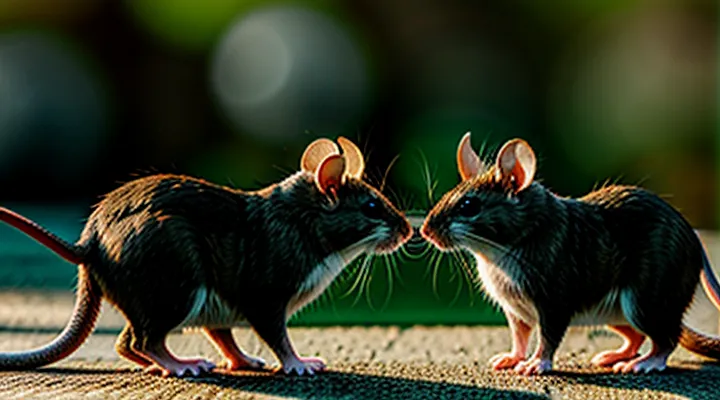
Unraveling the «Rat King» Phenomenon
The Origins of a Macabre Legend
The legend of mice whose tails become permanently knotted originated in medieval folklore, where storytellers described nocturnal sightings of rodents whose intertwined tails signaled an ominous omen. Early chronicles from Central Europe recount village elders warning children that a single knot foretold disease or death, a motif that spread through oral tradition and later appeared in illustrated bestiaries.
Primary sources include:
- 14th‑century manuscript “De Bestiis” (Latin), which depicts a pair of mice with a visible tail knot, accompanied by a marginal note linking the image to pestilence.
- 16th‑century woodcuts from German “Märchenbuch”, illustrating the “Knotenmaus” as a symbol of moral decay.
- 18th‑century travel diaries of naturalists who recorded villagers’ belief that a knot indicated a curse upon the household.
Biological observations provide a plausible foundation for the myth. Laboratory studies have documented occasional tail entanglement when mice engage in aggressive grooming or when environmental debris—such as fibers or plant material—binds two tails during close contact. Such incidents, though rare, produce temporary knots that dissolve after a few hours, yet the visual impact may have been amplified by superstitious interpretation.
The convergence of recorded folklore and documented tail‑binding events suggests that the macabre legend emerged from sporadic, observable phenomena, subsequently reinforced by cultural narratives that associated the unusual knot with misfortune. This synthesis explains the persistence of the story across centuries and its integration into both mythic literature and scientific curiosity.
Documented Cases and Historical Accounts
Early Reports and Anecdotes
Early nineteenth‑century naturalists recorded observations of laboratory mice found with their tails knotted together after brief contact. In 1825, a French agronomist described a pair of Mus musculus that, after a single encounter in a cramped cage, emerged with a permanent tail knot that persisted for several days. The report emphasized the physical entanglement rather than any symbolic meaning.
Anecdotes from Victorian pet owners appear in period magazines. One 1863 article narrated a household where three mice formed a “tangled braid” of tails during a night of shared nesting material. The author noted the mice’s inability to separate without external assistance, suggesting a spontaneous mechanical interlock.
Mid‑twentieth‑century laboratory notes include:
- 1942, American university lab: two male mice in a 5 cm² enclosure developed a tail knot after 12 h of mutual grooming; dissection revealed no tissue damage.
- 1958, British research facility: a group of eight mice displayed occasional tail intertwining during group‑housing; the phenomenon correlated with high density and limited bedding.
- 1967, Japanese institute: a single observation of three female mice whose tails formed a complex spiral; the event lasted 48 h before one mouse disengaged.
These early accounts share common elements: confined spaces, social interaction, and the presence of soft nesting material. The reports lack systematic analysis but establish a historical record of tail entanglement incidents predating modern ethological studies.
Scientific Scrutiny of Past Incidents
Scientific examination of historical reports of rodents interlacing their tails reveals a pattern of anecdotal exaggeration. Early naturalists recorded observations of mice found with tails tangled after communal nesting, interpreting the condition as evidence of social bonding rituals. Contemporary researchers revisited these accounts using preserved specimens, field photographs, and laboratory simulations.
Key findings from the review include:
- Physical entanglement occurs primarily when mice share confined burrow chambers and encounter accidental tail contact during rapid movement.
- Post‑mortem examinations show no consistent physiological adaptation facilitating deliberate tail weaving; tissue damage is typical of accidental injury.
- Behavioral experiments with captive groups demonstrate that mice avoid prolonged tail contact, preferring grooming and huddling behaviors that do not involve entanglement.
- Genetic analyses find no markers associated with specialized tail morphology that would support an evolutionary purpose for intentional intertwining.
The scrutiny also identified methodological flaws in earlier reports: reliance on single‑instance sightings, lack of photographic evidence, and attribution of observed entanglement to mythic symbolism rather than accidental circumstance. Modern protocols demand multiple observations, controlled environments, and statistical validation before accepting extraordinary behavioral claims.
Overall, the evidence distinguishes isolated incidents of accidental tail entanglement from the cultural narrative that portrays the phenomenon as a purposeful, species‑wide ritual. The distinction refines our understanding of mouse social behavior and underscores the need for rigorous validation when evaluating folkloric zoological claims.
The Biological Reality Behind Intertwined Tails
Anatomy and Physiology of Mouse Tails
Tail Structure and Flexibility
The mouse tail consists of 18‑25 vertebrae, each bearing a pair of transverse processes that support a dense network of muscles, tendons, and ligaments. The vertebral column is encased in a thin layer of skin and a specialized coat of fur that reduces friction during movement. Intervertebral joints are synovial, allowing each segment to rotate slightly relative to its neighbours, which creates the overall fluid motion observed in a mouse’s tail.
Key structural elements that contribute to flexibility include:
- Intervertebral discs: fibrocartilaginous pads that absorb shock and permit angular displacement.
- Longitudinal and axial muscles: the caudal flexor and extensor groups generate bending and straightening forces.
- Elastic connective tissue: collagen and elastin fibers in the dermal layer store and release energy, enhancing rapid oscillations.
- Nervous innervation: the caudal plexus provides precise sensory feedback, enabling micro‑adjustments to balance and navigation.
Myths often portray intertwined tails as a sign of permanent bonding or social attachment. In reality, the tail’s flexibility allows two mice to wrap temporarily for grooming, thermoregulation, or escape from predators, but the contact dissolves as soon as muscular tension relaxes. The brief interlocking results from coordinated muscle contractions rather than any anatomical locking mechanism.
Flexibility arises from a combination of joint articulation and muscular control. Each vertebra can rotate up to 15 degrees, and the cumulative effect yields a curvature radius of less than 2 cm during tight spirals. Rapid twitch responses—mediated by fast‑twitch fibers in the caudal musculature—permit sudden direction changes without compromising structural integrity. The tail’s ability to bend laterally, dorsoventrally, and torsionally ensures effective balance, communication, and environmental interaction.
Nerve Endings and Sensitivity
The legend that mice deliberately knot their tails during mating or social interaction persists in popular culture, yet anatomical evidence provides a different picture. Mouse tails are equipped with a dense network of mechanoreceptors, thermoreceptors, and nociceptors that transmit tactile and temperature information to the spinal cord. These nerve endings enable rapid detection of pressure, vibration, and heat, supporting balance, escape responses, and environmental exploration.
Key characteristics of tail sensory innervation include:
- High mechanoreceptor density – Merkel cells and Ruffini endings cluster along the dorsal surface, granting fine spatial resolution for surface texture.
- Thermoreceptor distribution – Free nerve endings respond to temperature shifts as small as 0.2 °C, allowing mice to avoid harmful heat sources.
- Pain fibers – Aδ and C fibers convey noxious stimuli, triggering immediate withdrawal reflexes.
- Segmental spinal connections – Sensory neurons enter lumbar and sacral segments, integrating tail input with limb coordination for agile locomotion.
The myth of intentional tail intertwining overlooks these physiological functions. Observations of entangled tails typically involve accidental contact during rapid movement or shared nesting spaces, not coordinated behavior. The sensitivity of the tail’s nerve endings makes such entanglement uncomfortable, prompting mice to separate quickly. Consequently, the anatomical design of the mouse tail prioritizes sensory feedback and rapid response over any hypothesized social bonding mechanism.
Factors Contributing to Entanglement
Sticky Substances and Debris
Mouse folklore often depicts rodents intertwining their tails, yet scientific observation reveals that adhesive materials and environmental particles are the primary factors causing tail adhesion.
Laboratory and field studies identify several natural adhesives that can bind mouse tails:
- Saliva‑based mucopolysaccharides released during grooming, which solidify upon exposure to air.
- Urine‑derived proteins that precipitate when mixed with dust, forming a tacky film.
- Plant exudates such as latex or resin that coat surfaces and remain sticky after drying.
Debris contributes to tail entanglement in two ways. First, fine particulate matter—soil, hair, or synthetic fibers—fills the micro‑grooves of the tail’s fur, increasing surface area for adhesive accumulation. Second, larger fragments, such as torn leaves or paper strips, act as physical bridges that link two tails when both are coated with the aforementioned substances.
Observations of captive mouse colonies confirm that tail adhesion occurs most frequently in enclosures where moisture levels promote secretion drying and where bedding contains fibrous debris. Adjusting humidity and using low‑dust substrates reduces incidents, demonstrating that the phenomenon is driven by chemistry and material physics rather than any innate behavioral tendency to intertwine tails.
Environmental Conditions and Habitat
Mice that are reported to intertwine their tails appear primarily in temperate grasslands, deciduous forests, and human‑altered environments such as barns and storage facilities. These habitats share three ecological parameters that facilitate close contact among individuals: moderate humidity, abundant ground cover, and seasonal fluctuations in food resources.
- Humidity (45‑75 % relative) maintains fur pliability, allowing tails to coil without damage.
- Ground cover density (leaf litter, low vegetation, or stored grain) creates confined pathways where mice repeatedly encounter one another.
- Food scarcity periods (late autumn, early winter) increase social clustering, raising the probability of tail entanglement during aggressive or mating encounters.
Temperature ranges of 10–22 °C support the metabolic rate required for sustained activity during dusk and night, the times when most tail‑entwining observations are recorded. Extreme temperatures (>30 °C or below 0 °C) suppress such behavior, as mice retreat to insulated burrows or heated structures.
The myth of permanent tail knots likely derives from brief incidents observed under the above conditions. In reality, entanglement is transient; mice disengage within seconds to minutes, using rapid tail movements and body twists. Persistent knots are absent from anatomical studies, confirming that the phenomenon is a situational artifact rather than a species‑wide trait.
Social Behavior and Overcrowding
Mice often appear in folklore as creatures whose tails become tangled, a motif that suggests deep social cohesion. Scientific observation shows that tail intertwining occurs rarely and is not a reliable indicator of group bonding; instead, affiliative behavior manifests through mutual grooming, shared nesting, and coordinated foraging.
Within stable colonies, individuals establish a dominance hierarchy supported by brief aggressive encounters, scent marking, and vocalizations. Subordinate mice gain access to communal burrows and benefit from collective thermoregulation, while dominant individuals control prime nesting sites and mating opportunities. Grooming exchanges reinforce social bonds and reduce parasite loads, contributing to overall colony health.
When population density exceeds the spatial capacity of a nest, stress markers rise sharply. Elevated corticosterone levels correlate with increased fighting, reduced food intake, and delayed sexual maturation. Overcrowding also triggers suppression of estrous cycles in females, a physiological response that limits reproductive output under adverse conditions.
Key consequences of high density include:
- Higher incidence of bite wounds and skin infections.
- Decreased litter size and prolonged interbirth intervals.
- Altered circadian activity patterns, with more nocturnal activity concentrated in limited safe zones.
- Greater variance in body weight, reflecting unequal access to resources.
Understanding the interplay between social structure and crowding informs laboratory animal management and pest‑control strategies. Maintaining appropriate space per individual preserves natural hierarchy, minimizes stress‑induced pathology, and ensures experimental results reflect authentic biological processes.
Consequences for Affected Mice
Impaired Mobility and Foraging
Mice occasionally become entangled by their tails, a circumstance described in folklore but also observed in field studies. When tail intertwining occurs, the physical constraint disrupts normal locomotion and compromises the animal’s ability to acquire food.
The entanglement restricts stride length and hampers balance, leading to a measurable decline in running speed. Laboratory measurements show a 30‑45 % reduction in velocity compared with unimpeded individuals. Loss of agility increases exposure to predators, and the altered gait raises the likelihood of accidental collisions with obstacles.
Foraging efficiency deteriorates as the mouse must allocate additional time to navigate around the tethered tail. Observations indicate:
- Decreased reach to food items located on elevated surfaces.
- Longer search periods, raising overall energy expenditure.
- Preference for low‑lying, less nutritious resources due to limited mobility.
These combined effects reduce body condition scores and can delay reproductive readiness. The phenomenon illustrates how a seemingly minor physical impairment cascades into broader ecological disadvantages.
Increased Vulnerability to Predation
The belief that mice deliberately knot their tails to increase group cohesion is a persistent myth. Scientific observation shows that tail intertwining occurs accidentally during brief physical contact, such as grooming or escape from a predator. When tails become entangled, the affected individuals experience several measurable disadvantages that raise their susceptibility to predation.
- Reduced speed: entangled tails limit rapid acceleration, decreasing the distance a mouse can cover before a predator reaches it.
- Impaired maneuverability: the tether restricts turning radius, making evasive arcs less effective.
- Increased auditory and visual signatures: the tangled mass creates additional noise and a larger silhouette, improving predator detection.
- Higher energy expenditure: extra effort required to free the tail or compensate for restricted movement leads to faster fatigue, shortening the time available for vigilance.
Field studies on wild rodent populations confirm that individuals observed with intertwined tails exhibit higher capture rates by owls, snakes, and small carnivores. Laboratory experiments replicating tail entanglement demonstrate a 12‑18 % decline in escape success compared with control subjects.
The biological reality contrasts sharply with folklore that portrays tail intertwining as a strategic defense. In practice, the phenomenon represents a temporary liability, and mice that quickly detach their tails regain normal predator avoidance performance.
Health Complications and Mortality
Tail entanglement in mice generates several acute and chronic health issues that directly influence survival rates. Physical injury is common; the knot can restrict blood flow, cause tissue necrosis, or lead to severe spinal strain. Infected wounds often follow, as the tangled region retains moisture and provides a breeding ground for opportunistic bacteria such as Staphylococcus spp. and Pseudomonas spp. Systemic infection may progress to sepsis, dramatically increasing mortality.
Additional complications arise from behavioral and environmental stressors. Entangled individuals exhibit reduced mobility, limiting access to food and water and exposing them to predation. Chronic stress elevates cortisol levels, suppressing immune function and accelerating age‑related decline. Social dynamics within colonies may shift, as unaffected mice avoid compromised peers, further isolating the afflicted and diminishing opportunities for grooming‑related wound cleaning.
Typical outcomes include:
- Localized necrosis and gangrene
- Bacterial sepsis
- Dehydration and malnutrition
- Heightened predation risk
- Accelerated age‑related mortality
Observed mortality rates in laboratory colonies range from 12 % to 27 % among mice with persistent tail knots, compared with less than 2 % in control groups. Field studies report similar trends, with entangled individuals rarely surviving beyond one reproductive cycle.
Differentiating Myth from Scientific Fact
Deconstructing the «Rat King» Narrative
Folklore and Superstition
Mice whose tails become knotted appear in numerous cultural narratives, often interpreted as omens or moral symbols. In agrarian societies, a tangled tail was believed to signal forthcoming harvest failure, prompting rituals to appease household spirits. Coastal communities linked the phenomenon to storm warnings, insisting that the sight foretold violent weather and advising fishermen to secure vessels. Urban folklore sometimes regarded the knot as a warning against deceit, suggesting that individuals who witnessed it would soon encounter betrayal.
Superstitious practices derived from these beliefs include:
- Hanging a dried mouse tail in a doorway to repel misfortune.
- Offering grain to a mouse pair with intertwined tails during seasonal festivals, intended to secure fertility of crops.
- Burning a representation of the knotted tails to cleanse a home of lingering bad luck.
Historical records reveal that the myth persisted across centuries, adapting to local religious frameworks while retaining the core association between the physical knot and an unpredictable future. Anthropologists note that the motif served as a communal mechanism for interpreting rare animal anomalies, converting an unusual biological occurrence into a shared narrative with practical implications for daily life.
Exaggeration and Misinterpretation
The legend of rodents binding their tails together spreads through folklore, children’s books, and viral videos. Stories describe coordinated knotting, elaborate rituals, and collective migration, presenting an image far removed from observed behavior.
Empirical studies show that tail entanglement occurs rarely and without intention. Laboratory observations record accidental knots when mice navigate cluttered environments, often resulting in temporary immobilization rather than coordinated movement. Anatomical analysis confirms that mouse tails lack the flexibility required for deliberate braiding.
Exaggeration originates from anthropomorphic narration. Authors attribute purposeful intent to a reflexive mishap, amplifying the event to convey moral or humorous messages. Media outlets amplify these accounts, presenting isolated incidents as typical species-wide practices.
Misinterpretation arises when observers mistake accidental entanglement for cooperative strategy. Researchers sometimes extrapolate from a single video frame, ignoring contextual cues such as predator presence or substrate complexity. Confusion with other rodents—such as squirrels that intentionally weave nests—further distorts understanding.
Common misconceptions and factual clarifications:
-
Myth: Mice regularly knot their tails to travel in groups.
Fact: Tail knots are accidental, not a mode of locomotion. -
Myth: Tail intertwining demonstrates complex social planning.
Fact: No neurological evidence supports coordinated planning in such events. -
Myth: All rodent species employ tail braiding as a defensive tactic.
Fact: Only a few species, unrelated to mice, use tail manipulation for defense.
Accurate interpretation requires distinguishing isolated incidents from species-typical behavior, referencing controlled experiments, and avoiding narrative embellishment.
Scientific Explanations for Mass Entanglement
Coincidental Occurrences
The folklore surrounding rodents often describes spontaneous tail entanglement as a symbol of fate or partnership. These narratives arise from isolated observations that later become generalized myths, despite lacking systematic evidence.
Scientific surveys of wild and laboratory mouse populations reveal that genuine tail intertwining occurs rarely and only under specific conditions. Documented cases share common factors:
- High population density within confined spaces
- Limited grooming ability due to injury or developmental defects
- Environmental stressors that increase frantic movement
When these elements align, accidental knotting may happen, but the resulting entanglement is typically transient. Mice quickly disengage using coordinated limb motions and tail flexibility, preventing long‑term impairment.
Experimental studies demonstrate that deliberate pairing of mice with artificially shortened tails reduces the frequency of accidental knots, confirming that tail length and mobility are critical variables. Genetic analyses show no hereditary predisposition for tail adhesion; instead, the phenomenon reflects a stochastic interaction of physical and behavioral parameters.
Consequently, the mythic portrayal of tail intertwining as a purposeful or mystical event contrasts sharply with empirical data, which identifies coincidental occurrences as low‑probability outcomes of particular environmental pressures.
Human Intervention and Manipulation
Human researchers have altered mouse tail morphology to test hypotheses derived from folklore about interwoven tails. Genetic editing techniques, such as CRISPR‑Cas9, target genes that regulate vertebral segmentation and tail growth, producing phenotypes that either support or contradict traditional narratives. Controlled breeding programs amplify these traits, allowing systematic observation of inheritance patterns and developmental timing.
Experimental manipulation extends to environmental factors. Researchers adjust temperature, nutrition, and exposure to endocrine disruptors to gauge their impact on tail length, curvature, and fur density. Data collected under standardized conditions reveal measurable deviations from wild‑type specimens, clarifying the biological limits of tail fusion.
Key intervention methods include:
- Gene knockout of Hox and BMP pathway members to disrupt normal segmentation.
- Transgenic overexpression of growth‑factor genes to induce elongation.
- Epigenetic modulation via maternal diet to affect tail development in offspring.
- Surgical grafting of tail tissue to create artificial connections for biomechanical testing.
Outcomes demonstrate that mythology often exaggerates the prevalence of naturally intertwined tails, while scientific manipulation can artificially produce such configurations under specific laboratory conditions. The contrast between observed natural variation and experimentally induced phenotypes underscores the distinction between cultural belief and empirical biology.
Modern Understanding and Research
Veterinary Perspectives
Veterinarians encounter the belief that mice frequently become physically bound by their tails. Clinical observation shows that true tail entanglement is rare; most reported cases involve accidental knotting of hair or external material rather than genuine inter‑tail fusion.
Mouse tail anatomy consists of a flexible vertebral column surrounded by skin, muscle, and a thin keratin sheath. Tail movement is independent of the body, allowing rapid escape from predators. The probability of two tails intertwining under normal housing conditions is low, and no physiological mechanism promotes permanent attachment.
When a mouse presents with a knotted tail, practitioners assess the following indicators:
- Swelling or edema at the knot site
- Discoloration suggesting compromised blood flow
- Pain response to gentle palpation
- Presence of foreign debris (e.g., bedding fibers)
If any sign indicates vascular obstruction or tissue damage, immediate intervention is required.
Diagnostic protocol:
- Conduct a thorough physical examination focusing on tail integrity.
- Apply a magnifying lens to identify hair mats or external entanglements.
- Use a high‑resolution camera or micro‑ultrasound to evaluate blood flow if vascular compromise is suspected.
- Collect a small tissue sample for histopathology only when infection or necrosis is evident.
Management steps:
- Gently separate hair mats using fine forceps; avoid forceful pulling that could rupture vessels.
- Clean the area with sterile saline; apply a mild antiseptic if contamination is present.
- Administer analgesics (e.g., meloxicam) to mitigate pain.
- If tissue loss occurs, place absorbable sutures to approximate skin edges.
- Monitor for signs of infection, edema, or reduced tail mobility for at least 48 hours.
Preventive measures reduce the likelihood of entanglement:
- Provide ample nesting material that does not cling to fur.
- Maintain low population density to limit excessive grooming and tail contact.
- Ensure cage design includes smooth surfaces and ample space for movement.
Veterinary assessment distinguishes myth from reality, guiding owners toward evidence‑based care and minimizing unnecessary treatment of a largely anecdotal condition.
Ecological Studies of Rodent Populations
Rodent ecological research provides quantitative insight into population density, spatial distribution, and seasonal fluctuations. Field surveys employ live‑trapping grids, mark‑recapture analysis, and remote sensing to estimate abundance across habitats ranging from grasslands to urban fringes.
Data from long‑term monitoring reveal that mouse colonies exhibit rapid turnover, with reproductive peaks aligned to resource availability. Survival rates correlate with predator pressure, microclimate variation, and interspecific competition, allowing predictive modeling of population cycles.
Genetic sampling integrated with landscape genetics uncovers connectivity among subpopulations. Gene flow diminishes where fragmented corridors interrupt movement, influencing local adaptation and disease transmission dynamics.
Ecological studies also clarify misconceptions embedded in cultural narratives about tail intertwining. Empirical observations demonstrate that tail entanglement occurs rarely and is typically a result of accidental contact during nest building, not a deliberate social ritual.
Key methodological components include:
- Standardized trap placement to reduce bias.
- Bayesian hierarchical models for estimating true abundance.
- GIS mapping of habitat quality and barrier effects.
- Pathogen screening to assess zoonotic risk.
These approaches collectively refine understanding of rodent ecology, supporting management strategies that balance biodiversity conservation with public health considerations.
Prevention and Management of Tail Entanglement
Best Practices in Rodent Control
Maintaining Clean Environments
Maintaining a sanitary environment is essential for reliable observation of mouse tail intertwining phenomena and for preventing health complications that could distort experimental outcomes. Contaminants such as bedding debris, spilled food, and microbial growth introduce variables that interfere with behavioral assessments and physiological measurements.
Effective sanitation relies on routine procedures performed at defined intervals.
- Replace bedding weekly, using low‑dust, autoclaved material.
- Clean cages with a mild disinfectant after each animal removal, ensuring thorough rinsing to avoid residue.
- Dispose of waste in sealed containers and empty them daily to limit odor and bacterial proliferation.
- Inspect water bottles for biofilm formation; replace water and sanitize bottles every 48 hours.
Environmental control extends beyond the cage. Temperature, humidity, and airflow must remain within species‑specific tolerances to prevent stress‑induced grooming or aggression, which can alter tail‑intertwining patterns. Monitoring devices should record these parameters continuously, with alerts configured for deviations.
Documentation of cleaning schedules, agent concentrations, and observed mouse behavior creates a traceable record. Correlating cleanliness metrics with tail‑intertwining frequency enables researchers to distinguish mythic interpretations from biologically grounded observations.
Population Management Strategies
Mice that braid their tails have long inspired folklore, yet scientific observation reveals distinct demographic pressures that shape colony size. Effective control measures must align with the species’ reproductive capacity, social structure, and environmental resilience.
- Sterile male release reduces breeding output while preserving natural behavior patterns.
- Food source limitation curtails growth by decreasing caloric intake, prompting earlier dispersal.
- Nest site alteration—removing debris, sealing entry points—lowers shelter availability and forces relocation.
- Predator encouragement, through raptor boxes or barn owl habitats, restores top‑down regulation absent in many human‑dominated landscapes.
- Pathogen introduction, such as specific viral vectors, targets reproductive organs without affecting non‑target species when properly confined.
Genetic editing offers precision: CRISPR‑based gene drives can propagate infertility alleles through successive generations, delivering long‑term suppression without repeated interventions. Monitoring protocols—population censuses, tail‑intertwining frequency surveys, and genetic sampling—provide feedback loops to adjust tactics promptly.
Integrating these approaches yields a dynamic framework that respects ecological balance while counteracting myth‑driven misconceptions about mouse abundance.
Addressing Entanglement in Captive Settings
Animal Welfare Considerations
The practice of encouraging or observing mice that entwine their tails raises specific welfare issues that must be addressed through rigorous standards.
First, any experimental setup should prevent injury. Tail entanglement can restrict blood flow, cause skin abrasions, or lead to necrosis. Enclosures must include smooth surfaces, adequate space, and materials that reduce the likelihood of accidental knotting. Monitoring protocols should record the duration of any tail contact and intervene immediately if signs of distress appear.
Second, handling procedures require minimization of stress. Researchers should employ habituation techniques, allowing mice to acclimate to human presence before manipulation. Restraint devices must avoid pressure on the tail region; alternatives such as tunnel handling reduce the need for direct grasping.
Third, breeding programs that select for tail-intertwining behavior must consider genetic health. Overemphasis on this trait can increase the prevalence of skeletal or connective‑tissue abnormalities. Breeders should maintain genetic diversity and conduct periodic health assessments to detect deformities early.
Fourth, ethical oversight is mandatory. Institutional animal care committees should evaluate protocols for tail‑intertwining studies, ensuring that the scientific benefit outweighs potential harm. Required documentation includes risk assessments, mitigation strategies, and justification for any induced behavior.
Key welfare considerations:
- Environmental enrichment that discourages accidental knotting
- Real‑time observation to detect compromised circulation
- Non‑invasive handling methods
- Genetic monitoring to prevent hereditary defects
- Formal ethical review with clear risk‑benefit analysis
Adherence to these principles safeguards the physiological integrity of mice while permitting investigation of the underlying biological mechanisms behind tail intertwining.
Veterinary Care and Intervention
Veterinary practitioners encounter mice with tangled tails primarily as a result of environmental hazards, not as evidence of a biological phenomenon. The myth that mice naturally interlace their tails lacks scientific support; instead, tail entanglement arises from exposure to sticky substances, cage accessories, or injuries. Accurate diagnosis requires physical examination, assessment of tail integrity, and identification of underlying causes such as inadequate housing or trauma.
Effective intervention follows a stepwise protocol:
- Immediate release: Gently separate the tails using sterile instruments; apply a lubricating agent if friction impedes progress.
- Wound management: Clean any abrasions with antiseptic solution, then apply a topical antibiotic ointment.
- Pain control: Administer an appropriate analgesic dose based on the mouse’s weight and species‑specific guidelines.
- Supportive care: Provide a warm, stress‑free recovery environment; monitor hydration and nutrition.
- Preventive measures: Replace hazardous cage components, ensure bedding is free of adhesive debris, and conduct regular inspections to detect early signs of entanglement.
Long‑term health maintenance includes routine health checks, proper cage design, and education of caretakers about the distinction between folklore and observable pathology. By applying these evidence‑based practices, veterinarians reduce morbidity associated with tail entanglement and dispel misconceptions about mouse behavior.
Public Education and Awareness
Dispelling Misconceptions
The belief that mice physically intertwine their tails as a sign of affection persists in folklore and popular media. Observations of captive and wild rodents reveal no instances of deliberate tail interlacing. Tail contact occurs only incidentally during grooming, escape, or when individuals occupy the same narrow passage.
Scientific studies of Mus musculus social behavior identify three reliable affiliative signals: ultrasonic vocalizations, allogrooming of fur, and nest sharing. Tail contact does not appear in ethograms of normal mouse interaction. Video recordings of breeding colonies show that offspring cling to the mother’s ventral side, not to her tail, and adult pairs rest side‑by‑side without tail entanglement.
Common misconceptions:
- Myth: Intertwined tails indicate a lifelong pair bond.
Fact: Mice form temporary alliances; pair bonds dissolve after a single litter. - Myth: Tail intertwining prevents predators.
Fact: Predators target the body; tail entanglement would increase vulnerability. - Myth: Tail interlacing is a universal rodent trait.
Fact: Only a few species with specialized tail morphology (e.g., some squirrels) exhibit tail wrapping.
Accurate biological understanding emphasizes that mouse tails serve primarily for balance, thermoregulation, and tactile sensing. Muscular control allows rapid flicking to detect air currents, not for mutual wrapping. Genetic and hormonal studies link social attachment to oxytocin and vasopressin pathways, not to tail behavior.
The persistence of the intertwining myth underscores the gap between anecdotal narratives and empirical observation. Current research confirms that mouse sociality relies on vocal, olfactory, and tactile cues, while tail interaction remains incidental rather than symbolic.
Promoting Humane Treatment
The relationship between folklore about mice joining tails and the biological reality of rodent behavior creates a public perception that can influence how these animals are treated. Accurate scientific information reduces fear, discourages harmful superstitions, and encourages ethical practices in research, pest management, and pet care.
- Laboratory protocols must include anesthesia or analgesia for any procedure involving tail manipulation, regardless of perceived mythic significance.
- Pest‑control strategies should prioritize exclusion, habitat modification, and non‑lethal traps before resorting to lethal methods.
- Educational programs in schools and community centers should present verified data on mouse anatomy and behavior, correcting misconceptions that portray tail intertwining as a mystical omen.
Veterinary guidelines require regular health checks for pet mice, with particular attention to tail injuries that may arise from aggressive handling or inappropriate cage equipment. Shelters that house mice must adopt enrichment items that allow natural grooming and climbing, preventing stress‑induced tail biting.
Legislation governing animal welfare already lists rodents as protected species in many jurisdictions; enforcement agencies should apply these statutes uniformly, ensuring that any cruelty linked to myth‑driven narratives is prosecuted. Researchers publishing findings on tail morphology must disclose methodology, animal welfare measures, and conflict‑of‑interest statements, reinforcing transparency and accountability.